
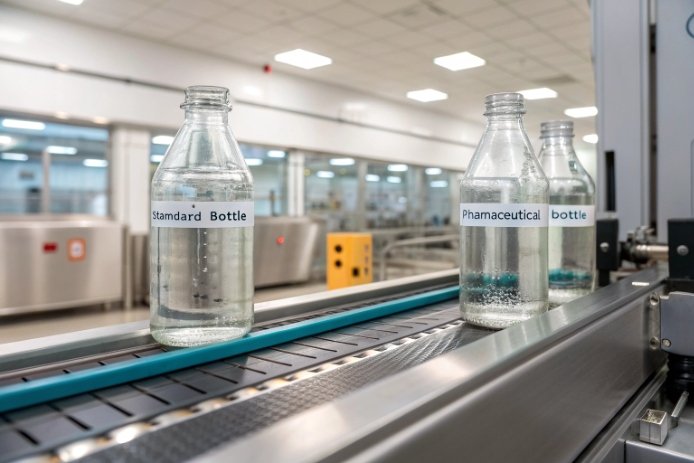
Many bottles look the same. Then stability data fails, and the team learns too late that “clear glass” is not one material.
Pharma bottles are built for controlled extractables and proven hydrolytic resistance, so they use Type I borosilicate (composition-driven) or Type II treated soda-lime (surface-driven), while standard food/cosmetic bottles are usually regular soda-lime focused on cost and appearance.
Why pharma glass is a performance promise, not a marketing label?
Pharmaceutical glass is not “better glass” in a vague way. It is glass that must meet defined test outcomes, lot after lot, under regulated conditions. That requirement changes how composition is chosen and how the line is controlled. Standard bottles for food and cosmetics often optimize melting speed, decoration, and price. Pharma bottles must also protect the drug and avoid adding risk through leachables, pH shift, and particles.
In daily production, this difference shows up in how targets are written. A food bottle spec might focus on dimensions, impact strength, and color. A pharma spec adds hydrolytic resistance 1, limits for extractables risk, and documentation that stays consistent through audits. The same furnace can make both only if the glass family and cullet streams are separated. If not, chemistry drift appears in the exact place regulators care about: the inner surface.
One lesson came from a project where a customer switched from cosmetics to oral syrup packaging. The bottle design stayed the same, but the glass type had to change. The first pilot run used a “high-white” soda-lime recipe. It looked perfect. Still, the water extraction showed higher alkali release than the customer expected. The fix was not a new label. The fix was choosing the right glass type strategy and controlling the surface condition.
Two strategies exist in pharma glass
- Composition-driven durability (Type I): the bulk oxide ratios create high hydrolytic resistance.
- Surface-driven durability (Type II): the bulk is soda-lime, but the inner surface is treated to reduce alkali release.
What procurement should ask for from day one
- Glass type intent and test basis (USP/EP/ISO language)
- Hydrolytic resistance performance at defined conditions
- Elemental risk and extractables support data where required
- A clear control plan for cullet, fining, and furnace stability
| Topic | Standard food/cosmetics bottles | Pharmaceutical bottles |
|---|---|---|
| Main goal | Cost, appearance, supply speed | Hydrolytic resistance, low E&L risk, repeatability |
| Typical glass family | Soda-lime-silica | Type I borosilicate or Type II treated soda-lime |
| Key oxides emphasized | Na₂O for melt speed, CaO/MgO for stability | Lower alkali or treated surface, higher B₂O₃/Al₂O₃ in Type I |
| Quality focus | Visual defects and breakage | Visual defects plus extractables risk, compliance data |
| Biggest production risk | Color drift, defects, breakage | Hydrolytic class drift, pH shift, delamination risk, audit gaps |
This is the base idea. Now the details become clear when each question is handled as a “composition + surface + control” system.
A good comparison always starts with the two pharma types people talk about most: Type I and Type II.
Is pharma glass typically borosilicate (Type I) or de-alkalized soda-lime (Type II), and how do their oxide ratios differ?
Many buyers assume “pharma glass = borosilicate.” That is often true for high-risk injectables, but not always for every product.
Pharma packaging commonly uses Type I borosilicate when the bulk glass must be highly resistant, and Type II treated soda-lime when a treated inner surface can meet the required hydrolytic performance; their oxide ratios differ most in B₂O₃ and total alkali.
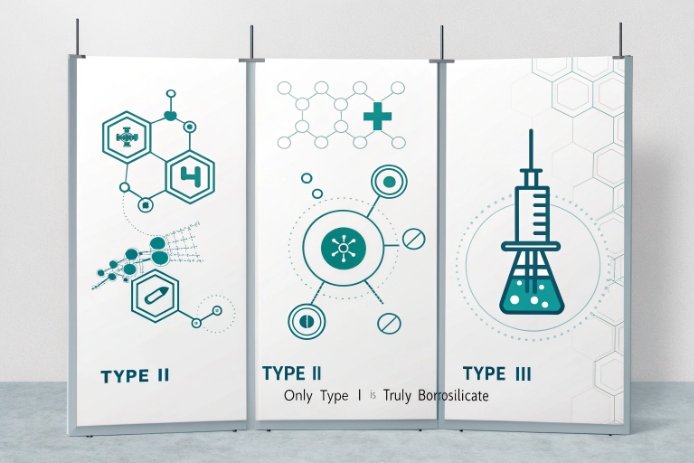
Type I vs Type II: the “fingerprint” in oxides
Type I borosilicate glass 2 reduces alkali and adds boron to build a more durable network. Type II starts as soda-lime and keeps the fast-melting alkali level, but uses a de-alkalized inner surface so the product sees a more durable surface layer.
A practical way to explain it to non-glass teams is: Type I is durable everywhere. Type II is durable where the drug touches.
| Glass family (typical) | SiO₂ | B₂O₃ | Na₂O (and other alkali) | Al₂O₃ | CaO/MgO |
|---|---|---|---|---|---|
| Type I borosilicate (pharma) | ~70–81% | ~7–13% | ~4–7% | ~2–7% | low (often near 0–2% CaO, low MgO) |
| Standard soda-lime (food/cosmetics) | ~67–74% | ~0–1% | ~12–15% | ~1–4% | higher (CaO often ~8–11%, MgO ~2–4%) |
| Type II treated soda-lime (pharma) | similar to soda-lime bulk | similar to soda-lime bulk | similar to soda-lime bulk | similar to soda-lime bulk | similar to soda-lime bulk |
The exact ranges vary by manufacturer and by forming method, but the pattern is stable: Type I carries meaningful B₂O₃ and lower total alkali, while standard soda-lime carries higher alkali and higher alkaline earth content.
Where each type is used in real projects
- Type I borosilicate: common for parenterals, sensitive biologics, and products that can react with alkali or trace ions.
- Type II treated soda-lime: common for many aqueous and acidic or neutral products where the treated surface provides enough resistance and the product has strong stability data.
- Standard soda-lime: common for beverages, sauces, cosmetics, and many OTC products 3 where the regulatory and stability risk is different.
What changes in the factory when switching types
Type I borosilicate and soda-lime behave differently in melting, working range, and thermal shock 4. That means the line needs different control habits. Also, cullet streams must not mix. Mixing borosilicate cullet into soda-lime can create defects and unstable viscosity. Mixing soda-lime into borosilicate can weaken chemical performance and increase defect risk.
So, yes, pharma glass is often Type I, but Type II is also widely used. The key is not the label. The key is the test outcome and the control plan that protects it.
How do Na₂O, CaO/MgO, Al₂O₃, and B₂O₃ levels change hydrolytic resistance and extractables performance?
When hydrolytic resistance fails, the root cause is usually simple: too much exchangeable alkali at the surface, or a surface that is rough and easy to attack.
Higher Na₂O increases ion exchange and pH rise, while higher network formers and intermediates like SiO₂ and Al₂O₃ improve durability; B₂O₃ helps build Type I glass networks but must be balanced for process and extractables profiles.
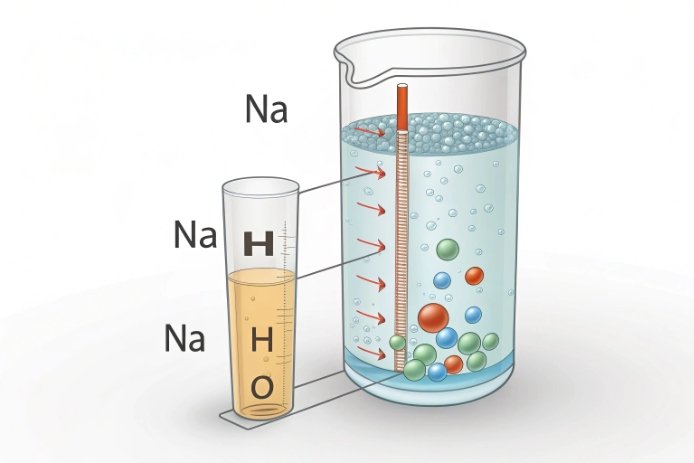
The simple mechanism behind pH rise and alkali release
Water attacks the surface first. H⁺ swaps with Na⁺ and K⁺. That increases pH and releases alkali ions. Then, if the surface layer becomes hydrated and weak, the network can dissolve slowly, releasing other ions. So Na₂O is the main “speed knob” for early pH rise, while the network strength controls longer-term release trends.
How each oxide matters in practice
- Na₂O: helps melting, but raises the pool of exchangeable alkali. Lower Na₂O usually improves hydrolytic resistance, but it increases melting difficulty.
- CaO/MgO: stabilize soda-lime and can reduce alkali mobility in some cases, but their biggest impact is indirect. If CaO is too high or the MgO/CaO balance is poor, devit and surface skins rise, and leaching can rise because the surface becomes rough and defect-rich.
- Al₂O₃: strengthens the network and often improves chemical durability. Modest Al₂O₃ helps resist hydrolytic attack in many glass families.
- B₂O₃: in Type I borosilicate, boron helps deliver high chemical durability while keeping viscosity workable. Still, boron can appear as a measured element in extractables screens, so acceptance criteria and risk assessment must match the product.
| Oxide | Hydrolytic resistance impact | Extractables impact | Production trade-off |
|---|---|---|---|
| Na₂O | Usually lowers resistance if high | Raises pH shift and Na release | Easier melting when higher |
| CaO | Mixed; can raise liquidus if too high | Indirect via devit/defects | Needed for stability |
| MgO | Helps stability; can reduce devit when balanced | Indirect via smoother surface | Can shift working range |
| Al₂O₃ | Improves network durability | Often lowers long-term ionic release | Too much can slow melting |
| B₂O₃ | Supports Type I durability | Boron may be detectable in screens | Volatility and cost control needed |
Practical “directional” composition targets (how buyers can specify)
Instead of writing one rigid recipe, it works better to specify directional targets tied to performance:
- For Type I intent: lower total alkali, meaningful B₂O₃ and Al₂O₃, and a proven hydrolytic class result.
- For Type II intent: stable soda-lime bulk composition plus a controlled surface treatment that produces the required hydrolytic class.
- For standard bottles: stable soda-lime windows that balance durability and forming, with impurity limits suited to food/cosmetic regulations.
This is why pharma glass costs more. It is not only raw materials. It is the tighter control of alkali behavior and surface-driven extractables risk 5.
Which surface treatments (sulfur de-alkalization, internal SiO₂ coating) modify composition to meet USP <660>/EP 3.2.1?
Sometimes the base glass is fixed. The furnace is built for soda-lime, and a full Type I switch is not realistic. In that case, surface engineering becomes the tool.
Sulfur de-alkalization (Type II) changes the inner surface chemistry by removing or neutralizing alkali at the surface, while internal SiO₂ coatings add a barrier layer that blocks ion exchange; both can help meet pharmacopeial hydrolytic resistance expectations when controlled and qualified.
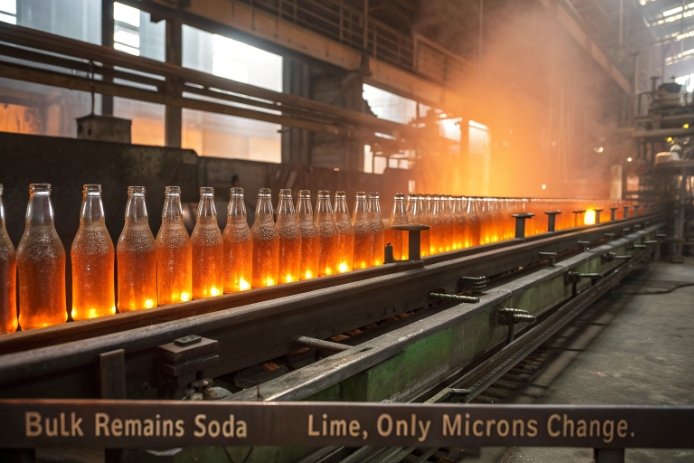
Sulfur de-alkalization: how Type II is created
Type II glass is usually soda-lime-silica that has been treated with sulfur compounds to de-alkalize the interior surface. The treatment creates a more silica-rich surface and reduces the amount of alkali available to leach into the product. The bulk glass chemistry stays soda-lime, but the product contacts a “better” surface.
This is not a one-time trick. It needs stable container temperature and stable treatment conditions. If the treatment is uneven, hydrolytic results can vary, and that is the worst outcome for regulated supply.
Internal SiO₂ coatings: a real barrier for sensitive formulations
Internal SiO₂ coatings are used when very low extractables are needed, or when a formulation is sensitive to pH shift and ionic contamination. The coating acts as an ion barrier layer. In many projects, this is used on Type I borosilicate to reduce leachables even further, especially for sensitive biologics and complex buffers.
The trade-off is qualification work. Coating coverage, integrity, and process compatibility must be proven. A coated bottle is not “the same bottle.” It is a new contact surface and needs a real E&L strategy.
| Treatment | What changes | Main benefit | Main risk | Best use case |
|---|---|---|---|---|
| Sulfur de-alkalization (Type II) | Inner surface alkali reduced | Lower pH shift and alkali release | Uneven treatment causes variability | Many aqueous and acidic/neutral pharma products |
| Internal SiO₂ coating | Adds barrier layer | Strong reduction in ionic leachables | Coating integrity and qualification burden | Highly sensitive drugs, tight E&L targets |
| No treatment (Type I bulk durability) | Bulk composition does the work | Stable baseline hydrolytic performance | Cost and forming differences | High-risk injectables and long shelf life |
How this connects to USP <660> and EP 3.2.1 in procurement language
Industry still uses Type I/II/III language often, even as standards evolve and clarify performance intent. The practical procurement rule is simple: the supplier must state which standard and which test basis supports the glass type, and must keep the surface condition stable.
When a project depends on surface treatment, the control plan must be part of the spec. Otherwise, compliance becomes a moving target.
Do heavy-metal limits and colorant choices (Fe, Cr, Co, Se) differ for pharma vs food/cosmetics bottles?
Color is not only marketing. In pharma, colorants and trace metals can become part of an extractables and elemental risk story.
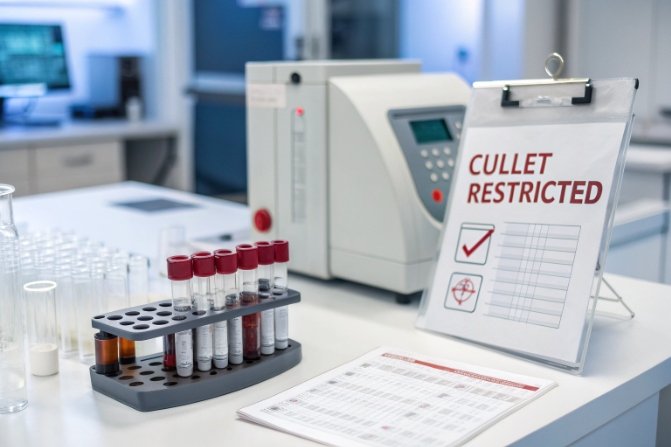
Yes. Pharma packaging is usually held to tighter impurity control and deeper documentation because packaging contributes to extractables/leachables and elemental-impurity risk assessments; food/cosmetics bottles still control metals, but the compliance and testing depth is often different.
Heavy metals: the key difference is documentation and risk linkage
For pharma, elemental impurities 6 are managed through risk-based approaches in the drug product, and packaging is one potential source. So pharma buyers often ask for:
- trace metals profiles from suppliers
- extractables data under defined conditions
- ongoing change control when raw materials or cullet sources change
For food and cosmetics, heavy metals are still controlled through food-contact rules and packaging restrictions, but the conversation is often “compliance + appearance,” not “E&L + toxicological assessment.”
Colorants: what changes between pharma and standard bottles
- Flint pharma glass: often avoids strong colorants. If decolorizers are used, they must be stable and must not create new extractables concerns.
- Amber pharma glass: used for light protection. The chemistry often relies on iron-based systems 7 and controlled furnace conditions. The goal is functional transmission control with stable shade, not only “nice amber.”
- Food/cosmetics: has more freedom to tune color for branding. Amber, green, and specialty tints are common. The limits usually focus on food-contact compliance and brand look, not compendial hydrolytic class.
Why Fe, Cr, Co, and Se are handled carefully in pharma supply
- Fe: common and often acceptable, but still a contributor to chemistry and shade.
- Cr: powerful green contaminant, often controlled tightly because it can drift color and can be part of elemental profiles.
- Co and Se: strong colorants/decolorizers 8. Small doses can change tone fast. In pharma programs, stability and documentation matter because trace elements can be measured in extractables work.
| Industry | Typical colors | Colorant mindset | Usual control focus |
|---|---|---|---|
| Pharma | Flint and amber | Functional and stable, audit-ready | Hydrolytic class, E&L support, change control |
| Food | Flint, amber, green | Branding + shelf look | Food-contact compliance, appearance consistency |
| Cosmetics | Water-white flint, light tints | Visual premium first | Appearance, fragrance/oil compatibility, brand specs |
The practical buyer takeaway
Pharma glass is not always “more pure,” but it is almost always “more controlled.” That control includes tighter cullet governance 9, tighter impurity limits, and clearer documentation of what can leach and under what conditions. If a buyer asks for pharma-style paperwork on a standard bottle, cost and lead time often rise, even if the shape stays the same.
Conclusion
Pharma bottles differ mainly in glass family choice, alkali and boron/alumina balance, and surface treatments that lock hydrolytic resistance—plus tighter impurity control and documentation than standard food/cosmetics bottles 10.
Footnotes
-
Standard testing method used to verify the water resistance of glass. ↩
-
A type of glass with silica and boron trioxide, known for thermal resistance. ↩
-
Over-the-counter medicines that often have less strict packaging than injectables. ↩
-
When glass cracks due to rapid temperature changes, a risk during washing. ↩
-
FDA guidance on substances that can migrate from packaging into drugs. ↩
-
Regulations controlling trace metals in drug products to ensure patient safety. ↩
-
Chemical systems using iron and sulfur to create light-blocking amber glass. ↩
-
Additives used to neutralize green tints or add specific colors to glass. ↩
-
Managing recycled glass streams to prevent contamination in sensitive products. ↩
-
General category of glass containers with different regulatory needs than pharma. ↩






