
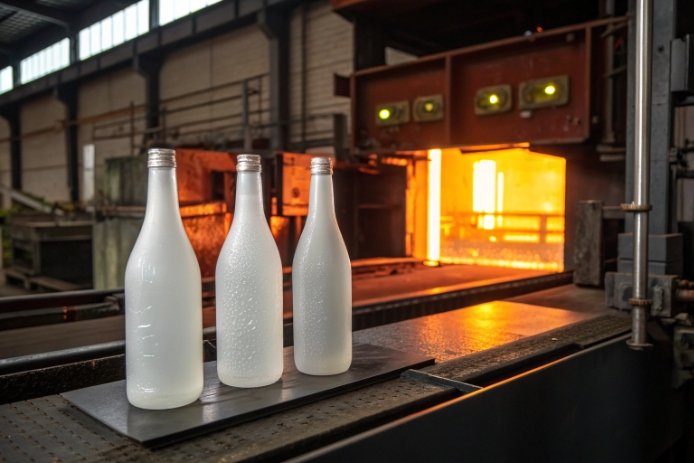
A “clear” bottle can still look dull on shelf. A tiny green or yellow cast can ruin premium branding and make every label look cheap.
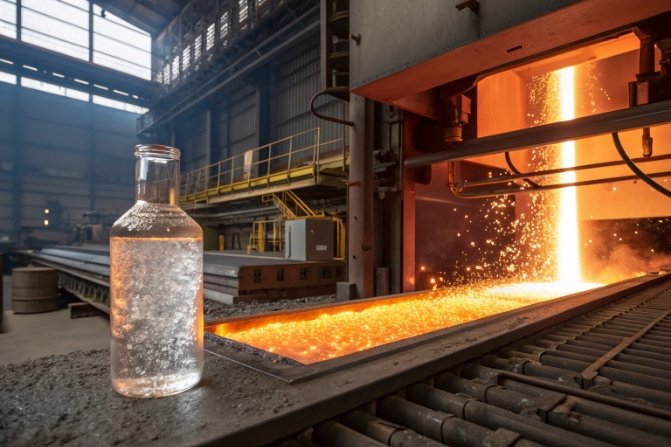
Ultra-clear, high-white flint comes from strict raw material specs, tight impurity control, and steady redox + decolorizer dosing, while keeping refining strong enough to protect yield and machine uptime.
What does “high-white flint” really mean on a production line?
High-white flint is not only “low iron.” It is the result of three things staying stable at the same time: optical tone, melt quality, and batch-to-batch repeatability. The tone is what people see. The melt quality is what the IS machine feels. Repeatability is what keeps complaints away.
In practice, “high-white” is a neutral-looking flint with very low green and low yellow. Green mainly comes from ferrous iron (Fe²⁺). Yellow mainly comes from ferric iron (Fe³⁺), plus trace Ti and some refractory pickup. If the furnace redox 1 moves, the balance between green and yellow moves too. That is why two batches with the same total iron can still look different.
The other hidden part is yield. If a plant chases whiteness with unstable redox or too much decolorizer, it often pays later with cords, stones, bubbles, or a slow drift in tone. High-white flint needs a “boring” melt. That means stable temperature, stable fining, and stable mixing. When those are stable, a smaller decolorizer package can do the job, and it will not need daily rescue adjustments.
A simple way to manage this is to specify and measure the color as a window, not a single number, and link it to thickness. A flint bottle wall can be 2–4 mm. A small tone change is far easier to see at higher thickness. That is why internal QC should test at a fixed thickness coupon or a fixed bottle type.
| What buyers call it | What the factory must control | What usually breaks it |
|---|---|---|
| “High-white flint” | Low total impurities + stable Fe²⁺/Fe³⁺ + stable decolorizer feed | Cullet contamination, redox swings, refractory wear |
| “Ultra-clear” | Low bubbles/cords + good homogenization | Fining instability, batch blanket waves |
| “Premium clear” | Neutral tone across lots | Supplier changes, mixed cullet, inconsistent sand |
Keep that frame in mind. The next four topics are the real control levers.
A clean, consistent spec is the fastest way to make high-white flint easy, not hard.
Which raw materials most directly determine “high-white” clarity, and how should buyers specify them?
Most “color problems” start before the furnace. Buyers often focus on bottle shape and decoration, but high-white begins with what goes into the batch house.
The biggest drivers of high-white clarity are low-iron silica sand first, then clean soda ash and clean limestone/dolomite; buyers should specify impurity limits (Fe, Cr, Ti, Ni), grain size, and consistency, not only major oxide chemistry.
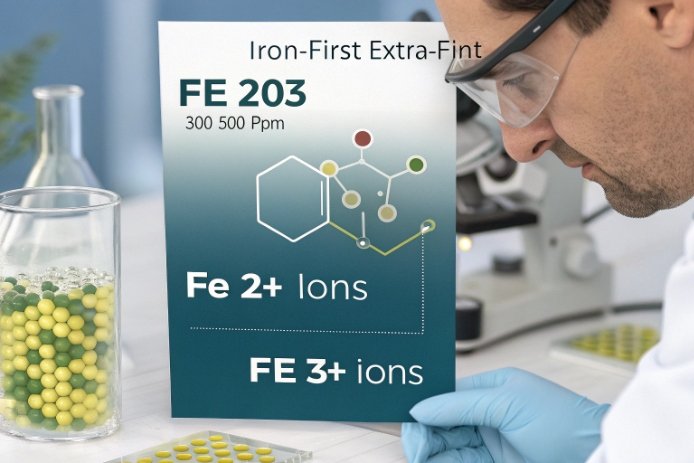
Why silica sand is the #1 whiteness lever
Silica sand 2 is the largest part of a soda-lime container batch. Even a small change in sand iron can move the whole glass tone. That is why “low-iron sand” must be defined by numbers, not by a sales name. The sand spec should include:
-
Total Fe as Fe₂O₃ (max)
-
TiO₂ (max) to limit yellow
-
Cr₂O₃ and Ni (max) to limit green/brown side tones
-
Al₂O₃ and heavy minerals because they affect melt stability and stones
-
Grain size distribution because it affects melting speed and seeds
-
Moisture and LOI because they affect batch flow and furnace stability
Soda ash and limestone still matter a lot
Soda ash 3 sets the Na₂O input. It can carry trace iron, organics, and insolubles. Insolubles can become defects or increase fining load. Limestone (and dolomite if used) can bring iron and manganese, and it also affects sulfur chemistry and fining stability.
For high-white flint, buyers should request a batch-ready raw material package with certificates that show both major oxides and trace impurities. The most helpful buyer spec is a “must meet” table plus a “typical” table, so drift is visible early.
| Material | What to specify for high-white | Why it matters |
|---|---|---|
| Low-iron silica sand | Max Fe₂O₃, TiO₂, Cr₂O₃, Ni; grain size; moisture; heavy minerals | Drives base tint and melting behavior |
| Soda ash | Insolubles, Fe, organics/carbon, moisture | Affects foam, fining load, redox drift |
| Limestone / dolomite | Fe₂O₃, Mn, MgO (if dolomite), LOI, fineness | Controls stability, stones, and tone drift |
| Feldspar / alumina sources (if used) | Fe, Ti, alkalis, particle size | Can raise yellow tone and stones if unstable |
How buyers should write the specification
A strong spec includes:
1) Impurity limits in ppm or % (Fe, Cr, Ti, Ni)
2) Consistency limits (allowed variation lot-to-lot)
3) Test methods and sampling plan (XRF/ICP, sieve, moisture)
4) Reject rules (what happens if one impurity exceeds the limit)
When this is written clearly, suppliers can quote correctly, and the glass plant can run with fewer emergency color corrections.
How can you minimize iron and other color-causing impurities while maintaining melt stability and production yield?
Chasing “the lowest iron” can backfire. If melting slows, defects rise, and yield drops, the plant pays more than it saves.
Minimize Fe, Cr, Ti, and Ni by controlling every input path (raw materials, cullet, refractories, and batch handling) while keeping the base glass and fining system strong enough to protect melt rate, refining, and forming stability.
All impurity paths, not only sand
Most teams watch sand iron and forget the rest. In real production, impurities 4 enter through:
-
Cullet (the biggest wild card)
-
Refractory corrosion (Cr pickup can show as green tint)
-
Batch handling and conveyors (metal fines and dust)
-
Additives (some decolorizers and fining agents can carry trace metals)
To protect yield, the goal is “low and steady,” not “lowest at any cost.”
Protect melt stability with smart base chemistry
A high-white flint still needs a base that melts and refines well. If the batch is too “tight” (high silica, low alkali), the furnace needs more heat, and unmelted grains can rise. If the fining is weak, seeds and cords increase, and rejection rises.
A practical approach is:
-
Keep the major oxides in a proven container-glass window.
-
Use cleaner sources for the same oxides instead of moving the oxide targets too much.
-
Use small alumina control to help viscosity 5 and reduce devit risk, while keeping raw material purity high.
Control plan that protects both color and yield
The best plants run impurity control like a quality system, not like a one-time project.
| Control point | What to do | What it prevents |
|---|---|---|
| Supplier qualification | Audit sand and carbonate sources; demand trace impurity history | Surprise tint drift |
| Refractory management | Track wear zones; plan repairs; monitor Cr pickup risk | Slow green drift over campaigns |
| Batch house cleanliness | Control dust, magnet separation, metal pickup | Random specks and cords |
| Cullet governance | Dedicated flint cullet stream; strict color rules | Day-to-day color variation |
| Furnace stability | Stable pull and stable temperature profile | Redox and fining swings that show as tone swings |
This is also where “production yield” stays safe. Stable melting and stable fining reduce rejects, so the cost of better raw materials becomes easier to justify.
What decolorizing and refining strategies help remove green/yellow tones without causing long-term color shift?
Decolorizing can fix tone quickly, but it can also create a slow drift that is hard to explain to customers months later.
The safest path is stable redox control first, then a small and steady physical decolorizer package (often selenium + cobalt style balancing), supported by consistent fining so the glass stays neutral without creeping blue, pink, or yellow over time.
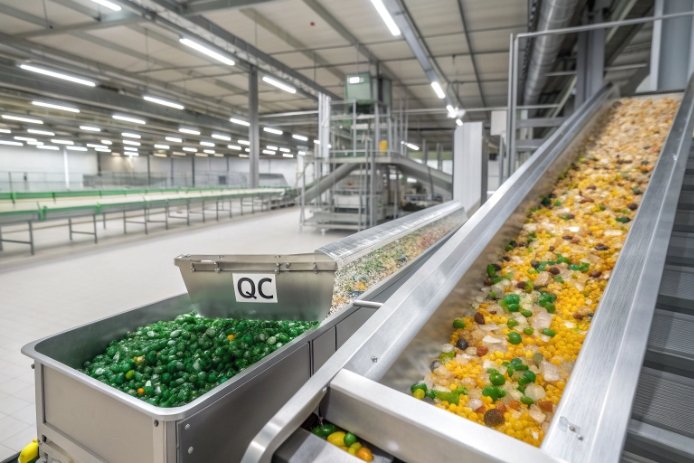
Start with redox, because iron color depends on valence
Iron can show as greenish when more is in Fe²⁺ form. A more oxidizing melt pushes iron toward Fe³⁺, which reduces green but can increase a yellow note. This is why redox control must be linked to the decolorizer 6 plan. If redox swings, the same decolorizer dose will not behave the same way.
Stable redox comes from:
-
Steady burner settings and oxygen potential
-
Controlled sulfate behavior in fining
-
Stable carbon/organics input (often from cullet and batch dust)
Physical decolorizing: cancel the tint, but do it gently
In container flint, many plants use a “cancel color” approach: add a tiny complementary hue to neutralize the residual tint. Selenium can add a pink note. Cobalt can add a blue note. Together, they can neutralize green/yellow into a cleaner white look.
The risk is long-term shift:
-
Selenium chemistry can be sensitive to redox and volatilization.
-
Cobalt is strong. Small overdoses can push a cold blue cast.
-
Manganese can work, but it can also show solarization behavior in some cases, which is not welcome for premium clear bottles.
So the best practice is: keep the decolorizer dose low, keep it stable, and let furnace stability do most of the work.
Refining choices that support whiteness, not fight it
Refining 7 is not only about bubbles. Refining is also about keeping the melt uniform, because a non-uniform melt makes tint bands and cords visible. For high-white, the refining system should be:
-
Consistent fining agent feed
-
Consistent fining temperature and residence time
-
Good mixing and homogenization where possible
| Strategy | Helps with | Risk if mismanaged |
|---|---|---|
| Redox stabilization | Keeps tone stable day to day | Tone swings and cord tint bands |
| Selenium + cobalt balancing | Neutralizes green/yellow tint | Slow drift to pink or blue |
| Sulfate fining discipline | Seeds control and stable melt | Foam, sulfur swings, color instability |
| Better homogenization (bubbling/mixing when available) | Reduces cords and tint streaks | Higher operating cost if overused |
When these are managed together, the plant can run “quiet,” and the glass can stay ultra-clear without weekly recipe resets.
How should you manage recycled cullet ratios to keep color consistency, and what incoming QC tests prevent batch-to-batch variation?
Cullet is a gift and a threat. It saves energy and boosts melting, but it can bring color and chemistry surprises faster than any virgin raw material.
Keep color consistency by using a dedicated flint cullet stream, setting strict limits on colored glass and contaminants, and running incoming QC with colorimetry plus impurity checks so every cullet lot behaves like a known raw material.
Set a cullet policy that matches the whiteness target
For standard flint, many lines can run high cullet 8. For ultra-clear, high-white, the best ratio is the highest ratio that still stays inside the color window with low correction effort. That ratio depends on cullet supply quality, not only furnace capability.
A simple hierarchy works well:
-
In-house flint cullet is the first choice. It matches your glass.
-
Certified furnace-ready flint cullet is second choice.
-
Mixed or uncertain cullet should be avoided for high-white, or used only with tight limits and blending.
Incoming QC tests that actually stop variation
The fastest way to prevent drift is to test cullet like a raw material, not like scrap.
Key incoming tests:
-
*Colorimetry (CIE Lab or equivalent)** on a standard melted coupon or standardized cullet sample method
-
Visual sorting audit for colored glass pieces
-
Contamination checks for ceramics, stones, metals, organics
-
Chemistry screening using XRF 9 for Fe, Cr, Ti, and other trace elements (and ICP when needed)
The goal is to catch problems before they enter the day bin.
| QC item | Test approach | What to set as an acceptance rule |
|---|---|---|
| Color drift risk | Colorimetry on a controlled sample | Must stay inside the agreed color window |
| Iron and trace metals | XRF screening (and periodic lab confirmation) | Max Fe, Cr, Ti, Ni limits by contract |
| Colored glass contamination | Manual + optical sorting reports | Max % of amber/green pieces allowed |
| Ceramics, stones, CSP | Sieve + manual count + supplier data | Max counts or max ppm by weight |
| Metals | Magnet + visual inspection | Ferrous = zero tolerance in many specs |
| Organics | LOI or practical cleanliness checks | Max % organics, no food waste, no plastics |
Blending and control charts keep the line calm
Even with good cullet, small differences exist. Blending solves most of it:
-
Blend cullet lots to reduce spikes.
-
Keep a running “cullet fingerprint” chart (color + Fe + contaminants).
-
Link furnace color readings to cullet lot IDs so the root cause is easy.
When cullet is managed this way, it becomes a stable input. That stability is what makes ultra-clear, high-white flint repeatable in continuous production.
Conclusion
High-white flint is a system result: strict low-impurity raw materials, steady redox and decolorizers, and disciplined cullet QC that keeps every batch inside a tight, stable color window.
Footnotes
-
Oxidation-reduction balance determines the color expression of iron in the glass melt. ↩
-
High-purity sand with low iron content is essential for maximizing light transmission. ↩
-
Sodium carbonate acts as a flux but must be free of contaminants to prevent defects. ↩
-
Trace metals like chromium and nickel must be managed to prevent unwanted tints. ↩
-
Controlled viscosity ensures the glass melt flows and forms correctly in the machine. ↩
-
Additives like selenium neutralize green tints to create a neutral clear appearance. ↩
-
The process of removing bubbles and homogenizing the melt for optical clarity. ↩
-
Recycled glass usage requires strict sorting to maintain the purity of high-white flint. ↩
-
X-ray fluorescence provides rapid elemental analysis to screen raw materials for contaminants. ↩






