

Copper looks easy on a mood board, then the furnace shifts and the shade turns muddy. That can trigger returns and slowdowns.
Copper is best for teal, blue-green, and “antique” tones when Cu²⁺ stays dominant. The same copper can turn brown, hazy, or uneven if redox drifts and pushes copper toward Cu⁺/Cu⁰ behavior.
Copper tinting is mostly a redox project, not a pigment project?
Copper’s “color space” in container glass
Copper is not one colorant with one outcome. Copper can deliver clean blue-green tones, and it can also produce dull brown, smoky haze, or streaky cords. The reason is simple. Copper changes its behavior with oxygen activity in the melt. That means copper is sensitive to cullet quality 1, furnace atmosphere 2, batch reducers, and even local mixing near the blanket.
Why copper is attractive for brands
Copper can create modern teal, vintage “apothecary” green, and subtle sea-glass looks without needing heavy chromium. It also gives a premium feel because it can be tuned to look deep at thick sections while staying bright in thin sections. This “depth” is why copper fits cosmetics, mixers, and specialty beverages.
Where copper gets risky
Copper becomes risky when the plant tries to run it like cobalt. Cobalt often tolerates small redox drift. …Copper does not. In reducing pockets, copper shifts away from the clean Cu²⁺-driven blue-green and can move toward Cu⁺/Cu⁰ pathways that cause brown tone, haze, or ruby-like effects that are not desired in bottles.
A quick decision matrix before choosing copper
| Goal | Copper can deliver? | Redox sensitivity | Best bottle styles |
|---|---|---|---|
| Teal / turquoise | Yes (very strong) | Medium | spirits, cosmetics, mixers |
| Antique green | Yes (very natural) | High | apothecary, food jars, premium sauces |
| Deep cobalt-like blue | Not ideal alone | Medium | better with cobalt |
| Amber / brown warmth | Possible but risky | High | only with strong controls |
What makes copper behave well
Copper works best when the plant locks three items:
- a stable oxidizing window in the melting + refining zones,
- strong homogenization to avoid local redox gradients,
- and a cullet plan that prevents organic spikes.
Once these are set, copper becomes a reliable tool. Without them, copper becomes a weekly firefight.
If copper feels unpredictable, the next sections will make it predictable. Each one ties an observed bottle shade to a specific copper state and a specific control lever.
What hues arise from Cu⁺/Cu²⁺ equilibria?
Copper color can look “alive” in one pull, then flat in the next. That usually means copper speciation moved.
Cu²⁺ is the main driver for blue to green tones in many commercial glasses, while Cu⁺ tends to be colorless and can act as a bridge toward metallic Cu⁰ under more reducing conditions. That shift changes hue, saturation, and clarity.

The practical chemistry behind the hue
In an oxidizing melt, copper tends to sit in the Cu²⁺ state, and this produces strong absorption that reads as blue or green depending on base glass composition 3. In a more reducing melt, copper shifts through a Cu²⁺↔Cu⁺ balance. Cu⁺ itself often does not add strong color in typical silicate glasses, but it opens the door to Cu⁰ particle formation in the right conditions. Cu⁰ is the classic pathway toward ruby red, which is not usually wanted in bottle production.
Why base glass composition changes “the same copper”
The same Cu²⁺ does not always look the same. A common practical observation is that alkali balance 4 influences the absorption band position. When sodium is partly replaced by potassium, the copper-related absorption can shift and the perceived color can move toward greener tones. That is why copper teal can look cleaner in one formulation and more green in another even if copper ppm is the same.
What operators can observe without spectroscopy
Even without advanced instruments, copper states show fingerprints:
- Cu²⁺ dominance often looks clean and transparent.
- A drift toward reduced copper often shows as dulling, smoky tone, or early haze, especially near thick sections.
- Local redox gradients show as cords or vertical shade bands.
| Predominant copper state | Typical hue tendency | Furnace condition that favors it | Bottle risk |
|---|---|---|---|
| Cu²⁺ | blue to green-blue | stable oxidizing | low, if mixed well |
| Cu⁺ | weak / near-colorless contribution | mildly reducing | shade instability risk |
| Cu⁰ (particles) | ruby/red-brown potential | more reducing + thermal history | haze, brown, streaking |
…A simple way to keep hue stable
The goal is not “maximum oxidation.” The goal is “stable oxidation.” A stable Cu²⁺ window gives stable teal. Fast swings invite mixed copper states, and mixed copper states invite cords and haze.
Why pick copper for teal and antique shades?
Teal is popular, and “antique” sells. Still, those looks fail fast if the recipe ignores iron, sulfur, and cullet reality.
Copper is chosen for teal and antique shades because Cu²⁺ gives vivid blue-green with high depth, and small interactions with iron and the base glass can create natural vintage greens. Copper can also mask small recycled-content variation better than flint when the redox window is stable.
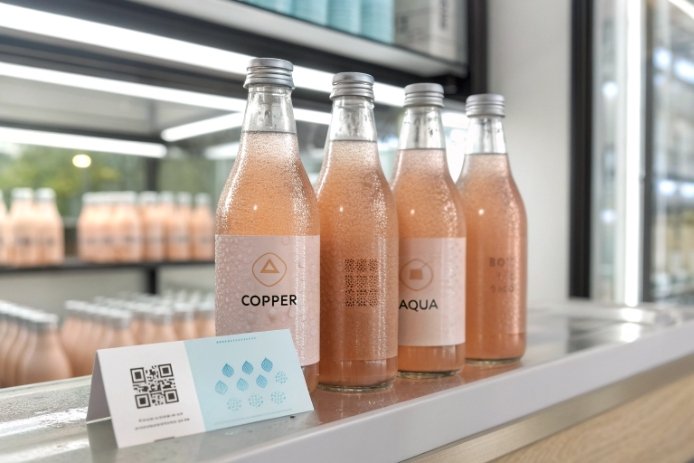
Teal: clean modern color with small copper additions
Teal usually aims for a bright blue-green that looks premium under bar lighting. Copper can do this with very small additions, so it is cost-effective on a per-ton basis. Teal also pairs well with clear or frosted surface treatments 5, because the transmitted color stays rich while the surface finish softens glare.
A teal program works best when the plant accepts that iron is part of the final look. High cullet raises iron. Iron redox shifts also change the background tint. So teal is best built as a “copper trim on an iron baseline,” not as “copper-only.”
Antique: controlled “not perfect” that still looks intentional
Antique shades look slightly muted, slightly warm, and slightly earthy. Copper is a strong tool here because it can create a deep tone without needing a heavy chromium push. Many antique looks are not pure copper. They are copper plus:
- a controlled iron background,
- …sometimes a small chromium presence for greener lift,
- and a sulfur plan that avoids ambering and haze.
The key is to make the imperfections uniform. Antique looks wrong when it varies lot-to-lot. It looks premium when it is consistent.
Shade targeting that survives cullet swings
A stable approach is to define the shade in Lab* 6 or transmission, then keep the target by adjusting copper as a trim, while holding redox and iron within a band. This is the opposite of “fix shade with one big copper change.”
| Target look | Typical chromophore mix | What makes it premium | What makes it fail |
|---|---|---|---|
| Bright teal | Cu²⁺ + controlled Fe background | high clarity, tight ΔE | redox drift → dull tone |
| Sea-glass green | Cu²⁺ + higher Fe + soft finish | consistent haze-free translucency | Cu⁰ risk → smoky haze |
| Antique apothecary | Cu²⁺ + Fe + tiny Cr (optional) | uniform muted depth | cords from gradients |
| Teal-amber crossover | copper + controlled sulfur/redox | intentional warmth | accidental brown and reboil |
Copper is picked because it can create shades that look expensive without heavy colorant loads. It succeeds only when redox and mixing are treated as first-class design variables.
How to manage redox to avoid brown or haze?
Copper punishes sloppy redox. A small reducing pocket can turn a clean teal into a brownish, hazy bottle.
To avoid brown or haze, keep copper mainly as Cu²⁺ by stabilizing oxygen activity, limiting unplanned reducers from cullet, and preventing redox gradients. Brown and haze often signal Cu⁰ particle formation or local copper-rich zones that did not homogenize.

What “bad copper” looks like in bottle plants
There are three common failure modes:
1) Brown shift: the blue-green collapses into a dull brown-green. This often points to over-reduction and mixed copper states.
2) Smoky haze: the bottle looks dirty even when seeds are normal. This can be copper particle formation or fine phase separation 7 effects that scatter light.
3) Cords and streaks: vertical shade lines or swirls. This is usually a mixing and gradient problem, not a dose problem.
Redox levers that work without creating oscillation
Copper responds to both batch chemistry 8 and furnace atmosphere. The reliable levers are:
-
Cullet cleaning and blending: remove organics that push reduction in spikes.
-
Slow batch redox trims: use consistent oxidizers or reducers in small steps, held long enough to match furnace residence time.
-
Stable combustion control 9: keep air/fuel and oxygen staging steady so oxygen activity does not wave.
-
Temperature uniformity: avoid cold corners and stagnant zones where local redox can drift.
An industry redox note also links glass redox to sulfur retention (SO₃) and to color families, which is useful because sulfur swings often show up as foam, reboil, and shade noise in colored bottles.
A troubleshooting table that stops waste fast
| Symptom | Likely cause | Fast check | Best long-term fix |
|---|---|---|---|
| Teal turns brownish | melt too reducing, Cu²⁺ drops | cullet organics spike? combustion drift? | tighter cullet spec + stabilize firing |
| Haze without seed spike | Cu⁰ particles or micro-scatter | compare thick vs thin sections | hold oxidizing band + improve mixing |
| Shade cords | redox gradients, poor homogenization | cord mapping across section | bubbling/mixing + slower corrections |
| Spotty streaks | batch segregation of copper | dosing location and PSD audit | use masterbatch/frit + better batch mixing |
The simplest operating rule for copper
Do not “chase shade” with rapid oxygen swings. Copper needs calm, not drama. A stable oxidizing band is the cheapest way to keep teal clean and antique consistent.
Is copper coloring compatible with high-cullet melts?
High cullet saves cost and energy, but it also increases variability and redox noise. Copper is sensitive to both.
Copper can work with high-cullet melts, especially for teal and antique shades, because colored bottles tolerate more iron variation than flint. Still, high cullet raises the risk of reducing spikes from organics, so copper programs need stronger cullet QA, blending, and redox monitoring to stay stable.
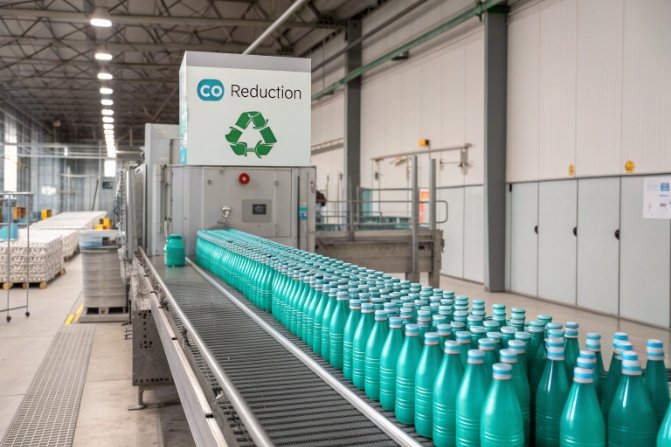
Why high cullet makes copper harder
High cullet usually brings:
-
higher baseline iron and wider iron variation,
-
more organics from labels and coatings,
-
more day-to-day changes in batch blanket behavior.
Those items push oxygen activity around. Copper reacts quickly, so copper becomes the “canary” that shows the drift first.
Why copper can still be a smart choice at high recycled content
Copper teal and antique shades can absorb some iron variation as part of the intended look. That makes them more forgiving than flint. A plant can hit higher recycled content 10 targets while keeping a premium shelf color, as long as the redox window is controlled.
Controls that make high-cullet copper stable
The practical package is:
-
Ready-to-furnace cullet discipline: strict limits on organics and ceramics, plus lot traceability.
-
Blending rules: blend cullet lots to smooth spikes instead of feeding “new lot” directly.
-
Redox sensing or strong proxies: track oxygen activity or feeder redox trends so corrections can be small and early.
-
Copper dosing discipline: use masterbatch or pre-dilution to prevent segregation and cords.
A research discussion on cullet sorting and redox monitoring supports the idea that cullet quality control is tied to redox stability, which is exactly what copper needs.
| High-cullet risk | Why it matters for copper | Control that works best |
|---|---|---|
| Organics spikes | sudden reduction → brown/haze | washing + reject rules + blending |
| Iron variability | background tint changes | model cobalt/copper trims on Fe baseline |
| Mixed glass families | cords and striae | stricter cullet sorting |
| Foam events | traps bubbles and changes clarity | stabilize sulfur/redox and firing |
| Fast corrective actions | creates gradients | smaller steps with time-lag awareness |
A realistic answer for buyers
Copper is compatible with high cullet when the bottle color is designed to tolerate iron variation and when cullet is controlled like a primary raw material. If the cullet stream is unstable, copper will show the instability faster than many other colorants.
Conclusion
Copper shines for teal and antique bottles, but it demands stable redox and good mixing. With clean, blended cullet and calm controls, copper can still run well at high recycled content.
Footnotes
-
High-quality cullet standards prevent organic contamination that causes redox instability in copper-tinted glass melts. ↩
-
Proper atmosphere control is critical for maintaining the specific oxidation states required for consistent copper glass coloring. ↩
-
Understanding how base glass chemistry interacts with colorants is fundamental to predicting final bottle hue. ↩
-
Shifts in alkali ratios can alter the absorption bands of copper, changing the perceived color from blue to green. ↩
-
Post-processing techniques like frosting can enhance the visual depth of copper-tinted glass containers. ↩
-
Standardized color measurement ensures consistent shade reproduction across different production runs and factories. ↩
-
Microscopic separation of glass phases can cause unwanted haze, a common defect in copper glass production. ↩
-
Calculating and controlling the redox number of the batch is essential for managing copper’s volatile color states. ↩
-
Precise fuel-air ratio control stabilizes oxygen activity, preventing color drifts in sensitive copper formulations. ↩
-
Using recycled glass saves energy but requires strict contaminant management to maintain color stability. ↩






