
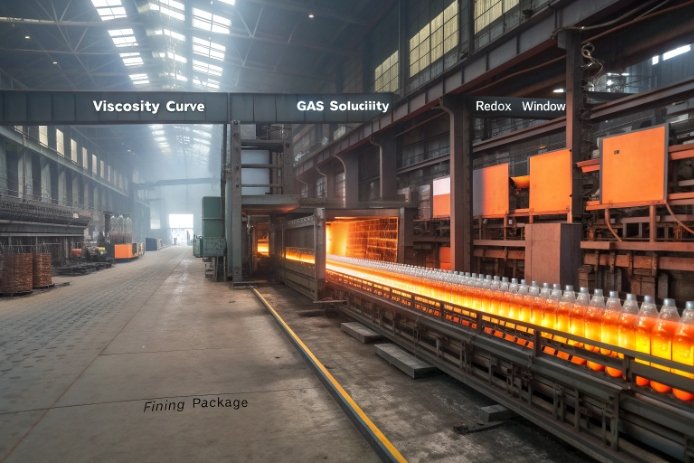
Seeds look small, but they destroy clarity, raise rejects, and trigger customer claims. Many plants fight them with heat, but chemistry still sets the limits.
Glass composition controls seeds by changing gas generation, gas solubility, viscosity, and redox. With the right oxide window, fining gases grow bubbles when the melt is soft, and the same gases do not reboil later in the forehearth or mold.
How does composition, redox, and melt trajectory decide whether bubbles survive?
Bubble control in container glass is a full lifecycle problem. A seed starts as a gas pocket or trapped air. It then either dissolves, grows and escapes, or survives into the feeder. Composition sits behind every step because it decides how much gas is created, how easily gas dissolves, and how fast bubbles rise when the melt becomes low-viscosity.
Composition decides the “gas budget”
The batch creates gases from carbonates, moisture, and fining reactions. Cullet can add more carbon and sulfur residues. If the glass composition holds more sulfate (as SO₃) or dissolves more water, the melt can carry a larger hidden gas inventory. That inventory is not always a problem at peak fining temperature. It becomes a problem later if the melt cools, reheats, or sees pressure changes. (See gas solubility 1)
Composition decides fining efficiency
Fining is not only about adding a fining agent. Fining works best when gas release happens while viscosity is low, so bubbles can grow and rise quickly. If composition shifts viscosity up in the refining zone, the same fining recipe produces more bubbles but removes fewer of them.
Composition decides reboil sensitivity
Reboil is the painful case where the melt looked clean, but bubbles appear again during conditioning or forming. Reboil is strongly linked to dissolved species like water and sulfur that can come out when temperature, pressure, or redox changes. A composition that retains higher SO₃ can be more sensitive if the process later drives SO₃ to release into bubbles.
| Bubble stage | What must happen | Composition lever that matters most | Typical failure mode |
|---|---|---|---|
| Batch melting | gases should escape early | sulfate retention, batch basicity | foam traps bubbles |
| Refining | bubbles must grow and rise | viscosity window, redox window | many small seeds survive |
| Conditioning | melt should stay stable | SO₃ and H₂O behavior vs temperature | reboil starts in forehearth |
| Forming | gob should not “wake up” gas | temperature uniformity, redox stability | blisters show at mold |
In my experience, the fastest improvement comes when the plant stops treating “seed count” as a forming KPI and starts treating it as a chemistry-and-trajectory KPI. That shift changes how batch, cullet, fining, and forehearth settings are managed.
The next sections go step by step: first the real causes of seeds and blisters, then how fining oxides and redox work together, then furnace moves that cut reboil at the mold, and finally what new assist technologies may add.
What causes seeds and blisters during melting?
Seeds and blisters are often grouped together, but they are not the same problem. When the plant treats them as one defect, the fixes become expensive and slow.
Seeds are small bubbles that survive refining because gas release, viscosity, and residence time do not line up. Blisters are larger bubbles that often come from batch foam, trapped gases, or late reboil during conditioning and forming.
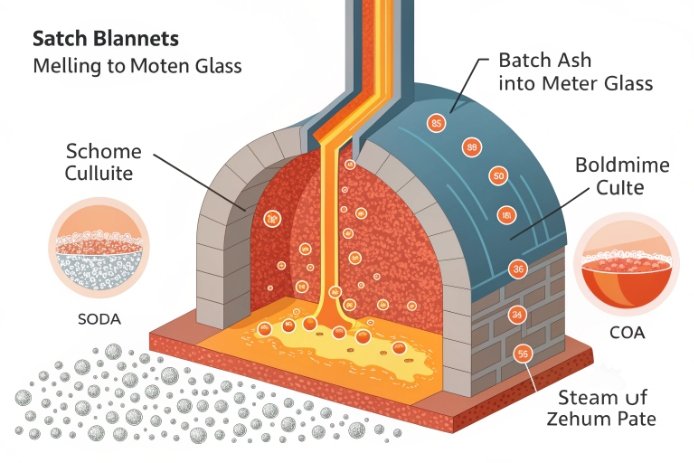
Seed sources: many tiny beginnings
Seeds usually come from three sources:
1) Batch gas release that happens too late. Carbonates and sulfate reactions release gas as temperature rises. If the melt is already too viscous when this gas forms, bubbles stay small and rise slowly. (See fining mechanisms 2)
2) Foam and batch blanket trapping. A foamy layer can hold bubbles under it and reduce heat transfer. This slows melting and delays fining into the wrong temperature zone.
3) Poor dissolution of sand and batch clusters. Undissolved grains create local chemistry pockets. Those pockets can create micro-bubbles and also disturb flow, so bubbles get trapped in colder zones.
Composition is involved because it changes sulfate solubility and the redox path during melting. A more basic soda-lime melt can retain more sulfur as sulfate, and redox swings change which sulfur species form and when gases release.
Blister sources: fewer, but more dramatic
Blisters often come from:
- Large gas pockets trapped under foam (Read about foam formation 3)
- Gas release in the forehearth (reboil)
- Air entrainment from aggressive stirring or unstable level control
A key point is that blisters can appear even when seeds are controlled, if reboil is triggered late.
A practical root-cause map
When a defect photo arrives, it helps to classify it fast and link it to a likely source.
| Defect type | Visual cue | Likely source zone | Composition link to check |
|---|---|---|---|
| Fine seeds | many tiny bubbles | refining too viscous | alkali drift, sulfate balance |
| Large blisters | few big bubbles | forehearth or mold | SO₃ carryover, water pickup |
| Bubble streak line | aligned bubbles | flow path / dead zone | viscosity mismatch, temperature gradient |
| “Peppery” bubbles + scum | bubbles near inclusions | batch blanket | sulfate + carbon mismatch |
A strong plant habit is to tie each bubble class to one upstream check: cullet LOI, SO₃ trend in glass, redox proxy, and refining-zone temperature profile. That keeps the team from only changing forming settings.
How do fining oxides and redox reduce bubbles?
Fining is chemistry, but redox is the steering wheel. Many plants change fining dosage and forget that redox decides what the fining agent actually does.
Fining oxides reduce bubbles by generating fining gases at high temperature, which enlarges small bubbles and speeds their rise. Redox control decides when sulfate decomposes, how much SO₃ stays dissolved, and whether the melt later releases gas as reboil.
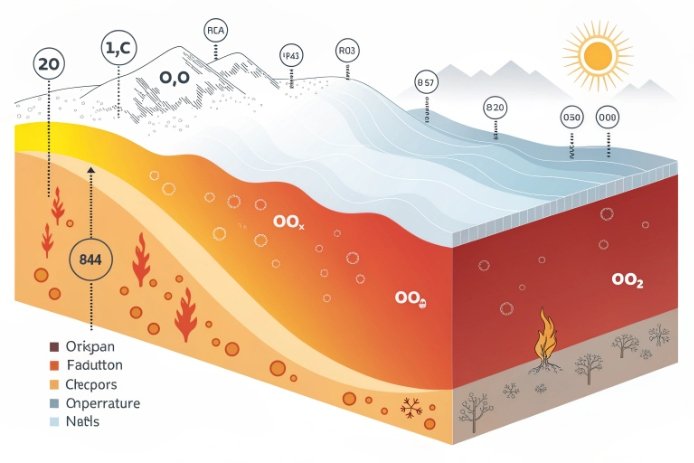
What fining agents really do
A fining agent is useful only if it releases gas when the melt is at its lowest practical viscosity in the tank. That timing is the whole game. If the fining reaction happens too early, gas is trapped under batch. If it happens too late, bubbles stay small because viscosity is high again in colder zones.
Sulfate fining is the common example in soda-lime glass. Excess sulfate can decompose and release gases like SO₂ and O₂, which helps bubble growth and removal. But sulfate also has limited solubility and can remain in glass as SO₃, which later becomes a reboil risk if conditions change. (See sulfate behavior 4)
Why redox decides whether fining helps or hurts
Redox is shaped by:
- carbon and organics (including dirty cullet)
- oxidizers like sulfates and nitrates
- polyvalent ions like iron
- furnace atmosphere leakage and combustion balance
Redox affects both bubble removal and color. In flint, the main worry is fining stability and clarity. In amber, redox also controls sulfur color chemistry, so the window is narrower. (Read redox control guide 5)
A simple rule works well: fining dosage should not be used to “fight” redox drift. Redox drift should be corrected at the source, then fining can be reduced.
Practical fining packages in container glass
Most plants run a package, not a single oxide:
- sulfate source for fining gas potential
- controlled oxidizers (sometimes nitrate) to prevent over-reduction
- controlled reducers (carbon balance) to keep sulfate reactions efficient
- Iron redox (Fe²⁺/Fe³⁺) as a buffer
| Lever | What it changes | What improves when correct | What fails when wrong |
|---|---|---|---|
| Sulfate level | fining gas potential | fewer seeds | foam, scum, SO₃ carryover |
| Nitrate or oxidizing push | melt oxygen potential | stable fining, fewer sulfides | NOx risk, color drift |
| Carbon/organic load | reducing power | controlled sulfate reactions | over-reduction, reboil risk |
| Iron redox (Fe²⁺/Fe³⁺) | gas solubility + color | stable clarity and tint | sudden bubble and color swings |
A “green” mindset helps here even if the goal is not only emissions. The cleanest fining system is the one that needs less chemistry because the melt trajectory is stable. With stable redox and stable temperature, a plant can often reduce total fining dosage and still cut seeds.
Which furnace tweaks cut reboil at the mould?
Reboil is the defect that makes operators feel helpless. The furnace can run clean, and then blisters show up near the mold. That usually means a stability problem in conditioning, not a missing fining chemical.
Reboil at the mold is reduced by preventing late gas exsolution: keep forehearth temperature uniform, avoid local reheating and strong stirring, limit SO₃ and water carryover, and avoid redox mixing that changes gas solubility.
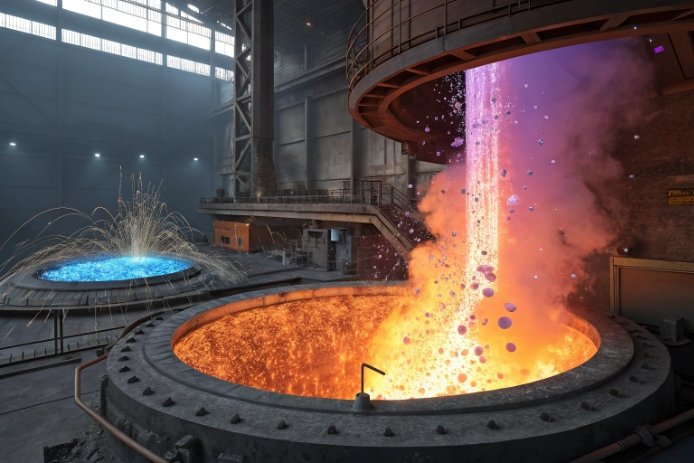
Treat reboil as a temperature–pressure–chemistry event
Reboil can occur when dissolved gases exceed solubility at local temperature and pressure. It can be triggered by reheating after the melt was refined and cooled, by pressure reduction above the melt, and by stirring. Water and SO₃ are common contributors because they can release gas into bubbles during these changes. (See reboil mechanisms 6)
So the furnace-side strategy is not only “fine more.” The strategy is to keep the glass from crossing the reboil boundary as it moves through the throat, forehearth, and feeder.
Forehearth stability beats higher forehearth temperature
Many teams raise temperature to stabilize gob flow. That can increase reboil if it pushes a local zone above the reboil temperature. The better move is to:
- reduce temperature gradients between zones
- keep heat input smooth, not cycling
- tune stirring to improve uniformity without over-agitating the surface
Reboil often spikes after:
- a cullet source change (more organics or sulfate residues)
- a fining shift (higher sulfate carryover)
- combustion changes (oxygen potential swings)
- maintenance events (refractory interface changes that provide nucleation sites)
The process can be stabilized by controlling cullet cleanliness, tracking SO₃ in glass, and keeping a steady redox proxy.
| Tweak | What it targets | What to watch | Fast check in production |
|---|---|---|---|
| Tighten forehearth uniformity | local reheat points | zone ΔT, gob temp spread | gob camera + IR scans |
| Reduce aggressive stirring | bubble nucleation sites | surface activity, scum | blister rate after changes |
| Control SO₃ carryover | sulfur-driven reboil | SO₃ trend in glass | lab sulfur test trend |
| Stabilize redox | gas solubility mismatch | Fe redox proxy, color drift | ΔE + redox proxy |
| Manage headspace pressure | pressure-driven exsolution | damper settings, draft | correlate blisters to draft |
A strong plant routine is to treat every reboil event like a short investigation: what changed in cullet, sulfate dosage, redox indicators, and forehearth heating pattern in the last 48 hours. That keeps reboil from becoming a permanent “mystery.”
Are ultrasonic or vacuum assists nearing adoption?
Plants want a tool that removes bubbles without more sulfate, more heat, or more emissions. Physical methods sound perfect, but they must work at high throughput and high temperature.
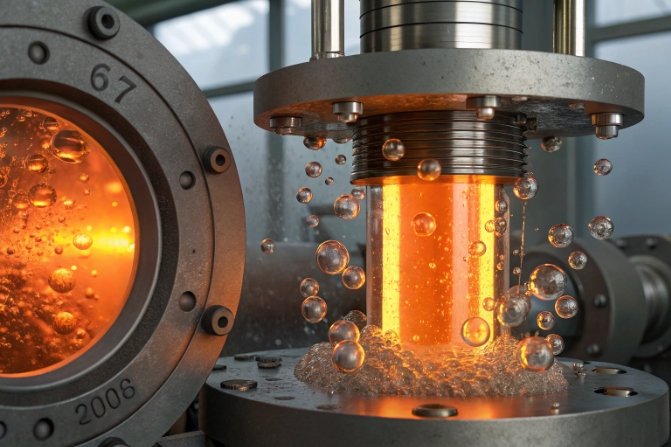
Vacuum and ultrasonic assists can remove bubbles by changing pressure or by using acoustic energy to drive bubble growth and coalescence. They are proven in research and niche applications, but broad container-glass adoption still depends on durability, throughput, and maintenance economics.
Vacuum refining: clear physics, hard engineering
Vacuum fining removes bubbles by lowering ambient pressure so dissolved gases come out and bubbles expand, so they rise faster. It can be useful when chemical fining agents cause unwanted side effects, such as property changes or emissions. (Read vacuum refining concepts 7)
The main barrier is integration:
- large melt flow rates in container glass
- sealing and refractory wear
- continuous operation without stopping production
- managing volatilization under reduced pressure
Recent designs describe continuous or alternating vacuum refining vessels, which shows the idea is still active in development. That is encouraging, but it also signals that the industry is still solving practical scaling details.
Ultrasonic / acoustic bubble removal: promising, but materials must survive
Acoustic methods can push bubbles toward coalescence zones or pressure wells, and can help bubble separation. In simple words, ultrasound can make small bubbles behave like fewer big bubbles, which are easier to remove. (See ultrasonic degassing 8)
The challenge is hardware:
- sonotrodes and ceramics must survive 1400–1600°C and corrosive melts
- coupling acoustic power into a high-viscosity melt is not trivial
- maintenance downtime must be low for container economics
Some suppliers promote forehearth ultrasonic degassing using specialized ceramic sonotrodes. That points to pilot-level and early industrial use cases, often where glass value per ton is higher or where defect cost is extreme.
What “nearing adoption” really means for bottle plants
For most bottle plants, the near-term path is not a full replacement of sulfate fining. The near-term path is:
- use physical assists in targeted zones (forehearth modules, special products)
- reduce chemical fining dosage and emissions, not remove it overnight
- pair the assist with stronger cullet QA and redox stability
| Technology | Best-fit use case today | Main benefit | Main adoption barrier |
|---|---|---|---|
| Vacuum refining module | high-quality or emission-limited melts | strong bubble removal without extra fining | cost and integration complexity |
| Ultrasonic/acoustic module | forehearth or downstream “polishing” | reduces fine seeds by coalescence | tool life at temperature |
| Better sensors + APC | all container lines | prevents drift before defects | data quality and discipline (see Industry 4.0 in glass 9) |
The most realistic expectation is that vacuum and ultrasonic methods will first scale in places where quality value is high, then move into more bottle lines as reliability and maintenance cost improve.
Conclusion
Bubble control is a chemistry-and-trajectory problem. Keep composition and redox stable, and align fining gas release with low viscosity, so seeds disappear without reboil at the mold. (See sustainable melting tech 10)
Footnotes
-
Overview of gas solubility and fining agent behavior in glass melts. ↩
-
Study on sulfate fining efficiency and SO2 release mechanisms. ↩
-
Technical article on sulfate foam formation and control in glass furnaces. ↩
-
Research on mixed alkali effects and sulfate behavior in glass structure. ↩
-
Detailed guide on controlling iron redox for consistent glass color. ↩
-
Explanation of reboil phenomena and bubble nucleation in glass melts. ↩
-
Review of advanced glass melting technologies, including vacuum refining. ↩
-
Scientific discussion on the stability and applications of nanobubbles and ultrasonic effects. ↩
-
Siemens article on digitalization and process control in the glass industry. ↩
-
Strategies for sustainable and optimized glass melting processes. ↩






