
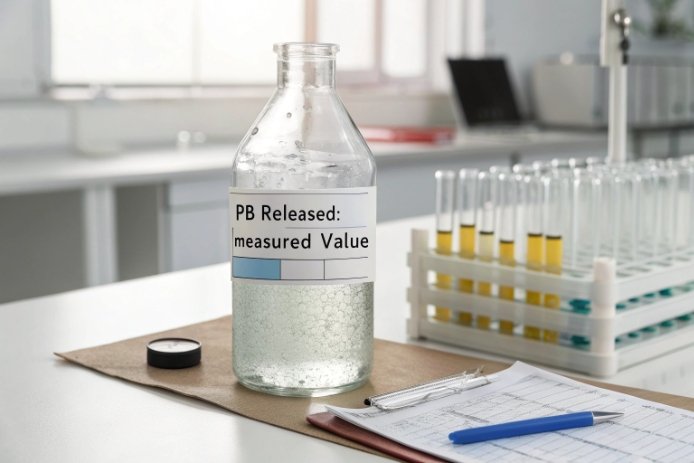
A bottle can look clean, feel premium, and still fail a heavy-metal check. One missed link in the supply chain 1 can turn into a blocked shipment.
Lead risk is assessed with a simple model: identify high-risk bottle types and scenarios, screen suppliers and cullet, test both total lead and lead release, and lock control with audits plus lot-level documentation.
A practical lead-risk scorecard that works for food, cosmetics, and pharma
Lead contamination risk is not only about the base glass recipe. Most modern container glass 2 is made without intentional lead. The real risk comes from “what else touched the glass” and “what went into the furnace.” A strong assessment needs two views at the same time: composition risk (lead in the glass body) and contact risk (lead that can release from the surface, especially if the bottle is decorated).
This is the scorecard I use when I evaluate a bottle program for export. It keeps decisions simple, even when recycled content targets are high.
1) Start with the use-case pressure
Food and beverage usually focus on food-contact compliance 3 and brand risk. Cosmetics add a strong focus on appearance, coatings, and decoration systems. Pharma adds tight change control, traceability, and performance testing expectations. The stricter the sector, the lower the tolerance for “unknowns.”
2) Separate bulk glass from decoration and accessories
Many buyers say “glass bottle,” but the shipment may include painted bottles, ceramic inks, sprayed coatings, droppers, caps, or pumps. Lead can enter through those extras even if the bulk glass is clean. So the assessment must cover the full pack, not only the bottle body.
3) Use two tests, not one
A “total lead” test helps catch contaminated cullet and raw materials. A “lead release” test helps catch decoration problems. When both are clean, the risk drops fast.
4) Lock the result with traceability
A single passing test does not control future lots. A controlled program needs lot IDs, COA rules, cullet contracts, and a supplier change process.
| Risk factor | Low risk signal | Medium risk signal | High risk signal |
|---|---|---|---|
| Bottle type | Plain flint/amber/green, no decoration | Label area coating or minor printing | Ceramic enamel, metallic inks, rim decoration |
| Cullet plan | Internal cullet + audited container-grade cullet | Mixed post-consumer cullet | Unknown cullet origin or frequent supplier switching |
| Supplier controls | Lot traceability + stable raw material sources | Partial documentation | No lot COA, no change notice, weak QC |
| Proof | Total Pb + release tests on finished bottle | One test only | No test reports, only a statement |
If this scorecard feels strict, that is the point. Lead risk is not hard to manage. It is hard to manage after a container is already on the water.
Now I will break down the four questions that buyers and brand owners ask most.
A buyer who reads these sections can build a lead-risk plan before the first purchase order.
Which glass bottle types and supply chain scenarios have the highest lead risk for food, beverage, cosmetics, and pharma use?
A basic bottle is usually low risk. The risk climbs when the supply chain adds unknown recycled glass, decoration, or fast switching between suppliers.
Highest lead risk shows up in decorated bottles, bottles made with poorly controlled post-consumer cullet, and supply chains with weak traceability. The lowest risk is plain container glass from stable furnaces with audited cullet and lot-based QC.
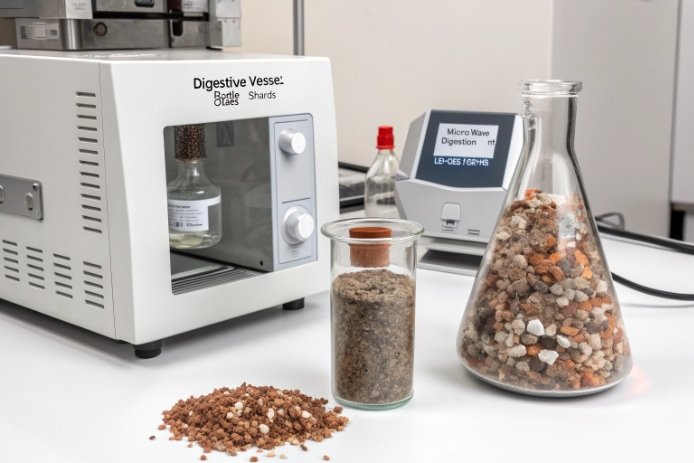
High-risk bottle types
Externally decorated bottles sit at the top of the list. Ceramic enamels 4, vitrified labels, metallic pigments, and some specialty inks can be the hidden lead source if the decoration vendor is not qualified. The risk rises again when decoration is placed near the lip, because the consumer contact area becomes part of the compliance story.
“Crystal-like” promotional bottles also deserve caution. Some designs chase a high refractive look and may be sourced from regions where lead crystal and container glass production exist in the same supply network. The glass itself may still be lead-free, but the scenario has more mixing risk.
Coated bottles can also be high risk if the coating chemistry is not controlled. Even when the coating does not contain lead, poor vendor control often correlates with other compliance gaps.
High-risk supply chain scenarios
1) Unknown cullet origin: Post-consumer cullet 5 that is not container-only can carry the wrong glass types.
2) Frequent changes: Switching sand, cullet, or decoration suppliers without a formal change notice creates surprise variation.
3) Multi-tier subcontracting: A trading company sells bottles, then a separate decorator adds printing, then a third company packs the set. Each handoff can break traceability.
4) Mixed packaging sets: Droppers, caps, and pumps can fail heavy metal limits even when the bottle passes.
Lower-risk scenarios that stay stable
Plain amber, green, or flint bottles from a known furnace, with controlled internal cullet and audited container-grade cullet, are usually the safest base. Pharma supply chains add value when they follow stronger GMP-style controls and lot documentation.
| Scenario | Lead risk level | Why it matters | What reduces the risk |
|---|---|---|---|
| Plain bottles, no decoration | Low | Few outside inputs | Stable raw materials + lot COA |
| Post-consumer cullet with audits | Medium | More variability | Tight cullet contracts + incoming screening |
| Ceramic/vitrified labels | High | Pigments and frits add risk | Qualified decoration system + release tests |
| Multi-vendor decorated sets | High | Traceability breaks | One accountable supplier + change control |
When a buyer is unsure, the safest move is to treat decoration as a separate product that needs its own compliance proof.
What are the most reliable test methods for lead in glass bottles, and what detection limits should you look for?
Testing can be fast, or it can be deep. A good plan uses both: quick screening for every lot and confirmatory lab testing on a schedule.
The most reliable approach combines XRF screening for total lead with confirmatory digestion plus ICP-MS/ICP-OES, and a lead-release test on finished bottles when decoration is present. Buyers should ask for reporting limits that are far below the legal thresholds, not “pass/fail” language.
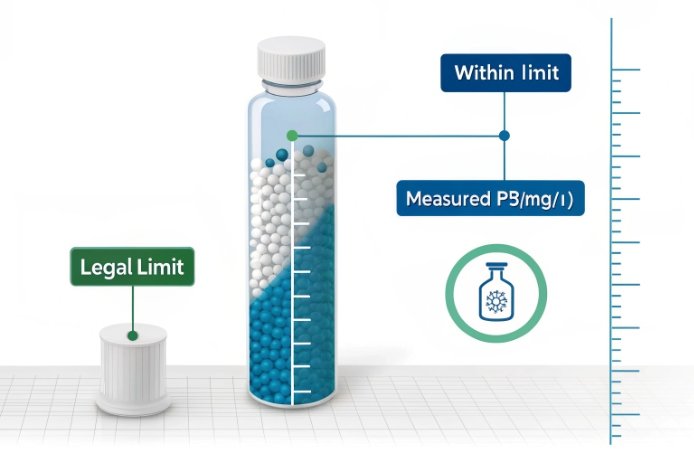
Method 1: XRF screening (fast, practical)
Handheld or bench XRF 6 is useful for incoming screening of bottles and cullet. It is fast and non-destructive. It helps catch obvious contamination and wrong materials. It also helps find “hot spots” on decorated areas.
Limits matter. XRF detection limits vary with instrument, sample thickness, and measurement time. In procurement, XRF works best as a screening gate, not the final proof for a strict market.
Method 2: Acid digestion + ICP (the confirmatory backbone)
For total lead in the glass body, digestion followed by ICP-MS 7 or ICP-OES is the common confirmatory route. Silicate glass needs aggressive digestion to release metals bound in the network. A lab that cannot digest glass well can report low numbers that are not real. This is why the method and lab capability matter as much as the instrument.
For buyers, the key request is simple: the lab should provide a numeric result and a reporting limit that fits the market. A practical target is a reporting limit at or below 1 ppm for total lead in glass, because many packaging programs use very low reporting limits to show control, even when the legal limit is higher.
Method 3: Lead release testing (especially for decoration)
For food-contact packaging and decorated bottles, release testing 8 answers the real consumer question: “Can lead migrate out?” This is the test that catches problems from enamels, inks, and coatings. A clean bulk-glass test does not protect against a dirty decoration system.
| Test purpose | Recommended method style | Best use | What to demand from the report |
|---|---|---|---|
| Screen incoming bottles or cullet | XRF | Fast gatekeeping | Instrument type, settings, numeric result |
| Confirm total Pb in glass body | Digestion + ICP-MS/ICP-OES | Compliance proof | Sample prep method, reporting limit, QA blanks |
| Confirm release from contact area | Standardized release test on finished bottle | Decorated bottles, lip-area risk | Conditions, units, pass criteria, lab accreditation |
A buyer who asks for “detection limit” is asking the right question. A buyer who accepts “ND” without a number is accepting a future argument.
How do raw materials, cullet sources, and decoration processes increase lead risk even in “lead-free” glass?
“Lead-free” often means “no lead is intentionally added.” That statement does not block trace contamination. Control does.
Raw materials can carry trace lead, cullet can import wrong-glass fragments, and decoration systems can introduce lead through pigments, frits, and inks. Even when the base glass is lead-free, these three channels can create lead findings in final bottles.
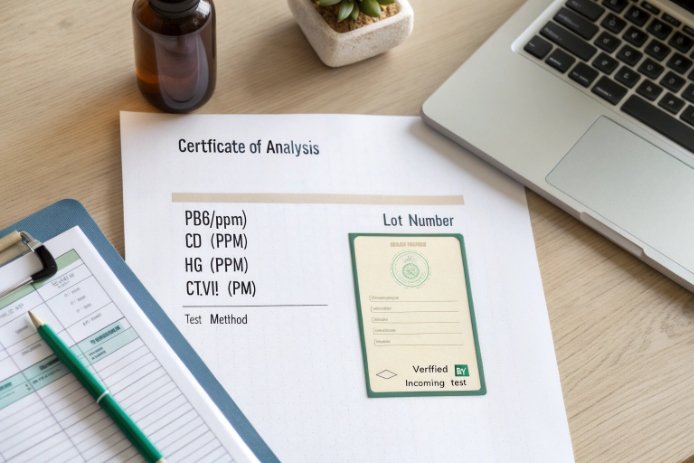
Raw materials: low probability, real impact
Sand, soda ash 9, limestone, dolomite, and feldspar usually have very low lead levels. Still, “usually” is not a guarantee. Risk rises when:
-
the supplier changes the source quarry,
-
the plant blends multiple low-cost sources,
-
incoming testing is reduced to save cost,
-
traceability is weak.
A good lead-free program sets a supplier approval list and tests high-risk transitions. The program also keeps “raw material substitution” under formal change control.
Cullet: the main variability engine
Cullet reduces melting energy and supports recycled content targets, but it also carries the highest mixing risk. The lead danger is not normal container cullet. The danger is non-container glass or specialty glass slipping into the stream. That can happen when cullet is sourced from mixed municipal recycling without strong sorting, or when a supplier does not lock the grade.
I have seen stable flint lines drift into compliance stress because a “new cullet deal” arrived with inconsistent upstream sorting. The recipe did not change. The input reality changed.
Decoration: the most common “surprise lead” channel
Decoration is where buyers get surprised most often. A bottle can pass a total-lead test on the glass body and still fail a migration or extract test because the decoration uses the wrong pigment system. The risk rises when:
-
ceramic enamels are used,
-
metallic inks are used,
-
the decoration vendor is separate from the bottle manufacturer,
-
the decoration is placed near the lip.
| Risk channel | How lead gets in | Early warning sign | Best control step |
|---|---|---|---|
| Raw materials | trace impurities or unapproved substitutions | supplier changes without notice | approved vendor list + periodic screening |
| Cullet | wrong glass mixed into cullet | sudden batch-to-batch swings | cullet contracts + incoming lot audits |
| Decoration | pigments/frits/inks or subcontracting | no decoration DoC, no release tests | qualify decoration system + test finished bottle |
If “lead-free” is treated as a marketing label, risk stays high. If it is treated as a controlled system, risk drops and stays low.
What supplier audits, certifications, and batch documentation help reduce lead risk in bulk glass bottle procurement?
A buyer cannot test every bottle forever. The goal is to buy from a system that makes contamination unlikely, and that proves control with documents.
The strongest risk reduction comes from supplier audits that verify cullet and decoration controls, certifications that prove disciplined quality systems, and batch documentation that links each shipment to raw materials, production lots, and test results.
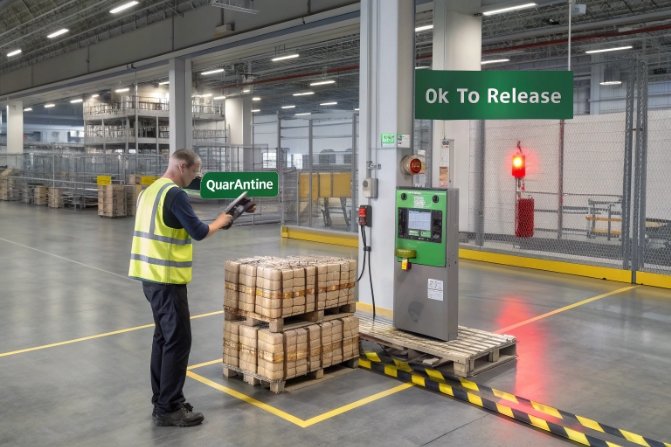
Supplier audit points that matter most
A lead-focused audit should not be a generic factory tour. It should check the exact places where lead can enter:
-
Cullet management: source contracts, sorting method, storage separation, and incoming inspection.
-
Raw material approvals: approved list, supplier qualification, and change management.
-
Decoration control: approved ink/enamel vendors, heavy metal declarations, and finished-product release testing.
-
Lab capability: internal or third-party lab scope, method references, and recordkeeping.
-
Traceability: lot coding that connects bottles to production time, furnace, and batch.
Certifications that add real value
ISO 9001 10 is a common baseline for quality management. For pharmaceutical primary packaging, stronger GMP-linked systems may apply. The certification itself does not guarantee lead-free results, but it signals the supplier can run documented controls and corrective actions.
Batch documentation buyers should request every time
1) Lot-based COA: includes heavy metals results (Pb at minimum) with reporting limits.
2) Statement of no intentional lead addition: for glass and for decoration materials.
3) Cullet declaration: type, source category (container-grade), and contamination limits.
4) Change notice commitment: written promise to notify buyers before raw materials, cullet sources, or decoration systems change.
5) Third-party test reports: scheduled verification, not only one-time testing.
| Buyer document request | What it proves | What it prevents |
|---|---|---|
| Lot COA with reporting limits | measurable control per shipment | “pass/fail” arguments after arrival |
| Cullet source declaration | recycled input is controlled | sudden contamination from new cullet |
| Decoration compliance pack | inks/enamels are qualified | migration failures from printing |
| Change control agreement | supplier will not switch quietly | hidden material substitutions |
| Audit report or audit access | system-level reliability | repeating the same risk every order |
When procurement is large-volume, the smartest cost move is to shift money from repeated emergency testing into stable supplier controls. That lowers the total risk cost across the year.
Conclusion
Lead risk is controlled by choosing low-risk scenarios, using both total and release tests, and demanding cullet discipline, decoration proof, and lot-level traceability from suppliers.
Footnotes
-
Overview of the network between a company and its suppliers to produce and distribute a specific product. ↩
-
Industry data and facts regarding the production and recycling of glass containers. ↩
-
Regulatory guidelines ensuring materials are safe to come into contact with consumable products. ↩
-
Decorative materials fused onto glass for branding, subject to heavy metal restrictions. ↩
-
Recycled glass from consumer waste used to reduce energy and raw material consumption. ↩
-
Non-destructive analytical technique (X-Ray Fluorescence) used to determine the elemental composition of materials. ↩
-
Highly sensitive laboratory method (Inductively Coupled Plasma Mass Spectrometry) used for detecting trace metals. ↩
-
Laboratory procedure to measure the migration of hazardous substances from packaging materials. ↩
-
Common name for sodium carbonate, a key raw material used to lower melting temperature. ↩
-
International standard outlining the requirements for an effective quality management system. ↩






