
When a line fights viscosity noise or a brand wants a “different feel,” the first reaction is often to push temperature. That is expensive and risky. A smarter lever is the alkali balance.
Yes, K₂O can partially replace Na₂O in bottle glass, but it changes viscosity behavior, volatility, and cost. A safe approach is small, controlled substitution with tight defect and color monitoring.
Partial K-for-Na substitution is possible, but it must respect the container furnace reality?
K₂O is not a “drop-in” for Na₂O
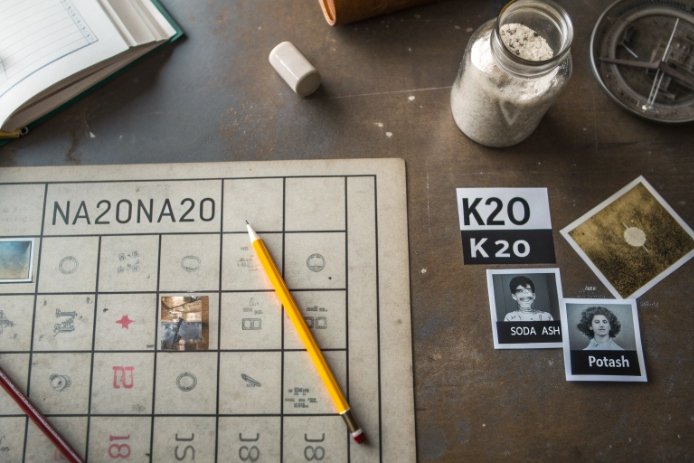
Both Na₂O and K₂O are alkali modifiers 1. Both lower melting temperature and reduce viscosity by opening the silica network 2. Still, K⁺ is larger than Na⁺, and that changes how the melt structure relaxes and how the viscosity curve 3 behaves across temperature. In practice, K₂O can shift the working range differently than Na₂O at the same mol% alkali. That is why partial substitution can help tune forming in a narrow way, but it can also tighten other controls.
Why this question comes up in real projects
K₂O substitution usually gets discussed when:
-
a plant wants a different viscosity curve shape at feeder temperature
-
a bottle needs better stability under certain forming speeds
-
a premium program wants a different optical “neutrality” feel under LEDs
-
a line wants to reduce some Na-driven durability or extraction risks (with careful balancing)
However, K₂O rarely replaces Na₂O to save money. Potash sources 4 are usually more expensive than soda ash sources. So the value must come from performance, not raw cost.
The procurement view
A supplier can offer a “K-rich” recipe, but procurement should treat it like a controlled variant:
-
define K₂O and Na₂O ranges (and Na₂O/K₂O ratio range if needed)
-
define forming KPIs (thickness spread, rejects, cord/seeds)
-
define color and transmittance targets for flint bottles
-
define change control for feldspar or potash sources
| Why consider K₂O | What it can improve | What it can hurt | Best guardrail |
|---|---|---|---|
| Tune viscosity curve | feeder stability | volatility and deposits | furnace crown/deposit monitoring |
| Adjust working range | forming speed consistency | higher cost | cost-per-ton vs yield analysis |
| Optical neutrality tweaks | LED appearance | color drift sensitivity | L*a*b* trend + spectral checks |
| Durability tuning | surface stability (system dependent) | meltability if misbalanced | durability screen + defect AQL |
Partial replacement is realistic. Large replacement is usually niche. The next sections explain the real differences between sodium and potassium oxides, then show the trade-offs and a safe trial plan.
What differences exist between potassium and sodium oxides?
Both are alkali oxides, but their ionic size and mobility lead to different melt and glass behavior.
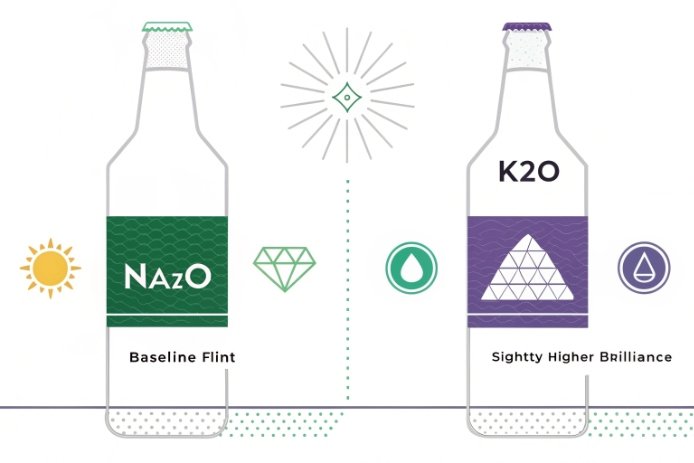
Na₂O and K₂O both act as network modifiers, but K₂O often shifts viscosity and relaxation behavior differently because K⁺ is larger and has different mobility. This can change the working range, volatility behavior, and sometimes how glass responds to moisture at the surface.
Network effect differences in plain language
-
Na₂O is the classic container flux. It lowers viscosity strongly, melts fast, and is economical.
-
K₂O also lowers viscosity, but it can change the way the melt responds across temperatures, which can shift how “forgiving” the feeder is.
In some compositions, K₂O can create a slightly different balance of non-bridging oxygen environments, which changes viscosity curve shape. This is why the same “total alkali” value can still behave differently when Na and K are swapped.
Process-side differences that matter in bottles
-
Raw material sources differ: Na₂O mainly comes from soda ash 5 and sodium feldspathic minerals. K₂O comes from potash and potassium feldspar.
-
Cost differs: potash and high-grade potassium feldspar 6 often cost more than soda ash.
-
Volatility and deposits can differ: both alkalis can contribute to volatilization at high temperatures, but the deposit chemistry and behavior can shift when K is higher.
Property-side differences that show up in packaging
-
CTE: both alkalis tend to increase CTE, but the exact effect depends on the full recipe. Substitution can shift CTE slightly and change thermal shock sensitivity 7.
-
Durability: both can reduce durability margin if alkali mobility rises too much, so the stabilizer package (CaO/MgO/Al₂O₃) must be aligned.
| Attribute | Na₂O dominant | K₂O increased | Why it matters |
|---|---|---|---|
| Cost | lower | higher | affects feasibility for mass bottles |
| Meltability | strong | strong but different curve | feeder stability tuning |
| Volatility | can be high at extremes | can shift deposit chemistry | furnace maintenance risk |
| Optical stability | stable when controlled | can be sensitive if redox unstable | flint disputes |
| Supply risk | broad | narrower | sourcing governance |
Once these differences are clear, the trade-offs become easier to evaluate. Most of the real debate is viscosity and cost.
Why K₂O trade-offs impact viscosity and cost?
K₂O is often chosen for performance tuning, not for saving money. That is because the raw sources and process impacts usually raise cost.
K₂O trade-offs matter because substitution changes the viscosity–temperature curve and can tighten the forming window, while raw materials for K₂O are often more expensive and can add volatility or deposit management costs.
Viscosity: the curve shape is the real lever
Bottle plants need a narrow viscosity band at the feeder. A small shift can change gob shape, shear timing, and thickness distribution. K₂O substitution can:
-
lower viscosity at a given temperature in some blends
-
change how sensitive viscosity is to small temperature drift
-
change the “working range” [^8] across the forming temperature band
This is why K₂O is sometimes used in niche premium glass or specialty forming programs, even when it costs more.
K₂O sources often cost more per unit alkali delivered. On top of that, the hidden costs can include:
-
more deposit management if volatility increases
-
tighter quality controls for feldspar or potash consistency
-
higher risk of drift if raw sources change
So the business case should be built on total cost of quality:
-
yield improvement
-
defect reduction
-
reduced complaints
-
higher brand value for premium look
A simple cost–benefit lens
| If K₂O improves… | The value comes from… | What to watch so the value is real |
|---|---|---|
| feeder stability | higher speed, less scrap | reject rate + thickness spread |
| optical neutrality | fewer brand complaints | ΔE and customer acceptance |
| surface performance | fewer returns/scuffs | pallet wear simulation |
| process stability | fewer correction cycles | temperature correction logs |
If these gains are not proven, K₂O becomes a cost increase with no reward.
Now the practical question: how to trial partial substitution without creating defects like cords, seeds, or color drift?
How to trial partial substitution without defects?
A partial substitution trial is safest when it is treated like a controlled SKU change, not a casual “try it next week.”
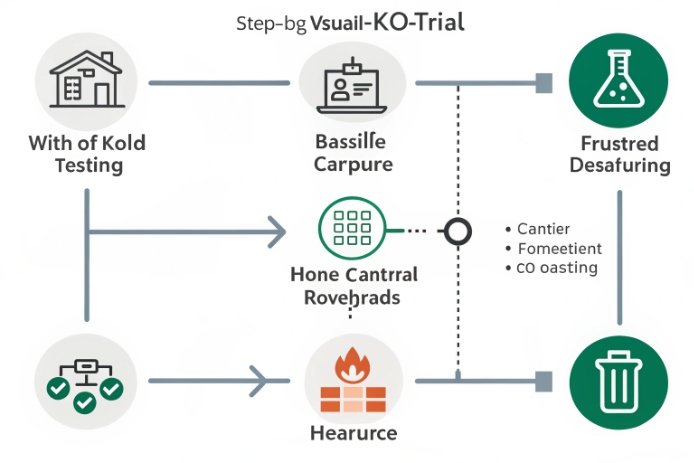
Trial partial Na-to-K substitution by changing in small steps, keeping total alkali constant, and holding CaO/MgO/Al₂O₃ stable. Validate melt stability (seeds/cords), forming stability (thickness), and optics (ΔE and transmittance) over a full stable campaign segment.
Step 1: Define the trial scope and risk level
Pick one SKU family that:
-
is not the tightest flint brand if first trial
-
has stable baseline KPIs
-
has enough run time to collect data
Step 2: Hold total alkali and stabilizers steady
A common safe strategy is:
-
keep total alkali (Na₂O + K₂O) near the same target
-
swap a small fraction of Na₂O to K₂O
-
keep CaO + MgO and Al₂O₃ stable to protect durability and viscosity stability
This avoids a “double change” that makes diagnosis impossible.
Step 3: Move in small steps
Instead of a big shift, use staged steps. Many plants start with a small K₂O addition and evaluate. If stable, step again. The right step size depends on furnace scale and risk appetite. The key is to change only one control lever at a time.
Step 4: Validate with a defect-first dashboard
A simple dashboard should include:
-
seed count trend (and foam events)
-
cord/striae inspection results
-
stone count (melting completeness)
-
thickness distribution by zone
-
ΔE and L*a*b* direction [^9] (a*, b* drift)
-
pull stability and correction frequency
| Validation KPI | Pass looks like | Fail looks like | Likely root |
|---|---|---|---|
| seeds | stable or lower | rising seeds | fining timing changed |
| cords/striae | stable | more distortion | local chemistry pockets |
| thickness spread | stable | wider spread | feeder instability |
| ΔE trend | stable within spec | drift, greener/warmer | redox or alkali balance shift |
| correction cycles | fewer or stable | more frequent | curve sensitivity increased |
Step 5: Lock change control on raw sources
K₂O trials often use potassium feldspar or potash. Their quality and PSD must be stable. A source change mid-trial ruins the data. For procurement, this means:
-
same mine or supplier batch for the trial
-
COA requirements
-
incoming PSD and moisture checks
A successful trial is not “it ran once.” It is “it ran through normal drift and stayed stable.”
Now the final question: are K-rich mixes enabling niche premium bottles? Yes, but the “why” matters.
Premium bottles are judged by look and feel. K₂O can be one of the tuning tools, but it is not the main premium driver.
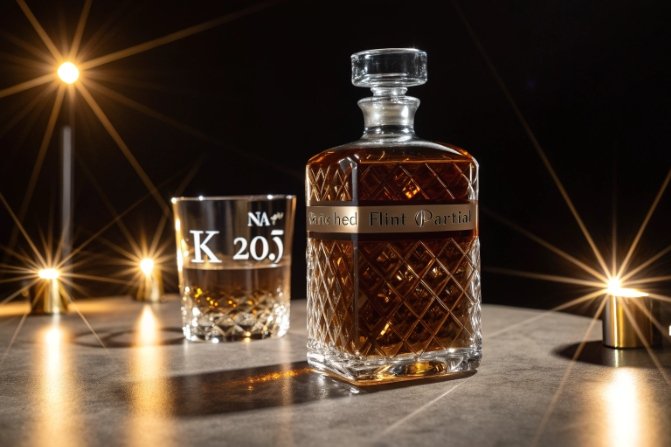
K-rich mixes can support niche premium bottles by fine-tuning working range and sometimes improving perceived clarity or neutrality under certain lighting. Still, most premium wins come from low-iron inputs, strict cullet control, and surface/geometry design, with K₂O used as a controlled minor lever.
Where K₂O makes sense
K₂O is most defensible when:
-
the bottle is high-margin and appearance-sensitive
-
the line needs a specific viscosity curve behavior that Na₂O alone cannot deliver without pushing temperature
-
the brand demands extremely stable “neutral” flint appearance under modern lighting
In these programs, the cost premium can be justified if it reduces disputes and raises acceptance rates.
Even with K₂O, premium flint depends on:
-
low-iron sand and low-iron cullet
-
stable furnace redox [^10]
-
stable decolorizer packages (Se/Co or alternatives)
-
low seeds and low cords
-
good surface condition and optional coatings
K₂O is not a replacement for those fundamentals. It is a tuning knob after fundamentals are locked.
A realistic decision guide
| Decision question | If yes, K₂O trial is more justified | If no, keep Na₂O dominant |
|---|---|---|
| Is the SKU premium with high appearance value? | yes | no |
| Is feeder stability limiting speed/yield? | yes | no |
| Can the plant hold redox stable? | yes | no |
| Can procurement lock K raw supply consistency? | yes | no |
| Will the customer pay for the improvement? | yes | no |
K₂O-rich mixes can be a smart niche tool. For mass bottle glass, Na₂O remains the economic anchor, and K₂O is best used as a controlled minor component.
Conclusion
K₂O can partially replace Na₂O, but it changes viscosity behavior and raises cost. Small, well-instrumented trials with tight defect and color KPIs are the safest path, and K-rich mixes fit best in premium niche bottles.
Footnotes
-
Chemical additives like sodium and potassium that alter glass structure to lower melting temperatures and modify physical properties. [↩] ↩
-
The structural backbone of glass, consisting of interconnected silicon and oxygen atoms, which modifiers disrupt to enable melting. [↩] ↩
-
A graphical representation of how glass fluidity changes with temperature, critical for controlling forming stability and thickness. [↩] ↩
-
Potassium-rich raw materials used to improve glass brilliance and adjust viscosity, typically more costly than soda. [↩] ↩
-
Sodium carbonate, a key raw material that acts as the primary flux in glass manufacturing to lower melting points. [↩] ↩
-
An abundant mineral group used as a source of alumina and alkali oxides to improve glass durability and viscosity. [↩] ↩
-
The degree to which gla ↩






