
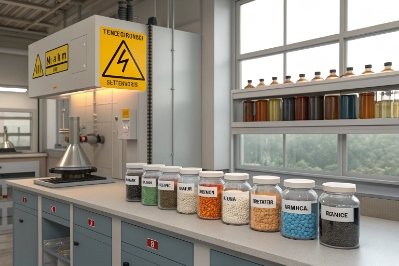
A “clear” bottle that turns slightly green can ruin a brand shelf look overnight. That small tint shift often comes from iron, cullet drift, and weak decolorizer control.
The most common bottle-glass decolorizers are selenium + cobalt packages, manganese-based oxidizing decolorizers, and cerium oxide systems. Rare-earth options exist for premium neutrality, but cost and process control decide if they fit.
The short list of decolorizers used in modern bottle glass?
1) Selenium + cobalt: the workhorse “optical compensation” package
For flint container glass, selenium 1 and cobalt are widely used because they neutralize the yellow/green tint from iron by adding small amounts of red (selenium) and blue (cobalt). When tuned well, the net look becomes a neutral gray that appears colorless. This is why many plants keep Se/Co as the default solution when they cannot push iron lower enough with raw materials alone.
2) Manganese-based decolorization: oxidation plus a magenta counter-tint
manganese dioxide 2 is a classic decolorizer. It pushes iron toward a less green-looking state and can add a faint purple/magenta tone that cancels green. The risk is long-term solarization. Some Mn-decolorized glass can turn lavender or amethyst after sunlight exposure. That is a real branding risk for bottles stored outdoors or displayed near windows.
3) Cerium oxide: “chemical decolorization” by shifting iron state
cerium oxide 3 is used as an oxidizing decolorizer. It converts more Fe²⁺ into Fe³⁺, which can reduce the strong blue-green influence from Fe²⁺. It is also discussed in the market as a way to reduce reliance on Se/Co in some recipes, especially when plants want more stable control.
Rare-earth oxides are not mainstream in every container plant, but they appear in premium and specialty projects. They can support better neutrality under different lighting by selective absorption. In practice, they are usually used in small amounts and only when a brand will pay for the tighter look.
| Option | What it does best | Typical pain point | Best-fit bottle programs |
|---|---|---|---|
| Selenium + cobalt | strong neutralization of iron tint | volatility and tuning sensitivity | mainstream flint with tight branding |
| Manganese (MnO₂) | oxidation + green cancellation | solarization risk | controlled indoor storage programs |
| Cerium oxide | shifts Fe²⁺ → Fe³⁺ | cost and melt control | flint stability projects with strong QC |
| Rare-earth mixes | premium neutrality under LEDs/daylight | price and supply | luxury spirits, cosmetics, showcase bottles |
A decolorizer choice only makes sense when it is tied to a control plan. The next sections break down how decolorization works, why brands care, and how to specify Mn and Se without creating new risks.
What is decolorization and how does it work?
Clear glass is rarely “pure clear” in production. Iron rides in with sand and cullet, and it shows up as green or yellow before anyone notices in the lab.
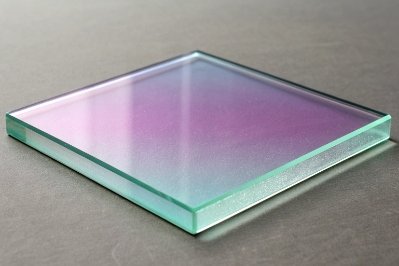
Decolorization is the process of reducing visible tint in flint glass by either changing iron chemistry (oxidation control) or adding complementary colorants (optical compensation) so the final appearance looks neutral.
Two routes: chemical shift vs optical compensation
Chemical decolorization tries to change the iron state so the strongest green influence drops. Oxidizers like MnO₂ or CeO₂ can push the melt toward more Fe³⁺ and less Fe²⁺. This can reduce the blue-green look that Fe²⁺ creates.
Optical compensation accepts that iron tint exists and “cancels” it by adding tiny amounts of other colors. Selenium adds a pink/red tone. Cobalt adds a blue tone. When tuned together, the eye sees a neutral gray that reads as colorless. This is why Se/Co is often called “decolorization” in container glass, even though it is really careful color balancing.
Why it is sensitive to furnace redox
The same total iron can look different if the furnace oxidation state 4 changes. The Se/Co package also responds to redox. This is why two campaigns can match on paper and still drift on the pallet. When redox moves, the absorption balance moves. The bottle looks greener, grayer, or warmer, even if total Fe₂O₃ stays stable.
What to measure so decolorization is not subjective
A practical program uses both appearance and physics:
- Lab* (or ΔE) under a defined illuminant
- visible transmission and haze limits for “clean clarity”
- optional spectral checkpoints for UV/blue bands when shelf life matters
| Approach | Main mechanism | What it changes in the bottle | What QC should trend |
|---|---|---|---|
| Oxidation (MnO₂, CeO₂) | shifts Fe²⁺/Fe³⁺ | greener tint drops, tone shifts | redox indicators + Lab* |
| Se/Co compensation | adds red + blue to neutralize | neutral gray “reads” colorless | ΔE + gray index + transmission |
| Raw control (low-iron sand, clean cullet) | lowers iron input | less need for decolorizer | Fe₂O₃ trend + cullet audits |
The most reliable “decolorization” is still lower iron input. But in mass bottle production, some compensation is often needed to keep flint stable across seasons and cullet shifts.
Why decolorizers stabilize flint color for branding?
When a flint bottle looks greener than last month, buyers do not care about furnace theory. They see brand inconsistency, and they stop shipments.
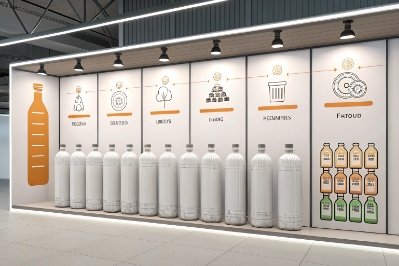
Decolorizers stabilize flint color by reducing lot-to-lot tint drift from iron and cullet changes. This protects brand identity, keeps labels looking correct under store lighting, and reduces buyer–supplier disputes during incoming inspection.
Branding is measured in repeatability, not “best possible clarity”
Many brands approve a master sample and then expect repeatability for years. That is hard because:
- cullet chemistry shifts with recycling streams
- sand and dolomite sources change slowly over time
- furnace conditions drift with pull rate and maintenance cycles
Decolorizers give a buffer. They let the plant hold a stable visual target even when iron moves slightly. This is especially important for clear bottles with thick bases, because thickness makes any tint more visible.
Why disputes happen without a decolorizer control plan
In sourcing, the biggest fights happen when the spec is vague. “Clear glass” is not a spec. A workable flint agreement uses a measurable color window:
- ΔE limit from an approved standard
- a and b directional limits (to control green/yellow drift)
- haze limit (to separate “tint” from “dirty clarity”)
- a change-control rule for cullet and raw material swaps
When these exist, incoming QC becomes faster and calmer. Without them, every rejection becomes a debate about lighting and perception.
A simple spec pattern that works in procurement
Most programs that run smoothly use a “3-layer” approach:
1) Appearance target: ΔE + a + b window
2) Input control: Fe₂O₃ max + cullet color grade rules
3) Process control: decolorizer package window + redox stability statement
| Brand situation | What usually matters most | Why decolorizers help | What to lock in the contract |
|---|---|---|---|
| Premium cosmetics | true “water white” look | cancels small iron drift | tight ΔE + low haze + cullet rules |
| Spirits with heavy bases | base looks too green | offsets thickness-driven tint | b* limit + base-zone checks |
| Food with shelf-life claims | light transmission matters | keeps color stable while managing transmission | ΔE + spectral checkpoints |
| Multi-supplier sourcing | line-to-line variation | creates a common tuning tool | common test method + shared standards |
Decolorizers are not only about “making it clear.” They are about making it consistently clear, at scale, with recycling in the mix.
How to specify MnO₂ or Se levels safely?
A decolorizer can solve a tint problem and create a new problem. Overdose can make glass look gray. Wrong chemistry can create purple solarization. Poor handling can create worker exposure risks.
*Safe specification means setting narrow addition windows tied to iron level, redox, and target Lab. For Se/Co, keep dosing in ppm-level ranges and control volatility. For MnO₂, avoid solarization risk by limiting Mn and validating sunlight/UV exposure behavior for the SKU.**

1) Treat “safe” as three things
Safe for brand: no gray cast, no purple shift over time.
Safe for process: no unstable redox, no deposits, no high scrap.
Safe for people: dust and fume controls, clear SDS, and exposure monitoring.
2) Use windows, not single numbers
Se and Co are typically used in very small ranges. Industry references commonly describe selenium on the order of 0.001–0.005% (about 10–50 ppm) and cobalt oxide around 0.0001–0.0005% (about 1–5 ppm) for flint decolorization packages. Selenium retention can be low because of volatility, so plants must tune and verify actual glass chemistry, not only batch addition.
Manganese is trickier because it can “work” and still cause later solarization 5 to purple under sunlight. If the bottle will see outdoor exposure, Mn-based decolorization needs extra caution and a validation step.
3) Write a buyer-proof control plan
A strong spec includes:
- max Fe₂O₃ in finished glass
- decolorizer window (MnO as reported, Se in ppm, CoO in ppm)
- ΔE and b* limits
- a defined lighting condition for color measurement
- a “no-source-change” rule for sand and cullet without notice
| Item | What to specify | Why it matters | Typical verification method |
|---|---|---|---|
| Selenium (Se) | ppm window + retention check | avoids gray cast and volatility drift | glass chemistry + Lab* trend |
| cobalt oxide 6 | ppm window tied to Se | keeps neutral balance under LEDs | Lab* + visual master match |
| Manganese (as MnO) | low, controlled range + sunlight risk test | prevents purple solarization complaints | accelerated UV/solar exposure test |
| Worker safety | exposure controls for Se and Mn dust/fume | protects compliance and continuity | SDS + air monitoring rules |
4) Do not ignore workplace limits
For plants handling selenium compounds and manganese dust/fume, it is smart to reference recognized workplace limits in the safety plan. This keeps the decolorizer choice from turning into a hidden compliance cost when production scales.
Safe specification is not “use less.” Safe specification is “use the right range, prove it in glass, and lock the inputs that drive drift.”
Are rare-earth decolorizers improving neutrality?
Brands now judge flint under LEDs, daylight, and phone cameras. A bottle that looks neutral in one light can look green in another. This is where rare-earth ideas become interesting.
Rare-earth decolorizers can improve perceived neutrality by selective absorption and stable oxidation behavior, especially when combined with cerium-based oxidation control. They are promising for premium flint, but they must justify cost, supply risk, and process complexity.
Why “neutral” is harder today
Retail lighting changed. LEDs can exaggerate tint differences. Also, brands compare bottles from multiple suppliers side by side. A Se/Co gray balance that looked perfect under older lighting can appear slightly cool or slightly warm under modern LEDs.
rare-earth oxides 7 can help because they offer more selective absorption bands. Cerium also acts as a strong oxidizer and can reduce the Fe²⁺ fraction that pushes green. Some rare-earth concentrates can combine oxidation (cerium) with optical compensation (didymium-like absorption from neodymium/praseodymium), which can produce a different neutrality profile than Se/Co.
What changes in practice when rare earths are used
- The glass can look more “daylight neutral” for certain brand targets.
- The tuning may be less sensitive to tiny Se losses, but it shifts cost.
- Supply qualification becomes more important, because rare-earth purity and consistency matter.
- The plant must confirm that transmission, haze, and any fluorescence effects stay acceptable for the product.
When rare-earth routes make sense
Rare-earth decolorizers usually fit when:
- the bottle is premium and appearance drives price
- the customer rejects small green shifts
- the supply chain can support stricter raw control
- Se/Co volatility or regulatory pressure is a concern for the plant
| Route | Main advantage | Main risk | Where it fits best |
|---|---|---|---|
| Se/Co only | lowest cost, proven | gray cast and volatility tuning | mainstream flint |
| CeO₂-assisted decolorization | reduces Fe²⁺ green push | cost and redox control | stable flint programs |
| Rare-earth assisted neutrality | better neutrality under mixed lighting | cost, sourcing, qualification | luxury spirits and cosmetics |
| Low-iron system + minimal decolorizer | highest transmission and clarity | higher raw cost, supply limits | “true flint” signature SKUs |
Rare-earth solutions are not replacing Se/Co everywhere. Still, they are a serious tool for high-appearance bottles, especially when the buyer values neutrality more than the last cent of batch cost.
Conclusion
Modern bottle decolorization relies on Se/Co, Mn-based oxidation, and cerium systems. The best results come from tight windows, clean cullet, and stable redox, with rare-earth tools reserved for premium neutrality.
Footnotes
-
Selenium is a chemical element used as a decolorizer to neutralize green tints caused by iron impurities in glass. ↩ ↩
-
Manganese dioxide acts as both an oxidizer and a physical decolorizer to counteract iron-induced green hues in commercial glass. ↩ ↩
-
Cerium oxide is an effective oxidizing agent that shifts the oxidation state of iron to reduce blue-green coloration. ↩ ↩
-
Understanding the oxidation state of iron ions is critical for managing the color and clarity of flint glass containers. ↩ ↩
-
Solarization is a physical phenomenon where glass changes color after prolonged exposure to ultraviolet radiation or high-energy light. ↩ ↩
-
Cobalt oxide is used in minute quantities to impart a blue tint that helps mask yellowish iron impurities. ↩ ↩
-
Rare-earth oxides provide high-precision selective absorption for premium glass neutrality under various industrial and retail lighting conditions. ↩ ↩






