

Color drift can kill approvals fast. One small tint shift can turn a “repeat order” into a return, even when dimensions and strength look perfect.
Iron is the main hidden driver of bottle tint because it absorbs visible light in different ways depending on its oxidation state. Control total iron and the Fe²⁺/Fe³⁺ ratio to keep color stable in bulk production.
A practical framework for iron-driven color control in bulk bottle orders
Total iron is not the whole story
Most buyers start with “Fe₂O₃%” on a raw sand COA. That is useful, but it does not explain why two melts with similar total iron can look different. The missing piece is iron’s oxidation state 1. Fe²⁺ and Fe³⁺ absorb different parts of the spectrum, so the same total iron can shift from yellowish to greenish depending on redox.
In bottle production, the glass color that people see is shaped by three layers at the same time:
-
Chemistry layer: total iron, Fe²⁺/Fe³⁺ balance, and other colorants (Cr, Mn, Co, S, Se).
-
Process layer: furnace atmosphere, batch redox, fining chemistry, and cullet mix.
-
Geometry layer: wall thickness 2 and where the light path is longest (base, heel, shoulder).
This is why iron control must be written as a system spec, not a single number. A clear bottle program can pass in thin samples and fail in the heavy base. A customer often blames “iron too high,” but the real cause may be “Fe²⁺ too high today” or “cullet mix drifted.”
Why iron-only specs create buyer–supplier disputes
A single Fe₂O₃ max can still allow a lot of visual change. It also does not address daily redox swings. If the supplier uses the same sand but changes oxygen control or the cullet stream, the Fe²⁺/Fe³⁺ ratio shifts and color changes.
A better approach is to pair chemistry limits with colorimetric limits 3 and an agreed test setup. When both sides measure color the same way, arguments drop fast.
The spec stack that works in real bulk orders
| Control layer | What to specify | Why it matters | Common pitfall |
|---|---|---|---|
| Raw materials | Sand Fe₂O₃, Cr, Ti, Mn; cullet type | Prevents upstream drift | Only checking sand, ignoring cullet |
| Melt chemistry | Total Fe as Fe₂O₃ + a redox target | Connects chemistry to tint | Using total iron only |
| Optical spec | L*a*b* windows + ΔE limit + thickness | Matches what customers see | Measuring on random thickness |
| Process control | Redox levers and “no-change” rules | Keeps lots consistent | Adjusting furnace O₂ without notice |
| Lot release | AQL sampling + retain samples | Reduces claim risk | No retains, no traceability |
This framework makes the next questions easier because each one sits inside a controlled system, not inside guesswork.
A clear spec starts with the basics: why Fe²⁺ and Fe³⁺ look so different.
Bottles do not “change color by accident.” The melt chemistry and redox choice decide it.
Why does Fe²⁺ create green/blue tones while Fe³⁺ creates yellow/brown tones in glass?
Tint issues feel subjective, but the physics is simple. Iron absorbs light in specific wavelength zones, and the eye reads what remains.
Fe²⁺ absorbs more in the red and near-infrared side, so transmitted light shifts toward green/blue. Fe³⁺ absorbs more in the blue/UV side, so transmitted light shifts toward yellow/brown.

The absorption mechanism in plain words
Glass color comes from selective absorption 4. If the glass absorbs more blue light, the transmitted light looks more yellow. If the glass absorbs more red light, the transmitted light looks more blue/green. Iron can do both, depending on oxidation state.
Fe³⁺ tends to create a yellow to brown cast because its absorption is stronger toward the shorter wavelengths. Fe²⁺ pushes green to blue-green because it suppresses the longer wavelengths more strongly. In flint glass, buyers often describe the difference as “warm clear” vs “cool clear.”
Why thickness changes what the customer sees
Even when chemistry stays constant, color can look different across the bottle because thickness changes the optical path. The heel and the base often show tint first because light travels through more glass.
This is why a spec should not rely on a thin flat coupon unless it matches the customer’s viewing points. If the customer judges the base, the measurement must include the base path length or a thickness-matched sample.
How other colorants amplify iron’s effect
Iron rarely works alone. Small levels of chromium can push green fast. Sulfur systems can shift amber development. Manganese can counter iron in some systems, but it also brings its own stability risks. In real production, iron sets the baseline and the other colorants steer the final look.
| Iron state | Main absorption tendency | Visual tone | Where it shows first |
|---|---|---|---|
| Fe²⁺ | Red-side suppression | Green / blue-green | Thick base, heel |
| Fe³⁺ | Blue-side suppression | Yellow / brownish | Panels, neck ring |
| Mixed Fe²⁺/Fe³⁺ | Both effects mix | “Gray” or “muddy” | Whole bottle, especially thick zones |
Once the team understands the mechanism, consistency becomes a redox control task. That leads to the furnace and the batch.
How do melting atmosphere and redox control shift the Fe²⁺/Fe³⁺ ratio and change bottle color consistency?
Color drift often appears right after a process change: new cullet, new fuel balance, a different fining push, or a furnace O₂ adjustment.
Redox control shifts the iron balance: more reducing conditions increase Fe²⁺ (greener), and more oxidizing conditions increase Fe³⁺ (yellower). Stable atmosphere and batch redox are the real tools for color repeatability.

Where redox is set in a container glass plant
Redox is not one knob. It is a chain:
-
Batch redox: carbon sources, sulfates, nitrates, and organics from cullet contamination.
-
Furnace atmosphere: oxygen availability, burner tuning, and local hot/cold zones.
-
Fining and refining chemistry: sulfate systems, bubbles, and how gases evolve.
A stable furnace can still produce drift if the cullet stream adds organics or if batch moisture changes. In one project, a “cheap” change in cullet supplier moved the clear glass into a cooler green tone within days. The total iron barely moved. The Fe²⁺ fraction did.
Redox levers that move color
Reducing conditions push more Fe²⁺. Oxidizing conditions push more Fe³⁺. Still, each lever has side effects, so the plant must use the cleanest lever first and keep the rest stable.
How to keep Fe²⁺/Fe³⁺ stable across shifts
The best practical method is to lock three things:
-
Cullet quality and family: avoid mixed glass families and organics.
-
A stable oxygen policy: avoid “small” burner changes that swing redox.
-
A standard correction plan: when color drifts, use the same correction path every time.
| Redox lever | Typical shift in Fe²⁺/Fe³⁺ | Side effects | Best QC signal |
|---|---|---|---|
| More oxidizing atmosphere | Fe³⁺ increases | Can change fining behavior | L* and b* trend |
| More reducing atmosphere | Fe²⁺ increases | Can increase green tint | a* shift toward green |
| Cullet with organics | Fe²⁺ rises (often) | Seeds, bubbles, tint drift | Defects + color drift together |
| Sulfate/fining balance | Can swing redox locally | Foam, refining changes | UV-Vis curve stability |
| Temperature profile drift | Indirect | Viscosity and mixing changes | Thickness-matched color checks |
Once redox is stable, setting iron limits becomes easier. Limits still depend on target color and bottle thickness, so the next step is choosing practical ranges for flint, light green, and amber.
What iron-level limits are needed to achieve flint (high-clear), light green, or amber glass bottles?
Many buyers ask for one “iron max” and expect it to solve everything. That only works when thickness, decolorizers, and redox stay stable.
Iron limits depend on the target color, thickness, and redox. Flint needs very low total iron and tight redox stability; light green allows higher iron; amber uses iron with sulfur/redox chemistry, so color control must include more than total Fe₂O₃.
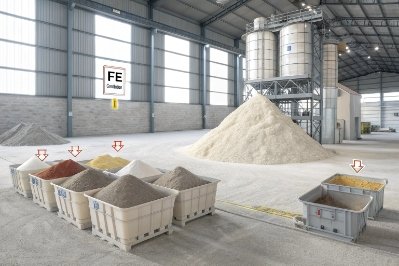
Flint: iron must be low, and redox must be calm
For high-clear flint, the practical goal is “no visible green or yellow.” That requires low total iron and stable Fe²⁺/Fe³⁺. Many plants treat flint as a tight-control product because small shifts show fast. If the bottle has a heavy base, the limit needs to be tighter than a thin-wall jar.
Light green: iron becomes a controlled color contributor
For light green, iron is often part of the look. The job becomes repeatability, not “remove tint.” This is where cullet stability helps a lot because light green programs often use more recycled content.
Amber: color is a chemistry system, not only iron
Amber is not simply “more iron.” Amber is usually built by a redox and sulfur system that generates strong absorption in the short wavelengths. Iron still matters, but color consistency depends on redox and sulfur balance as much as on total Fe. A high-iron amber can still look off if the redox swings.
Below are typical working ranges used as starting points in negotiations. They are not universal. They should be finalized using thickness-matched color measurements and master standards.
| Glass color target | Typical total iron (as Fe₂O₃) starting range | Notes for buyers | Safer acceptance method |
|---|---|---|---|
| Flint / high-clear | \~0.015%–0.05% (150–500 ppm) | Heavy bases often need the low end | L*a*b* window + ΔE on thickness-matched sample |
| Light green | \~0.08%–0.25% (800–2500 ppm) | Control Cr tightly to avoid “too green” | L*a*b* window + UV-Vis curve check |
| Amber | \~0.15%–0.6% (1500–6000 ppm) | Sulfur/redox often dominates final tone | L*a*b* + transmittance 5 at key wavelengths |
The best way to avoid argument is to set iron limits as a guardrail, then use optical specs as the real acceptance rule. That leads to the last question: what tests and color specs control iron-related variation in bulk orders?
Bulk orders fail when testing is inconsistent. One lab measures a thin coupon. Another lab measures a thick base. The numbers disagree, and both sides think they are right.
Use a combined control plan: chemistry testing for total iron, optical testing for L*a*b* and ΔE, and a fixed measurement geometry that matches the bottle thickness customers judge. Add a sampling plan and retained references for every lot.
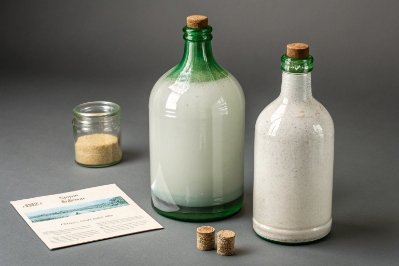
Chemistry tests that keep the melt honest
For routine control, total iron is usually tracked as Fe₂O₃ by methods like XRF on glass samples. This is fast and good for trend control. Still, total iron does not guarantee color. It must be paired with an optical check.
If a project is very strict, the plant can also track redox-sensitive indicators or run specialized checks for Fe²⁺ fraction. Many teams do not need daily Fe²⁺ lab work if optical curves are stable, but it helps during root-cause work.
Optical tests that match what customers see
Color must be measured in a consistent way:
-
define illuminant 6 (often D65) and observer angle
-
define measurement thickness and sample position
-
define pass windows for L*, a*, b* and ΔE (ΔE00 is often more realistic than ΔE*ab)
A tight flint program often needs a lower ΔE than an amber program. Amber hides small shifts better, but the customer can still see “too red” or “too brown” if sulfur/redox drifts.
Sampling and documentation that prevent claims
Color control works when every lot has:
-
a defined sample count
-
retained reference bottles
-
a master standard that both sides agree on
-
clear re-test rules
| Control item | What it measures | Frequency in bulk orders | Example requirement style |
|---|---|---|---|
| XRF (total Fe as Fe₂O₃) | Total iron trend | Each melt/shift or each lot | “Fe₂O₃ within agreed range” |
| Colorimeter (L*a*b*) | Visual color in numbers | Each lot + thickness matched | “L*, a*, b* within window” |
| ΔE vs master | Lot-to-lot difference | Each lot | “ΔE00 ≤ 1.0 (premium flint)” |
| UV-Vis scan (optional) | spectral behavior 7 | New setup, then periodic | “Absorption curve matches master” |
| Retain samples | Traceability | Every lot | “Keep 12 bottles/lot for 12 months” |
A simple buyer-friendly approach is to set:
-
a chemistry guardrail (Fe₂O₃ range)
-
a color acceptance rule (L*a*b* window + ΔE limit)
-
a method lock (same thickness and same measurement setup)
This combination is what makes iron-related color control scalable and calm.
Conclusion
Iron drives bottle color through Fe²⁺/Fe³⁺ absorption and furnace redox. Set iron as a guardrail, but control color with thickness-matched L*a*b* and ΔE plus stable cullet and oxygen rules.
Footnotes
-
Understanding the oxidation state is vital for controlling the final color of glass containers. ↩ ↩
-
Measuring wall thickness ensures uniform color distribution and structural strength across different bottle zones. ↩ ↩
-
Setting colorimetric limits helps manufacturers maintain consistency and prevent visible tint drift between batches. ↩ ↩
-
Selective absorption of light by metal ions determines the specific tint and clarity of commercial glass. ↩ ↩
-
Transmittance measurements quantify how much light passes through the glass, indicating clarity and light protection levels. ↩ ↩
-
A standard illuminant provides consistent lighting conditions to accurately measure and compare glass color values. ↩ ↩
-
Analyzing spectral behavior across wavelengths allows for precise adjustments of coloring and decoloring agents. ↩ ↩






