
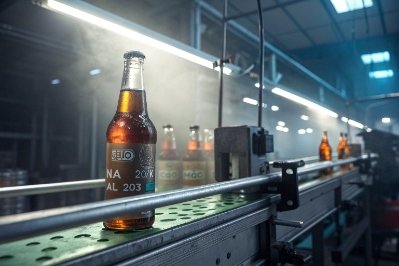
Chemical resistance problems rarely start loud. They start small, then turn into haze, taste shifts, and wash-line failures that cost orders and trust.
Glass composition controls acid and alkali resistance by changing network strength and ion mobility. More SiO₂ and Al₂O₃ usually improves durability, while excess Na₂O/K₂O lowers it unless CaO and MgO are high and stable.
The composition levers that decide chemical durability in real bottles
Network strength vs ion mobility is the core trade
A glass bottle is a silica-based network 1. Some oxides build the network, and some oxides “open” it. Acid and alkali resistance depend on how tight the network stays and how easily ions can move out of it.
-
SiO₂ forms the backbone. Higher SiO₂ usually improves both acid and alkali resistance.
-
Al₂O₃ strengthens the network when charge-balanced. It often boosts hydrolytic resistance and helps lightweighting without losing durability.
-
Na₂O and K₂O (alkalis) make melting easier and forming faster, but they also add mobile ions. Too much alkali usually lowers chemical durability and increases weathering risk.
-
CaO and MgO stabilize the Na₂O–SiO₂ system. They reduce leaching in neutral and mildly acidic conditions and can improve long-term performance in alkaline wash exposure.
A simple mental model helps: alkalis help production today, stabilizers protect performance tomorrow. The best bottle recipes keep both sides balanced.
Why “ratio” thinking prevents surprises
A single oxide number can be misleading. The Na₂O:CaO (and MgO) balance is often a better early warning signal than Na₂O alone. If modifiers rise but stabilizers do not rise with them, the surface becomes more reactive in both acids and bases.
Why impurities and cullet chemistry can break a good design
Even a strong design can drift in production:
-
Variable cullet streams can dilute stabilizers or raise alkalis. That reduces durability without changing the batch sheet much.
-
Iron and poorly controlled colorant additions can create more reactive zones that etch faster in acidic media.
-
Amber color helps with light protection, but colorants alone do not protect against acid or alkali attack. Stabilizers still matter.
| Composition choice | What it improves | What it can hurt | What to control daily |
|---|---|---|---|
| Higher SiO₂ | Broad chemical resistance | Higher melting load | Furnace stability + fining trend |
| Higher Al₂O₃ | Hydrolytic resistance + strength | Higher viscosity | Al₂O₃ window + melt quality |
| Adequate CaO + MgO | Lower leaching + wash durability | Devitrification risk if pushed | Stones/haze + chemistry SPC |
| Excess Na₂O/K₂O | Faster melting and forming | Lower durability | Na₂O max + durability checks |
| Consistent cullet chemistry | Stable optics + durability | Supply constraints | Cullet sorting + XRF by shift |
Strong chemical resistance is not one ingredient. It is a balanced system: network formers, modifiers, stabilizers, and stable inputs.
If this sounds theoretical, the next sections make it practical: what attack looks like, why it matters to buyers, how to tune oxides to meet hydrolytic classes, and where nano solutions really help.
What mechanisms drive chemical attack on glass?
Most disputes happen because people say “acid attack” or “alkali attack” as if they are the same. They are not. The mechanism decides the correct composition move.
Glass is attacked by two main pathways: ion exchange and leaching (common in water and mild acids), and network dissolution (stronger in alkaline solutions). Both start at the surface and get worse when alkalis are high and stabilizers are low.

Ion exchange and selective leaching
In water or mildly acidic products, the first step is often ion exchange 2. Hydrogen species from the liquid swap with alkali ions (Na⁺/K⁺) in the glass surface. This creates a depleted layer. It can raise surface roughness over time and can release alkali into the product.
Composition links:
-
Higher Na₂O/K₂O increases the amount of exchangeable ions.
-
Higher Al₂O₃ and enough CaO/MgO reduce ion mobility and slow the exchange process.
Network dissolution in alkaline media
In alkaline solutions (like strong detergents or caustic cleaning), the attack can shift toward network dissolution 3. The surface can dissolve and roughen. This often produces haze and a “frosted” look over repeated cycles.
Composition links:
-
Higher Al₂O₃ often improves alkali resistance because it increases network connectivity.
-
Higher MgO can support long-term weathering resistance in alkaline exposure, especially in dolomitic recipes.
-
Too much Na₂O/K₂O can worsen dissolution by making the network more open.
Defects and local chemistry make attack faster
Chemical attack accelerates at weak points:
-
stones and unmelted particles
-
cords and composition streaks
-
devitrified regions
-
high-impurity pockets from unstable raw inputs
That is why “chemical resistance” is not only a recipe job. It is also a melting and raw control job.
| Attack mechanism | Typical environment | Early symptom | Composition direction that often helps |
|---|---|---|---|
| Ion exchange / leaching | Water, mild acids, neutral fills | Alkali pickup, slight dulling | Lower Na₂O, add Al₂O₃, keep CaO/MgO stable |
| Network dissolution | Alkaline detergents, caustic wash | Surface roughness, haze | Increase Al₂O₃ and MgO, avoid high alkali |
| Local fast-etch zones | Any aggressive fill | Patchy etch, random haze | Improve melt quality, reduce impurities, control cullet |
If the mechanism is identified early, the fix becomes clear and fast. If it is not, teams chase the wrong oxide and waste weeks.
Why resistance matters for food, pharma, and cleaning lines?
Chemical durability is easy to ignore when the bottle looks clean. Then the product sits, gets shipped, gets washed, or gets tested, and the real cost shows up.
Resistance matters because chemical attack can change product stability, taste, and appearance. It also affects line reliability, especially in alkaline washing and hot processes where surface roughening and breakage risk increase.

Food and beverage: taste and clarity are the business risks
Most food and beverage liquids are mild in chemistry, but exposure time is long. Even small leaching can matter for taste and shelf confidence. Surface changes can also affect label adhesion and create haze that customers blame on the product.
What works well here:
-
Adequate CaO and MgO to stabilize the network in neutral and mildly acidic conditions.
-
Controlled Na₂O/K₂O to limit leachable ions.
-
Stable cullet chemistry to avoid random drift.
Pharma and sensitive fills: qualification pressure is high
Pharma-like buyers demand repeatability. They want low extractables and stable performance across lots. A small composition drift can force extra testing or lot rejection.
What helps most:
-
Higher Al₂O₃ for hydrolytic resistance 4 and stable surfaces.
-
Tight control of alkalis and impurities.
-
Clean, consistent cullet streams.
Cleaning lines and returnables: alkali wash is the harsh reality
Returnable bottles and cleaning lines see repeated exposure to alkaline detergents, heat, and mechanical handling. Alkali attack can roughen the surface, raise haze, and increase breakage probability over many cycles.
What helps most:
-
Balanced stabilizers with MgO support.
-
Enough Al₂O₃ to slow network dissolution.
-
Process control to prevent weak surface defects.
| Use case | What fails when resistance is weak | Buyer-visible outcome | Best composition focus |
|---|---|---|---|
| Food & beverage | Leaching and slow surface dulling | Taste risk, haze complaints | Stable CaO/MgO + controlled Na₂O |
| Pharma-like fills | Hydrolytic scatter and extractables | Qualification delays | Higher Al₂O₃ + tight impurity control |
| Returnables / cleaning lines | Alkali resistance 5 + roughening | Frosting, higher breakage | Higher Al₂O₃ and MgO + balanced Na/Ca |
| Coated bottles | Coating life shortens if base glass leaches | Adhesion failures over time | Improve base alkali resistance first |
When resistance is strong, downstream problems shrink. When resistance is weak, every other fix becomes expensive.
How to adjust oxides to meet hydrolytic classes?
A strong PO should not say “high durability” only. It should connect composition windows to the hydrolytic class goal and to forming limits.
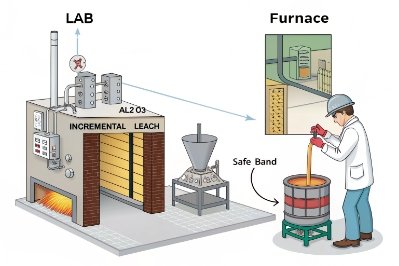
To meet hydrolytic classes, increase network formers (SiO₂, Al₂O₃), control alkalis (Na₂O/K₂O), and keep stabilizers (CaO/MgO) in a proven window. Then verify with durability testing and keep viscosity within the forming window.
Step 1: Define the durability target and the service environment
Hydrolytic resistance is usually measured with standardized durability tests 6. Still, the bottle’s real environment might include mild acids, hot-fill, or alkaline washing. The target should match the real exposure.
A practical target package often includes:
-
a hydrolytic resistance test result
-
a leaching trend in a product simulant if needed
-
a wash-cycle or detergent exposure test for returnables
Step 2: Tune oxides with a “strength first, viscosity second” plan
The most reliable moves follow the same direction your insights already match:
-
Increase SiO₂ and Al₂O₃ to strengthen the network.
-
Keep CaO and MgO adequate to stabilize the Na₂O–SiO₂ system.
-
Avoid excess Na₂O/K₂O, because they lower chemical durability.
-
Keep a balanced Na₂O:CaO (and MgO) ratio, or durability will drop even if one oxide looks correct.
The key constraint is viscosity. Al₂O₃ is powerful, but it can raise viscosity quickly. That is why Al₂O₃ targets should be set as a window proven by both durability results and forming KPIs.
Step 3: Lock cullet chemistry before tightening durability classes
Cullet variation is one of the fastest ways to lose control of hydrolytic performance. If recycled streams change the alkali level or dilute stabilizers, durability falls and the leaching trend 7 scatter rises.
A tight hydrolytic class program should use:
-
stable internal cullet or closed-loop streams
-
frequent XRF checks on finished glass chemistry
-
clear change control when cullet source changes
| Oxide lever | Typical durability impact | Typical process impact | Good control method |
|---|---|---|---|
| +SiO₂ | Improves acid and alkali resistance | Higher melt energy | Furnace stability + fining checks |
| +Al₂O₃ | Strong hydrolytic and alkali resistance gain | Higher viscosity | Use reactive sources + tight window |
| +CaO/+MgO | Reduces leaching, improves weathering | Devit risk if too high | Monitor stones + maintain ratio |
| -Na₂O/-K₂O | Improves durability | Harder melting, slower forming | Balance with process tuning, not shortcuts |
| Cullet stability | Reduces drift and disputes | Supply constraint | Closed-loop + chemistry tracking |
Hydrolytic classes are achieved by discipline. Composition is the tool, and control is the cost.
Are nano-additives enhancing surface chemical stability?
Nano solutions can be useful, but they are not a shortcut around a weak base glass. They work best when the composition is already durable and stable.
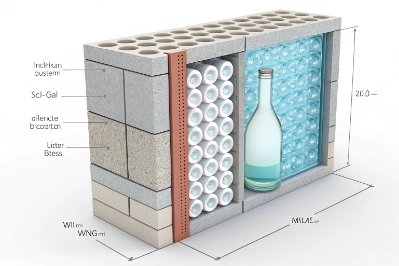
Nano-additives and nano-scale surface layers can improve chemical stability by creating more resistant surfaces or reducing ion mobility near the surface. They still require tight validation for adhesion, uniformity, and long-term drift.
Where nano approaches help most in bottles
For bottles, “nano” usually shows up as:
-
thin protective surface layers
-
internal coatings with fine particle structures
-
surface activation treatments that improve coating bond strength
These can reduce leaching and slow alkaline attack, especially in harsh cleaning environments. They can also help protective coatings last longer, because coatings adhere better when the base glass has good alkali resistance.
What nano cannot fix
If the base glass has high alkali extraction or unstable cullet chemistry, the surface keeps changing. That change can undermine coating adhesion and create haze. In that case, nano layers become another variable, not a solution.
A safe strategy is:
1) Fix composition balance first (SiO₂/Al₂O₃ + stable CaO/MgO + controlled Na₂O).
2) Add nano layers as a second barrier only after the base glass is stable.
How to validate nano benefits without new disputes
Validation should be written like a buyer–supplier contract:
-
thickness and uniformity across bottle zones
-
adhesion after hot-fill, detergent wash, and aging
-
chemical resistance before and after service simulation
-
optical impact (haze and transmittance) when appearance is critical
| Nano option | What it can improve | Main risk | Validation that matters |
|---|---|---|---|
| Thin barrier coating | Lower leaching and better wash resistance | Pinholes and adhesion drift | Aging + leach trend + adhesion |
| Nano-particle reinforced layer | Scratch and chemical stability | Haze and scatter | Haze + optical scan + abrasion |
| Surface activation | Stronger coating bonding | Process sensitivity | Adhesion after thermal + wash cycles |
| Hybrid “nano” topcoats | Longer service life | Cost and complexity | Lot-to-lot repeatability checks |
Nano solutions are real tools, but they should be treated like any other process change: measured, proven, and controlled.
Conclusion
Acid and alkali resistance comes from network strength and stable chemistry: higher SiO₂/Al₂O₃, controlled alkalis, and balanced CaO/MgO. Nano layers help most when the base glass is already durable.
Footnotes
-
Explore the molecular arrangement of the silica-based network that defines the fundamental structural integrity of silicate glasses. ↩ ↩
-
A technical overview of the ion exchange process where hydrogen ions replace alkali ions at the glass surface. ↩ ↩
-
Understanding how high pH environments lead to the complete network dissolution of the silica structure in glass containers. ↩ ↩
-
International standards for testing the hydrolytic resistance of glass containers to ensure safety for pharmaceutical and food storage. ↩ ↩
-
A guide to the chemical durability and alkali resistance of different glass compositions under aggressive cleaning conditions. ↩ ↩
-
Detailed information on standardized durability tests used to classify glass quality according to international regulatory requirements. ↩ ↩
-
Scientific research regarding the long-term leaching trend of alkali ions from glass surfaces into liquid contents. ↩ ↩






