
Raw material swings can turn a stable bottle into a headache. One week the glass forms fine, the next week defects rise and buyers start questioning consistency.
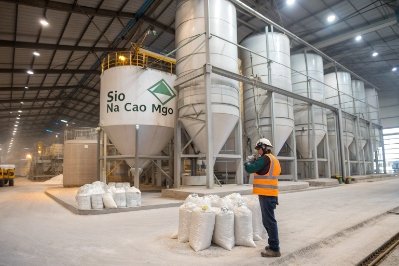
Dolomite is added because it delivers CaO and MgO together. This pair improves chemical durability, helps stabilize working properties, and can reduce variability when the dolomite is clean and consistent.
Dolomite is a “two-oxide stabilizer” that helps bottles stay strong and predictable
Dolomite becomes CaO + MgO, and that changes both melt behavior and bottle life
Dolomite is calcium magnesium carbonate (CaMg(CO₃)₂) 1, so it is not just a filler. In the furnace it breaks down and releases CO₂, then leaves behind CaO and MgO. Those two oxides enter the glass network and do the hard work that buyers care about later. They help stabilize the silica structure, reduce leaching risk, and support a more durable surface.
The CO₂ release also matters. Gas release affects glass fining and bubble removal 2. If the decomposition timing is unstable, seeds and cords become more likely. So dolomite quality is a process control tool, not only a chemistry tool.
Why plants like the CaO + MgO package instead of “all calcium”
Limestone can supply CaO, but dolomite supplies CaO and MgO in one step. MgO is useful because it can improve durability while keeping the glass from becoming too “soft” or too easy to attack by water. In many soda-lime glass container formulations 3, MgO is kept at a modest level. This makes the melt easier to control without pushing devitrification risk too far.
Also, using dolomite can help balance the alkaline earth system. It gives another knob besides CaO alone. That extra knob is helpful when we need to tune viscosity, working range, and thermal expansion while still meeting strength and durability targets.
What procurement should expect when dolomite control is good
When dolomite is consistent, performance tends to be more repeatable:
- forming becomes steadier because viscosity drift slows down
- durability test scatter drops
- color drift can reduce if iron and other impurities stay low
- defect rates trend smoother across shifts
| What changes | If dolomite is consistent | If dolomite varies a lot | What the buyer feels |
|---|---|---|---|
| CaO/MgO delivery | Stable oxide balance | Chemistry drift | Lot-to-lot quality claims |
| Fining and seeds | Smoother fining | More bubbles | More rejects and complaints |
| Viscosity and working range | Predictable forming | Narrow or unstable working | Weight and wall variation |
| Color and clarity | More stable look | Tint shifts or haze risk | Brand approval delays |
Some teams treat dolomite as “standard.” That is fine. But the real value appears when the spec is tight and the raw control is real. The next sections answer the key questions that usually show up in buyer calls and internal quality reviews.
Now let’s go point by point, because each oxide and each control method has its own tradeoffs.
What do CaO and MgO from dolomite provide?
When a bottle fails in durability or handling, people often blame the furnace. The truth can sit in the oxide balance.
CaO and MgO act as stabilizers in soda-lime container glass. CaO supports chemical stability and hardness, while MgO adds durability and helps tune viscosity and thermal behavior without relying only on CaO.

CaO: the stabilizer that makes container glass usable in real products
CaO helps the glass resist water and many product environments. Without enough stabilizer, alkali in the glass can be more mobile. That increases leaching risk and surface attack. CaO also supports a stronger, more durable surface for handling lines.
In practical terms, CaO is tied to:
- better chemical resistance for foods, beverages, and many daily chemicals
- stronger resistance to surface dulling and long-term haze
- better balance between easy melting and long-term durability
But CaO has a ceiling. When effective CaO gets too high relative to the rest of the recipe, devitrification risk can rise. This is one reason dolomite is attractive. It adds stability with a second stabilizer instead of only pushing calcium.
MgO: a second stabilizer that changes the “feel” of the glass
MgO is not a copy of CaO. Magnesium ions behave differently because of size and bonding. In many soda-lime systems, MgO can improve durability and mechanical behavior while shifting viscosity and thermal expansion in useful ways.
For many bottle recipes, MgO is kept modest, but it still matters. When MgO is controlled well, the glass can become:
- more durable in water exposure tests
- less sensitive to small recipe swings
- easier to tune for forming without sacrificing durability
The value is in the balance, not in one oxide
The most useful mindset is to treat CaO + MgO as a package. Procurement should not ask only “how much dolomite.” Procurement should ask “what is the finished CaO and MgO window, and how stable is it?”
| Oxide | Main role in container glass | What improves when controlled | What can go wrong if pushed |
|---|---|---|---|
| CaO | Stabilizer, durability, hardness support | Lower leaching, stronger surface | Higher devit tendency, stones risk |
| MgO | Stabilizer with tuning power | Better durability, tuned viscosity/CTE | Working range shifts, devit phases can change |
| CaO + MgO | Balanced alkaline earth system | More stable forming and quality | Needs tighter raw and cullet control |
This oxide balance is the first reason dolomite is used. The second reason is deeper: MgO’s role in durability and thermal behavior is often stronger than teams expect.
Why does MgO improve durability and thermal properties?
A small MgO drift can look harmless on paper. On the line and on shelf, it can change performance enough to matter.
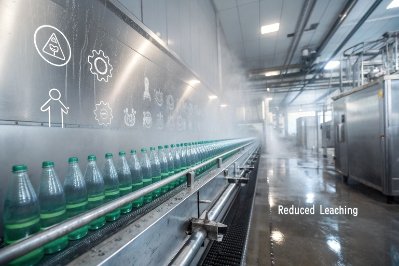
MgO can improve durability because it helps stabilize the silicate network and reduces the tendency for water-driven attack. It can also help tune thermal expansion and thermal behavior, which supports more stable performance through heat cycles.
Durability improvement is usually about water and surface stability
Many container failures start at the surface. Water exposure, cleaning, and hot filling can all attack weak glass surfaces. MgO helps by supporting a tighter, more stable network compared with an alkali-heavy structure. This can reduce ion mobility and slow surface change.
What does this look like in daily work?
- Fewer durability outliers when raw materials drift.
- Better stability for sensitive fills that react to extractables.
- Lower risk of surface dulling in reuse programs.
MgO does not replace CaO. It complements it. Many recipes use both because the mix can produce a stable, repeatable durability profile with fewer extreme tradeoffs.
Thermal properties: why buyers see fewer surprises after heat steps
Thermal behavior is not only “thermal shock.” It also includes how the glass behaves through:
- hot filling
- pasteurization-like cycles
- annealing stability
- rapid cooling zones in forming
MgO can influence coefficient of thermal expansion (CTE) and viscosity-temperature behavior. The exact direction depends on the whole recipe, but the procurement logic stays the same: MgO gives another tuning lever. This helps keep bottles stable under heat exposure and reduces stress-driven issues when the process window is tight.
A practical way to link MgO to real performance tests
Instead of arguing theory, the clean method is to tie MgO control to a test bundle:
- hydrolytic or leaching trend
- thermal cycle stress outcomes
- impact strength trend by lot
- devitrification and stones trend by furnace zone
| Property buyers care about | How MgO helps | How to prove it in production | Common mistake |
|---|---|---|---|
| Chemical durability | Stabilizes network, slows leaching | Durability trend vs MgO window | Only checking one lab sample |
| Heat cycle stability | Supports tuned thermal behavior | Hot-fill simulation + stress checks | Ignoring annealing drift |
| Mechanical handling | Supports stronger surface behavior | Breakage SPC + scratch trend | Blaming packing only |
| Visual stability | Reduces process-driven variability | Haze and clarity trend | Not separating haze from color |
MgO is useful because it improves durability while helping thermal tuning. But tuning is not free. Changing dolomite content changes viscosity and CTE, and that affects forming and buyer specs. That is the next question.
How do you tune dolomite to manage viscosity and CTE?
Many plants “set and forget” dolomite. That works until a new bottle design, a new lightweight target, or a new buyer durability spec forces a tighter window.
Dolomite tuning means controlling the finished CaO and MgO levels, not only the batch percentage. The goal is to keep viscosity and CTE inside a forming-friendly window while avoiding devitrification and keeping durability stable.

Start with the finished-glass targets, then work backward
The fastest way to avoid confusion is to define target windows for:
- CaO
- MgO
- total alkali (Na₂O + K₂O)
- silica and alumina balance
- iron and other color-related impurities
Then tune dolomite so the finished glass chemistry stays stable even when cullet composition shifts. Cullet can hide chemistry changes because cullet brings its own CaO and MgO. If cullet control is loose, dolomite tuning becomes guesswork.
Viscosity control: keep the working range wide enough for stable forming
Forming needs a steady viscosity window. If the working range narrows, weight and wall thickness variation rise. Dolomite affects viscosity because CaO and MgO change how the melt flows across temperature.
A practical tuning plan uses three steps:
1) Model or track viscosity-temperature behavior by composition trend.
2) Run short trials when changing dolomite source or level.
3) Lock furnace and forehearth controls before blaming the recipe.
Even a small dolomite change can shift:
- gob temperature sensitivity
- forming stability on complex shapes
- defect patterns like thin walls or bird swings
CTE control: protect downstream steps and customer use
CTE matters for thermal compatibility with closures, coatings, and heat steps. Some customers care about CTE because of thermal cycling. Others care because of decoration processes and stress.
Tuning for CTE is usually about staying consistent, not chasing a perfect low number. A stable coefficient of thermal expansion (CTE) 4 reduces stress surprises and reduces risk of cracks from temperature gradients.
| Tuning goal | What to adjust | What to monitor | What to avoid |
|---|---|---|---|
| Stable viscosity | Finished CaO/MgO window + forehearth control | Weight SPC, wall thickness, forming rejects | Changing recipe and process at the same time |
| Stable CTE | Keep alkaline earth ratio steady | Stress checks, thermal cycle outcomes | Over-correcting for one buyer test |
| Low devit risk | Avoid local CaO/MgO-rich pockets | Stones rate, liquidus signs, cold-spot behavior | Poor mixing, unstable furnace profile |
| Consistent quality | Control dolomite + cullet chemistry | XRF chemistry trend, COA audits | Accepting raw swings without correction |
Dolomite tuning is a chemistry-and-process job together. When it is done well, forming becomes calmer and buyer audits become easier. Still, one concern remains for premium clear bottles: impurities in dolomite can push color. That is why low-impurity dolomite is a hot topic.
Are low-impurity dolomites reducing color variability?
Color drift causes the fastest disputes. Buyers notice it first, even when durability is fine. Dolomite can be a quiet contributor to that drift.
Yes, low-impurity dolomite can reduce color variability because iron and other trace impurities can shift tint in clear and extra-white glass. Consistency also improves when particle size and moisture are controlled tightly.

Why impurities in dolomite matter more than people expect
In clear and extra-white containers, small changes in iron can change the perceived color. Even if the recipe stays the same, a raw material lot with higher Fe₂O₃ can push the bottle toward green or yellow tones. For premium brands, that becomes a rejection risk.
Dolomite is tricky because iron in dolomite is often hard to remove by simple processing. So the best lever is usually source selection. Choosing a quarry and supplier that can deliver low and stable iron content matters more than trying to “fix it later.”
Consistency is not only chemistry; it is also particle size and moisture
Two dolomites with the same chemistry can behave differently in the furnace if one has:
- wider particle size distribution
- higher moisture
- higher LOI variability
- more inert inclusions
These factors change decomposition timing and melting speed. That can affect fining and seed removal. Seeds can make a bottle look hazy or inconsistent, which buyers can read as “color shift” even when chemistry is stable.
What procurement should ask for in a dolomite spec
A strong raw spec for premium bottles should include:
- Fe₂O₃ maximum and typical value
- moisture limit
- LOI window
- particle size distribution
- impurity limits that match the product’s risk level
| Dolomite quality factor | Why it affects color and clarity | What to request from suppliers | Fast plant-side check |
|---|---|---|---|
| Iron content | Drives green/yellow tint in clear glass | Tight Fe₂O₃ limit + stability data | Incoming COA + periodic lab verify |
| PSD consistency | Controls decomposition and melting | Sieve spec, process control | Melt stability, seeds trend |
| Moisture | Adds gas and energy load | Moisture cap, storage handling | Batch behavior, foaming signs |
| Inclusions | Can form stones or cords | Cleanliness and impurity limits | Stones count and reject mapping |
Low-impurity dolomite is not a marketing trick. It is a real path to more stable appearance, especially for clear bottles. It also supports process stability, because consistent raw behavior reduces furnace variability.
Conclusion
Dolomite adds value because it supplies CaO and MgO together. This improves durability and gives tuning control for viscosity and CTE, especially when low-impurity dolomite keeps color stable. For day-to-day verification, many plants track chemistry by X-ray fluorescence spectrometry (XRF) glass composition analysis 5 and correlate it to rejects.
You get the best results when the batch recipe, furnace stability, and working range are treated as one system—because CaO and MgO act as alkaline-earth network modifiers 6, and their balance strongly influences both durability and forming behavior.
Also remember that pushing CaO/MgO too hard can shift liquidus behavior and raise devitrification in glass 7 risk—so tuning should be paired with trials and defect trend tracking.
Footnotes
-
Definition and key properties of dolomite, the CaMg(CO₃)₂ source for CaO and MgO. ↩ ↩
-
Explains fining—how bubbles are removed—and why gas release timing can affect seeds. ↩ ↩
-
Practical overview of soda-lime container glass raw materials and oxide roles. ↩ ↩
-
Clear definition and context for CTE and why stability matters in manufacturing. ↩ ↩
-
Shows how XRF is commonly used to measure glass chemistry for routine process control. ↩ ↩
-
Explains network modifiers (including CaO/MgO) and their impact on durability and properties. ↩ ↩
-
Defines devitrification and why composition and thermal history can trigger crystallization risk. ↩ ↩






