
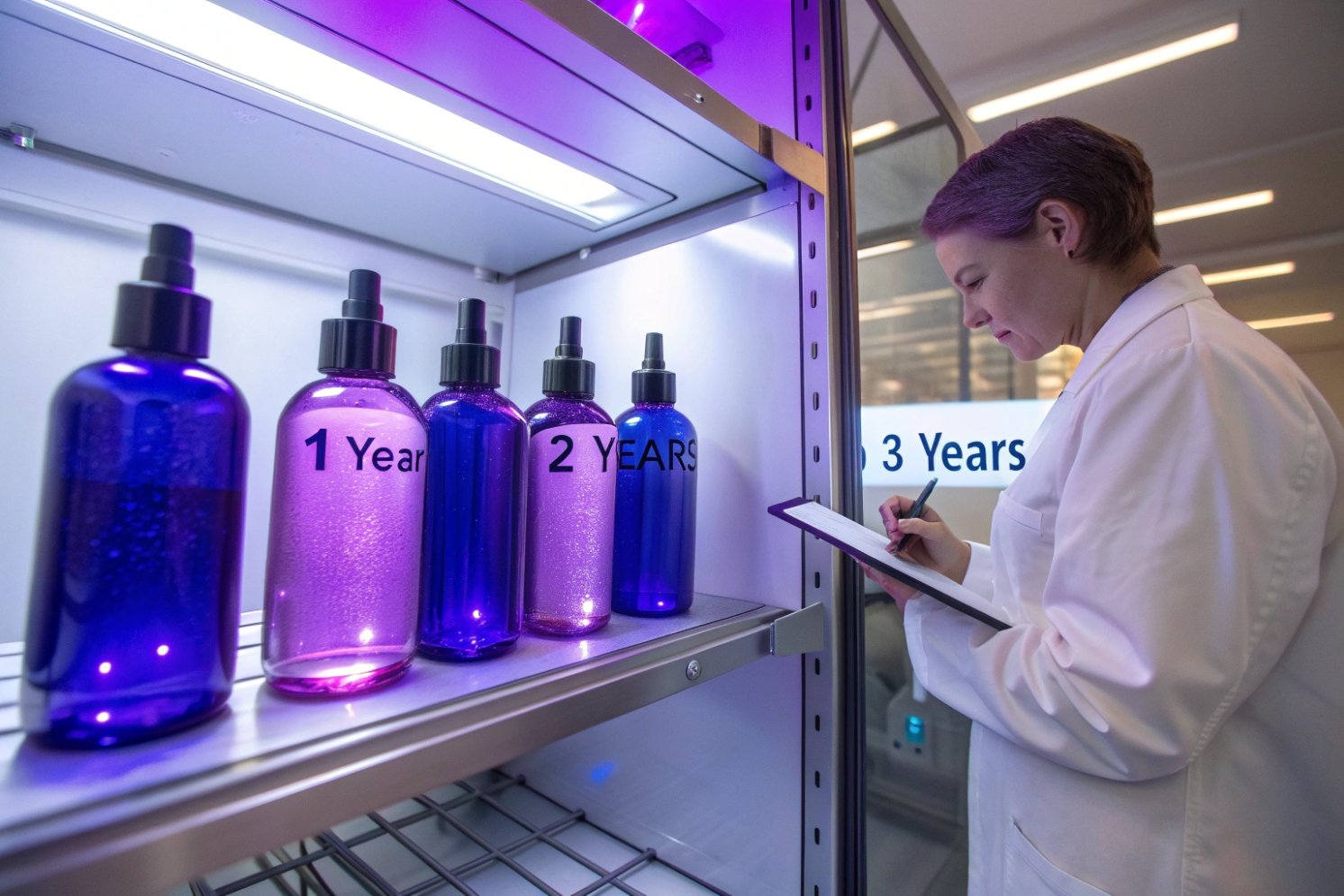
Light damage feels slow and invisible, but it is one of the easiest ways to waste a good formula and a good brand story.
Well-formulated UV coatings on glass bottles usually stay effective for the full product shelf life (about 1–3 years), and often several years longer, if curing, handling, and exposure are controlled.
UV coatings are not magic shields. They are thin functional layers that can chalk, scuff, and lose performance over time. So we need to understand which coating type we are buying, how long it really lasts in our supply chain, and how to test that claim instead of guessing.
What types of UV coatings exist and how do they work?
When people say “UV coating”, they often mix very different technologies into one bucket, from thin clear paints to full-body polymer shells.
Most UV coatings for bottles are clear or tinted polymer layers that absorb or reflect UV light before it reaches the product, using UV-absorber pigments, crosslinked binders, or polymer jackets around standard glass.
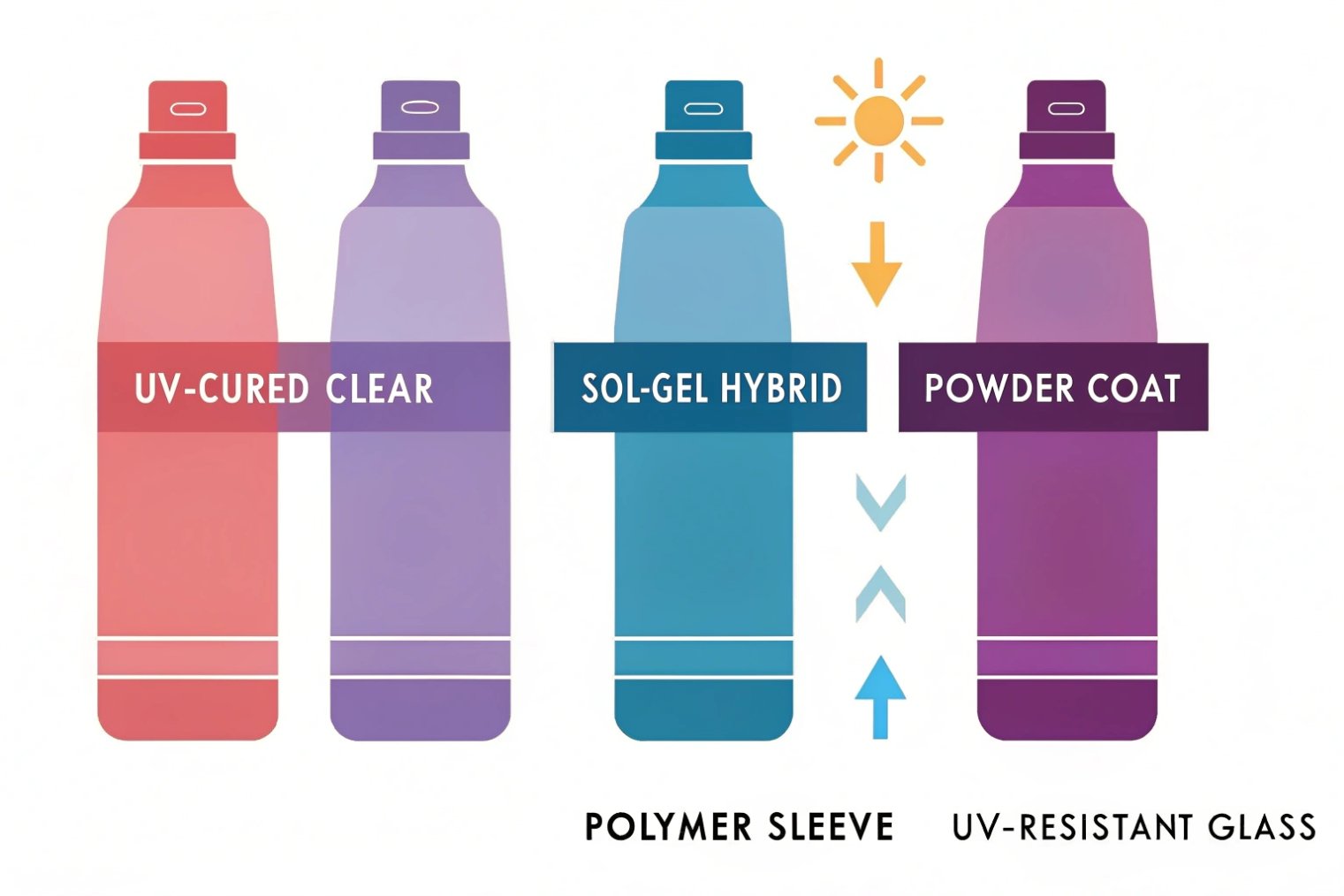
Main UV coating families on glass
At a high level, we can sort UV solutions into a few groups:
| Type of solution | Where it sits | How it blocks UV |
|---|---|---|
| UV-cured clear coatings | Direct on glass | Organic polymer film with UV-absorbing additives |
| Sol–gel / hybrid coatings | Direct, chemically bonded | Inorganic–organic network plus UV absorbers |
| Powder or paint coatings | Direct, baked on | Thicker polymer layer with pigments and absorbers |
| Full polymer sleeves / films | Around the bottle | Separate plastic layer with UV-blocking pigments |
| UV-resistant glass itself | Inside the glass melt | Colorants in glass (e.g. amber) absorb UV in bulk |
For cosmetic and nutraceutical bottles, the most common is UV-cured clear coatings 1. A liquid is sprayed or dipped onto the bottle, then cured under UV lamps or in an oven. The curing step crosslinks the resin and “locks” UV absorbers in place, giving a hard, glossy shell that can reject 95–99% of UV in the target band when new.
Meanwhile, sol–gel coatings 2 go one step further. They form a thin inorganic–organic network that bonds tightly to the glass surface. This can improve scratch resistance and chemical resistance, so UV performance drops more slowly under handling.
Powder coatings and thick paints behave more like a colored shell. They can combine color, texture, and UV protection in one pass. Because the layer is thicker, they often hold UV rejection a bit longer even as the surface weathers, but they can also raise questions about recyclability or refilling if the layer is too heavy.
Sleeves and films are different. They do not bind to glass in the same way. Their UV performance comes from the film itself. If the sleeve stays intact and in place, protection stays high. If it tears, shrinks, or lifts around the label edge, UV “windows” appear.
How coatings interact with glass and product
Whatever the chemistry, the goal is simple:
- UV hits the outside surface.
- The coating absorbs or reflects most of it.
- Very little UV reaches the glass and liquid inside.
Most modern UV coatings are tuned to block harmful radiation. If the formula also includes antioxidants or internal UV stabilizers, it can tolerate a small loss of coating performance over time without immediate photodegradation 3. If the formula is very fragile, we often combine UV coatings with amber glass or sleeves instead of relying on coating alone.
How does coating durability affect warranty and shelf life?
Many buyers ask, “How many years does this UV coating last?” The honest answer is, “It depends what you do to it.”
Coating durability sets the safe window where UV rejection stays above your spec. That window must at least cover your product shelf life, and it also shapes how long you can safely reuse or rebrand coated bottles.
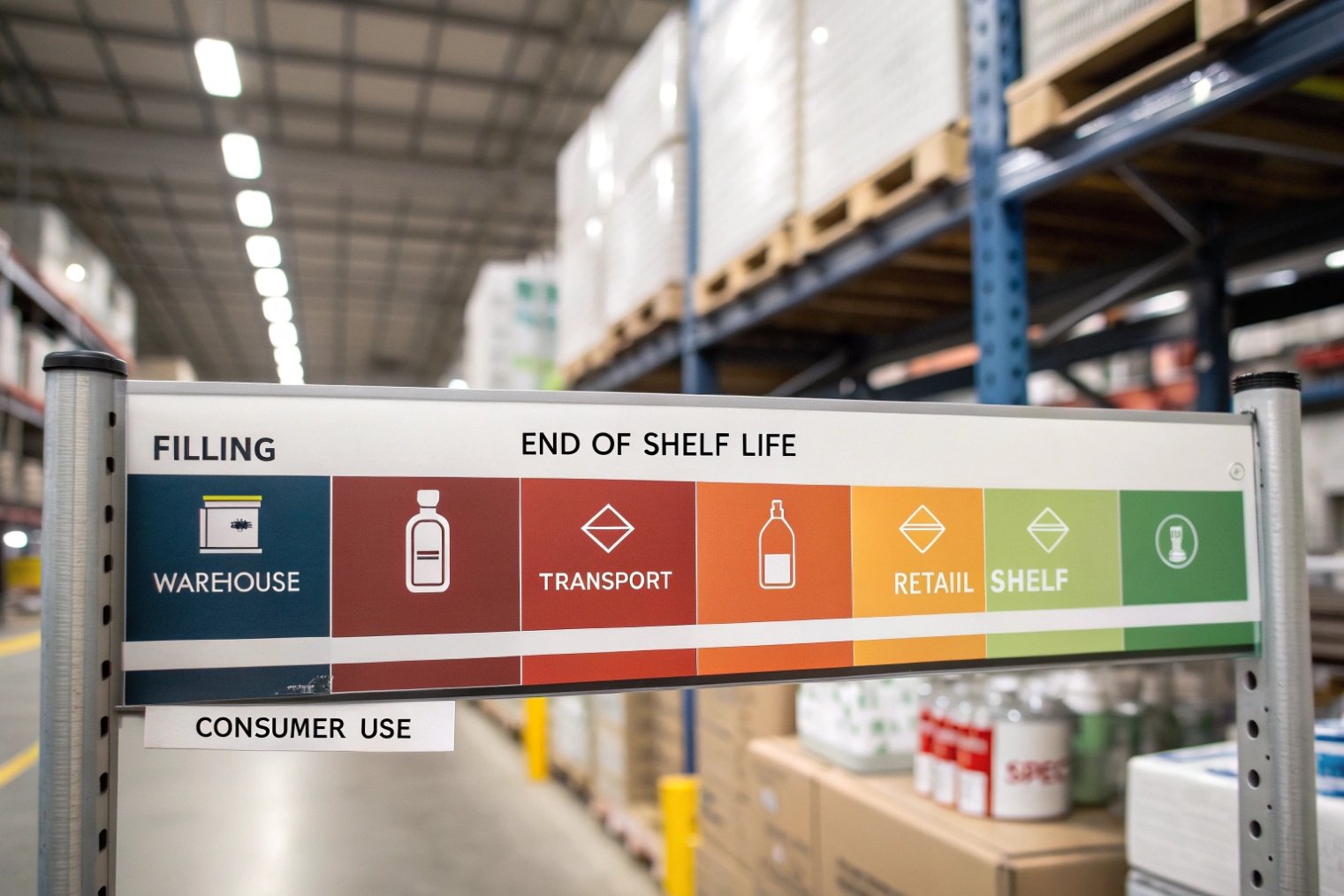
What really ages a UV coating
Several stress factors slowly eat away at performance:
-
UV exposure itself
UV absorbers do the job by taking the hit. Over many cycles, some break down. Under normal indoor and shelf light, this is slow, so good coatings can hold strong UV rejection for several years. -
Mechanical abrasion and scuffing
Conveyor contact, case packing, shipping vibration, and hand handling thin the coating, make microcracks, or polish spots back toward bare glass. High-handling bottles lose protection faster than cartons that barely move. -
Washing and chemicals
Repeated hot water, caustic wash, or aggressive cleaners can dry out, chalk, or swell the coating, which changes both optics and adhesion. -
Edge damage and chipping
Any chip, label edge lift, or missed spray band becomes a UV “leak” path straight to the product.
Tying durability to warranty and shelf life
From a B2B view, we care less about the absolute lifetime and more about confirming the labeled shelf life 4 remains supported by the packaging barrier. Typical patterns look like this:
| Use case | Typical coated-bottle use window | Coating expectation |
|---|---|---|
| Single-use, 12–24 month shelf | 1–3 years in normal retail and home use | UV spec held with comfortable margin |
| Premium cosmetics (24–36 months) | 3–5 years with moderate handling | UV spec held; light surface wear acceptable |
| Refillable / multi-cycle use | Many wash cycles over several years | Needs special high-durability coating or sleeve |
How to test abrasion, washing cycles, and sunlight aging on coatings?
Without testing, UV coatings can feel like black boxes. They look shiny at the start and “kind of fine” years later, but we do not see the UV curve dropping until a failure happens.
To qualify a UV coating, we combine abrasion and wash tests with accelerated UV aging, then track UV transmission with a spectrophotometer so we know how fast protection declines under realistic stress.
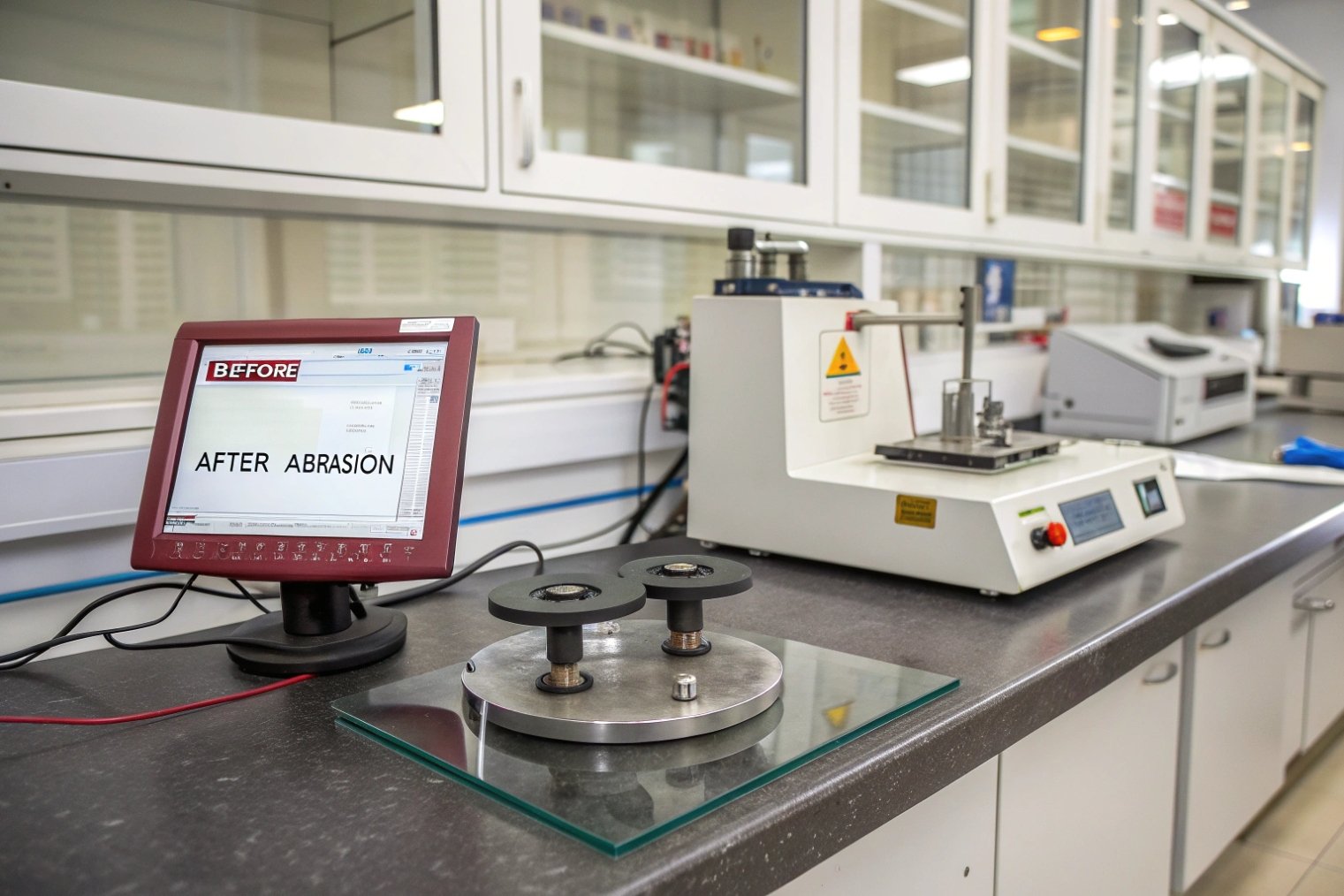
Abrasion and wash testing
For abrasion, we want to mimic what happens on conveyors and in people’s hands. A common procedure involves Taber abrasion 5 testing. A coated panel or bottle section rotates under weighted abrasive wheels for a set number of cycles. We check gloss loss, visible damage, and UV transmission before and after.
UV and sunlight aging tests
To understand how the coating itself weathers under light, we use accelerated UV aging 6 techniques. This involves placing samples in a cabinet with UV-A lamps to run wet/dry and light/dark cycles that represent daylight. These tests help answer how much UV rejection is lost after years of window or outdoor-like exposure.
Are recyclable or refill-safe UV coatings reaching commercial scale?
Sustainability teams ask a fair question: “Are we trading recyclability and refill safety for UV protection?” The answer is starting to shift.
Some thin, factory-applied UV coatings and sleeves are already compatible with standard glass recycling and limited refill cycles, but pure colored glass still leads on simplicity. Refill-safe, high-durability UV coatings are emerging, yet adoption is selective.
Recyclability of UV-coated glass
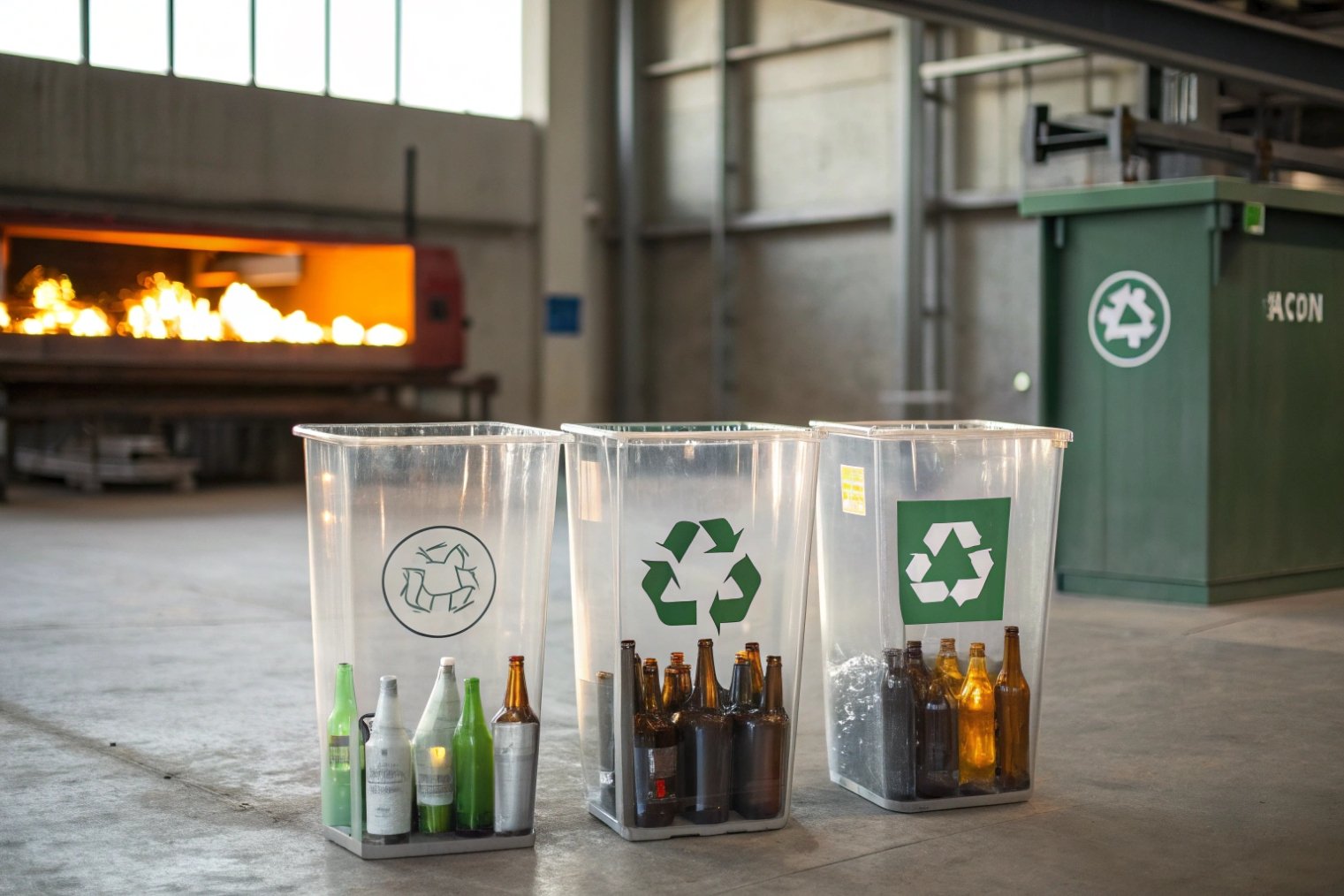
In most municipal systems, glass recycling 7 does not sort by coating type. Thin UV-curable coatings usually do not stop glass from being recyclable in practice because the organic layer is very thin compared with the mass of glass and burns off in the furnace. However, heavy polymer jackets or multi-material sleeves can complicate color sorting and add extra cost to pre-treatment.
Conclusion
UV-coated glass stays effective long enough when we choose the right coating family, test real handling and light loads, and treat coatings as one layer in a larger protection and sustainability plan—not the whole story.
-
Learn how UV light initiates polymerization to create durable, protective films on glass surfaces. ↩ ↩
-
An overview of the chemical process used to produce high-performance ceramic and glass-like thin films. ↩ ↩
-
Understanding the chemical breakdown of products caused by exposure to light radiation. ↩ ↩
-
Regulatory insights into determining the expiration periods for consumer and cosmetic products. ↩ ↩
-
Standard testing methods used to measure the resistance of organic coatings to mechanical wear. ↩ ↩
-
Laboratory techniques used to simulate long-term environmental exposure in a compressed timeframe. ↩ ↩
-
Insights into the circular economy and processes for remelting glass containers into new products. ↩ ↩






