
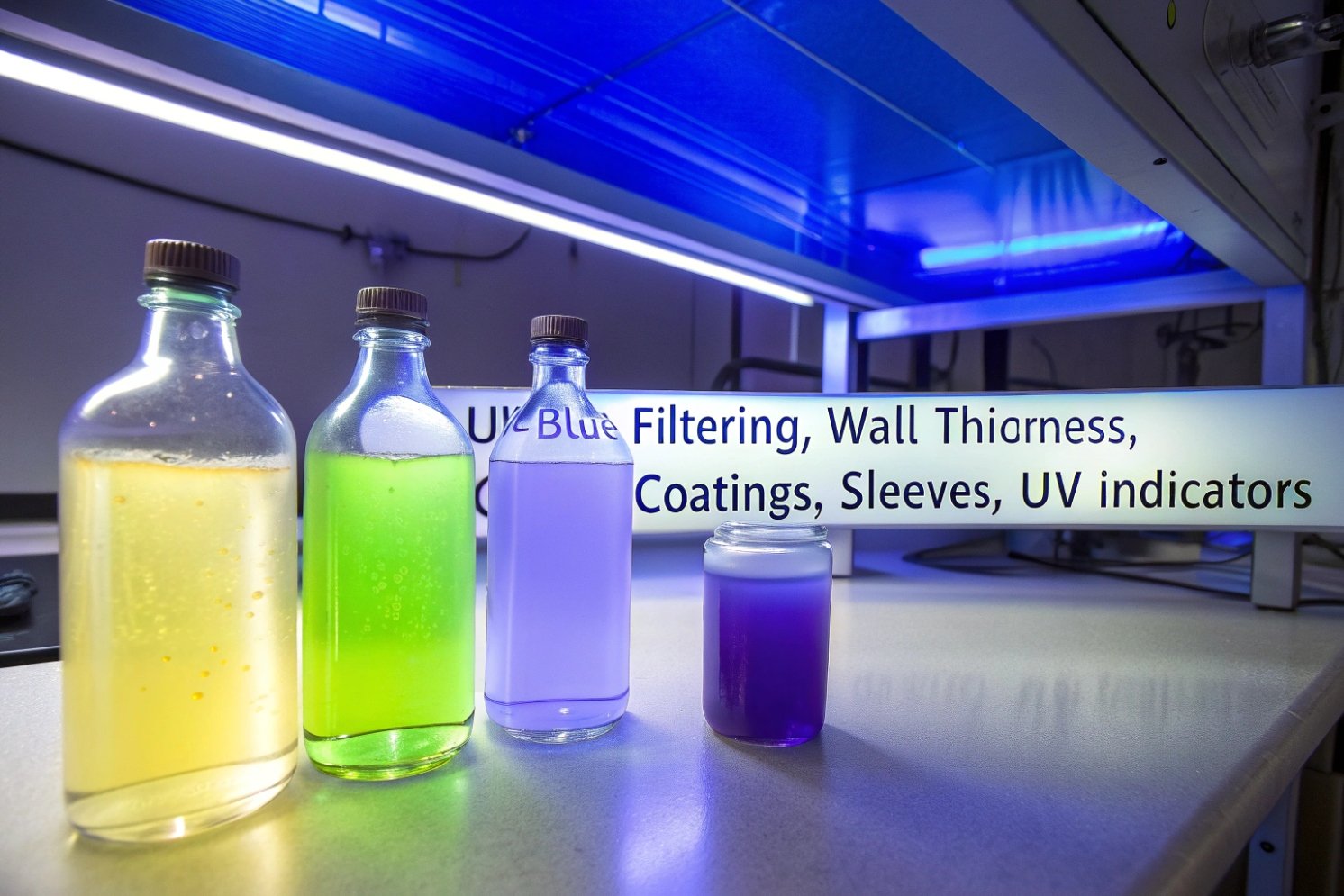
Light damage feels invisible at first, but it slowly eats color, flavor, and potency. By the time people notice, the batch is already on shelves or in photodegradation 1 complaints.
Glass bottles reduce photodegradation by filtering harmful UV–blue light, increasing optical path with thicker or colored walls, and adding coatings, sleeves, and smart UV indicators that control and monitor real light exposure.
When we design glass for light-sensitive fills, the goal is simple: slow down light-driven reactions enough that the product survives its whole shelf life in real retail lighting. To do that, we first need a clear view of what photodegradation actually is.
What is photodegradation in foods, beverages, and pharma liquids?
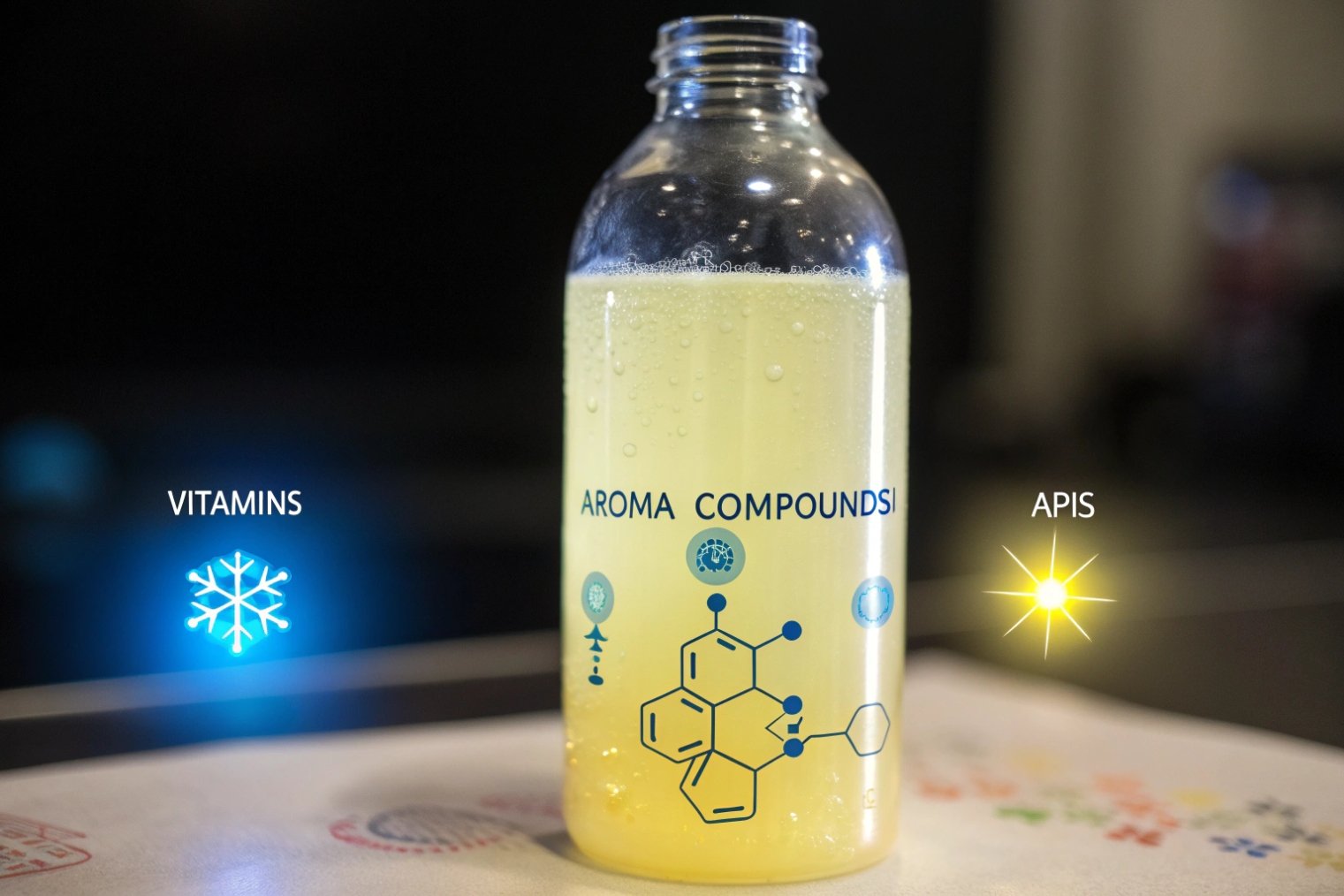
Light damage does not shout. It works quietly on vitamins, aromas, and active ingredients 2, while everything still looks fine in the warehouse.
Photodegradation is the set of chemical changes triggered when photons hit sensitive molecules in foods, drinks, and pharma liquids, causing nutrient loss, off-flavors, color change, and API breakdown over time.
How light attacks different products
Photodegradation starts when a molecule absorbs a photon with enough energy to move an electron to a higher state. The excited molecule then reacts with oxygen, other ingredients, or even the packaging itself. In real products, this looks a bit different by category:
-
Foods and beverages
Light breaks down vitamins (A, B2, C), plant pigments, and aroma compounds. In milk and juices, this leads to vitamin loss and “sunlight” off-flavors. In beer and some wines, UV and blue-violet 3 light create sulfur compounds like MBT, known as “skunky” notes. -
Pharma and nutraceutical liquids
Many actives are photolabile. Light-driven reactions can reduce potency, form unwanted degradation products, or shift color. Pharmacopoeias 4 class some drugs as “light-sensitive” and require storage in “light-resistant containers” for this reason. -
Cosmetics and personal care
Fragrances, plant extracts, and some UV filters themselves can change under light. This can bring color drift, fragrance shifts, and sometimes new irritant species in the formula.
The most aggressive wavelengths are usually UV and blue-violet (around 290–450 nm). Amber formulations are tuned to absorb strongly in this band, which is why they are so common for light-sensitive products.
Why glass is such a useful light filter
Glass is rigid, inert, and can be colored at the melt stage using iron, sulfur, carbon, and other colorants. That lets us shape the spectral transmission curve 5 of the bottle:
| Glass type | Typical UV–blue protection (≈290–450 nm) | Typical use cases |
|---|---|---|
| Flint (clear) | Very high transmission | Display-first, low sensitivity products |
| Green | Moderate UV cut, better in visible green region | Beer, some wines |
| Cobalt / blue | Strong color, specific band absorption | Cosmetics, niche beverages |
| Amber / brown | Very strong UV–blue absorption, near zero UV | Pharma, beer, essential oils, nutraceuticals |
| Violet / near-black | Ultra-high UV and some visible attenuation | Biotech, high-end and very sensitive fills |
So, when we talk about “glass bottles reducing photodegradation,” we are really talking about tuning this spectrum so fewer damaging photons ever reach the product.
Which quality losses drive returns or regulatory rejection?
Light damage is not always dramatic. Often it is a slight odor, a faded label claim, or a suspicious color shift that pushes customers or regulators to say “no”.
The most serious light-driven quality losses are off-flavors, color changes, vitamin or API loss, and formation of related substances that break label claims, sensory expectations, or pharmacopoeial limits.
What photodegradation looks like to customers
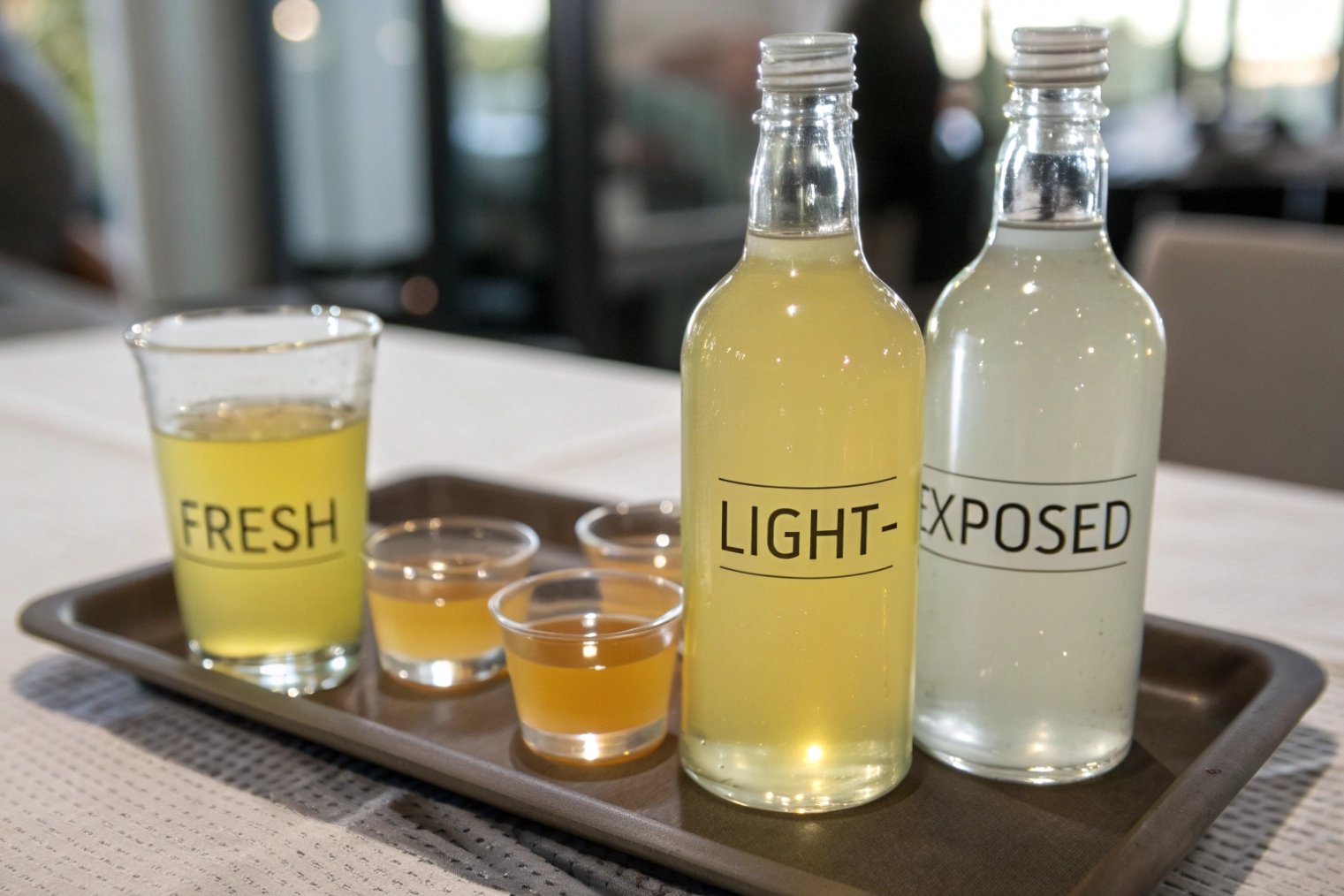
Light damage becomes a business problem when people can see, smell, or measure it. Typical cases:
-
Beer and beverages
UV-induced “skunky” notes, loss of hop aroma, color fading in juices and teas, or browning in delicate drinks. Consumers describe this as “stale”, “sun-struck”, or “off”. Brewer tests show that even amber bottles in strong sunlight can develop noticeable defects if exposure is long enough. -
Foods and oils
Rancid or cardboard-like notes in oils and dressings, fading of natural colors in sauces, and loss of appeal in premium products that sell partly on appearance. -
Vitamins and supplements
Decrease in labeled vitamin content and discoloration of liquids. If assays show content has dropped below the labeled claim, the batch is at risk. -
Pharma liquids
API loss, formation of degradation products, and color drift. Regulatory guidelines often specify that related substances must remain under defined thresholds and that appearance must stay within strict limits during photostability studies 6.
The link between light and these defects is well documented in photostability guidelines and food science literature, but in daily operations it often shows up first as returns, complaints, or failed release tests.
How this turns into rejections and write-offs
For brand owners and buyers, the chain usually looks like this:
| Symptom | Impact on business | Likely link to photodegradation |
|---|---|---|
| Off-flavors in beer or beverages | Consumer complaints, negative reviews, write-offs | UV / blue light triggered reactions |
| Faded or brownish liquids | Shelf pull, damaged brand perception | Pigment and vitamin breakdown |
| API or vitamin content below label | Regulatory non-compliance, product recall risk | Light + oxygen degrading actives |
| New peaks in chromatograms | Batch rejection in QC, delayed release | Photo-induced degradation products |
Because so many of these failures are preventable with better light control, glass packaging is often the first place we adjust when a product with good formulation still fails under real display conditions.
Which packaging controls—color, coatings, inserts—most effectively cut exposure?
We cannot shut off light in every store or home. So the package has to act as the main shield. Glass gives several layers we can stack.
The strongest controls are high-UV-blocking glass colors (especially amber and violet), adequate wall thickness, external coatings or full-body sleeves, plus smart use of labels, inserts, and secondary packaging to cover thin or exposed zones.
Layer 1: Glass color and thickness
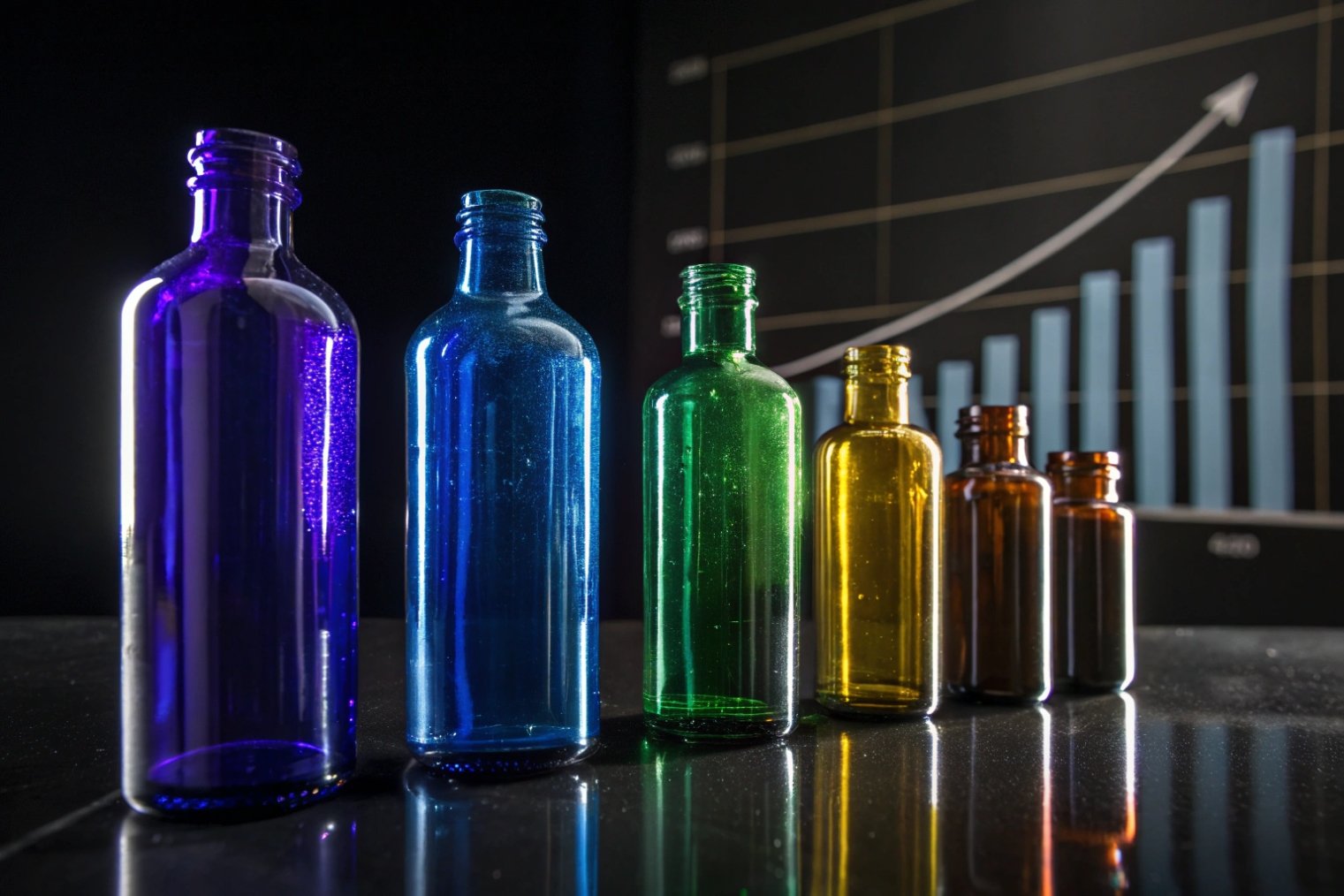
The first and most powerful lever is glass color:
- Amber and dark brown stop most UV and a lot of blue light.
- Green and cobalt give intermediate protection and a strong visual identity.
- Violet and near-black glass can protect against both UV and some visible light for sensitive biotech or high-end formulas.
Within each color, thicker walls stretch the optical path. This increases attenuation of harmful wavelengths, especially in amber recipes designed to absorb UV–blue light. Thicker shoulders and bases often act as extra shields, while thin sidewalls are more vulnerable. That is why specs for light-sensitive products often define minimum thickness and spectral transmission together.
Layer 2: Coatings, inks, and sleeves
We cannot always change the melt. Maybe the brand insists on near-clear glass for a “clean” look. In that case, we can add light barriers on the outside:
- UV-blocking clear coatings keep the look but cut the most damaging wavelengths.
- Ceramic inks and printed designs add both branding and extra absorption zones.
- Full-body shrink sleeves and wraparound labels create almost opaque shells if needed.
These are very useful for retrofitting protection onto existing bottle designs or for seasonal products that will sit in strong light for limited periods.
Layer 3: Inserts, geometry, and secondary packaging
Sometimes we reduce light mainly by how the product is boxed or displayed:
- Cartons, trays, and overwraps shield all but the top of the bottle. This is common in pharma, where an amber bottle still ships inside a printed box.
- Internal inserts or dip tubes can slightly scatter light, though they are usually secondary to outer layers.
- Bottle geometry can turn the thickest glass toward the main light source, for example by using deeper shoulders or strategic paneling.
A simple way to think about the toolbox:
| Control type | Example | Best for |
|---|---|---|
| Glass color | Amber, green, violet | Long-term, built-in protection |
| Thickness | Thicker shoulders, stronger sidewalls | High sensitivity, premium or pharma fills |
| External coatings | Clear UV varnish, ceramic inks | When color must stay light or clear |
| Sleeves and labels | Full-body shrink sleeves, large labels | Retrofits, seasonal promos, strong branding |
| Secondary packaging | Cartons, wraps, trays | Pharmacies, e-commerce, premium gifting |
Stacked together, these controls can push the effective light dose inside the bottle far below the threshold where serious photodegradation starts.
Are smart UV indicators enabling dynamic light-damage monitoring?
Even with good packaging, we often do not know how much light a specific bottle sees on its real journey. That is where smart indicators start to help.
Yes. Smart UV indicators and photochromic labels are emerging that change color or record cumulative dose, so brands and labs can see real light exposure on packs instead of guessing from shelf conditions alone.
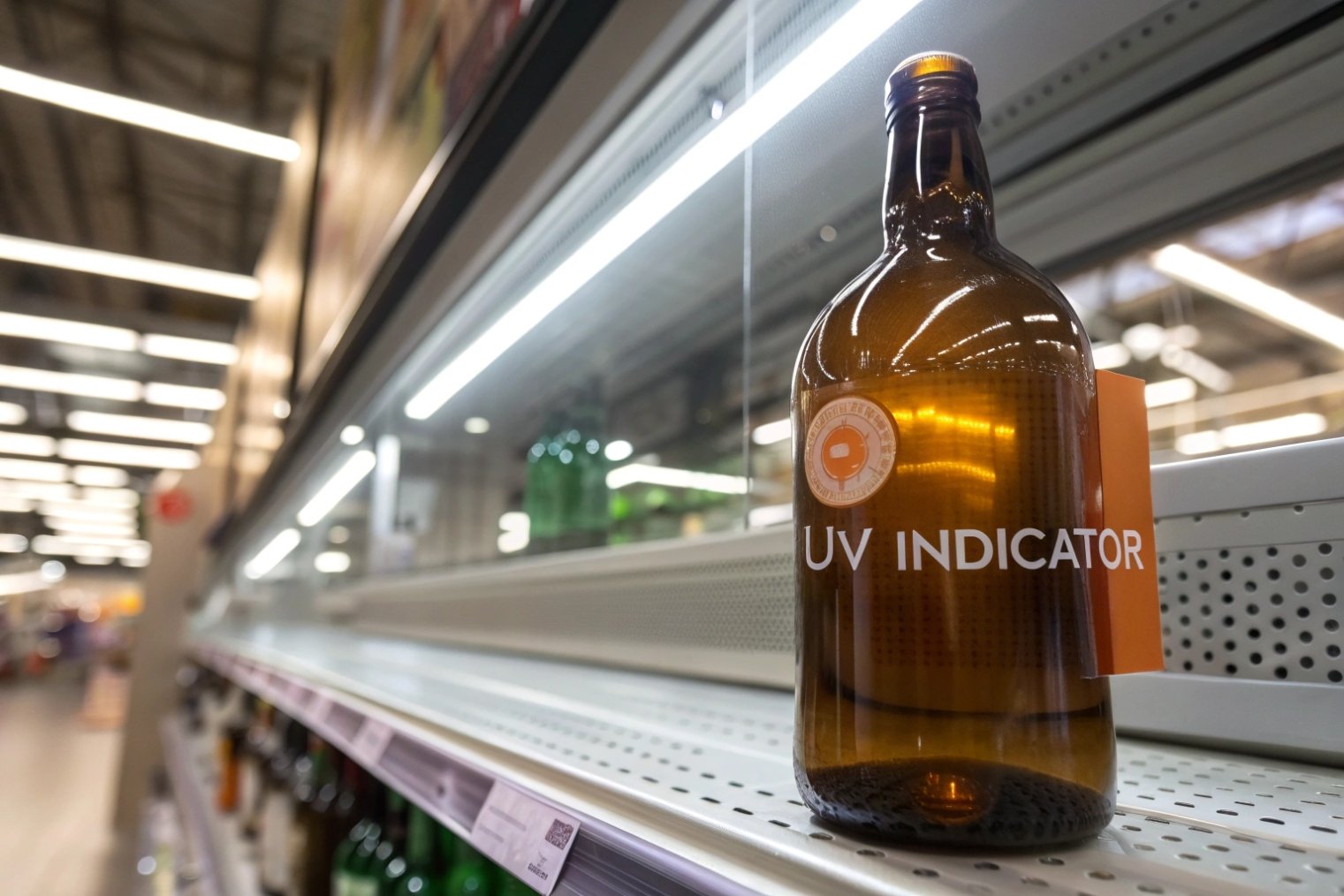
What smart UV indicators do
Smart indicators translate invisible light exposure into a visible signal. Typical types include:
- Photochromic inks 7 and labels that darken or change color when they absorb a certain amount of UV.
- Time–temperature–light indicators that combine multiple stress factors into one visual output.
- Data-logging tags (often RFID or NFC linked) that record light and can be read by scanners or smartphones.
For light-sensitive liquids, the focus is mostly on cumulative UV dose, since many reactions depend on total energy received rather than only peak intensity.
How they fit with glass bottles
These indicators usually sit outside the glass, on the:
- Main label or neck label
- Shrink sleeve
- Cap, security seal, or overwrap
They do not replace spectral transmission tests. Instead, they complement them:
- Transmittance testing shows how much of a given light spectrum the bottle lets through.
- Smart indicators show how much light actually hits that bottle or that batch over time.
That lets QA or marketing teams test real scenarios:
| Use case | How a UV indicator helps |
|---|---|
| New retail display with bright LEDs | Confirms if light dose stays within safe window |
| Export to hot, sunny markets | Reveals if stock in transit sees excess UV |
| Return analysis | Checks if problem products saw unusual exposure |
| Consumer-facing premium packs | Adds a “live protection” or “freshness” story |
Why this matters for future packaging
As brands push for more glass and more open merchandising, light risk can actually grow. Smart indicators help close the loop:
- Packaging teams tune glass color, thickness, and coatings based on lab data.
- Real-world pilots use indicators to see if these designs hold up.
- Results feed back into better specs, better display rules, and training for retail partners.
For very sensitive pharma and biotech products, more advanced sensor-based systems already support cold-chain and stability management. It is likely that similar ideas will move into premium foods, drinks, and nutraceuticals as sensor costs fall.
In simple terms, glass bottles and smart indicators together move us from designing for “average light” to designing for the light the product actually sees.
Conclusion
When glass color, thickness, coatings, and smart indicators work together, bottles become active shields that slow photodegradation, protect flavor and potency, and turn invisible light risk into something we can measure and control.
Footnotes
-
Understanding the chemical processes where light energy breaks down material structures and molecular bonds. ↩ ↩
-
A guide to active ingredients in pharmaceuticals and how they react to environmental stimuli. ↩ ↩
-
Exploring the properties of ultraviolet light and its impact on organic and inorganic substances. ↩ ↩
-
Standardized reference works for medicinal drugs, including storage requirements and light protection standards. ↩ ↩
-
Technical data on how different materials transmit or block specific wavelengths across the light spectrum. ↩ ↩
-
Regulatory guidelines for testing the stability of products when exposed to artificial and natural light. ↩ ↩
-
Analysis of inks that change color in response to light intensity for monitoring and security. ↩ ↩






