
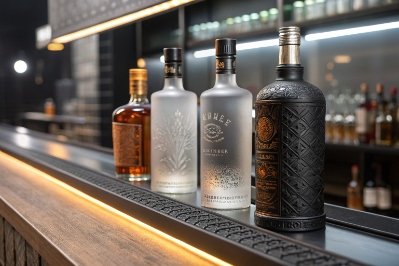
Spirits shelves are crowded, and many bottles look “premium” from far away. Up close, buyers touch the glass, tilt it, and judge the details in seconds. Weak decoration feels cheap fast.
Deep processing turns a standard spirits bottle into a brand asset by adding texture, contrast, metallic highlights, and permanent identity marks. The best programs combine mold features, surface finishes, and printing while keeping line efficiency and end-of-life recycling in mind.
Deep processing is everything that happens after the bottle is formed and annealed, plus some decisions that start inside the mold. For spirits, this “extra work” is often the difference between a bottle that competes on price and a bottle that defends a higher shelf price. The goal is not decoration for decoration’s sake. The goal is to create signals that customers trust: weight, texture, clarity, and craftsmanship.
In practice, deep processing falls into four buckets:
1) Mold-based permanent features
Embossing and debossing 1 are built into the mold, so the logo and texture become part of the glass. This is the most durable form of decoration and one of the best tools for anti-counterfeit 2 measures.
2) Surface texture and optical effects
Frosting, acid etching, and sandblasting create matte areas, grip zones, and contrast windows. These finishes also hide seams and reduce the “factory look.”
3) Color and metallic layers
Spray coating, painting, hot stamping 3, and metallization create bold brand blocks and luxury accents. They can also protect the bottle surface during handling.
4) High-resolution graphics and data
Screen printing 4, UV printing, decals, and laser marks replace paper labels or add layers on top of them. This is where legal text, batch coding, and personalized editions can live.
A smart program mixes one “permanent” feature (mold or engraving) with one “visual” feature (frost/paint/metal) and one “information” layer (print or code). That mix gives strong shelf impact and real brand protection.
| Deep-processing family | What it adds | Best for | Watch-outs |
|---|---|---|---|
| Mold emboss/deboss | permanent texture + identity | core brand signatures | tooling lead time, mold cost |
| Frost/etch/sandblast | tactile matte + contrast | premium hand-feel | fingerprint visibility, line handling |
| Coating/painting | bold color + protection | brand blocking, gradients | recyclability, scratch resistance |
| Hot stamp/foil | luxury highlights | logos, neck accents | adhesion and abrasion resistance |
| Printing/decals | detailed artwork + text | complex graphics, compliance | dishwasher/ice-bucket durability |
| Laser engraving | unique marks + personalization | limited editions, security | throughput and placement control |
Deep processing works best when it starts from a clear brand brief: what should the bottle “feel like,” what should it “say,” and what should it “prove” about authenticity. Once that is decided, the technical choices become much easier.
The next sections break down the decision points that usually decide value: texture features, surface finishes, anti-counterfeit integration, and sustainability trade-offs.
How do engraving, embossing, and debossing add value?
Many luxury cues disappear after a few ice buckets or shipping cycles. Mold texture and engraving keep working because they do not peel, fade, or wash off.
Embossing and debossing build permanent brand identity into the glass mold, while engraving adds high-precision details and personalization after forming. These features increase perceived value, improve grip, and make counterfeiting harder because the “signature” is physical, not just printed.
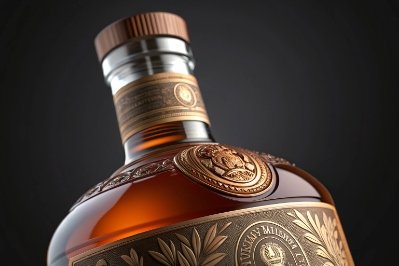
Embossing (raised) and debossing (recessed) are the most reliable “always on” luxury signals. They work in dim bars, on backlit shelves, and in a customer’s hand. They also simplify decoration strategy. A bottle with a strong molded logo can use a smaller label, or even skip paper labels in some designs.
Texture changes how light moves across the glass. Raised ribs create shadows. Recessed panels create clean boundaries for printing and foiling. When a customer runs a thumb over the glass and feels sharp edges and clean transitions, the bottle feels intentional.
Practical ROI for brands
- Lower dependence on large labels, which reduces label wrinkles and misalignment complaints.
- Stronger recognition at distance because silhouette and texture are consistent.
- Better anti-refill posture when unique shoulder patterns are used.
Where engraving fits
Engraving is flexible and works for limited editions, numbered runs, and personalization. Laser engraving 5 can add small marks that are hard to copy, and it can be done after decoration. Mechanical engraving can create deeper relief but is slower. Engraving also allows late-stage customization without changing the mold.
| Feature | Best use | Value signal | Production impact |
|---|---|---|---|
| Embossing | logo, crest, shoulder ribs | “heritage” and craft | needs mold design + stable QC |
| Debossing | label panel, medallion zone | “clean luxury” | improves print/foil alignment |
| Deep emboss texture | grip pattern | functional premium | may catch dirt in bar use |
| Laser engraving | serial, microtext | authenticity + collectability | adds a station and cycle time |
| Mechanical engraving | deep personalization | high-end gifting | higher cost per piece |
A good rule is simple: use emboss/deboss for the brand features that must survive the full life of the bottle, and use engraving for features that change by batch, market, or edition.
When should you choose frosting, painting, or metallization?
Some finishes shout. Some finishes whisper. The best spirits bottles often layer them so the customer sees depth, not noise.
Choose frosting when the brand needs tactile matte contrast and seam-hiding. Choose painting when color blocking, gradients, or on-shelf recognition matter. Choose metallization when the goal is a mirror-like luxury effect, but plan carefully because heavy coatings can complicate recycling.

Frosting and etching: texture-first luxury
Frosting (often via acid etching or sandblasting) creates a matte surface that feels soft and looks modern. It also makes fingerprints less obvious in some cases, and it can hide minor glass lines and seams. Partial frosting is especially powerful: a frosted body with a clear “window” can show the spirit color while keeping a premium matte feel elsewhere.
Frosting is also a great base for other processes. Foil pops harder on matte. Screen printing looks sharper against frosted areas. That layering is where many high-end bottles win.
Painting and spray coating: brand-first recognition
Spray coating and painting are chosen when the bottle must be recognizable from three meters away. Solid colors, gradients, and matte-gloss contrast can make a new brand stand out fast. Coatings can also add scratch protection during transport, which matters for e-commerce.
The trade-off is durability and end-of-life. Coatings must resist abrasion from cartons, conveyors, and ice buckets. They also must be food-contact safe on the outside and stable under temperature swings.
Metallization: maximum shine, maximum planning
Vacuum metallization 6 creates a mirror or chrome-like look. This screams luxury and works well for limited editions. It is also the finish that needs the most planning because it adds layers. If the metallized layer is thick or combined with heavy paints, it can reduce cullet quality in recycling streams.
| Finish | Visual effect | Best brand moment | Main risk |
|---|---|---|---|
| Full frosting | soft matte, “icy” | modern vodka, gin | scuffing visibility in bar use |
| Partial frosting | contrast window | premium storytelling | process alignment complexity |
| Matte paint | velvet color block | craft + design-led | scratch/abrasion over time |
| Gloss paint | bold shine | flavored spirits | fingerprint and scuff marks |
| Metallization | mirror luxury | limited editions | recycling and abrasion concerns |
The simplest way to choose is to match the finish to the shelf environment. If the bottle sits under harsh LED lighting, matte and frosted finishes control glare. If the bottle competes in a bright, colorful aisle, bold coatings help recognition. If the bottle is a trophy item, metallization can justify the price—if the brand also plans the sustainability story honestly.
Can anti-counterfeit micro-engraving be integrated?
Counterfeits do not copy everything. They copy what is easy. A physical mark that is hard to replicate can shift the economics in your favor.
Yes, micro-engraving can be integrated through laser marking, microtext, hidden codes in embossing, or serialized “fingerprint” marks. The best approach combines a visible cue for consumers with a covert feature for inspectors, aligned to an authentication standard and workflow.
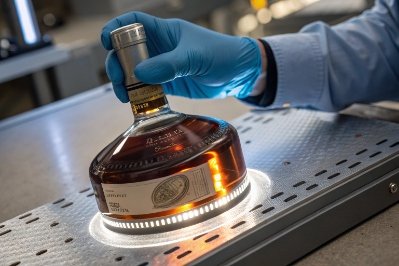
Anti-counterfeit on glass works best when it is layered:
Layer 1: Visible feature (consumer confidence)
A molded crest, a tactile neck pattern, or a crisp deboss medallion gives a quick “this feels real” signal. This is not a full security system, but it reduces casual fakes.
Layer 2: Covert micro-feature (hard to imitate)
Laser microtext, micro-engraved serial numbers, or tiny guilloche-style patterns can be placed on the heel, under the label panel, or around the neck ring. The mark can be readable with a loupe or a phone macro lens. The key is consistent placement and a mark that survives abrasion.
Layer 3: Digital linkage (track and verify)
A micro-engraved code can link to a digital identity system. Even a simple “verify page” can help, but the strongest programs tie into controlled serialization and internal audits.
A useful standard mindset is to evaluate authentication features by performance criteria: resistance to tampering, ease of use, and reliability. This keeps the project practical and helps align brand, factory, and distribution teams.
| Security layer | Example on glass | Who uses it | What it blocks |
|---|---|---|---|
| Overt | embossed crest | consumer and bartender | casual counterfeits |
| Covert | microtext laser mark | inspectors and staff | higher-effort copies |
| Forensic | taggants in ink/label | labs | organized counterfeit rings |
| Digital | serialized code | brand + consumer | gray market and refills |
Micro-engraving is easiest to integrate when the bottle already has a defined “quiet zone” for marking. The heel, base edge, and back label panel are common zones. It also helps to plan early so the engraving does not fight with coatings or frosting.
The best anti-counterfeit design still respects brand aesthetics. A luxury bottle should not look like industrial equipment. That is why micro-engraving is valuable: it can be subtle while still being effective.
Which finishes balance luxury with recyclability?
Luxury packaging now needs a second story: what happens after use. Some finishes look amazing but create friction in recycling. The best designs plan for both.
The most recycle-friendly luxury finishes are mold-based emboss/deboss, selective frosting/etching, and minimal ceramic or screen printing. Heavy full-body paints, thick metallization, and complex sleeves can reduce recycling quality, so the balance uses “less coating, more glass design.”
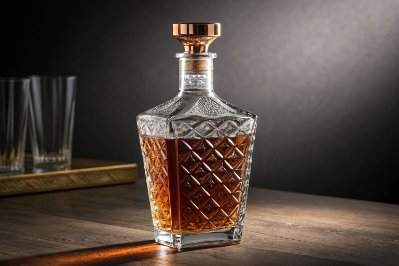
Start with the most sustainable luxury tool: the mold
Embossing and debossing add luxury without adding foreign layers. They do not need to be separated in recycling, and they survive reuse cycles. A strong molded identity can reduce the need for full-coverage labels and heavy coatings.
Use surface effects that stay “glass-like”
Frosting and etching change the surface of the glass itself. They can be a better sustainability choice than thick paints because there is less foreign material. Selective frosting can create premium contrast while keeping most of the bottle close to “naked glass.”
Keep coatings strategic and removable when possible
Paint and metallization can still be used, but selective placement helps. A painted back panel plus a clear front window can keep shelf impact while reducing coating mass. A small foil logo can deliver luxury without a full metallic shell.
Think like a recycler, not only like a designer
Recycling systems often sort by color and prefer clean cullet. Heavy coatings, glue-heavy sleeves, and mixed-material decorations can push bottles into lower-value streams. Brands that want both luxury and recyclability 7 often do three simple things:
- avoid full-body opaque coatings unless necessary,
- reduce sleeve coverage or choose easy-release solutions,
- use mold identity so decoration can be lighter.
| Finish choice | Luxury score | Recyclability friendliness | Best compromise version |
|---|---|---|---|
| Mold emboss/deboss | High | Very high | use deeper relief + clean panels |
| Selective frosting | High | High | frost zones, keep clear windows |
| Screen printing (limited) | Medium-High | High | small logo + legal text only |
| Full-body paint | High | Medium-Low | paint only part, keep clear areas |
| Full metallization | Very high | Low-Medium | small metallized medallion only |
| Full shrink sleeve | Medium-High | Low unless designed right | perforated, easy-remove sleeve |
A balanced “luxury + recyclable” bottle usually looks simple from far away and rich up close. It uses glass geometry, texture, and selective accents. That approach protects both brand image and end-of-life outcomes.
Conclusion
Deep processing builds spirits bottle value through permanent mold texture, layered surface finishes, integrated security marks, and smart material choices. The best programs deliver luxury while keeping coatings selective and recycling outcomes realistic.
Footnotes
-
Detailed overview of embossing and debossing techniques used for high-end glass packaging identification. ↩ ↩
-
Effective strategies for integrating anti-counterfeit features into premium spirit bottle designs. ↩ ↩
-
Insights into the hot stamping process for applying metallic foils to decorative containers. ↩ ↩
-
Technical guide on screen printing applications for durable and high-resolution glass bottle graphics. ↩ ↩
-
Analysis of laser engraving for high-precision marking and personalization on finished glass products. ↩ ↩
-
Understanding the vacuum metallization process for creating reflective finishes on luxury packaging. ↩ ↩
-
Best practices for balancing luxury decorative finishes with the technical requirements of modern glass recycling. ↩ ↩






