
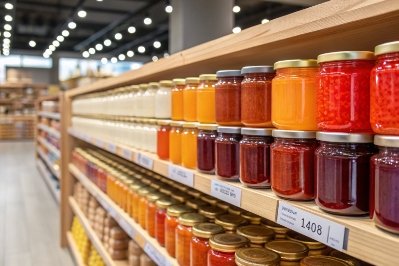
Plastic can hold food, but it can also hold smells. A weak barrier can also let moisture move, then texture and flavor change before customers even open the jar.
Glass is the go-to for jam and honey because it stays neutral in taste and smell, blocks moisture and oxygen well, handles hot-fill and pasteurization, and sells better on shelf through clarity and premium cues. It also supports reuse and true recycling over many cycles.
Glass wins for jam and honey because it solves several problems at once. It is inert, so the product tastes like the recipe, not the container. It is also a strong barrier, so the jar helps protect the set of jam and the aroma of honey over time. On the production side, glass fits heat processes like hot-fill and water-bath pasteurization 1 without warping. On the sales side, glass shows the product clearly, which matters for fruit pieces, color, and honey crystallization. On the sustainability side, glass can be reused many times and recycled into new glass again and again when the local system is set up for it.
Why jam and honey punish weak packaging
Jam is a sugar-acid system that can still ferment or mold if oxygen, moisture, or contamination 2 enter after filling. Honey is stable by nature, but it is hygroscopic, so it can absorb moisture from the air 3 if the seal is weak. Both products are sensitive to off-odors because consumers expect “clean” sweetness. This is where glass feels simple and safe.
What “better shelf life” really means in practice
For jam and honey, packaging performance often shows up as:
-
less flavor drift over months,
-
fewer loose lids or leaks,
-
cleaner label presentation after shipping,
-
lower complaint rates about “plastic taste” or “weird smell.”
| Benefit area | Jam impact | Honey impact | Why glass helps |
|—|—|—|—|
| Taste and aroma | Keeps fruit notes clean | Keeps floral notes clean | Inert, nonporous surface |
| Barrier performance | Protects set and color | Reduces moisture pickup | Very low moisture transmission |
| Heat process fit | Handles hot-fill and pasteurization | Handles warm filling and re-liquefy | No warping under common heat steps |
| Merchandising | Shows fruit, texture, set | Shows clarity and crystals | High transparency and premium look |
| Sustainability | Reuse programs work well | Home reuse is common | Durable and recyclable long term |
For many brands, the jar is not just a container. It is the first “proof of quality” customers hold in their hands.
If the goal is fewer returns, better shelf presence 4, and a longer product life, the jar choice deserves the same attention as the recipe.
Does glass prevent odor/taste transfer and moisture ingress?
Odor transfer is the fastest way to lose trust. Moisture ingress is the slow way to lose texture. Both can happen even when the food itself is made perfectly.
Yes. Glass does not absorb odors or flavors, and it is one of the best barriers against moisture movement. With the right lid and liner, it keeps jam from picking up off-smells and helps honey resist moisture pickup from humid air.
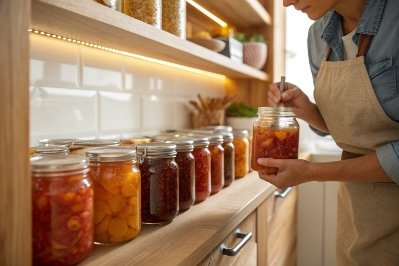
Glass is nonporous. That simple fact matters more than most buyers expect. When a container wall has no pores, it does not “hold” strong aromas the way some plastics can. That is why a jar used for spicy jam or infused honey can be cleaned and reused without leaving a ghost smell behind. For brands, it also means fewer complaints that the product “tastes like the packaging.”
Moisture control is another hidden win. Honey is hygroscopic. If the seal lets humid air exchange with the headspace, honey can gain water over time. That can increase fermentation risk and change texture. Jam also depends on the right water activity and a clean seal. Moisture exchange can affect surface condition, and oxygen entry can support mold growth after opening. Glass itself provides a strong barrier, but the seal system completes the job. A good metal lug lid or twist-off cap with a suitable compound can maintain a tight seal and reduce headspace exchange.
A practical point from real production floors: many “jar issues” are actually closure issues. The glass jar can be perfect, but a liner that is too soft, too hard, or not suited for oily fruit spreads can lead to micro-leaks. So the selection should treat jar + lid as one unit.
Quick checks that prevent moisture and odor failures
-
Choose food-grade, heat-tolerant sealing compounds for hot-fill.
-
Control torque and application pressure so the seal is consistent.
-
Use headspace targets that match the process and product viscosity.
| Risk | What causes it | What glass prevents | What the closure must still do |
|—|—|—|—|
| “Plastic taste” complaint | polymer interaction or absorbed odors | Eliminates wall absorption | Avoid odor-active liners and gaskets |
| Moisture pickup in honey | headspace exchange in humidity | Blocks moisture through the wall | Maintain a tight seal over time |
| Jam surface mold | oxygen entry + contamination | Reduces oxygen permeation | Provide a stable vacuum or tight closure |
| Aroma loss | volatile compounds escaping | Minimizes diffusion through wall | Keep cap tight and liner stable |
When the goal is consistent taste, clean aroma, and stable texture, glass gives a strong baseline, then the lid choice locks it in.
Are hot-fill and pasteurization safer in glass?
Food safety is not only about the recipe. It is also about whether the container can survive the process without creating cracks, leaks, or seal drift.
Yes. Glass handles hot-fill and common pasteurization steps well because it does not soften or warp at those temperatures. With correct jar geometry and a process-friendly lid system, glass reduces failure risk during heating and cooling.
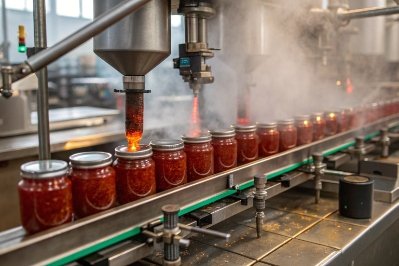
Jam production often uses hot-fill or hot-fill plus a short hold to build a stable seal and reduce microbial risk. Water-bath canning and pasteurization steps can also be part of the plan, especially for shelf-stable jam formats. Honey is different because it is naturally stable, but warm filling and controlled heat steps are common for flow and filtration. In both cases, glass performs well because it stays rigid through heat steps. That rigidity keeps the finish dimensions stable, which helps the cap seal consistently.
The key is not “glass can take heat.” The key is “glass can take the heat cycle.” Thermal shock 5 happens when hot jars meet cold air drafts or cold rinse water too fast. A good process uses controlled preheating and controlled cooling. The jar design also matters. Smooth shoulder transitions and stable bases reduce stress concentration. For jam, the vacuum seal is part of the safety story. As the product cools, it contracts and pulls the lid down, creating a vacuum. Glass supports that vacuum without collapsing, and the lid gives a visible seal signal in many designs.
From a packaging investment view, glass also makes validation easier because it is dimensionally stable. Once the process is tuned, the results stay repeatable. That repeatability reduces scrap and avoids “mystery leaks” at retail.
Practical process notes that protect glass performance
-
Pre-warm jars before hot-fill to reduce ΔT shock.
-
Avoid cold water contact on very hot glass.
-
Confirm the sealing compound is rated for the temperature and acidity.
| Process step | Main risk | How glass helps | What to control |
|—|—|—|—|
| Hot-fill | thermal shock, finish expansion | stays rigid, stable finish | preheat, fill temp, line drafts |
| Cooling | vacuum formation, seal set | supports vacuum and headspace | cooling profile, cap torque |
| Pasteurization | heat exposure, label/ink failure | container stays stable | decoration/label materials |
| Distribution | impact, vibration | rigid protection | case pack, dividers, pallet wrap |
Hot-fill and pasteurization are safer in glass when the jar and lid are chosen for the process, not only for looks. That is where a good supplier helps most.
Do transparency and label panels help merchandising?
Jam and honey are bought with the eyes first. If the jar looks clean and premium, the product feels safer and more worth the price.
Yes. Clear glass shows color, set, and inclusions, and it lets customers judge quality fast. Flat label panels and consistent diameters make labeling clean, which improves shelf impact and reduces label waste on the line.
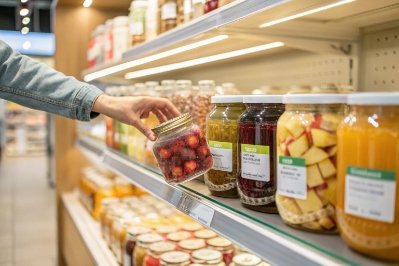
Transparency is not only “pretty.” It is information. Jam buyers look for fruit pieces, set firmness, and color. Honey buyers look for clarity, crystallization, and foam level. Clear glass with high transparency 6 communicates those cues without extra words. This is a big advantage in crowded shelves where shoppers decide in seconds.
Label panels matter just as much. A jar can have great glass quality and still look messy if the label wrinkles, skews, or lifts at the edges. A smooth, consistent label area makes labeling faster and reduces reject rates. It also supports multiple label formats: wrap labels for mass retail, front/back labels for premium, and paper labels for artisan stories. A stable panel helps both automatic labeling lines and hand labeling for small batches.
A second merchandising detail is “premium feel.” Glass has weight and rigidity that signals value. That is one reason artisanal jam, monofloral honey, and gift sets often stay with glass. Even when the food is the same, the jar changes perceived quality. This matters for ROI because packaging helps defend a higher shelf price.
Small design choices that sell better
-
Choose a jar with a clear label panel and a consistent diameter.
-
Avoid extreme embossing under the label if using paper.
-
Select closure colors that match brand cues (gold, black, white) while keeping food-contact compliance.
| Merchandising goal | Jar feature that helps | Why it works | Line-side benefit |
|—|—|—|—|
| Show product quality | high clarity glass | buyers trust what they see | fewer “is it separated?” questions |
| Premium positioning | heavier base or clean profile | stronger hand-feel | less deformation in handling |
| Clean branding | flat label panel | labels sit flat and read well | lower label scrap rate |
| Line extensions | same finish across sizes | closures and cartons can be shared | fewer changeovers |
For jam and honey, the jar is part of the story. Transparency and label control make that story easier to sell.
Are jars more reusable and recyclable long term?
“Sustainable” only works when customers can actually reuse or recycle the pack without trouble. Glass is not perfect, but it is one of the most proven long-life options.
Yes. Glass jars are highly reusable because they clean well and do not hold odors. They are also widely recyclable, and glass can be remelted into new glass many times. The real-world result depends on local recycling systems and color sorting.
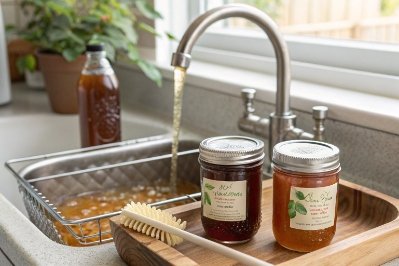
Reuse is where glass shines for jam and honey. Many households keep jars for spices, snacks, meal prep, and pantry storage. That behavior matters because it extends the life of the package far beyond one use. Glass supports this because it handles dishwashing, it resists staining, and it does not retain smells. Honey jars also have a special reuse advantage: warm water can remove residue without deforming the container.
Recycling is the second layer. Glass is recyclable, and it can become new container glass when the recycling stream is clean. The strongest long-term outcome happens when:
-
labels and adhesives release cleanly in washing,
-
closures are removed or separated,
-
the glass color is common in the local recycling systems 7.
For brands, “design for recycling” is not only a statement. It is a spec choice. Simple labels, recyclable inks, and easy-to-remove sleeves improve cullet quality. Standard shapes can also support returnable and refill programs, especially in local markets where customers bring jars back.
There is a real trade-off: glass is heavier than many plastics, so transport emissions can rise if logistics are not optimized. The best approach is to design the full pack system: lighter-weight glass where safe, strong case packs, and pallet patterns that reduce breakage.
Sustainability that customers can actually do
-
Offer refill packs in pouches while keeping a durable jar as the “forever container.”
-
Use common jar families so reuse is easy and parts are replaceable.
-
Choose labeling that peels or washes off cleanly.
| Sustainability lever | What improves | Why glass supports it | What to watch |
|—|—|—|—|
| Reuse | lower packaging waste per serving | easy cleaning, odor-free | lid replacement availability |
| Recycling | closed-loop material potential | remeltable material | color stream and local access |
| Lightweighting | freight efficiency | modern jar designs can reduce mass | impact resistance and breakage |
| Refill programs | customer loyalty and repeat buys | jar becomes a branded asset | hygiene and return logistics |
Long term, glass jars build a “keep it” habit. That habit is a real advantage for jam and honey brands that want premium positioning and repeat purchase behavior.
Conclusion
Glass protects jam and honey through inert contact, strong barriers, and heat-process fit, while also improving shelf appeal and supporting reuse and recycling when the total system is designed well.
Footnotes
-
Technical guide on pasteurization methods used to ensure the microbiological safety of jarred food products. ↩ ↩
-
Overview of common food contaminants and safety protocols to prevent spoilage in preserved goods. ↩ ↩
-
Scientific explanation of how honey interacts with environmental humidity and the importance of airtight seals. ↩ ↩
-
Insights into how packaging design and material choice influence consumer behavior and retail shelf impact. ↩ ↩
-
Understanding the physical limits of glass when exposed to rapid temperature changes during industrial filling. ↩ ↩
-
Analysis of glass clarity and its role in communicating product freshness and quality to shoppers. ↩ ↩
-
Detailed look at the infrastructure required for effective glass collection, sorting, and closed-loop recycling. ↩ ↩






