
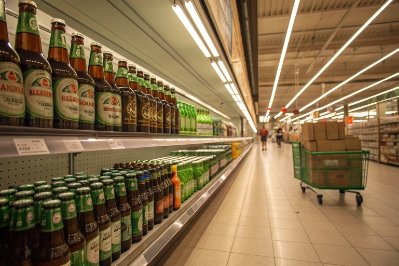
Beer can taste perfect at the brewery and “skunky” on the shelf. light-strike 1 happens quietly, then it shows up as one harsh, embarrassing sip.
Beer bottles are mostly brown or green because darker glass reduces light-strike, the photochemical reaction that creates skunky off-notes. Brown protects far better than green, but tradition, branding, and supply chains keep both common.
The real enemy is not heat, it is short-wavelength light
Light-strike is a packaging problem first. Beer contains hop-derived compounds, and beer also contains riboflavin 2 (vitamin B2). When UV and blue light reach the beer, riboflavin can act like a trigger, and the hop compounds can break down into ultra-potent sulfur compounds. The most famous one is MBT 3, the “skunk” note that can ruin a beer fast. The key detail is wavelength. The harmful band is mostly UV and the blue end of visible light, not the warm orange/red tones.
amber (brown) glass 4 became the practical fix because it blocks much more of that UV/blue band. Green blocks some, but not enough for long exposure under retail lighting. Clear blocks the least. That is the functional reason darker bottles dominate, even in modern supply chains.
Why green survived even though it protects less
If bottle color were only physics, most beer would be brown, full stop. But packaging is also a system of habits, existing molds, returnable pools, and brand codes. Many legacy brands built recognition around green glass. In some markets, green became a visual shortcut for “import” or “premium,” and those associations are hard to abandon.
“Freshness” is also shelf reality
A brewery can manage oxygen, carbonation, and cold storage. It cannot control every store shelf, every sunny window, or every outdoor event cooler. Dark glass is a passive insurance policy against skunky off-notes 5 caused by mistakes outside the brewery’s control.
| Bottle color | Light-strike risk on a bright shelf | Why brands still choose it | What usually needs extra help |
|---|---|---|---|
| Brown / amber | Lowest | Strong protection + classic beer look | Still needs good storage habits |
| Green | Medium | Heritage + premium cues + existing supply | Needs cartons, fast turnover, or recipe tricks |
| Clear | Highest | Product visibility + branding | Needs full light shielding or light-stable bittering |
A bottle color choice is not only about “taste vs looks.” It is a decision about risk in the real world. The next sections break down how much protection each color provides, why supply chains keep certain colors alive, and what brands can do when they insist on green or clear.
If a brand wants to win both taste and shelf appeal, it helps to treat light as a controllable input, not a random accident.
How does amber outperform green against light-strike?
Light-strike is not a slow “aging” problem. Under strong sunlight or retail lighting, it can show up quickly, and it only takes a tiny amount of the skunky compound to be obvious.
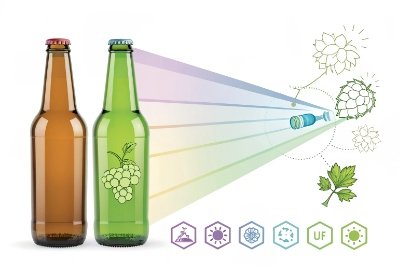
Amber outperforms green because amber blocks more of the UV and blue wavelengths that drive the light-strike reaction. Green blocks mainly the deeper UV region, while letting more of the damaging blue range through.
What “better protection” means in practice
The damaging wavelengths are often described as “under ~500 nm,” which includes UV (<400 nm) and much of the blue region (roughly 400–500 nm). Amber glass cuts a large portion of that region, so fewer photons reach the beer. Green glass may block more in the UV band than clear, but it still allows much more blue light through than amber. That difference matters under supermarket LEDs, fridge lights, and patio sun.
Why the difference feels bigger than it looks on paper
MBT has an extremely low flavor threshold. That means a small increase in transmitted light can still create a big sensory jump. So even if green “helps a bit,” the consumer experience can still be “skunked” if the beer sits under bright light long enough.
When green can be “good enough”
Green can work when the brand also controls exposure time. Fast distribution, cartons that stay on until purchase, and cold display can reduce the window for damage. But when exposure is uncontrolled, amber is the safer bet.
| Factor | Amber (brown) | Green | Why it matters on shelves |
|---|---|---|---|
| UV blocking | Very high | Partial | UV can trigger reactions quickly |
| Blue-light blocking (400–500 nm) | Stronger | Weaker | Blue is common in retail lighting |
| Exposure tolerance | Longer | Shorter | Longer tolerance means fewer returns |
| Operational dependence | Lower | Higher | Green needs better “dark chain” habits |
The simple takeaway is this: amber reduces the need for perfect behavior in storage and retail. Green needs a cleaner chain of custody. If the supply chain is messy, amber saves the brand from other people’s mistakes.
Do heritage and supply chains explain beer-bottle color choices?
A color decision can look irrational until the supply chain is visible. Glass color is not just a pigment choice. It is molds, cullet supply, brand identity, and long-running purchasing contracts.
Yes. Heritage and supply chains explain most green-bottle persistence: legacy brand recognition, historic glass availability, and existing bottle pools. Brown is the functional default, but green can be the commercial default for certain brands.
Heritage: the label is not the only brand asset
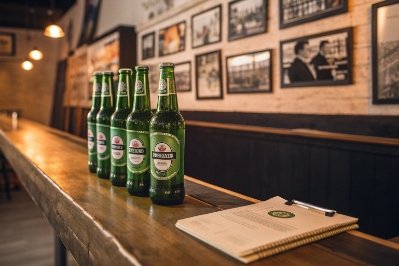
Some beer brands are recognized by silhouette and color before the logo is read. Changing from green to brown can feel like changing the brand’s face. That is why even a “better” technical choice can lose in marketing meetings. The bottle color carries meaning: tradition, import cues, or a signature shelf look.
Supply chains: the cost of change is bigger than the glass
Switching color is not just switching suppliers. It can mean:
- new molds or new procurement for standardized bottles,
- requalification of case packs and labeling,
- updates to returnable systems (where used),
- renegotiation with glass plants that specialize in certain colors.
In returnable bottle pools, color standardization is a real operational tool. Mixed colors complicate sorting and can reduce cullet quality when bottles reach end-of-life. Many systems historically leaned toward darker colors because they hide scuffs and survive repeated washing cycles visually.
Why “brown shortage” stories keep coming up
History shaped habits. In some periods, certain colors were easier to produce or easier to source at scale. Once a major brand commits to a color, the ecosystem around that choice grows.
| Decision driver | Why it pushes brown | Why it can still push green |
|---|---|---|
| Product protection | Better light barrier | Acceptable if exposure is controlled |
| Brand identity | “Classic beer” signal | “Import/premium” signal in some markets |
| Supplier ecosystem | Widely available | Locked-in contracts and existing molds |
| Returnable pools | Easier to standardize | Legacy pools already exist |
| Retail strategy | Fewer complaints | Strong visual differentiation |
Color choices often look like taste decisions, but they are usually system decisions. When a brand already owns a green-bottle system, the cost to change can be larger than the cost of managing light risk in other ways.
Can cartons or sleeves compensate for clear or green glass?
Clear bottles look great, and green bottles look iconic. The problem is that light does not care about aesthetics. So the real question is whether secondary packaging can reliably keep the beer in the dark.
Yes, cartons and sleeves can compensate—if they block light consistently from brewery to consumer. In practice, compensation works only when the package stays covered and the supply chain avoids “bright shelf” exposure.
Secondary packaging helps, but only when it stays on
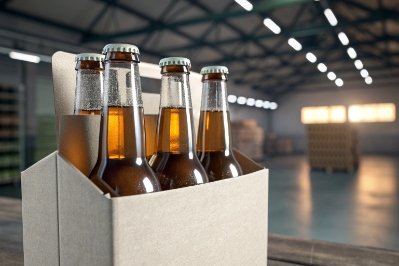
A full carton blocks light well. A full wrap sleeve can also help. The weak point is real behavior: multipacks get opened, bottles get displayed loose, and single bottles get placed under direct lighting. That is why clear and green bottles still face higher risk in mixed retail environments.
Coatings and “UV blockers” are another lever
Some brands use UV-protective coatings on glass. This can reduce transmission while keeping a clear look. The risk is durability and consistency. Coatings must survive abrasion, condensation, and line handling. If coating performance varies, the brand gets unpredictable flavor outcomes.
Recipe-level mitigation exists: light-stable bittering
There is also a brewing-side solution. Light-strike is strongly tied to traditional iso-alpha acids. Modified hop extracts (often called light-stable bittering 6 products) can reduce or prevent the MBT pathway. That is one reason some clear-bottle beers can survive better than expected. It is not magic glass. It is chemistry plus packaging plus logistics.
The hard truth: cans and kegs win on light
If light protection is the top priority, opaque packaging has an advantage. This is why cans and kegs are so reliable against light-strike.
| Mitigation method | How well it works | Where it fails most often | Best-fit use case |
|---|---|---|---|
| Full carton | High | Singles displayed outside carton | Multipacks, club stores |
| Shrink sleeve / full label wrap | Medium to high | Abrasion, partial coverage | Premium branding + some protection |
| UV coating on glass | Medium | Coating wear, inconsistent application | Clear look with controlled channels |
| Light-stable hop extracts | Medium to high | Style limits, cost, flavor targets | Clear/green bottle strategies |
| Cans/kegs | Very high | Not a bottle format | Maximum protection needs |
Cartons and sleeves can compensate, but only if the brand also manages retail behavior. The most reliable clear-bottle program is a “dark chain” program: covered transport, covered retail, fast turnover, and chemistry designed for light exposure.
How do recycling streams handle different colors?
Bottle color is not just a marketing choice. It affects recycling value, sorting complexity, and what new products the cullet can become.
Recycling streams usually sort glass into clear (flint), amber (brown), and green. Clear cullet often has the highest demand and the tightest contamination limits, while green and amber have different end markets and can be less valuable in many regions.
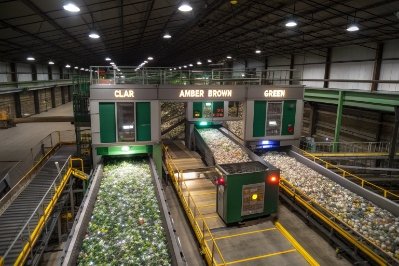
Why color sorting matters
Glass can be recycled many times, but color control is strict. A small amount of the wrong color can tint an entire batch. That is why recycling facilities often separate flint, amber, and green using optical sorting systems 7. The market rewards cleaner cullet. When glass is too mixed or too dirty, it may be downgraded into lower-value uses.
Why clear is usually “king”
Clear glass has the widest end-use demand because it can be turned into many clear containers. It also has the lowest tolerance for colored contamination. That makes flint a high-value stream when it is clean, and a fragile stream when it is contaminated.
Where amber and green fit
Amber and green can be recycled back into colored container glass when there is a steady buyer. But the economics depend on local demand. Some regions have strong amber demand due to beer and food packaging. Others have limited green demand, which can reduce value. The practical outcome is that a brand choosing green may face a more constrained cullet market in some locations, even if the bottle is fully recyclable.
What brands can do about it
Brands can support recycling performance by:
- using standard colors that match local demand,
- avoiding decorative elements that contaminate cullet,
- designing labels and adhesives that wash off cleanly,
- using returnable systems where the market supports them.
| Color stream | Typical sorting approach | Typical market strength | Main contamination sensitivity |
|---|---|---|---|
| Clear / flint | Optical sorting + strict QC | Often highest | Very sensitive to green/amber contamination |
| Amber / brown | Optical sorting | Often strong in container markets | Moderate sensitivity |
| Green | Optical sorting | Can be weaker in some regions | More tolerant, but fewer high-value uses |
Recycling can handle all three colors, but “recyclable” is not the same as “equally valuable.” Color choice can shift the economics of recycled content and the stability of supply over time.
Conclusion
Brown bottles dominate because they best reduce light-strike. Green persists for heritage and supply reasons. Cartons and chemistry can help, and recycling value depends heavily on color sorting and demand.
Footnotes
-
A scientific explanation of how light reacts with hop compounds to create off-flavors in beer. ↩ ↩
-
Understanding the chemical role of Vitamin B2 in triggering photochemical reactions within bottled beverages. ↩ ↩
-
Technical data on the specific sulfur compound responsible for the unpleasant smell of light-damaged beer. ↩ ↩
-
How the chemical composition of amber glass provides the highest level of UV protection for sensitive liquids. ↩ ↩
-
Learn how UV light exposure leads to the distinct skunky aroma that ruins premium beverage quality. ↩ ↩
-
Insights into using modified hop extracts to maintain flavor stability in transparent or green glass packaging. ↩ ↩
-
Advanced technologies used in recycling facilities to separate glass by color and ensure high-quality cullet. ↩ ↩






