
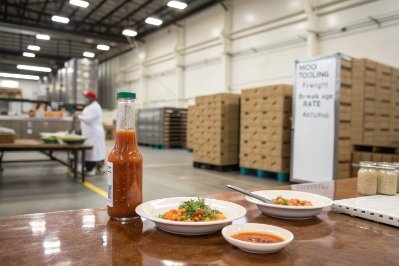
One wrong bottle choice can turn a great sauce into a leaking, stained, hard-to-pour mess. That mistake shows up fast in reviews and returns.
Invest in sauce bottles by treating packaging as a system: product chemistry + process heat + dosing experience + total landed cost. The best ROI comes from matching material, closure, and logistics to your real line and market.
Sauce bottles look simple, but they sit at the center of food safety, shelf life, consumer experience, and shipping cost. The right bottle protects flavor, keeps seals tight, and makes dosing easy. The wrong bottle causes oil seepage, vinegar stains, cap corrosion, label lift, and broken cartons in transit. A smart investment starts with a clear picture of the product chemistry 1 itself. Is it acidic like vinegar-based hot sauce? Is it oily like chili oil or pesto-style sauce? Is it thick like ketchup or thin like a soy-based marinade? Those traits decide what the bottle must resist.
The next anchor is the process. Hot-fill 2, pasteurization, and retort are not “small differences.” They dictate glass thickness, headspace design, closure liner selection, and torque settings. Then comes usability. If the sauce is meant to be dripped, you need a narrow orifice and anti-drip control. If it is meant to be squeezed, the bottle and fitment must match viscosity. Finally, there is the business side. MOQ, tooling, and logistics can make a “cheap” bottle expensive once breakage, pallet count, and changeover time are included.
A practical way to structure the decision
Instead of asking “Which bottle looks best?”, it helps to ask “Which failure is most expensive?”
-
Food safety and shelf stability failures cost the most.
-
Leaks and dosing frustration cost the most in reviews.
-
Freight and breakage cost the most in scaling.
| Decision area | What to define first | What usually goes wrong | What fixes it |
|---|---|---|---|
| Product chemistry | pH, oil %, salt, spice, particulates | liner swelling, staining, flavor scalping | liner/material compatibility screening |
| Thermal process | hot-fill vs retort vs cold-fill | cracked glass, loss of vacuum, cap buckling | correct glass weight + finish + process profile |
| Dispensing | drip, pour, squeeze, spoon | clogging, splatter, messy neck | correct orifice + fitment + neck geometry |
| Supply chain | case pack, pallet, e-com | breakage, high freight, slow lead time | optimized pack + standard bottle family |
| Compliance | food contact + labeling | recalls, rejected imports | documented materials + traceability |
Getting these five parts aligned keeps the investment rational. It also keeps the design team and the operations team on the same page.
The next sections break down the decisions that usually decide profit or pain.
Are glass/liner materials compatible with acids/oils?
Acid and oil are silent enemies. They do not always fail on day one. They show up later as rusted caps, swollen liners, and “why does this taste different?”
Yes, compatibility matters as much as the bottle. Glass is usually safe for sauces, but the liner and fitment materials must match acid, oil, salt, and heat. A quick screening saves months of complaints.
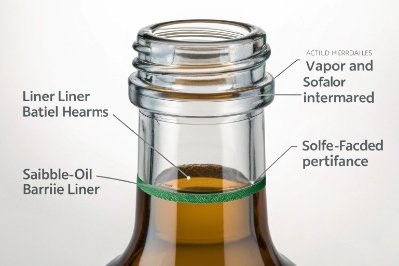
Glass itself is usually a strong choice for sauces because it is a high barrier 3 and it stays inert with most food acids and oils. A vinegar-based sauce, tomato-based sauce, and many marinades can live happily in glass without flavor pickup and without oxygen transmission issues. The real weak point is often the closure system 4. The liner touches the sauce through contact, headspace vapor, and cap condensation during cooling. If the liner swells, softens, or loses compression, the seal fails. If the cap corrodes, the threads seize or the seal edge becomes rough, and micro-leaks begin.
Acidic sauces push the system through low pH, salt, and sometimes sulfur compounds. That combination can be harsh on certain metals and on certain low-grade liners. Oily sauces bring a different risk. Oils can soften some polymers and can carry aroma compounds that migrate into liners, which can create off-odors in repeated open-close cycles. Some sauces are both acidic and oily. That is the toughest combo. It demands a liner that resists acid and resists oil, while keeping compression after heat.
A simple compatibility plan is better than guessing:
-
Identify pH range and oil content.
-
Run accelerated contact tests with actual sauce at storage temperature and at abuse temperature.
-
Inspect liner swelling, odor change, seal torque retention, and visible seepage.
Common liner choices and what they mean in practice
Not every brand needs the “highest spec” liner. The goal is the correct liner for the sauce and the process.
| Sauce profile | Main risk | Common closure/liner direction | What to watch during trials |
|---|---|---|---|
| High acid, low oil (vinegar hot sauce) | corrosion, seal loss over time | acid-resistant liner, coated cap if needed | cap rust, liner edge attack, torque drop |
| Moderate acid, some oil (BBQ, chili sauce) | odor pickup, liner softening | oil-resistant liner with stable compression | odor transfer, liner creep, micro-leaks |
| High oil (chili oil, infused oils) | liner swelling, staining at neck | oil-resistant liner + drip control | seepage at threads, staining at finish |
| High salt + particulates (garlic sauces) | clogging + corrosion | robust fitment + resistant liner | clogging, grit on seal land |
| Retort products | heat + pressure + vacuum | retort-rated lug/cap system | buckle, liner set, vacuum loss |
This is also where a small design habit makes a big difference: keep the neck finish clean and consistent. A great liner cannot seal across chips, poor roundness, or heavy glass seams. Material compatibility is a system problem, so the bottle finish quality and the cap quality must be treated as part of the same spec.
If the chemistry match is right, the brand gets fewer leaks, fewer “metal smell” complaints, and longer shelf stability with less drama.
Do hot-fill/retort specs dictate jar geometry?
Many sauce launches fail not because the recipe is wrong, but because the bottle was designed for shelf appeal, not for thermal physics.
Yes, hot-fill and retort dictate geometry. Hot-fill demands thermal-shock margin and vacuum management. Retort demands even more: pressure resistance, stable closure interfaces, and shapes that survive repeated high-temperature cycles.
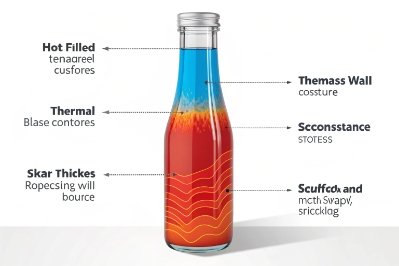
Hot-fill is usually the first heat process brands consider. The product is filled hot, capped, and then cooled. As it cools, a vacuum forms. That vacuum is helpful because it pulls the cap tight and supports shelf life. But it also creates inward load on the container and it amplifies any sealing weakness. Hot-fill bottles and jars need smooth geometry and controlled glass distribution to reduce thermal shock 5 when the inside is hot and the outside is cooler. Sharp shoulders, sudden wall thickness changes, and decorative deep embossing can become crack starters under rapid cooling.
Retort processing 6 exposes the sealed container to high heat and pressure, often in the neighborhood of 121°C conditions depending on the scheduled process. This pushes both the glass and the closure system. The container must survive not only temperature gradients but also pressure differentials during heating and cooling. Retort also punishes coatings and labels. Many standard label adhesives and inks fail in retort unless they are chosen for that exact process.
Geometry affects more than strength. It affects fill accuracy, headspace control, and how well bubbles escape during filling. It also affects how a cap seats under torque when the neck expands and contracts.
Geometry features that usually improve hot-fill performance
-
Smooth shoulder transitions.
-
Stable heel and base design.
-
Label panel that does not create thin sections.
-
Consistent wall thickness around the finish.
Retort adds more constraints
-
Avoid extreme height-to-width ratios that invite buckling stress.
-
Use finishes and closures that are proven for retort.
-
Choose shapes that allow even heat transfer in the retort.
| Process | What it “forces” in design | Typical geometry response | Validation focus |
|---|---|---|---|
| Cold-fill | handling and seal repeatability | lighter weight, more freedom | leak test + drop test + torque |
| Hot-fill | ΔT + cooling vacuum | moderate weight, smoother curves | thermal shock + vacuum retention |
| Hot-fill + pasteurization | added heat exposure | conservative finish and base | seal retention after heat cycles |
| Retort | heat + pressure + closure stability | retort-rated jars and finishes | process validation + seal integrity + vacuum/pressure |
A strong packaging investment starts by locking the process early. If the process is still uncertain, the safest move is to choose a bottle family that can handle the highest likely process, then optimize later. It costs more at unit level, but it protects the launch. The cheapest bottle is rarely the cheapest failure.
Which caps and orifice fitments improve dosing?
Consumers judge sauces with one hand. If dosing is messy, the brand feels cheap, even if the ingredients are premium.
Caps and fitments should match viscosity, particle size, and the way people use the sauce. The best dosing comes from the right orifice size, anti-drip features, and a closure that stays clean at the neck.
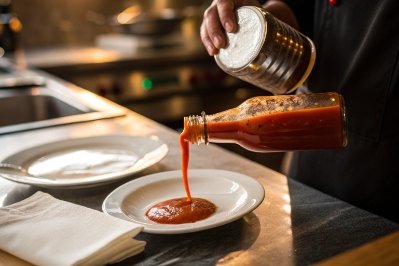
Dosing is where packaging becomes part of the product. A thin sauce splashes if the orifice is too large. A thick sauce frustrates users if the orifice is too small. A sauce with seeds or herbs clogs reducers that work perfectly for smooth liquids. This is why an “orifice fitment” decision is not a minor accessory choice. It is a core experience decision, and it affects repeat purchases.
For pour-style sauces, a controlled pour spout or reducer insert can improve accuracy and reduce waste. For drips and garnishes, a narrow tip gives precision. For squeeze-style sauces, the bottle wall flexibility matters more than glass, so many brands use plastic for squeeze use cases. But glass can still win for premium table sauces if the neck and fitment are designed for clean pouring and easy wiping.
Tamper evidence also matters. A shrink band or tear-off ring builds trust and reduces returns. A cap that feels secure and opens cleanly signals quality. The best closures also resist “neck creep,” where sauce migrates into the threads and makes the cap sticky.
Practical fitment rules that reduce clogging and mess
-
Match orifice diameter to the largest particle, not the average particle.
-
Add an anti-drip valve 7 for thin, oily sauces where surface tension causes creeping.
-
Use a cap design that shields threads from direct product contact when possible.
-
Test the full cycle: open, pour, close, invert, wipe, store.
| Sauce style | User action | Cap/fitment direction | Failure to avoid |
|---|---|---|---|
| Thin soy-based marinades | pour fast | controlled pour spout | splatter and over-pour |
| Vinegar hot sauce (smooth) | dash and drip | reducer insert or narrow orifice | neck creep and messy threads |
| Chili oil | drizzle | anti-drip + oil-resistant liner | oil seepage and sticky caps |
| BBQ sauce (medium) | pour or squeeze | wider orifice + clean-lip cap | glugging and residue |
| Chunky salsa-style sauces | spoon or wide pour | wide-mouth + lug cap option | clogging and consumer frustration |
The correct dosing system also improves ROI. It reduces consumer waste, reduces kitchen mess, and lowers complaint rates. It also helps brands differentiate without changing the recipe. When the pour looks clean, the product looks premium.
How do MOQ, tooling, and logistics affect ROI?
Packaging ROI is rarely decided by unit price alone. It is decided by landed cost, breakage, and how fast the supply chain can respond when sales move.
MOQ, tooling, and logistics shape ROI through cash tied in inventory, lead times, changeover costs, and freight efficiency. Standardizing a bottle family often beats custom shapes when scaling.

A sauce bottle investment has two cost layers. The first is obvious: bottle price, cap price, decoration, and cartons. The second is where most surprises live: mold tooling, minimum order quantities, safety stock, pallet utilization, and breakage. Tooling is a one-time cost, but it changes risk. A custom mold can create a unique shelf look, but it also locks the brand into one supplier path and longer replacement lead times. When demand spikes, a standard bottle can be sourced faster from multiple channels. That flexibility has a real dollar value, even if it is not listed on the quotation.
MOQ controls cash flow. If the MOQ forces six months of inventory, the brand pays for storage, ties up cash, and risks packaging obsolescence if labels or regulations change. On the other hand, too small an order can raise unit price and raise freight per unit. The best balance is often a “bottle family” strategy: one or two neck finishes across multiple sizes, shared caps, shared cartons, shared case packs. That reduces complexity and lowers reorder friction.
Logistics matters more with glass because weight and breakage risk amplify freight cost. A heavy glass bottle signals premium, but it also reduces units per pallet and increases shipping cost. For e-commerce, protective packaging can become a major cost line. For retail distribution, case pack and pallet pattern can decide whether the product flows smoothly through warehouses.
A simple ROI model that packaging teams can use
-
Unit cost is only 40–60% of true packaging cost.
-
The rest is freight, breakage, warehousing, and changeover time.
-
Faster replenishment can be worth more than a small unit discount.
| ROI driver | What it changes | How to improve it | What to measure |
|---|---|---|---|
| MOQ size | cash + storage | pick standard items where possible | inventory turns and write-offs |
| Tooling | uniqueness vs flexibility | use semi-custom decoration first | lead time and supplier risk |
| Case pack | freight and damage | optimize partitions and pallet pattern | breakage rate by lane |
| Pallet footprint | warehouse efficiency | choose square bottles for density | cases per pallet and stability |
| Line compatibility | downtime cost | match neck finish to current chucks | changeover minutes and scrap |
| Decoration method | speed and rejects | choose label-friendly panels | label scrap rate and rework |
The best bottle investment usually looks conservative on paper. It uses common neck finishes, proven caps, and shipping-friendly case packs. Then it adds brand value through decoration, labeling, and a strong dosing experience. That path keeps the ROI strong while still letting the product stand out.
Conclusion
A smart sauce bottle investment matches chemistry, heat process, dosing design, and total landed cost. The best ROI comes from proven closure systems, process-ready geometry, and supply-chain standardization.
Footnotes
-
Understand the chemical interactions between food products and packaging materials to ensure long-term shelf stability and safety. ↩ ↩
-
A guide to the hot-fill process, which uses heat to sterilize both the product and its container simultaneously. ↩ ↩
-
Learn how high-barrier materials prevent oxygen and moisture transmission to preserve the flavor and quality of bottled sauces. ↩ ↩
-
Explore various types of closures and liners designed to maintain seal integrity for different liquid and sauce viscosities. ↩ ↩
-
Insights into managing thermal shock in glass containers during rapid temperature changes in industrial filling and cooling lines. ↩ ↩
-
Detailed information on retort processing techniques used for high-temperature sterilization of shelf-stable food products in sealed containers. ↩ ↩
-
Discover how advanced anti-drip valves improve consumer experience by preventing messy spills and ensuring precise product dispensing. ↩ ↩






