
A carbonated soft drink can taste perfect on the line, then lose bite after weeks in the market. When that happens, the package gets blamed first.
Glass protects CO₂ and flavor extremely well, and it supports premium positioning and reuse. The trade-off is higher logistics cost and higher safety risk from breakage, so glass works best when the supply chain and closure system are designed for pressure and handling.
Glass is a classic CSD format because it is inert, stable, and familiar. But the cost and safety profile is different from PET and cans. The right answer depends on route length, returnable strategy, and how high the carbonation spec runs.
Does glass retain CO₂ and flavor better over time?
A soda that goes flat does not only lose bubbles. It loses aroma lift and crispness. That is why carbonation retention is a flavor topic, not only a “fizz” topic.
Yes. Glass is essentially impermeable to CO₂ and oxygen through the container wall, so long-term CO₂ retention and aroma stability are usually better than PET. In real life, closure seal quality and headspace oxygen still decide the outcome.
Why glass helps more than people think
For CSDs, the biggest packaging enemies are:
- CO₂ loss (less bite, less aroma “push”)
- oxygen ingress (oxidation, flavor dulling for sensitive flavors)
- flavor pickup (package taste or absorbed aromas)
Glass solves the container-wall part because it is fully impermeable 1. It does not breathe. It does not absorb aroma. It does not leach flavors into the drink. That is why many consumers say soda “tastes cleaner” in glass.
The closure is still the gatekeeper
A glass bottle can still lose CO₂ if the closure system leaks or if the cap application is inconsistent. Micro-leaks can happen when:
- torque is wrong (too low or too high)
- finish has micro-chips
- liner is not matched to carbonation and syrup chemistry
- bottle/cap threads are out of spec
So glass gives a strong baseline, but the seal system must be engineered, verified, and kept stable on high-speed lines.
| Factor | Glass bottle | PET bottle | What matters most for shelf life |
|---|---|---|---|
| CO₂ permeation through wall | near-zero | low but not zero | longer shelf = bigger gap |
| Oxygen permeation through wall | near-zero | low but not zero | sensitive flavors benefit |
| Flavor interaction | very low | depends on resin/additives | “clean taste” positioning |
| Real loss driver | closure / handling | closure + wall permeation | cap, liner, torque, QC |
A simple practical rule: when shelf life is long and carbonation is high, glass makes the CO₂ part easier, but only if cap control is tight.
How do weight and shatter risks affect logistics?
Glass feels premium, but freight does not care about premium. Freight cares about kilograms, cube, and damage rate.
Weight raises transport cost and emissions per unit shipped, while shatter risk adds packaging materials, slower handling, and breakage claims. These costs can exceed the bottle price difference if routes are long or if e-commerce is a major channel.
What weight changes operationally
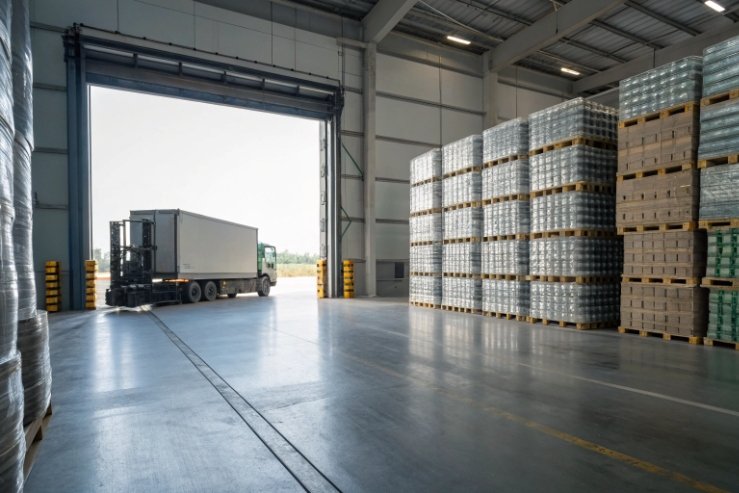
Compared with PET or cans, glass:
- increases case weight and pallet weight
- reduces how many units fit within truck weight limits
- increases handling fatigue and safety controls
- increases damage when a case drops
Even if breakage rate is low, the cost of one break is high: cleanup, safety protocol, spoiled adjacent product, and retailer complaints.
Shatter risk is a system-level cost
Shatter risk pushes spend into:
- dividers or partitions
- stronger corrugate
- slip sheets and edge protectors
- better pallet wrap patterns
- gentler conveying and lower line aggression
Glass also has “hidden” shatter costs at the plant:
- more careful depalletizing
- better empty-bottle inspection
- more glass break detectors and line stops
| Logistics topic | Glass impact | How to reduce pain |
|---|---|---|
| Freight cost | higher | maximize pallet density, optimize case count |
| Damage rate | higher risk | partitions, drop tests, stronger cartons, ISTA-style tests 2 |
| Warehouse handling | slower, stricter | train handling, use stable pallets |
| E-commerce | hardest channel | molded pulp, strong shippers, avoid singles if possible |
| Safety | higher injury risk | break zones, PPE, cleanup SOPs |
Glass can still be profitable in logistics when the network is short and stable, like local distribution, deposit loops, or direct-to-retail with full pallets.
Can returnables and recycling offset higher costs?
Many brands choose glass because sustainability is part of the promise. But sustainability can fail financially if reverse logistics is weak.
Yes, returnables can offset higher material cost when trip count is high, loss rate is low, and reverse logistics is efficient. Recycling helps brand messaging, but it does not automatically offset the cost the way reuse can.
Recycling vs returnables: they solve different problems
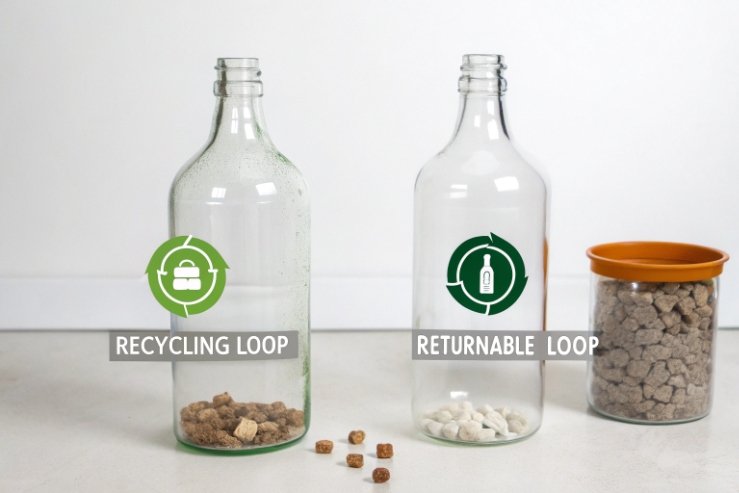
- Recycling reduces virgin material demand and supports circular messaging, but the bottle is still single-use in most markets.
- Returnables can cut packaging cost per fill, but they add operations: collection, sorting, washing, and inspection.
Returnables work best when:
- there is a deposit incentive
- the brand has high repeat purchase
- distribution is regional
- retailers support returns
- crates are standardized
Where returnables often break financially
Returnable glass can lose money when:
- bottles disappear (high loss rate)
- the network is too wide (high reverse freight)
- washing is poorly controlled (high break and high energy)
- inspection is weak (unsafe bottles stay in circulation)
So returnables require stricter standards than one-way glass. The pool must be protected as an asset.
A simple returnables budget model
| Driver | What improves economics | What kills economics |
|---|---|---|
| Trip count | many reuses per bottle | low reuse, high break |
| Loss rate | low loss, strong deposit | bottles not returned |
| Wash efficiency | stable washer control | etching, label residue, downtime |
| Pool management | standard crates, clear IDs | mixed formats, poor sorting |
| QC discipline | strict rejection criteria | letting damaged bottles loop back |
Recycling can still be a win even without returnables, especially when the brand can claim high recycled content and when local recycling infrastructure is strong. If you need a quick reference point for messaging and design checks, FEVE’s work on glass packaging recyclability 3 is a useful starting point. But the biggest financial offset comes from reuse, not from recycling alone.
Which closures and tests ensure pressure safety?
Carbonated soft drinks are pressure packages. Pressure safety is not only a bottle spec. It is bottle + cap + torque + handling + temperature.
Pressure safety comes from proven bottle strength (proof and burst), reliable closures and liners, controlled cap application torque, and real-world tests like thermal cycling, top load, and impact. Returnable pools add stricter inspection and abrasion control.
Closures that work for CSD in glass
Most CSD glass programs use one of these:
- Crown caps 4 (common for glass CSD in many markets)
- ROPP aluminum caps (strong tamper evidence, good sealing when matched)
- Swing-top (niche; convenience but needs careful spec and QA)
The liner matters as much as the cap shell. For CSD, the liner must:
- seal reliably under CO₂ pressure
- resist acids (citric, phosphoric) and flavor oils
- maintain seal under temperature swings
- avoid flavor pickup
In practice, strong options often include:
- PVC-free sealing compounds designed for beverages
- TPE-based liners engineered for carbonation sealing
- well-qualified crown lining compounds for crown systems
The right choice depends on the finish design and the filling conditions.
Core tests that prove pressure safety
A solid qualification plan often includes:
- Internal pressure resistance testing 5 (hydrostatic hold at a set pressure for a set time)
- Internal pressure burst test (ramp-to-failure to confirm margin)
- Leak testing on capped bottles (inversion, vacuum/pressure, or CO₂ loss checks)
- Thermal shock tests 6 (simulate cold chain and warm corridors)
- Vertical load (top load) testing 7 (stacking and conveyance stress)
- Impact/drop testing (bottle-level and case-level)
Returnables add:
- abrasion and scuff monitoring
- washer cycle simulation
- incoming inspection rules for chips, checks, and etched glass
| Risk | Best test | Pass signal | Common fix |
|---|---|---|---|
| bottle burst under CO₂ | burst test | failure pressure well above working | adjust wall profile, annealing, supplier |
| slow CO₂ loss | seal integrity test | stable pressure/weight over time | change liner, tighten torque control |
| breakage in distribution | packaged drop/vibration | acceptable damage rate | partitions, stronger cartons, pallet tuning |
| cold-to-warm abuse | thermal cycling | no cracks, no leaks | adjust glass quality, cooling curve, storage control |
| returnable aging | wash + inspection | low defect growth over trips | coatings, stricter reject criteria |
One practical closure rule for CSD
If the brand wants “long shelf life” and “no fizz loss,” the closure system must be treated like a critical component:
- define target torque range
- verify cap/liner compatibility with acids and flavor oils
- validate with accelerated temperature exposure
- track leakage and carbonation loss with trend charts
When these controls are in place, glass can deliver very stable carbonation and flavor for CSD.
Conclusion
Glass can keep CSD carbonation and taste very stable and support premium and reuse stories, but weight and shatter risks must be priced into logistics, and pressure safety depends on proven closures plus strong proof/burst and handling tests.
Footnotes
-
Verallia on glass being fully impermeable and preserving product quality. ↩ ↩
-
ISTA 3A parcel-shipment test overview for validating e-commerce packaging. ↩ ↩
-
FEVE recyclability guide coverage and context (Packaging Europe). ↩ ↩
-
AFNOR listing for ISO 12821 crown finish (26 mm) used with crown caps. ↩ ↩
-
ISO 14193 outlines internal pressure resistance test methods for glass containers. ↩ ↩
-
ISO 15163 covers thermal shock resistance and endurance test methods for glass containers. ↩ ↩
-
ISO 8113 vertical-load test overview for glass bottles (via Mecmesin). ↩ ↩






