
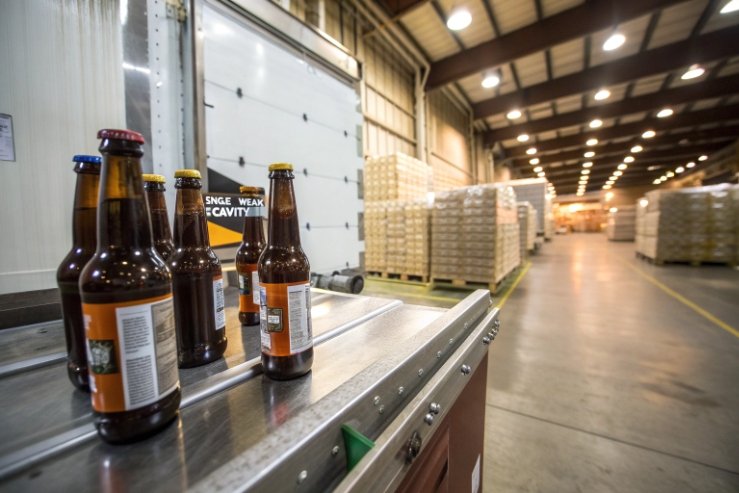
A beer bottle looks simple, yet one weak cavity or one scuff can turn carbonation into a safety incident.
Beer bottles usually run at only a few bar in real life, but standards qualify them far above that with hydrostatic proof tests around 1.0–1.6 MPa (10–16 bar) and burst-style ramp tests for added safety margin, especially for returnables.
Most buyers focus on “how much CO₂ the beer has,” then forget the real risk drivers: heat exposure, handling damage, and wall-thickness drift. A solid program connects internal pressure tests, top-load tests, and real-world handling simulations so failures are caught at the glass plant, not at the brewery.
What proof and burst pressures must beer bottles withstand?
When a bottle breaks under pressure, it is rarely because the beer is “too fizzy.” It is usually because the bottle had low margin.
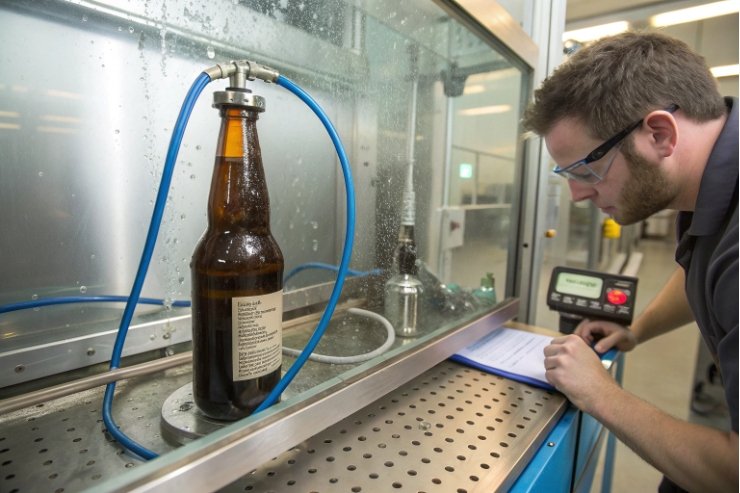
Proof tests qualify bottles at a fixed internal pressure for a set time (often 60 seconds), while burst tests ramp pressure until failure to confirm margin. Common minimum proof levels range from about 1.0 MPa for multi-trip specs to 1.2 MPa for standard grades and 1.6–1.8 MPa in stricter or export-focused requirements.
Proof vs burst in plain terms
A proof test answers: “Will bottles survive a defined pressure without cracking or leaking?”
A burst test answers: “How far above the proof level does the bottle actually fail?”
Most factory QA uses hydrostatic (water) pressure because it is safer and gives stable results. Test method families like ISO 7458: internal pressure resistance test methods for glass containers 1, ASTM C147: internal pressure strength of glass containers 2, and GB/T 4546: test methods for internal pressure resistance of glass bottles 3 describe two main procedures: a constant-pressure hold (proof) and a constant-rate ramp (burst). Many internal specs also lock a pressurization rate band (often around 0.4–0.6 MPa/s) so results are comparable across labs.
Typical pressure numbers you will see on specs
Beer inside the bottle is commonly only a few bar during storage, but standards qualify bottles much higher to cover temperature excursions, filling shocks, and defects. A useful conversion is 1.0 MPa ≈ 10 bar ≈ 145 psi.
Common bands used in practice:
- 1.0 MPa (10 bar / ~145 psi): seen in some multi-trip specifications as a minimum hydrostatic hold level.
- 1.2 MPa (12 bar / ~174 psi): often cited as a “qualified” internal pressure resistance level in some national standards and supplier grades.
- 1.4–1.6 MPa (14–16 bar / ~203–232 psi): used when higher safety margin is needed (hot corridors, export, tighter brand risk control).
- 1.8 MPa (18 bar / ~261 psi): sometimes used as a high-safety target in advanced markets or for very conservative programs.
These are not “what the beer runs at.” These are qualification pressures that create a buffer against the messy parts of real distribution.
How sample size and pass/fail are commonly set
For production, bottles are tested by lot using an acceptance plan (AQL or an agreed rule). One well-known approach from older multi-trip standards uses a lot definition (for example, up to 10,000 bottles per lot) and then pulls a few hundred bottles for staged checks. The pass rule is simple: if more than an allowed number of bottles fail proof pressure, the lot is rejected or escalated.
| Item | Typical setting | Why it exists |
|---|---|---|
| Lot definition | same capacity + same conditions + same mold set | keeps results meaningful |
| Proof hold time | often 60 s (some specs use ~1 min) | catches slow crack initiation |
| Pressurization rate | controlled band (often 0.4–0.6 MPa/s) | avoids shock bias |
| Pass/fail | “no break/leak” at proof pressure, limited defectives by plan | protects safety at scale |
| Escalation | tighten sampling or stop shipment if drift appears | prevents repeats |
A personal note from one line trial: a brewery once blamed “overcarbonation” for random breaks. The root cause was a single cavity drifting thin at the heel after maintenance. Proof testing by cavity exposed it in one shift, and the “CO₂ issue” disappeared.
How do wall profile and glass color affect pressure performance?
Pressure strength is not only “thicker glass.” It is “thicker where it matters,” plus “less damage where cracks start.”
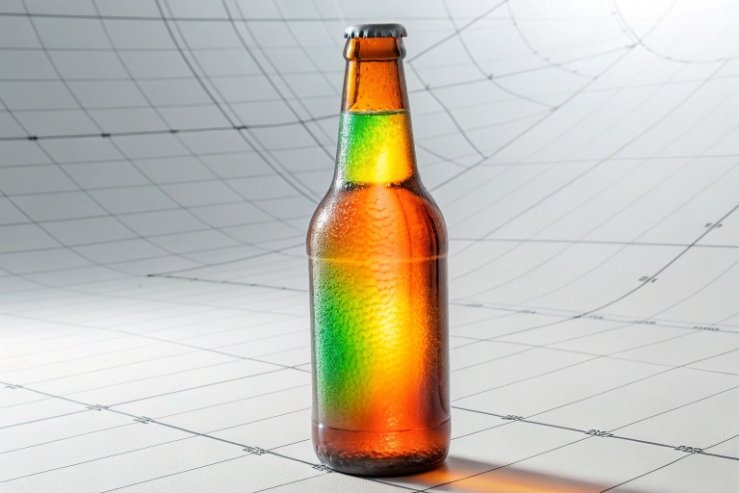
Wall profile has a direct impact because thin spots and sharp transitions concentrate stress under internal pressure. Glass color usually affects strength indirectly through composition, heat absorption, and defect visibility, while also changing light protection and inspection behavior.
Wall profile: where bottles really fail
Under internal pressure, stress concentrates at specific zones:
- Heel and base ring: common crack-start region after impacts and scuffing
- Shoulder transition: stress concentration if geometry is sharp
- Neck/finish area: sensitive to handling damage and cap application forces
A bottle with “good average thickness” can still fail if it has a wedge at the bottom, a thin heel band, or a sharp geometry step. That is why serious suppliers track thickness distribution by cavity and monitor drift after mold changes.
Key wall-profile choices that lift pressure performance:
- smoother radius transitions (shoulder and heel)
- robust heel thickness with stable base geometry
- uniform sidewall thickness (avoid thin stripes)
- controlled finish geometry to avoid micro-chips during capping
Color: mostly indirect, but still important
Color does not automatically make a bottle stronger or weaker. Beer bottles are commonly amber for light protection, and green for certain brand signals. The indirect effects matter in operations:
- Heat absorption and cooling: darker glass can absorb radiant heat differently, which can influence cooling gradients if process control is sloppy.
- Defect visibility: flint shows cords, stones, and surface defects more clearly; amber can hide some cosmetic issues, so inspection discipline must be high.
- Recycle stream variability: high recycled content can shift chemistry slightly, which can change viscosity and defect behavior if not controlled.
For brands selling light-sensitive beer, amber is often the default because it reduces light exposure, which helps protect flavor. From a strength view, the bigger risk is not the tint. The bigger risk is how well the plant controls forming, annealing, and surface protection for that specific color batch.
A quick “design-to-strength” checklist
| Design lever | What it improves | What to watch out for |
|---|---|---|
| Heel reinforcement | fewer cracks from scuffs and drops | heavy heel can raise cost and weight |
| Smooth radii | lower stress concentration | design must still run on high-speed lines |
| Uniform wall control | fewer thin spots, higher burst | requires strong mold maintenance discipline |
| Finish robustness | fewer chips during capping | must match crown/closure spec exactly |
| Amber/green color | light protection, brand cues | don’t relax QC because defects are harder to see |
In practice, the fastest way to improve pressure reliability is to control thin spots and heel damage. Everything else is a smaller lever.
Which creep and drop tests simulate real use, and do returnable pools require higher specs?
Many bottles pass a lab pressure test, then fail in the field because damage and time change the game.
Real-use simulation combines sustained-pressure “creep” ideas, vertical-load tests, thermal conditioning, and impact/drop tests on both bottles and packed cases. Returnable pools usually need higher specs and tighter surface protection because repeated washing and scuffing reduce strength over many trips.
What “creep” means for glass bottles
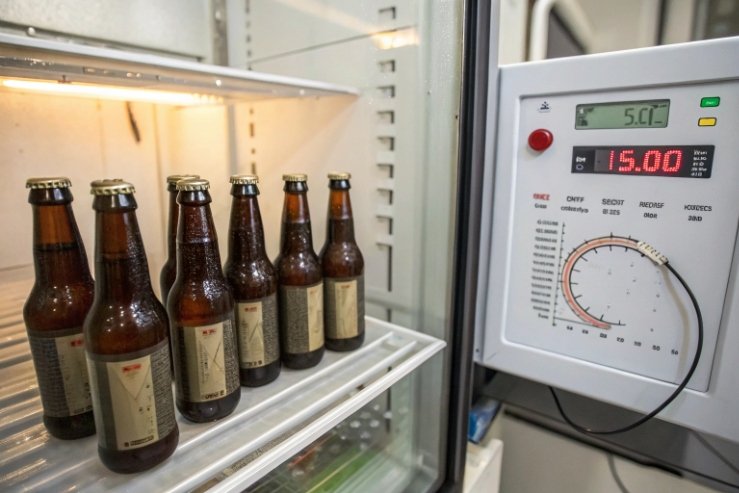
Glass does not creep like plastic, but it does suffer from static fatigue: tiny surface flaws can grow slowly under sustained tensile stress, especially in moist environments. For beer bottles, this matters when a bottle holds pressure for weeks and also gets scratched in use.
A practical “creep-style” program usually includes:
- Sustained internal pressure holds at a conservative pressure level
- Conditioning at elevated temperature to simulate warm warehouses or summer trucks (since internal pressure rises with temperature)
- Repeat measurements to confirm no growth in failure rate over time
This is less about one dramatic burst and more about reducing rare, delayed failures.
Drop, impact, and transport simulation
Impact is a major driver because it creates micro-damage that later fails under pressure. A good plan uses two layers of tests:
1) Bottle-level impact tests (to understand glass robustness)
2) Package-level drop/vibration/compression tests (to understand distribution risk)
Key tests used in many programs:
- Vertical load / top load testing (commonly aligned to ISO 8113 vertical-load resistance testing 4) to ensure bottles survive stacking and conveyor compression.
- Impact testing on critical zones (especially heel and shoulder).
- Thermal shock / thermal cycling checks (often aligned to ISO 7459 thermal shock resistance and endurance test methods 5) to simulate cold-to-warm transitions and pasteurization corridors.
- Packaged drop tests for cases and multi-packs, because most breakage happens in cartons, not in the lab fixture.
| Real-world event | Failure mode | Best test signal |
|---|---|---|
| Warm truck exposure | pressure rise + slow crack growth | conditioned pressure holds + trend charts |
| High-speed conveyors | shoulder/heel scuffs | abrasion monitoring + impact checks |
| Pallet stacking | axial compression + micro-cracks | ISO 8113 vertical load testing |
| Case drops | heel cracks, base breaks | packaged drop tests (case-level) |
| Returnable washing | scuffs + caustic etching | wash-cycle simulation + inspection criteria |
Returnables: higher specs and tighter controls
Returnable pools usually need tougher rules because bottles face:
- repeated scuffing on lines
- caustic washing and thermal swings
- crate impacts and mixed handling
- long service life expectations (often many trips)
As a result, returnable programs often:
- target higher internal pressure margins than one-way bottles
- enforce stricter rejection criteria for scratches, chips, and finish damage
- rely on hot-end and cold-end coatings 6 or protective coatings to reduce abrasion
- track “trippage” (number of refill cycles) and retire bottles before risk rises
For returnables, QC becomes a system: incoming inspection, washer controls, line scuff monitoring, and periodic destructive testing. It is common to see more frequent sampling and a stronger reaction plan because one weak batch can contaminate the entire pool’s safety performance.
Conclusion
Beer bottles are qualified far above real carbonation pressures using proof and burst testing, then protected in real life by wall-profile control, surface damage prevention, and tougher test programs—especially in returnable pools.
Footnotes
-
ISO reference for standard internal-pressure resistance test methods used to compare proof and burst programs. ↩ ↩
-
ASTM procedure details for hydrostatic proof and burst testing of glass container internal-pressure strength. ↩ ↩
-
GB/T standard reference describing internal-pressure resistance test methods used for glass bottles. ↩ ↩
-
Vertical-load test method used to qualify stacking and conveyor compression strength for glass containers. ↩ ↩
-
Thermal shock and endurance methods to simulate temperature swings that can trigger cracks in glass containers. ↩ ↩
-
Industry guide explaining hot-end and cold-end coatings and how they reduce abrasion and help maintain bottle strength. ↩ ↩






