
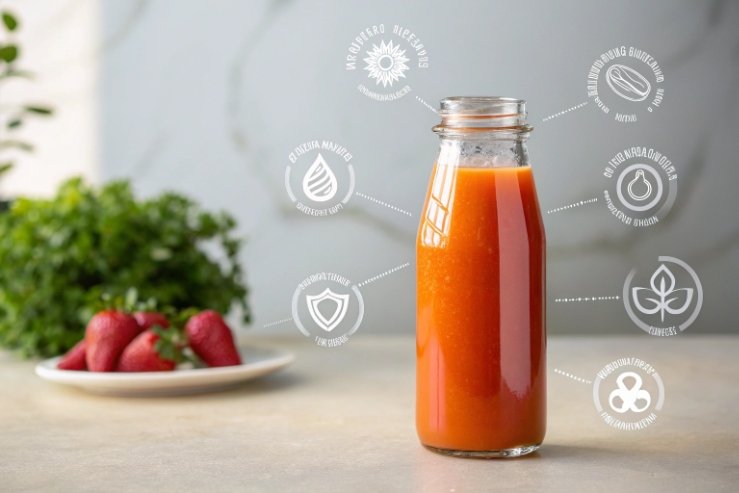
Juice can lose its fresh taste fast when oxygen sneaks in, and customers notice the “flat” flavor long before a lab test does.
Glass is inert and almost impermeable, so it protects aroma, color, and nutrients better than most plastics. With a tight closure and smart liner, it can also support hot-fill and a higher shelf price.
Glass is not a free upgrade. It changes your filling specs, freight math, and closure choices. But for many juice brands, the product protection and premium cues can pay back, especially when aroma and vitamin stability are key selling points.
Does glass reduce oxygen ingress and aroma loss vs PET?
A great juice recipe can still taste tired after a few weeks if oxygen slowly enters and top notes fade.
Yes. Glass is a near-zero oxygen barrier through the bottle wall, so it avoids permeation that can happen in PET. Aroma loss still depends on headspace, closures, and handling, so the cap system matters as much as the bottle.
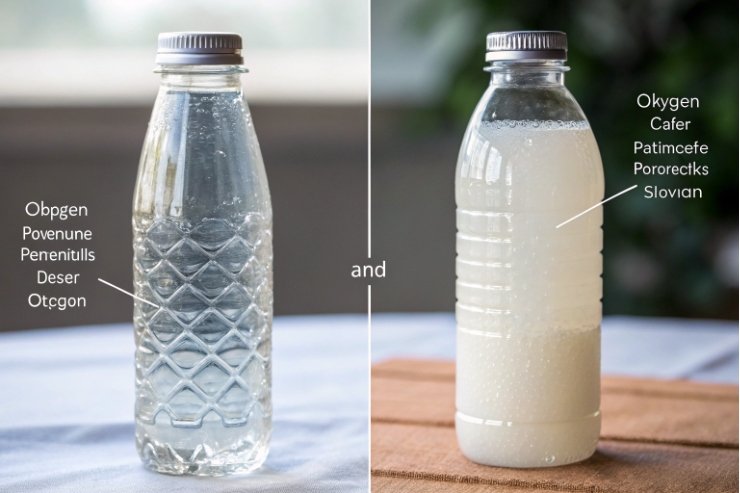
Oxygen ingress is often a closure problem
Glass does not “breathe” the way many plastics do. That is the big win. Oxygen cannot diffuse through the glass wall in normal storage. PET, even when it is well made, is still a polymer. It can allow slow gas transfer over time. For juices with delicate citrus notes or cold-pressed aroma, that slow transfer can show up as a softer smell and a darker color.
Still, many real shelf-life failures come from the top, not the side. Oxygen can enter through:
- a weak liner seal
- wrong application torque
- poor thread engagement
- micro-leaks during vibration in transit
So glass removes one pathway, but it does not remove all pathways.
Aroma “scalping” and why juice brands care
Another issue with plastics is aroma scalping 1. Some polymers can absorb small volatile compounds. That can mute the “fresh peel” smell or floral notes. Glass is nonporous and does not absorb these aromas. This is why many premium juices feel more “true” in glass when the formula depends on aroma complexity.
What to compare when choosing glass vs PET
| Topic | Glass bottle | PET bottle | What to do in practice |
|---|---|---|---|
| Oxygen through wall | near-zero oxygen transmission rate (OTR) 2 | low but not zero | focus on closure OTR either way |
| Aroma retention | very strong | can be lower for some volatiles | run sensory tests at 30/60/90 days |
| Squeeze convenience | low | high | consider wide-mouth or pour spout in glass |
| Shipping | heavier, breakable | lighter, tougher | use partitions and drop tests for glass |
Decision tip for juice brands
If the juice is sold on “fresh aroma” and “natural taste,” glass usually gives an easier path to a stable sensory profile. If the channel is mostly e-commerce, PET can win on damage rate and shipping cost unless the glass shipper system is engineered from day one.
How do hot-fill and pasteurization specs favor glass?
Hot-fill and pasteurization protect food safety, but they also punish packaging that cannot handle heat cycles.
Glass handles hot-fill and many pasteurization steps without softening or warping, so label fit and closure geometry stay stable. The main watch-out is thermal shock, which must be managed with bottle specs and cooling control.
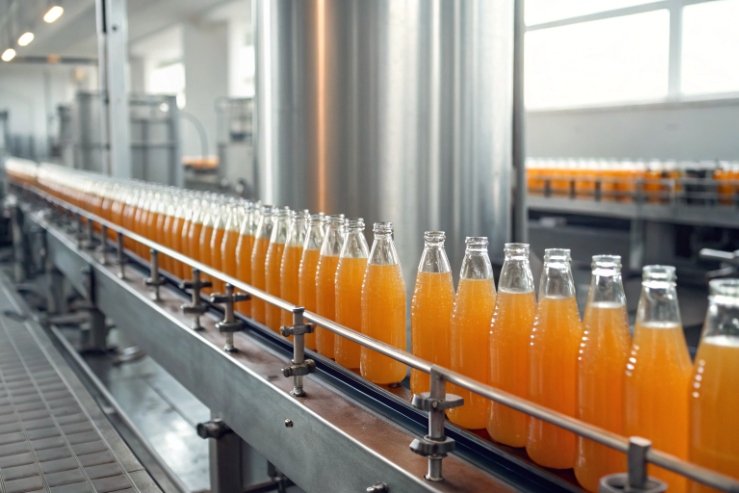
Why glass likes heat more than many plastics
Many juice lines use hot-fill, tunnel pasteurization 3, or warm sanitizing steps. Glass stays rigid at these temperatures. It will not deform the way plastics can when heat load is high. This helps in three practical ways:
- the neck finish stays accurate, so the cap can seal correctly
- the panel stays flat, so labels stay aligned
- the bottle keeps its shape, so filling level and shelf look stay consistent
Heat-set PET can handle hot-fill, but it often needs design features like panels and vacuum ribs. Those features can reduce the clean, premium look for some brands.
Thermal shock is the real risk to plan for
Glass can crack from thermal shock 4 if the temperature changes too fast. This is not a “glass is weak” issue. It is a process control issue. Common shock points include:
- filling very hot juice into a cold bottle
- moving from hot zones to cold rinse water
- placing hot bottles on cold metal rails
- stopping the line and restarting with unstable temperatures
A practical spec approach includes:
- choose bottles designed for hot-fill (weight, wall thickness, anneal quality)
- control bottle temperature before fill when needed
- control cooling and avoid sudden cold sprays
- validate with real line trials, not only paper specs
Hot-fill choices that affect cost and performance
| Item | Helps glass succeed | Typical trade-off | Budget note |
|---|---|---|---|
| Proper annealed bottle | reduces crack risk | may limit supplier list | worth it for line stability |
| Controlled cooling | protects from shock | needs process discipline | saves scrap and downtime |
| Vacuum management | supports shelf life | can stress panels | match cap and liner to vacuum |
| Tunnel pasteurization | strong safety control | adds energy and time | use when shelf life demands it |
Where glass is a clear win
Glass often wins when a brand wants a shelf-stable or extended-life juice without packaging deformation risk. It also works well when the product story includes “no plastic contact under heat,” which some buyers care about.
A crowded juice shelf is full of bright labels. It is hard to stand out without a strong pack signal.
Yes. Clear glass shows real color and texture, and the weight in hand often signals quality. The downside is higher freight and breakage risk, so the premium price needs to cover total landed cost.
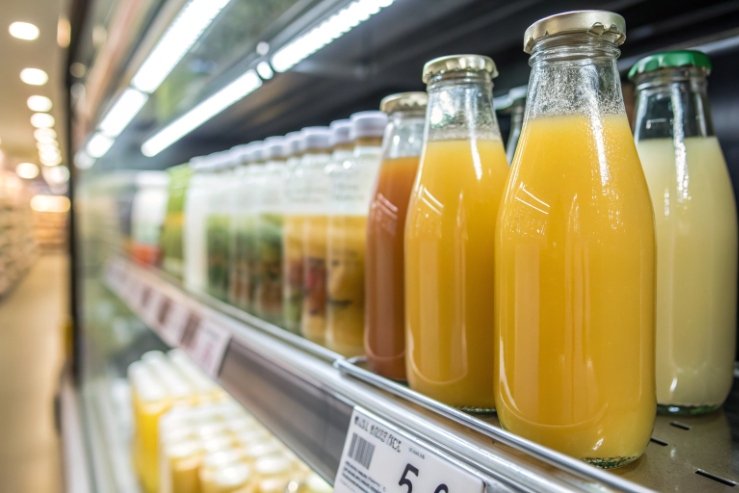
Clear glass sells “real product”
Transparency can be a silent salesperson. It lets buyers see:
- natural color
- pulp level
- separation that signals “minimal processing” for some categories
- fill level consistency
That visibility can build trust. It can also support simple labels, because the product itself becomes part of the design.
Heft changes perception, but it also changes logistics
The weight of glass can make the product feel more serious. Many shoppers connect glass with “clean,” “safe,” and “premium.” This can support higher price points, especially in:
- cold-pressed juice
- functional shots
- premium blends with botanicals
But weight has a cost. It raises freight. It lowers how many units fit per pallet. It also raises handling risk. Breakage can add hidden cost in claims, cleanup, and retailer complaints.
Use TCO thinking, not unit-cost thinking
A simple way to keep the decision clean is to look at total cost of ownership (TCO) 5. That includes:
- bottle cost
- caps and liners
- shipper materials (dividers, stronger cartons)
- freight and warehousing
- damage rate and returns
| Value driver | How glass helps | What it can hurt | How to protect margin |
|---|---|---|---|
| Shelf impact | premium look and feel | none | use minimal label design to show product |
| Brand trust | “inert and clean” message | none | support with clear claims and QA story |
| Freight | none | higher cost | optimize pallet pattern and bottle weight |
| Damage rate | none | breakage risk | partitions, drop tests, stronger corrugate |
| Price power | often higher | only if story is clear | build premium cues into design system |
When transparency needs protection
If the juice is light-sensitive, clear glass can work with a full-body label or sleeve that blocks light. This keeps the “glass premium” cue while protecting vitamins and aroma.
Which caps and liners cut vitamin C degradation?
Vitamin C can drop fast when oxygen and light stay in the system, even if the juice tastes fine at first.
The best protection comes from low-oxygen sealing: induction seals, strong liners, correct torque, and low headspace oxygen. Adding light protection and fast cooling also helps preserve vitamin C over shelf life.
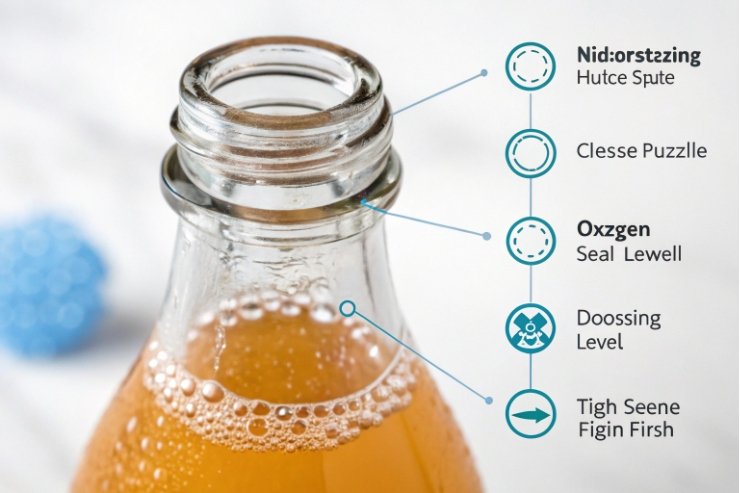
Vitamin C loss is mostly oxygen-driven
Ascorbic acid is sensitive to oxidation. Work on ascorbic acid degradation 6 consistently points to oxygen control as a major lever. So the practical goal is simple: keep oxygen out, and keep oxygen low inside. Glass helps because the wall is a barrier. The closure and filling method must finish the job.
Key levers that cut degradation:
- low headspace oxygen (deaeration, nitrogen dosing, controlled fill)
- high-integrity seal at the cap
- light protection when the formula is sensitive
Closure systems that work well with glass juice
Common choices include:
- Continuous thread (CT) caps with strong liners for reliable reseal
- CT caps with induction sealing 7 for a true barrier and tamper evidence
- Lug caps for hot-fill and vacuum applications when the process is designed for it
Induction seals are often the strongest move for oxygen control and leak control. They also help e-commerce because they reduce “micro-leak” events during vibration.
Liner choices and what to ask your supplier
Different liners behave differently with acids, aromas, and temperature cycling. For most juices, acid resistance is needed, and odor neutrality matters.
| Closure / liner option | Oxygen control | Reseal experience | Best fit use case |
|---|---|---|---|
| CT cap + standard liner | medium | good | chilled juice with short shelf life |
| CT cap + induction seal | high | good (after opening) | extended shelf life, e-commerce |
| Lug cap + hot-fill vacuum | medium to high | familiar “pop” | shelf-stable hot-fill lines |
| Light-blocking sleeve + clear glass | indirect (via light) | no change | light-sensitive formulas |
Light and vitamin C
Light can speed vitamin loss and color change, especially in juices with sensitive compounds. If stability tests show a drop, options include:
- amber glass
- UV-blocking coatings
- full wrap labels or sleeves
- secondary cartons for premium sets
A practical habit helps: run a simple shelf test with two packs, one exposed to light and one stored in the dark. The difference often makes the packaging choice obvious without guesswork.
Conclusion
Glass helps juice stay aromatic and stable, supports hot-fill needs, and can lift premium cues, but caps, liners, headspace oxygen, and light control decide real vitamin and shelf-life results.
Footnotes
-
Evidence-based explanation of aroma scalping and why volatile citrus notes can fade faster in plastics. ↩ ↩
-
Learn how OTR is measured so you can compare PET barrier claims against real test methods. ↩ ↩
-
Practical overview of tunnel pasteurization vs hot fill when choosing a heat process and container. ↩ ↩
-
Real-world causes of thermal shock and prevention steps that reduce cracking on hot-fill lines. ↩ ↩
-
Definition of TCO to model landed cost, damage, and packaging materials—not only bottle unit price. ↩ ↩
-
Technical background on ascorbic acid stability and why oxygen management protects vitamin C during storage. ↩ ↩
-
Clear breakdown of induction sealing and how it creates a hermetic barrier for leak and oxygen control. ↩ ↩






