
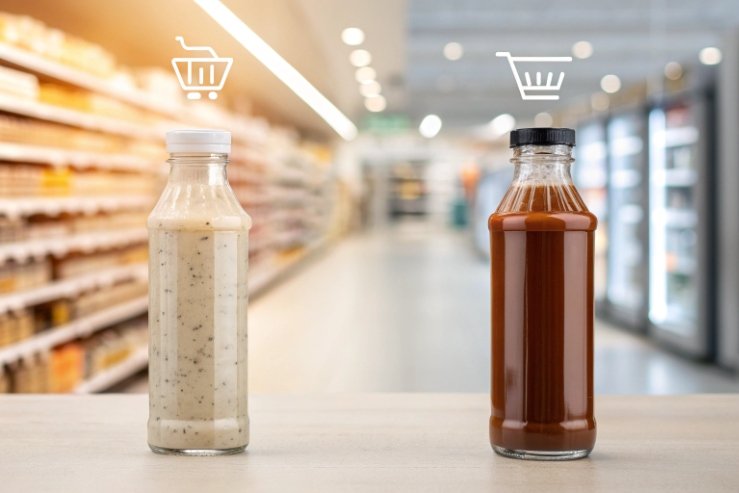
A sauce can taste perfect in the kitchen, yet turn flat on the shelf. Many brands only notice after returns and bad reviews start to pile up.
Glass sauce bottles protect taste and handle heat well, but they raise freight, breakage, and handling cost. The best choice depends on sauce chemistry, channel mix, and the closure system, not just “premium look.”
The real question is not “is glass good or bad.” The question is whether the full cost and the product protection match the way the sauce will be made, shipped, and used. When that is clear, glass becomes either a smart advantage or a heavy headache.
Do flavor integrity and heat tolerance outweigh weight risks?
A sauce can carry vinegar, garlic, chili oils, and smoke notes. One small off-odor can kill repeat buys, even if the recipe is strong.
Glass usually wins on taste and heat, but weight can erase the gain if shipping is long and damage control is weak.
Why glass protects taste better
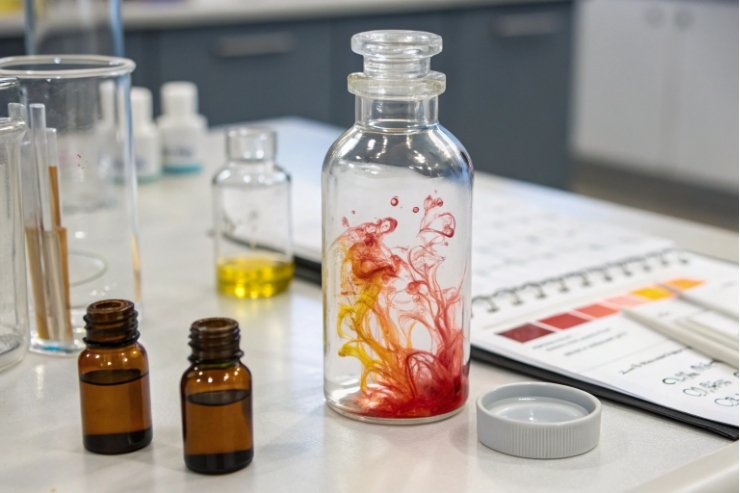
Glass is nonporous. It does not absorb smells. It also does not “give back” old smells into the next batch like some reused plastics can. This matters for bold sauces where aroma is half the experience. In many real launches, the biggest upgrade from plastic to glass is not the look. It is the stable aroma after 60 to 180 days.
Glass also provides strong moisture and oxygen barrier performance 1 when paired with the right closure. That slows oxidation in oil-based sauces and helps keep bright top notes in herb or citrus profiles. It also reduces “headspace drift,” where air exchange changes taste over time.
Heat tolerance is a big plus, but thermal shock is real
Glass handles hot-fill and pasteurization conditions well because it does not soften like plastic. It also does not warp, so label fit stays stable. That said, thermal shock breakage in glass containers 2 can happen if the temperature change is too fast. A hot-filled bottle that is moved to a cold surface, or hit by cold rinse water, is a common failure point.
So the “heat tolerance” benefit is strongest when the line process is controlled:
- controlled pre-warm of bottles when needed
- steady fill temperature
- controlled cooling curve
- proper annealed bottle quality
The weight risk is not only freight cost
Weight raises shipping cost, but it also raises handling strain. That can slow packing speed and add injuries. It also affects e-commerce where dimensional weight rules and drop tests matter. The weight risk becomes more serious when the sauce price is low. If the product sells for $4.99, a few cents of added logistics cost can crush margin.
| Factor | Glass advantage | Glass downside | What to do about it |
|---|---|---|---|
| Taste and aroma | very stable, no absorption | none on product side | keep headspace low, use good seal |
| Heat processing | supports hot-fill and wash | thermal shock cracks | control cooling, choose the right bottle spec |
| Shelf life | strong barrier | depends on closure | pick liner for acid and oil, add tamper evidence |
| Consumer feel | premium, solid | heavy in hand | consider lighter-weight glass, ergonomic shape |
A simple rule helps: glass is often worth it when the sauce value is high, the flavor story is important, and the channel is retail shelf. If the channel is mostly e-commerce, the weight and drop risks must be priced in from day one.
How do breakage and logistics affect total cost of ownership?
A glass bottle that arrives broken costs more than the bottle. It costs product loss, rework, claims, reviews, and sometimes lost accounts.
Breakage and logistics can dominate TCO, so the bottle choice must match shipping lanes, pack style, and channel demands.
What “TCO” really includes for glass
Total cost of ownership (TCO) 3 is not unit price. It is unit price plus the cost to deliver a sellable unit to the customer, again and again, at an acceptable damage rate.
For glass sauces, the hidden costs often show up in four places:
- Secondary packaging: dividers, corrugate strength, cushioning, tape, and labor
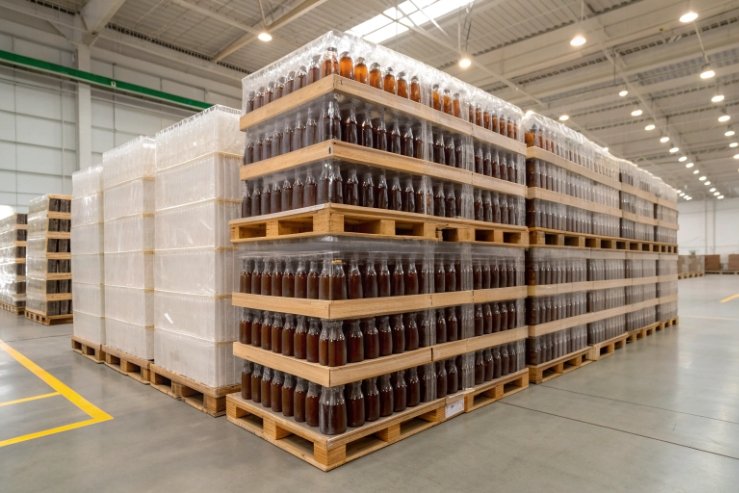
- Outbound freight: higher weight and sometimes lower pallet density
- Damage and claims: breakage, leakage, customer credits, chargebacks
- Operational friction: slow packing, extra QA checks, extra clean-up
In one project I remember, the bottle cost difference looked small on paper. The real swing came from case packing changes. Once partitions and stronger cartons were added, the “cheap bottle” was no longer cheap. The brand still chose glass, but only after redesigning the shipper and reducing headspace leaks.
Breakage is a design problem, not only a “handling problem”
Breakage often comes from stress points:
- sharp shoulder transitions
- thin base with high drop energy
- weak heel radius
- inconsistent wall thickness
- poor pallet pattern that allows case-to-case impact
This is why bottle selection should include a drop-risk view, not only a shelf view. Lighter-weight glass can still perform well when geometry is right. On the other hand, a thick bottle can still fail if the heel design is weak.
Logistics choices that lower cost fast
- Use case dividers for retail distribution and long-distance lanes.
- Use strong corrugate grade matched to pallet height and humidity.
- Limit pallet overhang and use stable wrap.
- For e-commerce, consider molded pulp or honeycomb sleeves and validate with ISTA test procedures 4.
- Reduce leak risk so that “minor damage” does not become “total loss.”
| Cost bucket | What changes with glass | TCO risk level | Best control lever |
|---|---|---|---|
| Packaging materials | stronger cartons, partitions | medium to high | optimize case pack and divider design |
| Freight | heavier pallets | high for long lanes | pallet density, lighter-weight glass, zone strategy |
| Damage rate | breakage, chips, leaks | high in e-commerce | ISTA-style testing, better closure, better shippers |
| Labor and operations | slower pick/pack, cleanup | medium | line training, ergonomic pack design |
| Brand impact | premium shelf look | positive | use it to justify price and margin |
If the sauce goes mostly to retail DCs on full pallets, glass can be very stable with proper case design. If the sauce goes mostly to home delivery in singles, the TCO model must assume higher packaging and testing spend. Without that, the project will bleed money after launch.
Which closures and liners ensure leak-proof, acid-resistant seals?
A great bottle does not matter if the cap system fails. Leakage kills e-commerce ratings and creates sticky, unsafe cartons.
Leak-proof and acid-resistant performance comes from the full closure system: cap type, liner material, torque control, and process temperature.
Start with sauce chemistry and process
Sauces vary a lot:
- High-acid (vinegar-based, finished equilibrium pH of 4.6 or below 5)
- Oil-rich (chili oil blends, infused oils)
- Particulate-heavy (garlic bits, pepper seeds)
- Hot-fill vs cold-fill
- Vacuum cooling after fill
Acid can attack some materials over time. Oil can swell some foams. Heat can relax liners and change torque. Particulates can sit on the sealing land and create micro-leaks.
So the closure choice should be tied to:
- pH and ingredients (acid, oils, solvents like citrus oils)
- fill temperature and cooling method
- expected shelf life and channel (retail vs e-commerce)
- tamper evidence needs
Common closure systems for glass sauce bottles
1) Lug caps (twist-off) with plastisol lining
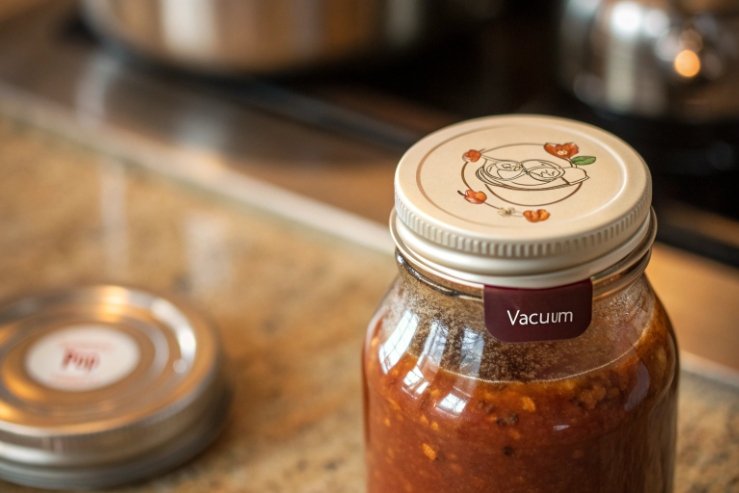
This is very common for hot-fill foods. It can form a strong vacuum seal when the process is right. It also gives a familiar “pop” opening experience. Plastisol can perform well in high-acid foods when the formulation is food-grade and validated. The key is correct application torque and proper bottle finish quality.
2) Continuous thread caps with induction sealing
This can be a strong choice for leak resistance, especially for e-commerce. Induction sealing creates a hermetic seal 6 across the mouth, which also supports tamper evidence. After induction, a secondary liner (like foam) can support reseal after opening. The induction liner choice matters for glass and for sauce chemistry.
3) ROPP aluminum caps (roll-on pilfer proof)
This is popular in spirits, but it can also work for sauces that want a premium feel and strong tamper evidence. Liner selection is still critical, especially for acids.
Liner materials to consider
- PTFE-faced liners: strong chemical resistance and low absorption. Often used when ingredients are aggressive or when long-term flavor neutrality is critical.
- Foam liners (PE/EPE, F217 style): good for reseal feel. Not always the best primary barrier for very demanding leak cases unless paired with induction.
- Pulp/PE liners: common and cost-effective. Good for many foods, but performance depends on sauce and storage.
- Plastisol (for lug caps): widely used for hot-fill and vacuum applications. Needs proper vendor selection and compliance checks.
| Sauce type | Good closure direction | Liner / seal approach | Notes to reduce risk |
|---|---|---|---|
| High-acid, hot-fill | lug cap or CT cap | plastisol (lug) or induction + reseal liner | control torque, verify vacuum, keep finish clean |
| High-acid, cold-fill | CT cap | induction seal recommended | best for e-commerce leak control |
| Oil-rich, aromatic | CT cap or ROPP | PTFE-faced liner or induction | avoid liner absorption, protect aroma |
| Particulate-heavy | wider mouth CT | induction + careful sealing land | keep particulates off the rim |
Practical checks that save money
- Specify the bottle finish precisely (thread, lug count, sealing land width). A mismatch causes leaks.
- Control application torque and test at hot and cold conditions.
- Run inverted leak testing and vibration testing for shipping lanes.
- Confirm cap corrosion resistance if salt or acids can contact metal.
- Add tamper evidence that fits the channel: shrink band, TE band, or induction seal.
In real projects, most “liner debates” are solved by testing two or three options on the actual sauce. Paper logic helps, but the sauce chemistry always has the final vote.
Are amber or UV options needed for light-sensitive sauces?
A clear bottle looks great, but light can be a silent attacker. Many brands only notice after the color fades or aroma softens.
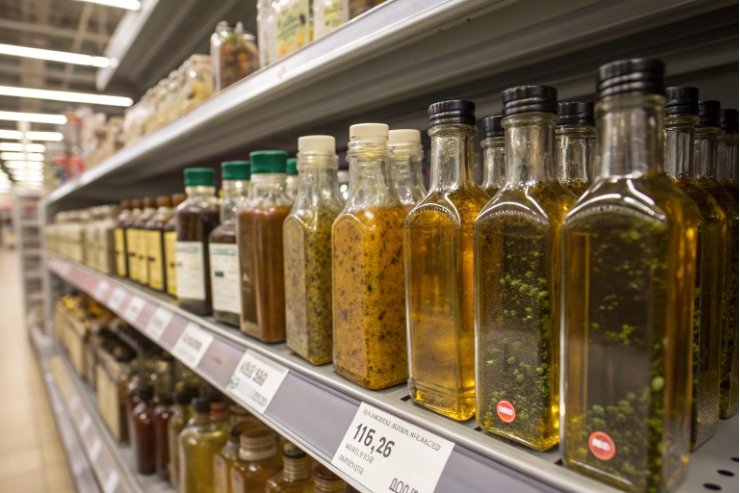
Amber or UV protection is needed when the sauce has light-sensitive oils, herbs, natural colors, or vitamins, and when shelf exposure is high.
What light does to sauces
Light can speed up oxidation and breakdown of sensitive compounds. It can:
- fade natural colors
- change aroma in herb and spice oils
- create “stale” notes in oil-based products
- reduce potency in functional ingredients
Not every sauce needs protection. Many tomato-based or vinegar-heavy sauces are stable enough for clear glass, especially when the label covers most of the bottle and the shelf life is moderate.
The need increases when:
- the sauce is oil-forward (infused oils, chili oils)
- the sauce uses natural colorants and wants bright color for months
- the brand targets long shelf life and slow-moving retail
- the product sits under strong retail lighting
- the sauce is premium and flavor nuance matters
Protection options beyond amber glass
Amber is one route, but it is not the only route. Protection can also come from:
- a full-wrap label or sleeve that blocks light
- UV coatings or tinted coatings on clear glass
- secondary cartons for gift sets or premium lines
- store-facing strategy like keeping cases closed until shelf load (for some channels)
Amber glass can signal “apothecary” or “craft.” That can fit hot sauce, fermented sauces, and small-batch brands. But amber also reduces product visibility, so it can hurt impulse buys when color and texture sell the product.
A simple decision framework
The best approach is to test and decide with real exposure conditions:
- keep filled bottles in strong light and in dark storage
- compare aroma and color every 2 to 4 weeks
- set a pass/fail rule based on sensory checks and brand standards
If you want a measurable method, UV/Vis transmission testing 7 can quantify how much light your final package lets through (glass + label/sleeve).
| Product goal | Clear glass | Amber glass | Label/sleeve UV block | Secondary carton |
|---|---|---|---|---|
| Show color and texture | best | weak | good if window cut | weak unless window |
| Protect light-sensitive oils | limited | strong | strong | strong |
| Premium shelf look | strong | niche premium | strong | strong for gift |
| Cost impact | baseline | higher | medium | higher |
| E-commerce readiness | needs strong shipper | needs strong shipper | needs strong shipper | adds protection |
For most sauces, clear glass works when the formula is stable and the label provides some coverage. For oil-heavy or aroma-driven sauces, amber or UV-blocking solutions often pay back by keeping the “first-open” experience consistent across the shelf life.
Conclusion
Glass gives sauces strong taste protection and heat stability, but TCO depends on breakage control, channel mix, and the right closure and liner system.
Footnotes
-
GPI summary of glass’s moisture/oxygen barrier and inertness for food packaging decisions. ↩ ↩
-
Explains thermal shock patterns and prevention steps for hot-fill glass to avoid cracking. ↩ ↩
-
Clear definition of total cost of ownership to build a landed-cost model beyond unit price. ↩ ↩
-
Official ISTA overview of test procedures to compare shipper designs and reduce transit damage. ↩ ↩
-
FDA guidance explaining acidified foods and why pH 4.6 matters for safety and process controls. ↩ ↩
-
Step-by-step induction sealing explanation for creating hermetic, tamper-evident seals on caps. ↩ ↩
-
UV/Vis primer on absorption and transmission—useful for evaluating light protection of bottles, sleeves, or coatings. ↩ ↩






