
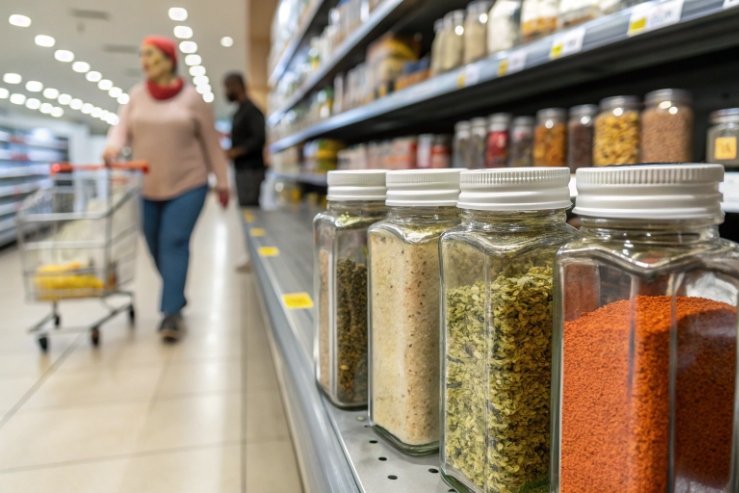
Spices lose flavor in a quiet way. A little moisture sneaks in, aromas fade, oils move into the pack, and the product tastes flat before the customer even opens it.
Most spice brands choose glass because it is inert, nonporous, and a strong barrier. It helps protect aroma, volatile oils, and color while working well with shaker and grinder closures. It also supports clean filling and easy recycling, which fits food safety and sustainability goals.
In spice packaging, the container is not a “holder.” It is a protective system. The jar, closure, liner, and label all affect freshness. Glass often becomes the safest default because it solves many risks at once, with fewer surprises over shelf life.
Does glass prevent aroma scalping and oil migration better?
A spice jar can smell strong on the line and smell weak on the shelf. That is often a packaging problem, not a spice problem. Volatile oils are the value of spices. Once they leave the spice, there is no way to put them back.
Yes. Glass is nonporous and chemically inert, so it resists aroma scalping and oil migration much better than many plastics. It also blocks oxygen and moisture very well, which slows oxidation and clumping.
Why “scalping” happens
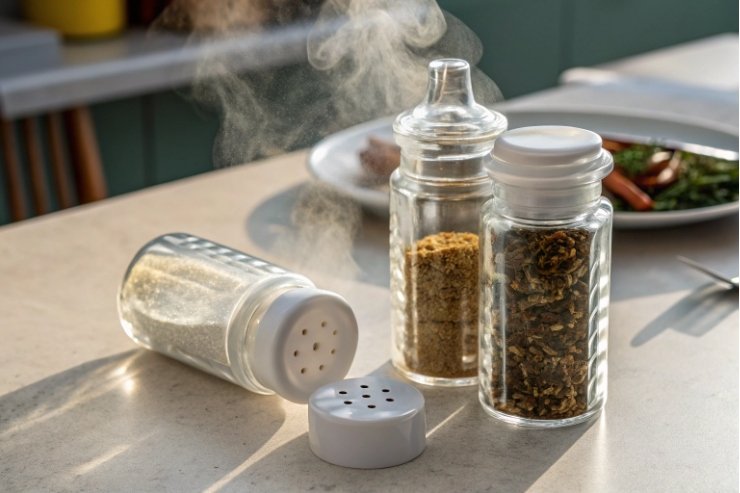
Aroma scalping 1 is when packaging absorbs flavor compounds. Many plastics can absorb small aromatic molecules, especially from spices with high essential oil content (like clove, cinnamon, oregano, cumin, and pepper oils). Over time, the aroma shifts. The jar can even keep the smell after the product is gone.
Glass has a smooth, nonporous surface. It does not soak up these volatile molecules in the same way. That means the spice stays closer to what the blender intended, and the jar does not become “seasoned” with old aromas.
Oil migration and staining
Spices are not only dry powders. Many are oily or contain oil-rich particles. Those oils can migrate into some plastics or interact with additives, which may change smell, color, or surface feel. Some plastics also stain or haze over time with strong pigments like turmeric or paprika. Glass resists staining, and it stays clear longer in real kitchens.
Barrier protection is the quiet advantage
For spices, oxygen and moisture are the two main enemies:
-
Moisture causes clumping, microbial risk in extreme cases, and loss of free-flow.
-
Oxygen drives oxidation and dull aroma.
Glass is an excellent barrier to both. The real limit is not the glass wall. The real limit is the closure and liner system. A strong cap and liner on glass often gives a longer “freshness window” than a similar cap on a flexible container.
| Risk area | Glass performance | Typical plastic performance | What matters most |
|---|---|---|---|
| Aroma scalping | Very low | Can be moderate to high | Polymer type and wall thickness |
| Oil migration | Very low | Can occur over time | Oil content of spice blend |
| Oxygen barrier | Excellent | Varies widely | Container wall + closure seal |
| Moisture barrier | Excellent | Varies widely | Closure design and liner compression |
| Staining | Very resistant | Can stain (spices with pigments) | Surface chemistry and texture |
A small story fits here. A spice brand once asked why one SKU “went quiet” faster than others. The blend was fine. The issue was packaging. The plastic pack held the smell after dumping the product, which was the clearest sign of scalping. A move to glass plus a tighter liner stabilized the aroma in storage.
Which colors protect photo-sensitive spices?
Light damage is real, but it is uneven. Some spices can sit in clear glass with little change. Others fade fast under retail lights. The hard part is that the customer likes to see the product, and the product may not like to be seen.
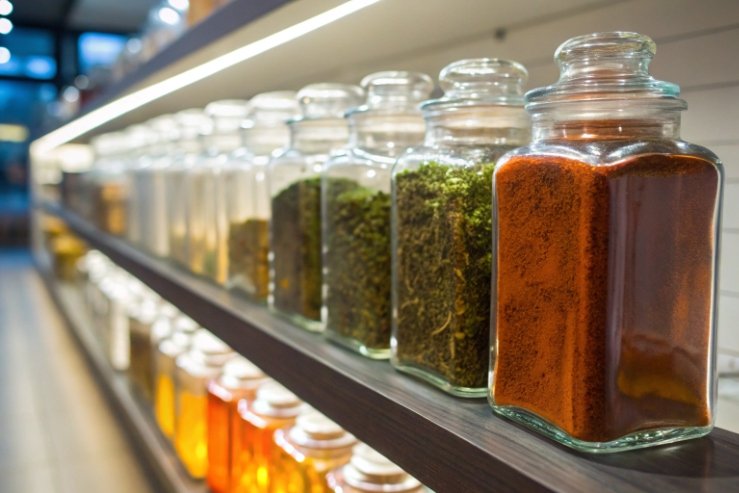
Amber and other darker glass colors protect photo-sensitive spices better by filtering more UV and blue light. Clear glass sells visibility, but it often needs help from labels, cartons, or sleeves to reduce light exposure.
Which spices are most sensitive
Many spices contain color compounds and volatile oils that break down under light. Examples that often show visible change include:
-
paprika and chili powders (color fading)
-
herbs (chlorophyll fade, aroma loss)
-
turmeric blends (color shift)
-
some infused salt blends with dried citrus or botanicals
Even when the color looks fine, aroma can still fade. Retail light is not “sunlight,” but it is constant. Constant exposure matters.
Color choice is a trade-off between protection and selling
Clear glass is popular because it shows grind size, fill level, and color. That helps conversion on shelves and in kitchens. But clear glass is the weakest option for light defense.
Amber glass is the most common “protection-first” choice. It reduces the light that triggers many photo reactions 2. Green offers some benefit, but it usually protects less than amber. Very dark glass can protect even more, but it can hide the product too much and reduce purchase confidence.
Practical ways to keep clear glass while reducing light risk
Clear glass does not have to be unsafe. Many brands combine clear glass with:
-
high-coverage labels (front + back + neck)
-
shrink sleeves
-
cartons or display trays that block light
-
secondary packaging for premium lines
A simple approach is to match color to the SKU risk. Use amber for light-sensitive herbs and bright red spices, and use clear for salt, peppercorns, or low-risk blends.
| Glass color / approach | Light protection | Shelf visibility | Best fit |
|---|---|---|---|
| Clear glass | Low | High | Low-risk SKUs, strong label coverage |
| Amber glass | High | Medium | Herbs, paprika, light-sensitive blends |
| Green glass | Medium | Medium | Brand-driven designs with some protection |
| Opaque coated glass | High | Low | Premium lines, gift sets, specialty blends |
| Clear + sleeve/carton | Medium to high | Medium to high | When visibility and protection both matter |
The goal is not to block all light. The goal is to reduce the exposure enough that the spice stays within spec through its real shelf life.
Do grinder and sifter closures fit glass necks reliably?
A great jar can still leak if the closure fit is weak. For spices, the closure does three jobs at once: it seals freshness, it controls dosing, and it handles repeated use.
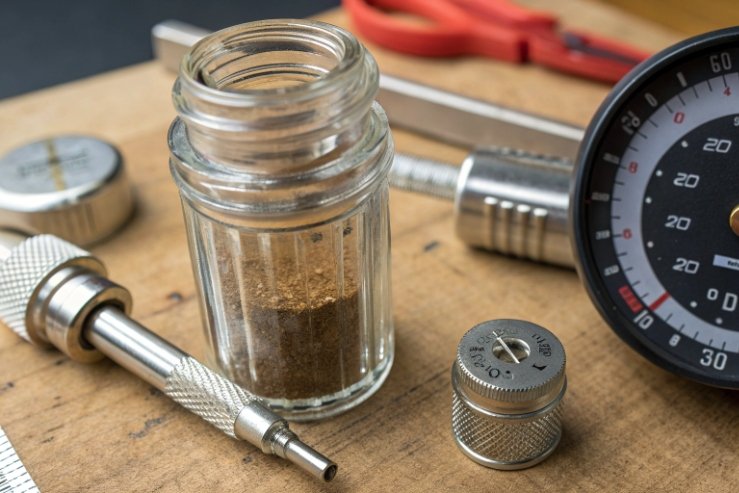
Yes. Grinder and sifter closures fit glass necks reliably when the finish standard, torque, and liner design are matched. Glass necks are rigid and consistent, which helps sealing and thread engagement for shaker caps, flip tops, and grinder mechanisms.
Why glass helps closure performance
Glass does not creep under load. That matters because a closure seal depends on compression. Plastics can relax over time, especially under heat, which can reduce seal force. Glass keeps the finish geometry stable, so the liner compression stays closer to what the capper applied.
Glass finishes also hold tighter dimensional control when tooling and inspection are strong. That supports consistent application torque on high-speed lines.
The real reliability drivers: finish, liner, and torque
A closure “fits” when three items align:
-
Neck finish standard (thread profile and diameter)
-
Closure thread and skirt design
-
Liner material and compression target
For spice jars, common closure styles include:
-
shaker/sifter caps with snap-on or screw-on assemblies
-
flip-top caps with integrated pour and sift sides
-
grinder caps with ceramic or metal grinding parts
Grinders add height and leverage. That means the thread and liner must resist more twisting and repeated use. A good liner choice can also reduce aroma loss, because the liner becomes part of the barrier system.
Tamper evidence and induction sealing
Many food brands use tamper-evident bands or shrink bands. Some also use foil liners that can be induction sealed 3 inside the cap system. This adds a strong initial barrier before the customer opens the jar. It also helps reduce early moisture pickup during distribution.
| Closure type | Main advantage | Common risk | Best control point |
|---|---|---|---|
| Shaker/sifter | Simple dosing, low cost | Dusting and liner leakage | Liner compression and cap torque |
| Flip-top dual dispense | Better user experience | Hinge fatigue, misalignment | Closure quality and drop testing |
| Grinder | Premium feel, fresh grind | Thread wear, wobble | Finish tolerance + stronger cap design |
| Tamper band / shrink band | Trust and protection | Heat shrink scuffing labels | Shrink settings and handling SOP |
A reliable closure fit is not luck. It is a spec: finish drawings, cap drawings, target torque range, and a simple leak test plan.
How do cleanliness and recyclability support food safety?
Food safety is not only about ingredients. It is also about contact surfaces, cleaning, and contamination control during filling. A jar that holds strong aromas and oils can also hold unwanted residues if it is not cleanable.
Glass supports food safety because it is nonporous, easy to wash, and resistant to staining and odor carryover. It also fits strong recycling systems and reuse habits, which helps sustainability without adding chemical interaction risk.
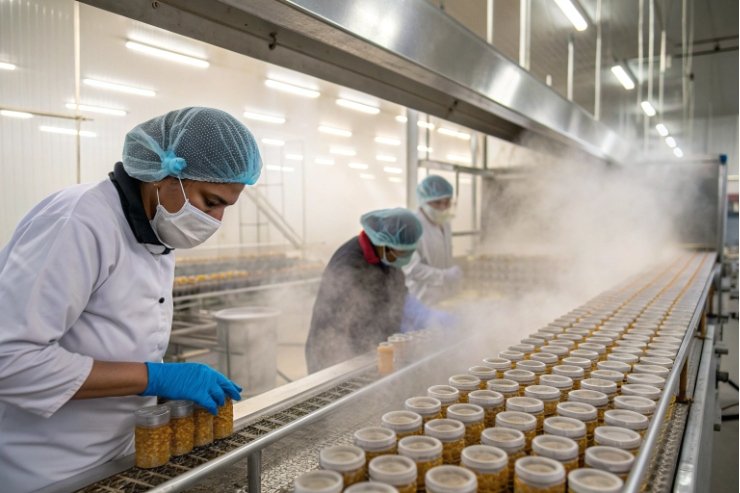
Cleanliness: a real factory benefit, not only a consumer benefit
In spice packing, dust is everywhere. Fine particles can cling to surfaces and become a cross-contact risk between SKUs. Glass cleans well because it has a smooth surface and does not absorb oils and aromas into the container wall.
Glass also tolerates higher wash or sanitizing temperatures without warping. That helps when a brand uses steam, hot rinse, or stronger cleaning steps. It also helps co-packers who switch between allergen-related SKUs and need a container that does not “hold” residues.
Reduced interaction risk
Glass is inert. That reduces worries about the container reacting with acidic spice blends, salty rubs, or oil-rich seasonings. This is not only about taste. It is also about maintaining a stable packaging system under different storage conditions.
Recyclability and reuse
Glass is widely recyclable and can be recycled repeatedly. Many consumers also reuse spice jars at home. Reuse is more realistic when a container can be cleaned without keeping odors. This is a small but real brand advantage, because the jar stays visible in the kitchen and becomes a long-term reminder.
From a retailer view, glass also fits many sustainability programs 4. That matters more each year, because more buyers look at packaging materials before price.
The honest trade-off: breakage and weight
Glass is heavier than plastic and can break if handled poorly. That is why good case packing, dividers, and pallet rules matter. For spice brands, the unit weight is small, so the freight penalty is often acceptable. For large-format seasonings, the brand may consider lightweight glass, protective sleeves, or secondary packs to control breakage.
| Food safety support factor | Why glass helps | What still needs control |
|---|---|---|
| Cleanability | Smooth and nonporous | Dust control on line and in warehouse |
| Odor carryover | Low absorption | Closure cleanliness and liner quality |
| Chemical interaction | Inert material | Label adhesives and coating choices |
| Heat tolerance | Handles hot wash better | Thermal shock handling rules |
| Recycling and reuse | Strong consumer acceptance | Breakage control in transport |
In spice packaging, safety and sustainability often point to the same choice. A jar that stays stable and clean is also a jar that can be recycled and reused with less worry.
Conclusion
Glass wins for spices because it protects aroma and oils, supports light protection options, fits reliable grinder and sifter closures, and stays clean and recyclable in real food supply chains.
Footnotes
-
The absorption of volatile flavor compounds by packaging materials, leading to flavor loss or alteration in the product. ↩ ↩
-
Chemical degradation of light-sensitive compounds (like vitamins and pigments) caused by exposure to UV or visible light. ↩ ↩
-
A non-contact heating process that bonds a foil liner to the container rim for a hermetic seal. ↩ ↩
-
Overview of glass recycling initiatives and environmental benefits provided by the Glass Packaging Institute. ↩ ↩






