
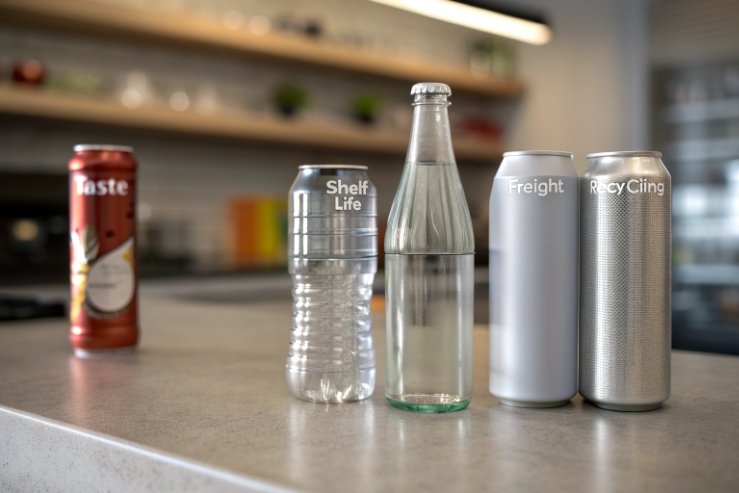
Bad packaging choices do not fail in the lab. They fail on the shelf, on the line, and in the customer’s mouth.
Glass wins on neutrality and barrier. Aluminum wins on light barrier and shipping efficiency. Plastic wins on weight and toughness, but needs smarter barrier design to protect flavor and shelf life.
A simple way to choose the right pack without overthinking it
Packaging decisions get noisy because each material is “best” at something. The clean way is to start from the product risk, not from the material marketing.
A bottle or can must protect four things: taste, aroma, carbonation/oxygen, and microbial safety. After that, it must survive real logistics: drops, dents, pallets, humidity, hot trucks, and retail handling. Then it must fit the regional recycling and refill reality, because the same package performs very differently in Germany versus the US or Southeast Asia.
In one project (this is a story placeholder), a brand switched from glass to PET to cut freight cost. The product stayed “fine” for two weeks. At week six, the aroma went flat and the top notes disappeared. The pack did its job for transport, but it did not protect the flavor long enough. That moment made the rule clear: barrier and neutrality decide the long tail of quality, not only the first taste test.
The fastest comparison snapshot
| Topic | Glass bottle | Aluminum can | Plastic bottle (PET/HDPE/PP) |
|---|---|---|---|
| Flavor / odor neutrality | Excellent | Very good, depends on liner | Variable, risk of scalping and permeability |
| OTR barrier | Near-zero | Near-zero | Non-zero, can be improved with barriers |
| Weight | High | Low | Very low |
| Damage mode | Breaks | Dents | Scuffs/creeps, less breakage |
| Heat processes | Great for hot-fill/pasteurization | Great for pasteurization/retort | Depends on resin and design |
| Recycling value | Medium, heavy logistics | High value, strong pull | Mixed, depends on region and resin |
| Refill potential | Strong where systems exist | Rare | Limited (special programs exist) |
A basic decision rule that works
- If the product is aroma-sensitive, oxidation-sensitive, or premium-positioned, glass or cans usually reduce risk.
- If the product is high volume and needs low freight cost, cans and plastic usually win.
- If the market has strong refill systems, returnable glass can be the best total-cost option even when glass is heavier.
The next sections go deeper, because each topic needs a real buyer-grade comparison.
If this feels like a long answer, that is the point. Packaging is not one metric. It is a trade-off map.
Which offers the best flavor/odor neutrality and OTR barrier?
Shelf life often dies quietly. A customer does not say “OTR is high.” The customer says “it tastes tired.”
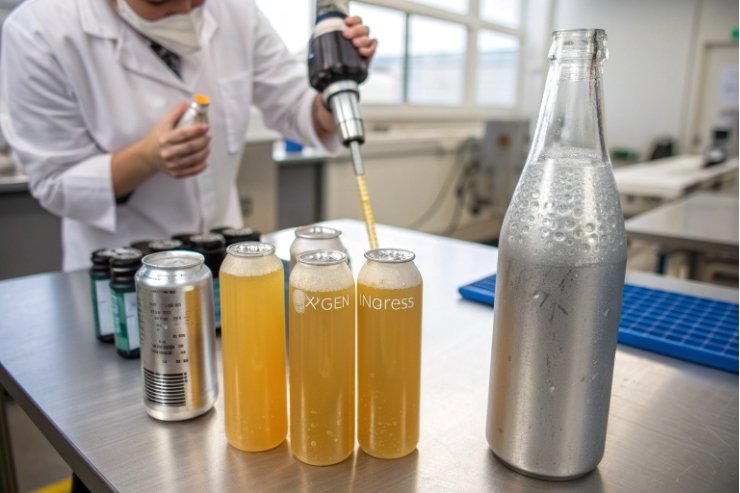
Glass is the most flavor/odor neutral and acts as an excellent barrier to oxygen and moisture. Aluminum cans are also a total barrier, but the liner becomes part of the flavor system. Plastics have non-zero oxygen transmission and can absorb aroma compounds, so they need barrier layers or shorter shelf life targets. :contentReference[oaicite:0]{index=0}
Why neutrality is not only about “inert”
Glass is basically impermeable to gases and does not offer polymer sites that trap aromas. This is why it is often treated as the gold standard for neutrality and long shelf-life stability. :contentReference[oaicite:1]{index=1}
Aluminum cans are a total barrier to light, gases, and moisture, which is great for oxidation control. Still, the product touches the can liner, not bare metal. That liner is typically an internal food-contact coating 1 that must be qualified for taste, migration risk, and long-term stability.
Plastic bottles vary a lot. PET (polyethylene terephthalate) 2 has improved oxygen barrier performance, but it is still not a “zero OTR” material. Even a good PET design has measurable Oxygen Transmission Rate (OTR) 3 over time, especially as temperature and storage duration increase. :contentReference[oaicite:3]{index=3}
What buyers should compare in real specs
- Required shelf life (weeks vs months).
- Sensitivity to oxidation (tea, juice, beer, functional drinks).
- Sensitivity to aroma loss (coffee, botanicals, flavor-forward RTD).
- Light sensitivity (beer, vitamins, some juices).
| Attribute | Glass bottle | Aluminum can | Plastic bottle |
|---|---|---|---|
| OTR | Near-zero | Near-zero | Non-zero, improves with barriers |
| Odor pickup | Very low | Low to medium (liner-dependent) | Medium (depends on resin and barrier) |
| Aroma scalping | Very low | Usually low (liner-dependent) | Higher risk without barrier layers |
| Light barrier | Clear glass is weak; amber is strong | Strong | Weak unless colored or sleeved |
A practical take
For “best flavor” with long shelf life, glass usually carries the lowest risk. For “best barrier at low weight,” cans often win. Plastic can work well when the product is not ultra-sensitive or when the bottle uses barrier technology and the shelf life target is realistic.
How do weight, durability, and logistics compare?
Freight cost is easy to measure. Damage cost is harder. Both matter.
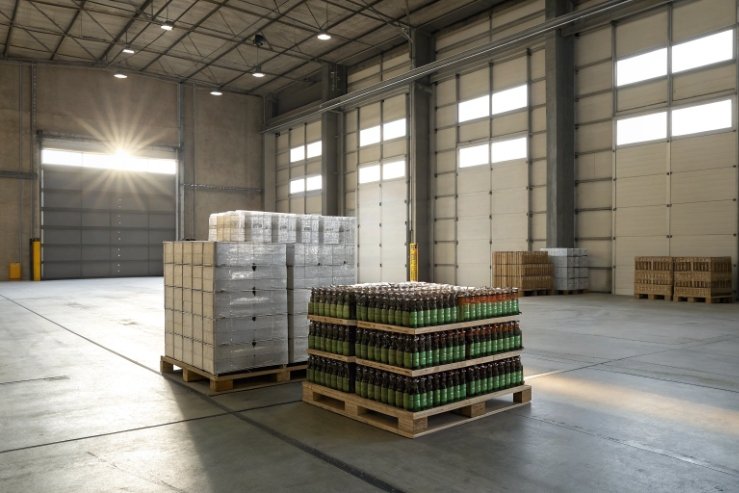
Glass is heavy and breakable, so it needs stronger secondary packaging and careful handling. Aluminum is light and robust, but dents and seam abuse become the main risks. Plastics are the lightest and often survive drops well, but they can scuff, creep, or panel under pressure and heat.
Weight changes everything in distribution
Glass adds weight fast. That can raise:
- freight cost per unit,
- manual handling strain,
- pallet load limits,
- and emissions per kilometer.
Cans and plastics reduce freight weight, so brands can ship more units per truck. This is why many high-volume categories move to cans or PET.
Durability is not one thing
Glass is strong in compression but weak in impact at the surface. A small scratch can turn into a crack later. Aluminum cans are tough in impact, but dents can affect appearance and sometimes consumer trust. Plastic is impact-tough, but it can deform under heat, load, or internal pressure if the design is not right.
Logistics realities that often get missed
- Return shipping: refillable systems add backhaul cost, but they can still win in regions where backhaul is efficient.
- Warehouse heat: glass holds shape well; some plastics need careful storage limits.
- Damage visibility: dents are visible; micro-scratches are not, but they can still cause breakage later.
| Logistics factor | Glass bottle | Aluminum can | Plastic bottle |
|---|---|---|---|
| Freight efficiency | Low | High | Very high |
| Damage in handling | Breakage risk | Dent risk | Scuff and deformation risk |
| Line speeds | Good | Excellent | Excellent |
| Secondary packaging need | Higher | Medium | Lower to medium |
| Cold-chain suitability | Good | Good | Good, but watch deformation under load |
A practical take
If the brand ships long distance and fights freight cost, cans and plastics usually win. If the brand sells premium, wants strong shelf presence, or uses refill loops, glass can still be the best total story.
What heat/sterilization options suit each material?
Heat is not only a process step. Heat is a stress test for packaging.
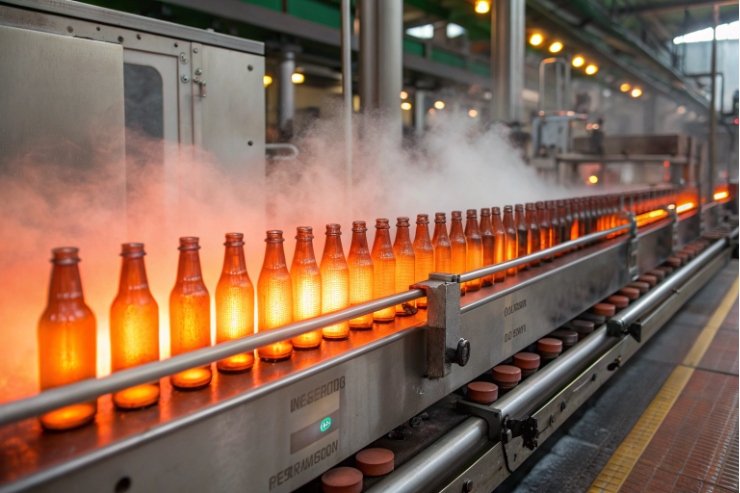
Glass and metal cans handle hot-fill, pasteurization, and retort sterilization well. Plastics can handle hot-fill and some pasteurization when designed for it, but retort needs special high-heat plastics or multilayer structures, and that adds complexity. :contentReference[oaicite:4]{index=4}
The main heat categories buyers should separate
- Hot-fill: product is filled hot, then cooled.
- Pasteurization: lower temperature than retort, often used for beverages.
- Retort sterilization: high temperature and pressure, used for shelf-stable foods.
Glass bottles and jars
Glass is strong for hot-fill and pasteurization when thermal shock risk is managed. For retort, glass jars are common because glass can withstand high temperatures if the design and process are correct. The main risk is thermal shock during fast cool-down, so process ramps and bottle design matter.
Aluminum cans
Cans are a classic choice for heat-processed foods and beverages because metal handles retort sterilization 4 well. The key control points are:
- seam integrity,
- internal coating compatibility,
- and pressure behavior in heating and cooling.
Plastic bottles
Plastic performance depends on the resin and design.
- Standard PET works for many cold-fill and some hot-fill designs, especially heat-set versions.
- HDPE and PP can handle higher temperatures in some formats.
- Retortable plastics exist, but they usually require special resins or multilayer structures, and the process window can be tighter.
| Heat process | Glass bottle/jar | Aluminum can | Plastic bottle |
|---|---|---|---|
| Hot-fill | Strong | Strong | Works with correct resin/design |
| Pasteurization | Strong | Strong | Often works, depends on resin |
| Retort sterilization | Strong (common for jars) | Strong (very common) | Possible, but needs high-heat design |
A practical take
If the product must be retorted and shelf-stable for a long time, cans and glass are usually the simplest choices. Plastics can do it, but the project needs tighter engineering and tighter supplier control.
How do recycling and refill systems vary by region?
A package is not “sustainable” in theory. It is sustainable where the system exists.
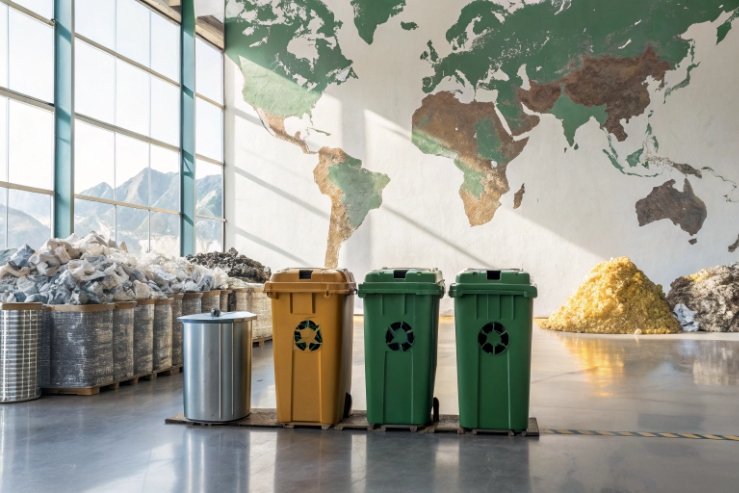
Europe has strong deposit return and is tightening packaging rules, so both recycling and reuse targets drive material choices. The US has improving deposit systems in some states, but refillables are still niche, and recycling rates vary by material. Many Latin American markets have long-running returnable glass loops, especially for beer and soft drinks. :contentReference[oaicite:5]{index=5}
Europe: strong systems and rising rule pressure
In many EU markets, deposit return schemes increase collection quality. There is also a policy push to make packaging recyclable and to raise reuse where it fits. EU packaging rules and guidance keep pushing packaging toward higher recyclability and clearer labeling. :contentReference[oaicite:6]{index=6}
Germany is a clear example of a mature deposit system. Refillable packaging is still a meaningful share of the beverage market there, and buyers often use that infrastructure as a business lever, not only an environmental one. :contentReference[oaicite:7]{index=7}
United States: strong for some materials, uneven overall
The US has high collection performance in states with deposit laws, but national performance is mixed. Many sustainability teams track the aluminum beverage can circularity rate 5 because it connects recycling rates to real material recovery outcomes. :contentReference[oaicite:8]{index=8}
Refill systems exist, but they remain very small in many US beverage categories. :contentReference[oaicite:9]{index=9}
Latin America and other regions: returnables can be normal
In many Latin American countries, returnable glass bottles are a standard business model in beer and soft drinks. This is often driven by short distribution loops, strong retailer collection habits, and cost logic. It is not only “green.” It is operational.
What buyers should do with this reality
Buyers should match packaging to local infrastructure:
- If a market has strong returnable loops, returnable glass can win.
- If a market has strong can recycling and long shipping distances, cans often win.
- If a market lacks sorting and has low plastic recovery, plastic needs a stronger brand-led plan.
Policy design also changes outcomes. Fees and incentives tied to Extended Producer Responsibility (EPR) 6 can shift which materials recycle well in practice.
| Region | Recycling reality (typical) | Refill reality (typical) | Best buyer move |
|---|---|---|---|
| EU | Stronger collection systems, tighter rules | Growing reuse targets and DRS | Design for recyclability and reuse options |
| US | Mixed, can recycling relatively stronger | Refill niche | Choose materials with local recovery strength |
| Latin America | Strong returnable culture in some categories | Returnables common in some markets | Use returnables when loop economics work |
| MENA/SEA | Highly variable by country | Often limited | Build a country-by-country plan |
Conclusion
Glass gives the best neutrality. Cans give strong barrier with low weight. Plastics give the best logistics, but need barrier and system planning. The “best” choice depends on product risk and region.
Footnotes
-
FDA overview of food-contact packaging, useful for understanding liner and coating compliance context. ↩ ↩
-
PET basics, including common packaging uses and material properties that influence shelf life. ↩ ↩
-
Quick definition of OTR and why it predicts oxidation-driven shelf-life loss. ↩ ↩
-
Explains retort packaging and thermal sterilization basics for shelf-stable products. ↩ ↩
-
Industry reports summarizing aluminum beverage-can recycling metrics and circularity indicators. ↩ ↩
-
Clear explanation of EPR and how it shifts real-world recycling economics and incentives. ↩ ↩






