
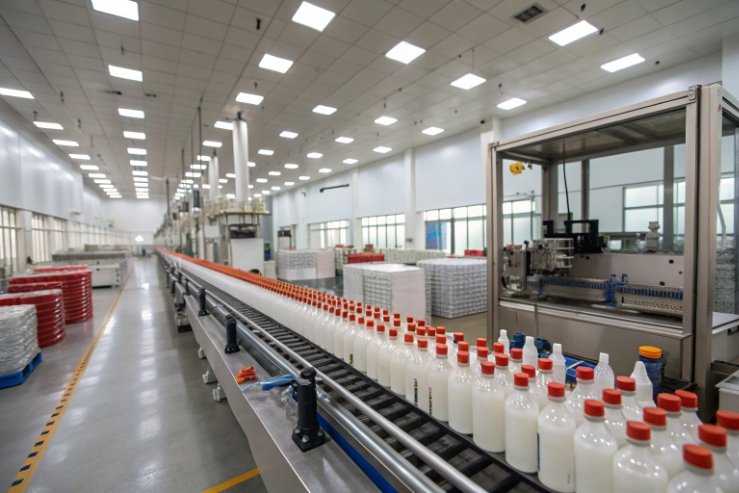
One bad bottle can ruin a whole batch. A small crack turns into a leak. A rough finish cuts a liner. A weak wall breaks in transit.
Baijiu bottle quality is tested with a simple logic: screen defects early, verify strength with impact/pressure/top-load/thermal tests, then prove seal and migration safety with the real closure and real high-ethanol spirit.
A baijiu bottle is not “just glass.” It is a sealing system: glass finish + closure + liner + capping torque + decoration. This is why the best QC plan mixes fast 100% checks (visual/finish) with lab tests (impact, thermal shock, pressure) and line validation (torque, leak, aging, migration). Below is the framework used to prevent the painful failures: leakers, stress cracks at the finish, and long-term taint risks.
Which finish/neck dimensions ensure closure seal integrity?
A bottle can look perfect and still leak. Most leaks come from small geometry errors at the finish or neck that the eye cannot judge.
Seal integrity depends on the sealing surface geometry, bore/finish diameters, ovality, verticality, and thread/knurl accuracy—because each one changes liner compression and cap alignment.
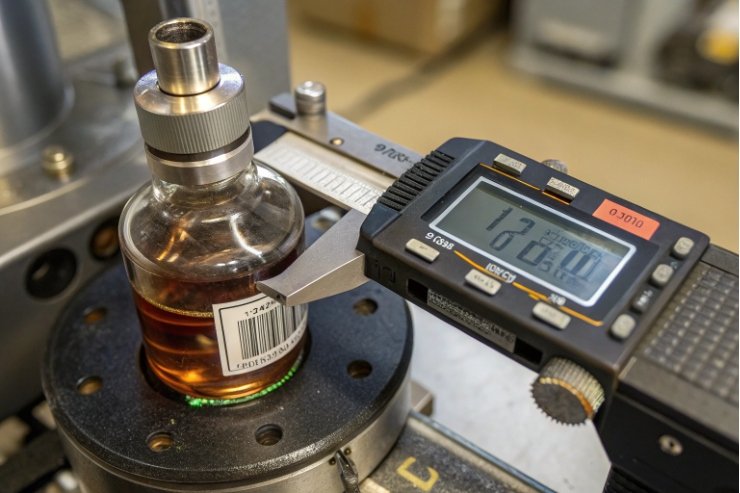
The “seal-critical” dimensions that deserve tight control
A baijiu bottle usually uses one of three closure styles: screw cap (often with liner), ROPP (aluminum roll-on) 1, or stopper-type (cork/T-top/synthetic). Each style has different seal-critical dimensions. Still, the same principle holds: the closure must compress evenly on a clean, flat, centered sealing surface.
Key dimensions to control on every lot:
-
Sealing land / top surface flatness: uneven land creates microchannels.
-
Finish outside diameter (OD) and roundness/ovality: oval finishes cause uneven liner compression.
-
Bore/inside diameter (ID): affects stopper insertion or liner seating.
-
Finish height and thread height: affects closure engagement and compression window.
-
Concentricity and neck tilt (verticality): a tilted neck loads one side of the liner and can crack during capping.
-
Chips, checks, and “feathered” glass on the lip: even tiny chips destroy seal integrity.
Practical gauges and controls that work on real lines
Seal problems do not get solved by “more inspection,” but by the right inspection:
-
Go/No-Go gauges 2 for finish OD/ID and thread profile (fast and objective).
-
Optical measurement for ovality, concentricity, and tilt (useful for premium decorated bottles).
-
Capping simulation using the same closure and torque settings as production, then leak testing.
A simple “finish control plan” makes a big difference. This table shows how the closure type drives what matters most:
| Closure type | Most seal-critical dimensions | Common failure | Best prevention |
|---|---|---|---|
| Screw cap (CT/continuous thread) | Finish OD, thread profile, top land flatness, tilt | microleak + liner cut | finish gauges + torque/leak correlation |
| ROPP | Neck finish OD, roll area, top land, neck hardness consistency | cap wrinkles, leaks, stress cracks | ROPP head setup validation + top-load/tilt control |
| Stopper/T-top | Bore ID, taper, insertion depth, lip finish quality | seepage, cork push-out | bore gauges + soak/invert test |
When a customer asks “what neck dimensions guarantee sealing,” the honest answer is: the dimensions must match the closure drawing, and the process must hold ovality, tilt, and top-land quality inside a stable window. This is also why wall thickness and weight uniformity checks matter. Forming drift can change the neck profile slowly, then sealing and cracking issues appear weeks later.
What drop, pressure, and thermal-shock tests are required for baijiu bottles?
Baijiu is not carbonated, so pressure demands are lower than soda. Still, bottles fail from handling shock, stacking load, and sudden temperature changes.
A solid baijiu test pack includes impact/drop resistance, internal pressure (safety margin), vertical top-load, and thermal shock—because shipping and washing create the real stresses, not the shelf.
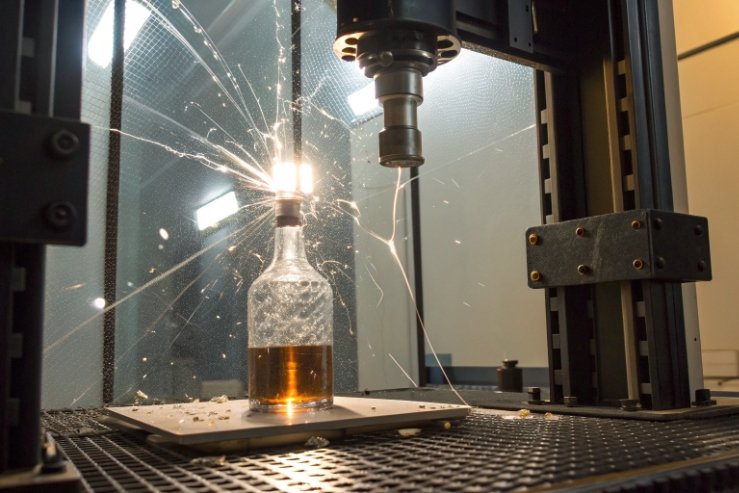
Mechanical impact and “drop-style” testing
For bottles, “drop test” often means two layers:
1) Container impact resistance (pendulum/impact methods are common in China, such as GB/T 6552-style approaches). This checks glass toughness and defect sensitivity.
2) Packaged product drop (carton or case drop). This checks if the packaging and bottle design survive logistics.
Good practice for baijiu:
-
Test multiple impact points: shoulder, sidewall, base edge, and finish area.
-
Test as-produced + after decoration (coatings and hot stamping sometimes hide microchecks).
-
Track failure mode: clean break, star crack, finish chip, base crack. Each points to a different root cause.
Internal pressure and top-load as “process safety” tests
Even for spirits, internal pressure testing is useful as a safety margin test. It helps detect weak walls, bad annealing 3, stones, and forming defects. Pressure tests also expose “silent” cracks that might pass visual inspection.
Top-load testing is non-negotiable for premium, heavy bottles:
-
It validates resistance to capping load, stacking, and line back-pressure.
-
It is also a proxy indicator for consistent wall thickness and good annealing.
Thermal shock testing for washing, hot rinse, or local sterilization
Thermal shock is often ignored until winter arrives and breakage spikes. Baijiu lines can include hot washing, warm filling, or a hot rinse. Any rapid temperature change can trigger cracks if residual stress 4 is high.
A workable thermal shock plan:
-
Define the maximum expected temperature difference in your process.
-
Cycle bottles between hot and cold water baths at that delta.
-
Test both empty and filled bottles if filling temperature varies.
Use one table to keep test scope clear and easy to audit:
| Test | What it proves | Typical sample style | What to record |
|---|---|---|---|
| Pendulum/impact | handling shock resistance | per cavity/per shift | break location + rate |
| Packaged drop | logistics survival | per pallet/lot | damage rate + weak corner |
| Internal pressure | safety margin + hidden defects | per lot | burst pressure distribution |
| Vertical top-load | stacking + capping robustness | per lot | peak load + failure mode |
| Thermal shock | wash/hot-cold tolerance | per lot + after decoration | crack rate + crack pattern |
This set works because it connects directly to the real risks: breakage on the line, breakage in transit, and cracks that become leaks later.
How do AQLs classify cosmetic vs critical defects for baijiu bottles?
Without a clear AQL defect book, QC becomes opinion. One inspector rejects for scratches. Another passes the same bottle. That inconsistency is expensive.
AQL works when defects are defined by risk: cosmetic defects affect brand image, major defects affect function, and critical defects threaten safety or create leaks—so each group gets its own tighter AQL.
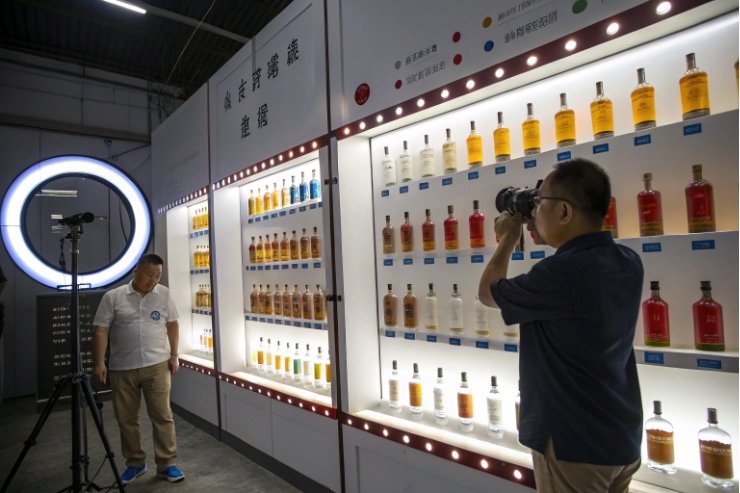
Build a defect catalog that matches how baijiu is sold
Baijiu bottles are often premium and gift-oriented. Cosmetic standards can be stricter than beer bottles. Still, “cosmetic” must stay separate from “critical.”
A simple and practical classification:
-
Critical defects (0 tolerance or near-zero AQL): anything that can cut, leak, contaminate, or shatter easily.
-
Major defects (low AQL): defects that can cause line issues, closure failure, or high breakage risk.
-
Cosmetic/minor defects (higher AQL): defects that do not affect function but reduce shelf appeal.
This table is a clean starting point:
| Defect category | Examples on baijiu bottles | Why it matters | Typical AQL direction |
|---|---|---|---|
| Critical | cracks, through-checks, sharp edges, finish chips, stones near surface, leakers | safety + product loss | lowest (often 0 or very close) |
| Major | out-of-spec finish/neck, heavy ovality, neck tilt, deep scuffs, severe blisters, coating delamination near finish | seal + line stoppage | low (tight) |
| Cosmetic | light scuffs, small seeds/bubbles in non-view area, slight color variation within agreed range, minor print dust | brand image | higher (agreed by brand) |
Cosmetic vs critical changes with the bottle zone
A scratch on the back panel might be cosmetic. A scratch on the sealing land is major or critical because it can create a leak path. So the same defect type can shift category based on location.
A zone-based rule helps inspectors:
-
Zone A (seal/finish/neck): treat defects as major/critical.
-
Zone B (front label/presentation area): treat defects as cosmetic but stricter.
-
Zone C (back/heel/hidden areas): treat small defects as cosmetic if function is safe.
Use AQL sampling, but keep 100% checks where risk is high
AQL sampling 5 is great for body cosmetics and decoration consistency. Still, for baijiu bottles, two areas deserve extra control:
-
Finish integrity (chips, checks, feathering): many plants use 100% camera inspection or dedicated finish checks.
-
Traceability (mold cavity, shift, furnace): it makes defect trends solvable, not mysterious.
AQL should not replace process control. It should enforce it. The best plants combine:
-
Tight AQL for critical risks,
-
Stable molding and annealing control,
-
Fast feedback to the forming team when drift starts.
Which leak/torque and migration tests apply to spirits like baijiu?
Spirits are harsh solvents. High ethanol can extract organics from liners, inks, and coatings. It can also find microleaks that water never shows.
For baijiu, the right tests are torque + leak validation on the filling line, then real-spirit aging trials and migration screening for liners, coatings, and decoration—because ethanol is the true worst-case.
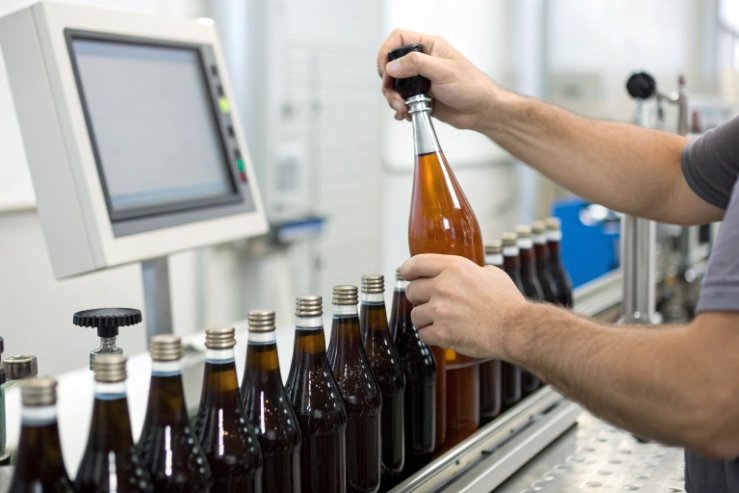
Torque and leak testing that match production reality
A cap can pass a lab test but fail on a real line because the capping head, speed, and bottle variation are different. So torque testing must be tied to the line.
Core torque checks:
-
Application torque (what the capper applies).
-
Removal torque after a set time (to confirm liner compression and thread engagement).
-
Bridge/band integrity if tamper evidence exists.
Core leak checks for spirits:
-
Vacuum/pressure decay leak test (fast, non-destructive for screw caps).
-
Inverted soak test for a defined time (simple and very revealing for microleaks).
-
Weight-loss/evaporation test over days or weeks (ethanol loss exposes slow leaks).
-
Dye penetration can help during root cause, but ethanol-based trials are closer to reality.
A useful control chart links torque and leaks:
| Control item | Target outcome | What it detects | Action when out of control |
|---|---|---|---|
| Application torque | stable window | capper drift, finish variation | adjust capper + re-check finish OD/tilt |
| Removal torque | stable retention | liner set, thread mismatch | confirm closure spec + liner compression |
| Leak rate | near zero | microleaks, finish defects | isolate mold cavities + tighten finish checks |
Migration and “taint” testing for spirits
Glass itself is usually inert for spirits. The risk comes from what is on the glass and what touches the spirit:
-
Cap liners (plasticizers, additives)
-
Printing inks, coatings, hot stamping layers
-
Adhesives (labels, back labels that may see splashes)
-
Decorative paints or electroplating layers
For baijiu, the most convincing approach is a real formulation trial:
-
Fill bottles with the actual baijiu (or a worst-case ethanol strength agreed with the lab).
-
Store upright and inverted, at room and elevated temperature.
-
Evaluate for leaks, haze, odor change, and off-taste.
-
Run analytical screening when needed: VOCs, semi-volatiles, and metals.
A pragmatic test menu for spirits packaging:
-
Overall and specific migration 6 for closure liners and any polymeric contact parts (use high-ethanol conditions).
-
Organoleptic testing (odor/taste transfer) after aging.
-
Heavy metal screening when decoration or colored enamels exist.
-
Coating resistance 7 to ethanol: rub, soak, and scratch resistance around the neck and label edges.
This is where many teams save time by testing the whole system, not just parts. A closure can be “food grade” for water and still cause issues in high-proof alcohol. A coating can look stable and still soften under ethanol vapor at the headspace. When the tests use real baijiu, these problems show up early, not in the market.
Conclusion
Quality baijiu bottles come from controlled finishes, balanced strength tests, strict AQL defect rules, and real-spirit seal and migration trials—done as one linked system.
Footnotes
-
Explains the Roll-On Pilfer-Proof closure mechanism commonly used for securing high-proof spirits bottles. ↩ ↩
-
Describes the standard inspection tool used to verify if bottle finish dimensions meet production tolerances. ↩ ↩
-
Details the heat treatment process that removes internal glass stresses to prevent spontaneous breakage. ↩ ↩
-
Technical overview of internal tension in glass manufacturing that increases susceptibility to thermal and mechanical failure. ↩ ↩
-
Guide to Acceptable Quality Limit sampling methods for defining defect thresholds in manufacturing batches. ↩ ↩
-
Overview of testing procedures to ensure chemical safety and prevent substance transfer from packaging to alcohol. ↩ ↩
-
Standard method for testing the adhesion and durability of coatings or decoration on glass surfaces. ↩ ↩






