
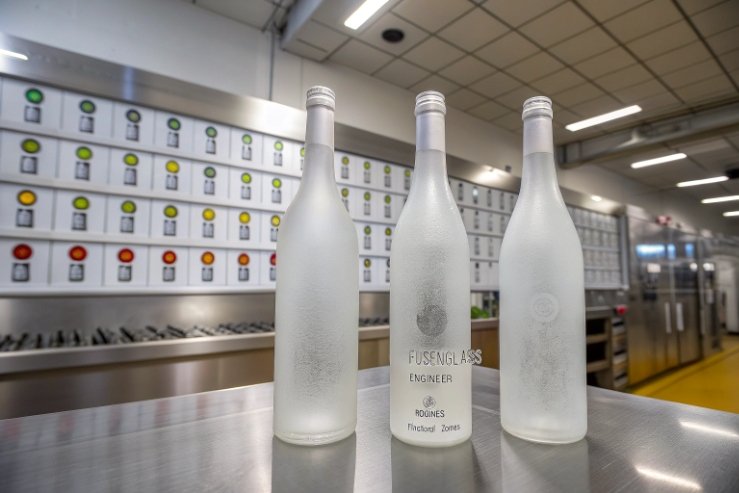
Frosted glass looks simple from the outside. In production, it can quietly ruin threads, weaken glass, or chalk in cartons if the process is not under control.
Glass bottles are frosted mainly by acid etching, sandblasting, or spray-frost coatings. The right method balances texture, strength, masking, rinsing, and QC checks on roughness and uniformity.
If you treat frosting as a full process instead of “just a decoration,” you protect both brand image and line efficiency. If you ignore the details, you get leaky closures, stains, or weak points that show up in the field, not in the sample room.
How do acid-etch and sandblast methods compare in texture and strength?
Frosted bottles can feel silky or harsh, premium or cheap. Most of that comes from how we remove glass from the surface.
Acid-etch frosting dissolves a very thin, even layer of glass for a smooth, permanent matte. Sandblasting hits the surface with abrasive, giving more texture and risk of over-roughening if not controlled.

How acid-etch frosting works
In acid-etch frosting 1, bottles pass through a controlled chemical bath or spray cabin. The chemistry normally contains fluoride compounds that react with the silica in the glass and dissolve a microscopic layer. Time, temperature, and concentration decide how deep that layer goes.
- Shorter time and lower strength give a very light, “satin” look.
- Longer time and stronger solutions give a denser, almost opaque frost.
Because the chemistry attacks the surface evenly, acid-etched bottles tend to have:
- smooth touch, almost velvety
- low sparkle under light
- very uniform appearance around the body
The etched layer is part of the glass itself, so there is nothing to peel. As long as we rinse and neutralize well, the effect is permanent and quite robust in logistics.
How sandblast frosting works
Sandblasting is mechanical and closely related to abrasive blasting 2. Fine abrasive (often aluminum oxide) shoots onto the glass surface at high speed. Each particle chips a tiny pit. Millions of pits create the frosted look.
This method is very flexible for:
- partial frosting
- deep, “stone-like” textures
- mix of clear and matte zones
But it also introduces more risk:
- deeper pits act as stress starters if we go too aggressive
- texture can vary more between operators or machines
- the surface feels rougher, sometimes too rough for some labels or print
Sandblasting is often better for short runs, special zones, and strong texture. For high-volume, fully frosted wine bottles, acid-etch tends to give more stable quality and lower breakage risk.
Where spray-frost coatings fit
Spray-frost coatings do not remove glass. They lay a matte coating on top. This is helpful when:
- local rules or brand policies do not like fluoride chemistry
- we need colored or gradient frost without changing glass color
- we want to test the look before committing to permanent etch
The trade-off is durability. Coatings can chip, scratch, or chalk if under-cured or if cartons are too aggressive. For long export or rough channels, treat spray frost like any other coating: it needs serious rub and adhesion testing.
Quick comparison table
| Method | How it works | Texture feel | Durability | Typical use cases |
|---|---|---|---|---|
| Acid etch | Dissolves thin glass layer | Smooth, silky matte | Very high (in-glass) | High-volume bottles, premium uniform finish |
| Sandblast | Abrasive chips glass surface | Rougher, grainy | High but stress risk | Partial effects, strong texture, small runs |
| Spray frost | Matte coating on glass | Variable, coatable | Medium, coating-based | Color frost, gradients, lower-temp processes |
When choosing between these, start from route-to-market and durability needs, then back into budget and design options. Texture comes last, not first.
Which masking and edge protections keep threads and seals in spec?
The fastest way to hate frosting is a batch of bottles that look beautiful but cannot hold a closure because the finish is out of spec or too rough.
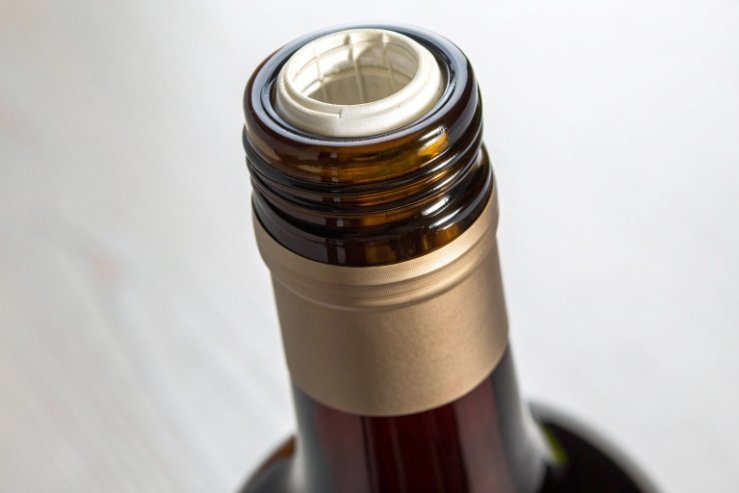
Masking protects functional areas like threads, seal lands, and support rings. Clean, rounded mask edges stop chemical creep and sandblast overrun, so finishes stay in tolerance and closures seal properly.
What must never be frosted
On a wine or spirits bottle, some areas are functional, not decorative:
- sealing land inside the finish
- threads for screwcaps
- T-top or cork bore surface
- support ring for conveyors and closures
- gasket or capsule interface zones
If acid or blast changes these, you see:
- poor torque behavior
- leaks during transport
- damaged corks or bar-tops
- line jams on filling machinery
Rule of thumb: no frosting on sealing surfaces and very limited frosting on support and handling surfaces.
Masking options that actually work
Common masking methods include:
- Silicone or EPDM caps (often made from EPDM rubber 3) over the finish and neck
- Precision tapes rated for chemical and blast resistance
- Custom rubber or plastic plugs that protect the bore
- Hard tooling masks for repeatable multi-zone designs
In acid-etch, masks must resist chemistry and stay tight so acid does not creep under the edge. In sandblast, masks must hold up against impact and not shed chips into the process.
Edge quality matters. A sharp, clean boundary looks premium. A fuzzy or “bitten” edge looks cheap and can signal poor process control.
Design rules for smooth transitions
Design the bottle and the frost zones together:
- use existing geometry (shoulder lines, label panels, punt curves) as natural edge lines
- avoid stopping frost in the middle of a smooth panel with no reason
- allow a small clear “safety ring” around threads, seal lands, and support rings
- keep mask lines away from high-stress corners if sandblasting is deep
Functional vs decorative zones
| Bottle area | Frosting allowed? | Masking focus |
|---|---|---|
| Seal land / bore | No | Full protection with cap or plug |
| Threads / closure fit | Very limited, if any | Keep thread form and roughness unchanged |
| Support ring | Light frost at most | Maintain diameter and handling function |
| Shoulder / body | Yes, main decorative space | Clean edges along design lines |
| Punt and base panel | Yes, if not contact zone | Avoid sharp edge near base outer ring |
What rinse and cure steps prevent stains and chalking?
The sample from the decorator looks perfect. Then the first shipment arrives with streaks, white haze, or chalky hands after handling. This almost always traces back to rinsing and curing.
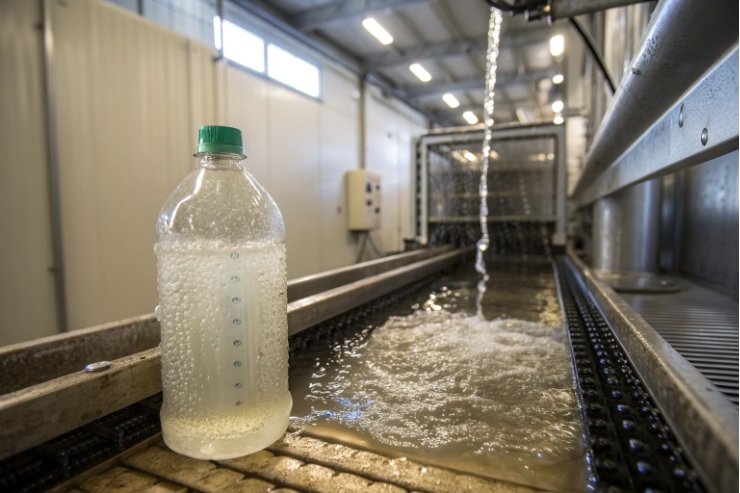
After acid-etch, strong rinsing and neutralization remove residues that cause stains and chalking. After spray-frost, correct flash-off and oven or UV cure lock the coating and prevent tack, prints, and powdering.
Rinsing after acid etching
Acid-etched glass needs careful post-treatment:
-
Rinse step 1 – bulk removal
High-flow water or spray to remove most of the etchant. -
Neutralization
Mild alkaline rinse or neutralizing bath to stop reaction and tie up fluoride residues. -
Rinse step 2 – clean finish
Fresh water, often softened or deionized, to prevent mineral spots. -
Drying
Hot air or tunnel drying to avoid water marks and uneven drying patterns.
If rinsing is weak or neutralization is incomplete, you see:
- milky stains
- chalky feel on hand
- spots that show up only under certain light
Sometimes these defects appear only after cartons trap moisture during shipping.
Curing spray-frost coatings
For spray-frost or UV coatings, the UV curing process 4 needs tight control:
- Pre-clean: bottles must be free from oil, dust, and fingerprints or the coating will fish-eye or peel.
- Flash-off: short time after spray to let solvents or water flash before entering the oven or UV tunnel.
- Thermal cure or UV cure: bake or expose for a defined time at defined power to reach full crosslinking.
Under-cure leads to:
- soft surfaces that scratch easily
- blocking (bottles sticking in cartons)
- coating transfer to labels, dividers, or hands
Over-cure can cause:
- brittle coatings that chip
- color shift for tinted frosts
Water quality and handling
Hard water leaves spots on matte surfaces. Recycled rinse water can carry fine solids that scratch or cloud the frost.
Simple controls:
- final rinse with softened or DI water
- frequent filter changes in rinse systems
- stable bottle temperature when entering rinse or cure (to avoid condensation)
Typical defect vs process cause
| Visible issue | Likely process cause | Fix to consider |
|---|---|---|
| White chalky film | Poor neutralization after acid etch | Stronger neutral bath + better agitation |
| Irregular streaks or runs | Uneven rinse or high surface tension | Adjust spray pattern, add wetting control |
| Water spots on matte | Hard final rinse water | Use softened/DI water on last stage |
| Soft, easily scratched coating | Under-cure or short oven time | Raise time or temperature / UV dose |
| Peeling or flaking patches | Poor pre-clean or contamination | Improve washing and handling before coating |
Which QC metrics verify roughness (Ra) and uniformity?
Frost feels emotional in the hand, but production needs numbers. Without simple metrics, every dispute becomes “it feels different” vs “we did nothing wrong.”
Key QC metrics include surface roughness (Ra) checks on flat reference zones, visual and color checks for uniformity, gloss measurement, and basic rub and adhesion tests to confirm strength for the real route-to-market.
Measuring roughness (Ra) on frosted glass
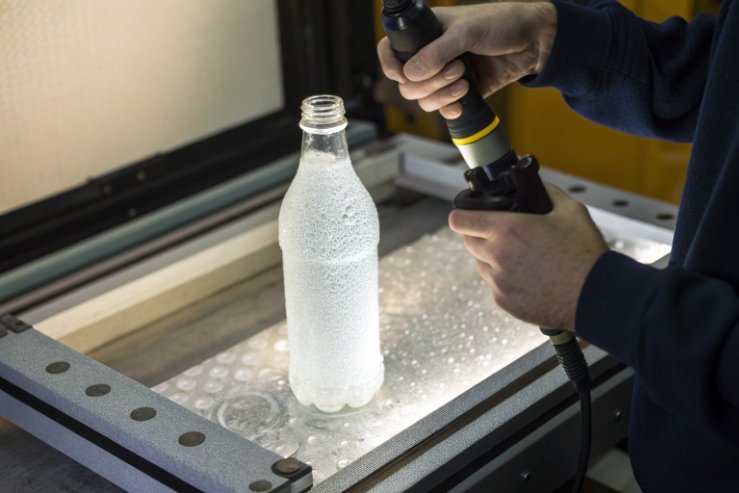
Surface roughness (Ra) 5 gives a numeric handle on “how frosted” a surface is.
- A surface profilometer 6 or roughness meter runs across a small patch of glass.
- We measure Ra in micrometers at defined spots, often on a flat-ish body panel.
- We set a target range (for example, 0.6–1.2 µm) for a given style.
Acid-etched surfaces usually show lower, more even Ra values. Sandblasted surfaces can show higher or more variable readings. Spray-frost coatings can be tuned across a wide range by formulation.
Visual uniformity and color checks
Humans still buy the wine, so visual QC matters:
- Uniformity around circumference: no patchy bands, dark/light zones, or visible overlaps.
- Top-to-bottom consistency: frost stops where the design says, not earlier or later.
- Color consistency for tinted frost: ΔE or similar color metrics can support visual checks.
Gloss meters can also help. Frosted glass should have low, stable gloss values. If gloss creeps up in one batch, it often means a weaker etch or thinner coating.
Adhesion and rub resistance
For spray frost and any over-printed layers, simple tests save a lot of pain later:
- Tape test: ASTM D3359 tape test 7
- Rubbing test: defined number of rub cycles with a standard pad or cloth, dry and wet.
- Carton simulation: vibrate packed cartons then check for burnish marks, scratches, or coating transfer.
Acid-etched and sandblasted glass do not need adhesion tests for the frost itself, but they do need them for any inks or decorations on top.
Example QC matrix for frosted bottles
| QC check | What it measures | When to run it |
|---|---|---|
| Ra roughness (µm) | Texture level, process stability | First article + periodic in-line |
| Visual coverage check | Uniformity, edge quality, defects | Every pallet or defined sample size |
| Color / ΔE (tinted) | Shade consistency across batches | New batches, new plants, color lots |
| Gloss (GU) | Degree of matte and uniformity | First article + spot checks |
| Tape adhesion | Coating or ink anchoring | Every coating or print batch |
| Rub / scuff test | Resistance to logistics damage | New designs + periodic verification |
When you combine numbers and simple visual standards (good/bad samples in a light box), disputes drop. Everyone can see and measure the same thing.
Conclusion
Strong frosting comes from the whole chain: the etch or blast method, smart masking, clean rinsing or curing, and clear QC metrics on roughness and uniformity so the look stays premium and the bottle stays functional.
Footnotes
-
Definition of acid etching and why it creates permanent matte finishes. ↩ ↩
-
Overview of abrasive blasting methods and controls that shape surface texture results. ↩ ↩
-
Background on EPDM rubber properties commonly used for masking caps and plugs. ↩ ↩
-
Explains UV/EB curing basics for setting correct cure windows on spray-frost coatings. ↩ ↩
-
Guide to Ra roughness parameters for defining and measuring frost texture targets. ↩ ↩
-
Explains what a surface profilometer measures to capture texture and finish variation. ↩ ↩
-
Official overview of ASTM D3359 tape adhesion testing for coated bottles and decorated finishes. ↩ ↩






