
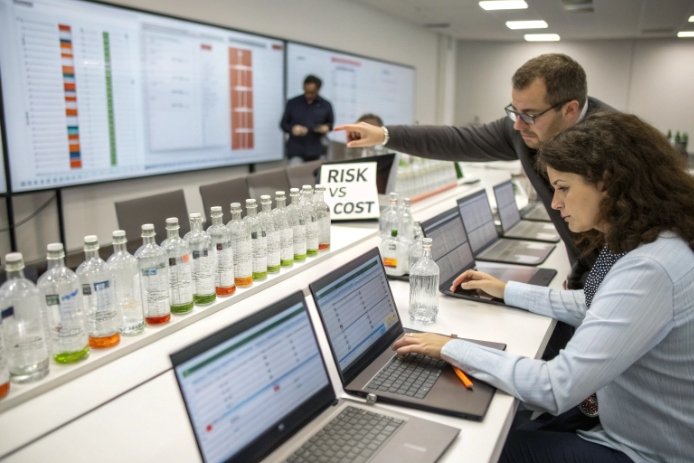
A bottle program can look safe until one late shipment or one leak wave hits. Then the brand pays in refunds, rework, and lost shelf space.
A reliable glass bottle manufacturer proves capability with repeatable QC, relevant certifications and test reports, real customization support, verified references, and clear SLAs that protect lead time, claims, and service.
The best supplier choice is not the cheapest quote. It is the lowest risk over 12–24 months. The process below is the one that keeps problems measurable, not emotional.
Which certifications and test reports actually prove capability?
Many factories can show certificates. Fewer factories can show test reports that match the bottle, the finish, and the channel you sell in.
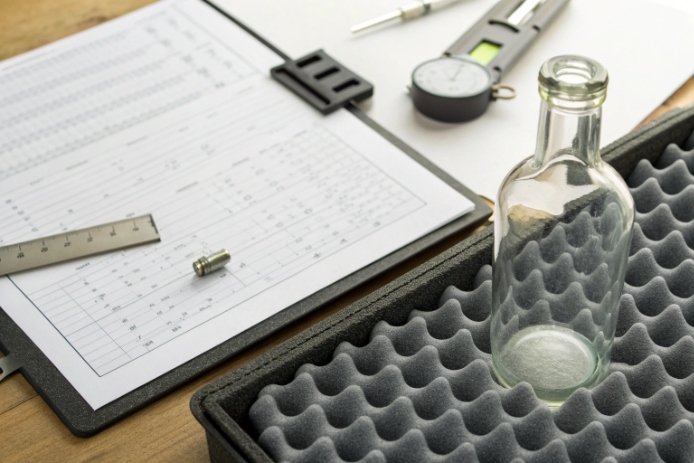
The most useful proof is a combination of quality-system certification, batch traceability, and product-level test reports for stress, dimensions, defects, coatings, and decoration durability tied to your exact specification.
Separate “signals” from “evidence”
Certifications like ISO 9001 quality management 1 can be a good signal that a factory has a documented quality system. Still, a certificate alone does not prove your bottle will be consistent. Evidence is what reduces risk: actual inspection records, capability data, and recent test reports for similar bottles.
Ask for reports that match your risk points
For spirits and wine bottles, capability shows up in a few critical tests:
- Dimensional inspection: go/no-go finish gauges 2, height, diameter, capacity, verticality, ovality.
- Annealing/stress screening: stress patterns and sampling frequency (a simple polariscope stress check 3 is a common screen).
- Strength screening: impact checks, top-load/compression, thermal shock screening if your line or route has temperature swings.
- Surface protection: scuff resistance and coating presence (hot-end/cold-end).
- Decoration durability: rub/abrasion, adhesion, chemical resistance if the bottle gets wet, chilled, or handled rough.
Insist on traceability and sampling discipline
A factory that tracks defects by date, line, and mold cavity can isolate problems fast. Without that, one defect spike can force you to quarantine too much inventory.
| Proof item | What it should include | Why it matters |
|---|---|---|
| ISO / system certs | Scope, issuing body, valid dates | Shows process discipline, not product proof |
| Dimensional report | Finish gauges + key dims + tolerances | Prevents closure mismatch and line downtime |
| Stress/annealing checks | Method + sampling plan + trend | Predicts delayed cracking risk |
| Strength checks | Test method + pass/fail criteria | Predicts shipping and handling survival |
| Coating/abrasion tests | Before/after handling results | Reduces scuff, chips, and returns |
| Traceability method | Date/line/cavity coding | Speeds root-cause and claims control |
Do they really offer custom molds, decoration, and closure sourcing?
Some suppliers say “custom” but only tweak a stock mold. Others can run a full bottle system with decoration and matched closures, which saves time and reduces compatibility surprises.
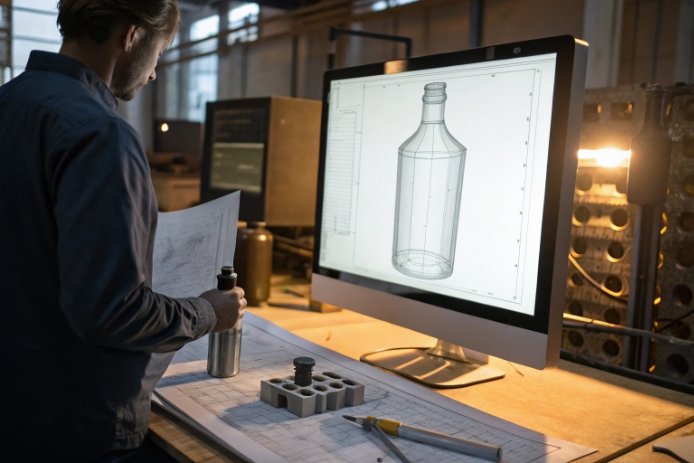
A strong supplier can support custom molds with clear ownership terms, run decoration with tested stacks and packing rules, and source closures that match finish specs with verified torque or T-top fit performance.
Custom molds: control the business terms, not only the drawing
Custom glass tooling can be a long-term asset. It needs clear rules:
- Who owns the mold and drawings?
- Who pays for maintenance and replacement?
- How long will the factory store the mold?
- Can the mold be transferred if the relationship ends?
A reliable supplier answers these questions clearly and puts them in writing. Vague answers usually mean future friction.
Decoration: capability is packaging + process, not only artwork
Decoration failures often come from handling and packing, not from “bad ink.” A supplier that truly supports decoration will define:
- the decoration stack (coating, ink, topcoat)
- curing process and validation
- rub and adhesion tests
- export packing that prevents scuffing in vibration
If the supplier cannot show past projects with similar finishes, treat that as an R&D project and price it with sample rounds.
Closure sourcing: the finish is the contract
Closure sourcing is useful only when the supplier respects finish control. A capable partner will:
- confirm finish drawings and tolerances
- provide closure spec sheets
- run fit and retention checks (torque, removal torque, strip checks, insertion/pull-out for T-tops)
- keep closure lots traceable to bottle lots
| Capability area | What “good” looks like | Red flags |
|---|---|---|
| Custom mold | Drawings + tolerance control + ownership terms | “We can copy any bottle” with no drawings |
| Mold maintenance | Cavity tracking + maintenance schedule | No plan for wear or cavity drift |
| Decoration | Rub/adhesion tests + packing spec | “It will be fine” with no test plan |
| Closure sourcing | Finish gauge control + lot traceability | “Standard cap fits” without dimensional proof |
| One-stop service | Bottle + cap + carton alignment | Blame shifting between vendors |
What references, audits, and pilot runs validate quality?
A supplier can look perfect in emails. Quality risk shows up when production speed increases and when export packing meets real vibration and drops.
References, audits, and pilot runs validate quality by proving repeatability: you confirm equipment, QC gates, traceability, and performance on a small production lot before scaling into full-volume risk.

References: ask the right questions, not just “are they good?”
A reference call works best when it targets specific risks:
- Did finish dimensions stay stable across lots?
- Did decoration scuff in transit?
- How did the supplier handle a defect spike?
- Were claims resolved fast and fairly?
- Did lead times stay stable in peak seasons?
If possible, pick references that run similar bottle weight and similar route-to-market.
Audits: verify the real line, not the brochure
A basic audit should confirm:
- melting and forming control basics (gob weight stability, temperature control)
- annealing lehr control and stress screening
- automated inspection points (finish, sidewall, base)
- packing line discipline (dividers, cartons, palletizing)
- calibration and gauge control
- traceability by line and cavity
A virtual audit can work, but it must follow a checklist and include real-time video at the line, not only staged slides.
Pilot runs: the cheapest insurance
A pilot run should be big enough to reveal variation but small enough to limit risk. It should include:
- first-article approval against your master
- full inspection report with AQL sampling plans 4
- closure fit/torque checks using your target closure lot
- packed-carton testing aligned to ASTM D4169 distribution cycle testing 5
- e-commerce validation using ISTA 3A parcel simulation 6
- a clear acceptance rule for cosmetic vs functional defects
| Validation step | What it proves | What to document |
|---|---|---|
| Reference checks | Real-world reliability | Notes, KPIs, issue examples |
| Audit | Process capability and honesty | Audit report + photos + checklist |
| First article | Spec match at startup | Signed sample + measurements |
| Pilot run | Repeatability at speed | Lot report + defect breakdown |
| Pack simulation | Shipping readiness | Test results + pack spec locked |
| Loading check | Export discipline | Pallet photos + container bracing notes |
How do SLA, lead time, and service support de-risk supply?
A supplier can be “high quality” and still be dangerous if lead times drift, communication is slow, or claims take months.
Strong SLAs reduce risk by defining lead time, quality limits, inspection rights, claim timelines, spare capacity options, and communication rules so problems are handled fast before they become stock-outs.

Make lead time a tracked KPI, not a promise
Lead time should include:
- drawing approval time
- mold build time (if custom)
- production time
- decoration time
- packing and booking time
A supplier that owns the schedule will share a timeline and update it. A supplier that hides the schedule will surprise you.
Service support should include technical support, not only sales
Good service means:
- fast response to dimensional questions
- root-cause support on defects
- packing optimization for your channel
- clear engineering contact for changes
- process to prevent repeat issues
This matters most when you scale. Early on, everything looks easy. Later, one cavity drifts and you need answers within days, not weeks.
Claims and quality gates must be written clearly
A clear service level agreement (SLA) 7 should include:
- agreed defect definitions and AQL targets
- incoming inspection rights
- third-party inspection rights before shipment
- how breakage and scuff claims are measured
- credit or remake timelines
- traceability requirements for both sides
| SLA clause | What to specify | Risk it reduces |
|---|---|---|
| Lead time | Standard and peak-season lead time | Stock-outs and missed launches |
| On-time delivery KPI | Target % and penalties/credits | Schedule drift |
| Quality targets | AQL by defect class | Surprise rejects on arrival |
| Inspection rights | PSI and loading checks | “Too late, already shipped” issues |
| Claims process | Evidence needed + response time | Slow refunds and blame loops |
| Change control | Drawing revision rules | Silent spec drift |
| Support model | Named contacts + response SLA | Communication gaps |
What service model makes a supplier reliable long-term?
A reliable supplier is not only a factory. It is a system that stays stable when the market gets messy.
The best long-term model includes a clear account owner, an engineering contact, documented QC and traceability, optional safety stock, and a second qualified line or site to protect continuity.
Build a “two-layer” risk plan
One layer is inside the supplier: multi-line capacity, mold backups, stable QC, and trained teams. The second layer is outside: dual-sourcing, safety stock, and an agreed emergency plan.
Use data to build trust
A good supplier shares:
- defect trend reports by lot
- on-time shipment performance
- corrective actions and closure dates
- mold maintenance records for your tools
This is boring data, but it prevents expensive surprises.
Keep the relationship simple and enforceable
Clear documentation wins:
- one master spec sheet
- one approved golden sample
- clear pack spec and pallet spec
- version control on drawings
- scheduled quarterly reviews
| Long-term lever | What to ask for | Why it matters |
|---|---|---|
| Named support team | Sales + engineering + QC contact | Faster decisions and fewer mistakes |
| Safety stock option | Minimum stock and refresh plan | Protects against shipment delays |
| Backup cavities/molds | Spare parts and maintenance plan | Prevents cavity-based defect spikes |
| Multi-line capacity | Proof of available capacity | Protects scaling and peak season |
| Quarterly review | KPI and action tracking | Keeps the system improving |
Conclusion
A reliable manufacturer is proven by data, pilot performance, and enforceable SLAs. Certifications help, but repeatable QC, traceability, and service support are what protect launches and margins.
Footnotes
-
Official ISO overview of ISO 9001 and why it matters for consistent quality systems. ↩︎ ↩
-
Explains go/no-go gauges and how they enable fast pass/fail checks on critical dimensions. ↩︎ ↩
-
Shows how a polariscope reveals residual stress patterns linked to delayed cracking risk. ↩︎ ↩
-
AQL basics to align sampling plans, defect thresholds, and incoming inspection expectations. ↩︎ ↩
-
Widely used distribution-cycle test framework for drop, vibration, and compression on packaged units. ↩︎ ↩
-
Parcel simulation procedures to validate e-commerce packaging performance before scaling shipments. ↩︎ ↩
-
Defines SLAs so lead time, quality gates, and claim timelines are enforceable—not “best effort.” ↩︎ ↩






