
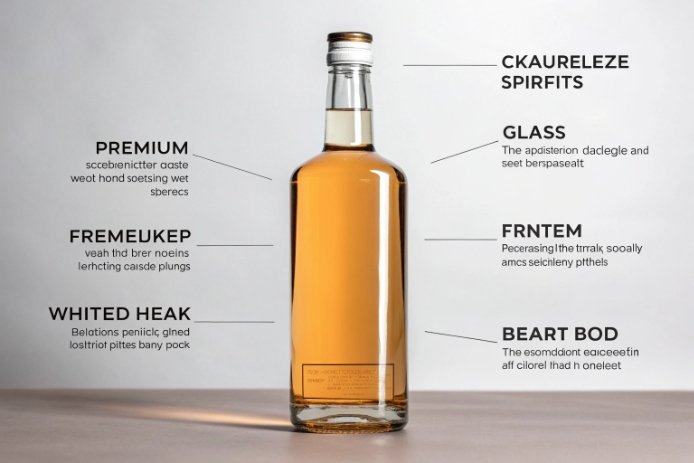
Leaks, scuffs, and breakage look like “shipping problems,” but they often start with tiny finish defects, weak decoration systems, and missing QA gates.
The most common bottle issues are closure leaks from finish mismatch or torque variance, decoration flaking or scuffing, thermal/impact breakage during handling, and e-commerce damage caused by weak secondary packaging and inconsistent pallet loads.
Most returns come from a simple truth: glass is unforgiving. A defect that looks small at the factory can become a leak after vibration, or a crack after temperature change. The good news is that most of these problems repeat in patterns. Once the patterns are clear, the fixes are usually basic and measurable.
Do sealing and evaporation problems really cause returns, and how do they show up?
A bottle can pass a quick hand check, then lose liquid during transit. One sticky carton later, the retailer rejects the whole case.
Yes. Sealing issues and slow evaporation create returns because small leaks wet labels, weaken cartons, and trigger odor complaints, and they are often caused by finish defects, closure mismatch, or bad application control.
Where sealing failures start
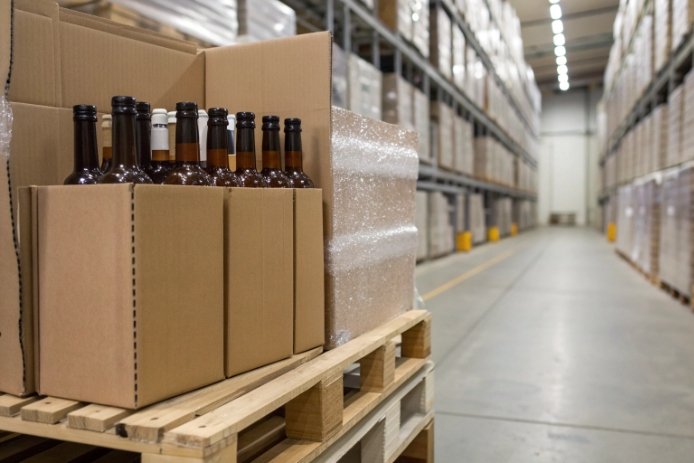
Most leaks start at the finish, not in the glass body. The mouth can have tiny chips, checks, or sharp edges that cut liners or prevent a uniform seal. The neck can also be slightly oval or off-center. That makes the closure load uneven. One side seals and the other side breathes. Over time, vibration and temperature cycles make the weak side worse.
Evaporation is slower than a leak, but it still creates claims. Spirits and RTDs can lose fill level if the closure system is weak, or if the liner is wrong for the product. Even a small headspace change can be visible to consumers, especially in clear bottles with a fill line expectation.
How it shows up in the market
Sealing failures usually show up as:
- damp neck labels or shoulder labels
- carton stains and soft corners
- “cap smells like alcohol” complaints
- inconsistent fill levels in the same case
- sticky residue that attracts dust and looks dirty on shelf
What to test and what to control
A practical plan is simple. First, trial-fit and torque or press-in your closures using real production methods. Then, run an inverted hold test and a vibration hold test on packed cartons. Also, check finish dimensions with gauges, not only calipers, so operators can catch drift fast.
| Symptom | Likely root cause | Fast check | Best fix |
|---|---|---|---|
| Damp label at neck | Finish chip or liner cut | Finish visual + liner inspection | Tight finish AQL + better handling |
| Sticky carton | Torque drift or poor seal | Torque chart + inversion test | Capper control + closure spec match |
| Low fill level over weeks | Slow evaporation | Retain samples over time | Better liner + tighter finish control |
| Random leaks in a case | Ovality / concentricity issues | Go/no-go gauges | Mold maintenance + dimensional QC |
[Story placeholder: a distributor once returned a full pallet because two cartons leaked. The real cause was a tiny finish chip pattern from one mold cavity.]
How do finish mismatch and torque variance create leaks on the line and in distribution?
A closure that “fits” is not always a closure that “seals.” Many leaks come from systems that are almost right, but not stable.
Finish mismatch and torque variance cause leaks because the closure and finish are a mechanical system: small changes in neck dimensions, threads, liner friction, or application torque create seal gaps that open during vibration and temperature swings.
Finish mismatch is a silent killer
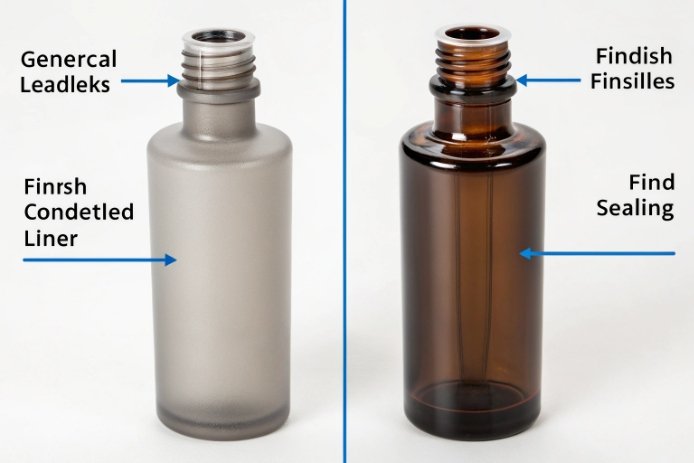
Mismatch happens when the bottle finish spec is vague. A supplier may say “28mm screw finish,” but that can hide different thread profiles, support ring shapes, and sealing land geometries. If the cap liner was designed for a different sealing land, it may seal at first, then relax. That becomes a slow leak. When you need one shared “source of truth” for finish geometry, align drawings to the CETIE GME finish data sheets 1 so glass and closure tolerances reference the same profile.
For bar-top and cork systems, mismatch is often neck ID. If the bore is too small, insertion force spikes and stoppers get damaged. If the bore is too large, pull-out force drops and the closure can walk out during vibration.
Torque variance is not only “operator error”
Torque drift can come from:
- capper head wear
- line speed changes
- lubrication changes on closures
- glass coating changes on the finish
- temperature differences between shifts
Averages can look fine while extremes fail. One capper head can apply low torque. One lane can run higher friction. That is why torque needs a control chart, and torque retention should be validated with ASTM D2063 torque retention test methods 2, not a single number.
Tests that match reality
For screw caps, track application torque, removal torque, and strip events. Then run a packed-carton vibration test and a heat/cool cycle that matches your route-to-market. For bar-top, focus on insertion force, pull-out force after a set dwell time, and inverted hold.
| Control point | What to measure | Typical failure if ignored | QA gate that catches it |
|---|---|---|---|
| Finish dimensions | Thread/land with gauges | Random leaks, cross-threading | Incoming bottle QC |
| Closure dimensions | Liner and skirt checks | Inconsistent seal | Incoming closure QC |
| Application settings | Torque by head/lane | Wet labels and returns | In-line torque sampling |
| Post-application seal | Inversion hold | Slow leaks | Retain sample protocol |
| Distribution stress | Vibration + temp cycle | Leaks appear “later” | Route-to-market simulation |
When the finish and closure match on paper, the next goal is stability. Stability is what protects you in real logistics.
Do decoration flaking, scuffing, and coating defects cause returns and brand damage?
Many buyers treat decoration as a “nice extra.” Retailers and consumers treat it as the product’s face. When it fails, trust drops fast.
Yes. Decoration flaking, ink rub, and coating chips cause returns because they make the bottle look used or counterfeit, and they often come from weak adhesion, poor curing, or abrasion inside cartons and on conveyors.

Why decoration fails in the real world
Decoration failure is usually a system issue:
- the glass surface was not clean
- the coating chemistry was not matched to the glass and product
- the curing process was rushed
- the artwork used inks that are too brittle for impact and vibration
- the packaging allowed bottle-to-bottle abrasion
Spirits bottles often run through conveyors that can scuff coatings. Then they get packed tight. During ocean freight and truck delivery, cartons vibrate. Even “tiny” rubbing becomes visible. Soft-touch coatings are especially sensitive. A premium matte finish can turn into shiny streaks after one rough pallet move.
What customers notice first
Customers notice:
- missing metallic foil areas
- chipped paint on edges and embossing peaks
- cloudy or orange-peel coatings
- ink that smears when wet
- labels that lift in ice buckets or condensation
A bottle can be functionally perfect and still fail on shelf because the front panel looks worn.
How to reduce decoration complaints
The best fixes are basic:
- define abrasion tests for the decoration system
- require adhesion tests after cure (many teams use the ASTM D3359 adhesion tape test 3 as a fast, repeatable gate)
- upgrade dividers and add protective sleeves when needed
- reduce sharp emboss peaks that chip coatings
- control handling on the line with low-abrasion guides
| Decoration problem | Most common cause | Quick validation test | Best prevention |
|---|---|---|---|
| Flaking on edges | Poor adhesion or brittle ink | Cross-hatch adhesion | Surface prep + correct cure |
| Scuffs on front panel | Carton abrasion | Rub test + ship simulation | Better dividers + spacing |
| Smearing | Incomplete curing | Solvent rub test | Longer cure + process control |
| Uneven finish | Spray inconsistency | Visual under defined light | Stable spray parameters |
| Fingerprint marks | Soft-touch sensitivity | Handling trial | Sleeve or carton, or different coating |
If a SKU sells online, decoration needs an even higher standard because the customer sees the bottle up close after unboxing.
Are impact and thermal checks frequent in logistics, and which ones matter most?
Glass does not need a dramatic drop to fail. It can crack from repeated small shocks, or from sudden temperature change after filling or storage.
Yes. Impact and thermal issues are common because pallets get bumped, cartons vibrate for days, and bottles see hot-to-cold swings; the most useful checks are packed-carton drop tests, vibration tests, top-load/compression checks, and thermal shock screening tied to your process.
Impact happens as a pattern, not as a single event
In distribution, bottles face:
- forklift bumps
- pallet-to-pallet contact
- carton compression at the bottom of stacks
- long vibration cycles in trucks and containers
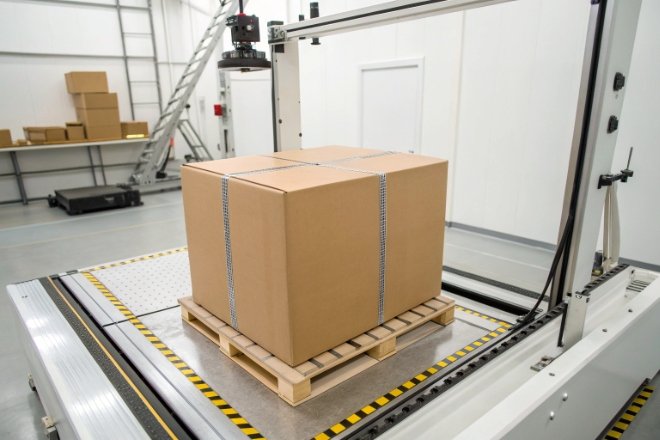
So a single bare-bottle drop test is not enough. What matters is the packed unit. A strong divider system and stable pallet wrap can prevent most impact damage without changing the glass. To make vibration screening consistent across labs, many packaging teams reference ASTM D999 vibration testing of shipping containers 4.
Thermal risk depends on your process and channel
Thermal shock is common when:
- bottles are washed hot and then cooled fast
- product temperature differs from bottle temperature
- cases are moved from warm warehouses into cold trucks
- bottles go into ice buckets or cold displays quickly
Even if you do not hot-fill, you still need basic thermal screening. Internal stress from poor annealing can turn a minor temperature swing into delayed cracking, which is why programs often align screening to ASTM C149 thermal shock resistance of glass containers 5.
A route-to-market test plan that stays realistic
For most alcohol packaging, a useful plan includes:
- packed-carton drop tests (corners, edges, faces)
- vibration simulation on the packed shipper
- top-load / compression checks for stacked pallets (commonly tied to ASTM D642 compressive resistance testing 6)
- a basic thermal cycle that matches your worst handling conditions
- visual inspection for micro-cracks and heel damage after tests
| Route risk | What fails first | Best test format | Best packaging lever |
|---|---|---|---|
| Long truck vibration | Heel chips, scuffs | Vibration on packed cartons | Strong dividers + anti-slip sheets |
| Pallet stacking | Carton crush | Compression/top-load | Better cartons + pallet pattern |
| Handling drops | Neck/shoulder breaks | Drop on packed shippers | Corner protection + cushioning design |
| Temperature swings | Stress cracks | Thermal cycle screening | Better annealing + process control |
The goal is not perfect lab numbers. The goal is fewer surprises after 30–60 days in the real channel.
Which QA gates reduce e-commerce damages for alcohol bottles?
E-commerce is brutal on glass. It adds extra touches, last-mile drops, and unpredictable handling. Many brands blame carriers, but the biggest wins come from better QA gates and ship-ready packaging.
The best QA gates for e-commerce are: finish/closure compatibility checks, decoration abrasion checks, shipper-package testing on the final packed unit, and pallet/container loading audits that prevent movement and carton crush.
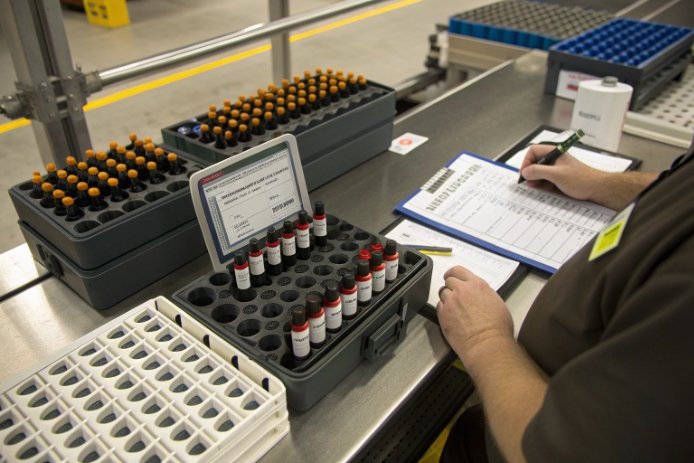
Gate 1: incoming QC that focuses on critical features
Incoming bottle QC should not be a beauty contest. It should target:
- finish dimensions and defects
- verticality and rocking base
- heel and shoulder thickness red flags
- cleanliness inside the bottle
Incoming closure QC should target:
- liner integrity
- dimensions and lot traceability
- friction consistency that affects torque
Gate 2: line trial and control charts
Before full production, run a line trial and capture:
- torque by head and lane (or insertion/pull-out for T-tops)
- leak checks after dwell time
- scuff points on conveyors
- carton packing consistency
Keep control charts. A stable process is cheaper than sorting later.
Gate 3: ship-ready packaging validation
For e-commerce, test the actual shipper that the consumer receives, not only the inner case. Many damages come from:
- too much empty space in the shipper
- weak corner protection
- bottles that can touch under shock
- labels scuffing against inserts
To avoid guessing, benchmark your validation sequence against ISTA Procedure 3A parcel delivery testing 7 so your shipper is proven under parcel-style drops and handling.
Gate 4: pre-shipment inspection plus loading discipline
A pre-shipment inspection should verify:
- AQL defects by class
- packaging specs (divider strength, carton grade, tape pattern)
- pallet pattern, corner boards, strapping, wrap
- photos of the loaded container or truck
| QA gate | What it prevents | What to document | Who owns it |
|---|---|---|---|
| Incoming bottle QC | Finish defects and weak glass | Gauge results + defect photos | Buyer + factory QC |
| Incoming closure QC | Liner and torque drift | Lot IDs + specs + COA | Closure supplier + buyer |
| In-line controls | Torque variance and leaks | Control charts + retain samples | Bottler |
| Pack testing | Last-mile damage | Test report + pack BOM | Brand/pack engineer |
| Pre-shipment inspection | Surprise defects at arrival | AQL report + packing audit | Third-party or buyer rep |
| Loading audit | Pallet shift and crush | Photos + checklist | Forwarder + factory |
E-commerce damage drops when the package is treated as a system. Glass, closure, decoration, carton, and pallet all need to work together.
Conclusion
Most alcohol bottle issues come from finish/closure mismatch, decoration weakness, and route stress. Tight QA gates and ship-tested packaging stop leaks and damages before customers see them.
Footnotes
-
Standard finish profiles to align bottle and cap drawings and reduce seal mismatch disputes. ↩︎ ↩
-
Torque retention method to confirm closures stay sealed after time and temperature. ↩︎ ↩
-
Quick adhesion tape test to catch weak ink or coating cure. ↩︎ ↩
-
Vibration test guidance to simulate truck/container shaking and expose scuff or crack risks. ↩︎ ↩
-
Thermal shock screening method for glass containers under hot-to-cold changes. ↩︎ ↩
-
Compression test reference for carton top-load limits and stacked pallet safety. ↩︎ ↩
-
Parcel test baseline for e-commerce shippers against common drops and handling. ↩︎ ↩






