
Glass bottle quotes can look cheap, then explode after tooling, decoration, and freight. If pricing feels random, unit economics will hurt every launch.
Bottle pricing is set by glass mass and color first, then mold complexity, then decoration steps. After that, logistics, duties, packaging, and breakage risk can rival the bottle cost. MOQs and lead times decide how fixed costs get spread and how much inventory cash you carry.
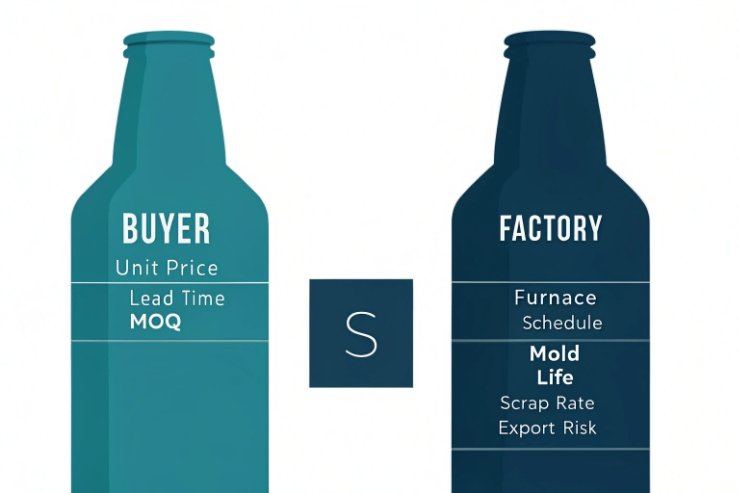
Most buyers only see the “per bottle” line. The factory sees a furnace schedule, mold life, scrap rate, and export risk baked into the glass bottle manufacturing process 1. When those two views match, pricing becomes predictable, and negotiations get cleaner.
Do weight, color, and mold complexity set the base cost?
A bottle can look like a small change from the outside. One extra millimeter on a heavy base can turn into tons of extra glass over a full container.
Yes. Weight, color, and mold complexity are the three base-cost levers because they drive raw glass usage, furnace load, cycle time, and scrap rate, which are the core manufacturing costs.
Weight is the most direct cost lever
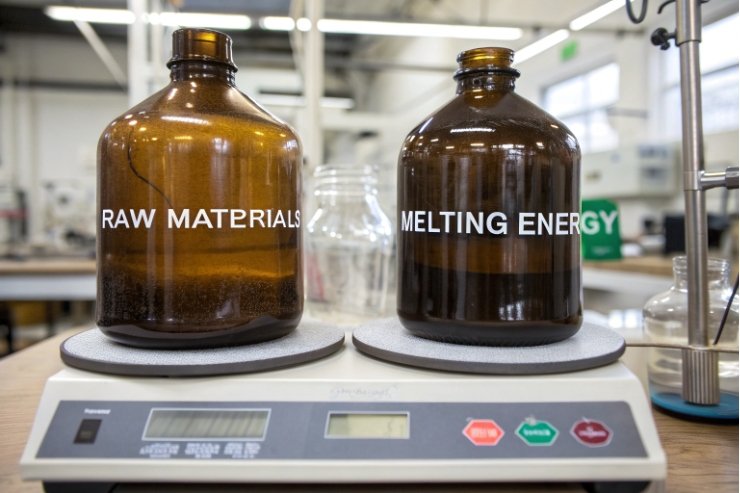
More glass means more raw materials and more energy to melt it—something cullet can reduce in glass recycling 2. It also means fewer bottles per container and higher freight per bottle. A “premium heavy base” can be a double cost hit: higher factory cost and higher logistics cost.
Weight also changes yield. Heavy bases and thick heels are harder to form cleanly. If the factory has to slow the line to keep defects down, the unit price rises again.
Color affects batch cost, stability, and yield
Flint is usually the easiest to run. True extra-flint or high-clarity programs can need tighter raw material control. Amber and other colors can add cost because of colorants, furnace campaigns, and changeover waste. Some plants run colors on dedicated lines. Others do it in campaigns. Either way, color adds planning limits, and planning limits show up as money.
Color also changes what defects are visible. Tiny cords and haze that hide in dark glass can look ugly in flint. That drives stricter sorting and higher rejects.
Mold complexity drives cycle time and tooling cost
A simple round bottle is fast. A non-round bottle, a sharp shoulder, deep embossing, or an extreme heavy base usually slows forming and raises defects. The mold itself costs more, and it wears faster if details are sharp. Worn molds create scuffs, soft embossing, and seam issues. Then the factory needs more maintenance, and pricing climbs.
| Base cost driver | What it changes in production | What to do in an RFQ |
|---|---|---|
| Weight (g) | Glass usage, energy, bottles per container | Lock nominal + tolerance and challenge “overweight” areas |
| Color | Raw batch cost, campaigns, yield, sorting | Define color standard and accept realistic variation bands |
| Shape complexity | Cycle time and scrap | Avoid extreme non-round geometry unless the margin supports it |
| Embossing depth | Mold cost and mold wear | Use “crisp but shallow” details when possible |
| Heavy base/punt | Forming difficulty and breakage behavior | Ask for wall distribution targets, not only total weight |
How do decoration and special finishes change pricing tiers?
A bottle can be cheap until it gets painted, printed, and packed like a cosmetic item. That is when “glass” stops being the main cost.
Decoration creates pricing tiers because each added process step adds labor, setup, yield loss, cure time, and protective packaging needs, so the total cost can be 1.5× to 3× the plain bottle for complex builds.
Decoration cost is driven by steps, not beauty
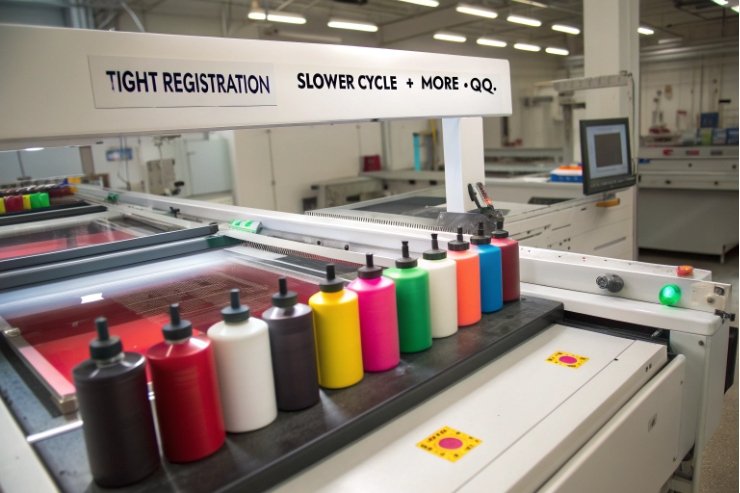
A simple screen print with one color is one tier. Multi-color prints, tight registration, and full-wrap artwork push you up tiers fast. Spray coatings and soft-touch finishes can look premium, but they need clean rooms, stable curing, and careful handling. One scuff can ruin the bottle, so packaging gets upgraded too.
Setup and yield matter more than the “per piece” adder
Most decoration has setup costs:
- screen making and screen setup
- color matching and trial runs
- fixture and jigs for odd shapes
- cleaning and changeover time
If the order quantity is low, those fixed costs get spread across fewer bottles. That makes each bottle expensive even if the process time is not long.
Yield is the quiet killer. If 3% of bottles fail print registration or get dust in a coating, that scrap cost gets priced in. Premium finishes often need slower lines, more drying time, and more QC.
Special finishes also force stronger export packing
A plain bottle can survive dividers and standard cartons. A painted bottle may need:
- non-abrasive dividers
- polybags or sleeves per bottle
- extra headspace in cartons
- stricter pallet wrap rules
Those are real dollars. They also reduce how many bottles fit in a container, which lifts freight per bottle.
| Finish type | Typical cost behavior | Main risk | Best control lever |
|---|---|---|---|
| Plain glass | Lowest, stable | Visual defects only | Clear AQL (acceptance quality limit) 3 and defect photos |
| Frosted / etched look | Mid, can be stable | Uneven finish, fingerprints | Surface standard sample and handling rules |
| Screen print (1–2 colors) | Mid | Misregistration, ink rub | Artwork lock + rub test + process spec |
| Multi-color / full-wrap | High | Yield loss and slow cycle | Tolerances for registration + tighter QC |
| Spray coating / soft-touch | High to very high | Scuffs, dust, chipping | Upgrade packing and add scuff tests |
| Hot stamping / metallized | Very high | Flaking, scratches | Adhesion testing and protected packing |
What logistics, duties, and breakage risks add up in landed cost?
A bottle is dense, heavy, and fragile. That makes it one of the fastest products to turn freight and damage into a profit leak.
Landed cost rises with inland trucking, port fees, ocean freight, insurance, customs clearance, duties, and the extra packaging needed to prevent breakage; poor packing and weak pallets can turn a “cheap” bottle into the most expensive part of the project.
Freight is not only about distance, it is about cube and weight
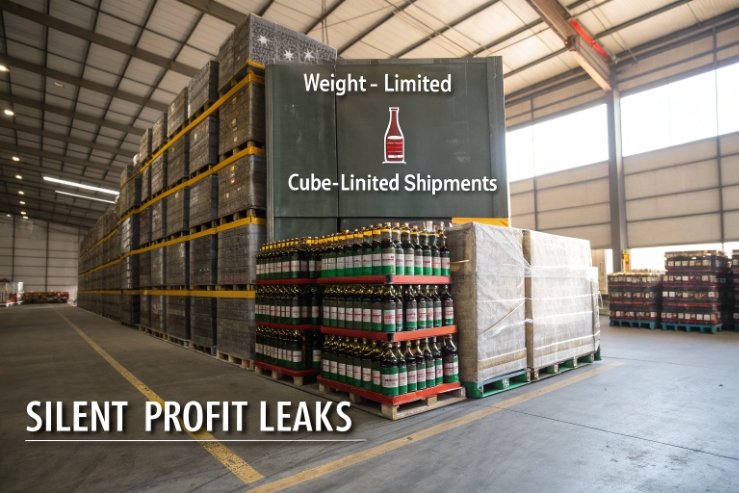
Glass ships on weight and space. Heavy bases and thick walls cut your bottle count per container. LCL shipments add more handling touches, and each touch adds breakage risk. Many programs only make sense as FCL once volume grows.
Local costs also matter:
- pickup from factory to port
- export documentation and terminal charges
- container stuffing fees
- destination port charges and drayage
Make sure your quotes state the shipping terms (for example, an Incoterms® 2020 checklist 4) so cost ownership is unambiguous. Those numbers can swing by season and by port.
Duties and compliance can be bigger than people expect
Duties, special tariffs, and broker fees are not factory costs, but they are still part of unit economics. If the Harmonized System (HS) code 5 is wrong, or documents are incomplete, shipments can be delayed. Delays create storage and demurrage and detention fees 6, and that can be worse than duty.
A simple habit helps: build a landed-cost sheet that lists every fee line by line. Then update it each shipment. That stops “surprise” costs from becoming normal.
Breakage and scuffing are real pricing factors
Export packaging is part of the product. If cartons crush, bottles rattle, or pallets shift, breakage rises. Even if bottles do not break, scuffs can force rework or scrapping, especially for decorated bottles.
Also confirm pallets and wood dunnage meet ISPM 15 wood packaging rules 7 to avoid avoidable customs delays.
Breakage is not only a loss of goods. It is a disruption cost. If the bottle arrives late or short, the filling line stops. That is often the most expensive outcome.
| Landed-cost item | What makes it jump | How to control it |
|---|---|---|
| Ocean freight | Heavy bottles, poor cube, peak season | Design for container efficiency and plan bookings early |
| Inland trucking | Long factory-to-port moves | Choose factories near export hubs when possible |
| Port/terminal fees | LCL handling and extra touches | Use FCL as volume grows |
| Duties/tariffs | Origin rules and policy changes | Model worst-case and keep broker aligned |
| Insurance | High value and high fragility | Insure decorated or high-value SKUs |
| Breakage/scuff loss | Weak cartons, bad dividers, poor pallet wrap | Lock packing spec and inspect before loading |
Do MOQs and lead times shift unit economics?
A “great” unit price can still be a bad deal if it forces cash into inventory for months, or if lead time makes you miss a launch window.
Yes. MOQs and lead times change unit economics because they decide how fixed setup costs are spread, how much inventory you must fund, and how much risk you carry if forecasts change.
MOQ is really a factory efficiency rule
Glass plants want long, stable runs. Setup, mold change, and line tuning take time. If a buyer asks for a short run, the plant still pays the setup cost. The plant either raises unit price, or it sets a higher MOQ so the run is worth it.
MOQs also move with complexity:
- standard round bottles often have lower MOQs
- custom shapes and colors often need longer campaigns
- decorated bottles often need minimums per decoration batch
A small run also risks more variation. The factory may not fully stabilize the line before the run ends. That can raise defect rates. Then you pay again through rejects and sorting.
Lead time changes what “cheap” means
Long lead time can force larger orders. Larger orders tie up cash. If market demand shifts, inventory becomes slow-moving. That cost is not on the invoice, but it is real.
Lead time is usually made of:
- drawing and sample approval time
- tooling build time (if custom)
- production queue time
- decoration time and curing
- packing and container booking
- ocean transit and customs clearance
Shortening lead time often costs more. The factory might need overtime, faster shipping for inputs, or priority scheduling. That premium can still be worth it if it protects a launch or prevents stock-outs.
A simple unit economics view keeps decisions clean
The best pricing decisions compare:
- unit price
- tooling amortization per bottle
- expected scrap and rework
- freight per bottle
- inventory carrying cost
- risk cost of delays and shortages
| Business situation | Best MOQ/lead-time strategy | Why it works |
|---|---|---|
| New brand launch | Medium MOQ + tight QC + stable lead time | Protects quality and avoids early reputation damage |
| Seasonal demand | Pre-book production slots | Avoids peak-season freight and factory queue premiums |
| Fast-growing SKU | Higher MOQ, better unit price | Spreads setup cost and reduces stock-out risk |
| Uncertain forecast | Lower MOQ even with higher unit price | Reduces inventory and cash risk |
| Complex decorated bottle | Plan longer lead time | Protects yield and lowers rework risk |
Conclusion
Glass bottle pricing is a system. Weight, color, molds, decoration, logistics, duties, breakage, MOQs, and lead time all stack together, so the best savings come from design and planning, not only negotiation.
Footnotes
-
Understand how bottles are formed, inspected, and packed—useful context for cycle-time and scrap drivers. ↩︎ ↩
-
Learn how cullet and recycling influence energy use, cost, and supply constraints in glass programs. ↩︎ ↩
-
Quick reference for AQL-style sampling logic so QC expectations are consistent across suppliers and shipments. ↩︎ ↩
-
Clarifies Incoterms cost responsibility so freight, insurance, and fees don’t “surprise” your landed-cost model. ↩︎ ↩
-
Explains HS codes and why correct classification matters for duties, documentation, and customs processing. ↩︎ ↩
-
Background on demurrage/detention fees and why port delays can balloon total landed cost. ↩︎ ↩
-
Shows the global wood-packaging rules for pallets/dunnage—critical to avoid holds, rework, or re-export. ↩︎ ↩






