
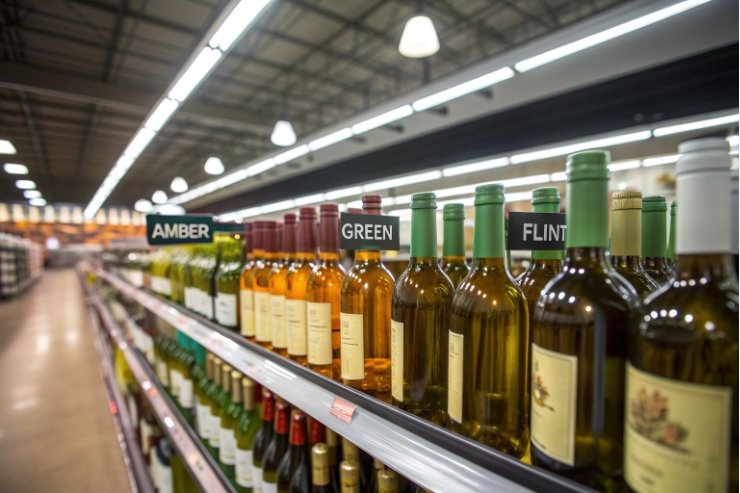
Sunlight and bright retail LEDs can turn a great beer into a “skunky” disappointment fast. Clear glass gives that reaction a direct path to the liquid.
Beer shouldn’t be packaged in clear bottles because clear glass transmits the UV and blue-violet light that triggers light-struck chemistry, creating skunky off-aromas and unstable flavor—especially in hop-forward styles.
Most brewers who choose clear glass are choosing a marketing advantage and then paying for it elsewhere: stricter light control, extra secondary packaging, or light-stable hop chemistry. The question is not “can it work?” The question is “is the risk worth the system cost?”
Does clear glass accelerate “skunking” from UV exposure?
A clear bottle looks clean and premium, but it can quietly sabotage the beer inside. The damage often happens before the customer even opens it.
Clear glass accelerates “skunking” because it allows the wavelengths that trigger light-struck reactions to pass through with minimal attenuation, so off-aromas can form quickly under sunlight or strong store lighting driven by UV radiation exposure 1.
What “skunking” really is in beer
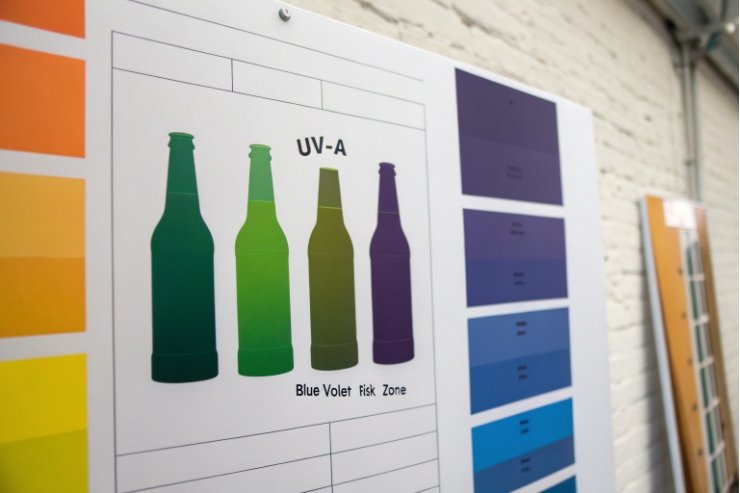
Light-struck beer is not a vague “stale” note. It is a specific reaction pathway tied to hop chemistry. Most beers contain iso-α-acids (from hops) that contribute bitterness. When UV and blue-violet light hit beer, those compounds can break down via light-struck beer chemistry 2 and form extremely potent sulfur compounds, most famously 3-methyl-2-butene-1-thiol (MBT) 3. Humans detect MBT at extremely low levels, so even a small amount can dominate the aroma.
Why clear glass is the worst performer
Glass color acts like a filter. Amber absorbs a lot of UV and short-wavelength visible light. Green absorbs some, but not as much. Flint (clear) absorbs the least, so it behaves like a window—one reason many brewers avoid it, as summarized in this overview on clear bottles and light-strike risk 4. This is why a clear-bottled beer left on a sunny table can smell “off” rapidly, while the same beer in amber might survive that same exposure much longer.
Style sensitivity is real
Hop-forward beers tend to show the problem more sharply because they rely on hop-derived aroma and bitterness balance. When light strike adds sulfur notes, the beer can move from “fresh hop” to “skunky” in a way that feels like a defect, not a normal aging curve. Lagers can also get light-struck, but many consumers are especially quick to notice it in clean, crisp beers where there are fewer competing flavors.
| Variable | What increases skunking risk | What reduces skunking risk | Practical takeaway |
|---|---|---|---|
| Bottle color | Clear > green > amber | Amber > green > clear | Color is the first defense |
| Light source | Sunlight, strong LEDs, fluorescents | Darkness, boxed storage | Stores matter as much as breweries |
| Hop profile | High iso-α-acids, hop-forward styles | Low hop load, light-stable extracts | Recipe and package must match |
| Exposure time | Minutes to hours in strong light | Minimal exposure, fast turn | Shelf discipline is part of QA |
Can sleeves or cartons offset clear-glass risks?
Clear glass creates a protection problem, then secondary packaging tries to fix it. That can work, but only if the supply chain behaves.
Yes. Sleeves, cartons, and full-case packaging can offset clear-glass risks by blocking light, but they only work if the bottle stays covered through storage, display, and last-mile handling.

Sleeves: effective barrier, but a “discipline” product
A full-body sleeve (opaque or UV-blocking) can protect almost as well as a dark bottle. The problem is consistency. Sleeves get cut away for display. Multipacks get broken apart. Some retailers remove cartons to build a “pretty” shelf. The moment the bottle is uncovered, the clear-glass risk returns.
Sleeves also add process steps and potential failure points: scuffing, wrinkles, misregistration, and recycling complexity in some markets—especially when choosing shrink sleeve labeling systems 5. If the brand is premium and the finish is matte or decorated, sleeve abrasion becomes a real complaint driver.
Cartons: the most reliable protection—until the shelf
Cartons with dividers protect beer in transit and warehouse storage. They also protect from vibration and label scuff. This is a strong solution for distribution stability. Yet many beers spend their highest light exposure time at retail, not in the warehouse. If the retailer stocks singles out of the carton into a bright cooler, the carton no longer protects the bottle.
For that reason, cartons are best viewed as a baseline, not a complete fix, when the primary container is clear.
Trays and shrink: good for logistics, mixed for light
Tray + shrink works well for pallet stability and speed. It can be paired with printed film that blocks light, which helps. But typical clear shrink film does not solve the UV problem. It mainly groups units. If the film is not UV-blocking and not opaque, it is not a light solution.
A simple rule that avoids disappointment
If the brand insists on clear glass, the protection must be “always-on.” That means opaque sleeve or fully opaque secondary pack that stays intact until consumption. If the plan depends on “retail will keep it boxed,” the plan will fail.
| Secondary pack | Light protection strength | Operational risk | Best use case |
|---|---|---|---|
| Opaque full-body sleeve | High | Sleeve damage, recycling rules | Clear bottle + premium branding |
| Full carton (kept intact) | High | Retail breaks cases, singles display | Warehouse-heavy distribution |
| UV-blocking printed film | Medium to high | Film sourcing and print control | Multipacks, club formats |
| Clear shrink / tray | Low | None for light, only for grouping | Only when bottle is already dark |
When is amber the safest choice for hop-forward styles?
Hop-forward beers are judged on aroma. If packaging adds sulfur notes, the whole product promise collapses. This is where “safe by design” matters.
Amber is the safest glass choice for hop-forward beers because it provides the most consistent light barrier in glass without relying on perfect retail behavior, making flavor outcomes more stable across routes and stores.
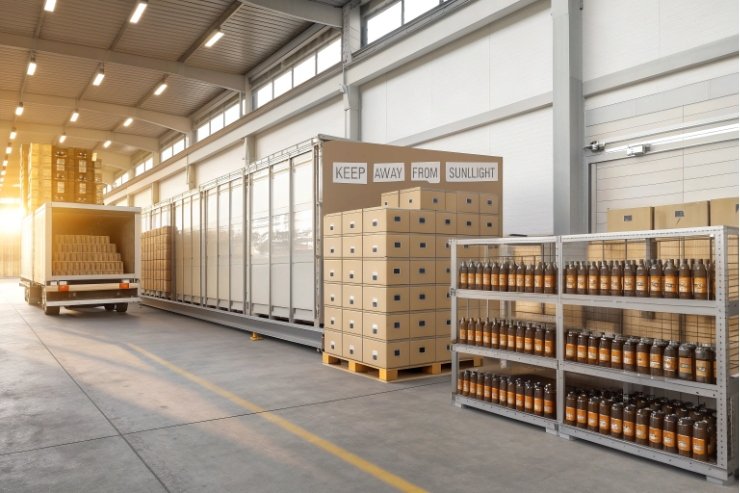
Amber is a built-in control, not a behavior request
A brewery can control filling, dissolved oxygen, and packaging QA. A brewery cannot control every store’s lighting choices. Amber bottles reduce that dependency. They do not eliminate light strike, but they significantly lower the energy that reaches the beer.
For hop-forward styles like IPA, pale ale, and dry-hopped lagers, this stability matters because the beer already has a narrow “fresh window.” Protecting against light keeps the hop aroma story cleaner for longer.
When amber still might not be enough
If the beer is extremely light-sensitive and will sit in bright conditions, cans often outperform glass because aluminum beverage cans 6 are a complete light barrier. Some premium brands still prefer glass for ritual and aesthetics, but from a flavor-stability view, cans are a strong option for aromatic beers.
Clear bottles can only be “safe” with chemistry changes
Some breweries use light-stable hop extracts 7 (often modified or reduced iso-α-acid products) designed to resist light strike. This can allow clear or green glass with reduced skunking. The trade is cost, supply complexity, and sometimes subtle flavor differences. That approach can be smart for certain brands, but it is still a system decision. It is not “free.”
Choosing amber in a portfolio context
Amber also makes sense when a brewery wants a single standard bottle color across multiple SKUs. It reduces packaging variation and reduces the chance that one SKU gets blamed for a shelf-light issue that is actually packaging-driven.
| Package choice | Light-struck risk | Best fit | Hidden cost to watch |
|---|---|---|---|
| Amber glass | Low (for glass) | Most hop-forward bottled beers | Slightly less product visibility |
| Green glass | Medium | Some legacy brands, mid-risk routes | Still skunks under strong light |
| Clear glass | High | Only with strict light control | Returns and inconsistency risk |
| Can | Very low | Most aroma-forward beers | Different brand feel vs glass |
How do marketing trade-offs weigh against flavor stability?
Clear bottles sell with the eyes, but beer sells with repeat purchases. If the first bottle tastes skunky, the second purchase never happens.
Marketing wins from clear glass are real—visibility, color cues, “clean” shelf presence—but the flavor-stability risk is usually larger unless the brand invests in protection systems or accepts higher complaint rates.
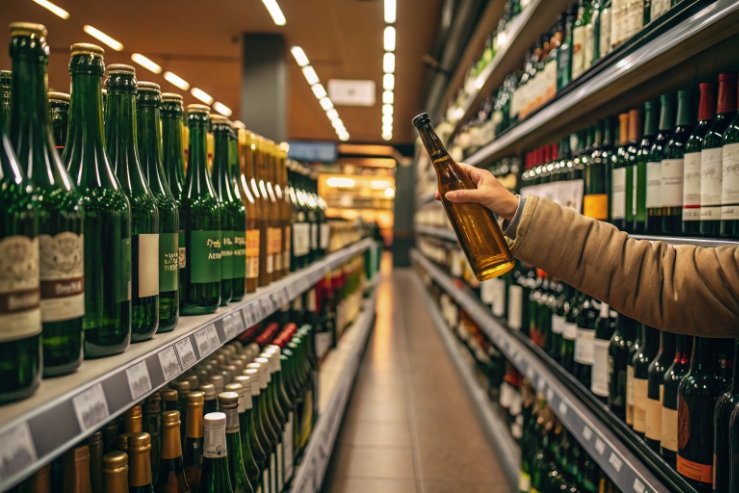
What clear glass gives marketing
Clear glass shows color, clarity, haze, and carbonation sparkle. It also photographs well and stands out in a cooler. For some brands, that visibility is part of identity, and it can boost first-time trial.
There is also a “premium perfume bottle” effect in certain markets. Some consumers associate clear glass with cleanliness and modern design. That can help at shelf.
What clear glass steals from operations
Clear glass shifts the burden from “package physics” to “supply chain discipline.” That means:
- tighter warehouse darkness rules,
- faster turn expectations,
- retailer education (which is hard to enforce),
- and often more secondary packaging cost.
This is where many programs break. The brand spends money to create an attractive clear bottle, then spends more money hiding it in cartons or sleeves to keep flavor stable. That is not automatically wrong, but it must be intentional and budgeted.
How I decide if clear glass is justified
A clear bottle can make sense when at least one of these is true:
1) the beer is engineered for light stability (extract strategy),
2) the beer is sold mostly in low-light environments with fast turnover,
3) the bottle is always covered (opaque sleeve or kept boxed),
4) the brand accepts that some portion of units will be “light damaged” and builds that into quality expectations.
If none of those are true, amber or cans are safer choices. Brand trust is harder to rebuild than a label design.
A practical decision matrix
| Goal | Best package move | Why it works | What to measure |
|---|---|---|---|
| Max flavor stability | Amber or cans | Built-in light barrier | Complaint rate, sensory stability over time |
| Max shelf visibility | Clear + always-on protection | Marketing + protection system | Sleeve integrity, retail compliance |
| Lowest system complexity | Amber | Fewer rules, fewer add-ons | Breakage, returns, consistency |
| Premium showcase look | Clear with light-stable hops | Visual + chemistry solution | ΔE/appearance + sensory checks |
Conclusion
Clear bottles invite light-struck off-aromas. Amber (or cans) protects hop character with fewer supply-chain assumptions, while sleeves and cartons only work when coverage is consistent from brewery to consumer.
Footnotes
-
EPA primer on UV radiation types and why UV exposure matters. ↩︎ ↩
-
Peer-reviewed overview of light-struck beer chemistry and wavelength sensitivity. ↩︎ ↩
-
Chemical profile and properties of MBT, the key compound behind skunky aroma. ↩︎ ↩
-
Practical explanation of why clear bottles increase light-strike risk and how brewers mitigate it. ↩︎ ↩
-
Example of APR-recognized shrink sleeve technology, useful when considering sleeve use and recycling implications. ↩︎ ↩
-
Industry overview of beverage cans’ protective barrier, including strong light blocking. ↩︎ ↩
-
Product background on light-stable hop extracts used to reduce skunking in clear or green glass. ↩︎ ↩






