
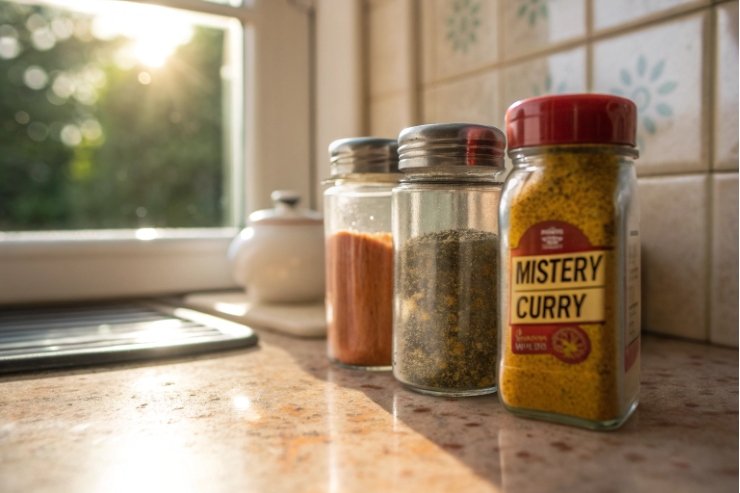
Dull paprika, clumpy garlic powder, and “mystery” curry jars are not a cooking problem. They are a packaging problem that starts with the wrong container.
For long-term spice storage, glass wins. It resists aroma loss, oil staining, and moisture better than plastic, especially when combined with tight lids, tinted glass for light-sensitive spices, and a simple refill system.
Most kitchens still use whatever jar the spice came in. But if you treat spices like ingredients, not decorations, the container becomes part of your flavor control system. One reason glass performs so well is that it is nonporous and impermeable 1. {#fnref1}
Does glass resist aroma scalping and oil migration?
You buy a fresh jar of smoked paprika. Months later it smells like dust, or worse, like the spice that was in the jar before. That loss is not random.
Yes. Glass is non-porous and inert, so it does not absorb spice oils or aromas. Plastic is more likely to scalp flavor, stain, and hold smells that leak into the next refill.
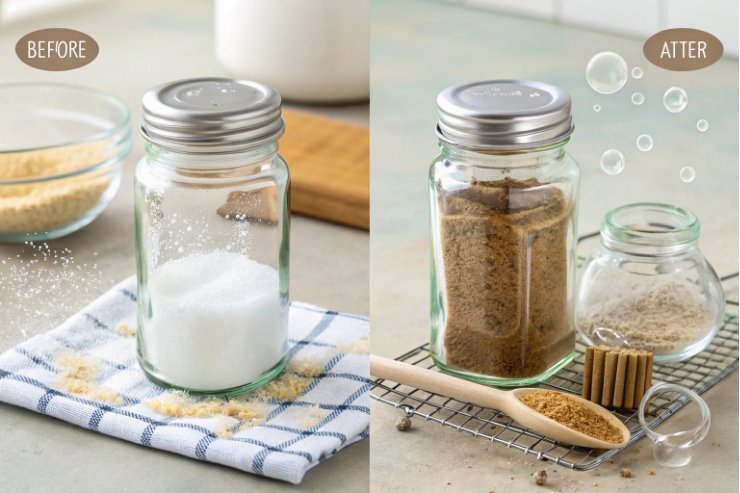
Why glass stays neutral
Glass has a big advantage for spices: it is smooth, non-porous, and chemically stable.
Spices, especially whole seeds and strong blends, contain volatile oils. These oils carry the smell and taste. When they touch glass, nothing much happens. The oil sits on the surface until you wash it away with hot water and detergent.
There is no chemical reaction. Glass does not swell, soften, or absorb these oils. So if you clean a glass jar well, it is ready for a completely new spice. Cumin today, vanilla sugar tomorrow. The jar does not keep a “memory” of the old aroma.
Where plastic falls short
Many plastics, even food-grade ones, are more open at a microscopic level. They can:
- Absorb some of the aroma molecules.
- Hold on to strong colors like turmeric yellow or chili red.
- Pick up oil films that never fully wash away.
Over time this leads to flavor scalping 2. {#fnref2} The spice inside gets weaker, and the container starts to smell like a blend of everything it has ever held. Fill that same jar with a delicate herb later and you will taste the history.
Plastic also scratches more easily. Each scratch is a tiny groove where oil and powder can lodge. Those grooves are hard to clean completely, and they keep smells.
A simple storage strategy
For most kitchens, a mixed approach works best:
| Use case | Better choice | Why it works |
|---|---|---|
| Long-term storage of whole spices | Glass | Minimal aroma loss, easy to clean and reuse |
| High-value spices (saffron, vanilla) | Glass | Protects quality and avoids cross-contamination |
| Everyday table shaker (salt, pepper) | Plastic or glass | Short turnover, flavor loss less critical |
| Travel, camping, food trucks | Plastic | Light and shatter-resistant |
My own rule is simple: if I care about the flavor and I will keep it more than a few weeks, it goes into glass with a tight lid. If you want quick baseline timing, McCormick’s spice shelf-life ranges 3 can help you decide what deserves “best container” treatment. {#fnref3}
Which tints reduce photo-oxidation of volatiles?
Even in a cool pantry, light can slowly bleach color and strip aroma from exposed spices. Clear jars look beautiful on open shelves, but they are not always the kindest choice.
Amber and dark green glass give the best light protection for sensitive spices and herbs. Clear flint glass is fine if the jars live in a closed cabinet away from sunlight.
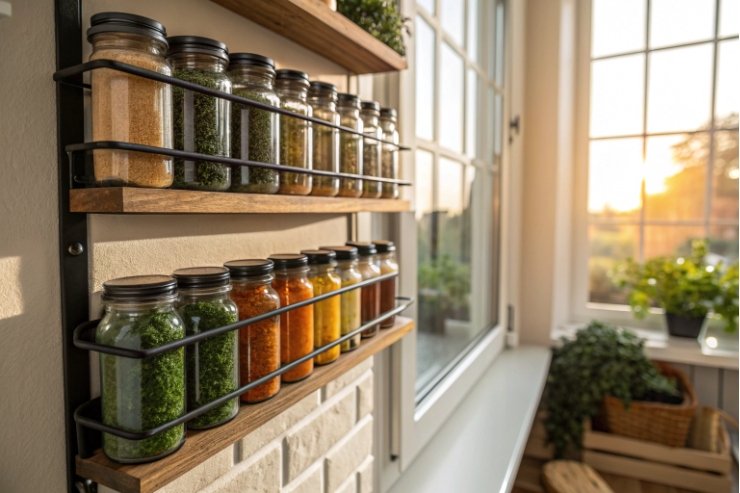
How light harms spices
Light, especially UV and blue light, can break down:
- Chlorophyll in green herbs.
- Carotenoids in paprika and chili.
- Essential oils in herbs and seeds.
The result is dull color and flat smell. You see it clearly in old green herbs left in a sunny window: they turn grey and lose punch.
Photo-oxidation is the process behind this. Light provides the energy, oxygen does the rest. If you store on open racks, Texas A&M AgriLife Extension’s storing dried herbs and spices 4 summary captures the core rule: keep them away from heat, light, and moisture. {#fnref4}
Choosing the right tint
Tint is a second shield after storage location. A simple guide:
| Spice type | Recommended glass color | Storage notes |
|---|---|---|
| Dried green herbs (oregano, parsley, dill) | Amber or dark green | Keep in a dark cupboard for best results |
| Bright powders (paprika, chili, turmeric) | Amber or smoky glass | Protects color and aroma over time |
| Whole seeds (cumin, coriander, fennel) | Amber or clear in dark area | More stable, but still dislike direct light |
| Everyday salt and pepper | Clear or tinted | Turn over fast, light less critical |
If your shelves are fully enclosed and away from sunlight, clear glass is fine. You get easy visibility and simple branding. But if you want that “open spice wall” look, tinted glass becomes important for anything colorful or aromatic.
Light damage is often driven by photosensitized oxidation 5, {#fnref5} so a simple barrier (tinted glass + darker storage) can slow the loss of both color and top notes.
Balancing shelf beauty and protection
There is always a trade-off between seeing the spice and protecting it. A practical compromise is:
- Use clear glass for high-turn items near the cooking zone.
- Use amber glass for bulk refill jars deeper in the pantry.
- Keep both away from strong, direct light where possible.
For brand owners, tints also send a message. Amber jars for herbs and high-value blends quietly say “we care about freshness”, even before anyone reads the label. For a packaging-oriented overview, GPI notes that glass can be specified to absorb damaging ultraviolet light 6. {#fnref6}
Do grinder and sifter closures pair better with glass necks?
Modern spice jars are more than just lids. They use grinders for whole pepper and sifters for fine powders. The neck needs to hold these parts steady through many twists and shakes.
Most grinder and sifter tops work best on rigid, well-formed glass necks. Plastic bottles can match them, but threads wear faster, and long-term fit is less precise.
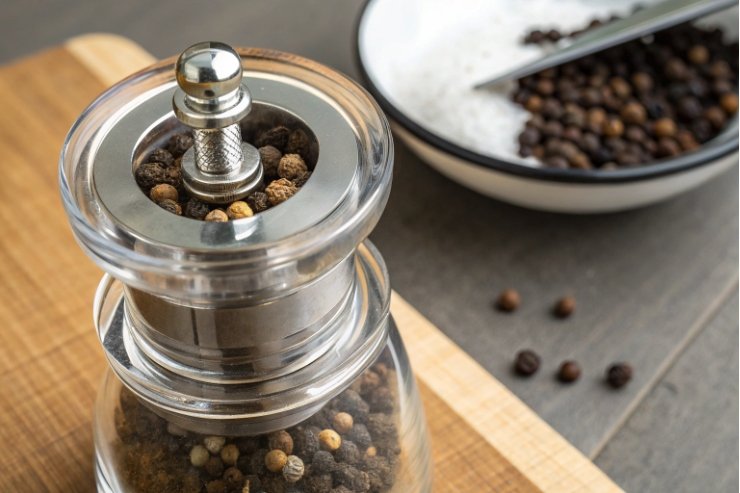
Why a rigid neck helps
Grinders and sifters rely on:
- Stable threads that hold the closure at the right height.
- Round necks so grinding parts do not wobble.
- Consistent dimensions so each batch of closures fits.
Glass comes out of the mold with good dimensional control. Once cooled, it does not creep or deform under normal kitchen heat. So a grinder screwed on today will align in the same way next year.
Plastic, especially thinner bottles, can:
- Flex when squeezed.
- Deform slightly under heat or load.
- Wear threads faster with repeated opening and closing.
This does not mean plastic cannot work. Many mass-market spices use plastic bottles with plastic grinder tops. But if you want a long-life, refillable grinder, glass gives a more stable base.
Refill, reuse, and closure durability
If you design a grinder for refills, think about:
- Grip: a heavier glass base feels more stable when grinding over a pot.
- Thread life: glass necks take less damage from repeated tightening.
- Cleaning: glass stands up to hot wash cycles better than most plastics.
For sifters (flip-top sprinklers), both materials can perform well. Here the key is the seal between closure and jar to keep moisture out. Many brands use glass jars with plastic sifter lids; this mix gives barrier benefits from glass and design flexibility from plastic.
Quick comparison at the neck
| Feature | Glass jar neck | Plastic bottle neck |
|---|---|---|
| Dimensional stability | Very high | Good at first, can change with heat/age |
| Thread wear | Very low | Higher, especially with coarse grinders |
| Refill potential | Excellent, easy to clean and re-use | Depends on plastic grade, more wear |
| Ideal use | Refillable grinders, premium sifters | Single-life or short-term spice formats |
For a brand that wants to sell both initial fill and refills, glass plus quality grinder heads is the stronger long-term platform.
How do cleanliness and recyclability favor glass?
Spices are oily, colorful, and sticky. After a few refills, a cheap container can look tired and smell like a mix of everything it held.
Glass cleans better, smells less, and sits in a stronger recycling loop than most plastics. That makes it the better base for refill systems and low-waste kitchens.
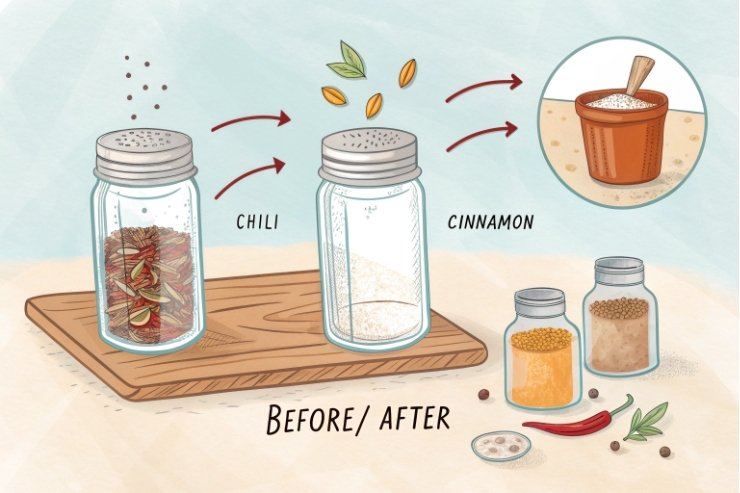
Cleaning and reusing without “ghost aromas”
With glass, you can:
- Wash jars in very hot water or a dishwasher.
- Use stronger degreasers when needed.
- Remove labels and glue without harming the container.
After proper washing, a glass jar can be almost as neutral as new. That makes it safe to move from chili to cinnamon without flavor ghosts.
Plastic has limits:
- High heat can warp or cloud it.
- Strong detergents or scrubbing can scratch it.
- Micro-scratches trap residue and smells.
So even when you “clean” a plastic spice jar, some smell often stays. Over time, that makes reuse less appealing. People throw the container away and buy a new one.
Recycling and bulk systems
Glass has a simple recycling story: it is endlessly recyclable in a closed bottle-to-bottle loop 7. {#fnref7} That makes it a strong base for refill systems, where the same jar stays in service for years.
Plastic is more complex:
- Only some types are accepted in local systems.
- Colors and additives can limit what the recycled material can become.
- Each cycle usually lowers quality (downcycling).
If you run a bulk or refill spice system, glass jars also:
- Give a clear fill line and easy stock check.
- Look good on shelves, which supports premium pricing.
- Survive many refill cycles without looking tired.
Glass vs plastic at end of life
| Factor | Glass jars | Plastic spice bottles |
|---|---|---|
| Washability | Excellent, handles high heat | Limited by warping and scratches |
| Odor retention | Very low after proper cleaning | High for strong spices |
| Reuse potential | High, many refill cycles possible | Lower, often looks old after a few uses |
| Recycling loop | Infinite in principle, stable material | Finite, may be downcycled |
| Best role | Long-term pantry jars, refill systems | Light, portable, short-term packaging |
For home cooks and brands that talk about sustainability, glass fits the story better. The same jar can stay with a customer for years, even as the label or lid design evolves.
Conclusion
For serious flavor and long-term storage, glass jars with tight, well-matched closures beat plastic on aroma, light protection, cleanliness, and recyclability, while plastic stays useful only for light, short-term, or travel spice use.
Footnotes
-
Confirms glass is nonporous and impermeable, helping prevent aroma and taste transfer. ↩ ↩
-
Explains flavor scalping—how packaging can absorb or alter volatile aroma compounds over time. ↩ ↩
-
Practical shelf-life ranges to decide which spices deserve airtight, higher-protection containers. ↩ ↩
-
Extension guidance on keeping spices away from heat, light, and moisture for longer potency. ↩ ↩
-
Explains light-driven oxidation and why blocking light helps preserve pigments and volatile compounds. ↩ ↩
-
Notes glass can be tuned to absorb UV, supporting tinted jars for light-sensitive spices. ↩ ↩
-
Describes glass as endlessly recyclable in closed-loop systems, ideal for refillable spice programs. ↩ ↩






