
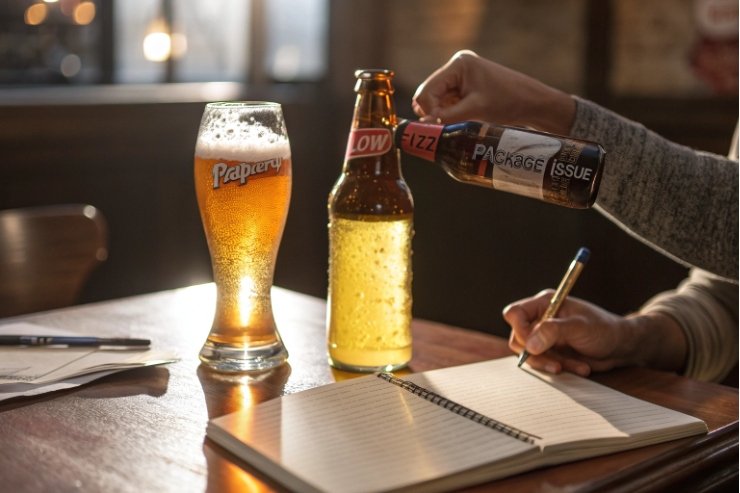
You crack open a beer, take a sip, and it tastes flat or “off”. Often the liquid is fine. The package is the problem.
For flavor, CO₂ retention, and long shelf life, glass-bottled beer is usually better. PET bottles solve weight and breakage in short-shelf-life or event settings, but they are a niche tool, not a full replacement.
Glass and plastic both have a role. The real question is how long the beer must stay fresh, how far it must travel, and how the bottle will be handled. Once those are clear, the “better” choice often becomes obvious.
Do light/oxygen barriers and CO₂ hold favor glass?
Warm, papery, low-fizz beer is the fastest way to destroy a brand moment. Oxygen and gas loss do that work quietly in storage.
Yes. Glass gives an almost perfect barrier to oxygen and CO₂ and, in the right color, to light. PET can work for fresh, short-shelf-life beer but loses the fight for long storage and aging.
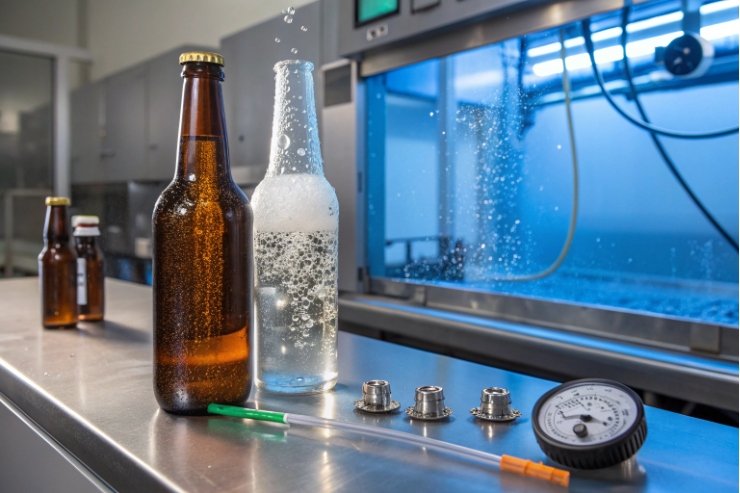
How glass protects CO₂, aroma, and taste
For beer, three enemies matter most in the package:
- Oxygen
- Light (especially UV)
- CO₂ loss
Standard beer glass (especially amber) helps on all three:
- CO₂: the glass wall is effectively gas-tight, so CO₂ can only escape through the closure if that seal is poor.
- Oxygen: the wall does not let oxygen seep in, so dissolved oxygen mainly comes from filling, not from storage.
- Light: amber glass blocks most light that creates light-struck off-notes 1, so hops stay cleaner for longer.
That is why:
- Classic lagers, hop-forward beers, and bottle-conditioned ales still favor glass for export and cellaring.
- Brewers who care about aging use glass plus good crowns or cork-and-cage systems as standard practice.
Even clear or green glass can beat PET on gas barrier; they just need more help on light protection, for example with cartons or shrink sleeves.
What PET does well and where it falls short
Modern PET beer bottles are not just soda bottles with a beer label. They use:
- Special barrier layers or coatings to slow oxygen ingress and CO₂ loss.
- Dark tints to cut some light.
- Closures designed to hold pressure and vent safely if abused.
Even with these improvements, PET still:
- Lets more oxygen in over months.
- Lets CO₂ escape faster than glass, as shown in brewing-industry measurements of oxygen ingress and carbon dioxide loss through plastic bottles 2.
- Is better suited to beers sold and consumed within about three to four months 3 of filling, often less in warm chains.
For a fresh, simple lager at a stadium or festival, this can be fine. For a complex IPA or strong ale meant to travel and age, it is not enough.
Light, caps, and small details that still matter
Light-strike is not only about clear bottles vs amber. Shelf and fridge placement matter. Even amber glass can struggle under harsh lighting if the beer sits too long. PET bottles can come in amber too, but their wall still lets more oxygen through than glass.
One more detail: recent work has shown that microplastics in glass-bottled drinks may come from the paint used on bottle caps 4. That is not a reason to avoid glass, but it is a reminder that the full system matters:
- Choose crown liners and inks with low shedding.
- Keep fill heights and handling gentle to avoid abrasion under the cap.
So if the goal is the best possible flavor after months, glass plus a well-specified closure is still the safer, more stable choice.
Are weight and shatter trade-offs manageable?
Glass feels solid and premium, but it is heavy and can break. PET feels light and safe, but it can feel cheap. Both sides affect logistics and risk.
Weight and shatter risks are real with glass, especially over long chains. They are manageable with the right bottle design, crates, and handling. PET wins for high-risk, high-movement venues, but you pay with shorter shelf life.
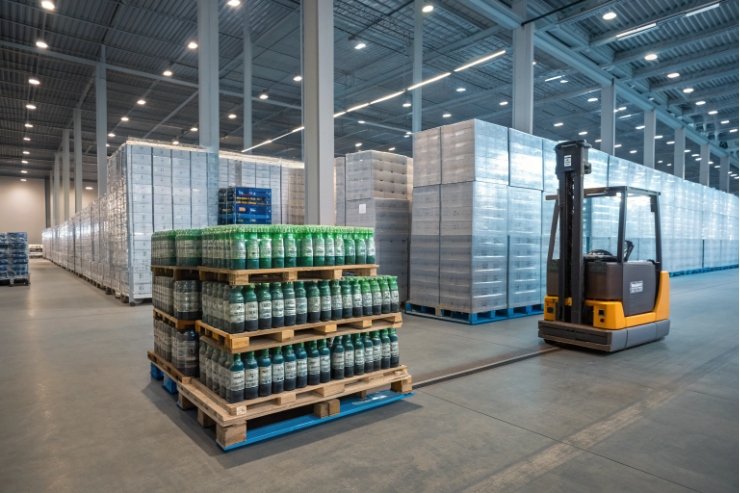
How much does weight actually matter?
Per bottle, glass is noticeably heavier than PET. Across a truck or container, that:
- Raises fuel use and transport costs.
- Adds strain for manual handling.
- Limits how much beer you can move per load.
PET, by contrast:
- Cuts bottle weight sharply.
- Lets you move more liquid per pallet within the same weight cap.
- Reduces worker strain when lifting and loading.
For short regional routes with efficient trucks and refillable glass, the weight penalty can be modest. For very long export chains, especially when bottles are one-way, weight starts to dominate the footprint.
Shatter risk, safety rules, and where PET shines
Broken glass is more than an inconvenience:
- It can injure staff and customers.
- It can force full cleanup and product loss in a bar, venue, or plane.
- It is banned outright in some event and stadium rules.
That is why PET bottles show up in:
- Stadiums and sports events.
- Festivals and concerts.
- Some airlines and transport hubs.
- Beaches and pools with strict glass bans.
Here, PET’s shatter resistance and low weight are more important than perfect gas barrier performance. The beer is meant to be drunk fast, not cellared.
Making glass safer and more efficient
Brewers and glass suppliers have not sat still. To manage glass downsides, they:
- Use light-weighted bottle designs that cut glass mass but still hold pressure.
- Rely on returnable crates and dividers that protect bottles in transit.
- Apply tempering and strong shoulder / base geometry to reduce break risk.
- Design proper pallet patterns and shrink to limit shock and rubbing.
So glass is not doomed by weight and shatter. It just demands a more careful logistics plan. Where that plan exists, the taste and shelf-life benefits usually justify the extra mass.
How do returnables and recycling differ by region?
Every brewer hears the word “sustainable” now. But whether glass or PET is greener depends a lot on what actually happens after the bottle is empty.
Glass works best in strong deposit/return or high-cullet systems. PET works best where deposit schemes capture bottles cleanly. In many regions, returnable glass pools still outcompete plastic on real reuse and recycling.
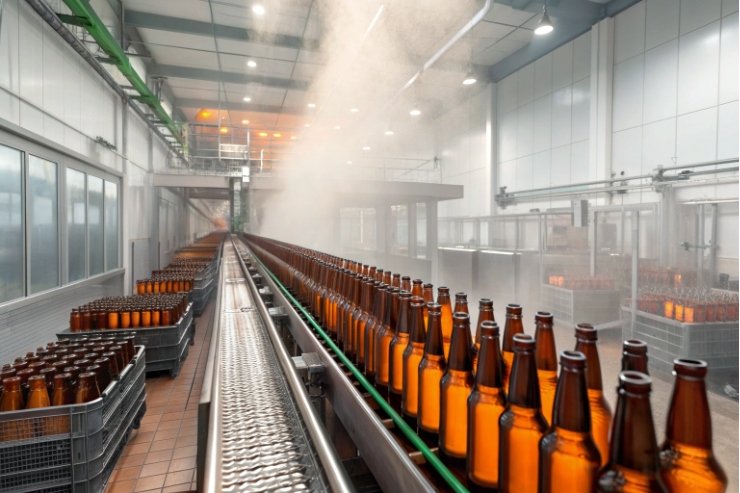
Glass returnables: where they shine
In countries with strong deposit systems and culture, glass bottles routinely:
- Get returned, washed, and refilled many times.
- Share standard shapes in a bottle pool used by many brands.
- Reach very high capture and reuse rates.
Examples include:
- Germany and much of Central Europe (refillable pool bottles).
- Parts of Latin America.
- Some Nordic and Eastern European markets.
In these systems, the reuse pool system 5 can drive high circulation rates and lower per-use impact. The weight penalty from transport is partly offset by skipping new bottle production over many cycles, and by using recycled content—because less energy is required to melt cullet 6 than to melt and react virgin batch materials.
PET deposits and downcycling realities
PET bottles often sit in deposit-return schemes too, especially for soft drinks and sometimes for beer. When clean and well sorted, PET can be:
- Recycled back into bottles or food-grade material.
- Downcycled into textiles or other lower-grade plastics.
But in many markets:
- Not all PET is collected.
- Mixed streams lower the value of the recycled resin.
- Some bottles still go to landfill or incineration.
So while PET has a strong story in theory, its real-world recycling success depends on the local system. Without a well-run deposit-return system 7, a “recyclable” PET beer bottle may still end its life as waste.
Regional patterns at a glance
Very simplified, and there are exceptions:
| Region | Glass pattern | PET pattern |
|---|---|---|
| Central/North Europe | Strong refillable pools + cullet recycling | Strong DRS, decent closed-loop PET in places |
| North America | Some deposits, low refill; strong cullet use in some areas | PET widely used, mixed recycling performance |
| Latin America | Many refillable glass systems | PET used, recycling varies by country |
| Asia-Pacific | Mix of one-way and refillable glass | Rapid PET growth, infrastructure still catching up |
The key is this: packaging choice should follow the local end-of-life reality, not only global averages. If your main market has a robust glass refill system, glass becomes a very strong eco choice. If it has excellent PET return and bottle-to-bottle recycling, PET can perform better than in places without such systems.
When can PET work for draft and take-home beer?
Many brewers look at PET with mixed feelings. They want light, safe bottles for certain uses, but they fear the “cheap” image or flavor risk. Used carefully, PET can help more than it hurts.
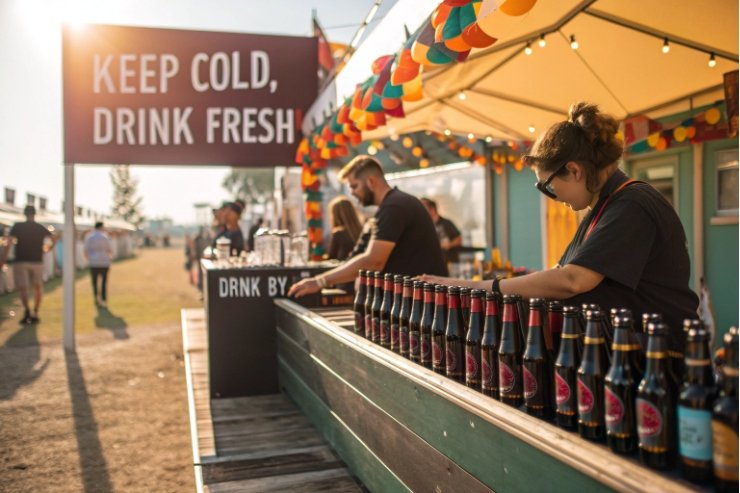
PET works for draft and take-home when the beer is fresh, cold, and consumed fast. It fits events, taproom fills, and high-turnover retail, but not long aging, export, or cellar beers.
Good use cases for PET beer
PET is most at home in:
- Stadiums and arenas where glass is banned.
- Festivals and outdoor events with spill and safety concerns.
- Taproom or brewpub fills where you sell direct and control storage.
- Short-run promotions where logistics are complex and breakage risk is high.
In these scenarios:
- Beer is filled close to where it will be consumed.
- Time from filling to drinking is short, often days or weeks.
- Temperature is controlled reasonably well.
If the beer is simple, fresh, and meant for quick enjoyment, PET can deliver decent quality while cutting costs and safety risks.
Design choices that make PET less risky
To get the best from PET in these roles:
- Use amber or dark PET to reduce light damage.
- Choose multi-layer barrier PET for better gas performance when shelf life must reach a few months.
- Set clear “drink by” dates that match realistic barrier performance.
- Label storage and use: “Keep cold, drink fresh, do not store warm for long periods.”
Beer style matters too:
- Crisp lagers and some ales can work in PET if freshness is respected.
- Highly hopped, delicate IPAs and strong, cellarable beers belong in glass or cans.
Brand and consumer expectations
There is also a perception angle:
- Many drinkers see PET-bottled beer as casual or budget.
- Premium and craft brands often fear this will drag down their image.
One way around this is to treat PET as a secondary, context-specific format:
- Core and flagship beers stay in glass or cans for retail.
- PET appears only for stadium, airline, or taproom take-home where glass is not allowed.
If you message this clearly, consumers tend to understand: the recipe is the same, the format is optimized for the venue.
Conclusion
For most beers, especially those that travel or age, glass still gives better flavor, shelf life, and brand value, while PET plays a smart supporting role in short-life, high-safety, event-driven channels.
Footnotes
-
Quick explainer of “lightstruck” flavor chemistry and why bottle color matters. ↩ ↩
-
Technical paper quantifying oxygen ingress and CO₂ loss through plastic bottles over storage. ↩ ↩
-
Practical overview noting PET beer shelf life is often limited to roughly three to four months. ↩ ↩
-
Summary of findings linking microplastics in glass-bottled drinks to paint on metal caps. ↩ ↩
-
Case study describing how standardized reuse pool bottles in Germany enable high return and refill cycles. ↩ ↩
-
Shows why higher cullet use reduces melting energy demand and related emissions in glass production. ↩ ↩
-
Checklist-style guide to designing deposit-return systems that achieve high capture and cleaner recycling streams. ↩ ↩






