
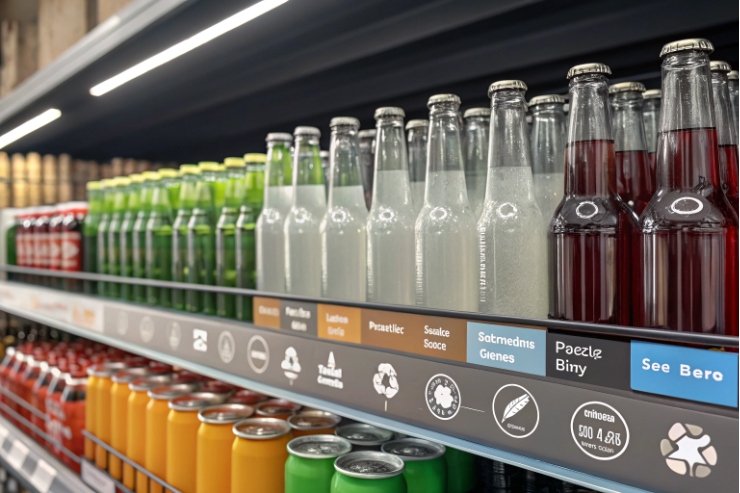
Glass-bottled drinks sit in a special corner of the shelf. They look different, taste different to many people, and often feel more “serious” than the same recipe in PET or cans.
Beverages packed in glass bottles are defined by an inert, airtight, heat-resistant container that protects flavor and carbonation, works with hot-fill or pasteurization, and fits strong reuse and recycling systems across still, sparkling, and alcoholic drinks.
From a brand point of view, glass turns a drink into more than a commodity. From an engineering point of view, it’s still one of the most stable and flexible beverage packages we can use—especially because glass is a nonporous and impermeable packaging material 1 in direct contact with the drink.
Is flavor and CO₂ retention superior vs PET/cans?
Many teams only notice the package when something goes wrong. A flat soda, a “plastic” aftertaste, a skunked beer. At that moment, the container is no longer invisible.
Glass offers very strong flavor and CO₂ retention because it is inert and impermeable, so it does not add taste, soak up aroma, or let carbonation slowly bleed out over time.
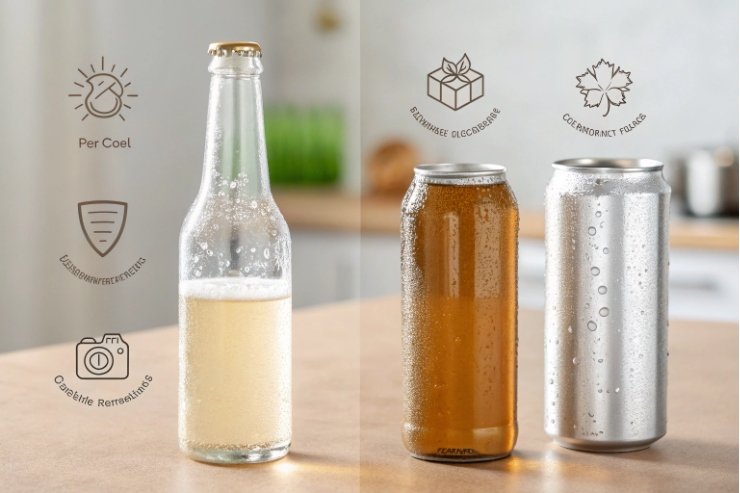
How glass protects taste and carbonation
Glass is a non-porous, inorganic material. It does three simple but important things:
- It does not react with acids, sugar, alcohol, or carbonation.
- It does not absorb flavors or aromas from the product or the environment.
- It acts as a complete barrier to gases and moisture through the wall.
PET and other plastics behave differently:
- They can let small amounts of oxygen ingress and carbon dioxide loss through plastic bottles 2 occur over long storage.
- They may carry small amounts of additives in the matrix.
- They can absorb strong flavors, especially citrus and cola notes, over long storage.
Cans protect gas extremely well through the metal wall, but they depend on metal can coatings 3. If that coating is damaged or mismatched to the drink, you can get metallic notes or stability issues.
For CO₂ retention, all three systems can hit good specs when they are designed correctly. But glass bottles quickly stand out in long shelf-life, premium roles where:
- Drinks may sit for many months before sale.
- Taste differences between formats are easier to notice.
- Higher carbonation levels are used for sensory reasons.
A simple view:
| Property | Glass bottle | PET bottle | Can |
|---|---|---|---|
| Inert wall | Yes | Limited | Needs inner lacquer |
| Gas permeability | Zero through wall | Low but not zero | Zero through metal |
| Flavor absorption | None in glass | Possible over time | None in metal, depends on lacquer |
When this difference really matters
In many everyday sodas, PET and cans do a fine job. But glass shows a real advantage when we talk about:
- Beer and cider, where light, oxygen, and CO₂ balance are critical.
- Premium soft drinks, tonics, and mixers served in bars, where taste is compared side by side.
- Juices and teas with more delicate aroma profiles.
- Craft fermented drinks like kombucha or kvass that may keep fermenting slowly.
In those cases, glass is often chosen not only for the “look” but also for the quiet insurance on flavor and fizz.
From my own conversations with beverage buyers, some will specify “glass only” for their flagship SKUs because they have fewer flavor complaints and more stable reviews over time in that format.
Do hot-fill and pasteurization options favor glass?
Many beverages need heat for safety and shelf life: hot-fill, tunnel pasteurization, or even retort. Not every package likes that treatment.
Yes. Glass handles hot-fill and pasteurization very well because it tolerates high temperatures and sharp ΔT when designed correctly, without warping or paneling like some plastics.
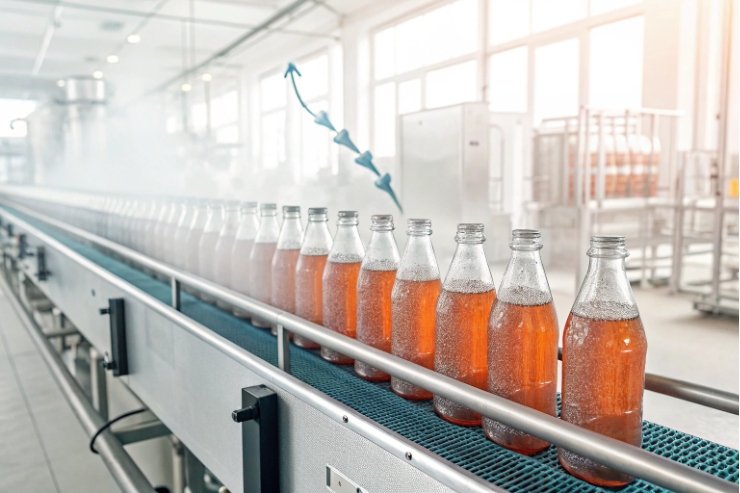
Hot-fill and pasteurization in glass
When we use the hot filling process 4:
- The drink is filled at high temperature.
- The closure is applied.
- The product cools and forms a vacuum.
Glass maintains:
- Stable geometry in the body.
- A firm sealing surface at the finish.
- Label flatness and capsule alignment.
With tunnel pasteurization 5, filled and capped bottles pass through warm and hot zones, then cool down again. Correctly designed glass bottles:
- Survive the thermal stress.
- Keep closures tight even as pressure fluctuates.
- Avoid dangerous breakage patterns.
PET hot-fill bottles exist, but they need special panel designs to manage vacuum and temperature. They also tend to look less “premium” and are harder to decorate beyond sleeving and labels.
Cans tolerate pasteurization too, but not all beverages or brands want the metal look or the short, squat format.
Design choices that support heat
To make glass work well with heat, we pay attention to:
- Wall thickness uniformity to avoid hotspots.
- Smooth transitions at heel and shoulder to reduce stress points.
- Base geometry that balances strength and manufacturability.
On the process side, we control:
- Maximum temperature.
- Heating and cooling rates.
- Bottle spacing and support.
Because glass can survive caustic washing and high-temperature rinses, it also fits reuse models. The same geometry that tolerates hot-fill also tolerates repeated cleaning cycles for refillable systems.
For many juices, teas, isotonics, and “clean label” drinks that avoid heavy preservatives, glass gives a wide process window. That is one reason why you still see so many premium juices and mixers in glass even when cheaper options exist.
Are recycling and refill programs more robust with glass?
A lot of current discussion is about “plastic vs cans”, but glass plays a separate role in the circular economy. It has a different lifetime and a different recycling story.
Glass supports very strong recycling and refill models because it can be cleaned many times for reuse and, at end of life, can be recycled repeatedly back to its original use 6.
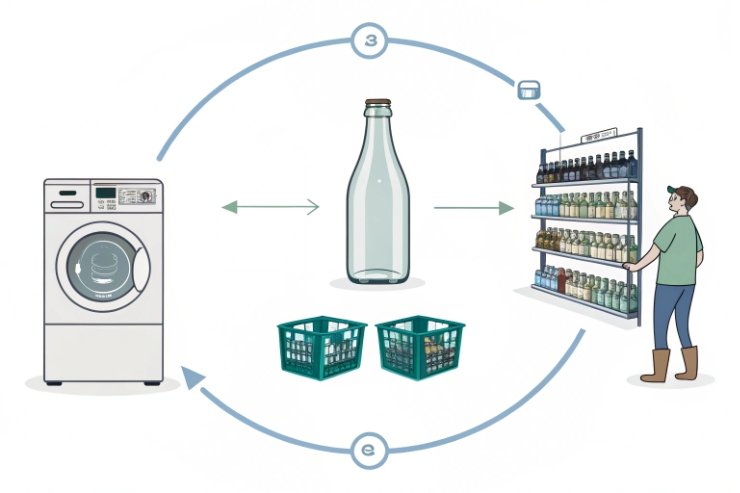
Refill and deposit systems
Refillable glass bottles work well when:
- Distribution is regional or local.
- Retailers or delivery services collect empties.
- There is access to washing and inspection equipment.
In these systems, a single bottle may see:
- 15–50 refill cycles before it is retired.
- Many washing and inspection passes.
- Repeated branding exposure as it moves through the market.
This is especially common in:
- Beer in some European and Latin American markets.
- Soft drinks for certain local bottlers.
- Dairy and small beverage brands using doorstep or farm-shop models.
PET and cans have refill models in some regions, but they are much less common. PET struggles with appearance and barrier performance after repeated wash cycles. Aluminum cans are mostly single-use by design.
Recycling and closed-loop potential
When refill is not used, glass still has a clear recycling pathway:
- Bottles are collected and sorted by color.
- They are crushed into cullet.
- Cullet is melted into new glass products, often new bottles.
Glass does not downcycle. It can become another food-grade bottle again and again, as long as contamination is managed.
PET can recycle into new bottles too, but it often moves down into fibers or other products. Multi-layer cartons are more complex; they mix paper, plastic, and sometimes foil, which makes full material recovery harder.
Consumer perception and policy
From a brand angle, glass makes the sustainability story easier to explain:
- “Refillable with deposit” is very clear.
- “Endlessly recyclable” is easy to communicate.
These simple messages suit labels, shelf tags, and marketing. In many surveys, people still rank glass as “most eco-friendly” for beverages, even if the reality depends on local collection and transport distances.
A quick comparison:
| Aspect | Glass bottle | PET bottle | Can |
|---|---|---|---|
| Refill potential | Strong in right systems | Limited in practice | Rare |
| Recycling loop | Bottle → bottle closed loop | Bottle → bottle + fiber, etc. | Can → can closed loop |
| Quality loss | None in glass itself | Gradual polymer degradation | Some but manageable |
| Consumer perception | Very positive for reuse and recycle | Mixed (depends on region) | Often good but not “refillable” |
This is why many brands choose glass when they want their sustainability actions to be visible and easy to trust.
Which formats suit still, sparkling, and alcohol drinks?
Not every beverage needs the same bottle. A still tea, a high-carbonation soft drink, a strong spirit, and a bottle-conditioned beer all ask for different specs and shapes.
Glass offers specialized formats for still, sparkling, and alcoholic drinks, each with tuned glass weight, pressure rating, neck finish, and closure so the package matches both product and brand.
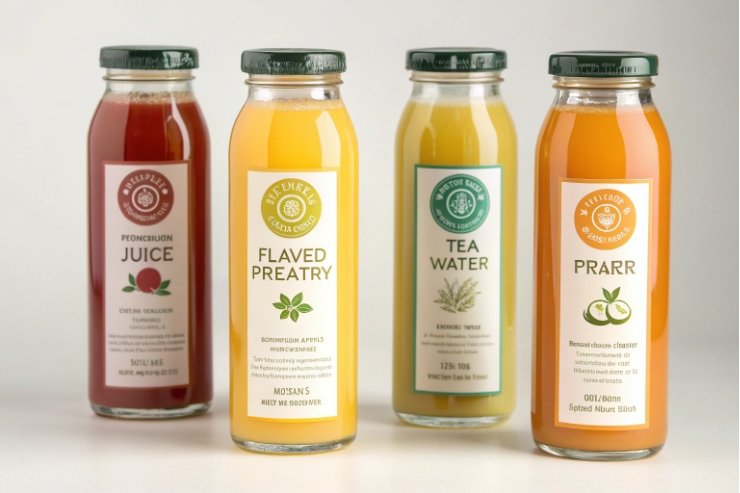
Still drinks
Still beverages (juices, teas, waters, isotonics, dairy) usually use:
- Moderate glass weights.
- Straight or gently curved bodies.
- ROPP (screw), twist-off, or crown closures depending on region.
Key priorities:
- Hot-fill or pasteurization capability if needed.
- Good label panels and stackable geometry.
- Visual clarity to show product color and quality.
For example:
- Clear glass for premium juices and flavored waters.
- Amber or green when light protection is important (for some teas, oils, or niche products).
Sparkling and carbonated drinks
Sparkling drinks need bottles that can safely contain pressure:
- Carbonated soft drinks often use crown-finished or screw-finished longnecks or specialty shapes.
- Beer and cider require pressure-rated bottles with proper necks for crowns or swing-tops.
- Sparkling wines use heavier, punted bottles that can handle much higher pressures.
In these cases, we adjust:
- Glass thickness especially in the base and heel.
- Bottle shape to manage internal stress.
- Finish and closure for tight gas sealing.
Light protection is also important. Amber is common for beer and some ciders, while green and flint are used more carefully where brand and style demand it.
Alcohol and spirits
Spirits like vodka, gin, whisky, rum, and liqueurs use:
- Non-pressurized bottles, often with tall, distinctive shapes.
- Heavy bases for premium hand-feel and bar stability.
- T-tops, corks, or ROPP closures with tamper evidence.
Priorities here:
- Back-bar visibility and brand recognition.
- Strong, clear surfaces for decoration.
- Good ergonomics for pouring.
Because spirits are less sensitive to light than beer or juice, brands can use clear glass freely and focus on structural and graphic design.
Matching format to beverage type
A quick map:
| Beverage type | Typical glass format | Main reasons |
|---|---|---|
| Still juice / tea | Medium-weight, ROPP or crown finish | Hot-fill, label area, clear color |
| Carbonated soft drink | Longneck / specialty crown or ROPP | Pressure + line compatibility |
| Beer / cider | Pressure-rated longneck, steinie, swing-top | CO₂, light protection, return systems |
| Sparkling wine | Heavy, punted champagne-style bottles | High pressure, premium cues |
| Spirits (vodka, etc.) | Tall, heavy-base, T-top or screw | Brand icon, bar use, decoration freedom |
| Dairy / specialty | Refillable glass with snap or foil closures | Reuse loops, freshness, trust |
When we match beverage, process, and glass format well, we protect the drink and strengthen the brand in one move—especially in refillable bottle programs 7 where the bottle becomes a long-life asset.
Conclusion
Beverages in glass are defined by more than a “premium look”; they combine flavor stability, process flexibility, and strong circular potential in formats tuned for still, sparkling, and alcoholic drinks.
Footnotes
-
Explains why glass stays inert and impermeable, protecting beverage flavor and aroma. ↩ ↩
-
Technical paper quantifying oxygen ingress and CO₂ loss risks in plastic bottles over shelf life. ↩ ↩
-
Background on can coatings that separate beverages from metal and prevent reactions or metallic notes. ↩ ↩
-
Practical overview of hot filling and why heat-friendly packaging matters for shelf-stable drinks. ↩ ↩
-
Explains tunnel pasteurization temperature zones and why gradual heating/cooling protects packaged beverages. ↩ ↩
-
Summarizes bottle-to-bottle glass recycling and the energy/CO₂ savings from higher recycled cullet use. ↩ ↩
-
Examples of refillable systems and why standardized, returnable bottles enable practical reuse programs. ↩ ↩






