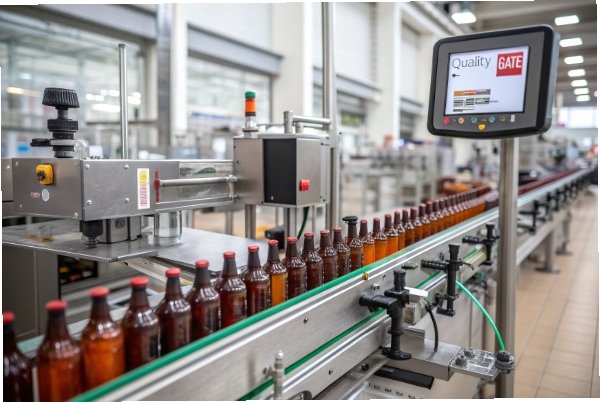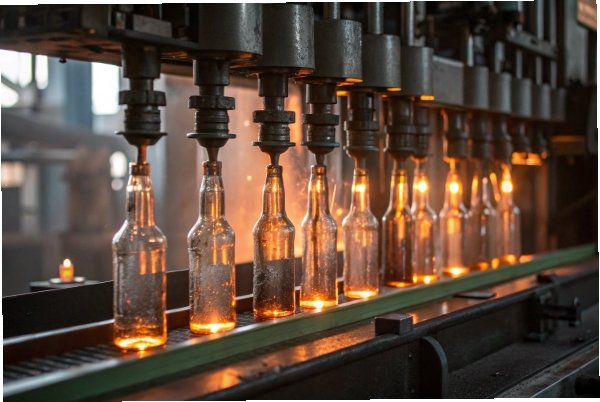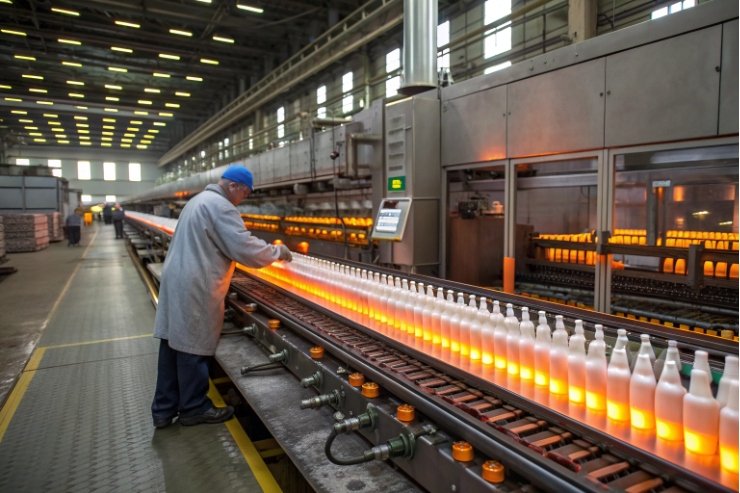
On a drawing, every bottle looks strong and shiny. In real factories and warehouses, glass scuffs, slips, and faces hot caustic, labels, and decoration.
Glass bottle surface treatments combine hot-end oxides, cold-end lubricants, and decorative coatings. Done well, they raise durability, support branding, stay recyclable, and keep friction and chemical resistance inside a safe window.
When we design a bottle for a customer, we do not start with color. We start with: what is the filling line like, what is the distribution route, and how far can we push decoration without hurting recyclability or yield?
How do hot-end and cold-end coatings actually protect glass in production?
Fresh bottles look strong when they leave the forming machine, but bare glass surfaces are fragile and scratch very easily.
Hot-end tin or titanium oxide builds a hard “skin” on hot glass, then cold-end polyethylene or stearate layers add lubricity. Together they control scuffing, stacking friction, and how later inks and paints anchor.
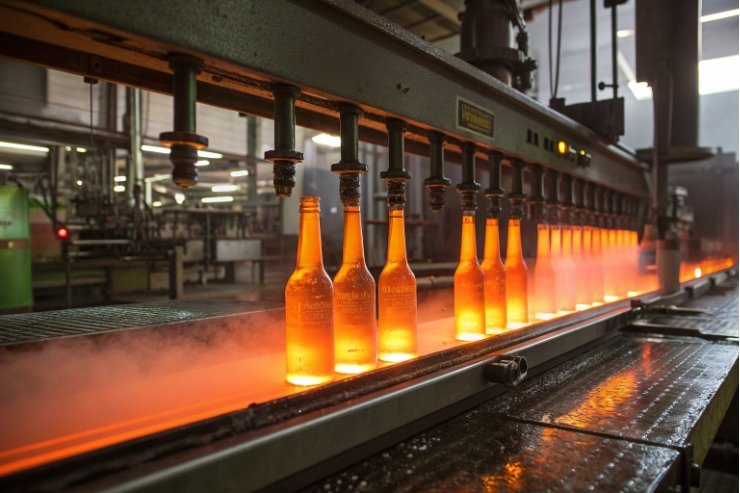
The hot-end: a thin oxide shell that changes everything
Right after forming, bottles pass under a hot-end container glass coating stage 1. There, a vapor of SnO₂ or TiO₂ precursor hits the hot surface and forms a very thin oxide layer.
Why it matters:
- It increases surface strength by reducing micro-defects from contact.
- It gives the glass a controlled, higher surface energy, so later coatings can grip.
- It improves resistance to abrasion as bottles touch molds, guides, and each other.
If you want a deeper technical view, academic notes on tin oxide (SnO₂) surface treatments for container glass 2 explain why that “invisible” layer matters so much.
This layer is invisible, but it is the foundation for everything that follows. Without it, later paints and cold-end coatings behave less predictably.
The cold-end: friction control for conveyors and pallets
After annealing, bottles are cooler and pass through cold-end coating stations. There we apply a very thin polymer film, often:
- Polyethylene (PE) emulsions.
- Stearate-based systems.
- Sometimes silicone-containing emulsions.
A practical reference is the label-adhesion discussion around polyethylene cold-end coating on non-returnable glass 3, because the same “slip” that protects bottles can also affect how labels anchor.
This layer:
- Reduces the coefficient of friction (COF) between bottle-to-bottle and bottle-to-carton.
- Cuts scuff marks on shoulders and label panels.
- Helps bottles run smoothly through high-speed lines, dividers, and packers.
For returnable bottles, there is a special balance: the cold-end layer must survive some handling, but also wash off in the caustic washer so bottles are clean for the next filling cycle.
Why the combination matters
Hot-end and cold-end coatings are designed as a system:
- The oxide hardens and prepares the surface.
- The polymer layer slides and protects during transport and filling.
If you over-coat at the cold end, labels may not stick and bottles can become too slippery in depalletizers. If you under-coat, scuffing explodes and pallets become unstable. So we tune both coatings to the filling line requirements and test COF on sample runs, not just in the lab.
Do frosting, painting, plating, and ceramic inks affect recycling and reuse?
Brand managers love heavy decoration. Recyclers do not always love it back.
Decorative treatments change how glass flows in recycling and reuse: acid frosting and light organic paints usually burn off, while heavy metallic inks, thick plating, and full-body coatings can contaminate cullet streams or fail in returnable washers.
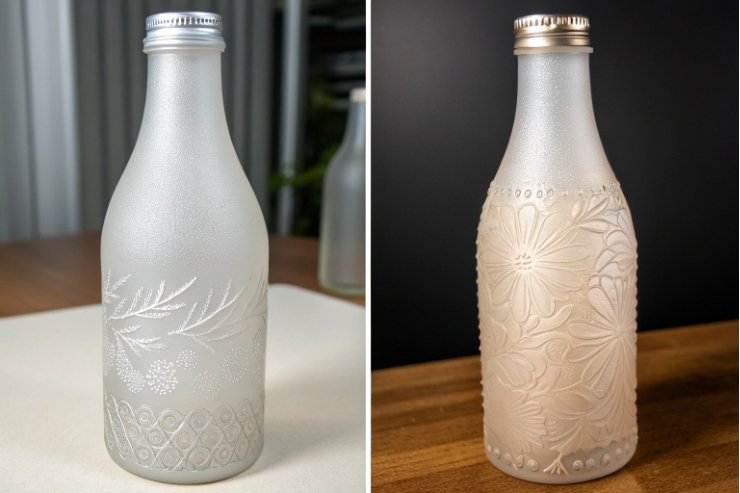
Frosting: chemical vs mechanical
Two main ways to frost a bottle:
-
Chemical frosting / acid etching
- Uses etchants to roughen the surface and create a satin look.
- Can be full-body or in patterns with masks.
- Leaves a permanent micro-rough surface.
-
Mechanical frosting / sandblasting
- Uses abrasives to erode the surface.
- Similar visual effect, but no chemical waste.
For recycling, both types still melt as glass. The main impact:
- Heavy frosting increases surface area and can trap label or adhesive residues.
- Very deep etching can change strength and breakage behavior in returnable pools.
We usually keep frosting away from critical contact zones (standing ring, heel, and finish) and test caustic resistance for refillable bottles.
Painting, lacquers, and organic inks
Organic paints and UV inks bring color, gradients, and soft-touch effects.
Pros:
- Endless color choices and quick design changes.
- Can be applied over clear or tinted glass.
Recycling impact:
- Thin organic layers generally burn off in the furnace.
- Dark or full-body coatings can make color sorting harder.
- Thick soft-touch coatings may generate extra combustion products.
For one-way bottles, this is less critical if furnaces are tuned. For returnables, strong caustic and mechanical action may strip or damage the coating in just a few trips. So for refill loops, we often favor more robust enamel or ceramic prints over large painted areas.
Ceramic inks, enamel, and metallization
Ceramic (ACL) inks and enamels are fused into the glass at high temperature. A concise overview of Applied Ceramic Labeling (ACL) inks on glass containers 4 is useful if you are choosing between paper labels, UV inks, and fired decoration.
They are extremely durable:
- Survive dishwashers, caustic washers, and long reuse cycles.
- Keep regulatory information and branding readable for years.
These inks become part of the glassy surface and do not burn off. In cullet, they behave like glass, though heavy-metal-free formulations are strongly preferred to keep streams safe.
Metallization and plating (for example vacuum-deposited aluminum, chrome-like layers):
- Use more complex stacks: primer, metal, topcoat.
- Can give mirror or metallic effects that signal luxury.
Recycling impact depends on layer thickness and composition:
- Very thin vacuum-deposited metal usually melts without major issues.
- Thick metallic coatings and non-glass components (plastic collars, sleeves) need careful separation.
So our rule of thumb is simple:
- For mass-market and high-recycling markets: keep decorations thin, heavy-metal-free, and limited in coverage.
- For luxury and short-run items: more freedom, but we still explain the recycling implications to the brand.
How do UV, IR, and thermal cures change adhesion, gloss, and durability?
The same color and design can behave very differently if the curing method changes. Cure is not just “drying”; it decides crosslinking, hardness, and how the coating behaves on a cold bottle in a wet cooler.
UV-curing gives fast, high-gloss films with tight line control. IR and thermal ovens drive deeper cure and better chemical resistance for many paints. High-temperature firing for ceramic inks fuses color into the glass for maximum durability.
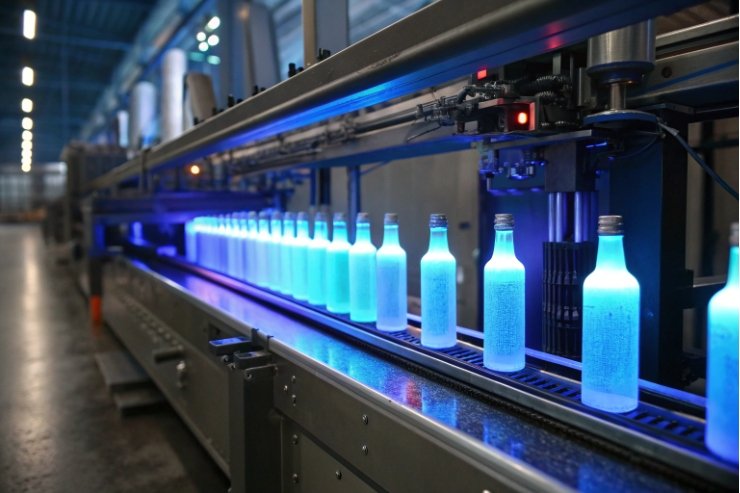
UV-curable inks and clear coats
UV systems use photoinitiators to crosslink coatings in seconds under UV lamps. For suppliers, a good reference point is the performance intent behind UV screen printing inks for decoration and functional prints 5.
Benefits:
- Very fast cure → short lines and low WIP.
- High gloss and clarity, ideal for premium looks.
- Good edge definition for fine text and detail.
But we must respect:
- Need for proper surface activation (flame or plasma) to get strong adhesion on glass.
- Sensitivity to oxygen inhibition at the surface if settings are wrong.
- Potential brittleness if over-cured or too thick.
UV is great for cosmetic and spirits bottles that will see normal handling, mild detergents, and no caustic washers.
IR and low–medium thermal cures
Many organic paints and varnishes for glass need IR ovens or hot-air tunnels at moderate temperatures.
This cure:
- Drives solvents off.
- Crosslinks resins into tougher films.
- Improves chemical and abrasion resistance compared to air-dried layers.
Gloss level can be tuned:
- High gloss with smooth films and good leveling.
- Satin or matte when filled paints or matting agents are used.
Process windows are wider than UV in some cases, but line speed and bottle mass still matter. Heavy spirits bottles, for example, need more energy to bring the coating into its cure window.
High-temperature firing for ceramic inks
For long-life prints, we use ceramic inks and bake them at high temperatures (often 500–600°C). At this point:
- Glass frits in the ink fuse into the base glass surface.
- The design becomes part of the bottle, not a layer on top.
The result:
- Excellent dishwasher and caustic resistance.
- Very high scratch resistance.
- Stable color for many years.
Gloss is more “enamel-like” than mirror, but for many wine, beer, and refillable soda brands, this is ideal.
So when we pick a cure system, we match it to:
- Expected mechanical stress (conveyors, crates, home use).
- Expected chemistry (coolers, dishwashers, caustic washers).
- Desired gloss, feel, and style.
Then we lock a cure profile and verify it with real bottles, not just lab panels.
What tests verify hardness, slip, and chemical resistance of coated glass?
Pretty samples on a showroom shelf are easy. The real test is pallets, warehouses, coolers, and people’s hands.
We verify coatings with hardness and abrasion tests, static and dynamic slip measurements, and chemical resistance checks that mimic real washing, filling, and consumer use, plus line trials to confirm COF and label performance.
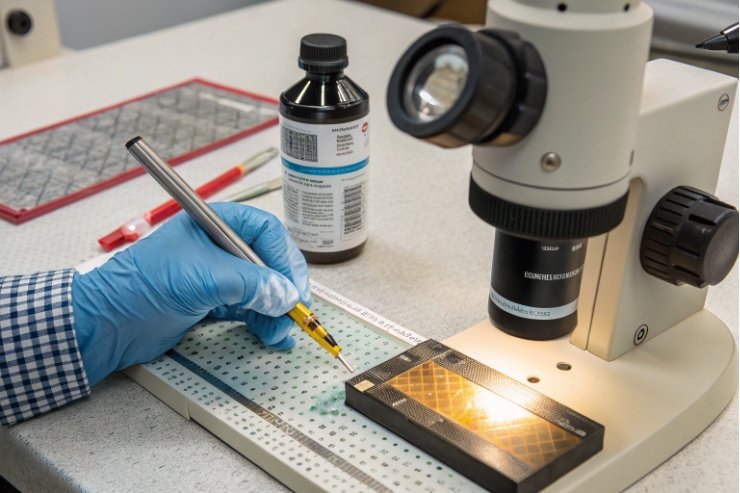
Hardness and abrasion
Common ways to check how tough a coating is:
- Pencil hardness tests on flat samples or bottle panels.
- Cross-hatch adhesion with tape pull to see if the film lifts.
- Abrasion tests, such as Taber or falling-sand, to simulate scuffing in crates and cartons.
When abrasion data matters for comparisons, many teams reference the ASTM D4060 Taber Abraser method for organic coating wear 6 to keep reporting consistent.
For hot-end and cold-end layers, we also look at:
- Visual scuffing after controlled bottle-to-bottle rubbing.
- Changes in gloss or haze after simulated conveyor runs.
The goal is not only high hardness. It is the right hardness and flexibility so coatings do not crack or flake under impact.
Slip and COF measurements
For handling, we care about the coefficient of friction (COF) between:
- Bottle and bottle.
- Bottle and cardboard.
- Bottle and stainless-steel or plastic guides.
We use:
- Inclined plane tests to see when bottles start sliding.
- Drag tests where a fixed load is pulled across a surface.
- On-line COF measurement systems in some plants.
There is always a target window:
- Too high COF → bottles jam and tip on conveyors; pallet wrapping stresses bases and shoulders.
- Too low COF → loads slide in trucks, and layers shift during braking.
We tune cold-end coatings and any decorative lacquers so the combined COF stays in the agreed window for the customer’s line.
Chemical and washing resistance
For chemical resistance we simulate:
- Filling hall cleaners: dilute caustic or acid sprays, wiped exposure.
- Consumer cleaners: dish detergents, alcohol wipes, hand sanitizers.
- Refill washers: hot caustic baths for returnable glass.
If you need a practical description of what “caustic” means on real equipment, this overview of caustic action stages in industrial bottle washing 7 helps align coating specs with the washer reality.
Tests can be:
- Immersion for set times, then inspection for gloss loss, blushing, or softening.
- Spot tests under drops of solvent or cleaner.
- Repeated wash cycles for dishwasher-safe or refillable lines.
Label and print systems also go through adhesion and edge-lift tests after chemical exposure. For UV-blocking clear coats, we add spectral transmission checks to make sure the promised protection still holds after curing and after washing.
A simple overview:
| Property | Typical tests | Why it matters |
|---|---|---|
| Hardness / abrasion | Pencil, cross-hatch, Taber, scuffing | Shelf look, crate life, handling |
| Slip / COF | Inclined plane, drag, line trials | Conveyor flow, pallet stability |
| Chemical resistance | Immersion, spot, wash cycles | Filling hall, consumer use, reuse |
| UV blocking (if used) | Spectral transmission measurement | Product light stability |
When all these tests pass with margin, we know the surface system—hot-end, cold-end, decoration, and cure—is ready for real production, not just for a photo.
Conclusion
Good surface treatment turns bare glass into a durable, printable, and line-friendly package that protects both your product and your brand image, from forming line to final pour.
Footnotes
-
Explains where hot-end coating fits in the line and why it prevents abrasion. ↩︎ ↩
-
Technical lecture on SnO₂/TiO₂ surface treatments and their effects on strength, friction, and durability. ↩︎ ↩
-
Shows how polyethylene cold-end coatings impact label adhesion and handling on glass containers. ↩︎ ↩
-
Practical guide to fired ceramic inks (ACL) and why they outperform paper labels in harsh use. ↩︎ ↩
-
Overview of UV screen inks designed for sharp detail, fast cure, and durable decoration. ↩︎ ↩
-
Standard reference for Taber abrasion testing used to compare coating wear resistance. ↩︎ ↩
-
Describes caustic bottle washing stages so coatings can be specified to survive real refill processes. ↩︎ ↩