
A bottle can look premium and still be awkward on the line. A base design that seems minor can raise breakage, cost, and complaints.
A wine bottle “punt” is a concave push-up in the base. It can support strength, stable standing, sediment management, and handling. Punt depth varies by pressure needs, glass distribution, and brand perception—not wine quality.
A punt sits where engineering meets storytelling. Some punts exist because sparkling wine needs pressure safety. Some exist because the brand wants a classic silhouette and a “heavy” feel. In wholesale, the right punt choice is never only about looks. It must fit pressure level, line handling, pallet stability, and sustainability targets. The sections below explain what a punt does, what it does not do, and how to choose it with fewer surprises.
What is a wine bottle “punt,” and why do some bottles have a deeper punt than others?
A deep punt can feel like quality. That feeling pushes buyers to assume the wine is better. That assumption can lead to over-spec bottles that cost more and ship worse.
A punt is a molded concave base. Deeper punts are usually chosen for pressure safety, base stiffness, glass distribution, or premium styling. Depth alone does not prove better glass or better wine.
What the punt actually is in manufacturing terms
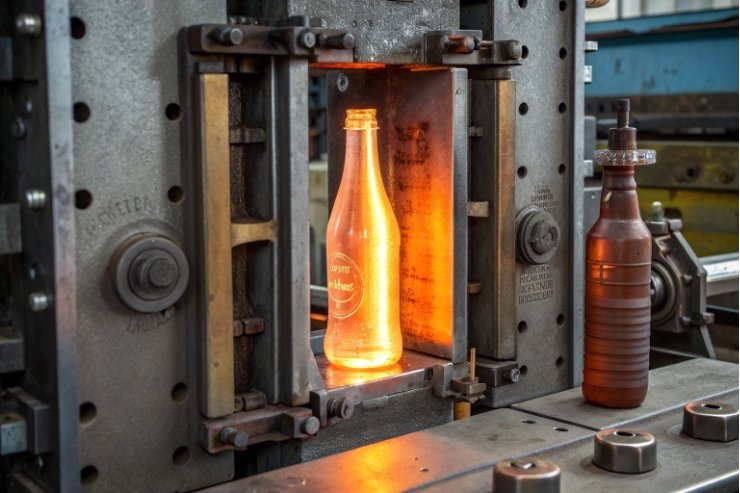
A punt is also called a push-up or kick-up (inward dome) 1. In modern bottle making, it is designed into the mold. The base has two main zones: the standing ring that touches the table and conveyor, and the push-up that rises into the bottle.
This geometry does several practical things:
- It creates a stable contact ring instead of a wide flat base that can rock if it is not perfectly planar.
- It gives a controlled place to “store” glass in the heel area without making the bottle look bulky.
- It can hide some base variations, like minor mold marks, while still keeping the standing surface consistent.
Why depth varies so much across styles
Depth is not a single “best practice.” It is a design trade. Deeper punts are common when one or more of these needs are true:
- The bottle must handle higher internal pressure (sparkling).
- The bottle needs more base stiffness without a wider diameter.
- The bottle needs a heavier feel to match a premium story.
- The bottle shape is tall and narrow, and the base needs more stability.
But depth can also increase weight and change how the bottle runs on equipment. So in my work with wholesale buyers, punt depth is chosen after checking target weight, desired shelf look, and the line’s base-handling tolerance.
What a deeper punt signals to customers
A deeper punt often signals “traditional” and “premium.” That signal is real in marketing, and it is often reinforced by premium cues in punt-driven bottle design 2. Still, it is not a reliable indicator of wine quality. Some high-end wines use flat-bottom bottles. Some low-end wines use deep punts to look expensive.
| Driver | Why a brand chooses it | What the punt changes | Risk if overdone |
|---|---|---|---|
| Pressure needs | sparkling safety | base stiffness and heel support | heavier glass, higher CO₂ |
| Stability | tall bottle balance | standing ring contact | rocking if ring is uneven |
| Premium feel | hand-feel and look | perceived thickness and depth | cost increases, shipping cost |
| Manufacturing fit | mold and base design | glass distribution | thin spots if glass is stretched |
A punt should be treated as a design feature that must earn its cost. If it only adds “feel” but breaks sustainability goals, it needs a second look.
How does a punt improve bottle strength for Champagne and other sparkling wines?
Sparkling bottles fail in violent ways. A weak base can become a safety event. This is why Champagne specs feel “overbuilt” compared with still wine.
For sparkling wines, a punt helps by shaping the base like a dome and supporting a strong heel and standing ring. This geometry reduces stress peaks from internal pressure and impacts, but it works only with correct thickness and annealing.
Why pressure changes the design rules
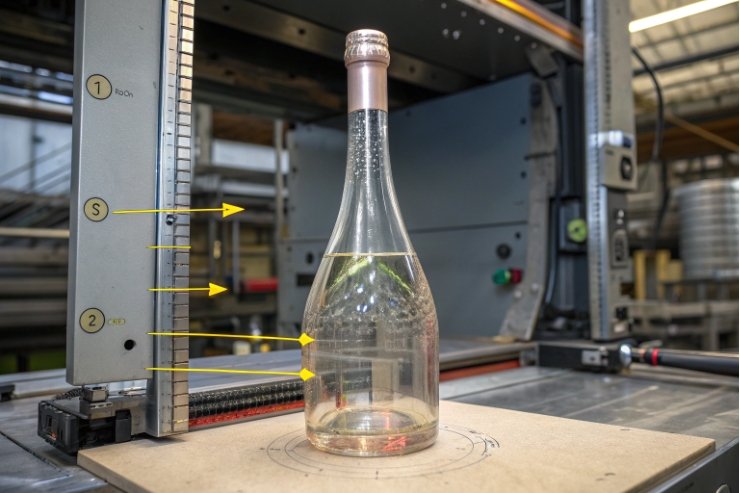
Sparkling wine bottles face high internal pressure, with fermentation often monitored until it reaches bottle pressure around 6 bars (≈90 PSI) 3. That pressure pushes outward on the sidewalls and downward on the base. A flat base behaves like a plate under load. A punted base behaves more like a shallow dome. Domes carry load better because they spread forces through compression paths.
This is why Champagne bottles usually combine:
- A deeper push-up
- A thicker heel
- A robust standing ring
- Higher bottle weight and stricter quality control
What “strength improvement” really means
The punt itself does not magically make glass stronger. It improves stress distribution. It can reduce the chance that pressure loads focus on one thin flat area. But the base still needs enough glass in the right places.
Strength comes from a package of controls:
- Minimum thickness at the base and heel
- Smooth radii where the base transitions into the sidewall
- Low residual stress from proper annealing and residual-stress control 4
- Good surface quality with fewer checks and stones
If the punt is deep but the apex becomes too thin, the benefit can disappear. This is why wall gauges and base thickness audits matter for sparkling bottles.
The role of the standing ring in pressure and impact
Many base breaks start at the heel or near the standing ring because that area sees impact loads during handling. The punt supports a standing ring that can be thick and consistent. That ring also helps the bottle stand evenly, so load does not concentrate on one edge.
| Base feature | How it helps under pressure | What to control in QC | Typical failure when wrong |
|---|---|---|---|
| Push-up dome shape | spreads pressure stress | concentricity and apex thickness | base star crack or thin-spot burst |
| Thick heel | absorbs impact and pressure | minimum heel thickness | heel fracture in transit |
| Smooth transition radius | reduces stress concentration | radius uniformity | cracks at sharp corner |
| Consistent standing ring | stable contact and guidance | flatness and ring width | rocking, scuffing, chipping |
For Champagne and other sparkling wines, the punt is part of a safety design. It supports pressure margin, handling margin, and consistent standing. It is not decoration. It is structural geometry that must be backed by stable forming and stress control.
Does a punt help with sediment control, stability, or easier pouring in still wine bottles?
Still wine bottles do not need the same pressure strength as sparkling. So many people ask why punts exist at all in still wines. The answer is: some functions are real, and some are more about experience.
In still wine bottles, a punt can support stable standing via the standing ring, offer a comfortable thumb rest for pouring, and sometimes help sediment settle in a ring. These benefits are modest and depend on bottle shape and serving behavior.
Sediment control: helpful, but not a guarantee
Older red wines and some minimally filtered wines can throw sediment. A punt creates a base shape where sediment can settle into a ring around the lower perimeter instead of forming one central mound. During a slow pour, that ring can stay more stable than loose sediment in the center.
But sediment control still depends on:
- How the bottle is stored before opening
- How much the bottle is moved
- How quickly the wine is poured
- The size and density of sediment particles
So a punt can help, but it does not replace careful handling. In practice, the most reliable sediment control is still a slow pour and a steady angle.
Stability: the standing ring does most of the work
A punted base usually creates a defined standing ring. A narrow ring can be stable if it is flat and centered. A wide ring can be stable too, but it can scuff more on conveyors and tables.
The stability benefit is strongest when:
- The standing ring is concentric
- The ring is flat, not wavy
- The bottle is tall and narrow, where small base variation causes rocking
If the ring is uneven, the bottle can rock more than a flat-bottom bottle. So stability is not automatic. It depends on how well the base is molded and annealed.
Pouring: grip and ritual matter
Many servers place a thumb in the punt and fingers around the base. This can feel secure. It also signals a “ceremony” of pouring. That ritual often makes the pour slower and steadier.
Still, pouring control is influenced more by:
- Bottle weight and center of mass
- Neck length and grip surface
- Surface friction of decoration
- The person’s pouring technique
| Claimed benefit | What is true | What is often overstated | Best way to use it |
|---|---|---|---|
| Sediment ring | can reduce sediment surge | does not prevent sediment movement | pair with slow pour and minimal shaking |
| Stability | standing ring can help | uneven ring can worsen rocking | control base flatness and concentricity |
| Easier pouring | thumb rest can feel secure | does not “fix” a heavy bottle | design grip zones and neck ergonomics too |
For still wine, a punt is mainly a stability and experience feature. It can help sediment in some cases. It can help grip for many people. But it should not be sold as a must-have engineering requirement for all still wines.
What are the cost and sustainability trade-offs of choosing a punted bottle in wholesale production?
A deeper punt often comes with a heavier bottle. Heavier glass can look premium, but it also carries real cost in raw material, energy, and freight. Many wholesale buyers feel this trade-off only after the first shipment.
In wholesale, punt depth can increase glass weight, mold complexity, and energy use. It can also reduce breakage risk for certain designs. Sustainability improves when punt geometry is optimized for strength with minimal mass, and when cullet content and lightweighting targets are enforced.
Cost drivers linked to punt decisions
A punt changes base geometry. That can change how glass flows in forming. It can increase the need for tighter base thickness control. In many cases, deeper punts also lead to heavier bottles, because brands want the base to feel thick and stable.
The cost impacts show up in:
- Glass weight: more glass means higher unit cost.
- Melting energy: more glass melted per bottle increases furnace load.
- Freight: heavier pallets cost more to ship.
- Breakage and claims: stronger bases can reduce damage, which can offset cost.
- Mold maintenance: deeper base features can require careful mold polishing and repairs.
For a wholesale buyer, the correct question is not “punt or no punt.” The correct question is “how much mass is needed to hit strength and brand goals.”
Sustainability: weight is often the biggest lever
Glass sustainability is strongly linked to mass and transport distance. A heavier bottle creates more emissions in melting and shipping. If a deep punt is used mainly for premium feel, it can conflict with sustainability goals. This is why many producers now run measurable wine bottle lightweighting programs 5 instead of relying on “heavier = better.”
Still, the trade is not one-way. If a stronger base reduces breakage, it can save emissions by reducing re-melt and re-ship. This is why the best sustainability approach is optimization, not simplification.
Practical levers that work in real supply:
- Set a maximum bottle weight for each SKU tier.
- Use strength-by-design (heel radius, base transitions) instead of mass-only.
- Increase cullet (recycled glass) use in container production 6 where possible and approved.
- Run packaging drop tests so breakage does not erase sustainability gains.
Line handling and labeling: indirect but important
Punts affect how bottles behave on conveyors. The key interface is the standing ring. A poorly controlled standing ring can cause rocking, scuffing, and line jams. Over time, that shows up as visible scuffing and etching on returnable glass bottles 7, plus waste and downtime.
Labeling is mostly about body shape, but punts can still influence:
- height repeatability if bottles rock at infeed
- stability during wrap labeling
- base code readability for traceability
| Choice | Cost impact | Sustainability impact | Line/label impact | Best use case |
|---|---|---|---|---|
| Deep punt + heavy base | higher material and freight | higher emissions unless breakage drops | stable if ring is perfect | sparkling, premium gift packs |
| Moderate punt + optimized heel | moderate cost | better balance | good runability | premium still wine and spirits |
| Flat bottom + reinforced ring | lower weight possible | strong sustainability | can run well | value still wines, high volume |
| Decorative punt only | cost without strength | worse sustainability | can cause handling issues | avoid unless justified |
In wholesale, the punt decision should be documented as a specification: target weight, base thickness limits, standing ring flatness, and runability requirements. That keeps the choice grounded in measurable outcomes, not only perception.
Conclusion
A punt can support pressure safety, stable standing, serving comfort, and premium cues, but the best choice balances strength, weight, line fit, and sustainability in wholesale production.
Footnotes
-
Bottle anatomy terms (heel, base, push-up) to align drawings, molds, and QC language. ↩︎ ↩
-
How punt depth and base styling influence premium perception without guaranteeing better wine. ↩︎ ↩
-
Practical reference for sparkling-wine bottle pressure (bars/PSI) and why pressure-rated glass is “overbuilt.” ↩︎ ↩
-
Why residual stress from annealing affects delayed breakage, especially around heel and base transitions. ↩︎ ↩
-
Real-world lightweighting example showing how weight reduction can lower cost and footprint at scale. ↩︎ ↩
-
How recycled glass (cullet) reduces manufacturing energy use and supports closed-loop container recycling. ↩︎ ↩
-
Why base and body scuffing happens on lines, and what reduces visible damage and breakage risk. ↩︎ ↩






