
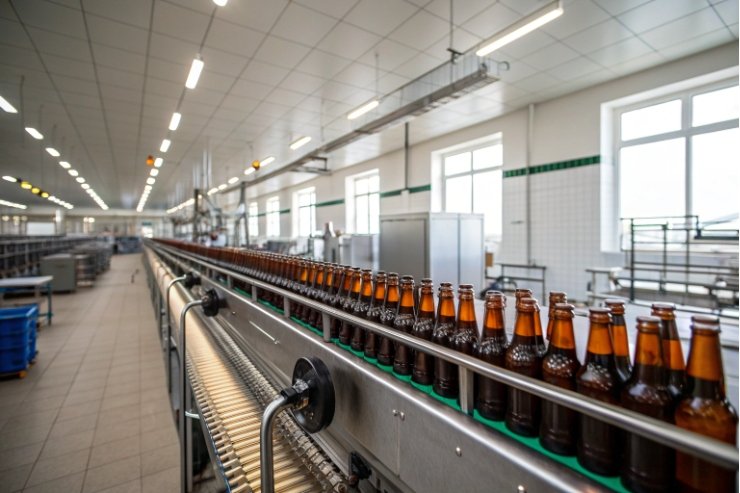
Skunked beer is almost always a light problem, not a brewing problem. Brown glass is the quiet bodyguard that most drinkers never notice.
Most beer bottles are brown because amber glass blocks far more UV and blue light than green or clear glass, so it prevents skunking, protects hop flavor, works well with recycling streams, and fits many style and branding rules.
Brown became the “default” only after brewers and glassmakers understood how fast light can ruin a beer. From that moment, color stopped being decoration and became part of quality control. Now, style traditions, recycling systems, and modern POS displays all sit on top of that technical choice.
Does amber provide superior UV shielding vs green for “skunking” prevention?
Everyone in beer knows the smell of a lightstruck bottle. The real surprise is how fast it can happen under the wrong glass.
Yes. Amber glass gives the strongest UV and blue-light shielding in the 300–450 nm band, so it prevents skunking much better than green and far better than clear glass.
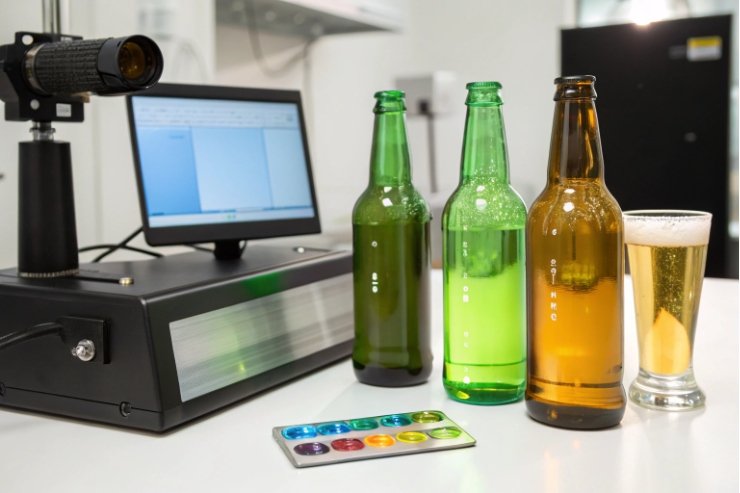
When light hits beer, the hops do not just fade. Hop iso-alpha acids break down into reactive bits. Riboflavin and other photosensitizers help this reaction. One of the end products is 3-methyl-2-butene-1-thiol (MBT) 1. Human noses detect MBT at very low levels. It smells like a skunk, even when everything else in the beer is perfect.
This reaction needs energy from UV and near-blue light. The critical band is roughly the 350–500 nm “blue/violet” window 2. Below that, air and glass already absorb a lot. Above that, light has less power to trigger the same photochemistry. So the job of the bottle is simple: stop as much light as possible in that dangerous window.
Amber glass does this very well. Colorants in amber glass (iron, sulfur, carbon and others in controlled ratios) create a broad absorption below about 500 nm. In practice, that means amber bottles reduce spectral transmission through ~290–450 nm 3. This sharply reduces MBT formation under shop lighting and daylight.
Green glass sits in the middle. It blocks some UV but lets much more blue and violet light pass compared with amber. So green bottles still allow enough light to skunk a beer that sits in bright conditions for long enough. Clear flint glass, of course, offers almost no protection in this range.
I often explain it to brewers with a simple comparison:
| Bottle color | UV / blue blocking (300–450 nm) | Skunking risk in bright retail |
|---|---|---|
| Clear flint | Very low | Very high |
| Green | Medium | Medium to high |
| Amber/brown | High | Low |
Cans remove light from the equation completely, but when glass is non-negotiable, amber is the most protective widely available option. Brewers who choose green or clear often compensate with light-stable hop extracts or strict control of display lighting. Brewers who choose brown let the glass do more of the work by design.
How do style guides and brand heritage reinforce brown?
Once color proved its value in the lab, it also started to shape how we “read” styles on the shelf and in style guidelines.
Style habits and brand heritage keep brown as the default for many ales and lagers, especially in North America and craft segments, where brown glass signals freshness, care, and classic brewing.
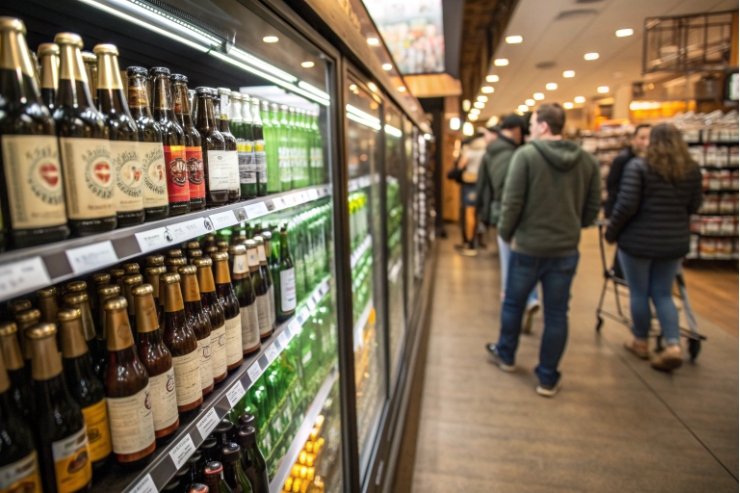
Brown glass did not arrive as a design choice. It arrived as a technical fix. In the early and mid-20th century, as chemistry explained lightstruck beer, breweries could suddenly connect flavor faults with bottle color. They saw that brown glass kept beer stable much longer than clear or weakly tinted glass.
As more breweries standardized on amber, this new “normal” started to shape expectations. In many markets, especially in the US and parts of Europe, brown bottles became the sign of “serious beer.” Large lagers moved into brown; early craft brewers adopted brown almost by default, because they wanted protection and tradition at the same time.
Over decades, style guides and competitions also absorbed this visual code. A pale ale or stout in brown glass looks “right” to many judges and consumers. The bottle disappears, and the focus stays on the liquid and the brand. The same beer in clear glass often feels more like soda or RTD, even before anyone tastes it.
Brand heritage adds another layer. If a brewery has used brown glass for 50 years, the bottle silhouette and color become part of the logo in the mind. Changing that color is risky. Customers might assume a recipe change even when only the bottle changed. So many long-running brands stay with amber to protect both flavor and identity.
In North America, brown also separates beer from many other categories. Many soft drinks, waters, and spirits use clear or green glass. Brown signals “beer shelf” at a distance. That fast recognition helps in crowded stores. It guides customers straight to the category before they even read a label.
In my conversations with breweries, this often leads to a simple pattern: use brown for core beers and many craft styles; use green or clear only when there is a strong story, a clear style link, or a special marketing goal that justifies the extra risk and complexity.
Are recycling streams friendlier to amber in some regions?
Color is not only a brewing and branding decision. It also affects how easy it is to run furnaces with high recycled content.
Yes. In many regions, amber glass fits strong beer cullet streams and can accept a high share of mixed-color cullet, which can make recycling and production more efficient than for clear in real plants.
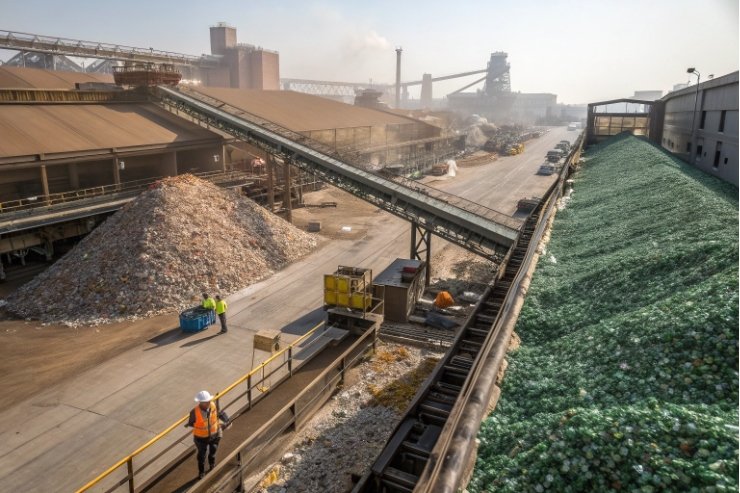
From a furnace point of view, glass is not just “glass.” Color matters. Recycled glass (cullet) comes back from the market as green, amber, and flint streams. The mix depends on local habits. In countries with strong beer cultures and amber-heavy portfolios, brown cullet is abundant. If a furnace is set up for amber beer bottles, it can absorb that cullet with little extra coloring.
Amber recipes also tolerate more mixed-color cullet than flint. This means plants can use green or slightly off-color fragments in amber batches without hurting the final look. So amber production can hit high recycled content percentages more easily. This helps both cost and CO₂ footprint.
If you want the “why” behind that, a good starting point is how recycled content in glass packaging 4 is limited by color sorting and furnace needs. In some jurisdictions, there are even explicit thresholds for color-sorted cullet mixes 5 (how much flint/green is allowed inside an “amber cullet” stream).
From a sustainability point of view, many breweries now ask two questions together:
- Which color best protects the beer?
- Which color fits local cullet streams and high recycled content?
Very often, amber answers both. It protects the beer and lets the glassmaker run high cullet loads with fewer purity headaches. That is one more reason why brown stays the default in many large beer markets, even when green carries a romantic import image.
When is clear glass acceptable with secondary light barriers?
Clear beer in clear glass looks beautiful. You can see color, bubbles, and clarity. The problem is simple: the beer is now naked in front of every light source.
Clear glass is acceptable only when brewers combine it with strong secondary light barriers—like cartons, sleeves, or light-stable hops—and accept that protection largely disappears once the bottle sits unshielded under bright light.
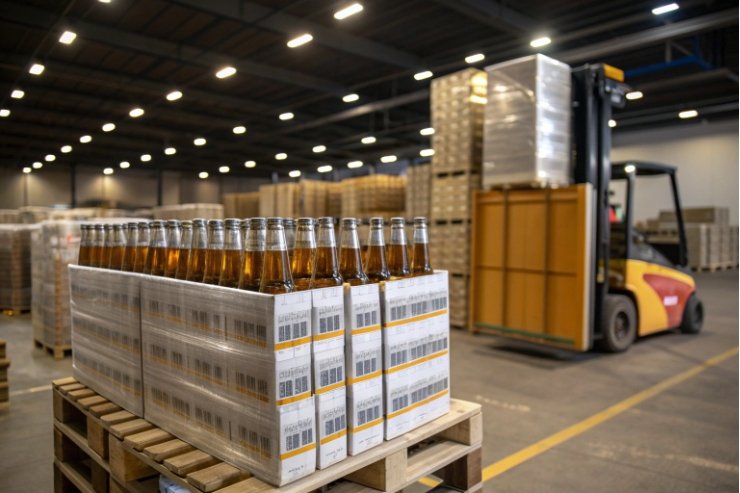
Clear flint glass offers almost no UV and blue-light protection. So the only way to keep flavor stable is to change what reaches the beer or what the beer does with that light. There are three main tools.
First, secondary packaging. Full cartons, can-style wrap-around boxes, or thick multipack sleeves keep bottles in the dark during transport and warehouse storage. As long as the bottles stay inside these shields, clear glass is less risky. For export or e-commerce, this can work well, because the beer may stay boxed until the last mile.
Second, decoration on the bottle. Full-body opaque shrink sleeves, dense labels, or heavy coatings can act like artificial amber. If the artwork covers almost the whole surface with solid color or metallic layers, much less light reaches the liquid. The protection is not perfect, especially where there are windows or gaps, but it can be strong enough for less sensitive styles.
Third, recipe choices. Brewers can use light-stable hop extracts 6 that avoid MBT formation under light. However, they also change the hop toolbox and may not fit every style or brand philosophy.
The real weakness shows up at the final stage. Once clear bottles leave cartons and sit in a bright fridge or on an open shelf, they become vulnerable again. Secondary barriers work only while they are in place. Brewers who want to understand the deeper chemistry and trade-offs can start with research on the mechanism of light-struck flavor formation 7.
So clear glass is not “wrong,” but it is conditional. It needs help from secondary packaging, recipe engineering, or tight retail control. Brown glass gives similar or better protection without so many conditions. That is why, whenever flavor stability comes first, amber remains the simplest and most forgiving answer.
Conclusion
Most beer bottles are brown because amber glass quietly does the hard work: it protects flavor, fits recycling systems, and still looks “right” for the styles drinkers trust.
Footnotes
-
Definition and key details of MBT, the classic “skunky” lightstruck compound in beer. ↩︎ ↩
-
Explains why 350–500 nm light is especially effective at generating lightstruck character in beer. ↩︎ ↩
-
Spectral-transmission data illustrating how amber glass strongly reduces light passage in the 290–450 nm range. ↩︎ ↩
-
Practical guide on what controls recycled content levels in container glass, including color-stream constraints. ↩︎ ↩
-
Reference thresholds for allowable color contamination in cullet streams (amber/green/flint) used in recycling standards. ↩︎ ↩
-
Example of reduced hop extract marketed for complete protection against light-struck (“skunky”) flavor under UV exposure. ↩︎ ↩
-
Research overview revisiting the photochemical mechanism responsible for beer light-struck off-flavor formation. ↩︎ ↩






