
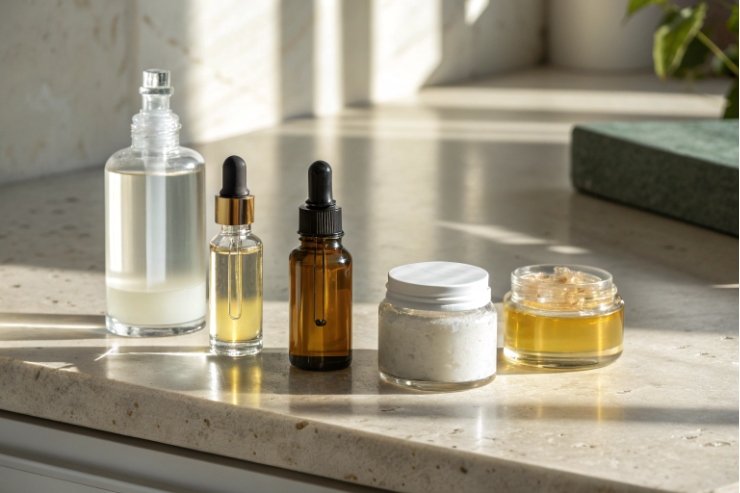
Many brands ask if glass really matters or if plastic is “good enough.” This doubt touches health, product quality, and how customers judge our packaging.
Glass packaging is healthier and higher-quality because it is near-inert, free from common plasticizers and odors, protects products from light and oxygen, supports reuse and recycling, and signals trust and premium value.
When we look past marketing, glass has three big strengths. It behaves almost like an inert packaging material 1, it preserves sensory quality better, and it fits real circular systems. These strengths sit behind the “premium” feeling that customers notice first.
Is glass truly inert and free from common plasticizers and odors?
When we choose a material for food or cosmetics, we first worry about what might migrate into the product during months or years of storage.
Glass behaves as a near-inert barrier. It contains no BPA, phthalates, or PFAS, does not absorb or release odors, and shows extremely low chemical migration under normal food-contact use.
Why glass is close to inert
Standard soda-lime glass has a dense, cross-linked structure. At normal temperatures it does not swell or soften in contact with water, oils, acids, or alcohol. Molecules in the product cannot easily move into the glass wall, and the wall does not give anything back into the product.
In practical terms, that means two things. First, we do not need plasticizers to make glass flexible. There is no bisphenol A (BPA) 2, no phthalates, and no flexible polymer backbone that can break down into smaller pieces. Second, we do not need layers or barrier coatings to stop gases and aromas. The glass wall itself is already an excellent barrier to oxygen, water vapor, and smells when we pair it with a good closure.
Compared with many plastics, migration from glass is extremely low. There can be traces of metal oxides from colorants or the furnace, but these are tightly controlled and sit far below food-contact limits when the plant applies good practice. The result is a packaging material that regulators and laboratories often use as a reference for “inert” behavior in contact tests.
No plasticizers, no extra odors
Glass does not carry “ghost flavors” between product runs. It does not pick up strong garlic one day and then give it back to a delicate cream the next day. The surface is hard, non-porous, and easy to clean. After proper washing or sterilization, the bottle does not keep a memory of the previous fill.
This is very different from many polymers. In plastics, the long chains move, and there are small free spaces in the material. Oils, aromas, and solvents can slip into these spaces. At the same time, additives such as antioxidants, UV stabilizers, slip agents, or residual monomers can move out into the product. This is why we see long lists of not intentionally added substances (NIAS) 3 and complex migration studies for plastic packaging.
Because glass does not need these additive classes, the risk of unknown migrants is much lower. For brands that want a clean label and a simple safety story, this matters a lot. It means we can say, with a straight face, that the bottle is free from BPA, phthalates, and PFAS, and that it will not leave a plastic taste in a juice, oil, perfume, or serum.
| Property | Glass packaging | Typical plastic packaging (PET, PP, PE) |
|---|---|---|
| Need for plasticizers | None | Often needed for flexibility |
| Common contaminants | Very low, controlled oxides | Additives, monomers, NIAS |
| Odor absorption | Negligible | Can absorb and re-release aromas |
| Chemical migration | Very low in normal use | Needs continuous testing and monitoring |
People do not hold lab reports in the supermarket. They read quality from how a bottle looks and feels in the hand.
Glass clarity and weight help products look honest and valuable. The bottle shows the real color, feels solid and stable, and tells customers the brand takes quality and safety seriously.
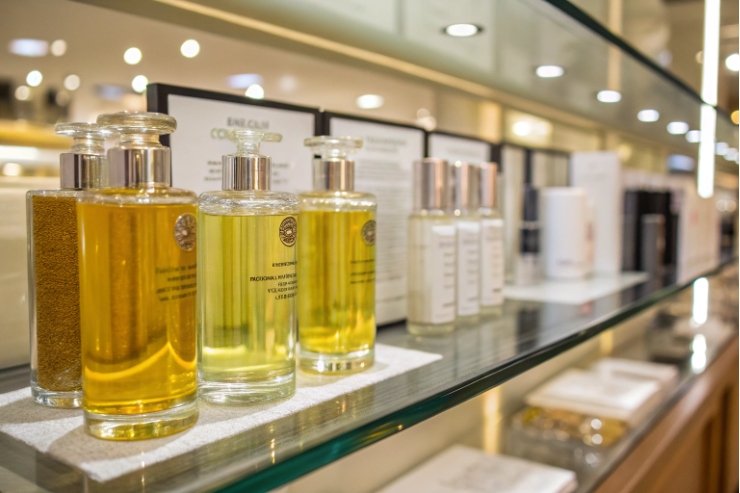
Seeing the real product
A clear glass bottle lets customers see the true color and texture of the product. There is no haze from polymer crystallinity and no doubt about what sits inside. For food and beverages, this makes people feel safe. They can judge freshness and naturalness with their own eyes.
For cosmetics, clarity works together with formula design. If a brand invests in a beautiful serum or oil, a good glass bottle acts like a small showcase on the shelf. Light reflection on the glass surface gives depth and sparkle that thin plastic walls rarely match. Even when we use tinted or frosted glass, the finish can stay sharp and uniform.
Glass also keeps that clarity over time. It does not scratch as easily as many plastics. It does not stress-whiten at corners or around threads. So the bottle still looks clean and new even after long shipping and handling, which supports a feeling of quality when the customer opens the pack at home.
Weight, sound, and the feel of quality
Weight is not only a physical property. It is also a signal. A sturdy glass jar or bottle feels cool and solid in the hand. The base can be thick. The walls can be straight and crisp. When we set it down, it makes a calm, firm sound, not a hollow rattle.
This sensory feedback tells people that the brand invested in more than the bare minimum. In premium food, spirits, and skincare, this matters a lot. The same cream in a light plastic jar and in a heavy glass jar will not feel like the same product, even before anyone reads the label.
From our work with buyers, we see a simple pattern. When they move a product from plastic into a well-designed glass format, they often can reposition it at a higher price point. Customers accept this because the packaging aligns with their mental picture of “high quality” and “safe for the body”.
At the same time, glass design gives many creative tools: embossing, engraving, partial frosting, hot stamping, and rich color coatings. All of these stay sharp and stable on glass surfaces. So brands can reinforce trust not only with words but with the full tactile and visual experience.
| Cue | How glass supports it | Effect on customer perception |
|---|---|---|
| Clarity | Shows real product color and texture | Feels honest and natural |
| Weight | Solid, cool, and balanced in hand | Feels premium and well-made |
| Surface quality | Smooth, scratch-resistant, crisp details | Feels hygienic and precise |
| Sound | Soft “clink” instead of hollow noise | Feels stable and long-lasting |
Are returnability and high recycling rates easier with glass?
Healthy packaging is not only about the first fill. It is also about how many safe lives each bottle can have in a real system.
Glass supports true circular use. It is strong enough for return and refill programs, and it is endlessly recyclable without losing quality when the bottle finally leaves service.
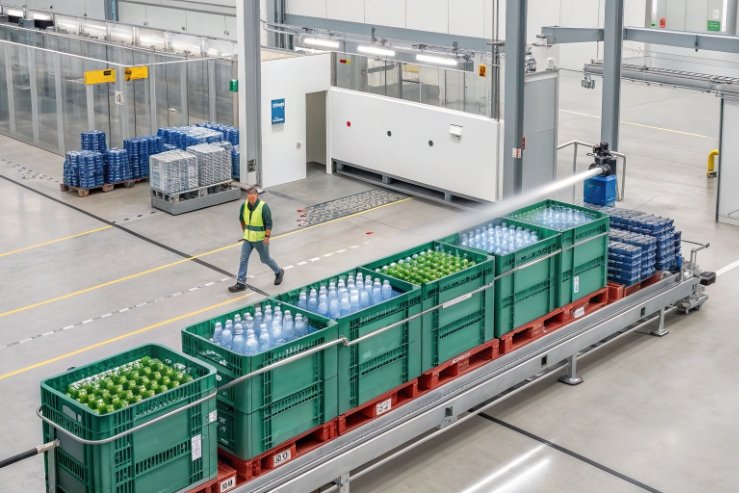
Glass and safe reuse
Glass does not degrade into microplastic particles 4. It does not creep or crack when we wash it at high temperature. This makes it ideal for returnable systems. Bottles or jars can go through repeated washing and sterilization cycles without losing their barrier performance.
In many markets, drink bottles already work like this. A single returnable bottle can complete many trips between the filling line and the consumer before it breaks or leaves the pool. For food and cosmetics, refill concepts grow quickly. Here, too, glass is a natural fit. The customer brings one durable bottle, and we only move the content.
Because the glass surface is hard and non-porous, cleaning can be strict. Industrial washers use hot alkaline solutions and rinses. After those cycles, there is no residue from previous products. The bottle starts each new fill with the same neutral surface. This is much harder to guarantee with softer polymers that scratch and hold soil in micro-damage.
Endless recycling and high cullet content
When a glass container finally reaches the end of its usable life, it does not become downcycled in the same way many plastics do. Broken glass, or glass cullet 5, goes back into the furnace and becomes new bottle glass. The material does not lose quality in this loop. We can repeat the process again and again.
As glass suppliers, we push to raise the share of cullet in our batches. Higher recycled content cuts energy use and CO₂ per bottle. Green and amber glass, in particular, can accept high cullet rates and tolerate some color variation. This makes it easier to use what the recycling stream actually supplies.
Collection systems already exist for glass in most regions. Bring-back banks, curbside programs, and deposit schemes all help. Many countries report higher effective recycling rates for glass than for mixed plastics, because sorting is simpler and markets for the cullet are clear.
Here is a simple comparison that we often use with brand owners:
| Aspect | Glass packaging | Typical plastic packaging |
|---|---|---|
| Reuse cycles | High, supports washing and refilling | Limited, material degrades over time |
| Microplastic risk | None | Possible from wear and breakdown |
| Recycling quality | Closed loop, same quality glass again | Often downcycled to lower-grade uses |
| Recycled content potential | Very high, especially in green and amber | Depends on stream and food-contact rules |
For brands that want real circularity, not just “recyclable” claims on a label, glass gives a clear path. It can move from product to product, and then from bottle to bottle, without creating complex waste streams or new health questions.
What certifications confirm food-contact safety and low migration?
Even if a material feels safe, brand owners still need formal proof. Regulators ask for data on migration, heavy metals, and production controls.
Food-contact glass can meet strict EU, US, and international rules. Conformity tests show that migration is far below legal limits when factories follow good manufacturing practice.
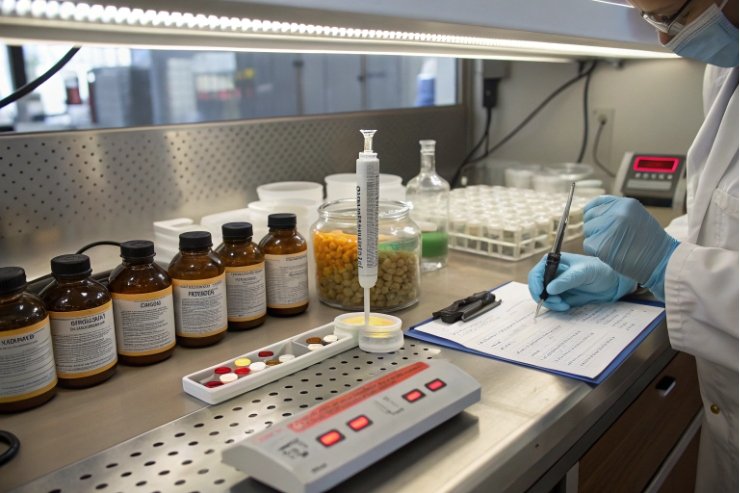
Regulatory framework for glass as a food-contact material
Glass packaging in contact with food and drink must comply with general food-contact laws. In the European Union, this includes the EU food contact materials framework 6 that demands materials do not transfer any substance into food in amounts that could harm health, change composition, or damage taste and smell. National rules and industry guidelines add extra detail for glass.
In the United States, glass for food and beverages is widely accepted and has a long history of safe use. The Food and Drug Administration evaluates the raw materials and processing aids and treats properly made soda-lime glass as suitable for repeat food contact. Many other regions align their own rules with these two large systems.
For brand owners, the key document is often the Declaration of Conformity that we issue as a supplier. It lists the product, the intended use, the migration tests, and the standards we follow. Behind that paper sits a full set of lab reports.
Typical tests and quality systems
Testing for glass focuses on overall migration, specific elements, and durability. Labs expose the glass or the fully decorated bottle to food simulants under defined time and temperature. Then they measure what, if anything, enters the simulant. For heavy metals and other elements, the limits are very strict, especially when the product targets babies or medical use.
We also test resistance to acids, alkalis, and thermal shock, because these factors affect how the glass behaves in hot-fill, pasteurization, or sterilization. Strong resistance means we can process the containers at high temperature without increasing migration or damaging the surface.
On top of lab tests, serious plants run certified quality and safety systems. These may include ISO 9001 for quality management and food-safety systems such as the FSSC 22000 certification scheme 7 for the whole supply chain. Internal audits keep an eye on batch control, furnace additives, decoration chemicals, and washing lines.
Here is a simplified view of what buyers often check:
| Checkpoint | What it covers | Why it matters |
|---|---|---|
| Declaration of Conformity | Legal alignment and intended use | Shows that the product is designed for food |
| Global migration test | Total substance release into food simulants | Confirms low overall migration |
| Specific elements test | Lead, cadmium, arsenic, and other critical metals | Confirms safety in worst-case scenarios |
| Heat resistance and shock tests | Behavior under hot-fill or sterilization | Avoids micro-cracks and hidden weak points |
| Certified management systems | Process control and traceability | Reduces the risk of batch-to-batch variation |
When these pieces come together, we can offer not only a nice-looking bottle, but also a documented safe food-contact system. For health-conscious brands and regulators, this combination of inert material, strong barrier, and clear certification is what finally builds trust.
Conclusion
Glass gives a rare mix of health safety, product protection, premium feeling, and real circularity that many other packaging materials still try to match.
Footnotes
-
Explains why glass is considered inert and protective for food and drink. ↩︎ ↩
-
Background on BPA and why many brands avoid it in packaging materials. ↩︎ ↩
-
Defines NIAS and why migration risk discussions are more complex for plastics. ↩︎ ↩
-
WHO overview of microplastics exposure concerns and evidence gaps in drinking-water. ↩︎ ↩
-
Clarifies what “cullet” is and why recycled glass improves circular manufacturing. ↩︎ ↩
-
Official EU overview of food-contact material safety principles and legal framework. ↩︎ ↩
-
Explains the FSSC 22000 scheme used to manage and audit food safety systems. ↩︎ ↩






