
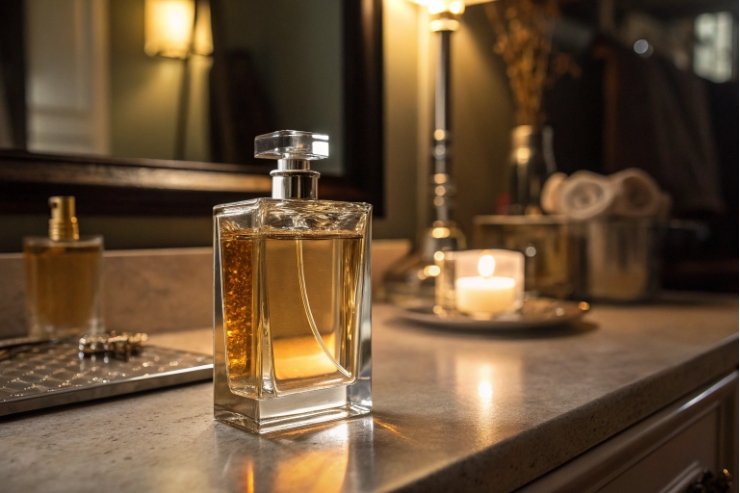
Many brands still ask if perfume really needs glass bottles. This doubt risks faded scents, stressed packaging, and even recalls. Glass is not just tradition; it is a technical necessity.
Perfume belongs in glass because glass is inert, non-porous, and stable with alcohol and fragrance oils. It blocks gas and odor transfer better than most plastics, protects light-sensitive notes, works well with atomizers, and supports premium, sustainable positioning.
When we break the question down, four points matter most: chemical stability, evaporation and pump fit, light protection, and how the bottle supports brand and sustainability goals. Glass wins on all four, especially for fine fragrance and long storage. Plastic has a role, but usually only in caps, pumps, or low-value scented products.
Does glass prevent ethanol and fragrance component absorption and odor transfer?
When perfume sits in the wrong bottle, it does not just lose strength. Notes shift, plastic smells appear, and whole batches become unsellable.
Glass does prevent ethanol and fragrance absorption because it is non-porous and inert, while many plastics absorb volatile molecules and release additives. This means glass keeps the original scent profile and blocks odor transfer between products.
Why plastic absorbs and glass does not
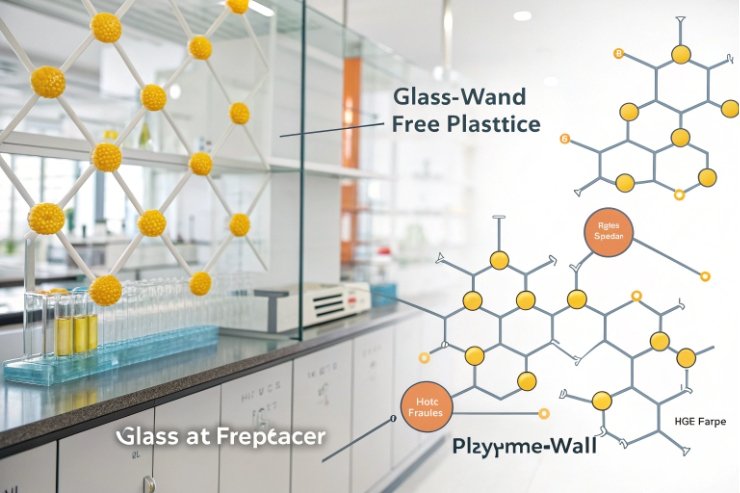
Soda-lime or borosilicate glass has a dense, rigid network. In normal conditions, small fragrance molecules and ethanol cannot move into the glass wall, consistent with how glass is described as nonporous and not retaining odors 1. So the perfume formula stays almost exactly as filled, even after years.
Common plastics like PE, PP, or even PET are different. Their chains move more, and there are tiny free spaces between chains. Volatile fragrance molecules can slip into these spaces. In packaging science this is called flavor scalping 2. Citrus molecules such as limonene are classic examples. They slowly leave the liquid and sit in the plastic wall. The perfume smells weaker and flatter, even if the bottle still looks “full”.
At the same time, plastic often contains additives: antioxidants, UV stabilizers, slip agents, plasticizers, leftover monomers, or process aids. Some of these can move into the perfume under the pull of ethanol and oils; research using ethanol as a simulant shows migration into ethanol can be much higher 3. Some migrants may be harmless from a safety point of view, but they still change the smell. In some cases they also bring regulatory risk, because many brands now avoid any material linked with endocrine-active substances.
With glass, there are almost no such migrants. As long as coatings, inks, and glues are tested, the container itself is basically inert. That is why high-value spirits and active pharmaceuticals do not sit in plastic for long storage. Perfume follows the same logic.
Odor transfer and cross-contamination
There is another issue that many people forget: odor transfer between products or production runs. A plastic wall can hold fragrance from a previous fill, then release it into the next one. Even with good cleaning, strong oils can linger in the polymer.
Glass does not hold odor in the same way. When a glass bottle is cleaned, there is almost no aroma memory in the wall. This is very important for refill programs and for factories that run multiple perfumes on one line. In our own trials with test plastics, a strong woody base kept showing up in later fills. The same base in glass did not “ghost” into the next batch.
So if a brand wants stable scent strength, clean top notes, and no unwanted background smell, glass is the safer and simpler choice for the main perfume container.
How do evaporation control and atomizer compatibility favor glass?
Perfume that slowly evaporates in the warehouse is silent profit loss. Evaporation does not only change fill level; it also destroys the top notes first.
Glass forms a tighter barrier with metal collars and crimped pumps, so it reduces ethanol loss and keeps spray performance stable. Many plastics flex, creep, or crack under stress, which makes leaks, sweating, or cloudy walls more likely.
Evaporation control and barrier performance
Perfume is normally a mix of ethanol and oils. Ethanol is small and very mobile. If the package has even slight permeability, ethanol molecules escape slowly through the wall. Over months this changes the balance between alcohol and oil, so the fragrance feels heavier and less diffusive.
Glass has extremely low gas permeability. So nearly all evaporation, if it happens, comes from the closure area: the pump, gasket, and crimp. When a good glass neck works with a well-designed pump, the system can hold the scent for years.
Most standard plastics allow more gas flow. Even “good” barriers like PET are more open to small molecules than glass. For body mists or cheap colognes this may be acceptable, because they are used quickly and the price point is low. For fine perfume that may sit on a shelf, in a warehouse, or in a personal collection for years, it is a big risk.
There are advanced plastic systems, such as multilayer bottles with EVOH or SiOx, or new polyesters like PEF. These can cut down permeation, but they add cost and process complexity. They also raise recycling issues, which we will touch later. That is why, in real projects, brands still come back to simple glass.
| Factor | Glass bottle | Typical plastic bottle (PET/HDPE) |
|---|---|---|
| Wall permeability to ethanol | Extremely low | Moderate to high |
| Long-term fill level | Very stable | Can drop over time |
| Impact on top notes | Minimal change | Top notes fade faster |
| Need for multilayer tech | No | Often needed for high barrier |
Atomizer fit, torque, and stress cracking
Perfume bottles use crimp pumps or screw pumps with metal collars. The neck must hold crimp force, torque, and repeated handling. Glass offers very stable neck dimensions, so pumps sit square and seals stay tight.
Plastics can deform over time. Under constant load from a crimp or cap, the neck can creep. Gaskets then lose compression and micro-leaks appear. Bottles can “sweat” around the collar, or show faster weight loss in hot-cold cycles.
There is also environmental stress cracking 4. Ethanol, oils, and surfactants can attack some plastics under stress. Micro-cracks grow around sharp corners, threads, or gate marks. The wall turns white and brittle, then fails. Technical papers on plastic failures show many examples of stress-cracked parts in cleaners and solvents; perfume has similar ingredients and can cause the same effect over long time.
PET or HDPE can work for short-term or diluted fragrance products like body sprays. But even there, we always recommend compatibility testing under real storage and transport conditions. For classic EDP and EDP in the premium segment, a glass bottle with a correctly controlled crimping process 5 gives far more safety and fewer unpleasant surprises.
Which tinted or coated bottles best protect light-sensitive perfume notes?
Light is another quiet enemy of perfume. Many citrus or herbal accords smell fresh on day one and flat or bitter after months in clear bottles.
Amber, smoked, or opaque coated glass gives the best protection for light-sensitive notes, because dark glass blocks much more UV than clear glass and coating adds another shield layer.
How light damages perfume
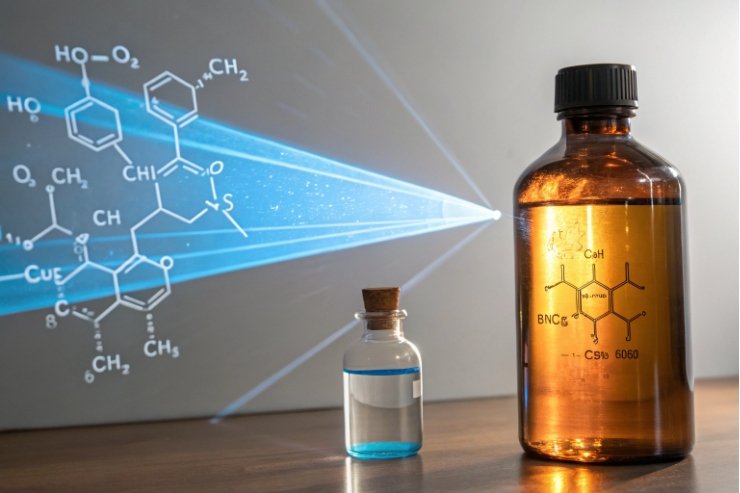
UV and high-energy visible light can break chemical bonds in fragrance materials. Top notes such as citrus, aldehydes, and some green or fruity molecules are especially sensitive. They can oxidize or rearrange, which leads to loss of freshness, color changes, or off-odors.
Ethanol does not stop this process. Oxygen dissolved in the liquid also helps these reactions. So if the bottle is clear and sits in shop windows, bathrooms, or warehouses with strong light, damage can happen faster than many people expect.
Glass helps in two ways. First, it is a stable barrier that does not add extra reactive species. Second, by changing color or adding coating, we can tune how much UV and blue light reaches the juice. Darker glass usually means better protection.
Plastics can also include UV absorbers. But those additives may themselves migrate or degrade over time, and their performance can drop. They also add another variable into the safety and regulatory picture. A simple amber glass bottle—backed by the basic science of amber glass and UV protection 6—avoids many of these worries.
Comparing glass colors and coatings
Here is a simple way to think about color and protection:
| Bottle type | UV protection (relative) | Typical use cases | Notes |
|---|---|---|---|
| Clear flint glass | Low | Display, testers, gifting | Best for visibility, weakest for UV |
| Light tinted (pale blue, pink) | Low to medium | Fashion lines, seasonal launches | Slight improvement only |
| Cobalt blue / dark green | Medium to high | Niche, masculine, herbal fragrances | Good balance of look and protection |
| Amber / brown glass | High | Citrus, natural, essential-oil rich | Classic choice for light-sensitive juice |
| Opaque lacquered glass | Very high | Premium, statement designs | Depends on lacquer quality and coverage |
| Frosted glass | Low to medium | Soft, minimal branding | Diffuses light but does not fully block UV |
In our projects for light-sensitive formulas, we usually start with amber or deep tinted glass. When a brand wants a bright color but still strong protection, an opaque or semi-opaque spray coating is a good answer. The coating can include additional UV-blocking pigments, while the glass underneath still gives full chemical stability.
For very natural or “clean” positioning, we sometimes combine clear glass with secondary packaging: thick cartons, inserts, or sleeves that block light until the bottle is opened. This is better than bare clear plastic, but it still leaves the perfume exposed after opening. For people who keep bottles on a vanity near a window, a naturally dark or coated glass bottle will always protect the formula better over its full life.
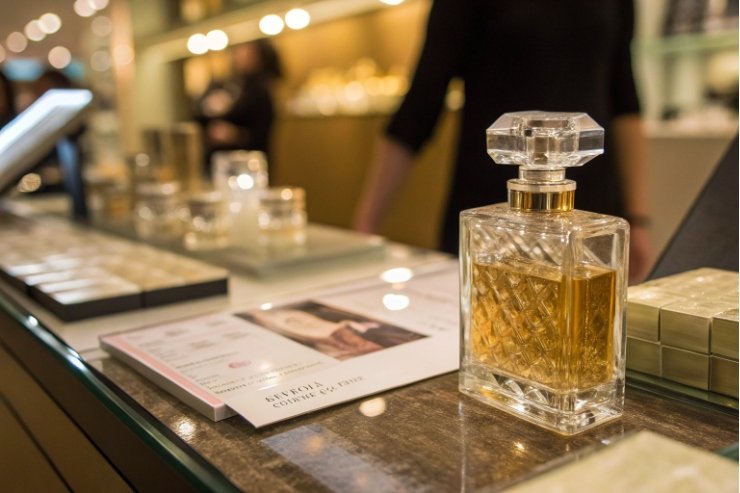
For many buyers, the bottle is part of the perfume, not just a container. Package choice sends a message about price, quality, and values in one second.
Glass signals luxury and sustainability more strongly than plastic because it is heavy, rigid, endlessly recyclable, and easy to refill. Plastic still carries low-cost and disposable cues, especially for fine fragrance buyers.
Refill, reuse, and recycling reality
From a material point of view, glass is simple. It is one base material that can be recycled again and again with almost no loss in quality. In many markets, colored and flint glass already have established collection and recycling streams. This makes it easier for brands to speak honestly about circular packaging, including the fact that glass is widely described as infinitely recyclable 7.
Perfume bottles are not perfect recyclables because of pumps, caps, and decorations, but the glass body itself still fits well into existing systems. Many refill-ready designs now use screw pumps that consumers can remove, which improves recyclability and enables refills in store or at home.
Plastic perfume bottles are different. Many high-barrier designs use multilayer structures, coatings, or blends that local recycling plants cannot easily sort or process. Even when the plastic is technically recyclable, real recycling rates are often low. Small formats and mixed materials make the problem worse.
Here is a simple comparison:
| Aspect | Glass perfume bottle | Plastic perfume bottle |
|---|---|---|
| Core material | Single, inorganic | Often multi-layer or additive-rich |
| Recyclability | High (where glass collected) | Variable, often low in practice |
| Refill compatibility | Very good | Depends on stress cracking, design |
| Consumer perception | Premium, durable, eco-friendly | Cheaper, lighter, sometimes “disposable” |
How glass shapes brand perception
Weight, sound, and touch all matter in perfume. A thick-base glass bottle feels cool and solid in the hand. It clinks softly when set down. Decorations such as frosting, hot stamping, and engraving look precise on glass. All this supports a story of care and craftsmanship.
Plastic can be beautiful too, but in fine fragrance it still signals “mass” and “low cost” to many buyers. When a heavy price tag sits on a very light plastic bottle, there is a mismatch. People may question the value, even if the juice is good. For this reason, most prestige brands keep plastic only for functional parts like pumps and caps, not the main container.
Sustainability messaging is also easier with glass. You can talk about high recycled content, strong collection rates, and long bottle life without complex caveats about additives or layers. When brands move to refill systems, a durable glass vessel makes sense in the customer’s mind. The bottle looks like something worth keeping, not throwing away.
From my own experience with overseas clients, even very cost-focused buyers often end up returning to glass once they compare long-term performance, regulatory comfort, and brand perception. For perfume, glass supports both the formula and the story around it in a way plastic still struggles to match.
Conclusion
For fine perfume, glass is not optional packaging. It is the safest way to protect formula, control evaporation, block light, and send the right message to the market.
Footnotes
-
Confirms glass is nonporous and odor-free, helping preserve fragrance purity. ↩︎ ↩
-
Explains “flavor scalping,” the absorption of volatiles by packaging materials over time. ↩︎ ↩
-
Shows ethanol can drive higher migration from plastics—relevant to alcohol-based perfumes. ↩︎ ↩
-
Defines environmental stress cracking, a common long-term failure mode for stressed plastics. ↩︎ ↩
-
Details how crimping improves sealing, reducing evaporation and leakage risk in fragrance packs. ↩︎ ↩
-
Summarizes why amber glass blocks UV/blue light that can degrade sensitive perfume notes. ↩︎ ↩
-
Supports sustainability claims around glass being reusable/refillable and infinitely recyclable. ↩︎ ↩






