
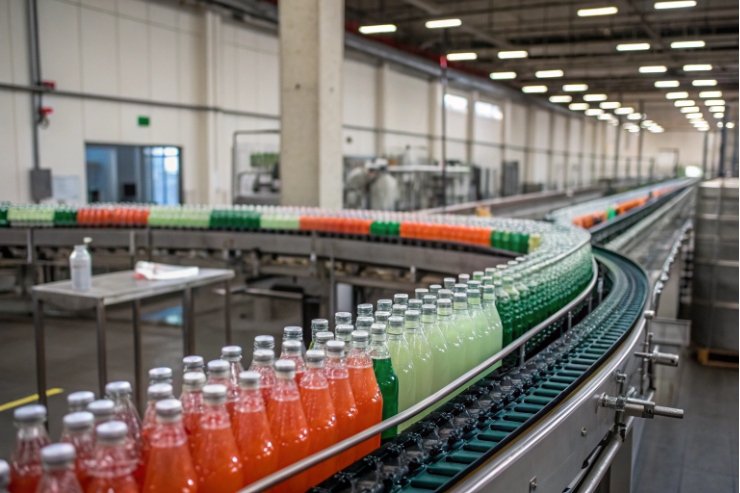
Most people see round beverage bottles as pure habit, but shape controls strength, cost, and even whether a bottle survives filling and transport.
Most beverage bottles are round because cylinders handle internal pressure and impact more evenly, use less material, and run faster and more smoothly on filling lines and conveyors, while also fitting hands and closures better than square or complex shapes.
Round looks simple, but every curve is doing work. It spreads carbonation load, keeps glass thickness under control, and makes high-speed lines and capping equipment stable. When we try to move away from round, we usually pay in weight, complexity, speed loss, or all three. The rest of the article breaks this down from physics to pallets to branding.
Do round bottle profiles improve internal pressure distribution and drop resistance?
Internal pressure from carbonation can turn a bottle into a small pressure vessel. If shape is wrong, small flaws and thin spots quickly become cracks.
Yes, round bottles are much better for internal pressure and drop resistance because a cylinder shares stress evenly around the wall, avoiding weak corners and letting us use lighter glass or PET without losing safety.
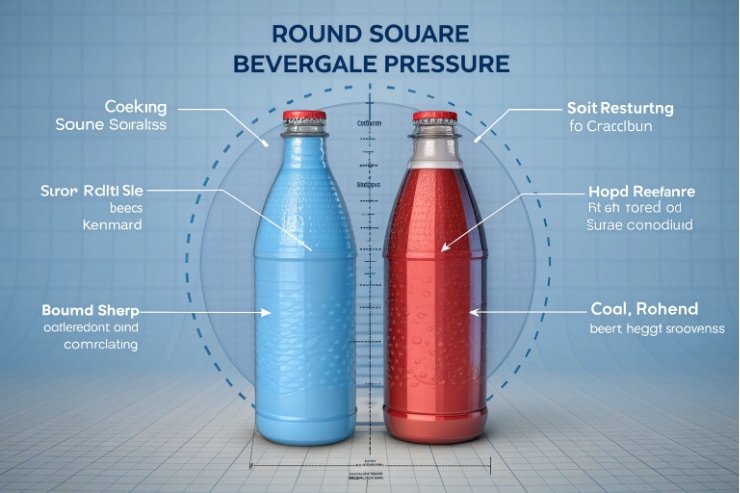
Why cylinders are stronger under pressure
Carbonated soft drinks, beer, sparkling water, and some functional drinks all push outward on the container. A round cross-section turns that pressure into a uniform hoop stress. Every point on the wall sees roughly the same load, so there are no obvious weak spots. If you want the basic math behind this, see axial and hoop stresses in thin-walled pressure vessels 1.
Square or rectangular bottles behave differently. Corners act as stress concentrators, which is why rectangular or polygonal pressure vessels can have very high stress concentration in corners 2. Under pressure, flat panels try to bulge, and the corners become the first “high-stress” zones. To stop this, we must add ribs, thicker walls, or special panel shapes. That adds material, weight, and cost.
Here is a simple comparison:
| Shape type | Stress distribution under pressure | Risk points | Typical wall weight for same pressure* |
|---|---|---|---|
| Round cylinder | Even around full circumference | None specific | Lowest |
| Square | Uneven, high at corners | Four sharp corners | Higher |
| Rectangular | Uneven, high at long edges | Corners and long walls | Highest |
*Conceptual comparison, real values depend on design and material.
In glass, any sharp geometry change is dangerous. Under a drop, that corner becomes the first place where cracks start. With round bottles, impact spreads around the “ring.” The bottle can flex slightly and survive.
Round bottles and thermal or process stress
Many beverages see more than just pressure. They also face:
- Hot-fill or pasteurization
- Cooling tunnels
- Low-temperature storage and re-warming
Each step makes the bottle expand or contract. Round profiles allow this in a smooth way. There are no panel centers that “suck in” or “panel” when internal pressure drops after hot-fill. PET juice and tea bottles with flat panels need special vacuum ribs to cope, which is why hot-fill packages often rely on vacuum panels that prevent deformation as the beverage cools 3. A round carbonated soft drink bottle just shrinks evenly.
For glass, the story is similar. With a round heel and shoulder, thermal stress at these transitions stays manageable. When brands ask for hard edges or flat faces, we must thicken those zones and control cooling very carefully. If not, shock from sudden temperature change can break the bottle at the corner.
So round shape is not only a tradition. It is a low-stress geometry that gives us a wider safety margin for pressure, impact, and temperature.
How do round bottles run faster on filling lines and conveyors?
Modern beverage factories push huge speeds. Any shape that slows conveyors, jams guides, or confuses labelers costs real money in downtime.
Round bottles run faster and more reliably because they self-center on rails and star wheels, turn smoothly for labeling, and accept uniform capping torque, so machines can run at higher speeds with fewer jams or tipped bottles.
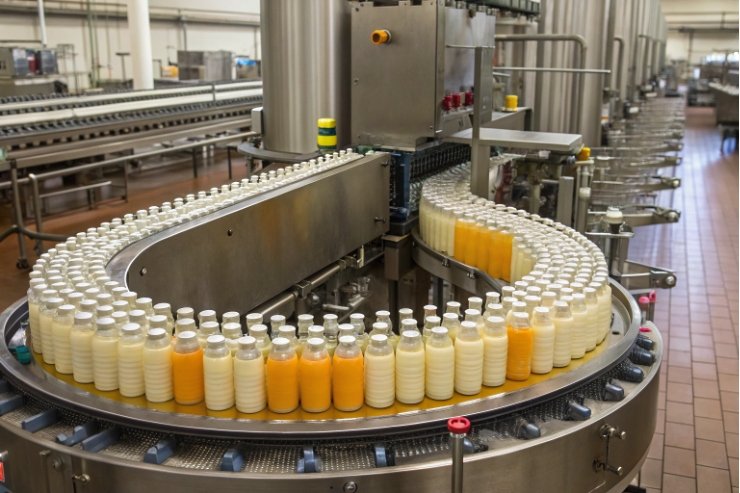
Why line equipment “likes” round geometry
Most filling and packaging equipment is designed around rotation. Star wheels, infeed screws, and labelers all treat the bottle like a cylinder. A round base means:
- The bottle finds the center of guides on its own
- Turning the bottle does not change its footprint
- Torque applied from the capper spreads evenly around the neck
A practical example is how high-speed machines use star wheels to grip and transfer bottles consistently—see Krones’ note on a multi-functional clamping starwheel for all common glass formats 4.
With square or sculpted bottles, the contact between guides and bottle changes as the bottle rotates. This can create small jerks or misalignments. At slow speeds, operators can live with it. At 30,000 or 60,000 bottles per hour, tiny instabilities can turn into shingling, tipping, or jams.
Here is a simple view:
| Feature | Round bottle result | Square / complex result |
|---|---|---|
| Side guide contact | Smooth, constant | Varies with rotation |
| Star wheel transfer | Clean, predictable | Needs tight tolerances |
| Labeler bottle spin | Simple, symmetric | Requires orientation controls |
| Capper torque | Even seal, less tilt | Higher risk of cocked closures |
When bottles can spin freely, wrap-around labels and sleeves also apply more cleanly. The bottle rotates, the label stays in a straight line, and application speed can be very high. With non-round bodies, we must add mechanical orientation or optical sensors to place labels on specific faces. That adds cost and is another thing that can go wrong.
Stability and accumulation on conveyors
Conveyors do more than just move. They also buffer bottles before palletizing or case packing. In these “accumulation” zones, bottles press against each other.
Round bottles:
- Slide and rotate against each other without locking
- Form natural, dense clusters without big side gaps
- Can be “mass flow” accumulated without precise spacing
Square bottles can wedge and build sideways forces. In some formats, two corners press together and lock, then the next row pushes harder. This can lead to tipping or scuffing on labels.
From my own projects, whenever a customer asks for a very special non-round shape, we always talk about line speed. Many brands accept a slower line or need new accumulation concepts. If they want the fastest possible line with standard equipment, we almost always stay close to a round footprint.
What are the packing and pallet efficiency trade-offs vs square designs?
From a pure geometry point of view, circles waste space in a rectangle. So if warehouse or shelf space is tight, it is tempting to move toward square or rectangular bottles.
Round bottles lose some packing efficiency compared with square bottles, but they win in strength and line speed. Square designs pack tighter on pallets and shelves, yet they often need more material and slower handling to stay stable.
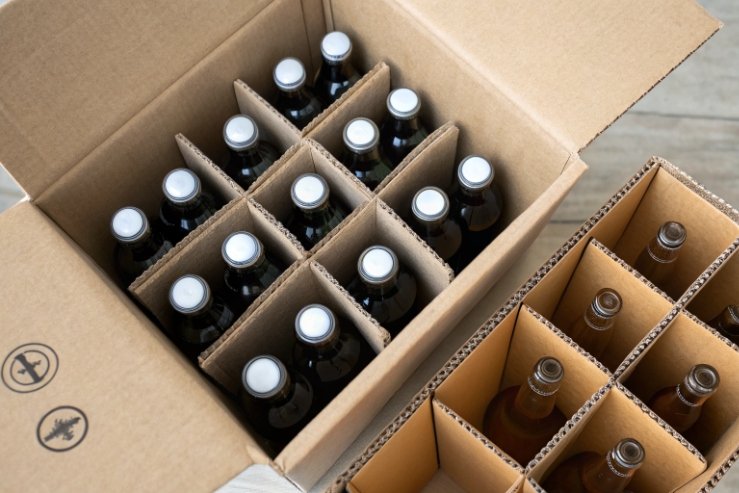
How round vs square bottles fill cartons and pallets
When you pack round bottles in a rectangular case, there are gaps between them. With square bottles, those gaps shrink a lot. For still products, especially in large sizes, this can drive big savings in freight and storage.
A simplified comparison:
| Aspect | Round bottle in case | Square / rectangular bottle in case |
|---|---|---|
| Footprint packing efficiency | Medium | High |
| Vertical stability | Very good (nest with curves) | Good if walls are flat and stiff |
| Empty space between units | More | Less |
| Pallet pattern flexibility | High | Medium |
However, round bottles often “nest” in both directions. The curve of one shoulder sits between neighbors in the next row. This helps stability even though there is some empty space. With square bottles, you get tighter fit, but you must control wall flatness and avoid bulging. Any deformation can break the nice tight grid and start leaning.
If you want a clean reference point for why circles leave gaps, note that hexagonal packing of circles is about 91% efficient 5, which means there is always “air” somewhere unless you change the shape.
Material and weight vs space efficiency
The big trade is simple:
- Round bottles need less material for the same pressure rating
- Square bottles use footprint better but need stiffer walls
For carbonated drinks, the pressure requirement is high. Almost all of these bottles stay round, even in PET, because any move toward flat panels requires ribs and thick corners. The material cost would wipe out freight savings.
For still beverages, especially dense products like juice, water, or dairy, pressure is lower. Some of these move to square PET or HDPE to save shelf space and create “block” presence. But these packages often show paneling if the internal pressure changes even a little, or if the product is hot-filled and then cools.
So the choice is not “round or square” in isolation. It is:
- What is the product and its pressure / fill process?
- How far and how full will pallets travel?
- Is line speed or pallet tightness more important for cost?
For many high-volume carbonated drinks, the math is clear. Round wins on total system cost, even if each pallet carries a bit of air. Packaging teams often summarize this with comparisons like the claim that a square bottle uses about 8% more material than a comparable size round bottle 6.
When do brand or ergonomics justify non-round bottle shapes?
Sometimes marketing wants to break the pattern. A new drink may need a special look or grip. At that point, we start to ask: when is it worth paying the price for non-round designs?
Brand and ergonomics justify non-round bottles when visual impact, shelf blocking, or special grip features bring clear value, and when the product is low pressure or the design keeps a mostly round pressure-bearing core.
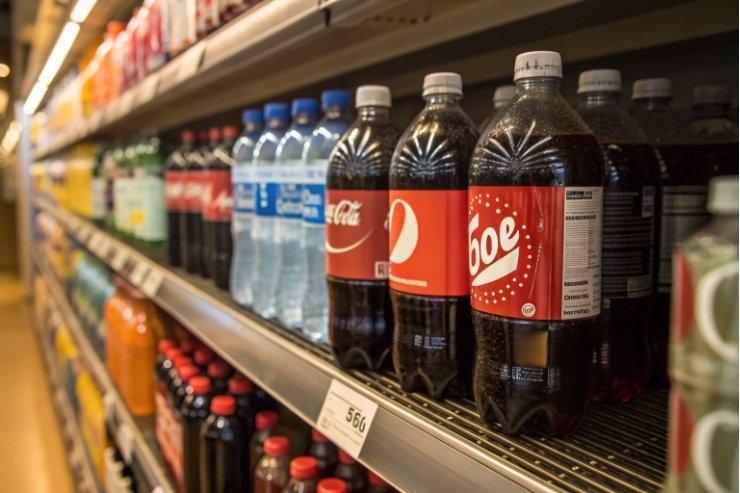
Branding reasons to move away from round
On a crowded shelf, shape is part of the logo. Non-round bottles help:
- Create instant recognition from a distance
- Offer big flat faces for bold labels
- Signal “premium” or “craft” through sculpted glass
Spirits and liqueurs show this very clearly. Many use heavy, square or faceted bottles because they move at lower volumes, sit behind bars, and are usually still products. The cost and weight penalty is acceptable for the brand story.
For beverages in glass, we sometimes keep a round internal pressure body, then sculpt the external surface with flats, embossing, or shoulders. This gives a custom look while still using the physics of a cylinder inside.
Ergonomics: how the hand and bottle meet
Ergonomics also drive shape choices, especially for larger PET bottles and handle packs. Examples include:
- Rectangular 2–3 L juice bottles with grip panels
- Square water jugs with integrated handles
- Energy drink cans with waist or depressions for fingers
In these designs, the hand needs flat or indented areas for comfort. A perfect cylinder can become too wide to grip. Designers solve this with:
- Slightly oval cross-sections
- Vertical grip panels with ribs
- Inset “waists” that still keep most of the body round
A famous reminder that shape can be both ergonomic and iconic is the history of the Coca-Cola contour bottle 7. From the engineering side, we allow these features as long as:
- Stress paths remain smooth
- Corners are well radiused, not sharp
- Structural ribs support panels under pressure or vacuum
When brands push the shape too far, we usually see more weight in the walls, stricter process windows, and slower lines. That can still be the right choice if the product is premium and volumes are moderate.
A simple rule helps guide decisions:
| Priority | Best shape choice |
|---|---|
| Maximum speed, carbonation, low cost | Mostly round with minor styling |
| Shelf impact, strong brand image | Sculpted or partly non-round, still drinks |
| High ergonomics for large sizes | Soft-rectangular with grip panels |
In practice, many successful designs stay “round at heart” and add branding in less critical zones. This keeps the physics on our side while still giving marketing something unique.
Conclusion
Round bottles stay dominant because cylinders solve pressure, weight, speed, and handling all at once; other shapes work best when brand image, shelf blocking, or grip needs are strong enough to justify extra complexity.
Footnotes
-
Hoop-stress equations for cylindrical pressure vessels—useful for explaining why round bottles handle internal pressure efficiently. ↩ ↩
-
Explains why corners in polygonal pressure vessels create high stress concentrations, supporting why square bottles need reinforcement. ↩ ↩
-
Overview of hot-fill PET bottles and why vacuum panels or extra weight are needed as product cools. ↩ ↩
-
Krones note on starwheel handling for common glass formats—illustrates why cylindrical bottles transfer smoothly at speed. ↩ ↩
-
Shows circle-packing efficiency (~91% for hexagonal packing), helpful when discussing case and pallet space waste. ↩ ↩
-
Packaging Digest comparison of round vs square bottles, including material and manufacturing trade-offs. ↩ ↩
-
Official history of the Coca-Cola contour bottle—good example of branding and ergonomics driving non-round shapes. ↩ ↩






