
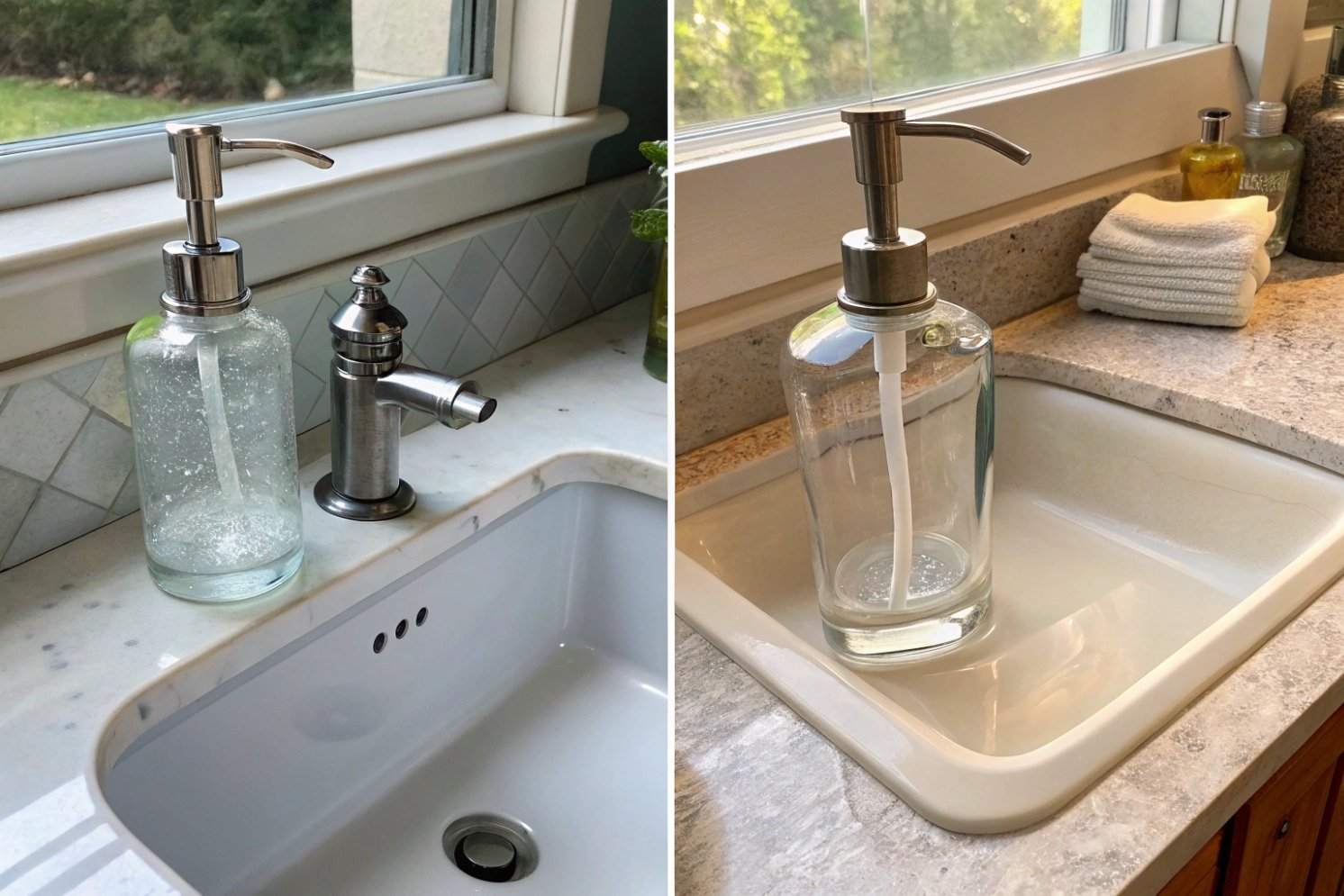
A nice glass dispenser can make a sink look calm and clean. A bad one leaks, clogs, or even cracks on tile and becomes a daily frustration.
To choose a glass soap dispenser, match the pump to your formula, use a standard neck finish with the right dip tube, check material compatibility, then verify safety with simple leak and drop tests.
Good dispensers are not only about style. They are small fluid machines that must work with your soap, your sink layout, and real life in a wet bathroom or busy kitchen. When bottle, pump, and test plan fit together, the dispenser feels “quiet” in daily use. It just works.
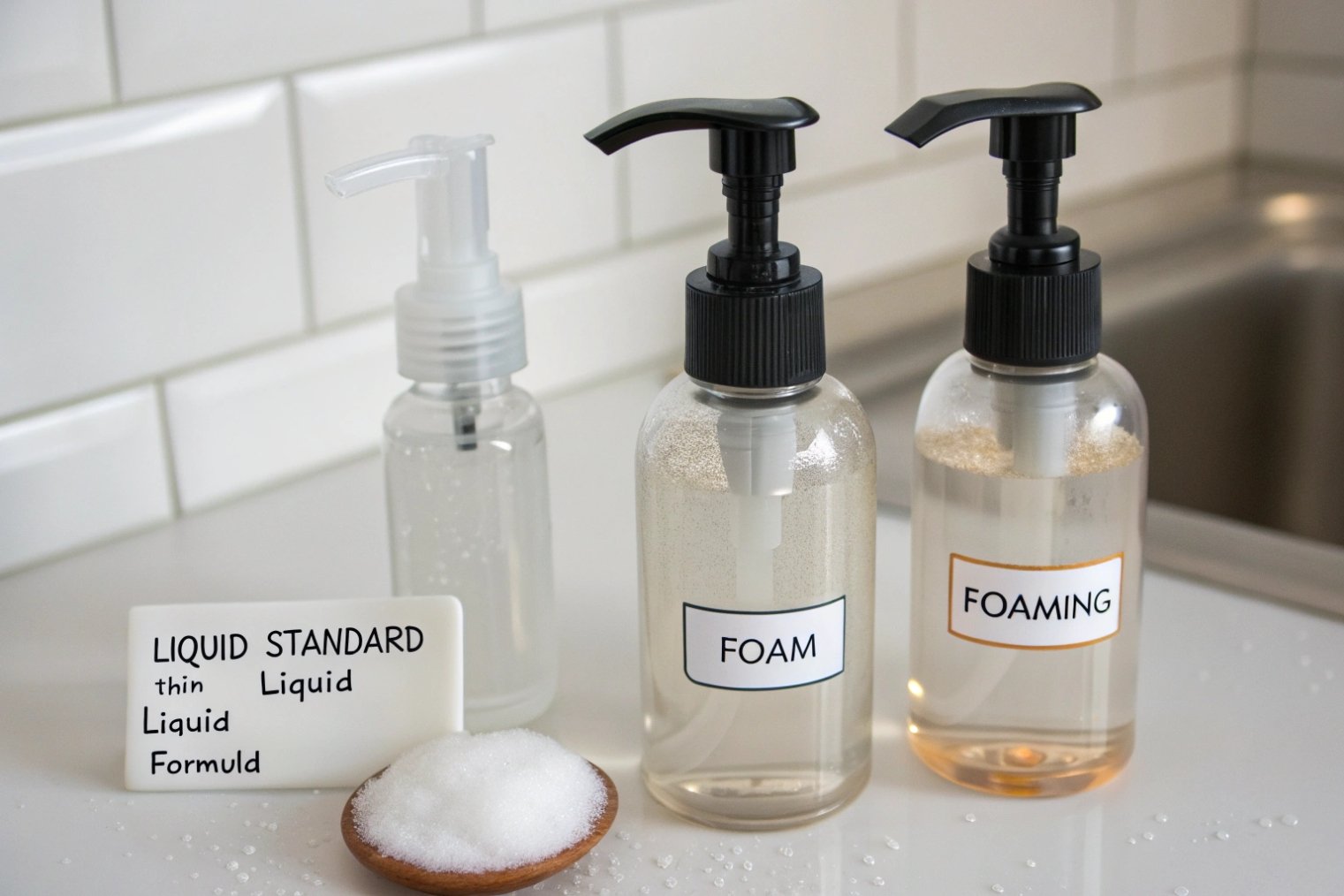
Lotion, foaming, or spray pump: which mechanism matches your formula’s viscosity?
The wrong pump turns a premium soap into a sticky mess. Thin soap flies everywhere, or thick gel barely moves and users press harder and harder.
Use standard lotion pumps for most liquid soaps and dish soaps, foaming pumps only for low-viscosity foaming formulas, and spray pumps for very thin liquids like sanitizers or multipurpose sprays.
Understand your formula first
Before looking at pumps, look at the soap itself. A thin, water-like hand sanitizer does not behave like a thick castile gel, even if both live near a sink.
I usually group formulas into three simple types:
- Thin liquids: very fluid, like alcohol-based hand sanitizer or light kitchen cleaner.
- Standard liquid soaps: typical hand wash or dish soap, flows easily but feels richer.
- Thick gels and scrubs: castile soaps, exfoliating scrubs, or very concentrated formulas.
Then think about where you will place the bottle. A family kitchen with greasy hands and high traffic needs a stronger, higher-output pump than a small powder-room sink. Larger households also benefit from bigger bottles that reduce refill time. Small pedestal sinks or narrow shelves work better with compact bottles so the pump does not sit right at the edge.
Different locations may need different pump types, even for similar soaps. For example, a kitchen may use a higher-output lotion pump for fast dishwashing, while the bathroom uses a more gentle, low-output pump to control cost of an expensive hand soap.
Match pump type to viscosity and use
Now connect formula type to pump mechanism. A simple mapping looks like this:
| Formula type | Typical example | Best pump type | Typical output per stroke | Notes |
|---|---|---|---|---|
| Thin liquid | Alcohol sanitizer, light cleaner | Spray or fine mist | 0.2–0.5 ml | Even coverage, avoids running off the hand |
| Thin–medium soap | Foaming hand soap base | Foaming pump | 0.8–1.5 ml (foam) | Needs special foaming pump and diluted formula |
| Standard liquid soap | Everyday hand or dish soap | Lotion pump | 1–2 ml | Most common choice for kitchens and bathrooms |
| Thick gel / castile | Gel wash, scrub, heavy detergent | High-viscosity lotion or 2–3 ml pump | 2–3 ml | Strong spring and wide channels help a lot |
Foaming pumps do not work well with thick or concentrated soap. They use a special chamber that mixes liquid soap with air through a mesh. If the soap is too thick, the mesh clogs and the pump fails—this is the core limitation of a foaming pump 1.
For thick gels or soaps with scrub particles, choose a lotion pump that is rated for higher viscosity. These pumps often have stronger springs, larger internal channels, and higher output per stroke (for example, 2 ml). This makes each press feel firm but smooth and prevents the pump from sticking.
Think about daily comfort and hygiene
Pump choice is also about how the dispenser fits into the room and routine:
- Manual countertop pumps are simple and flexible. They suit most homes and small offices.
- Wall-mounted pumps save counter space and are useful in small bathrooms or near crowded kitchen sinks.
- Touchless systems reduce touchpoints in shared spaces but usually pair with plastic reservoirs, not glass, so they are a different category.
For glass, I like a stable, manual pump for most sinks. It is easy to clean, easy to repair, and does not depend on batteries. Once pump type and output are correct for the formula, the rest is fine-tuning the look.
Which neck finishes (28/400, 28/410) and dip-tube lengths ensure a leak-tight fit?
A great-looking bottle with a mismatched pump neck will always leak sooner or later. Threads will not seat correctly, the gasket will work too hard, and shipping becomes risky.
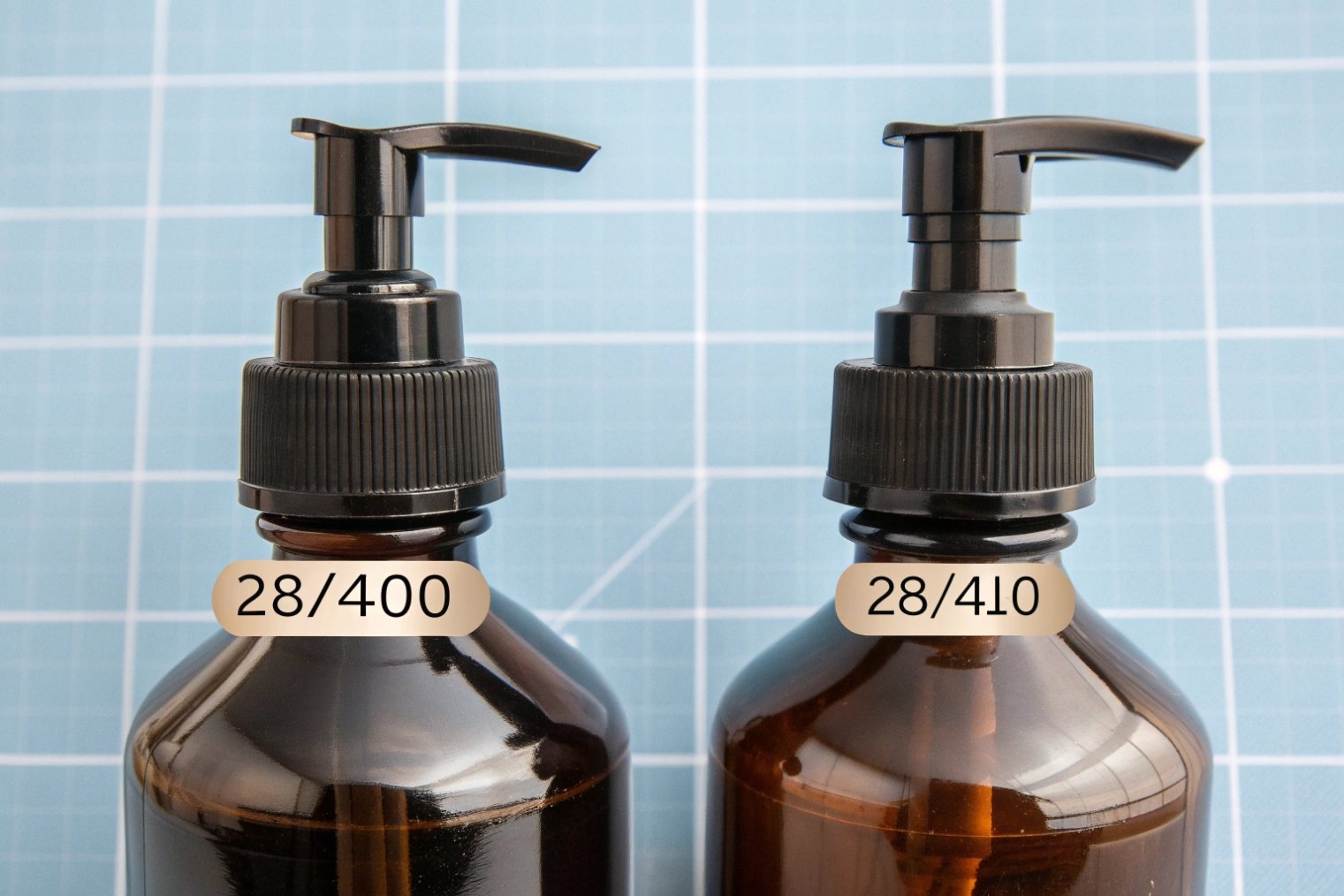
Choose a bottle with a standard neck finish like 28/400 or 28/410, then use a pump with the exact same finish and trim the dip tube to reach near the bottom without bending.
Learn the common neck standards
Neck codes have two parts:
- The number before the slash is the outer diameter in millimeters (here, 28 mm).
- The number after the slash describes the thread style and height, like 400 or 410.
For glass soap dispensers, 28 mm finishes are very common. They give enough room for a strong pump and a decent dose per stroke.
Basic examples:
| Neck finish | Where you see it | Key traits |
|---|---|---|
| 24/410 | Smaller cosmetic bottles | Slim pumps, smaller dose |
| 28/400 | Many soap and lotion bottles | Shorter thread height, wider range of closures |
| 28/410 | Very common for soap and lotion dispensers | Slightly different thread profile, many pump options |
If you want easy pump replacement later, choosing a bottle with a 28/410 neck finish 2 is a smart move. Many general replacement pumps are designed for this finish, so you can upgrade from a basic plastic pump to a stainless-look pump without changing the bottle.
Match pump thread and dip tube to the bottle
Next, match the pump specification to the bottle neck. The pump datasheet or product description should list the neck size, for example “28/410, 2 ml output.”
Key checks:
- Thread code matches exactly: 28/410 pump to 28/410 bottle. Do not mix 28/400 and 28/410.
- Gasket or liner size is correct: the sealing surface on the pump must cover the glass land area fully.
- Dip tube length fits the bottle height: measure from the top sealing surface to the inside base, then subtract 2–3 mm so the tube does not press into the bottom.
Cut the dip tube 3 at a slight angle. This prevents the tube from sealing flat against the bottom and helps the pump pick up the last soap. If the tube is too long, it bends and can crack or restrict flow. If it is too short, the pump leaves a visible amount of soap that users cannot reach.
Reduce leaks at the neck and in transit
A leak-tight fit needs more than the right thread code:
- Torque: caps and pumps must be tightened enough to compress the gasket, but not so much that they crack glass or distort the closure.
- Gasket material: a good pump often uses a PE or TPE liner under the head to seal the glass.
- Lock features: for shipping, a lock-down, clip, or twist-lock pump helps prevent accidental pressing that can force soap out under pressure.
You can run a simple test at home or in the lab. Fill the bottle, apply the pump with the right torque, then lay it on its side and upside down for 24–48 hours over a paper towel. If the design and neck match are correct, there should be no soap ring or damp patch under the closure.
Are bottle and pump materials compatible with surfactants, alcohols, and essential oils?
Nice glass is only half the story. The pump has springs, seals, and plastics that sit in your soap every day. The wrong materials can rust, soften, or leach into the product.
Use soda-lime glass bottles with lead-free, high-clarity glass, and pair them with pumps built from PP or PE plastics and stainless-steel springs that are tested for surfactants, alcohols, and essential oils.
Start with the glass body
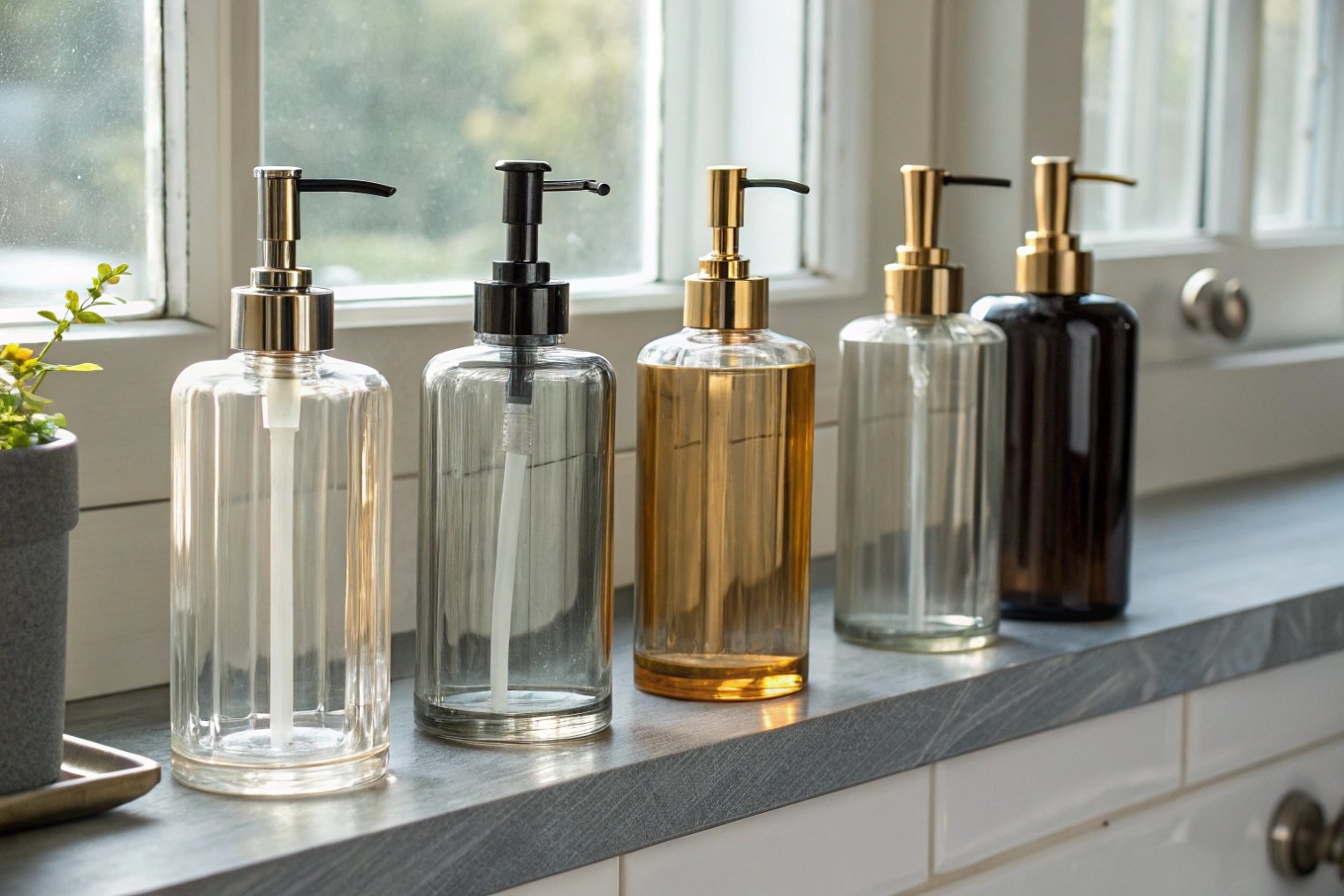
Glass is a strong base for most soaps:
- It is inert with surfactants, plant oils, and normal cleaning agents.
- It does not absorb dyes or fragrances, so you can clean and reuse it.
- It looks premium and matches many interior styles.
For regular soaps, standard high-white or flint soda–lime glass 4 is enough. For natural soaps with essential oils or light-sensitive fragrances, darker tints like amber or smoked grey are helpful. Darker glass helps slow color change and fragrance fading under light.
The bottle shape also affects safety. A wide, flat base is more stable than a tall, narrow bottle. A slightly thicker bottom adds weight and reduces the chance of tip-over when someone presses the pump with wet hands.
Choose safe plastics and metals in the pump
Inside the pump, materials work harder than most people think. They face constant contact with surfactants, sometimes alcohol, sometimes essential oils.
Good choices:
- PP (polypropylene) for the actuator, closure, and most structural parts. It is strong, resists many chemicals, and is easy to color or coat.
- PE (polyethylene) for the dip tube, because it is flexible and not brittle at room temperature.
- Stainless steel for the spring, usually 304 for normal soaps. This resists rust much better than plain steel.
If you want a practical starting reference for compatibility, this chart on the chemical stability of PP/PE 5 helps you screen obvious risks before you commit to long testing.
Less ideal choices:
- Thin metal parts with poor plating, which can rust in salty or alkaline soaps.
- Unknown rubber seals that might swell in high alcohol or strong essential oil blends.
For heavy use in a kitchen or salon, a well-made stainless-look pump (true stainless or high-quality plated plastic) gives both good corrosion resistance and long life. For alcohol-based sanitizers, make sure the pump is rated for high alcohol content. Alcohol can dry some plastics and seals, so rated pumps are safer.
Special cases: alcohol-heavy and essential-oil-rich soaps
Two types of formulas need extra care:
-
High-alcohol sanitizers or sprays
These can be more than half alcohol. Here, a glass bottle is fine, but the pump must handle alcohol without cracking or leaking. Check that the dip tube and seals are made from alcohol-resistant materials and that the spring is stainless steel, not plain steel. -
Soaps rich in essential oils
Essential oils contain terpenes such as limonene 6 that can behave like solvents. Over time, they can attack low-grade plastics or natural rubber. A simple rule: keep high EO levels in glass and high-grade plastics, avoid direct contact with natural rubber parts, and prefer amber or tinted glass to protect the scent.
A quick guide:
| Formula type | Bottle choice | Pump material set | Extra notes |
|---|---|---|---|
| Regular hand soap | Flint or tinted glass | PP/PE pump, 304 stainless spring | Good base choice for most bathrooms |
| Dish soap / kitchen | Thick, stable glass | Strong PP/PE pump, 304 stainless spring | Higher output, strong spring |
| Alcohol sanitizer | Flint or amber glass | Alcohol-rated plastic pump, stainless spring | Check seals and long-term test |
| EO-rich natural soap | Amber or dark glass | PP/PE pump, stainless spring, no rubber bulb | Avoid natural rubber contact |
If you are unsure, fill one test bottle and leave it for a few weeks. Watch for rust, cloudy plastics, swelling, or changes in the pump feel. This small test can prevent bigger problems after you fill many units.
What tests—drop, tilt-leak, and output/stroke—verify bathroom safety and durability?
Bathrooms and kitchens are not gentle labs. Bottles slip from wet hands, kids push the pump sideways, and water sits around the base all day.
Run simple physical tests: controlled drop tests to check breakage risk, tilt and upside-down leak tests for sealing, and output-per-stroke tests to confirm dose, pump smoothness, and long-term reliability.
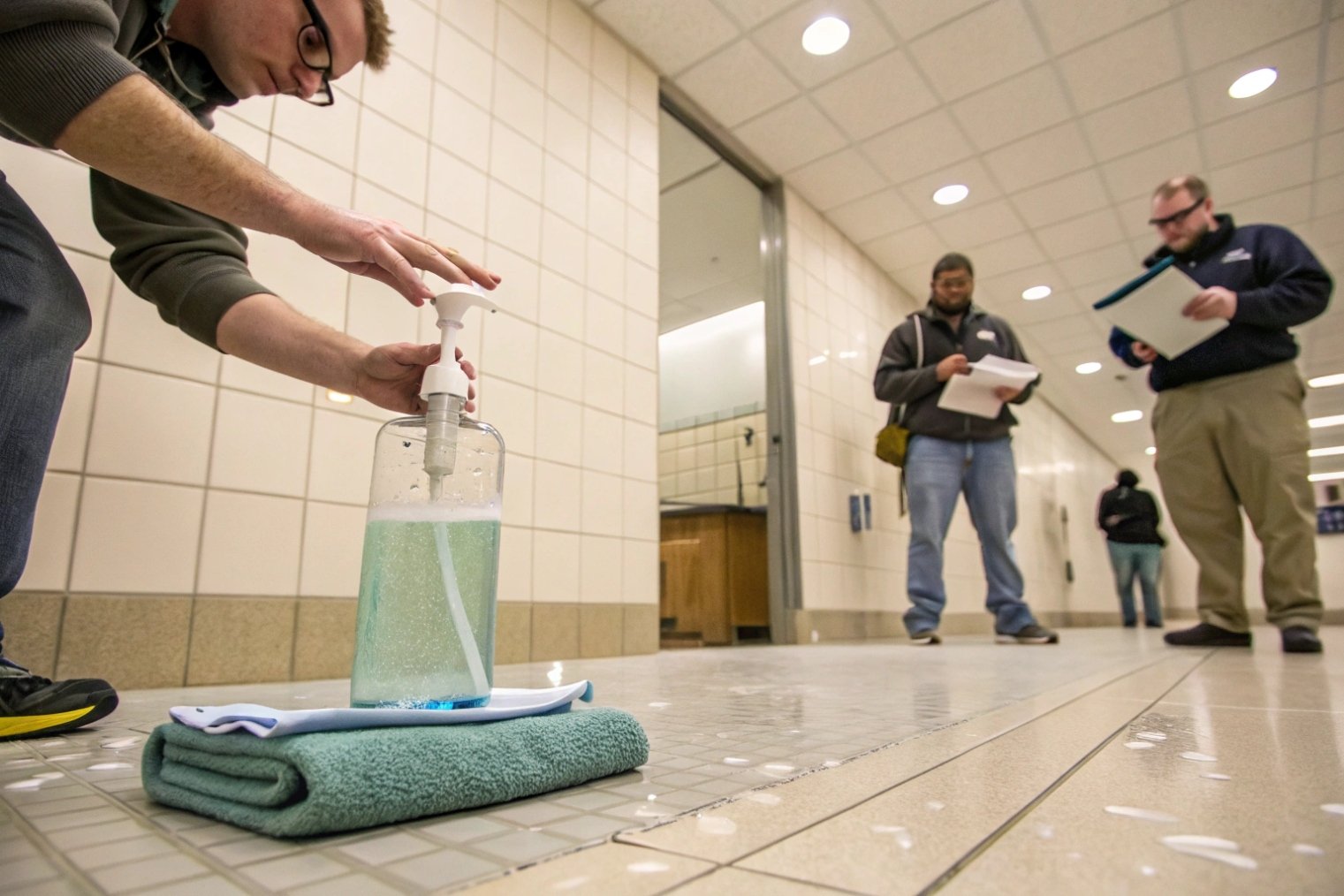
Drop and impact tests for real-world accidents
Glass will never be as forgiving as plastic, but you can still screen for basic robustness.
Simple checks:
- Empty-bottle drops: drop an empty bottle from typical counter height onto padded tile (for example, a towel on the floor). This shows how the shape and thickness handle impact without risking sharp shards on the first try.
- Filled-bottle drops: once the design seems safe, test with a full bottle onto a softer surface like a thick mat. This checks whether the pump loosens or the neck chips.
- Side impacts: gently push the bottle over to see how easy it is to tip and what happens when it lands sideways.
If you want a formal method to mirror industry practice, you can align your setup to ASTM D5276 free-fall drop testing 7 style conditions (defined height, orientation, and repeat count), then tune packaging and bottle geometry based on what fails first.
Look for chipped bases, cracked shoulders, or broken pump collars. If the design fails too often in simple drops, consider a smaller height, thicker base, or a silicone sleeve or tray for extra protection in real use.
Tilt-leak and long-soak tests
Leak tests show if your neck finish, gasket, and pump work as a system.
You can try:
- Tilt tests: fill the bottle, close the pump, then lay it on its side and upside down for 24–48 hours on clean paper. Check for rings or damp patches under the closure.
- Pump-lock tests: with lockable pumps, lock them and repeat the tilt tests. This simulates transport or someone knocking the bottle into a sideways position.
- Long-soak tests: leave the bottle standing in a shallow tray of water for a few days. This checks if the metal parts start to rust and how easy it is to clean the base after.
If you see slow weeping at the neck, review gasket material, neck compatibility, and torque. If rust appears on the pump head or around the spring area, the chosen metal may not be suitable for this soap.
Output, stroke count, and user feel
Output per stroke decides how much soap people use and how the pump feels.
You can measure it with a kitchen scale or small beaker:
- Prime the pump.
- Press it 10 times into a cup.
- Weigh or measure the soap and divide by 10.
Typical ranges:
| Pump type | Typical output per stroke | Best use case | Effect on user experience |
|---|---|---|---|
| Small lotion | 0.7–1.2 ml | Expensive or concentrated hand soap | Controls usage and waste |
| Standard lotion | 1–2 ml | Everyday hand and dish soap | One or two strokes feel enough |
| High-output | 2–3 ml | Thick gels, kitchen cleaners | Fewer strokes, strong spring, firm feeling |
| Foaming pump | 0.8–1.5 ml (as foam) | Foaming hand soap | Big visual foam, soft press |
Match output to price and habit. For very premium liquid soap, a lower output per stroke helps control cost. For dish soap in a busy kitchen, high-output pumps save time and effort.
Last, test cleaning and maintenance. Open the pump, rinse the bottle, and see how easy it is to remove dried soap from threads and actuator. Wide necks, simple pump paths, and robust materials make this much easier over the life of the dispenser.
Conclusion
When pump type, neck finish, materials, and simple tests all align, a glass soap dispenser becomes a stable, safe, and stylish tool instead of another small problem at the sink.
Footnotes
-
How foaming pumps create foam and why thick liquids clog them. ↩︎ ↩
-
Thread finish basics so 28/410 pumps seal and interchange reliably. ↩︎ ↩
-
Where the dip tube sits and how it feeds product upward. ↩︎ ↩
-
Soda–lime glass basics for strength and everyday container use. ↩︎ ↩
-
PP/PE chemical compatibility quick chart for packaging materials. ↩︎ ↩
-
Limonene overview: common terpene solvent that can stress some plastics. ↩︎ ↩
-
ASTM list including D5276 for repeatable packaging drop-test conditions. ↩︎ ↩






