
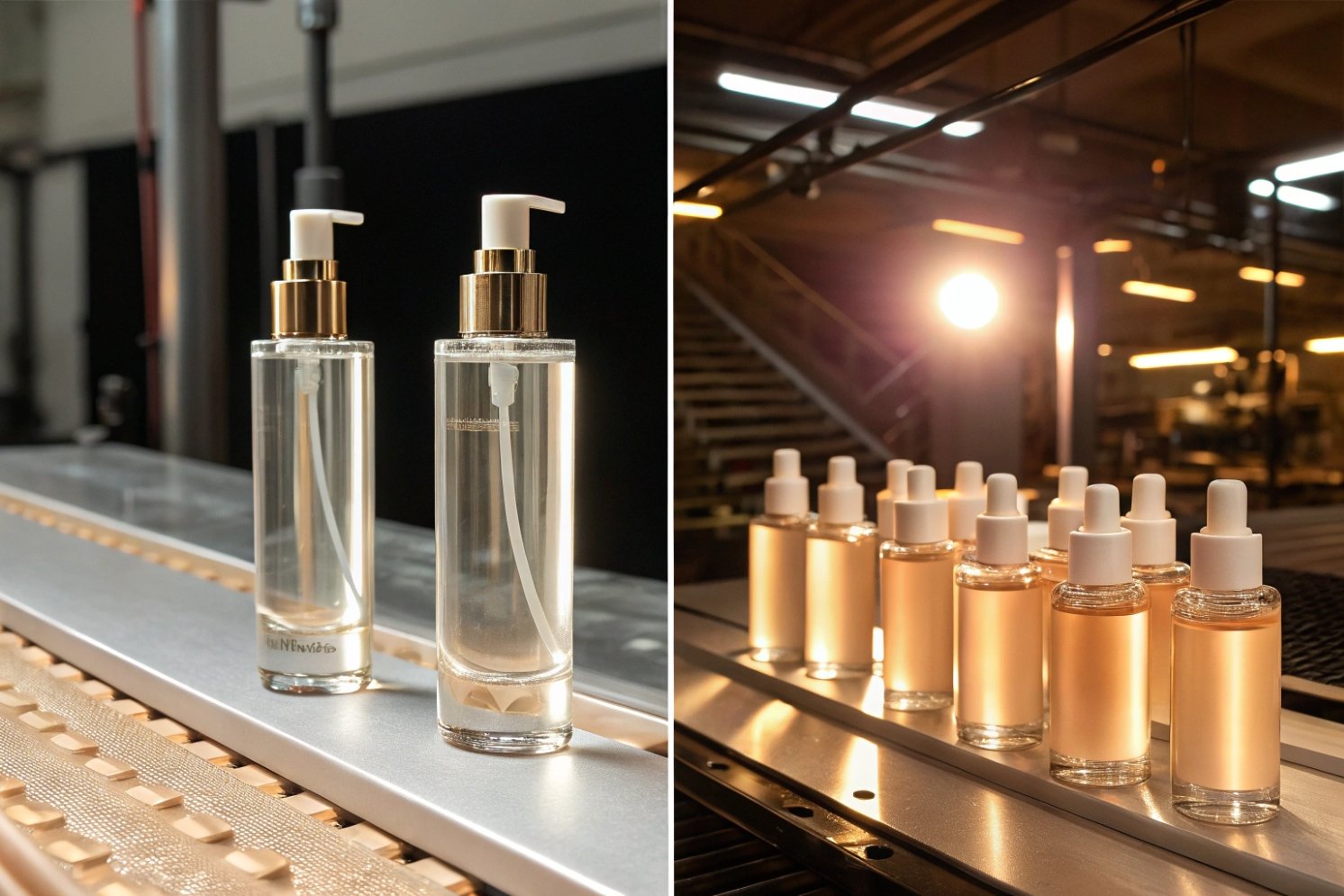
Choosing the wrong glass factory can turn a luxury launch into a nightmare of leaky pumps, scratched coating, and endless rework before filling even starts.
To choose a high-end cosmetic glass bottle manufacturer, look at four things together: certifications and audits, in-house mold and decoration control, realistic MOQ and AQL commitments, and hard sustainability data behind their “eco” claims.
When these four blocks line up, you get stable bottles from pilot run to global reorder. When even one part is weak, you see it later in broken pallets, color drift, or regulatory questions.
Which certifications (ISO 9001, GMP, REACH, SGS) and audits should I require?
Pretty samples are easy. What is hard is getting the same quality on every batch, in every busy season, and in every plant shift.
For high-end cosmetics, ask for ISO 9001, cosmetic or pharma-style GMP, REACH and heavy-metal compliance, plus recent third-party test reports or audits that prove the system is real, not only on paper.
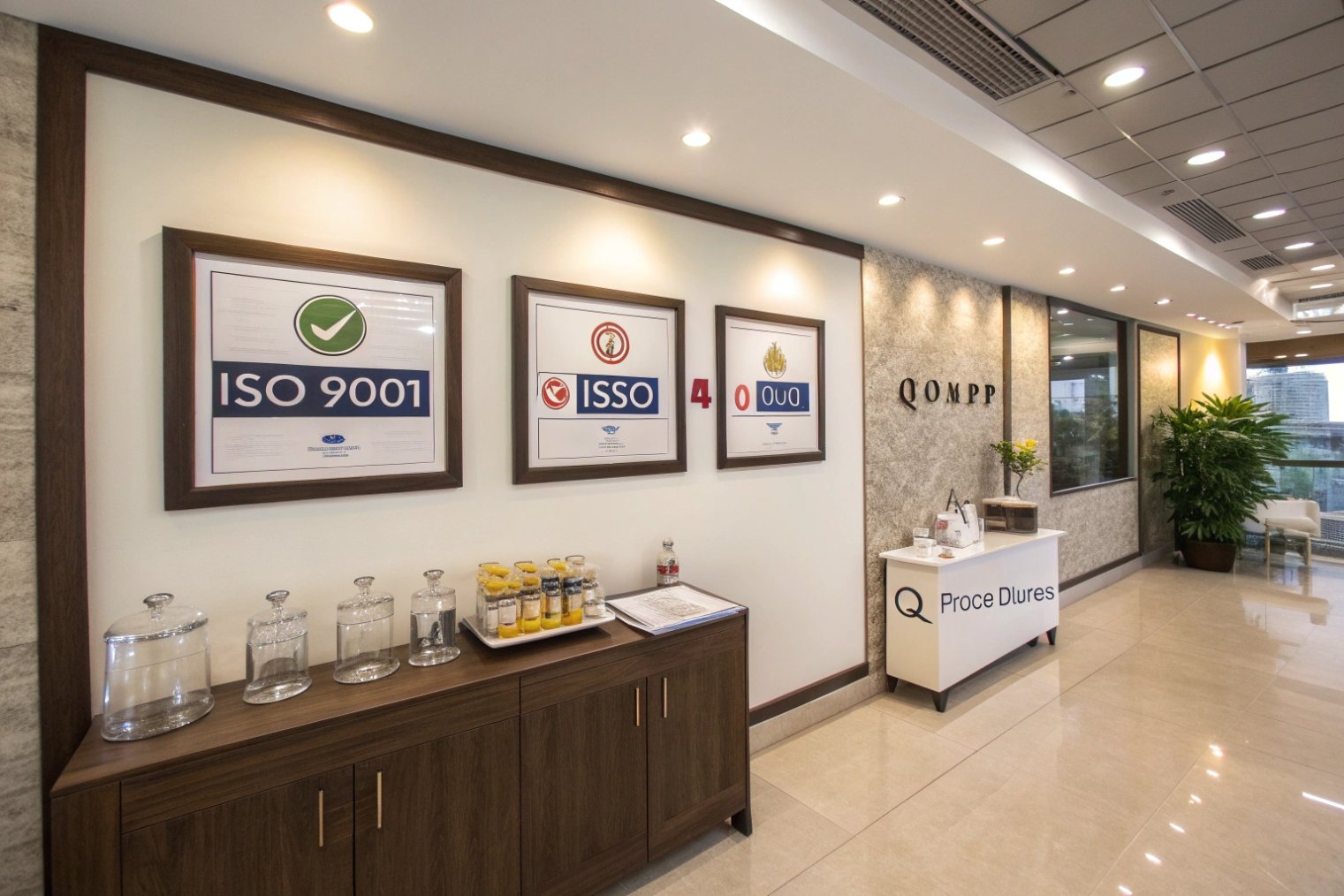
Build a certification baseline first
For a premium line, I never start serious talks without a basic certificate package:
- ISO 9001 quality management system 1 shows there is at least a structured quality management system. It will not guarantee no defects, but it proves the factory has standard operating procedures, records, and internal audits.
- GMP or ISO 22716 cosmetic GMP 2 systems: if the factory also handles filling or assembly in a clean environment, you want cosmetic GMP awareness. For glass-only plants, you still want controlled handling and packing that respects cosmetic expectations, not just food or beverage.
- Safety and environmental systems: ISO 14001 and ISO 45001 are strong plus points, especially for big brands that care about ESG.
These certificates are your first filter. A plant that cannot keep ISO 9001 valid will struggle with the discipline you need for tight cosmetic tolerances.
Check chemical and regulatory compliance
Glass looks “natural”, but you still need proof that it is safe:
- EU REACH regulation 3 and similar declarations for the glass, coatings, inks, and adhesives.
- Heavy metal limits (lead, cadmium, arsenic, antimony) for both the glass body and decorations.
- Migration or leaching tests where your formula is aggressive (high alcohol, low pH, high solvent load).
Ask for third-party test reports from SGS 4, Intertek, or local accredited labs. These reports should show method, limits, and real values, not only a marketing statement like “lead free”.
Plan your own audits and technical visits
Paper is not enough for a high-end line. A proper on-site audit tells you how the factory really runs:
| What to review on site | Why it matters for high-end cosmetics |
|---|---|
| Batch records and QC logs | Proves that every pallet is traceable and checked |
| Mould and forming area | Shows control of thickness, weight, and shoulder finish |
| Annealing lehr and inspection | Affects strength, stress, and cosmetic defect rate |
| Decoration and curing processes | Controls color accuracy, adhesion, and gloss |
| Packing, palletizing, drop tests | Direct link to breakage and scuffing in long transport |
If you cannot visit in person, request a structured video audit with live footage, not only a polished factory video. For strategic SKUs, I always treat this as a mandatory step, not a “nice to have”.
Do they own in-house mold, decoration, and assembly lines to control quality?
A supplier can buy glass from one plant, send it to another for coating, then to a third for printing, and only then ship to you. Every hand-off adds risk.
A high-end cosmetic glass partner should ideally own in-house mold making, decoration, and at least basic assembly lines, so they control the whole chain from molten glass to finished, decorated pack.
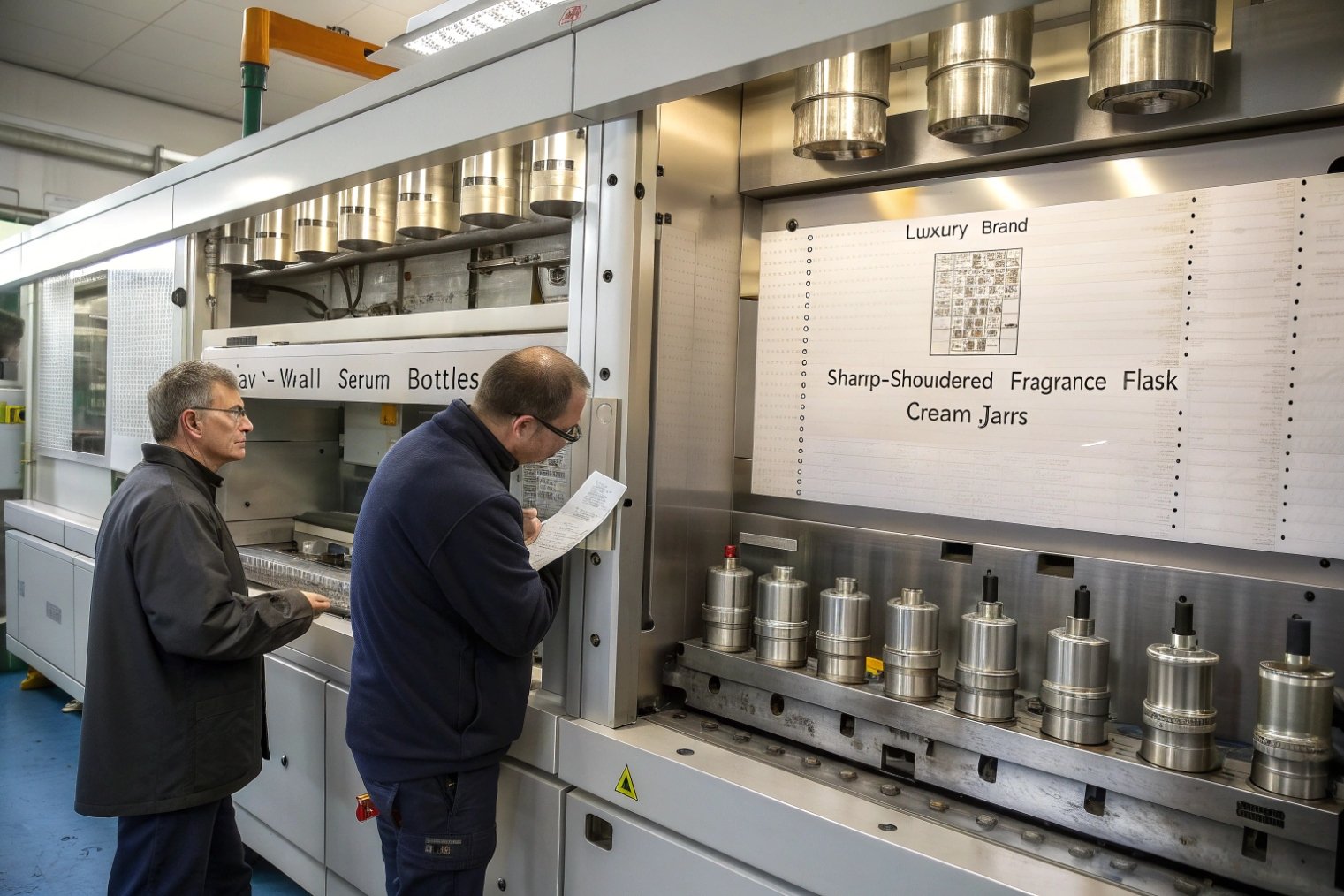
Why integrated mold capability matters
Custom molds are the backbone of a luxury line. A factory with its own mold workshop can:
- Refine edges, shoulders, and base quickly when early samples show weaknesses.
- Keep strict control of engravings and embossed logos so fine details stay crisp.
- Maintain molds proactively instead of waiting for outside vendors.
When mold work is fully outsourced, change requests take longer, and you see more drift in weight, height, and wall thickness over time. For a simple jar this might be acceptable. For a slender fragrance bottle or a heavy-wall skincare flask, it is risky.
Key questions to ask:
| Topic | What you want to hear |
|---|---|
| Mold ownership | Clear statement that you own your custom mold set |
| Change lead time | Weeks, not months, for minor engraving or shape adjustments |
| Mold maintenance | Preventive schedule, documented repairs, and spare parts |
Decoration lines as part of quality, not only beauty
High-end cosmetics live or die by decoration. A small color shift in a gradient or a rough hot-stamp edge is enough for a rejection.
Look for factories that run:
- Spray coating lines (inside and outside), with clear control of film thickness and curing.
- Silk screen printing and hot stamping, with in-house color matching and plate making.
- Frosting, acid etching, or electroplating when your design needs these effects.
Ask to see shade cards, cross-hatch adhesion test results, and rub/scratch tests. A serious factory will already test ink and coating adhesion on each new glass type and color, not only when a problem appears.
Assembly lines to simulate the real product
Even if your filling plant is separate, a good glass supplier can pre-assemble:
- Bottle + pump or dropper
- Bottle + cap and overcap
- Bottle + label or partial packaging
This lets them run torque, leakage, and transport tests in-house. Problems with chipped necks, bad torque windows, or crooked labels appear early, not after your first full-size production.
In my experience, factories that can mock up finished packs with their own assembly lines catch most “fit and function” problems before they reach your line. That saves both sides a lot of time and cost.
What typical MOQs, lead times, and AQL sampling plans can they commit to?
For a luxury launch, a beautiful bottle that arrives two months late or with 10% rejects is still a disaster.
Clarify MOQs, mold and production lead times, and AQL sampling rules up front; high-end factories can explain their numbers clearly and stand behind them with stable on-time delivery.
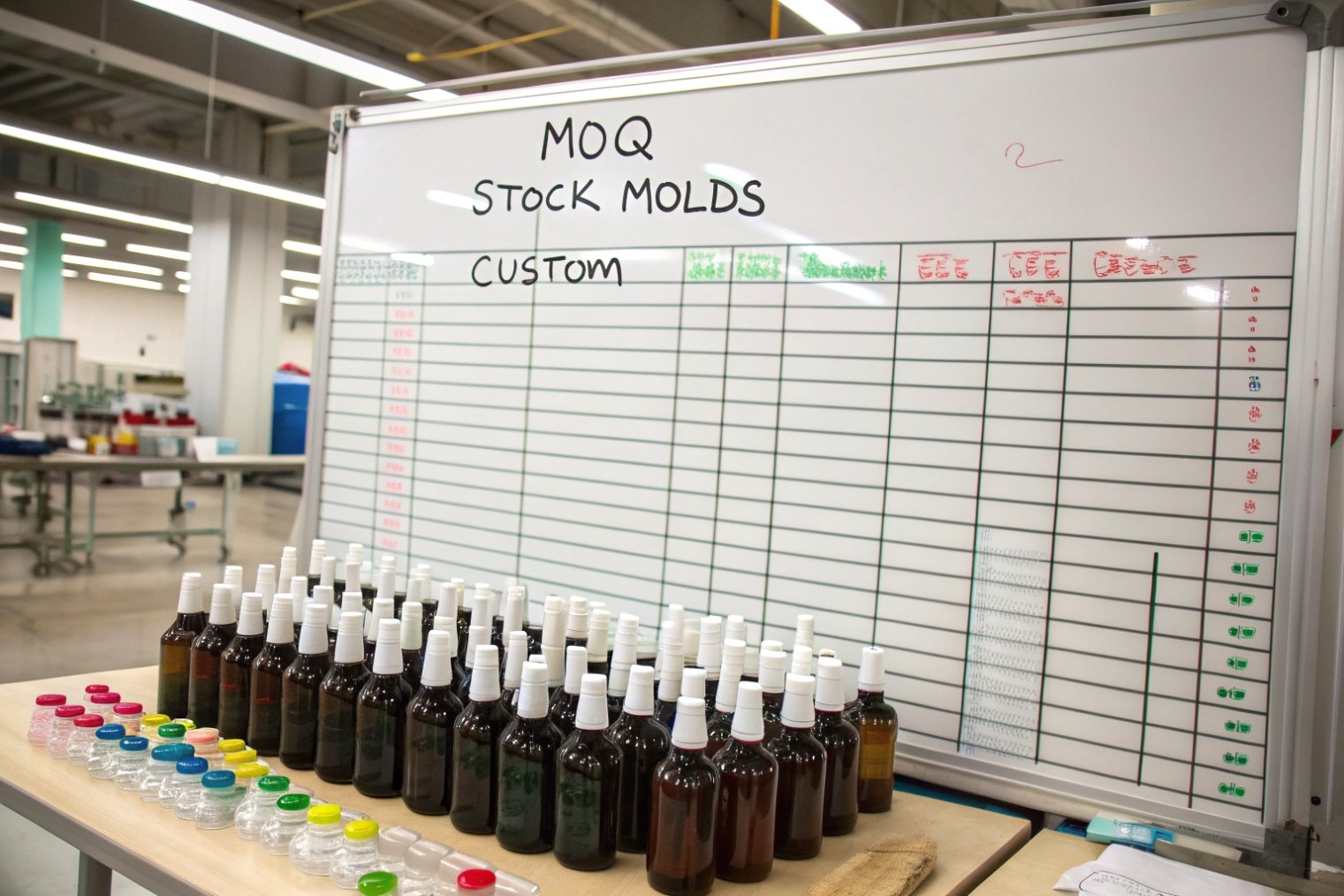
Understand MOQs for glass, decoration, and sets
There is no single “right” MOQ, but there are common ranges:
- Stock molds, undecorated: often from 5,000–10,000 pcs per item and color.
- Custom molds, undecorated: 10,000–30,000 pcs per item per first run, depending on size and complexity.
- Decorated items: sometimes higher MOQs, perhaps 10,000–20,000 pcs per design, because spray booths and printing lines need setup time and wastage.
Ask suppliers to separate:
- MOQ per glass body
- MOQ per decoration (color, print, hot stamp)
- MOQ per full set (bottle + closure + box if they handle all three)
This helps you plan hero SKUs with higher volumes and niche shades with lower, realistic ones.
A common timeline for a new custom bottle looks like this:
| Stage | Typical timing (working days) |
|---|---|
| Design, 3D, and tech drawing | 7–15 |
| Mold making | 25–35 |
| First sampling and ship-out | 7–10 |
| Adjustments (if needed) | 10–20 |
| Mass production (glass) | 20–30 |
| Decoration | 10–20 |
| Packing and shipping | Depends on route |
For stock molds, you can skip mold making, but color change, coating, and printing still take time. Ask for separate lead times for glass, decoration, and combined orders, and get clarity on how the factory handles peak seasons.
Lock in AQL and cosmetic standards before PO
AQL is where many misunderstandings appear. “High quality” means different things to different people. Before placing a PO, agree on:
- Critical defects (for example, sharp edges, big cracks, serious contamination): usually AQL near 0.
- Major defects (chips, heavy scratches, big bubbles in main view): AQL can be 0.65–1.5.
- Minor defects (small seeds, tiny color dots off main view): AQL maybe 2.5–4.0, depending on your brand level.
If you want a recognized baseline for attribute inspection, reference ISO 2859-1 AQL sampling 5 in your quality agreement.
A simple example table:
| Class | Typical AQL target | Example defects |
|---|---|---|
| Critical | 0 or 0.065 | Dangerous sharp edges, severe cracks, wrong item |
| Major | 0.65–1.5 | Large bubble on front, big scratch, heavy lean |
| Minor | 2.5–4.0 | Small internal bubble, tiny speck on side |
Also agree on sampling level (for example, ISO 2859, Level II) and on how to handle claims: photo evidence, retention samples, and time window for reporting. A high-end supplier will already have this documented. If the answers are vague, I treat it as a red flag.
Can they document sustainability metrics—cullet %, energy use, and wastewater?
Almost every factory now claims to be “eco-friendly”. Very few can back it with numbers that hold up in ESG reports or clean-beauty marketing.
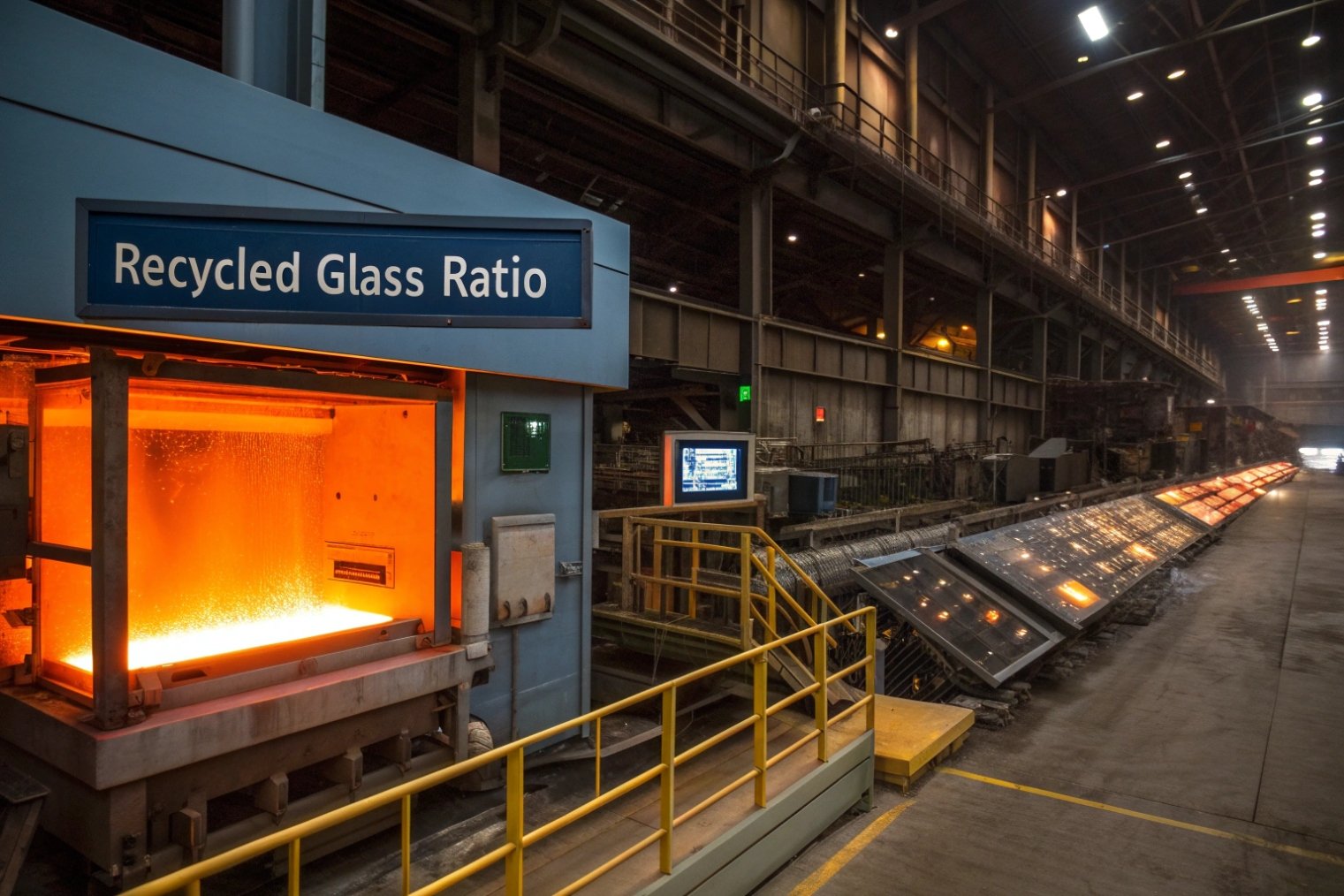
A serious high-end glass manufacturer tracks cullet percentage, furnace energy use, emissions, and wastewater treatment, and can share clear data and certificates to support your sustainability story.
Ask for real numbers, not only green slogans
Glass is recyclable, but that does not make every glass plant low impact. When I audit sustainability, I always ask for three basic metrics:
- Cullet percentage (recycled glass content) 6 in the batch
How much recycled glass goes back into the furnace? A higher cullet ratio usually cuts energy use and CO₂ per ton, but it must be controlled to avoid quality issues. - Energy use per ton of glass
This can be in kWh/ton or fuel use. You do not need exact furnace engineering data, but you want to see that the factory is measuring and improving it. - Wastewater and flue gas treatment
Decoration lines and acid-etching can generate wastewater. Furnaces create stack emissions. A responsible manufacturer has treatment systems and local environmental approvals.
If a supplier cannot give even approximate ranges, they probably do not monitor these topics closely.
Tie sustainability data to your brand needs
Different brands care about different aspects:
- High cullet percentage helps with claims like “made with X% recycled glass”.
- Local sourcing and short transport support a low “packaging miles” message.
- Certified environmental management (ISO 14001, local permits) reduce risk of future regulatory problems.
You can map data to claims like this:
| Metric | Possible brand claim | What to request from factory |
|---|---|---|
| Cullet % | “Up to 60% recycled glass” | Average cullet ratio, explanation of control |
| Energy use per ton | “Continuous improvement in furnace efficiency” | Trend data, description of upgrades |
| Wastewater treatment | “Responsible finishing and etching processes” | Treatment process description, permits |
| Emissions monitoring | “Compliant with local emission standards” | Test reports, inspection records |
For very visible ranges, you can go further and ask for:
- LCA-style data for key bottles, even if simplified.
- Carbon footprint estimates for packaging.
- Traceability back to raw materials and cullet sources.
This level of detail is still not standard, but you will see more and more brands ask for it. The manufacturers that can already provide these numbers will be easier partners for future launches and for serious ESG reporting.
Conclusion
A true high-end cosmetic glass partner proves quality with certifications and audits, controls molds and decoration in-house, gives clear MOQ and AQL rules, and backs every “green” claim with hard production data.
Footnotes
-
ISO’s official overview for ISO 9001 requirements and scope. ↩︎ ↩
-
The ISO cosmetics GMP standard brands reference for controlled, hygienic production systems. ↩︎ ↩
-
Plain-language REACH explanation to align packaging materials with EU chemical compliance. ↩︎ ↩
-
Reference example of accredited third-party testing services commonly used for compliance documentation. ↩︎ ↩
-
Standard attribute-sampling framework used to define AQL and inspection plans in contracts. ↩︎ ↩
-
Quick facts on how cullet improves glass sustainability and reduces energy in production. ↩︎ ↩






