
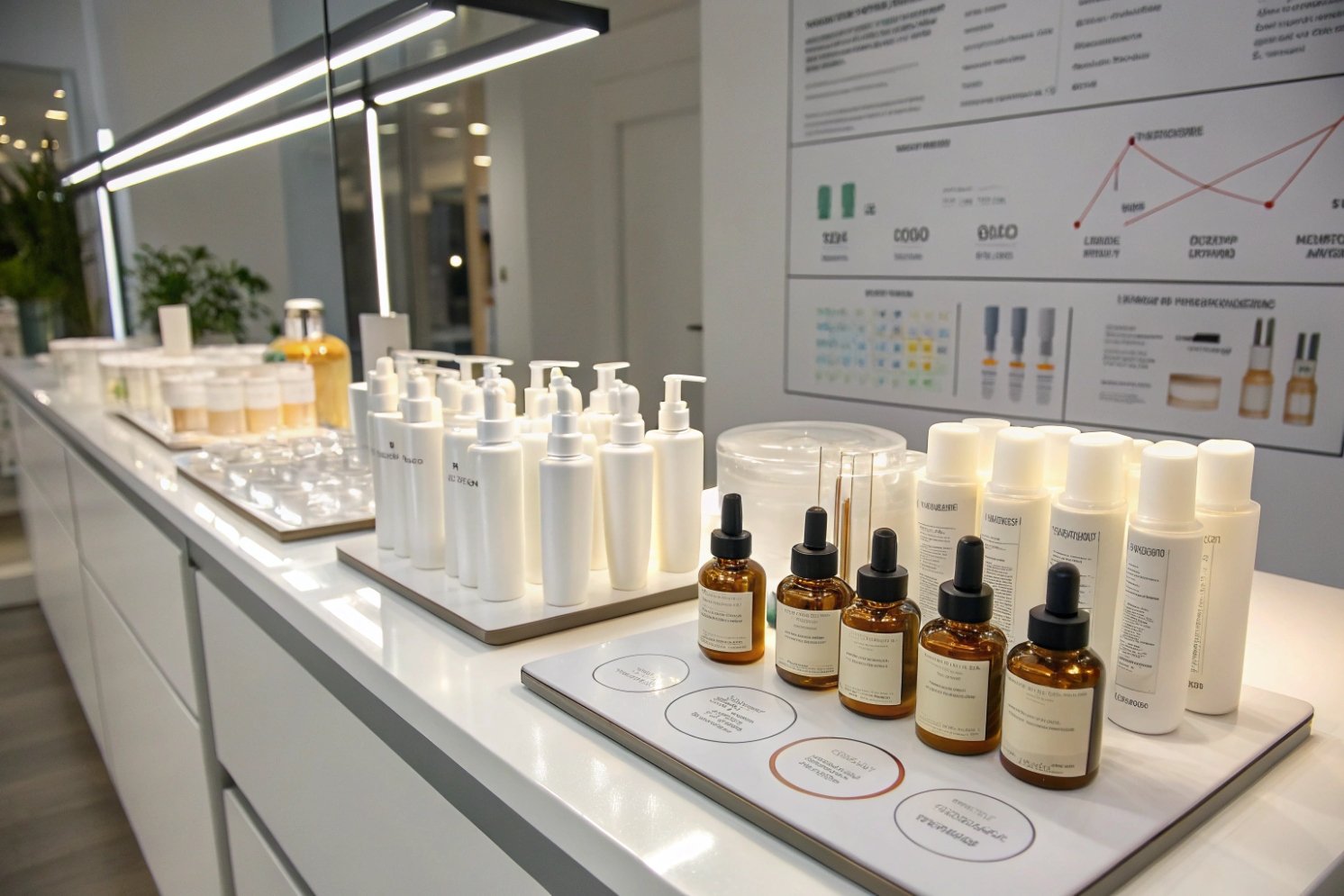
Many brands jump to glass because it “feels premium”, then discover freight, breakage, or pump issues later. The trick is to match the pack to the formula, not to a trend.
Glass is often better for high-solvent, high-value, or “clean” formulas, but advanced plastic and airless systems can beat glass on hygiene, cost, weight, and travel use. The best pack comes from formula, channel, and sustainability goals together.
So the real question is not “glass or plastic, which is better”. The real question is “for this one formula and price point, in this channel, which pack brings the most value and the least risk”. A useful way to frame that decision is to think in terms of a container closure system 1 rather than a single component. Let’s break that down step by step.
For which formulas is glass clearly superior to plastic on compatibility?
A formula can look perfect in the lab and then start to yellow, smell strange, or thin out once it sits in the wrong pack. Many of these failures are simple compatibility problems.
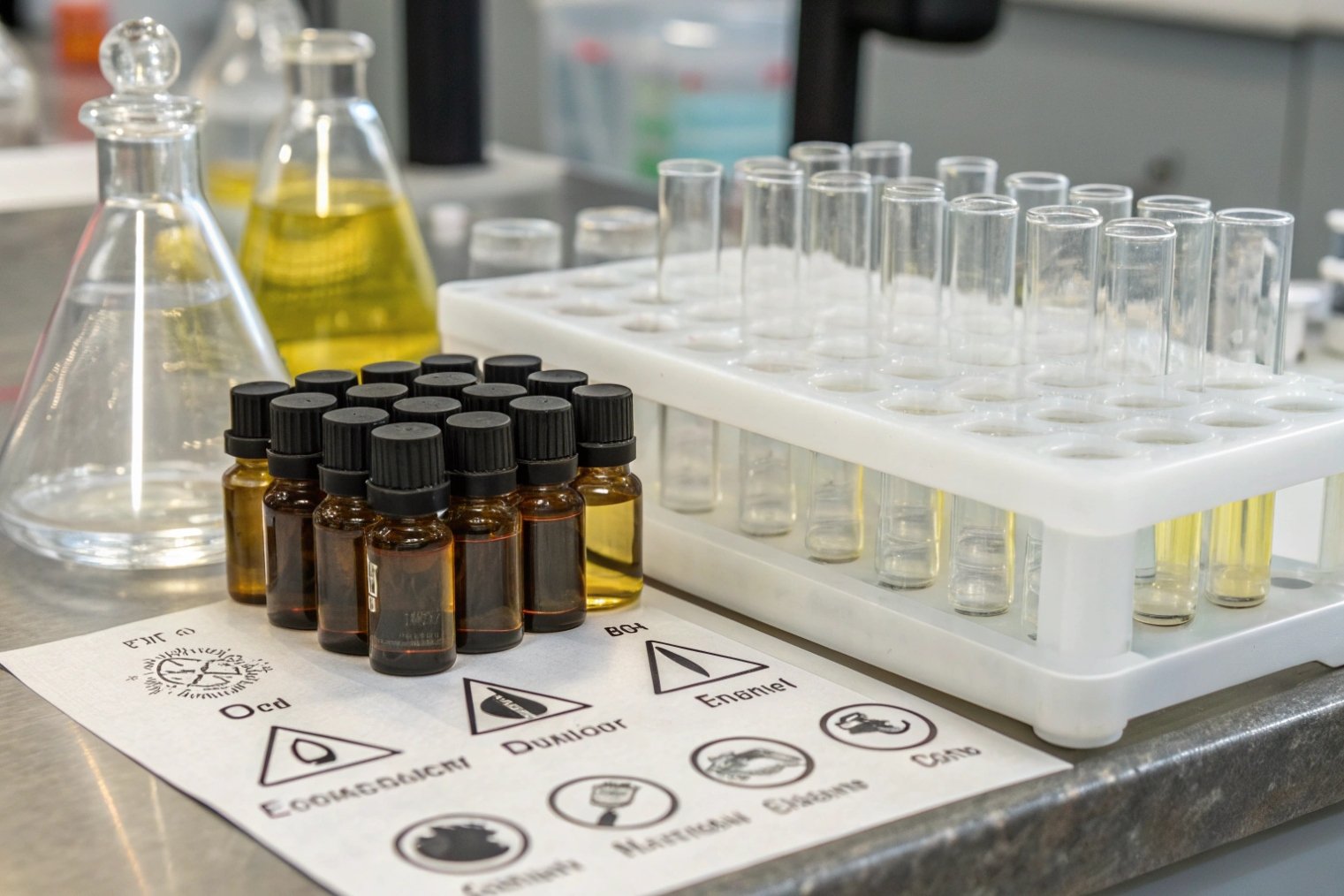
Glass is clearly superior for high-ethanol, essential-oil-rich, very acidic, or low-preservative formulas, because it is inert and non-permeable, while plastic can swell, leach, or slowly let aroma and oxygen pass through.
How glass and plastic behave with real formulas
Glass is a network of silica and other oxides. It is rigid, non-porous, and does not react with most cosmetic ingredients. There is no plasticizer to leach out. There is no scent “scalping”. This is why strong alcohol perfumes, pure essential oils, and aggressive actives have used glass for decades.
Most cosmetic plastics are polyolefins (PP, PE), PET, or acrylics. Good cosmetic grades are much safer than they used to be, but they still:
- Can absorb or lose some fragrance notes
- Can stress crack with high ethanol or strong essential oils
- Can allow small oxygen and water movement through the wall (often tracked via oxygen transmission rate (OTR) 2)
So for some formulas, the safe path is simple: use glass.
Here is a quick view:
| Formula type | Typical risk in plastic | Preferred pack choice |
|---|---|---|
| Alcohol-based fine fragrance / EDT | Fragrance loss, stress cracks | Glass bottle + crimp / screw |
| Pure essential oils and concentrated EO blends | Swelling, odor scalping | Glass, often amber |
| High-acid AHA/BHA peels | Stress cracking in some resins | Glass bottle or tube |
| Very “clean” formulas with low preservative | Extra sensitivity to leachates | Glass or high-barrier system |
| Standard face cream or body lotion | Usually low risk | Good plastic or glass |
| Daily cleanser, shampoo, body wash | Usually low risk | Plastic for shower safety |
When plastic systems still win on performance
Glass is not always the hero. For many oxygen-sensitive emulsions and thin serums, a good airless plastic system can protect better than a wide-mouth glass jar. Airless:
- Limits oxygen every time the customer pumps
- Limits finger contact and microbial load
- Can keep a formula inside its spec longer, even in plastic
So the choice often looks like this:
- Hero oil serum with high solvent, essential oils, or low preservative → glass dropper or treatment pump
- Clinical water serum that hates air and fingers → airless (plastic or hybrid)
- Everyday cleanser or big body lotion → plastic for squeeze, shower safety, and cost
The key is to run simple cosmetic packaging compatibility testing 3 with both options before making a big tooling decision.
How do weight, breakage risk, and freight costs affect total landed cost?
A glass jar can look perfect in a render. Then the freight quote arrives. Then the warehouse reports breakage. Cost is not only the bottle price. It is the whole journey.
Glass raises unit weight, carton weight, and breakage risk, so it often increases total landed cost versus plastic, especially for mass, e-commerce, and export lines.
What really drives cost beyond the EXW bottle price
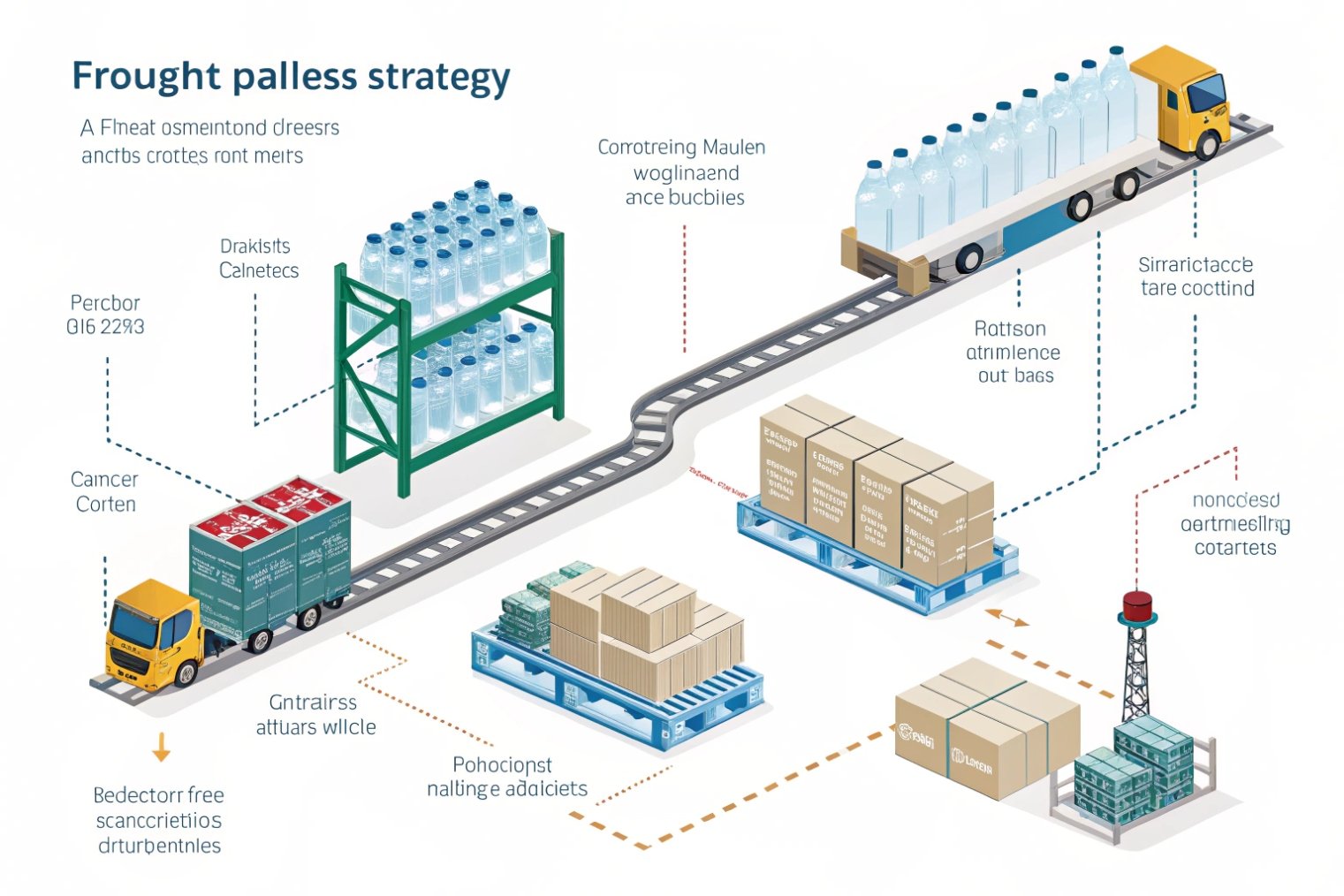
When teams compare glass and plastic, they sometimes look only at the unit price. In real projects, the landed cost includes:
- Bottle or jar + closure + decoration
- Inner cartons, dividers, pallets, and extra protection
- Ocean or air freight based on weight and volume
- Breakage and claims in warehousing and last-mile delivery
- Extra labor in filling lines if breakage or handling is slower
A simple comparison for a 50 ml face cream:
| Item | Heavy glass jar | Plastic jar / bottle |
|---|---|---|
| Empty pack weight | High | Low |
| Pack price (un-decorated) | Medium to high | Low to medium |
| Freight per filled unit | Higher | Lower |
| Breakage risk in e-commerce | Higher | Lower |
| Shelf “premium” feel | Strong | Can feel mid-range |
| Carbon from transport (per unit) | Higher | Lower |
Glass often still makes sense for high margin products where brand image and feel matter more than a few extra cents per unit. For big, low-margin SKUs (body wash, hair care, cleansers), the math often favors plastic.
How to reduce the pain if you choose glass
If glass is right for the brand, there are ways to control cost and risk:
- Use lightweighted glass where possible instead of very thick walls
- Optimize carton design and dividers to cut breakage without huge material use
- Match bottle shape to pallet patterns to avoid wasted space
- Test drop and vibration early (for example, using ASTM D4169 distribution testing 4), then adjust glass weight and packing once, not three times later
When this work is done well, glass can move safely across long supply chains with good yields. When it is skipped, glass can look like the problem, even though the real issue is layout and protection.
Many brands want glass because they dream of fine lines of ink, sharp metallic logos, and a deep glossy coat. Decoration is often where the “luxury gap” between glass and plastic shows up.
Most premium decoration processes are easier, more stable, and more durable on glass than on plastic, so high-end finishes often favor glass when the budget allows.
Why glass is a friendly canvas for decoration
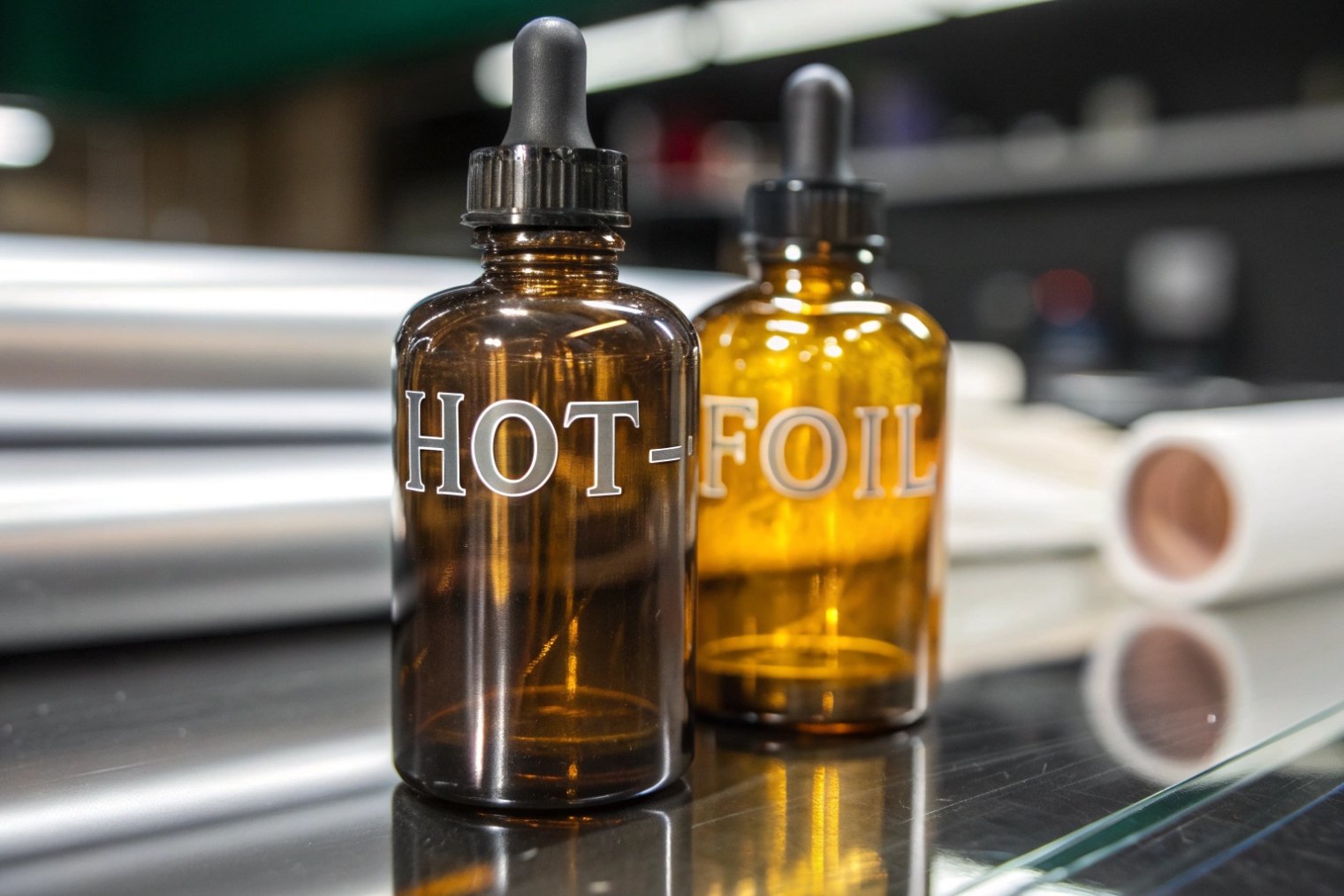
Glass can go through higher oven temperatures than most plastics. It does not soften. It does not outgas in the same way. Ink anchors directly to a hard, stable surface. So many processes are simple and repeatable:
- Silkscreen printing 5 with ceramic or UV inks
- Hot foil stamping for metallic logos and borders
- Frosting by acid or blasting for a soft, matte touch
- Spray coating for gradients, solids, or soft-touch effects
- Electroplating and metallic finishes on the outside
These treatments often look deeper and sharper on glass. They also survive long storage, sun, and humidity quite well when they are done with the right inks and curing curves.
Here is a quick feel:
| Finish / effect | On glass | On plastic |
|---|---|---|
| Single-color silkscreen | Very crisp, easy registration | Good, but more sensitive to handling |
| Multi-pass print + foil | Stable if glass is well-annealed | Risk of warping at high bake temps |
| Full spray / gradient | Uniform, high-gloss or matte possible | Needs careful adhesion and testing |
| Electroplated mirror look | Strong, durable over glass | Often done on ABS or caps, not bodies |
| Deep frosting | Classic, even feel | Often a coating, more prone to wear |
Where plastic still makes sense for “luxury look”
Plastic is not out of the game. There are very nice sprayed, plated, and soft-touch plastic packs on the market. They are lighter, safer in the bathroom, and often cheaper to ship. But extra care is needed:
- Adhesion tests under hot–cold cycles
- Drop tests to check for chipping and flaking
- Migration tests so coatings do not affect the formula
Often the sweet spot is a hybrid:
- Glass body with high-end silkscreen and foil
- Plastic or metal cap with plating, color, or sculpted form
This keeps the formula in inert glass and gives the designer a lot of freedom in the closure.
When do recyclability and refill models justify glass over plastic?
Many teams pick glass because “it is more sustainable”. Sometimes this is true. Sometimes it is only a story on a slide. Real impact depends on the full system.
Glass is strong on true recyclability and reuse, so it makes the most sense when you design clear recycling paths or real refill models, not just a heavier single-use bottle.
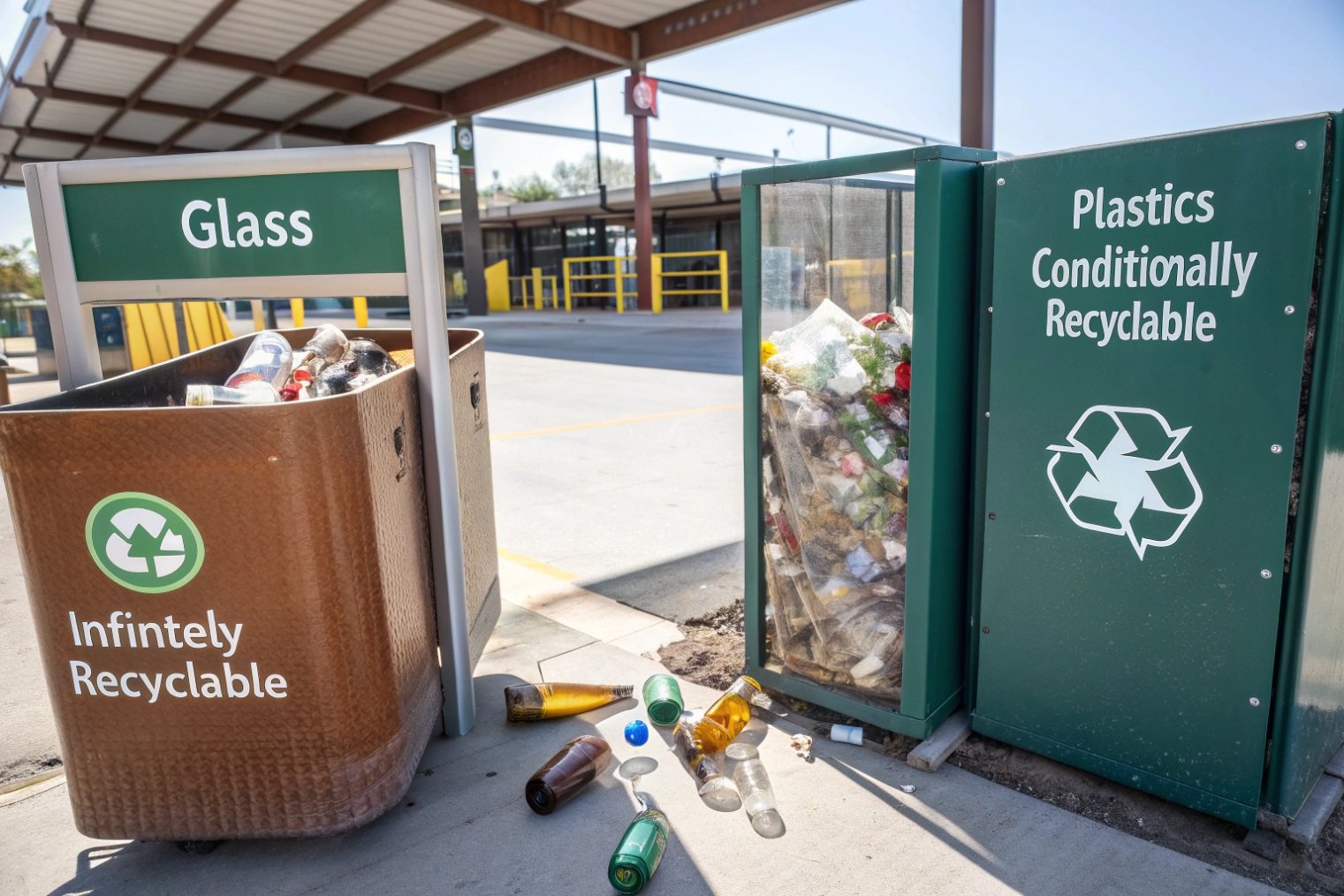
Glass, plastic, and what actually happens after use
On paper, glass is 100% and endlessly recyclable. In real life, it depends on the region:
- Some markets have strong glass collection and color sorting
- Some send a lot of mixed glass and plastic to landfill or low-grade use
Plastics face the same problem. Many are technically recyclable, but not collected or sorted well. So the best path is to use less and reuse more, then support the local recycling system as it exists.
Where glass has a clear lead:
- It can be refilled and reused many times if the design allows it
- It does not lose quality each time it is melted (many programs emphasize that glass can be recycled endlessly 6)
- Recycled cullet can replace a big share of virgin raw materials
When a glass-led system makes real sense
Glass becomes very strong when you build a concept around reuse:
- A heavy, beautiful outer glass bottle for serum or fragrance
- A simple inner plastic or glass refill that snaps or screws in
- Clear instructions and incentives for the customer to keep and refill
Or, for spa and retail:
- Standardized glass bottles and jars that brands or stores take back, wash, and refill
- Simple marking so bottles can move between batches
A small comparison:
| System | Glass use | Plastic use | Best use case |
|---|---|---|---|
| Single-use heavy glass | High | Low to medium | Prestige lines, gifting, low volume |
| Glass outer + plastic refill insert | Medium (per use) | Medium, but very light per cycle | Daily skincare with strong refill push |
| Single-material plastic, no refill | None | High | Mass, shower, travel, low margin |
In many briefs, the best story is:
- Use glass for hero SKUs where reuse and display are likely
- Use smart mono-material plastic for high-volume, wet, or travel items
- Show clear data: recycled content, refill rate, CO₂ per use
When brands build around reuse loops, they often borrow proven models like returnable packaging systems 7. When this mix is done with care, glass is not only “better” in feeling. It is better in numbers too.
Conclusion
Glass can be a big upgrade for cosmetic packaging when formula, cost, decoration, and end-of-life are planned together, not when glass is chosen only because it feels more premium.
Footnotes
-
Helps you evaluate packaging as a complete system, not just a bottle material choice. ↩︎ ↩
-
Quick primer on OTR so teams can compare plastic barrier performance realistically. ↩︎ ↩
-
Explains how to test pack–formula interactions before scaling tooling and production. ↩︎ ↩
-
A standard method to simulate shipping hazards and reduce breakage surprises in transit. ↩︎ ↩
-
Overview of screen printing basics, useful when specifying durable decoration on glass. ↩︎ ↩
-
Clear explanation of glass recycling and why quality can be maintained across many cycles. ↩︎ ↩
-
Practical framework for designing return, wash, and refill loops that make glass reuse meaningful. ↩︎ ↩






