Light destroys good formulas quietly. It fades color, flattens scent, and weakens actives long before the expiry date. Many “mystery” stability problems are simply light problems in disguise, driven by photo-oxidation 1.
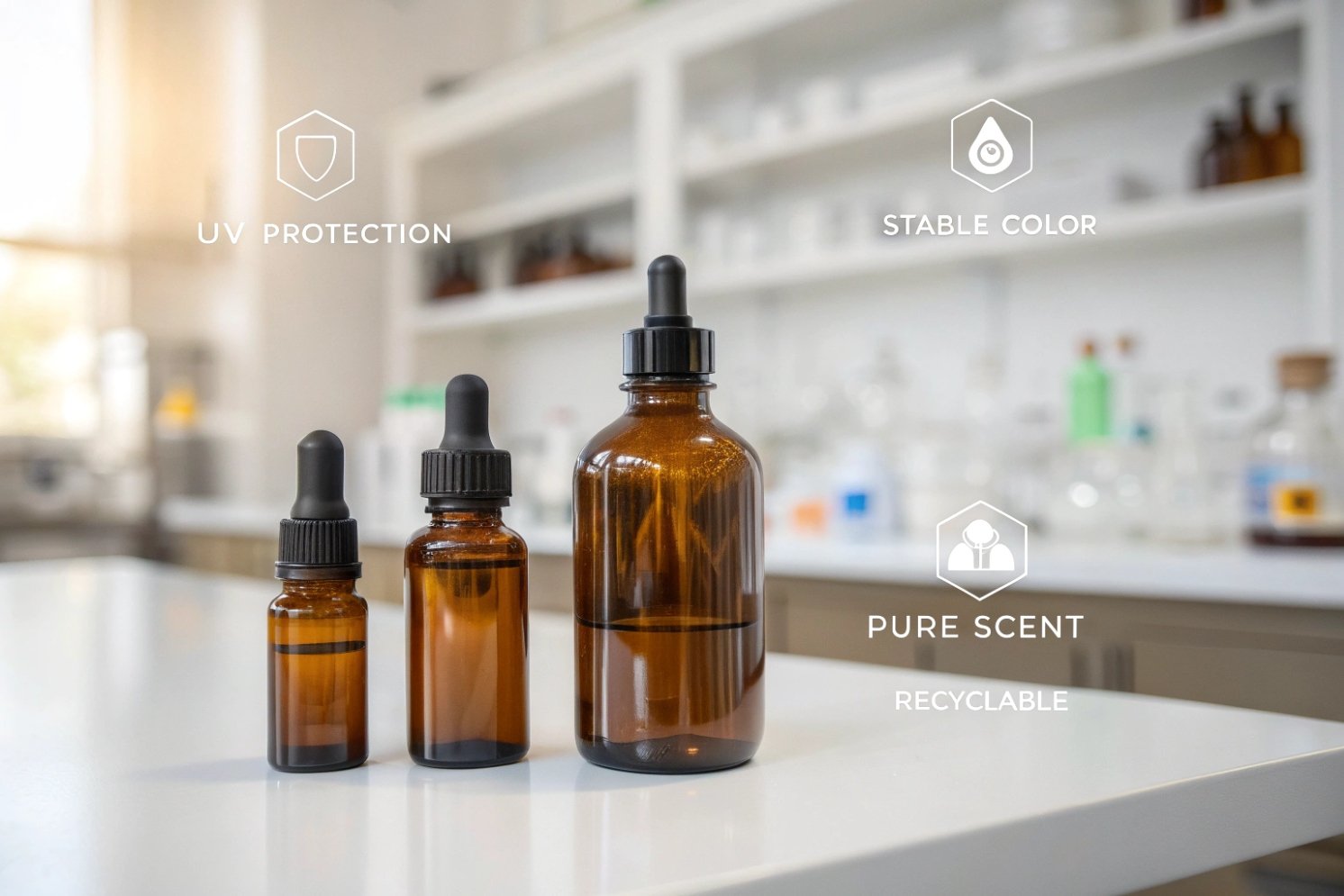
Amber glass blocks most UV and harsh visible light, reduces photo-oxidation, keeps sensitive formulas stable for longer than clear glass, and supports a natural, apothecary brand image with strong sustainability potential.
For essential oils, serums, tinctures and pharma syrups, pack choice is often more important than people think. When amber is chosen well, brands see fewer color shifts, fewer returns, and a clearer “professional” signal on shelf and online.
How much UV protection does amber provide for essential oils and actives?
Many natural actives hate light. Vitamin C (ascorbic acid) 2, retinol (vitamin A alcohol) 3, essential oils and botanical extracts all lose power fast in a clear bottle under store lighting.
Amber glass filters most UV and a large part of high-energy blue light, so it cuts the main driver of photo-oxidation for essential oils and light-sensitive actives compared with clear or even cobalt glass.
What amber glass really does to light
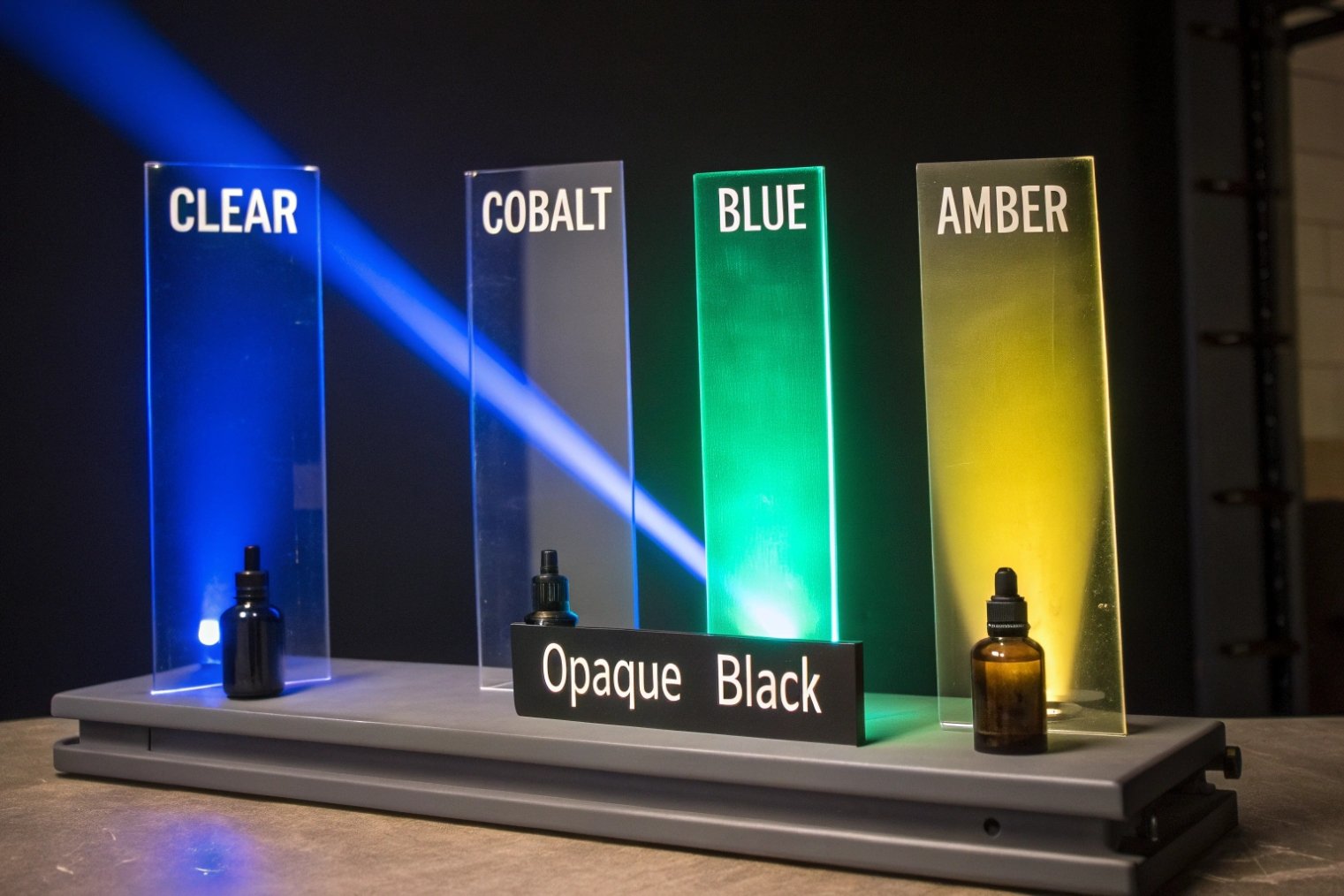
Amber is not just “colored” clear glass. The iron–sulfur color system 4 in the glass body absorbs a big portion of UV and a useful slice of high-energy blue light 5. For many formulas this is the difference between “stable on shelf” and “brown and flat after a season under LEDs”.
In practice, brands usually care about three things:
- How much UV the bottle blocks
- How much visible light still shows the product
- Whether the color stays consistent between batches
A simple way to compare common options:
| Glass color | UV blocking (rough feel) | Visible light to product | Typical use cases |
|---|---|---|---|
| Clear (flint) | Very low | Very high | Non-sensitive formulas, strong cartons |
| Cobalt blue | Moderate | High | Fragrance, “beauty” oils, more for style than full UV |
| Green | Low–moderate | High | Beverages, some oils |
| Amber | High | Medium | Essential oils, actives, pharma, natural skincare |
| Opaque / black | Very high (near total) | None | Highly photosensitive or prestige lines with mystery |
For most essential oils and natural actives, amber hits the sweet spot. The glass protects the formula but still lets the customer see the fill level and roughly sense the product inside.
Which products gain the most from amber UV protection
From day-to-day work with oil and skincare brands, amber helps most when:
- The formula has unsaturated oils (like rosehip, flax, evening primrose)
- The active list includes vitamins, retinoids, AHAs, BHAs, or plant extracts
- The pack will sit under strong retail, warehouse, or studio lighting
- The brand cannot always control storage at the distributor or end user
For these cases, amber glass plus basic storage advice (cool, away from direct sun) is an easy win. It is a small change in packaging, but a big improvement in real-world stability.
Does amber reduce photo-oxidation and extend shelf life vs clear glass?
Many teams see faster color change and off-odor in the same formula when they move from lab vials to large clear bottles. The formula did not get worse. The light exposure did.
Compared with clear glass, amber glass slows photo-oxidation of oils, dyes, and actives, so it often extends the practical shelf life and keeps products closer to their original color, scent, and strength.
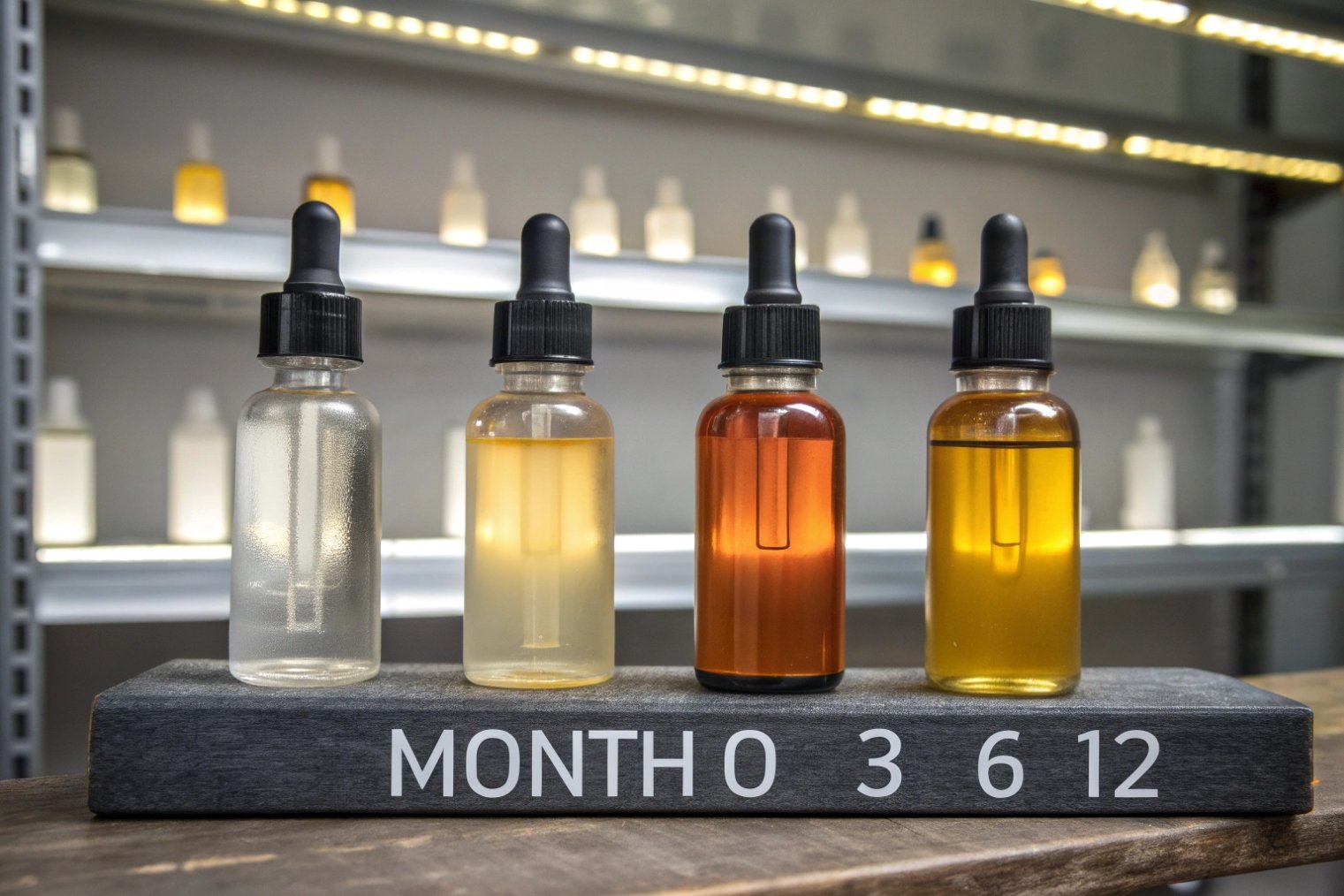
How light and oxygen work together
Most formulas do not fail from oxygen alone. They fail from light + oxygen + time. Light gives the energy that starts radical reactions in oils, fragrances, and colorants. Oxygen then finishes the damage.
Amber glass helps at the first step. By cutting UV and blue light, it reduces the number of reactions that start. Less start means less oxidation and fewer breakdown products. So:
- Color drifts slower
- Smell stays closer to the original brief
- Texture (especially oils and light creams) changes less over time
Clear glass gives almost no help. The only barrier is the headspace oxygen and the pump or cap.
When amber alone is enough and when it is not
Amber works best as part of a simple system:
- For essential oils and oil serums that are sold in small volumes (5–100 ml), amber plus a dropper or pump and normal storage is usually enough.
- For water-based serums with strong actives (like vitamin C), amber still helps, but the formula also needs chelators, antioxidants, and good headspace control.
- For very sensitive pharma or clinical actives, amber glass is often combined with cartons or full sleeves for near-total light block.
This quick table can guide the first decision:
| Formula type | Pack in clear glass | Pack in amber glass | Amber + extra shielding |
|---|---|---|---|
| Simple carrier + stable fragrance | Usually OK | Extra safety, better for hot climates | Rarely needed |
| Essential oil blends | Not advised for open shelf | Strongly preferred | Carton for very bright retail lighting |
| Vitamin C or retinol serum | High risk of fast change | Better, but needs good formula design | Best practice for long, bright shelf life |
| Pharma tinctures / light-sensitive | Usually not allowed | Often standard | Often required by regulation or SOP |
In short, amber is not magic. It does not “fix” a weak formula. But it gives the formula a much better chance to stay within spec out in the real world.
When does the apothecary aesthetic of amber strengthen brand cues?
Amber glass does not only protect. It also says something before the customer reads a word. That can be a big plus, or a wrong signal, depending on your story.
The apothecary look of amber glass works best for natural, clinical, or craft brands that want to signal seriousness, tradition, and trust, but it can clash with ultra-glam or hyper-colorful positioning.
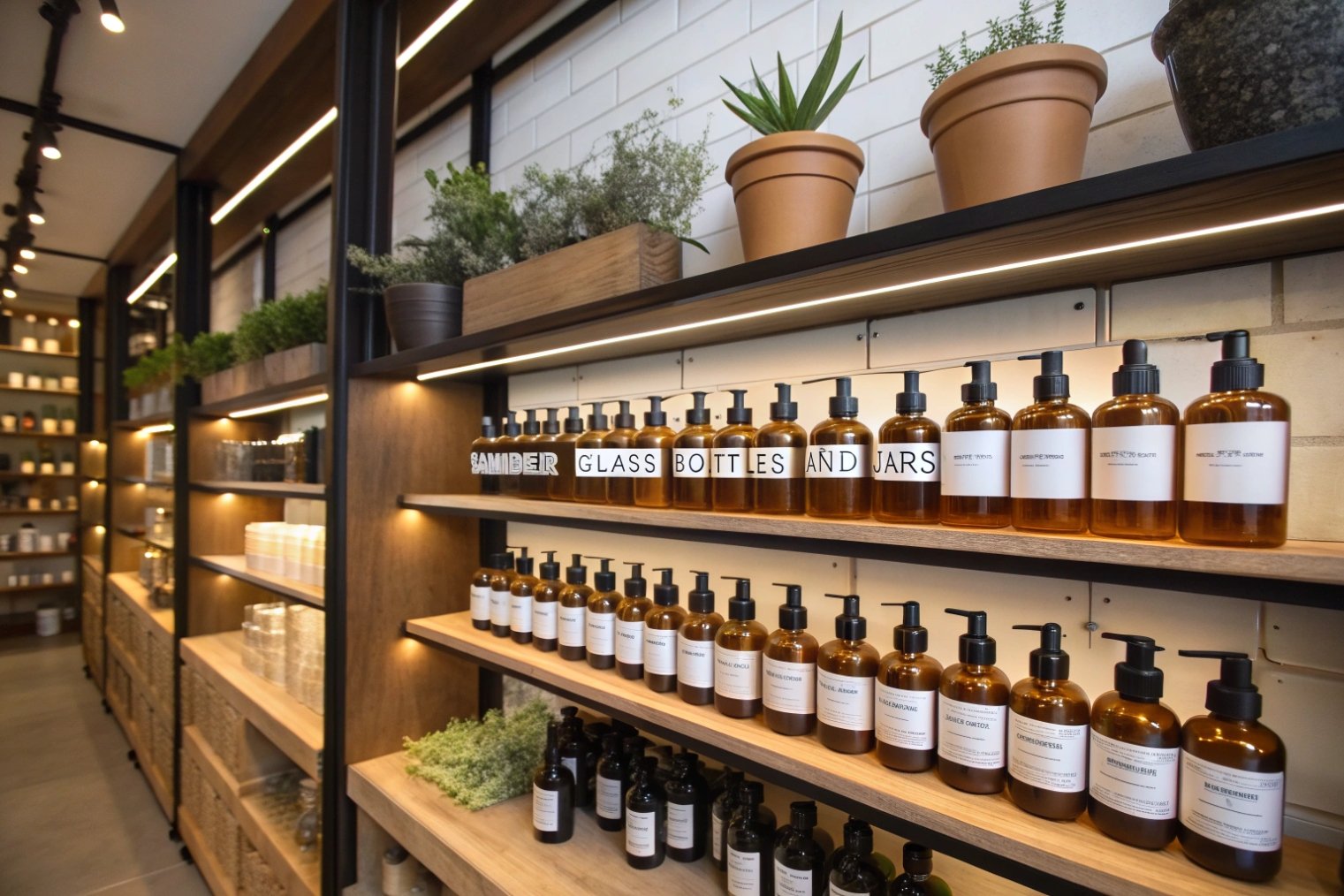
What amber “says” on shelf
Most people have learned, without thinking about it, that amber glass means “medicine” or “serious care”. Pharmacy bottles, lab reagents, essential oils, and herbal tinctures all use this color. So amber brings built-in cues:
- Trust and safety
- Natural and plant-based
- Small batch and craft
- Less glossy, more honest
This is very powerful for:
- Aromatherapy and essential oil houses
- Clean and minimal skincare lines
- Herbal and wellness supplements
- Clinical-style treatment brands
If the logo and closure are well done, amber glass gives a strong identity even on simple standard bottles.
When amber supports or hurts your brand story
It helps to map amber against your brand aim:
| Brand archetype / mood | Amber glass usually does… | Risk if used badly |
|---|---|---|
| Apothecary / clinical clean | Strongly supports | Can feel too plain without good details |
| Natural, organic, earthy | Feels honest and aligned | Heavy, dark packs in big sizes |
| Minimalist luxury | Works very well with simple labels | Needs very clean printing and closures |
| Ultra-glam, sparkling, “party” | Sometimes feels dull or old-fashioned | Might hide special juice color |
| Teen, playful, neon, K-beauty | Often off-tone | Loses bright, fun energy |
Small changes can keep amber from feeling heavy. For example:
- Use softer, matte labels and modern type
- Pair with brighter caps (white, silver, bamboo)
- Add frosting or clear windows to break up the block of color
In many projects, amber became the “visual glue” across a line. The same bottle shape and color worked for facial oil, toner, and mist. Only the closures and artwork changed. That keeps tooling cost low while the shelf still looks like one strong family.
Is amber widely available with high cullet content for sustainability?
Many buyers want better stability and stronger sustainability at the same time. The good news is that amber can do both if the supply chain is chosen with care.
Amber glass is widely available in standard and custom shapes, and in many markets it can include high recycled cullet content without hurting performance, which makes it a strong choice for brands with clear sustainability goals.

How cullet fits into amber glass production
“Cullet” is just recycled glass. Amber furnaces often accept higher cullet rates than some flint lines, because color control is easier when the target is already dark and warm. That is useful for brands that want high recycled cullet content 6 plus:
- Higher recycled content claims
- Lower CO₂ per bottle
- A circular story their customers can understand
In real projects, the main checks are:
- Color stays inside the agreed shade window
- Bubbles, cords, and stones stay within AQL limits
- Mechanical strength and thermal shock performance stay stable
Amber with high cullet content still needs good batch control and strong QA, but there is no rule that says “high recycled” must look rough.
Availability and design choices
Amber is one of the easiest packaging colors to source in:
- Dropper bottles
- Boston rounds
- Wide-mouth jars
- Pharma rounds and syrup bottles
- Spray bottles and roller bottles
Most glass plants hold a wide standard range in amber. That helps new brands move fast without paying for custom moulds. When custom shapes are needed, amber often shares the same neck finishes as clear lines, so existing pumps, droppers, and caps can be reused.
A quick view of common paths:
| Packaging route | Amber + cullet potential | Main benefit for brand | Note |
|---|---|---|---|
| Standard catalogue amber bottles | High, often already in the spec | Fast launch, low tooling cost | Good for test runs and fast rebrands |
| Custom amber bottle on existing line | High, depends on furnace policy | Unique look, strong brand ownership | Needs clear color and weight targets |
| Premium very pale “tea” amber | Moderate | Softer look, more juice visibility | Tighter color control, maybe lower cullet |
| Very dark almost-black amber | High | Maximum light protection and mystery | Labels and print must be very legible |
For sustainability storytelling, amber also helps at end of life. It is easy to explain to customers that:
- The glass is infinitely recyclable
- The dark color comes from mineral colorants, not plastic sleeves
- Bottles can be used in returnable packaging programs 7 or reused at home
This kind of clear, simple message is what many conscious shoppers look for when they evaluate packaging.
Conclusion
Amber glass protects sensitive formulas from light, extends real-world shelf life, supports apothecary and natural brand stories, and works very well with high recycled content for stronger sustainability claims.
Footnotes
-
Definition and mechanism overview of light-driven oxidation that causes off-odors, fading, and active loss. ↩︎ ↩
-
Reference details for ascorbic acid, useful for understanding why vitamin C formulas need protection strategies. ↩︎ ↩
-
Chemical profile for retinol to support discussions about sensitivity, degradation risk, and packaging decisions. ↩︎ ↩
-
Explains how glass colorants work, including systems used to create amber’s light-absorbing properties. ↩︎ ↩
-
Background on high-energy visible light and why short-wavelength light can accelerate ingredient breakdown. ↩︎ ↩
-
Quick explanation of cullet and why recycled content matters for glass sustainability claims. ↩︎ ↩
-
Practical overview of returnable packaging loops: return, wash, and refill systems that reduce single-use packaging. ↩︎ ↩