
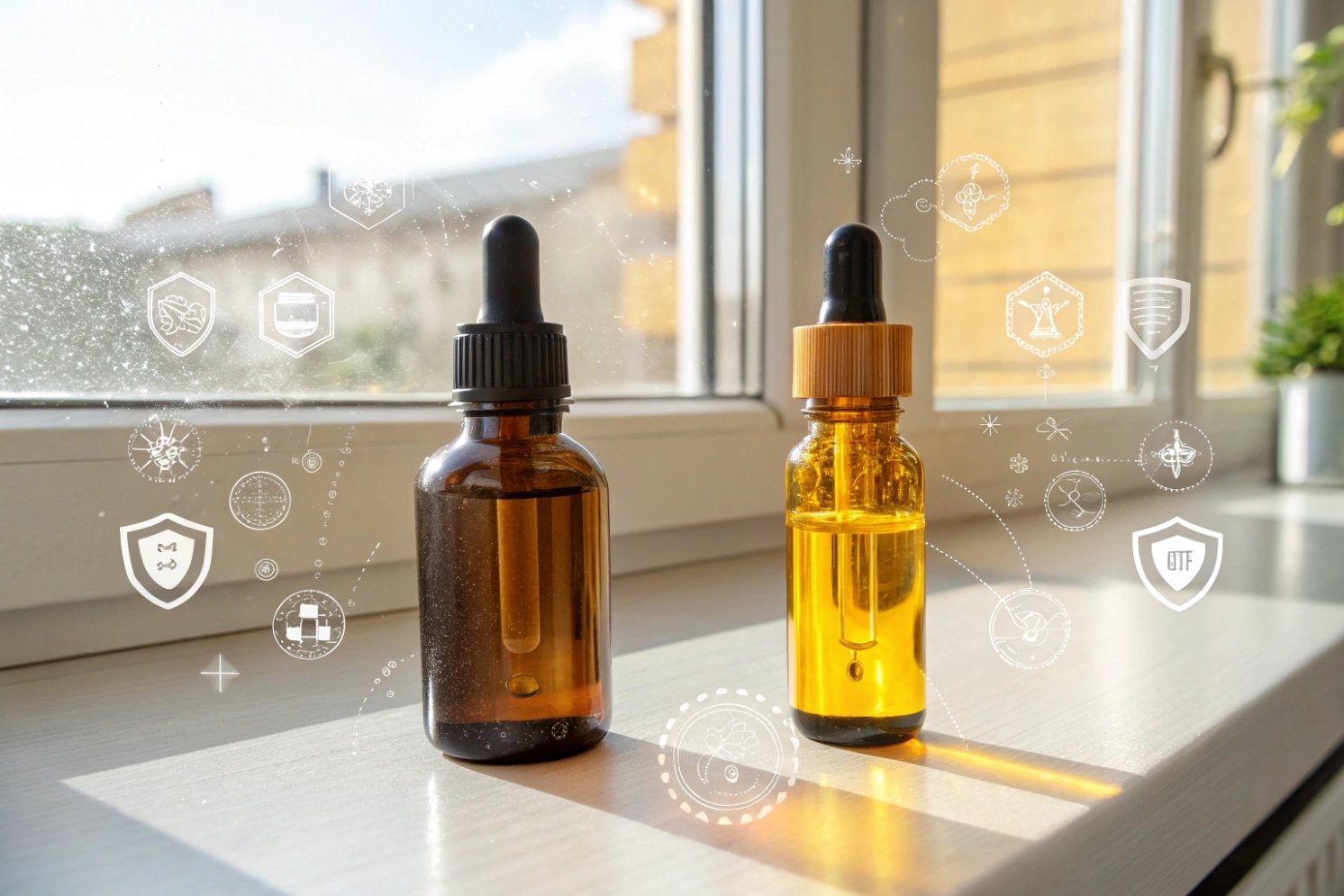
Many skincare launches fail in a quiet way. The formula looks fine at filling, then light and air slowly ruin it. Customers notice last, and trust drops fast.
Amber glass bottles are ideal because they filter UV and blue light, stay chemically inert, and support long shelf life when paired with the right closure, liner, and shipping protection.
Why packaging matters more than most brands expect
A cosmetic formula does not live in a lab. It lives in sunlight, bathroom heat, humidity, and daily handling. Every open and close brings more oxygen. Every bright window brings more photons. Some actives break down under UV or even short visible light. Some oils lose aroma. Some botanical colors shift. A premium brand can still look “cheap” when a serum turns yellow too early.
Glass helps because it is a strong barrier and it does not “breathe” like many plastics. Amber glass adds a second layer of defense. It absorbs a large part of UV and also filters a big part of blue light. That is why amber is often the default for light-sensitive products. The goal is simple: keep the formula closer to day-one quality for longer.
What amber glass does well, and what it does not do alone
Amber glass mainly solves light stress. It also supports stability because glass is inert and nonporous. Still, amber glass does not fully solve oxygen exposure by itself. Oxygen often enters through the closure system, not through the bottle wall. A weak liner or a poor fit can reduce the benefit. That is why amber bottles should be treated as a system: bottle + closure + liner + seal + secondary packaging.
For very sensitive formulas, amber alone may still be not enough. A carton, an overwrap, or a full-body label can be part of the real protection plan. Some brands ignore this, then they see stability drift after customers remove the outer box and store the bottle on a sunny shelf.
A simple decision view for “how much protection is enough”
A practical way to decide is to classify your formula risk. Then pick the package strategy that matches the risk and the channel.
| Formula risk level | Common examples | Amber glass role | Extra protection that often helps |
|---|---|---|---|
| Low | stable cleansers, basic lotions | optional | standard label |
| Medium | niacinamide blends, mild botanicals | strong choice | tighter closure, light carton for shipping |
| High | vitamin C style serums, retinoid-type products, essential oils | best default | carton + strong liner + controlled dispensing |
Amber glass is “ideal” because it reduces one of the biggest silent enemies: light. Still, the best results come when the full pack is designed and tested like a real product, not like a concept photo.
A packaging choice should reduce stress, not add it. The next sections break down protection, product fit, closures, and bulk-order verification.
How does amber glass protect skincare formulas from UV exposure, oxidation, and ingredient degradation?
Light damage is slow and hard to see at first. A formula can pass quick checks and still lose potency after weeks of retail lighting.
Amber glass protects by absorbing UV and filtering short visible wavelengths that drive photodegradation. Oxidation control improves further when the closure and headspace strategy reduce oxygen exposure.
UV and blue-light filtering is the main win
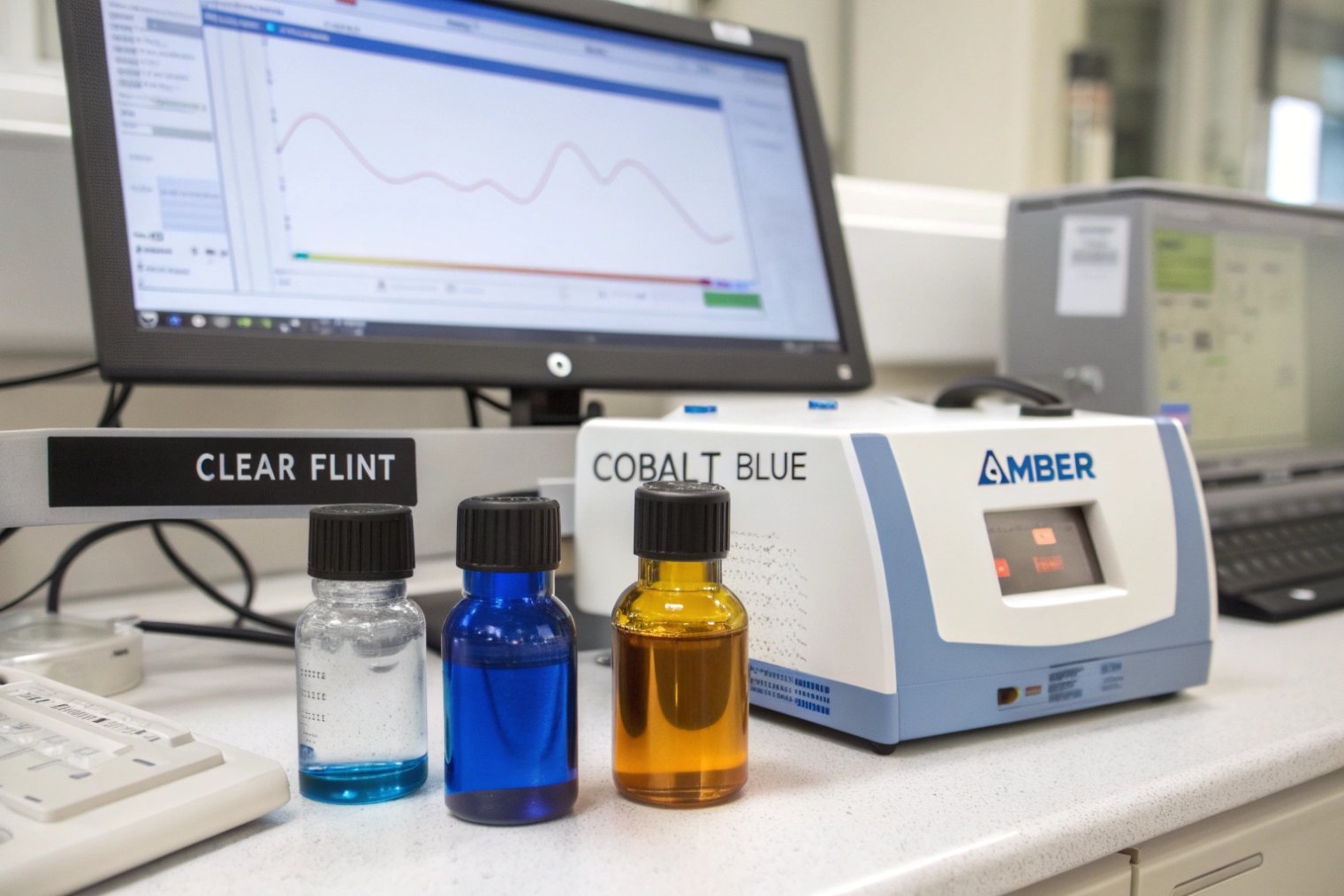
Amber glass is used because it blocks a large part of harmful UV and also cuts down blue light. Many skincare actives degrade faster under UV and short visible wavelengths. When the bottle filters that energy, the reaction rate drops. This helps reduce color change, odor shift, and potency loss.
For teams that need proof, light resistance can be treated as measurable performance. The clean way is UV-Vis spectrophotometry 1 paired with a defined wavelength window (often around 290–450 nm). For regulated or evidence-heavy programs, teams may align documentation to resources like the ICH quality guidelines database 2. This avoids the common mistake of assuming every “amber” looks the same. Different tint intensity and wall thickness can change transmission.
Oxidation is often a closure problem, not a glass problem
Amber glass does not stop oxygen from entering every time the product is opened. It also does not stop oxygen that lives in the headspace at filling. Oxidation control depends on how the bottle is sealed and how the product is dispensed.
A tight cap with a compatible liner reduces oxygen exchange and vapor loss. For pumps and droppers, quality of fit matters even more. If oxygen sensitivity is high, an airless packaging system 3 can reduce exposure during daily use. If an airless system is not possible, some brands use modified-atmosphere nitrogen flushing 4 before sealing to reduce headspace oxygen. That step must be validated, or it becomes a story with no real value.
Ingredient interaction is low with glass, but still not zero risk
Glass is widely treated as inert, so it reduces interaction risk compared with many plastics. Still, the full pack includes closures, gaskets, and liners. These materials can swell, soften, or leach if the formula is oil-rich or solvent-rich. This is why compatibility testing should include the closure components, not only the bottle.
| Threat to formula | What amber glass improves | What amber glass does not solve | The practical fix |
|---|---|---|---|
| UV exposure | strong reduction | none | choose correct tint + test transmission |
| Retail lighting | strong reduction | not complete for extreme cases | add carton or sleeve |
| Oxygen in headspace | none | still present after filling | purge option + tight closure |
| Oxygen during use | limited | user keeps opening | pump or airless option |
| Closure interaction | none | gaskets can swell | choose liner and elastomer by formula |
Amber glass is ideal when the brand wants fewer stability surprises and a clear quality story. The next step is to match amber glass to the right product categories.
Which cosmetic and personal care products benefit most from amber glass bottles (essential oils, serums, actives, and aromatherapy)?
A brand can use amber glass everywhere, but that can raise cost without real benefit. A brand can also avoid amber glass, and then regret it when actives degrade too fast.
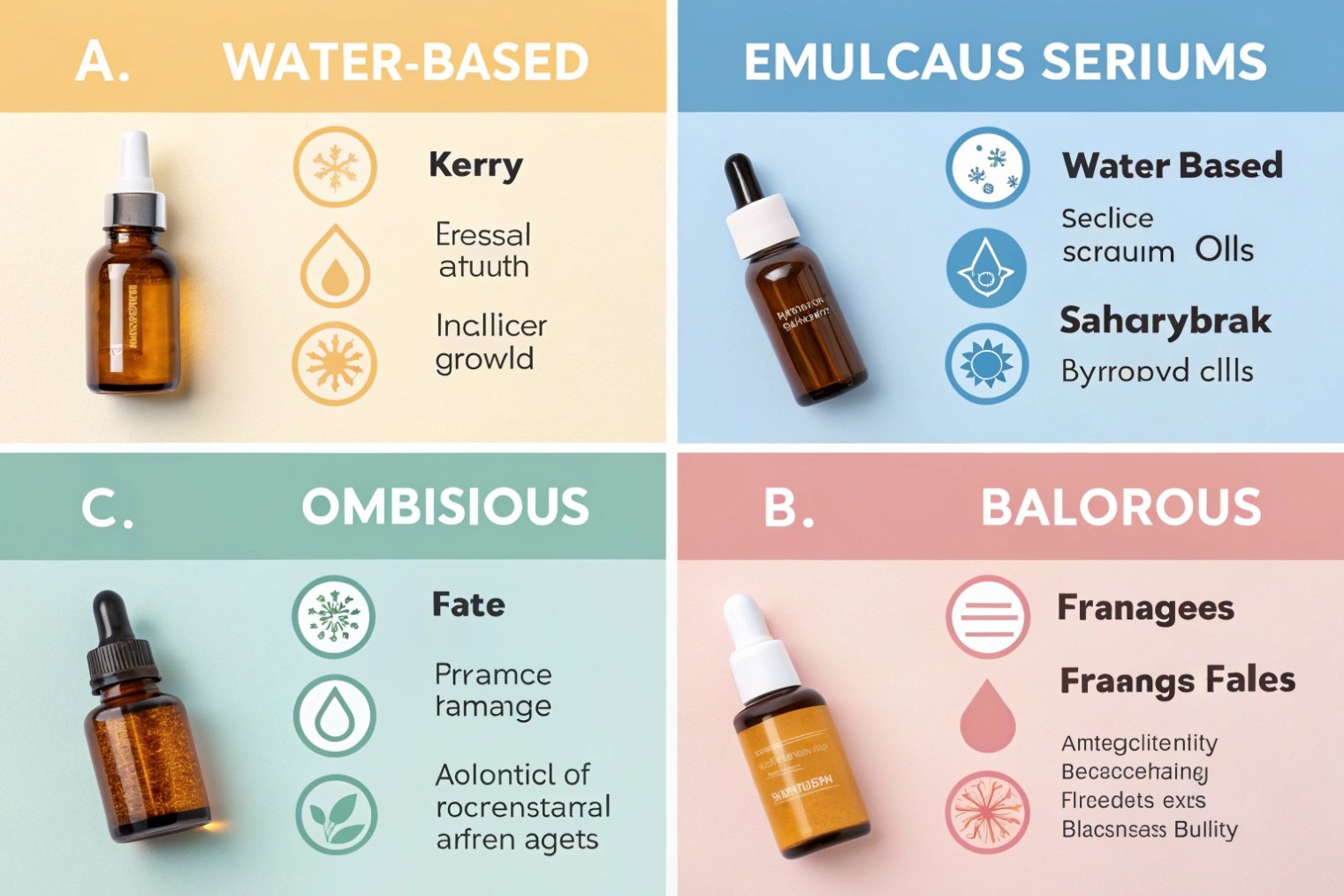
Products that benefit most are light-sensitive or oxidation-prone items like essential oils, active serums, aromatherapy blends, and some supplements. Amber is also a strong default when the formula team wants lower interaction risk.
Essential oils and aromatherapy blends
Essential oils often carry volatile aroma compounds. Light and oxygen can change aroma profiles over time. Amber glass is a common choice because it filters light and glass is a strong aroma barrier. Many brands also use tighter caps and good liners to reduce vapor loss. This matters in warm climates and long shipping lanes.
Aromatherapy blends also benefit because amber signals “apothecary” and “protected.” Still, the pack should not rely on color alone. A carton or a storage message can improve real outcomes, because many consumers store oils in bright rooms.
Active serums and treatment products
Active serums often include ingredients that are sensitive to light or oxygen. Amber glass is a safe choice when the formula contains unstable vitamins, antioxidant systems, or retinoid-type ingredients. It also supports premium positioning. It feels heavier than plastic and it looks credible for “active care.”
For serums that must keep performance for long shelf life, the bottle color is only one lever. Dose control and air exposure during use matter too. A dropper looks premium, but it opens the bottle each use. A treatment pump can reduce exposure. An airless system can reduce exposure even more.
Hair and personal care concentrates
Some hair oils, scalp treatments, and fragrance-rich concentrates also benefit from amber glass. These products often live on bathroom shelves with humidity and light. Amber reduces light stress and glass reduces odor transfer from the outside.
| Product type | Why amber helps | Best common format | Extra note for real-world use |
|---|---|---|---|
| Essential oils | light + aroma stability | dropper + tight liner | verify gasket compatibility with oils |
| Active serum | light-driven degradation | pump or dropper | carton helps for very sensitive actives |
| Aromatherapy | premium + protection story | dropper | add tamper evidence for retail trust |
| Botanical extracts | color and odor stability | screw cap or pump | test for sediment and wiper clog |
| Premium personal care oils | shelf appeal + stability | dropper or treatment pump | use leak-proof insert and torque control |
Amber glass becomes the “ideal” choice when the product value is tied to stability and trust. After product fit, the next decision is closures and dispensing, because leakage and oxygen exposure often start there.
What closure and dispensing options work best with amber glass bottles (droppers, pumps, sprayers, and leak-proof caps)?
A great amber bottle can still fail in the market if the closure leaks. Leakage ruins cartons, damages labels, and creates complaints that feel like a formula problem.
Droppers give precise dosing for oils and serums, pumps improve hygiene and reduce exposure, sprayers fit thin toners and mists, and leak-proof caps depend on correct liner, gasket, and torque control.
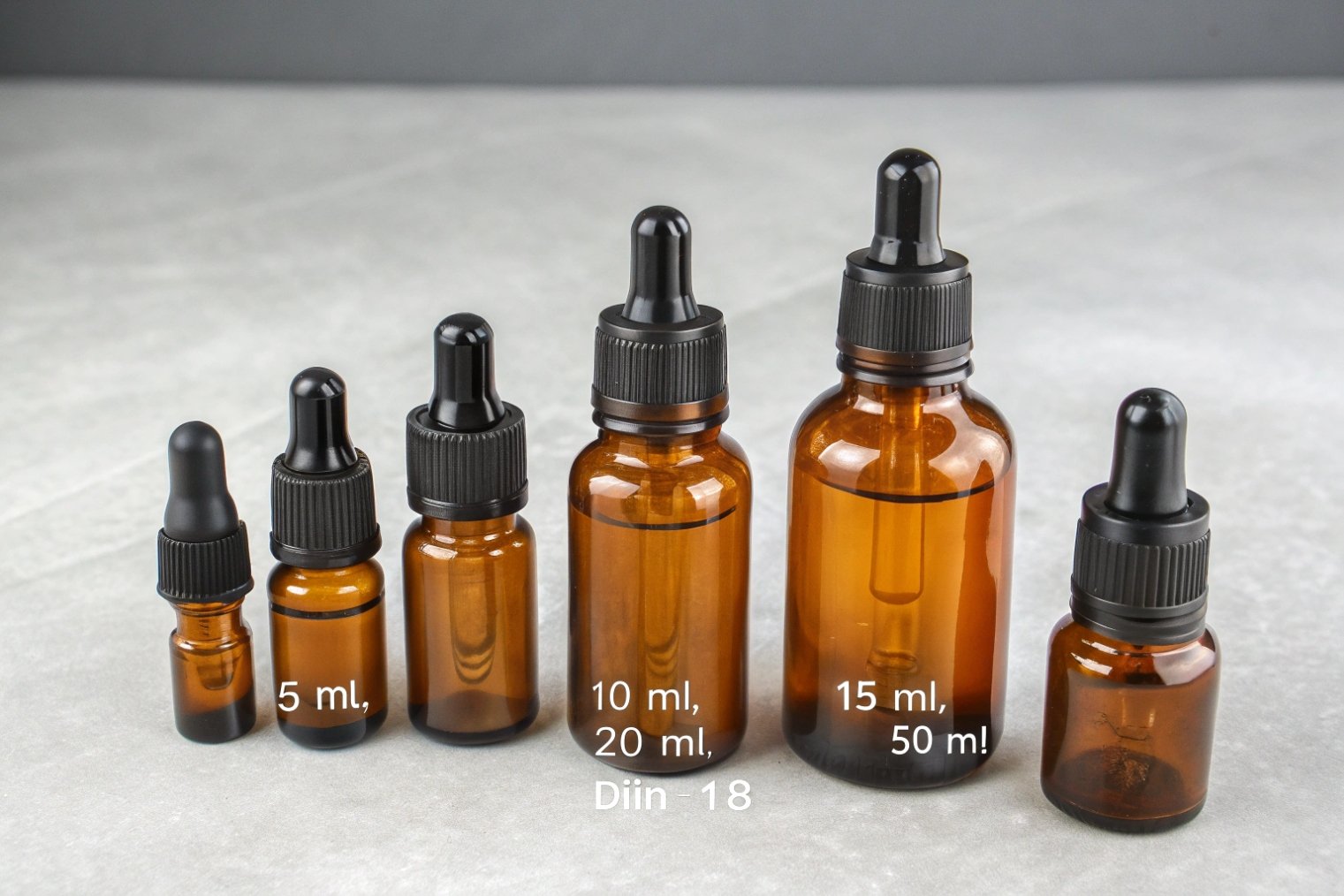
Droppers work well for oils and concentrated serums. The key internal detail is the wiper and the fit. A strong wiper reduces dripping. It also helps control dosing consistency. Many dropper issues come from poor tolerance, not from the bulb itself.
For oil-rich formulas, compatibility is a real topic. Some elastomers can swell. Some plastics can soften. A good supplier should specify bulb and gasket materials and offer compatibility options when oils or solvents are present.
Pumps: the best balance for daily use and hygiene
Pumps reduce finger contact and support repeatable dosing. For bathroom routines, pumps often create the best user experience. Still, pumps are a system. Output per stroke, spring design, and gasket choice all matter. Locking features matter for shipping. If e-commerce is a core channel, a down-lock or twist-lock is often worth it.
Sprayers: good for thin products, picky about formula and clogging
Sprayers fit toners and mists, but they require a formula that sprays well. Very viscous or particulate formulas can clog. Alcohol-based products need seals that resist drying and shrinkage. A sprayer also needs correct dip tube length and cut, or it will fail to evacuate product.
Leak-proof caps: simple, but only when the liner is correct
A leak-proof cap depends on liner choice, torque range, and neck finish match. For oil and fragrance systems, liners and seals should be chosen with resistance in mind. In many projects, PTFE-faced liners 5 and FKM-style elastomers 6 are considered when oils and solvents raise risk. For less aggressive formulas, other liner systems can work well and reduce cost.
| Dispensing choice | Best for | Main advantage | Main risk | What to lock in spec |
|---|---|---|---|---|
| Dropper | oils, serums | precise dosing, premium feel | leaks at wiper, drips | wiper fit + material compatibility |
| Lotion pump | lotions, cleansers | hygiene and convenience | output drift, shipping unlock | output tolerance + lock type |
| Fine mist sprayer | toners, mists | even application | clogging, poor seal | orifice + gasket + dip tube length |
| Screw cap + liner | concentrates, refills | strongest seal | user pour control | liner material + torque range |
A closure choice should be treated like a quality part, not an accessory. The next section covers what to confirm before bulk ordering, because amber glass projects often fail from “assumptions” instead of data.
What should you confirm before bulk ordering amber glass bottles (light-transmittance data, color consistency, decoration durability, and packaging tests)?
Bulk orders magnify small problems. A small shade shift becomes a shelf problem. A weak print becomes a scuff problem. A weak carton becomes a breakage problem.
Before bulk ordering, confirm spectral transmission performance for your bottle, lock amber color standards by lot, validate decoration with rub and adhesion tests, and approve a real shipping pack with drop and pallet checks.

Light-transmittance data: prove protection instead of guessing
The word “amber” is not a performance guarantee. Protection depends on tint density and wall thickness. A supplier should provide spectral transmission data for the exact bottle type, not only a generic statement. If the product is regulated or highly sensitive, this becomes even more important. A clear target window and acceptance limits make the conversation simple.
Color consistency: control the look across lots
Amber has many shades. Some are warm brown. Some are almost black. Some are lighter honey tones. For a premium line, consistency matters. A practical approach is to approve a golden sample and set a pass range for color difference. Even a simple controlled-light visual comparison can reduce surprises.
Decoration durability: test like a bathroom and a warehouse
Amber glass often uses screen printing, hot stamping, frosting, or spray coating. Each finish needs durability validation. Rub, tape adhesion, and humidity exposure are simple gate tests that catch weak curing or weak primer. If products are wiped with alcohol or stored in humid showers, add wipe testing too.
Packaging and shipping: treat breakage as a design problem
Amber glass is heavier than plastic, so shipping needs more control. Carton dividers, correct pallet pattern, and stable stretch wrap reduce breakage. For e-commerce, pack design should survive parcel handling. A drop test and a pilot shipment can save more money than any price negotiation.
Before you lock your inspection gate, align on an ISO 2859-1 (AQL) sampling scheme 7 and a defect list that matches your channel standards.
| Item to confirm | Why it matters | How to confirm | What to write into the PO or spec |
|---|---|---|---|
| Spectral transmission report | proves light protection | UV-Vis transmission test | wavelength window + limits |
| Bottle thickness and weight | affects protection and strength | sampling and measurement | tolerance range |
| Shade consistency | protects premium shelf look | golden sample + lot comparison | acceptance criteria per lot |
| Closure compatibility | prevents leaks and odor drift | soak + torque + leak test | liner and gasket materials |
| Decoration durability | prevents scuffs and peeling | rub + tape + humidity test | test method and pass level |
| Packing design | reduces transit damage | drop + vibration checks | divider spec + pallet plan |
| Quality plan | controls bulk drift | AQL sampling plan | defect list and limits |
In my work with bulk programs, the smoothest projects are the ones that lock these items early. The brand then spends less time fixing problems and more time selling.
Conclusion
Amber glass is ideal when formulas need real light protection and a trusted premium signal. Pair it with the right closure, proven transmission data, and shipping tests to protect quality at scale.
Footnotes
-
Learn how transmission curves quantify light blocking by wavelength. ↩︎ ↩
-
Browse official ICH guideline resources used in stability and photostability programs. ↩︎ ↩
-
See how airless designs limit oxygen intake and contamination during daily use. ↩︎ ↩
-
Understand why nitrogen flushing reduces headspace oxygen and slows oxidation. ↩︎ ↩
-
Review PTFE’s chemical resistance traits often used for high-barrier liners. ↩︎ ↩
-
Check fluoroelastomer basics when selecting seals for oil-rich or solvent-rich formulas. ↩︎ ↩
-
Reference ISO 2859-1 schemes for AQL-based acceptance inspection of production lots. ↩︎ ↩






