
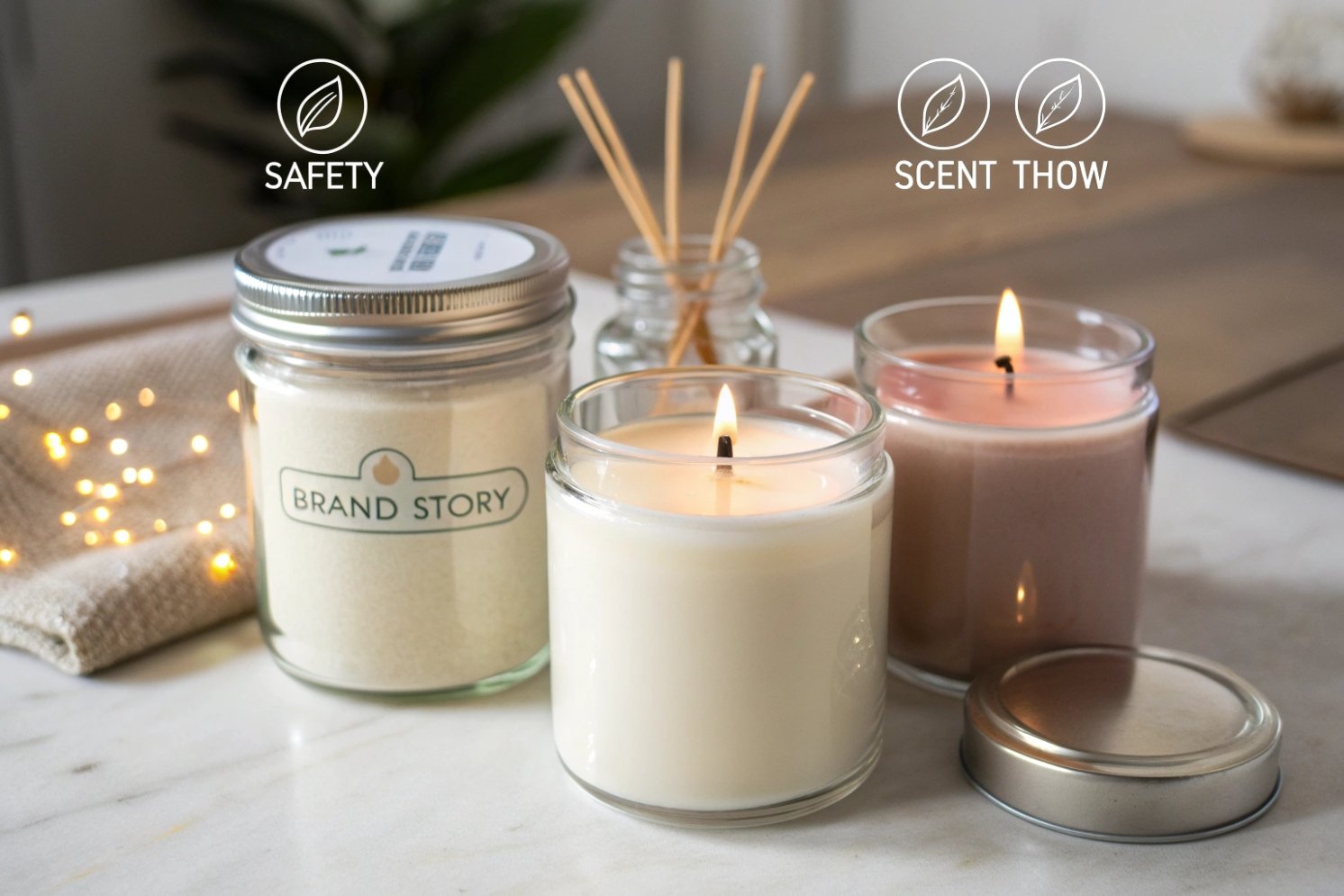
Cracked glass, overheating, and leaky tins can turn a “good scent” into a safety problem. One bad container choice can ruin a whole batch and your reviews.
The best candle containers are heat-suitable jars with stable wall thickness, safe mouth design, and packaging that survives shipping. Choose glass for most home candles, tins for travel, and ceramic for premium décor—then validate with burn and transit tests.
Start with candle safety, not aesthetics
A candle container is not only a “holder.” It is part of the burn system. The container controls heat buildup, oxygen flow at the surface, and how evenly the wax pool expands. When the container is wrong, the same wax and wick that looked perfect in testing can start to tunnel, smoke, or overheat.
Before you choose a vessel, align on basic candle safety tips for consumers 1 and confirm your product plan maps to recognized ASTM candle safety standards 2. For a U.S. market reality check, review the CPSC voluntary standards overview for candles 3.
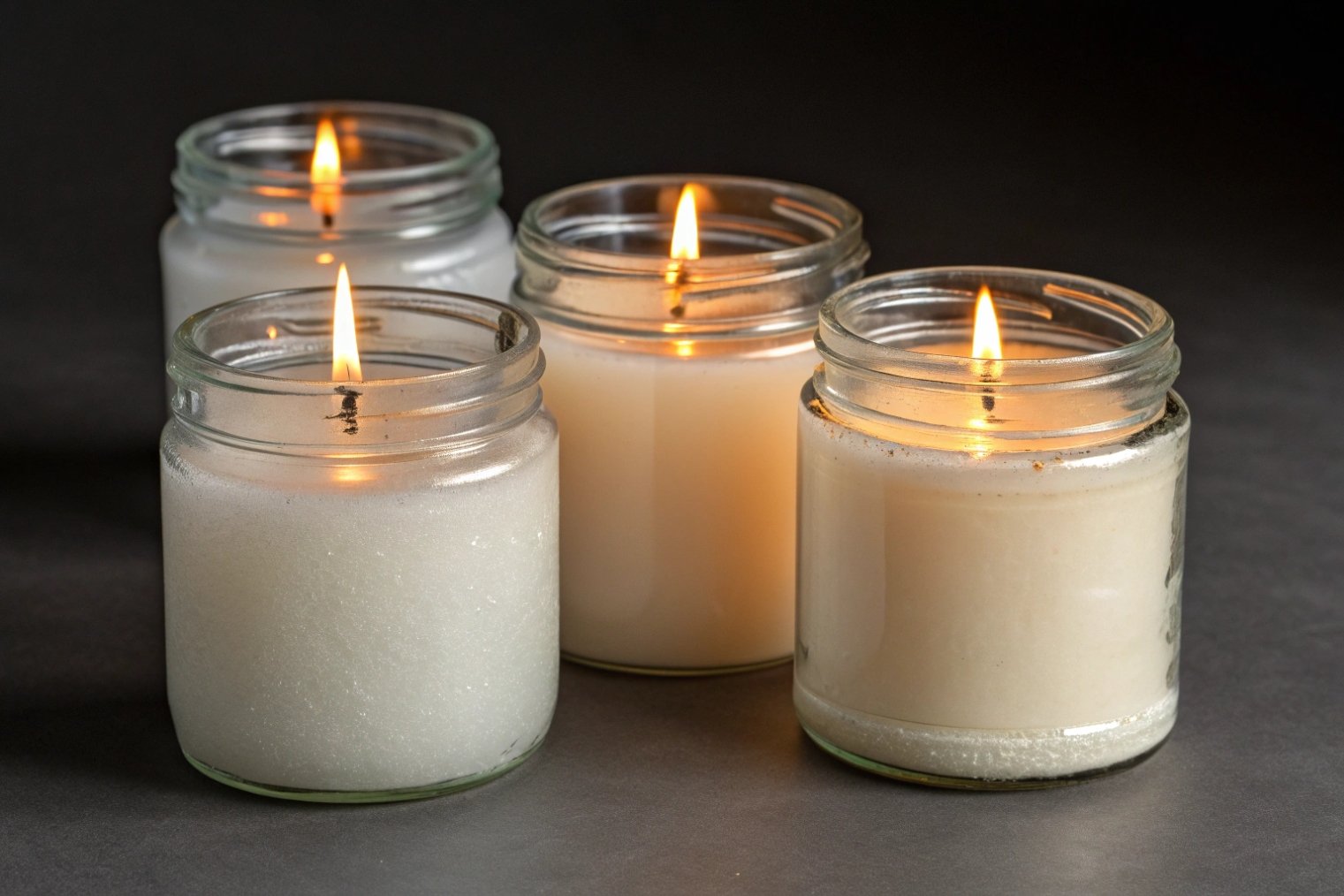
Most candle brands do best with purpose-made candle glass. Thick-walled, heat-suitable glass reduces thermal shock risk and slows rapid temperature swings. Thin decorative glass can look nice, but it can crack when the flame heats one spot faster than the rest. Reused bottles and random glassware add another risk because chips and scratches weaken the glass. Even small damage can become a crack path under heat cycling.
Metal tins are also a strong option for certain products. Tins do not shatter, so they work well for travel, outdoor sets, and subscription shipping. The trade-off is heat transfer and denting. A tin can feel hot to touch during long burns, and dents can affect shelf appearance. Seamless tins help reduce wax leaks, and a tight lid helps protect fragrance.
Ceramic and concrete vessels support high-end home décor candles. Ceramic can handle heat well, especially when glazed, but it can chip if dropped. Concrete looks modern and heavy, but it is porous and usually needs sealing, or wax can seep and stain. If you plan to market ceramic vessels as reusable for food or drink after the candle, glaze safety becomes part of the product story.
A practical container choice balances four needs:
- Heat resistance and crack prevention
- Wick performance and melt pool geometry
- Decoration durability and brand feel
- Shipping survival and landed cost
| Container type | Best for | Main advantage | Main risk | Simple mitigation |
|---|---|---|---|---|
| Heat-suitable glass jar | most home candles | stable, premium, visible wax | thermal shock, breakage | thicker walls + good packing |
| Metal tin | travel/outdoor | shatterproof, light | gets warm, dents | seamless tin + lid + labeling |
| Glazed ceramic | décor/luxury | premium look, heat stable | chips, glaze safety | drop test + glaze compliance check |
| Sealed concrete | modern décor | heavy, unique look | porous, needs sealing | heat-safe sealant + burn testing |
Once the container family is selected, the next step is to pick the right glass style, mouth size, and shape so the wick can do its job safely.
What types of glass candle jars are safest for heat resistance and crack prevention?
A candle can look fine on day one and crack on day five. Thermal shock and hidden stress in glass are common causes, and they show up when customers burn longer than your test.
The safest glass candle jars are purpose-made, thick-walled jars with consistent thickness, clean rims, and low internal stress. Avoid chipped, scratched, or repurposed glass, and screen for stress and defects before filling.
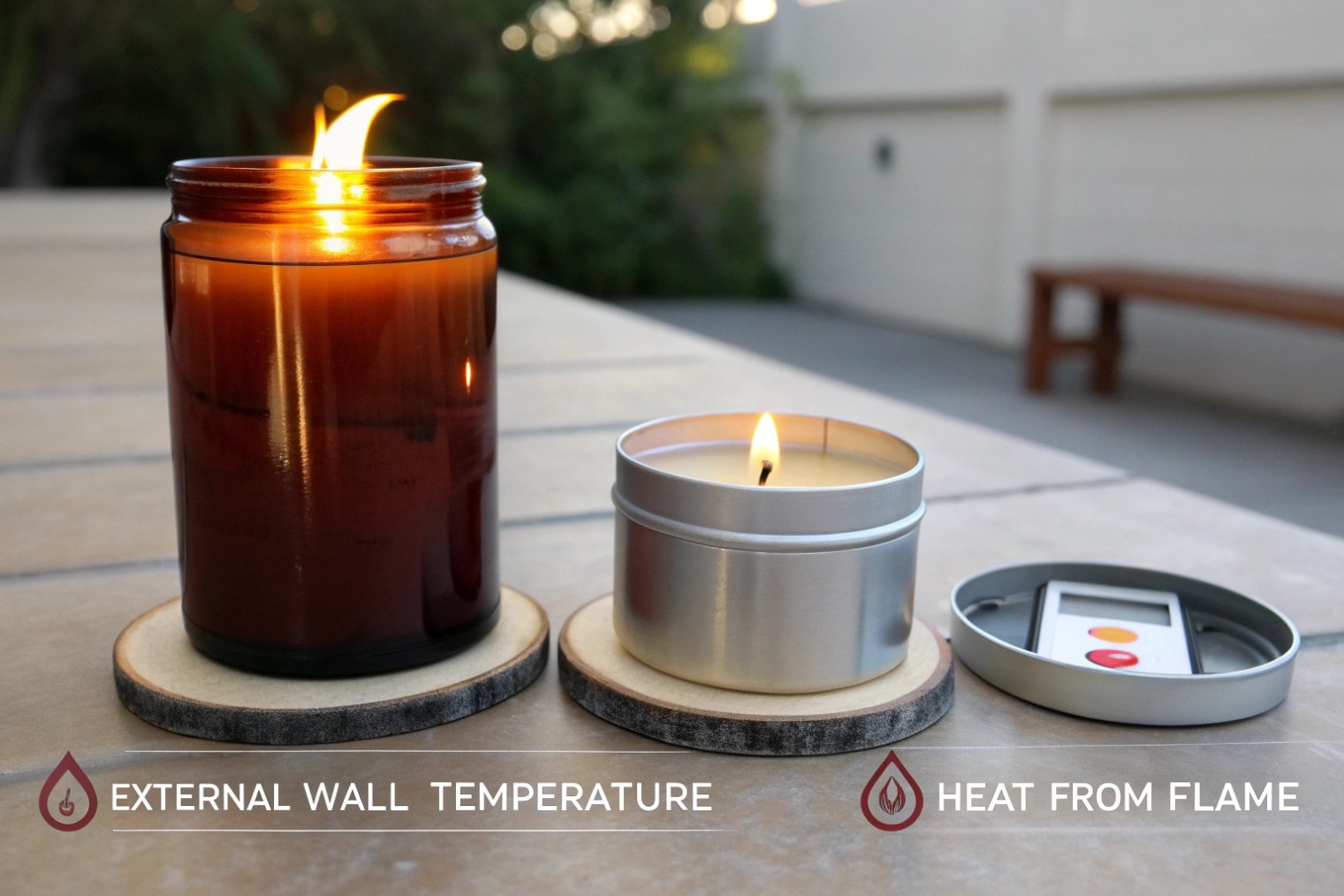
Choose “made for heat,” not “made for display”
The first safety filter is simple: use jars intended for heat exposure. Candle-made jars, some hot-food jars, and some lab-style glass are more likely to handle temperature swings. Decorative drinkware may not. Many cracks happen because the base heats slower than the sidewall, or because the jar has thin spots that heat too fast.
If you’re sourcing at scale, align your glass requirements with the ASTM standards catalog that includes candle-related safety specifications 4 so your supplier discussions stay specific.
Wall thickness, base thickness, and consistency matter most
Thick walls help, but consistency matters even more. A jar with a thick wall and one thin panel is still a crack risk. A heavy base can add stability and reduce tip risk. It also changes heat distribution, so wick selection may change too.
Avoid repurposed bottles and damaged glass
Repurposed beer or wine bottles and reused glassware can work for hobby projects, but bulk brand work needs a higher standard. Micro-scratches and chips become failure points under heat. A small rim chip can also cut customers during handling.
Screen for internal stress when reliability is the goal
Internal stress can make glass more likely to crack during heat cycling. A polariscope inspection is one method used in glass quality checks to detect stress patterns. Not every candle brand will do this in-house, but it is a good supplier-level control for higher reliability programs.
| Safety check | What it prevents | How to check | Pass criteria idea |
|---|---|---|---|
| Visual defect inspection | chips, cracks, stones | 100% visual under strong light | no chips, no cracks, clean rim |
| Thickness sampling | thin spots | caliper or weight sampling | within agreed tolerance |
| Stress screening (optional) | heat-cycle cracking | polariscope inspection | low stress pattern threshold |
| Heat cycling trial | thermal shock failure | controlled burn/heat test | no cracks after cycle |
| Rim and base flatness | wobble and uneven heating | flat-surface check | stable seating, no rocking |
A safe jar choice reduces crack risk, but it does not replace burn testing. The wick, wax, fragrance load, and dye all change how hot the container gets.
How do you choose the right jar size, mouth diameter, and shape for your wax type and wick performance?
Many candle issues that look like “wax problems” are really geometry problems. The wrong mouth size can cause tunneling, mushrooming, or an overheated jar.
Match jar size and mouth diameter to your target melt pool and burn time. Wider mouths need stronger or multiple wicks, while narrow mouths need careful airflow control. Use shape stability and consistent diameter to keep wick performance predictable.
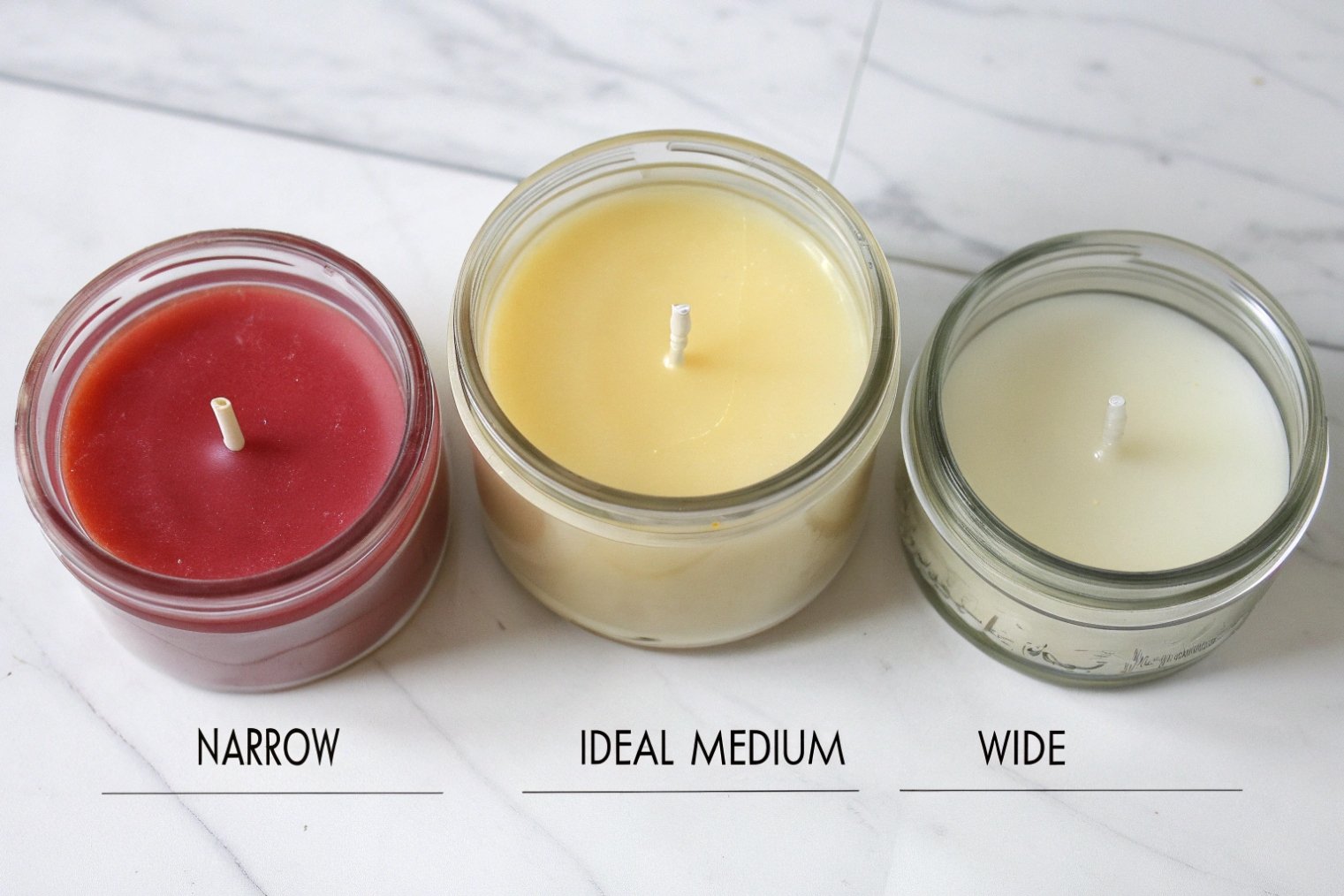
Mouth diameter controls melt pool and heat load
Mouth diameter is the biggest driver of melt pool width. A wider mouth requires more heat to reach the edges, so it often needs a larger wick or multiple wicks. If the wick is too small, the candle tunnels and wastes wax. If the wick is too large, the jar runs hot, soot increases, and safety risk rises.
Height and headspace influence flame behavior
Tall jars can create a chimney effect. This can increase heat in the upper zone and change how the flame behaves. Headspace matters too. Too little headspace can cause smoking or dirty rims. Too much headspace can reduce scent throw early in the burn.
Shape should be stable and repeatable in bulk
Simple round shapes are easier to wick consistently. Square and heavily contoured shapes look premium, but they can create uneven wax pull and hot spots. For bulk programs, repeatability matters more than novelty. A shape that looks unique but burns inconsistently will cost more in returns than it earns in shelf impact.
Wax type changes how the system behaves
Soy, paraffin, coconut blends, and beeswax each melt and flow differently. A softer wax may climb the glass and show frosting. A harder wax may pull away and create wet spots. These are not always defects, but the jar and finish can make them more visible.
| Jar feature | What it impacts | Safer direction | What to test |
|---|---|---|---|
| Wide mouth | melt pool, wick size | use correct wick or multi-wick | 4-hour burn cycles |
| Narrow mouth | airflow, soot risk | moderate wick, stable flame | soot and rim cleanliness |
| Tall wall | heat retention | thicker wall, controlled wick | container temperature |
| Heavy base | stability | improves stability | wick tuning may shift |
| Complex shape | hot spots | keep shapes simple for scale | edge melt and flame lean |
A simple workflow helps:
1) Choose 2–3 candidate jars by mouth diameter first.
2) Run wick ladders for each wax and fragrance load.
3) Record jar temperature at set burn intervals.
4) Approve only the jar-wick-wax combination, not the jar alone.
Which finishes and decoration methods work best on candle containers (frosting, spray coating, screen printing, hot stamping, and labels)?
A candle container can look luxury on the first photo shoot and still look worn after a week of handling. Poor decoration choice leads to scuffs, peeling, and dull branding.
For candles, frosting and screen printing create a premium “built-in” look, spray coating adds bold color but needs strong rub resistance, hot stamping works best for small metallic accents, and labels win for flexibility and compliance.
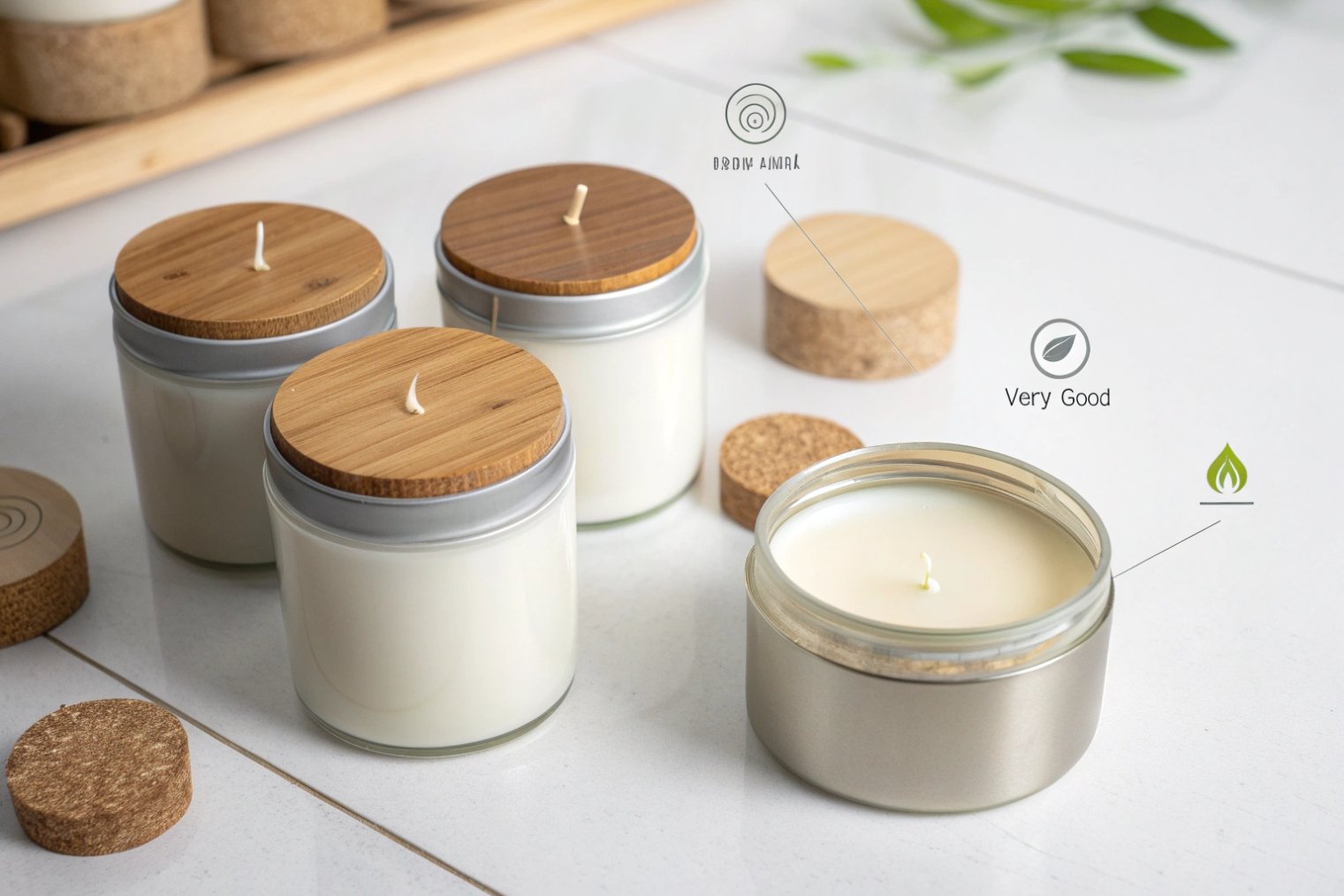
Frosted glass is a top choice for premium candles because it diffuses flame glow and hides fingerprints. Frosting also reduces the visibility of small wax marks. The risk is scratching during shipping or on retail shelves. A strong packing plan and sleeve protection can reduce that risk.
Spray coating: high impact, higher process risk
Spray coating creates strong brand color and can look very high-end. The weak point is scuffing. Candle jars are often moved, stacked, and wiped. A coating must pass rub tests and temperature exposure. Poor cure can cause tackiness or dull spots.
Screen printing: durable, no-label look
Screen printing on glass can be very durable when the ink system and curing are correct. It also avoids label edges. This works well for minimalist candle branding and repeated production runs. The trade-off is setup cost and fewer easy artwork changes.
Hot stamping: metallic accents, not full designs
Hot stamping can add gold or silver foil accents that feel luxury. It works best for logos and short text. It often needs a primer layer on glass. Primer quality controls adhesion and clarity. For candle jars, it is smart to keep foil areas small to reduce peeling risk.
Labels: fastest for multi-SKU and warnings
Labels are flexible and cost-effective for frequent SKU changes. They also allow warnings, barcodes, and variable data. For candles, labels should be chosen for heat and humidity resistance, and adhesives should resist oil from fragrance residue.
| Decoration method | Best use | Shelf look | Typical durability | Bulk pricing driver |
|---|---|---|---|---|
| Frosting | premium glow | soft luxury | medium-high | process yield + packing |
| Spray coating | bold color lines | high impact | medium (needs validation) | coating steps + QC |
| Screen printing | minimalist branding | no-label premium | high when cured well | setup per color |
| Hot stamping | metallic logo | luxury accent | medium-high with good primer | die + primer control |
| Labels | multi-SKU + warnings | flexible | medium (edge risk) | label material + finishing |
A decoration plan should always include a simple durability gate: tape adhesion check, rub test (dry and wet), and a packed-sample shipping simulation. This keeps “pretty” from becoming “problem.”
What packaging and shipping tests help reduce breakage for bulk candle jar orders (drop test, carton design, and palletization)?
A candle jar order can pass factory inspection and still arrive with cracks and chips. Shipping breakage destroys margin because it also destroys time and customer trust.
Reduce breakage with strong inner dividers, right carton strength, stable pallet patterns, and transit testing such as drop and vibration simulation. For parcel shipping, use a test method like ISTA-style procedures to validate your packed design.
Carton design is the first line of defense
Glass candle jars need separation. The goal is “no glass-to-glass contact.” Strong partitions or molded trays reduce impact transfer. Carton strength must match total weight and stacking height. A weak carton collapses on the pallet, and the jar rims take the load.
Palletization prevents slow crush and sudden tip-over
Many breakages happen from pallet issues, not from single drops. A stable pallet pattern, corner protection, and correct stretch wrap tension keep jars from shifting. Over-tight wrap can add pressure and crack jars, especially with thin walls or sharp corners.
Drop tests and vibration tests find weak points early
A simple drop test on packed goods can reveal divider weakness and rim contact. A vibration test or simulated transit test can reveal abrasion scuffs on frosted or coated jars. If the brand ships direct-to-consumer, the packaging must survive parcel networks, not only freight pallets.
For DTC, align your validation language with ISTA procedure change notes for 3A 5 so your supplier understands the expected parcel stress sequence.
Use a quality gate before full-scale shipment
A practical bulk program uses a small pilot shipment and tracks breakage rate. The pilot reveals whether the carton and pallet plan work for the real lane. For added fire-safety context in consumer messaging, reference the NFPA candle safety tip sheet 6 in your internal checklist and label review.
| Test or control | What it finds | Sample size idea | Pass target example |
|---|---|---|---|
| Drop test (packed) | weak dividers, rim contact | 3–5 cartons | no breakage, no rim chips |
| Vibration simulation | scuffs, shifting | 1 pallet layer | no glass-to-glass contact marks |
| Compression/stack test | carton collapse risk | 1 carton type | holds target stack load |
| Pallet stability check | tip and slide risk | 1 full pallet | no movement after wrap |
| Pilot shipment | real lane issues | 50–200 cartons | breakage below agreed limit |
Small improvements often save the most money:
- add neck/rim protection
- increase divider thickness
- change pallet pattern to reduce side pressure
- add corner boards and top frames
- use dust-free inner bags for frosted or coated jars
When shipping is controlled, bulk candle jars become predictable. Predictable supply is what allows brands to grow without daily fire-fighting.
Conclusion
Choose heat-suitable glass for most candles, tins for travel, and ceramic for décor. Then lock jar geometry, validate wick performance, and prove shipping strength with real transit tests.
Footnotes
-
Official NCA safety rules to reduce fire risk, burns, and common home-use mistakes. ↩︎ ↩
-
Explains key ASTM candle standards so you can spec containers, labels, and testing with fewer assumptions. ↩︎ ↩
-
U.S. guidance linking candles to voluntary standards; useful for compliance conversations and retailer readiness. ↩︎ ↩
-
Reference catalog for candle-related ASTM documents; helps keep technical sourcing terms consistent across suppliers. ↩︎ ↩
-
ISTA 3A-related notes that clarify parcel-test expectations, including leak checks for liquid-containing packages. ↩︎ ↩
-
Quick, printable fire-safety guidance that helps align consumer messaging and internal review checklists. ↩︎ ↩






