
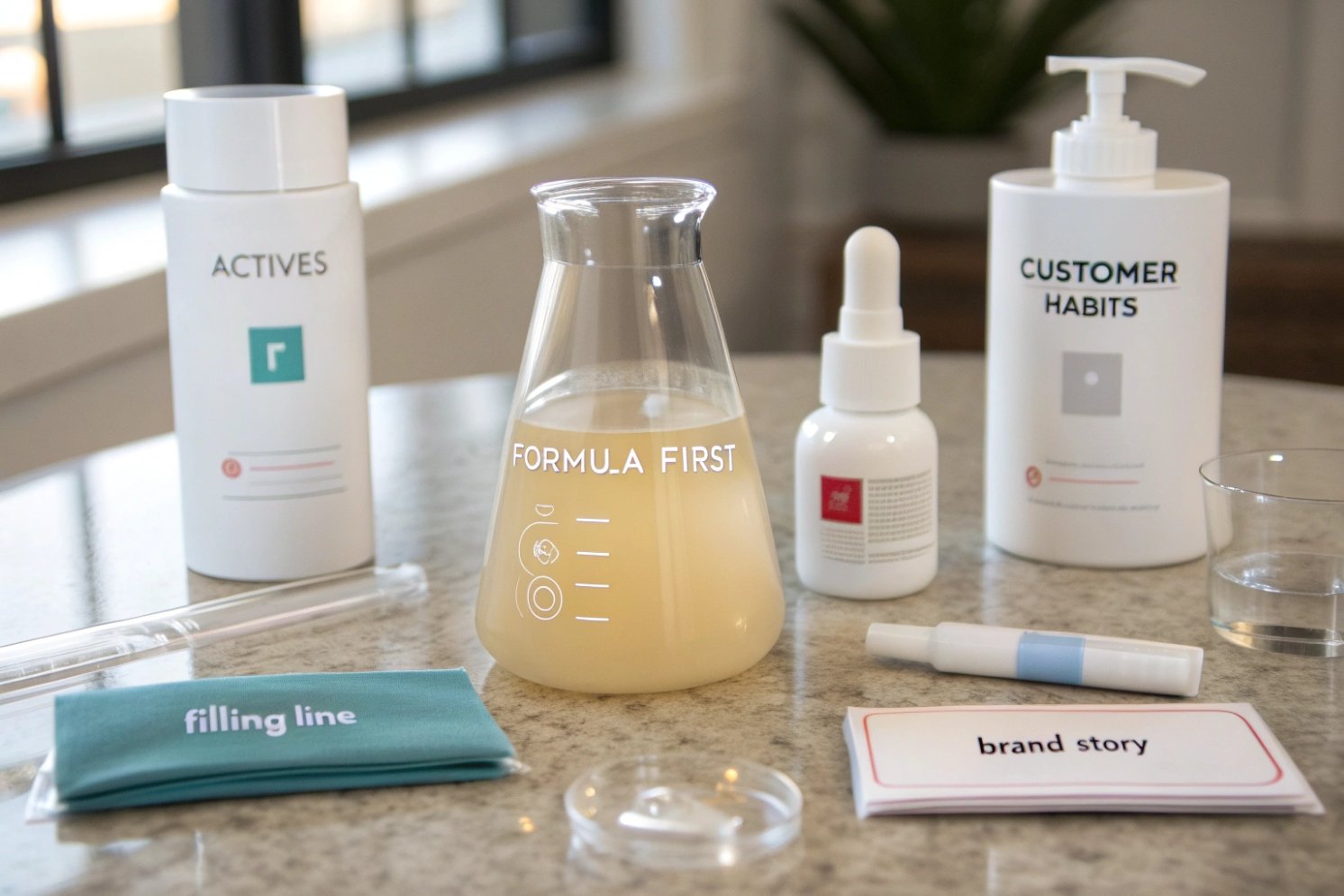
A skincare formula can be perfect in the lab, but it can fail in the customer’s bathroom. The wrong pack lets in air, light, and fingers—so stability and trust drop fast.
The best skincare packaging depends on texture, actives, and daily use. Serums often fit droppers or airless pumps, creams fit jars or airless systems, toners fit disc caps or sprayers, oils fit droppers, cleansers fit pumps or tubes, and sunscreens often fit tubes or airless packs.
Match the packaging to the product job, not the trend
Packaging is not decoration first. Packaging is protection first. Every skincare format has a “job to do” in real use:
- Oxygen control (oxidation-sensitive actives)
- Light control (UV/blue-light sensitive actives)
- Contamination control (fingers + backflow + bathroom humidity)
- Dispensing accuracy (dose consistency, waste reduction)
A simple way to choose fast is to rate each SKU as High / Medium / Low risk for these four areas. When one risk is high, it often dictates the pack type more than branding does.
Quick matching map (used in many bulk projects)
| Product format | Typical viscosity | Best-fit primary packs | Main protection goal | Common upgrade |
|---|---|---|---|---|
| Serum | low to medium | dropper, airless pump, treatment pump | oxygen + dose control | tinted bottle + carton |
| Cream | medium to high | jar, airless jar, pump bottle | contamination + oxygen | airless or inner lid |
| Toner | low | disc cap, flip cap, mist sprayer | controlled dispensing | opaque/tinted bottle |
| Oil | low | dropper, treatment pump | oxygen + aroma loss | amber glass + tight liner |
| Cleanser | medium | pump bottle, tube | hygiene + easy use | lockable pump |
| Sunscreen | medium to high | tube, airless pump | leak control + hygiene | airless + barrier pack |
If the goal is a line that scales, each pack choice should support stability, brand look, and production reality at the same time.
Which packaging type best fits your skincare format—serum, cream, toner, oil, cleanser, or sunscreen?
Many lines try to use one pack type for everything, then the user experience feels wrong. A thick cream struggles in a dropper. A toner feels awkward in a pump. A cleanser wastes product without a lock.
Pick packaging by viscosity and use scene. Serums and oils fit droppers or treatment pumps, creams fit jars or airless, toners fit disc caps or sprayers, cleansers fit pumps or tubes, and sunscreens fit tubes or airless for fast dosing and leak control.
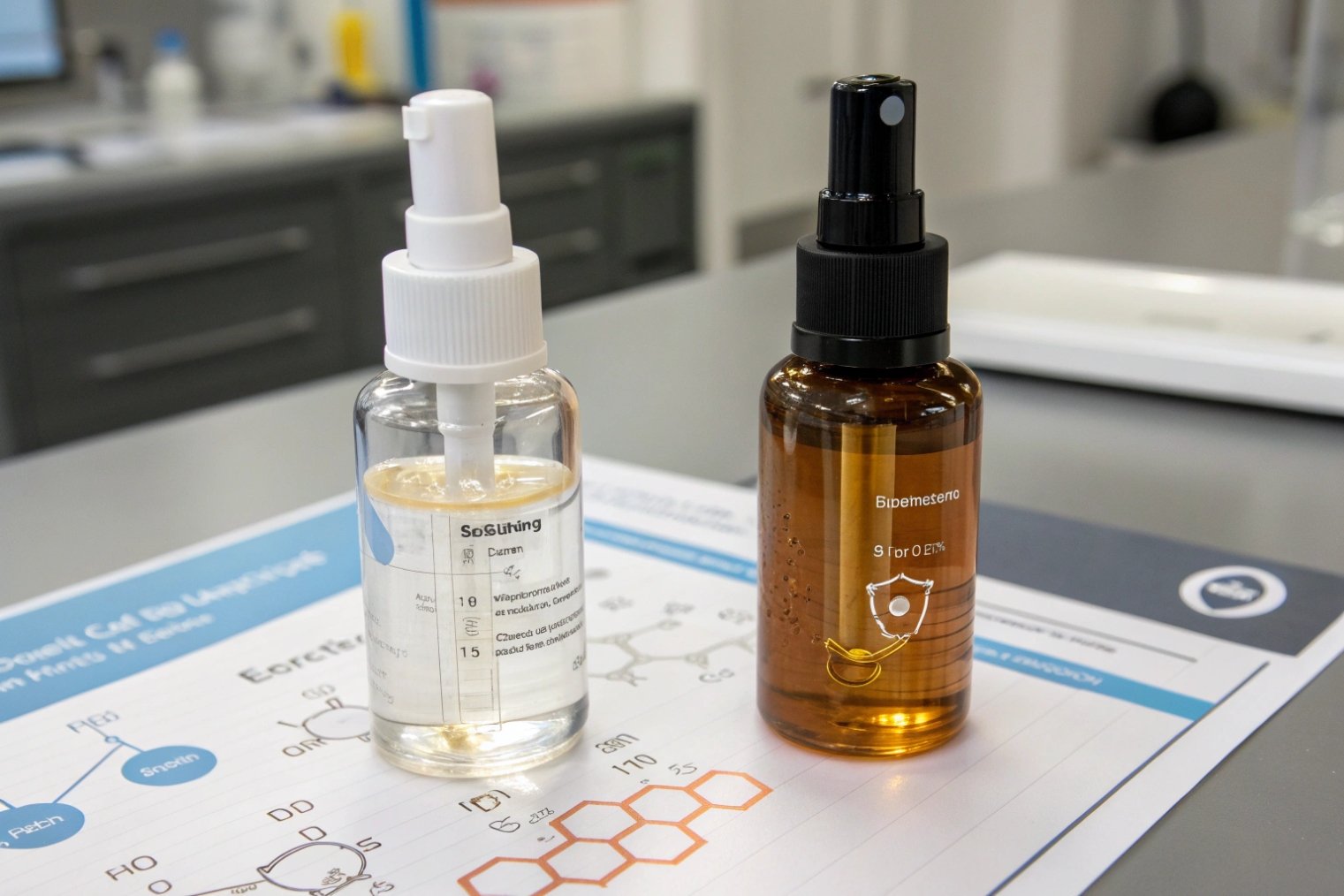
Serum
Serums often carry the highest active load per mL, so dose control + oxygen control matter.
- Dropper: ritual + precision, but more air exposure at the neck and more mess risk.
- Treatment pump: cleaner dosing, less dripping, still premium.
- Airless pump packaging](https://en.wikipedia.org/wiki/Airless_pump) 1: strongest choice when oxidation is a real stability driver.
If light-sensitive: choose amber/opaque or add a carton.
Cream
Creams are thick; users want easy access.
- Jar: best access, highest contamination risk (air + fingers).
- Airless jar: jar-feel with better hygiene.
- Pump: clean and controlled for daily use.
If active-heavy or preservative-light: airless often wins.
Toner
Toners are thin and used quickly.
- Disc/flip cap: controlled pour, simple, low clog risk.
- Fine-mist sprayer: only if the formula sprays cleanly and won’t clog.
Oil
Oils usually fit droppers because drop-by-drop dosing matches use.
- For “no mess” positioning, consider a treatment pump.
- Prioritize oil-resistant liners/gaskets to reduce seep and odor pickup.
Cleanser
Cleansers are used with wet hands.
- Pump bottle: easiest at sink/shower, but needs a lock for shipping.
- Tube: hygiene + travel-friendly, reduces backflow contamination.
Sunscreen
Sunscreen requires high-dose dispensing.
- Tube: fast dosing, familiar use, travel-friendly.
- Airless: can improve hygiene and reduce oxidation for some systems, but must match viscosity.
A simple “don’t regret it” table
| Format | Best user control | Best hygiene | Best for travel | Common mistake |
|---|---|---|---|---|
| Serum | dropper / treatment pump | airless pump | small airless | dropper that drips or leaks |
| Cream | jar / airless jar | airless jar | tube (some creams) | open jar for sensitive actives |
| Toner | disc cap / sprayer | sprayer | disc cap | pump that doses too much |
| Oil | dropper | treatment pump | dropper with lock | wrong liner causes seep |
| Cleanser | pump / tube | tube | tube | pump without lock |
| Sunscreen | tube / airless | tube / airless | tube | pack can’t deliver enough product |
How do you choose between jar, pump bottle, dropper bottle, and airless packaging to protect active ingredients?
A product can look premium and still lose potency because air keeps entering the pack. A jar can feel luxurious, but every open adds exposure. A dropper can feel precise, but the neck stays wet and oxidizes.
Choose jars for very thick textures where scooping matters, pumps for hygiene and daily convenience, droppers for precise low-dose serums and oils, and airless packaging for oxygen-sensitive actives and formulas that need longer stability in use.
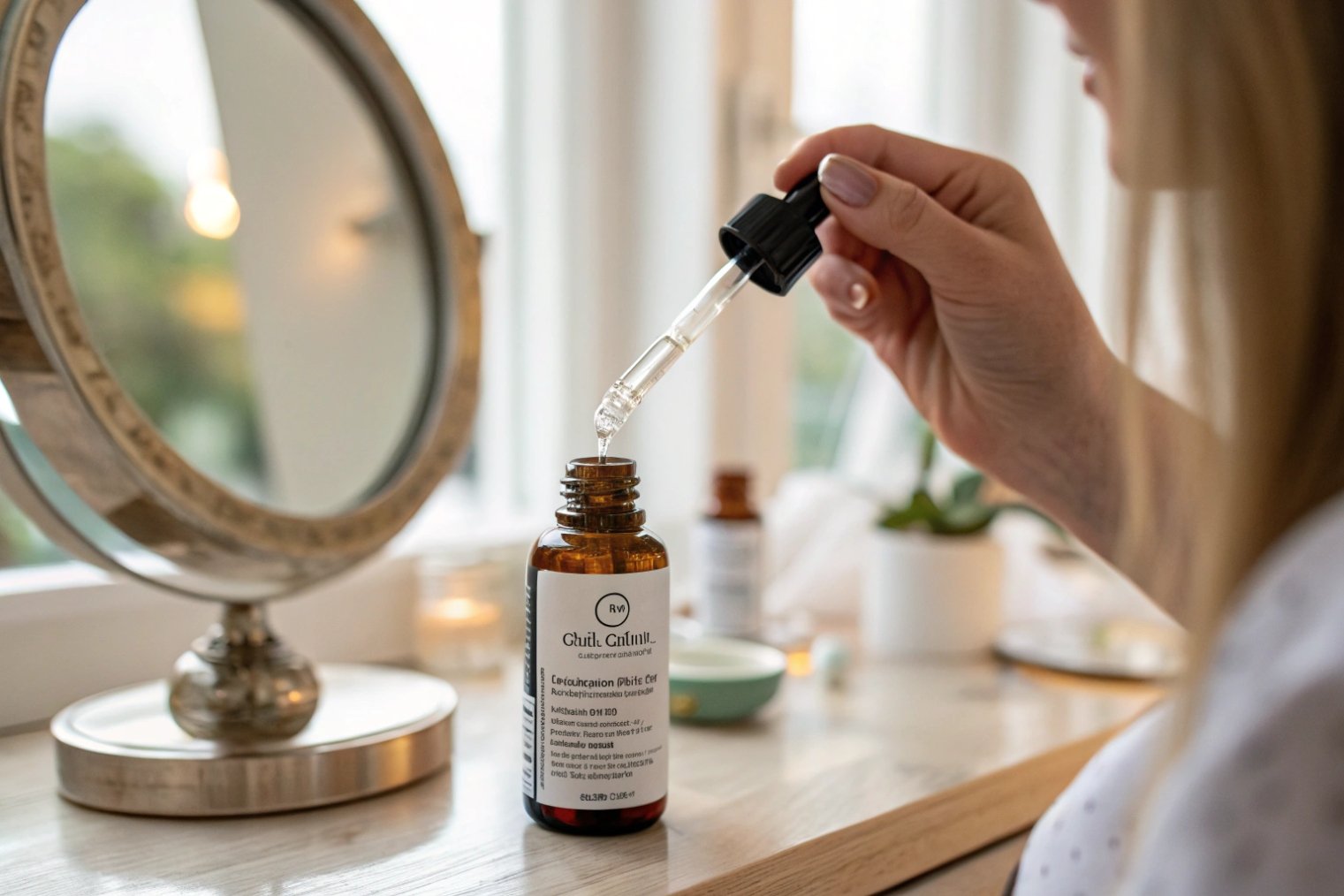
Jar: best access, weakest protection
Best for masks, balms, thick creams.
- Upgrade with inner lid + spatula and a realistic preservative strategy.
Pump bottle: best “daily tool” balance
Great for lotions, cleansers, body care.
- Lock output per stroke and require a shipping lock for e-commerce.
Dropper bottle: precision + ritual, but more variables
Great for oils and serums where dosing is small and deliberate.
- Lock the wiper fit, bulb material, and liner/gasket compatibility.
Airless: protection-first and dose-consistent
Strong for oxidation-prone actives and “clean” positioning.
- Must match viscosity range, priming behavior, and pump quality.
| Option | Oxygen exposure | Contamination risk | Dose control | Best fit | Key spec to lock |
|---|---|---|---|---|---|
| Jar | high | high | low | thick creams, balms, masks | inner lid + spatula plan |
| Pump bottle | medium | low | medium | lotions, cleansers | output + lock + gasket |
| Dropper | medium | medium | high | serums, facial oils | wiper + bulb + liner |
| Airless | low | low | high | active serums, sensitive formulas | viscosity + output + priming |
Premium packaging can backfire when the finish scratches, the coating reacts, or the cap leaks. A heavy bottle feels luxury, but it can raise shipping damage. A shiny metal look feels modern, but liners can fail if chemistry is wrong.
Glass gives a premium, inert base for many formulas, aluminum offers strong barrier with the right liner, and cosmetic plastics enable premium shapes with good coatings. Use finishes like frosting, spray, hot stamping, and screen printing only after compatibility and rub testing.
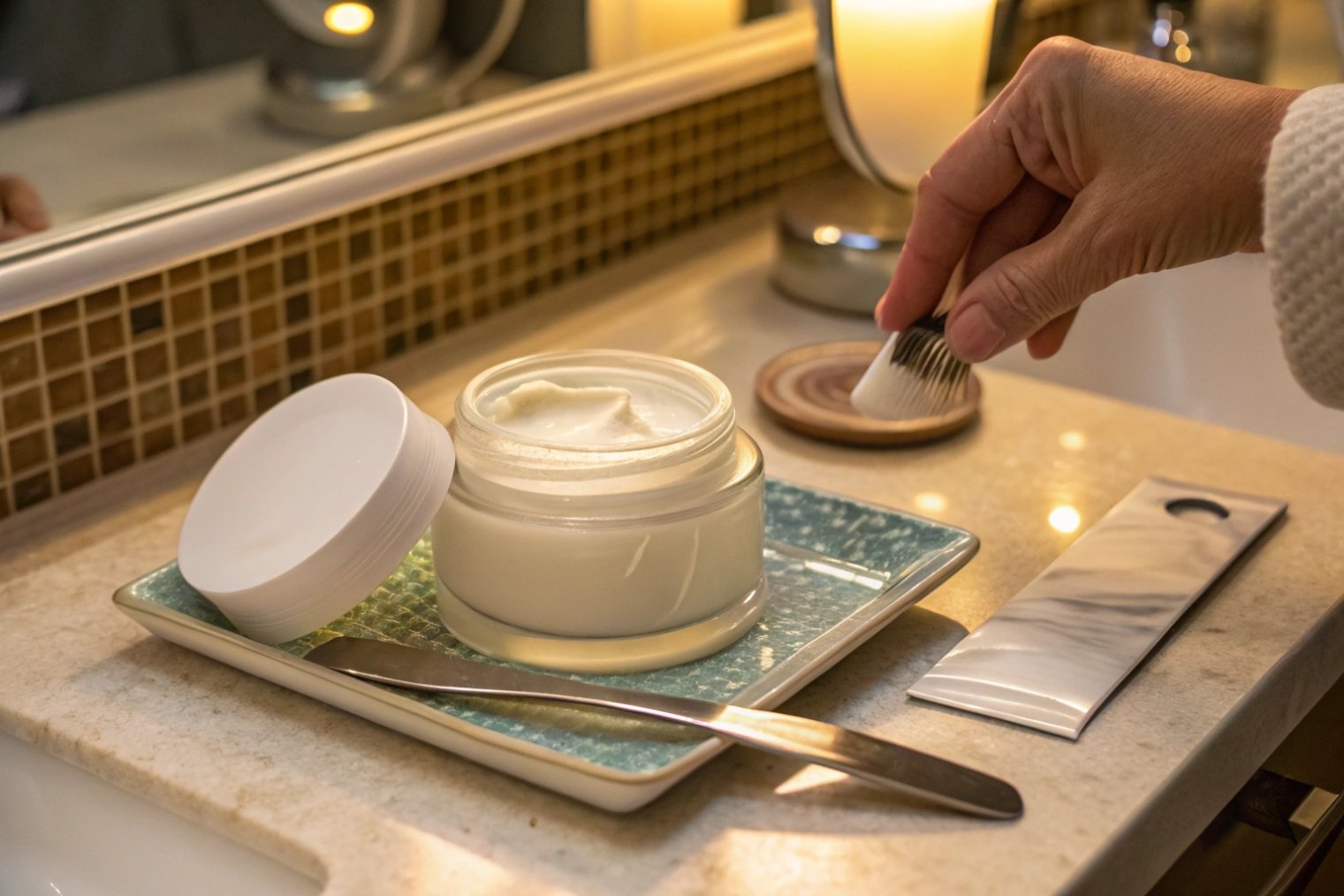
Material selection (practical view)
- Glass: premium + inert + great for tinted protection; heavier and break-risk.
- Plastic (PET/PP/PE, etc.): light + durable + design flexibility; some plastics need surface treatment like corona treatment 2 to hold inks and adhesives well.
- Aluminum: excellent light barrier; requires a liner that must match formula chemistry.
Premium finishes that survive real bathrooms
Premium is “looks good on day 1 and day 100.” For wet rooms and daily wiping, plan durability up front.
| Premium element | Best base | Main benefit | Main risk | Simple test |
|---|---|---|---|---|
| Frosting | glass | luxury feel, less fingerprints | scratching/unevenness | wet rub + scratch check |
| Spray coating | glass/plastic | strong brand color | scuff/chip | rub test + pack protection |
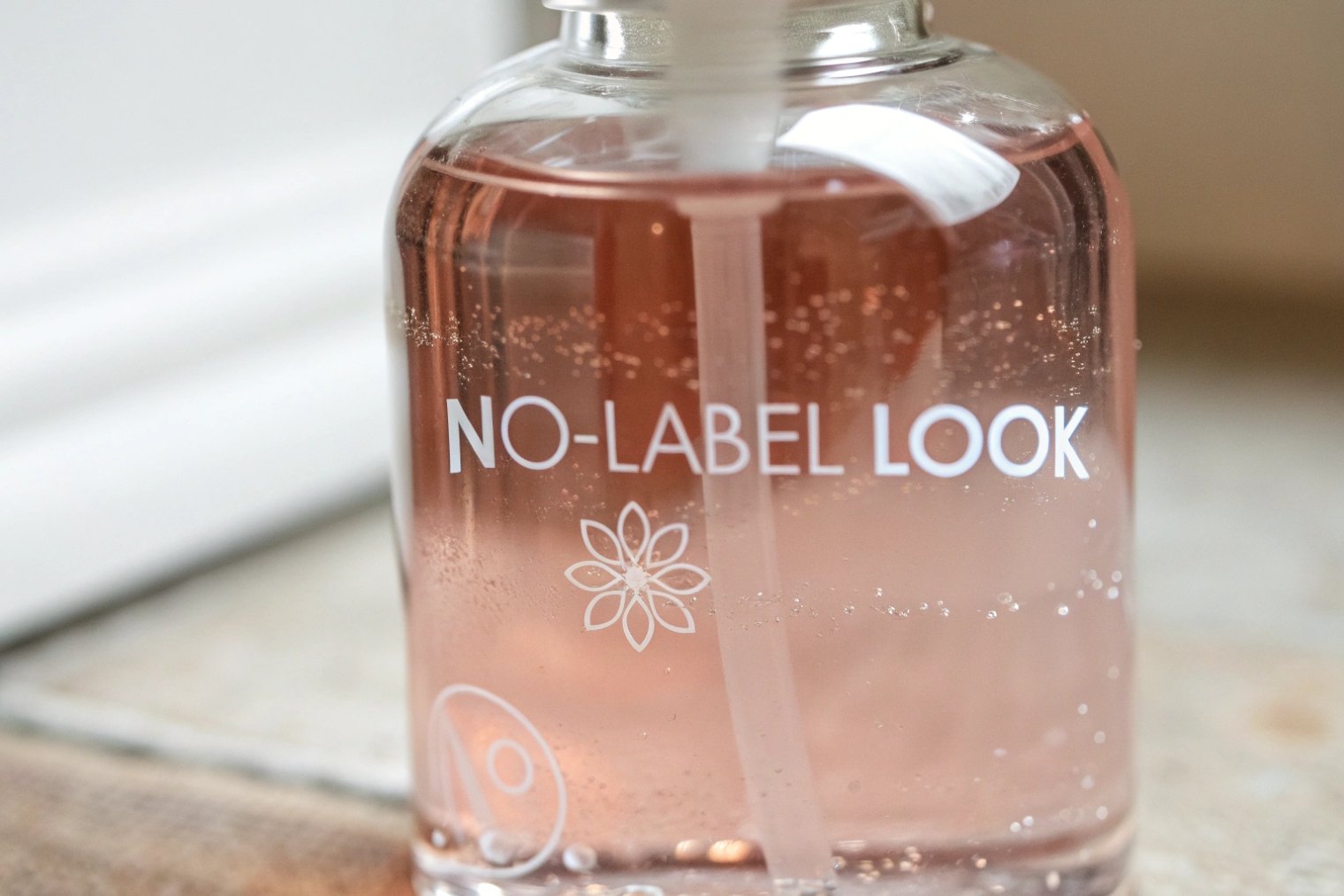
| Screen printing | glass | no-label look, durable | poor adhesion if cure weak | tape + rub |
| Hot stamping | glass | metallic brand pop | foil lift | tape + humidity aging |
| “No-label” film label | glass/plastic | printed-on look with flexibility | edge lift in humidity | humidity + oil wipe |
What should you consider for bulk production—MOQ, decoration options, stability testing, and shipping protection?
Many brands approve a sample and assume scale will match. Bulk production exposes hidden issues: color shifts, pump variation, scuffed decoration, cracked glass, and leaky cartons.
For bulk, lock MOQ and lead time early, choose decoration methods that match volume and SKU count, run stability and compatibility tests on the final pack, and design shipping protection to control breakage, scuffing, and leaks.
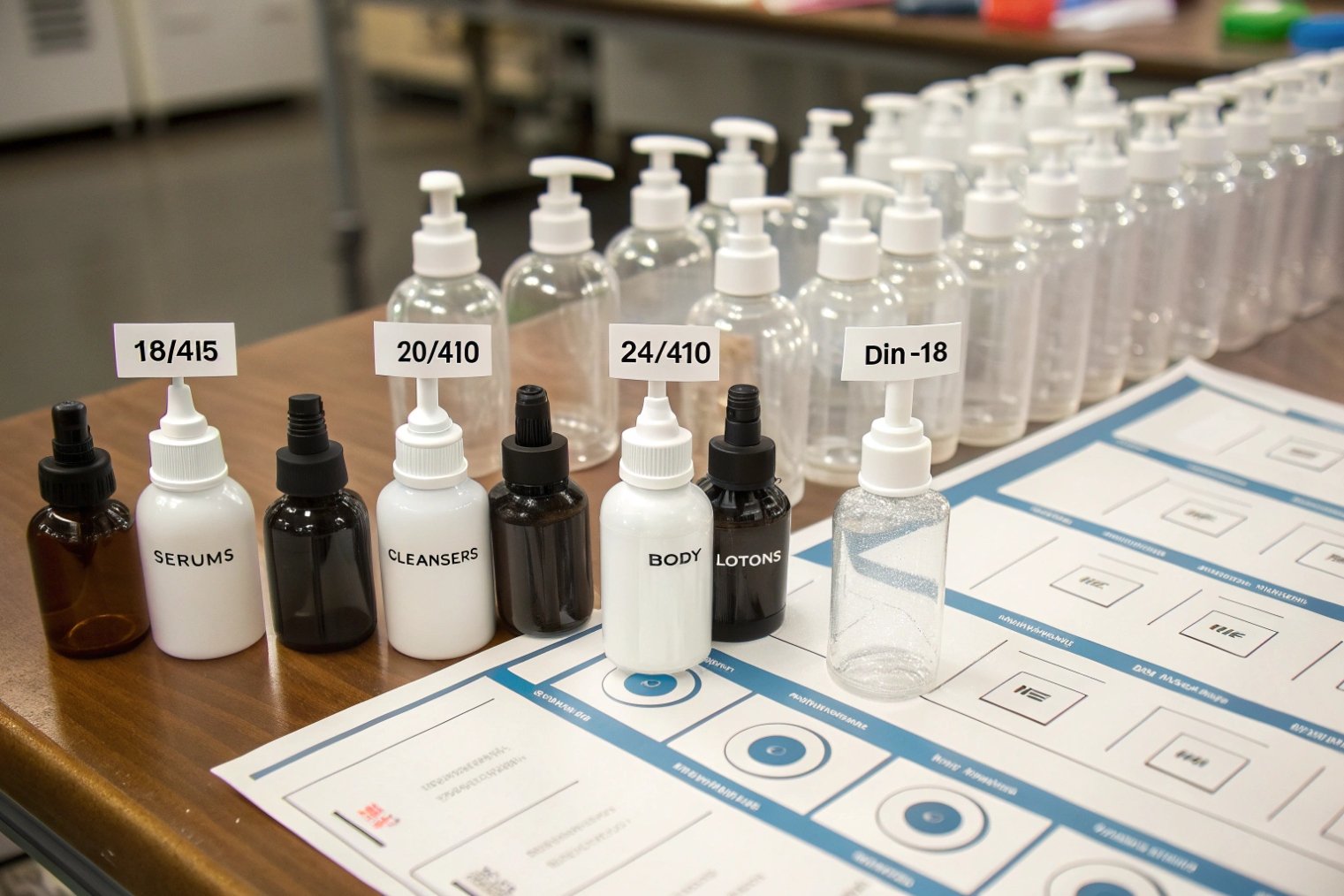
1) MOQ and lead time (avoid surprise minimums)
Confirm MOQ separately for:
- container
- closure/pump/sprayer
- decoration (screen/foil/coating)
- assembly and spare parts (especially pumps)
2) Decoration strategy (scale-friendly)
- Pressure-sensitive label 3 for fast-changing SKUs and compliance-heavy text.
- Silk screen printing 4 for stable hero SKUs and “no-label look” positioning.
- Foil/hot stamping for small, controlled premium accents (tooling + lead time apply).
3) “Final pack” testing (not just formula-in-a-jar)
Run tests using the actual bottle + closure + decoration + ship pack:
- leak (upright + inverted)
- torque range validation
- compatibility soak (weeks)
- heat/cold cycling
- rub/tape adhesion for decoration
- drop/vibration/compression on packed goods
- glass: dividers + corner protection + pallet rules
- pumps: lock-down heads and collar protection
- coated bottles: surface protection to prevent scuffs
| Bulk risk | What causes it | Prevention step | What to request |
|---|---|---|---|
| Breakage | heavy glass, weak packing | engineered dividers + pallet spec | packing spec + drop test proof |
| Leaks | gasket mismatch, torque drift | lock torque + liner match | torque range + liner spec |
| Scuffed print | weak cure + friction in cartons | rub test + protective packing | rub test report + packing photos |
| Color variation | pigment/recipe drift | signed color standard | QC plan + change control |
| Pump inconsistency | tolerance drift | output checks per lot | output spec + sampling plan |
Labeling & Screen Printing: Which One Is Right for Your Skincare Products?
A skincare bottle can look perfect in photos, then fail in real bathrooms. Labels lift. Prints scuff. Barcodes stop scanning. Returns start to grow.
Labels win for flexibility and complex design across many SKUs. Screen printing wins for a “printed-on” premium look and strong durability, especially at higher volume.
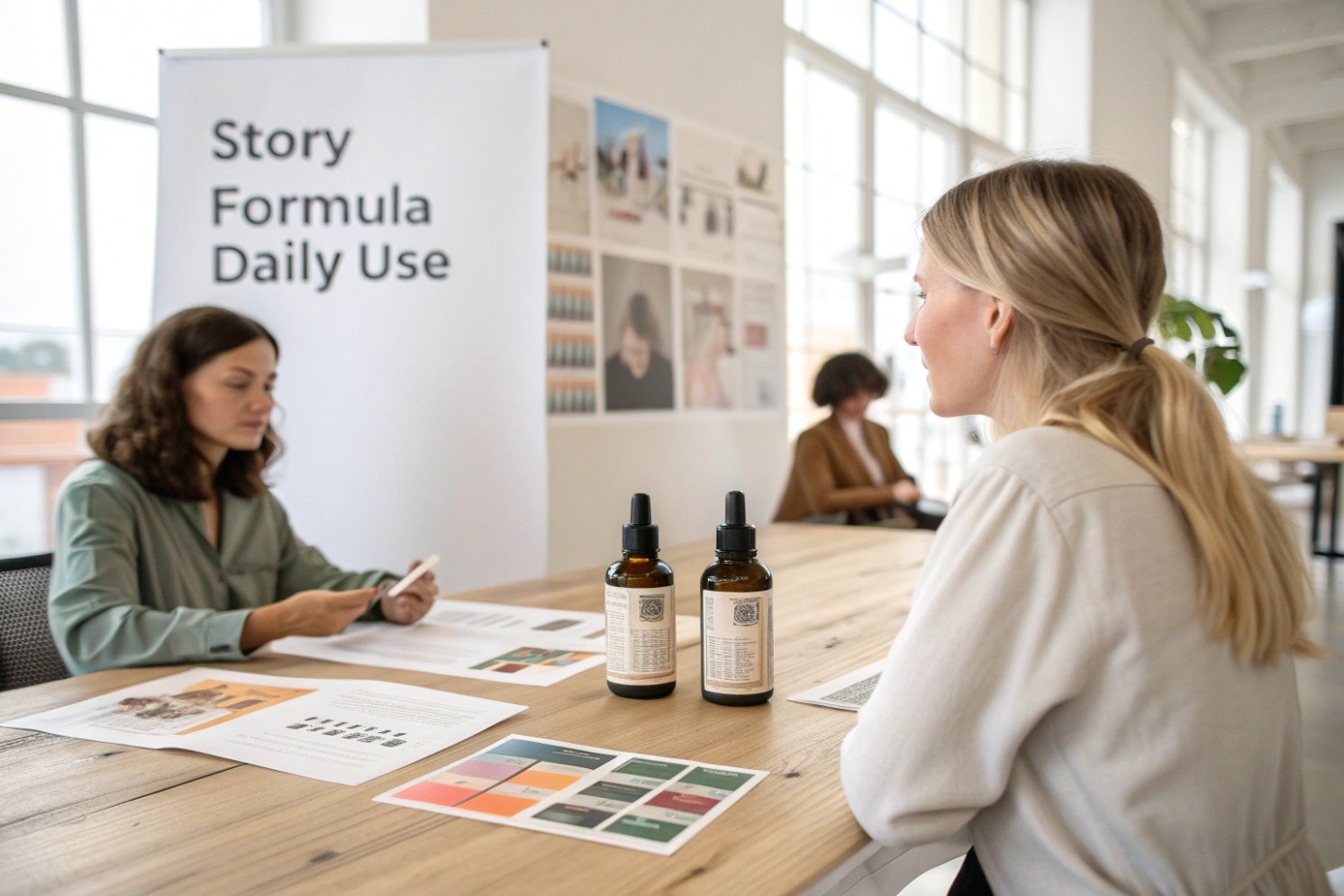
A simple way to decide before you talk to suppliers
The best choice is not about “which looks nicer.” The best choice is about control. A skincare line needs control over compliance text, batch changes, artwork updates, and real-life resistance in wet rooms. The container material also matters. Glass is friendly to printing. Some plastics need surface treatment to hold inks and adhesives well. The formula matters too. Oils, alcohol, and acids can attack weak label adhesives or certain ink systems.
A good decision starts with four questions:
1) How many SKUs will exist now, and how many will exist next year?
2) Will the pack live in a wet shower, or on a dry vanity?
3) How long is the INCI ingredient names 5 and compliance text, and how many languages are needed?
4) What volume is expected for the hero SKU, not the whole line?
In most projects, labeling is the fast path to launch. It supports fast artwork changes and shorter runs. It also supports photo-style graphics and dense copy. Screen printing is the stable path once the design is locked and volumes are consistent. It gives a clean, premium finish and avoids label edges, bubbles, and wrinkles.
Below is a quick overview that helps align design, sourcing, and operations:
| Topic | Pressure-sensitive label | Silk screen printing |
|---|---|---|
| Where the artwork lives | On a label stock | On the container surface |
| Best for | Multi-SKU changes, complex graphics | Premium “no-label look,” stable SKUs |
| Typical setup cost | Low to medium | Medium to high (screens, fixtures) |
| Typical MOQ | Lower | Higher |
| Risk when mistakes happen | Replace label | Scrap the container |
This is not a one-way decision. Many premium skincare brands use both. Labels for compliance-heavy SKUs. Screen printing for hero serums that must look like luxury. The key is to choose with a plan for scale.
If the decision still feels hard, the next sections break it down in the same order buyers face it in real sourcing.
What are the main differences between pressure-sensitive labels and silk screen printing for skincare packaging?
A label and a printed bottle can look similar from far away. Up close, the differences decide user experience, complaint rate, and how fast a brand can change.
Pressure-sensitive labeling applies a printed film or paper with adhesive onto the container. Screen printing pushes ink through a mesh stencil directly onto the container, usually one color per pass, creating an integrated “printed-on” finish.
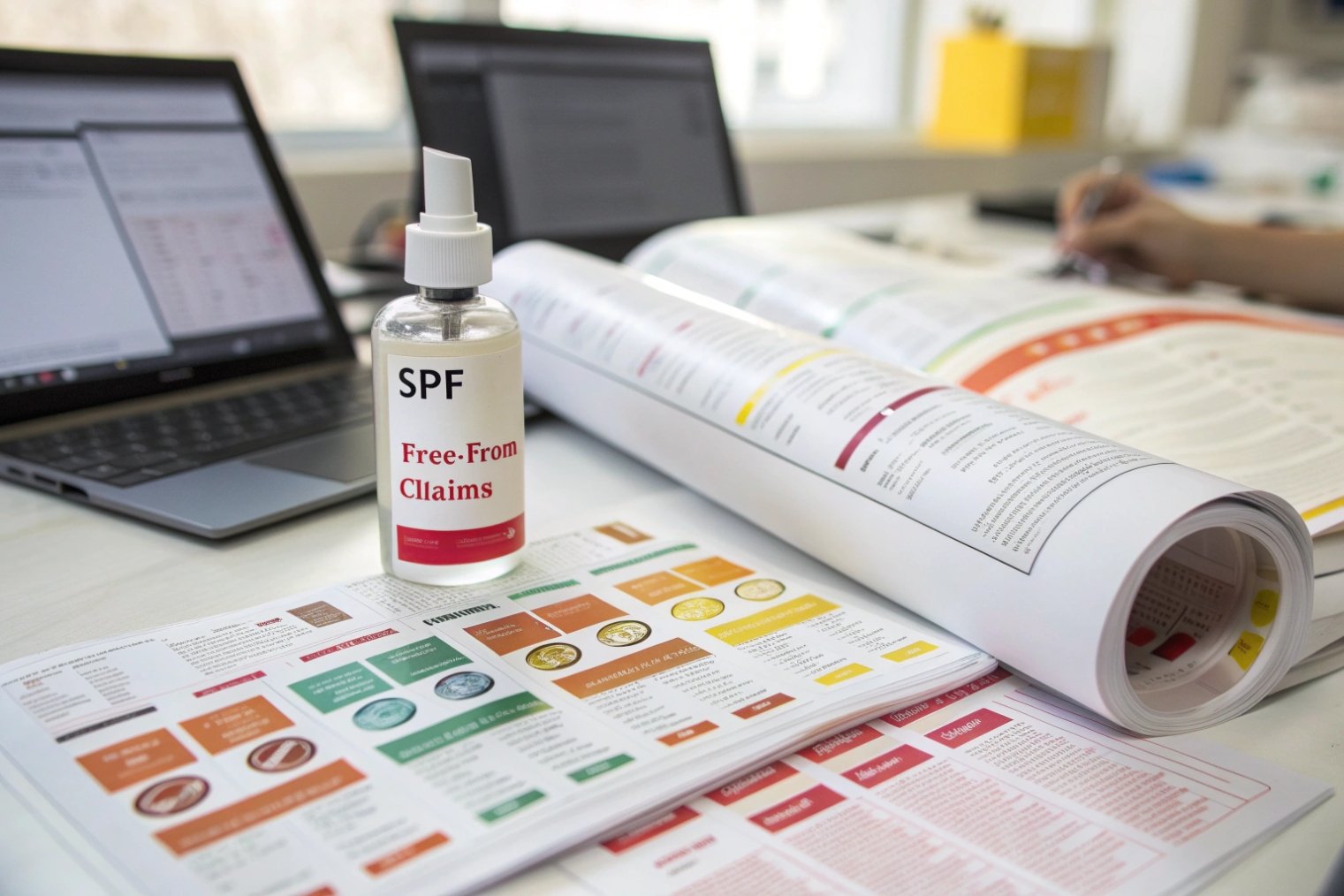
How the processes change your packaging workflow
With labels, the artwork is produced on a label roll, then applied in a labeling step. This means the bottle and the decoration are separate. When copy changes, the container does not change. The label changes. That is why labels feel easy for fast-moving skincare lines.
With screen printing, the decoration is part of container production. The supplier prepares screens (often one screen per color) and sets up the line to print directly on the bottle or jar. When artwork changes, new screens are needed and setup repeats. This is slower, but it is stable once locked.
How the look and feel differ on shelf
Labels can be extremely high quality. A clear “no-label look” label can make the container look directly printed, especially on glass. Still, label edges exist, and adhesive behavior can show over time. Screen printing has no label edge. It feels integrated and often reads as higher-end, especially for minimal designs.
What changes in problem-solving
Labels fail in common, visible ways: edge lift, bubbles, wrinkles, misalignment. Screen printing fails in different ways: scuffing, weak adhesion, pinholes, color shift, registration drift.
| Real-life issue | Labels: common cause | Screen printing: common cause | Best prevention |
|---|---|---|---|
| Looks crooked | Poor label placement | Fixture alignment drift | Clear placement spec + jigs |
| Peels after weeks | Wrong adhesive | Not applicable | Pick adhesive to match formula |
| Scratches in shipping | Overlaminate too weak | Cure or ink system too weak | Rub testing before mass |
| Color mismatch | Print run variation | Ink mixing variation | Signed color standard + sampling |
In my sourcing notes, the biggest practical difference is this: labels give the brand a “late change option.” Screen printing pushes changes earlier. That can be good discipline, but it can also slow a fast launch if the brand keeps adjusting claims and text.
Next, durability becomes the deciding point, because skincare packaging lives in bathrooms, not in clean labs.
Which option is more durable against oils, alcohol-based formulas, water exposure, and bathroom humidity?
Durability problems do not show up during sampling week. They show up in month two, when customers travel, shower, and wipe the bottle with wet hands.
Screen printing is usually more resistant to scuffing, water, and daily handling because the ink is cured onto the container. Labels can be durable too, but they depend on adhesive, face stock, and protective coatings that must match the formula and environment.
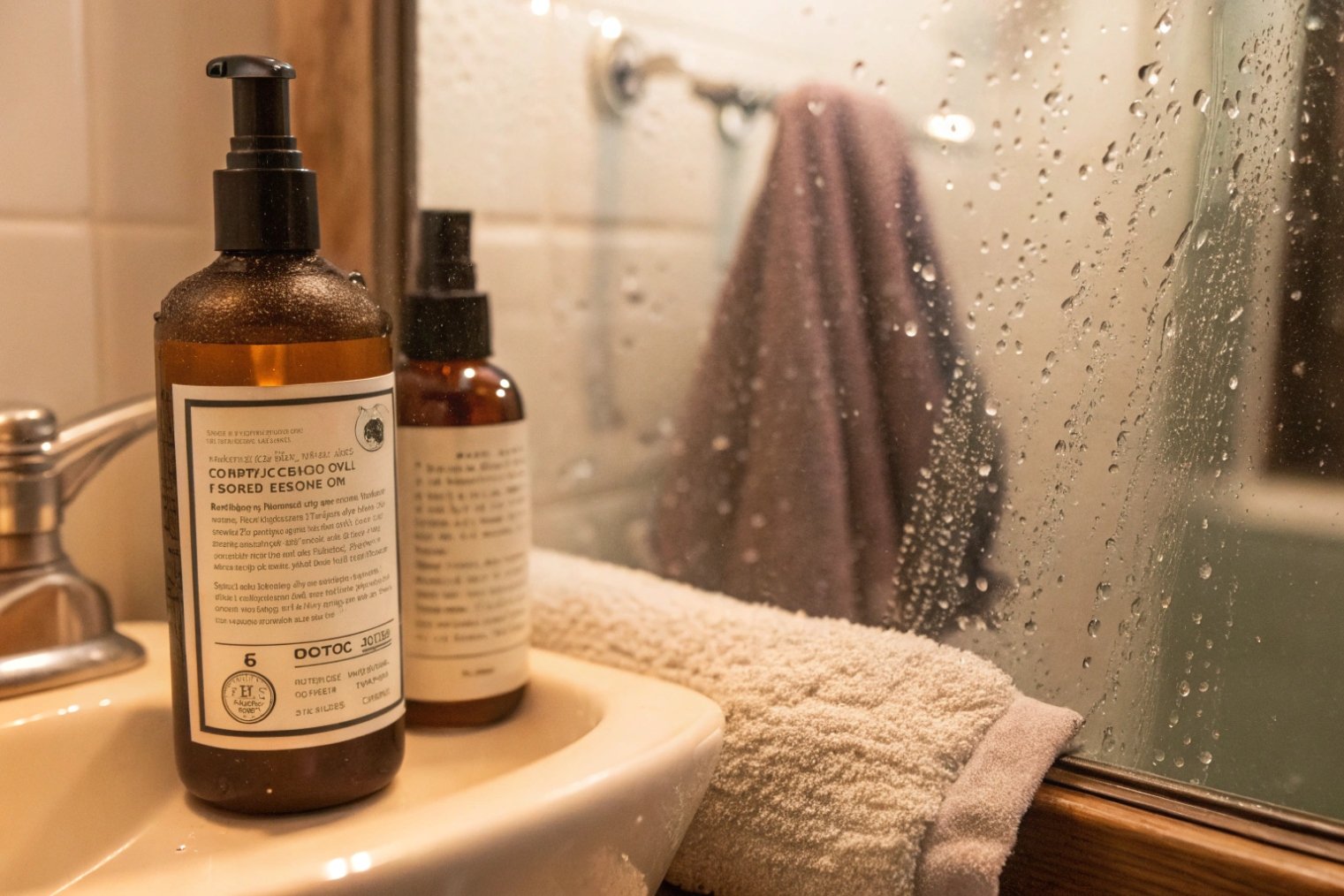
How formulas attack decoration
Oil drips can creep under weak label edges. Alcohol-based toners can soften some varnishes. Strong fragrance systems can stress certain plastics and adhesives. Water and humidity do not always “dissolve” a label, but they can weaken the bond at edges over time, especially in warm bathrooms.
Screen printing avoids adhesive edges, so it often looks cleaner after long use. Still, screen printing is not “magic.” If surface prep is weak, adhesion is weak. If curing is weak, abrasion resistance is weak. A bathroom product should be tested for wet rub, not only dry rub.
When labeling can be very durable
Labels can perform well when the construction is right:
- Film labels (like PET or BOPP label films 6) resist water better than basic paper
- Strong acrylic adhesives handle humidity better than weak systems
- Overlaminate or varnish protects ink from oils and alcohol wipes
- Full-wrap labels reduce edge lift by increasing contact area
When screen printing is the safer choice
Screen printing is strong for:
- Shower products that get water daily
- Products handled with wet hands
- Minimal designs where “no label edge” is part of the premium signal
A practical durability checklist helps keep testing simple:
| Exposure | Best risk control for labels | Best risk control for screen print | Quick test idea |
|---|---|---|---|
| Oils | Oil-resistant film + adhesive | Ink system matched to oils | 7–14 day soak + rub |
| Alcohol wipes | Protective varnish/laminate | Proper cure + chemical-resistant ink | Wipe test (repeat cycles) |
| Shower water | Film stock + strong edge seal | Strong adhesion + scuff resistance | Wet rub + humidity box |
| Bathroom humidity | Acrylic adhesive + good surface energy | Stable cure and surface prep | Heat/humidity aging |
The key is to test the finished pack, not only the label sample or the printed sample. A cap leak can wet the shoulder and destroy a label even if the label itself is “good.”
Next, most skincare brands have multi-SKU lines. That is where cost, MOQ, lead time, and scalability decide the final choice.
How do labeling vs screen printing compare on cost, MOQ, lead time, and scalability for multi-SKU skincare lines?
Many teams choose screen printing for the hero look, then struggle when the line expands to 12 SKUs and 3 markets. Complexity turns into cost fast.
Labeling is usually cheaper and faster for small runs and frequent SKU changes, while screen printing becomes more cost-effective at higher volumes with stable designs, but often needs higher MOQs and longer setup time.
Cost structure: variable vs setup-heavy
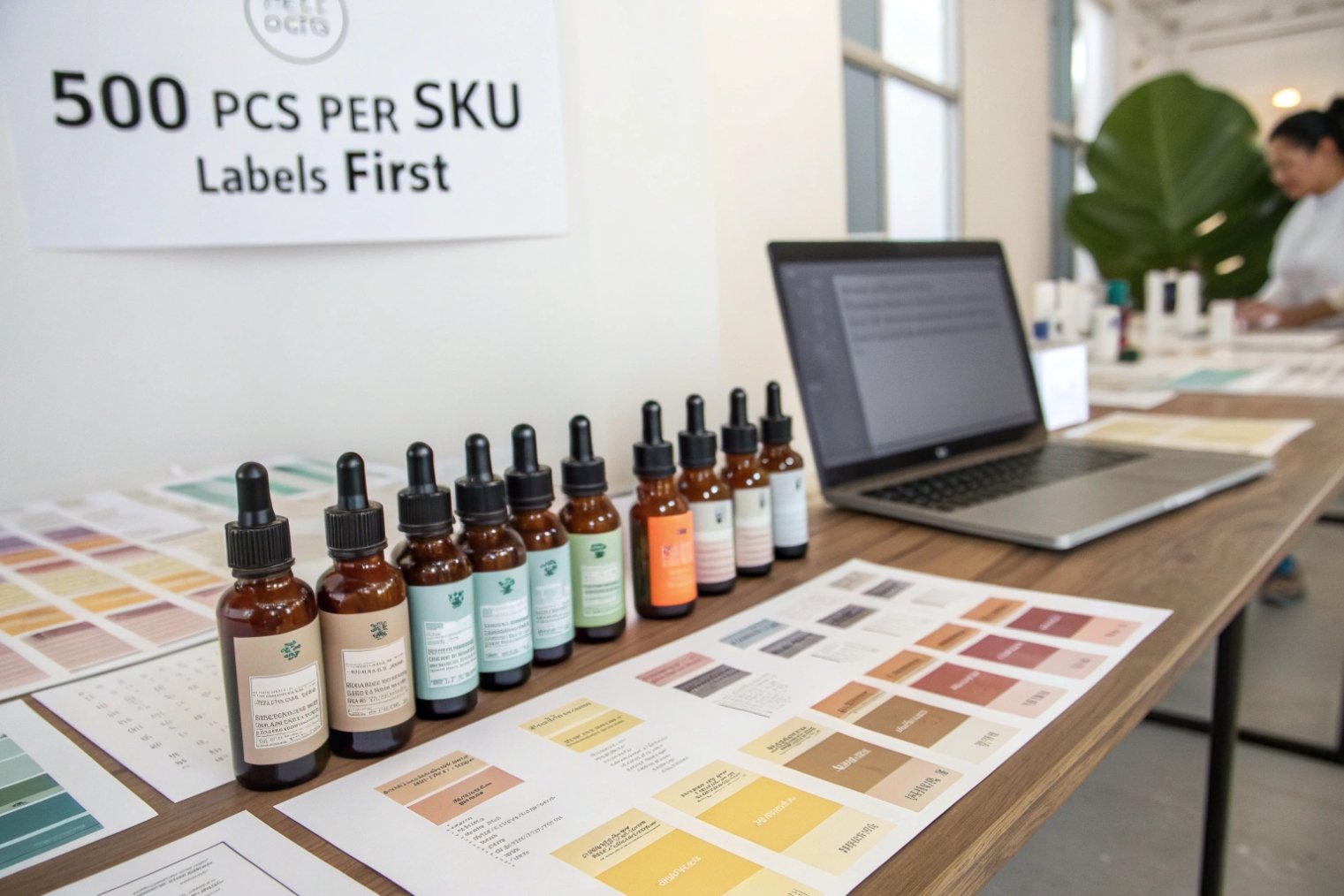
Labeling costs are more variable. You pay for the label material, printing method, and finishing. Setup can be low, especially with digital label printing. This fits early-stage skincare where claims, languages, and promotions change often.
Screen printing has more setup weight. Screens, color setup, and machine time matter. Once the line is running and volume is high, unit cost can look better, but misprints can be expensive because the container is already decorated.
MOQ and lead time: what usually happens in practice
Labels can support lower MOQ because changing a roll of labels is fast. Lead time can be shorter, especially for repeat label jobs.
Screen printing often pushes MOQ up because setup time must be worth it. Lead time can be longer because the line schedule matters, and each color pass adds time. If the bottle is custom molded, decoration adds another layer of scheduling.
Scalability for multi-SKU lines
A multi-SKU line usually needs:
- Different claims (sensitive skin vs acne)
- Different INCI lists
- Different language panels
- Different barcodes per market
Labels handle this well. Screen printing can still work, but it requires careful standardization and sometimes hybrid solutions like screen print for the front brand panel and a small label for compliance and barcode.
| Business situation | Better default | Why |
|---|---|---|
| 3–10 SKUs, frequent copy updates | Labels | Fast change, low setup risk |
| 1–2 hero SKUs, stable design | Screen printing | Premium look, stable scaling |
| Many markets and languages | Labels | Easy text swaps and booklet options |
| High volume, long lifecycle | Screen printing | Setup cost spread across units |
A practical rule helps: if the artwork is still moving, labels protect speed. When the design is locked and the hero SKU is stable, screen printing protects shelf presence.
Next is the part many teams forget until late: design and compliance details that must work in real retail systems.
Great branding means nothing if the barcode does not scan or the INCI text is too small. Compliance and retail operations are strict, and packaging must support them.
Labels usually win for compliance space and barcode control, while screen printing wins for premium shelf look. Tamper evidence often favors labels or added components, and both methods must protect readability under scuffs and moisture.
INCI text space and multi-language needs
INCI lists and warnings can be long. Small bottles make this harder. Labels solve this with wrap-around designs, booklet labels, or peel-back labels. Screen printing is limited by printable area, readability, and color passes. It can work for short compliance text, but it becomes tight fast with multi-language.
Barcode readability is not optional
Barcodes need good contrast, clean edges, and enough barcode quiet zone space 7. Labels make barcode quality easier because printing is controlled on a flat label web. Screen printing can still produce scannable codes, but it demands tight process control and design discipline. Curved bottles add distortion risk. Many brands place the barcode on a label panel even when the front is screen printed.
Tamper evidence and consumer trust
Labels can act as tamper seals, such as a neck seal label or a cap-to-bottle seal label. Screen printing cannot seal tamper by itself. It needs added parts like shrink bands, tear strips, or tamper labels. If tamper evidence is required, a label-based solution is usually faster to deploy.
Premium shelf look: the honest trade-off
Screen printing gives the clean, integrated “printed glass” look with no edge. Labels can still look premium with clear film, matte finishes, and soft-touch laminates. Still, label edges can show in humid bathrooms. If the brand promise is “luxury object,” screen printing on glass often supports that promise well.
| Factor | Label advantage | Screen print advantage | Best hybrid option |
|---|---|---|---|
| INCI and warnings | More space, booklet options | Limited space | Screen front + label back |
| Barcode | Stable contrast and quiet zones | Possible but harder on curves | Put barcode on label |
| Tamper evidence | Easy with seal labels | Needs extra components | Add shrink band or seal label |
| Premium look | Many finishes, but has edges | True no-label look | Screen + small compliance label |
For both methods, it is smart to run simple qualification tests before mass production:
- ASTM D3359 tape adhesion test 8
- Rub/scuff test (dry and wet)
- Alcohol wipe test if the product is wiped often
These tests save money because they catch the failure before 50,000 units ship.
Conclusion
The best skincare packaging matches viscosity, active sensitivity, and user habits. Plan protection first, then premium finishes, then bulk tests and shipping—so stability stays high and scaling stays calm.
Footnotes
-
Explains how airless pumps reduce oxygen exposure and deliver consistent dosing for active skincare. ↩ ↩
-
Explains corona treatment used to improve ink and adhesive adhesion on plastic packaging. ↩ ↩
-
Overview of pressure-sensitive adhesives and why label bonding depends on pressure and surface energy. ↩ ↩
-
Details how silk screen printing works and why it can create thick, durable ink layers. ↩ ↩
-
Clarifies what INCI names are and why they’re used for cosmetic ingredient labeling. ↩ ↩
-
Shows why BOPP labels resist water and oils—useful for humid bathrooms and oily formulas. ↩ ↩
-
Explains barcode quiet zones so packaging scans reliably at retail and in warehouses. ↩ ↩
-
Defines the ASTM D3359 tape test, a quick way to qualify coatings, inks, and foils. ↩ ↩






