

A glass dispenser can look premium in photos, then crack at the sink or leak on day ten. That kind of failure destroys trust fast.
Choose a glass soap dispenser by locking four things: a stable thick-walled bottle, a matched neck finish and pump, a premium decoration plan, and bulk-ready packaging that survives long shipping.
A soap dispenser is a daily-use tool. It lives next to water, stone counters, and hard sinks. It gets pushed and pulled many times a day. So the spec must focus on impact risk, tipping risk, and leak risk. A pretty silhouette is not enough.
A reliable selection process starts from how people use the product. One hand holds a sponge or a baby. The other hand presses the pump. That creates a side force. If the base is narrow, the bottle tips. If the pump does not seal well, it drips down the neck. If the glass has uneven thickness, small impacts can create cracks later.
It helps to think in “system parts.” The system includes: the glass bottle, the neck finish, the pump and gasket, the dip tube, the decoration, and the transit packaging. When one part is weak, the system fails. A high-end brand should write a one-page spec sheet before asking for quotes. That sheet forces the supplier to match the same target.
A simple one-page spec sheet that saves time
- Bottle capacity (ml/oz), height, diameter, base diameter
- Glass type (soda-lime or borosilicate), wall thickness target, base weight target
- Neck finish (example: 28-400 or 40/410), aligned to GPI continuous-thread finish numbers (28-400, 28-410, 40-410) 1
- Pump type (lotion/soap, heavy-duty, foaming), lock option, output per stroke
- Decoration stack (frosting, spray, silk-screen, hot stamping), durability requirement
- Packaging method (dividers, inserts), test requirement (drop/compression/vibration)
| Risk area | What causes the problem | What fixes it | What it protects |
|---|---|---|---|
| Cracking | Thin or uneven glass, hard impacts | Uniform thickness, better glass annealing process 2 | Fewer returns and complaints |
| Tipping | Tall narrow shape, light base | Wider footprint, weighted base | Better sink experience |
| Leaking | Wrong neck finish, weak gasket | Matched finish + quality pump | Cleaner counter and label life |
| Scuffing | Weak coating, wrong ink | Correct decoration stack | Premium look after daily wiping |
| Shipping breakage | Weak cartons, no dividers | Tested packaging design | Long-distance safety |
A glass dispenser can become a signature product when these basics are set. The next step is to go deeper into glass build quality, since that decides most cracking and tipping outcomes.
If the glass is right, the rest becomes easier. If the glass is wrong, every other improvement becomes a patch.
What glass material, wall thickness, and base design help prevent cracking and tipping during daily use?
A dispenser sits in a high-risk zone. Water makes hands slippery. Counters are hard. Faucets are metal. That means the bottle should be designed to forgive small hits and strong pumping.
For most soaps, quality soda-lime glass is enough, but the bottle should have uniform wall thickness and a wide, weighted base. A lower center of gravity reduces tipping and lowers crack risk.
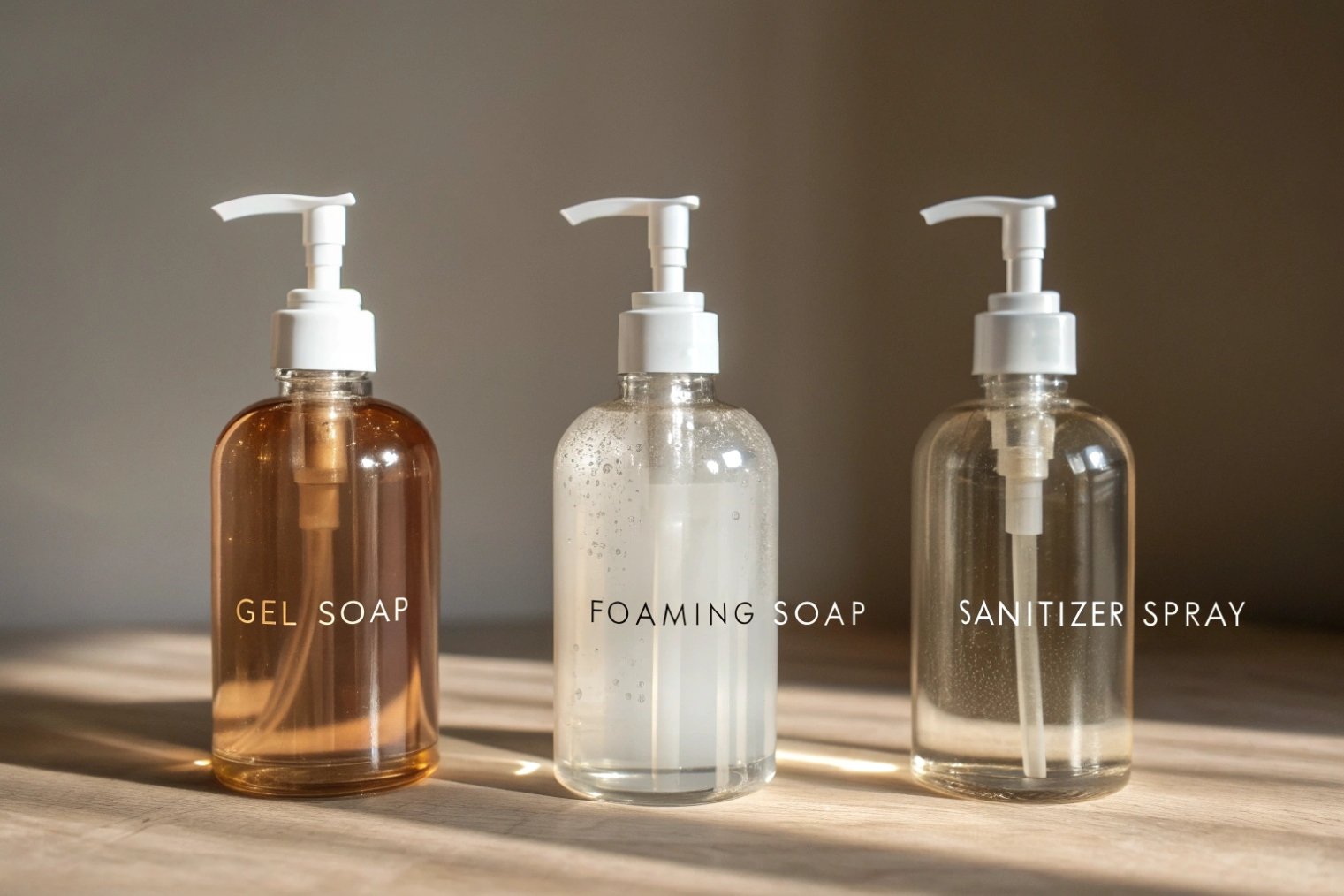
Glass material: choose what fits the formula and the use environment
Most hand soaps and dish soaps are compatible with standard soda-lime glass. It is widely used, stable, and cost-effective. Borosilicate glass can add better borosilicate glass thermal shock resistance 3, but soap bottles usually do not face extreme temperature changes like lab glass. So borosilicate is often a “nice extra,” not a requirement.
Still, some formulas are tougher. High essential-oil load, strong alkalinity, or aggressive solvents can attack weak plastics and some cheap pump parts. Glass usually stays safe, but the closure system becomes more important. In that case, it helps to treat the bottle and closure as one chemical contact system.
Wall thickness: focus on uniformity, not only “thicker”
Thicker walls can reduce breakage. Yet the bigger win is uniform thickness. Uneven thickness creates stress points. Those stress points can show up as cracks later, even if the bottle passes a basic visual check.
A good bottle also has a clean rim. A smooth, flat rim supports sealing. It also reduces chipping during assembly and transport. Minimal bubbles and a consistent “heft” are also good signals. These details show stable forming and annealing.
Base design: stability comes from geometry and weight distribution
Tipping risk is a geometry problem. Each pump press adds a sideways force. A bottle stays stable when the base diameter is large enough and the base mass is strong enough. A short, wide silhouette is naturally stable. A tall silhouette can still work, but the base must grow with it.
Many premium sets use a heavy base to signal luxury and to reduce wobble. That can work well near sinks, but it increases shipping weight. So the best designs balance base weight with packaging protection.
| Feature | Recommended direction | Why it helps daily use | Trade-off |
|---|---|---|---|
| Silhouette | Shorter + wider | Less tipping at the sink | Less “tower” elegance |
| Base diameter | Wider footprint | More stable under pumping | More counter space |
| Base weight | Slightly heavier base | Lower center of gravity | Higher freight cost |
| Wall thickness | Uniform medium-thick | Fewer stress cracks | Higher unit cost |
| Rim finish | Smooth and flat | Better sealing and safety | Needs stronger QC |
A stable bottle solves only half the experience. The other half is dispensing. A premium bottle with a cheap pump still feels cheap. The next section focuses on pump type and neck finish matching, since that is where leaks and clogs start.
A matched neck finish also protects the brand long-term because it makes replacement pumps easier to source.
Which pump types and neck finishes are best for leak-proof dispensing (lotion, foaming, hand soap, dish soap)?
Customers do not forgive drips. A leaky pump creates mess, wastes soap, and stains labels. That problem often starts with a mismatch between pump, neck finish, and formula viscosity.
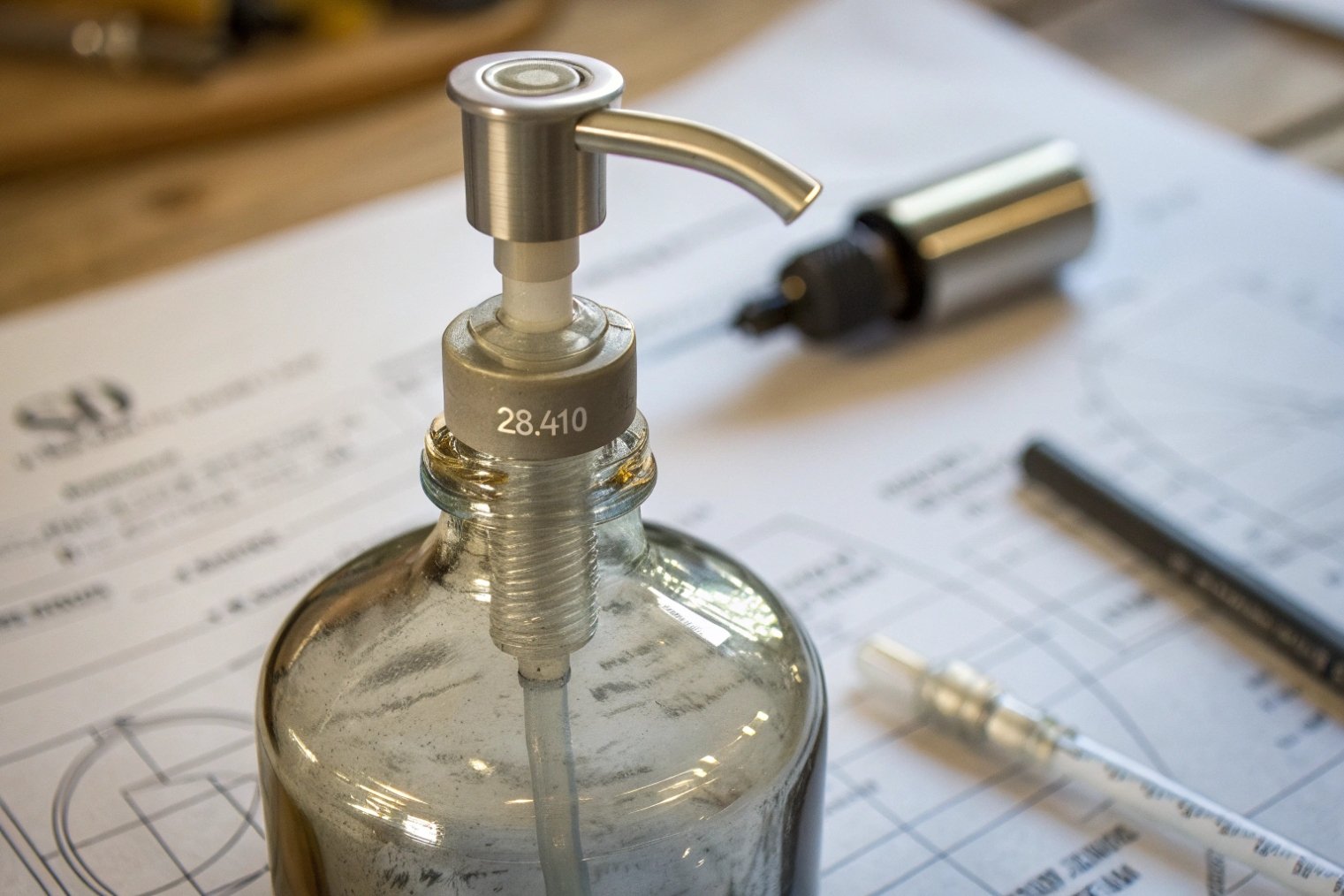
Use standard lotion/soap pumps with common neck finishes like 28-400 for most liquid hand soaps and lotions. Use heavy-duty pumps for thicker dish soap. Use foaming pumps only with foaming formulas, often with larger neck finishes like 40/410 or 43/410.
Start with the soap behavior
Hand soap and dish soap look similar, but they behave differently. Dish soap can be thicker and more “stringy.” Some hand soaps are thin and watery. A pump that works for watery soap can feel weak with a thicker formula. A pump that outputs too much can waste product and create mess.
A simple approach is to define viscosity range with your filler and then choose pump output. Many premium pumps offer a measured dose per stroke. That helps brands control cost-per-wash and user experience.
Choose the pump mechanism that fits the use case
- Standard lotion/soap pumps: Best for most liquid hand soaps and lotions. These often match 28 mm finishes.
- Heavy-duty pumps: Better for thicker dish soap and high-viscosity cleansers. These can still use 28 mm finishes, but the internal spring and piston need to be stronger.
- Foaming pumps: These are a different system. They mix air and liquid to create foam, and understanding the foaming pump mechanism 4 helps prevent “wrong pump, wrong bottle” mistakes. They work best with foaming soap or a diluted mix. Many users dilute around 1 part soap to 3 parts water, but the correct ratio depends on the soap base. Foaming pumps also often require larger neck sizes, so bottle selection must start from the pump.
Neck finish: use standards to reduce future risk
A common neck finish makes sourcing simpler. A standard finish also helps consistency across suppliers. For standard pumps, finishes like 28-400 are widely used. For foaming pumps, sizes like 40/410 or 43/410 are common in the market. The key is not the number itself. The key is that the bottle finish must match the pump finish exactly.
Leak-proof details that matter in real life
- A quality gasket and correct closure compression reduce leaks.
- A lock-down (twist-lock) head reduces accidental pumping during shipping and travel.
- An external-spring design places the spring outside the liquid path. That reduces rust risk and reduces contamination concerns.
- A correct dip tube length reduces waste and improves pump feel. The tube should sit near the bottom, but it should not curl.
| Soap format | Best pump type | Typical neck finish | Extra feature to request |
|---|---|---|---|
| Liquid hand soap | Standard soap/lotion pump | 28-400 | Smooth stroke + lock option |
| Dish soap | Heavy-duty pump | 28-400 or 28-410 | Higher output and stronger mechanism |
| Foaming soap | Foaming pump | 40/410 or 43/410 | Correct dilution guidance + lock |
| Lotion cleanser | Lotion pump | 28-400 | Tight seal and consistent dose |
A leak-proof dispensing system also makes decoration last longer. When drips run down the bottle, labels stain and coatings wear faster. That links dispensing directly to premium brand appearance.
Now the focus shifts to how the bottle looks and feels, since premium brands win with a consistent visual language and durable decoration.
Many soap dispensers look “nice” but not “brand.” Premium brands look intentional because the capacity and decoration follow a stable code across the whole line.
Pick capacity around real sink habits, choose color for both style and visibility, and stack decoration with restraint. Frosting, silk-screen, and small hot-stamp accents often create a clean luxury look that survives daily wiping.
Capacity: balance refill frequency and sink space
A 500 mL (18 oz) bottle is often a practical sweet spot. It reduces refill frequency, but it does not dominate a typical sink area. Smaller 250–300 mL bottles work well for guest bathrooms and gift sets. Larger 750 mL to 1 L bottles fit kitchens with heavy usage or commercial settings, but they add weight and can feel bulky.
A premium brand should also define fill level policy. Overfilling increases leak risk around the pump. A small headspace helps prevent seepage and makes refilling easier.
Color: decide what you want customers to see
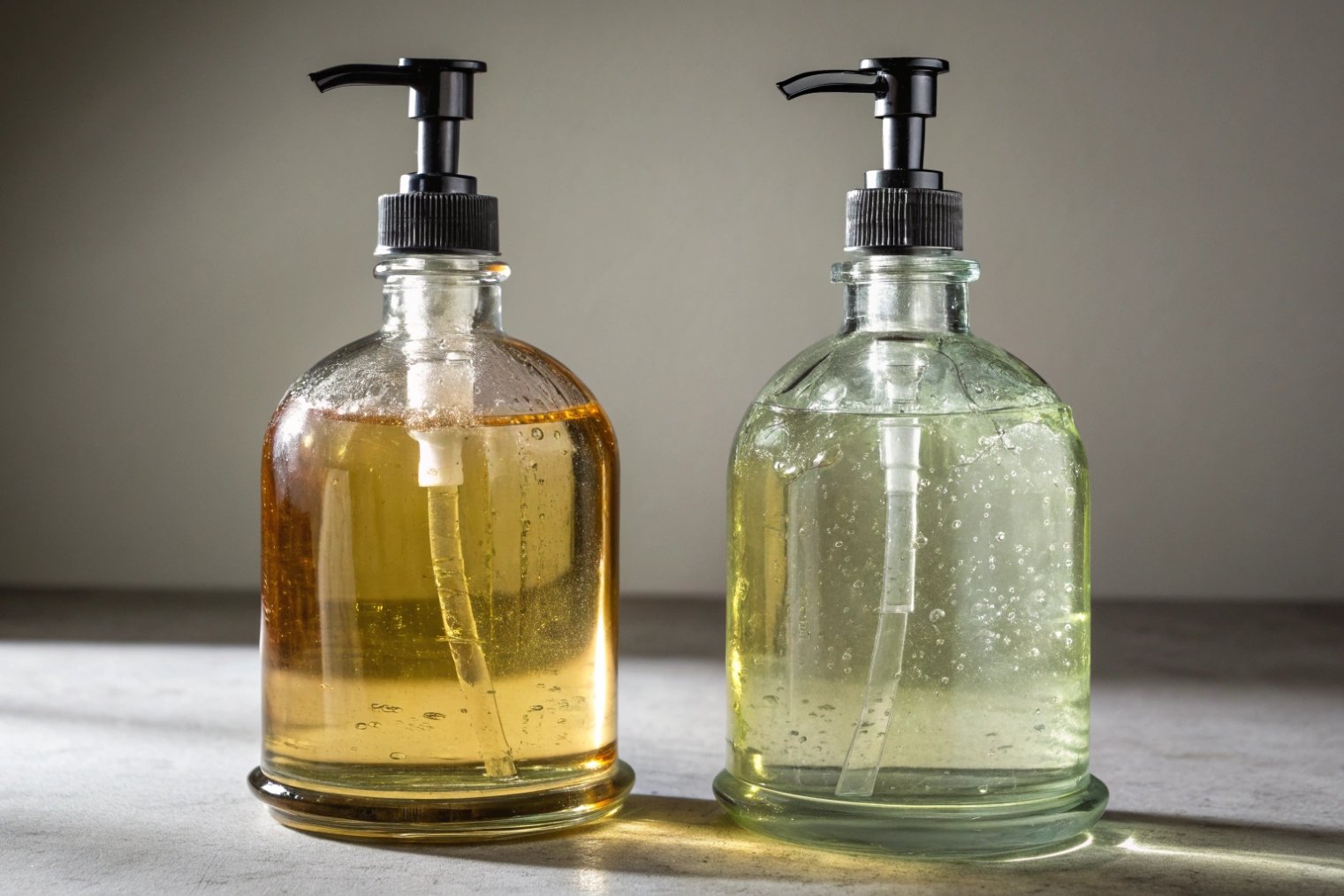
Clear (flint) glass makes the fill level obvious. It also matches modern minimal brands. Amber and darker tints can hide discoloration and can signal an apothecary premium look. Frosted finishes signal cleanliness and “lab-grade” care, but they reduce contrast. So the graphics must stay bold and readable.
A good rule is to match color to the environment. Bathrooms often look cleaner with frosted or light tints. Kitchens can support darker, more “hardware matched” colors like amber with black pumps.
A premium decoration stack usually has one hero surface and one accent.
- Frosting or a matte spray can be the hero surface.
- Silk-screen can carry the logo and the product name cleanly.
- Hot stamping can highlight a small brand mark or a thin frame line, and the hot-stamping foil process 5 is best treated as a “spotlight,” not a full-front treatment.
Labels can still work, but labels must use the correct adhesive for the surface treatment. For wet environments, the label should resist water, oil, and abrasion. Screen printing often feels more premium because it is integrated, not a sticker, but it needs precise alignment control.
| Brand style | Color choice | Decoration stack | Why it reads premium |
|---|---|---|---|
| Modern minimal | Clear or frosted clear | Silk-screen + matte coating | Clean hierarchy and clarity |
| Apothecary luxe | Amber | Silk-screen + small foil | Classic trust with subtle shine |
| Hotel-style calm | Frosted + neutral tint | Screen + restrained icons | Quiet, organized shelf look |
| Bold hardware match | Dark tint + black pump | Matte + one foil accent | Strong contrast and tactility |
A premium look must survive wet hands and daily wiping. That durability should be tested, not assumed. This leads directly to bulk order checks, since mass production and long shipping expose weak points fast.
The last step is to protect the brand at scale. Bulk orders need clear MOQ, real sampling, and transit safety proof.
What should you check for bulk orders—MOQ, sampling, packaging drop tests, and long-distance shipping safety?
A sample can look perfect and still fail in bulk. Bulk failures come from weak cartons, inconsistent QC, and unclear responsibility during shipping.
For bulk orders, confirm MOQ by component, lock pre-production samples from real lines, define inspection standards, and require tested transit packaging that can survive drops, vibration, and compression during long shipping.
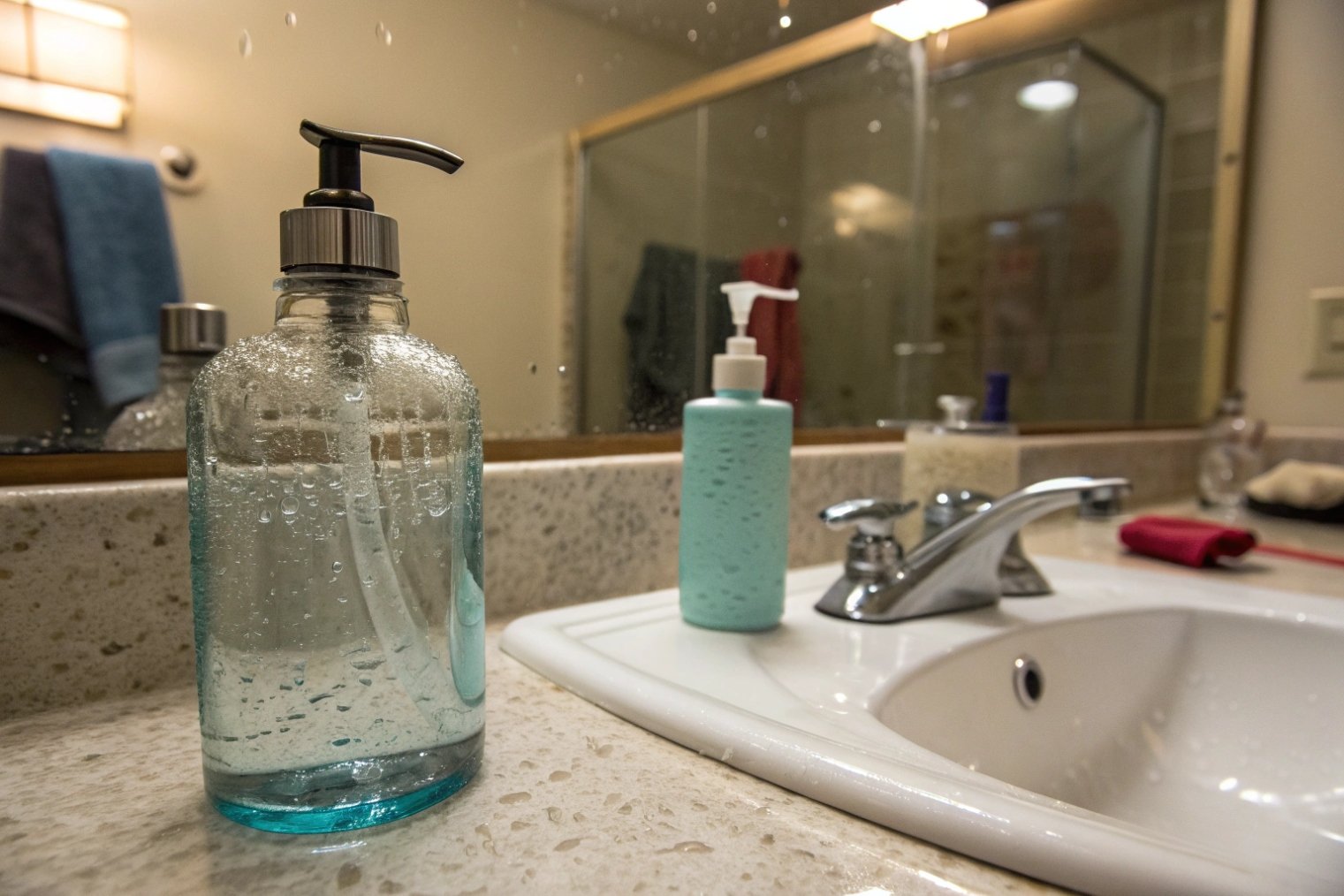
MOQ: confirm it for bottle, pump, and decoration separately
Suppliers often quote MOQ for the bottle only. Then pumps, custom colors, frosting, and hot stamping each add separate MOQs. A bulk buyer should list every part and its MOQ:
- Bottle MOQ by shape and color
- Pump MOQ by finish and mechanism
- Decoration MOQ by method (screen, spray, foil)
- Spare parts MOQ for service and replacements
A premium brand should also plan spare pumps. Pumps are the wear item. Customers appreciate replacement options. That also reduces waste.
Sampling: demand production-real samples
A “hand-finished” sample can hide problems. The sample should come from the same mold, same decoration line, and same pump supplier as mass production. For new projects, a small pilot run is useful. It reveals color drift, dust defects, scuff risk, and assembly fit problems early.
Packaging and drop tests: protect the glass in real routes
Glass can ship safely when the pack design is correct. The pack needs dividers, corner protection, and stable palletization. For e-commerce, inner protection is critical because single-unit drops are common. For pallets, compression strength matters because cartons stack for weeks.
A practical approach is to define a test plan:
- Drop test on packed units
- Vibration test for long truck or sea routes
- Compression test for stacked cartons
- Trial shipment to validate real handling
If your channel includes parcel shipping, asking for ISTA 3A transit testing 6 is a clean way to align expectations before bulk.
Shipping safety: define responsibilities and prevent surprises
Long-distance shipping risk rises with heavy bottles and thin cartons. Clear packing photos, clear pallet specs, and clear carton marking help reduce damage. It also helps to align on spare ratio, breakage allowance, and claim process before the shipment leaves.
| Bulk checkpoint | What to request | What “pass” looks like | What fails brands |
|---|---|---|---|
| MOQ | Bottle + pump + decoration MOQs | Matches forecast and cash flow | Surprise MOQs mid-project |
| Pre-production sample | From real production lines | Matches final spec | “Perfect sample” trap |
| QC standard | Defect limits and ANSI/ASQ Z1.4 AQL sampling standard 7 | Clear accept/reject rules | Endless sorting disputes |
| Transit packaging | Dividers + inserts + pallet spec | Low breakage in trial ship | Crushed cartons and broken glass |
| Pump protection | Lock-down heads | No accidental dispensing | Soap leaks in cartons |
Bulk success is not luck. It is planning. When MOQ, sampling, QC, and packaging tests are locked early, the dispenser arrives as intended and stays premium in customer hands.
Conclusion
A premium glass soap dispenser needs stable glass geometry, a matched pump and neck finish, a restrained decoration plan, and proven transit packaging for bulk shipping.
Footnotes
-
Helps decode thread/finish numbers so bottles and pumps match reliably across suppliers. ↩ ↩
-
Explains stress relief in annealing and why it reduces cracking under small impacts. ↩ ↩
-
Shows why borosilicate resists thermal shock, useful for harsh logistics or temperature swings. ↩ ↩
-
Clarifies how foaming pumps mix air and liquid so you don’t pair foam pumps with wrong formulas. ↩ ↩
-
Explains hot stamping basics so foil accents stay controlled, durable, and premium. ↩ ↩
-
Overview of parcel hazard simulation tests to validate packaging strength before long shipping. ↩ ↩
-
Defines AQL acceptance sampling so defect limits are measurable and enforceable in bulk QC. ↩ ↩






