

A beautiful sample can fool a team, and then a bulk order arrives with scratches, color drift, and leaking pumps. That pain shows up as delays, returns, and lost trust.
Choose a high-end cosmetic glass bottle manufacturer by validating real quality systems, repeatable defect control, scalable decoration, and reliable bulk delivery that matches your MOQ, lead time, and target market rules.
High-end is a system, not a single bottle
Luxury packaging is not only glass. It is glass plus molding, annealing, decoration, closure fit, carton design, pallet rules, and inspection gates. When one link is weak, the whole product feels cheap. The best manufacturers know this, and they run packaging like a controlled production system.
Start with ownership and process control
A fast filter is simple: who owns the mold, who runs decoration, and who owns QC decisions. If those steps are outsourced with weak control, defects are hard to fix. If those steps are in-house, or tightly controlled by audited partners, problems get solved faster and quality stays stable.
Use a scorecard to avoid “pretty sample bias”
A showroom sample is marketing. A scorecard is protection. It forces each supplier to prove capability with documents, data, and repeatable tests.
| What to evaluate | What to ask for | What “premium” looks like | Common red flag |
|---|---|---|---|
| Quality system | ISO scope, SOP samples, Corrective and Preventive Actions (CAPA) 1 examples | clear records and fast answers | vague claims, no records |
| Consistency | tolerances, gauges, sampling plan | stable measurements across lots | “it depends” on each batch |
| Defect control | defect list, AQL sampling plan 2, rejects tracking | defined defect taxonomy | no clear defect rules |
| Decoration | adhesion tests, color control method | repeatable finish and alignment | scratches and rub-off in transit |
| Closure fit | neck finish drawings, torque/leak tests | leak-free across lots | mismatch and “trial and error” |
| Delivery | milestone schedule, capacity plan | predictable lead time | shifting dates without reasons |
| Shipping readiness | packing spec, ISTA 3A transit testing 3 | low breakage track record | weak cartons and poor dividers |
| Sustainability | cullet %, energy, wastewater metrics | tracked KPIs with boundaries | slogans without measurement |
The goal is not to find the cheapest supplier. The goal is to find the supplier that can repeat luxury results at scale, and can prove it before the first bulk order.
A smart decision gets easier when the questions stay structured. The next sections follow the same structure many brand audits use.
A supplier can promise “high quality,” yet still fail an audit or fail a retailer requirement. That can block a launch with one email.
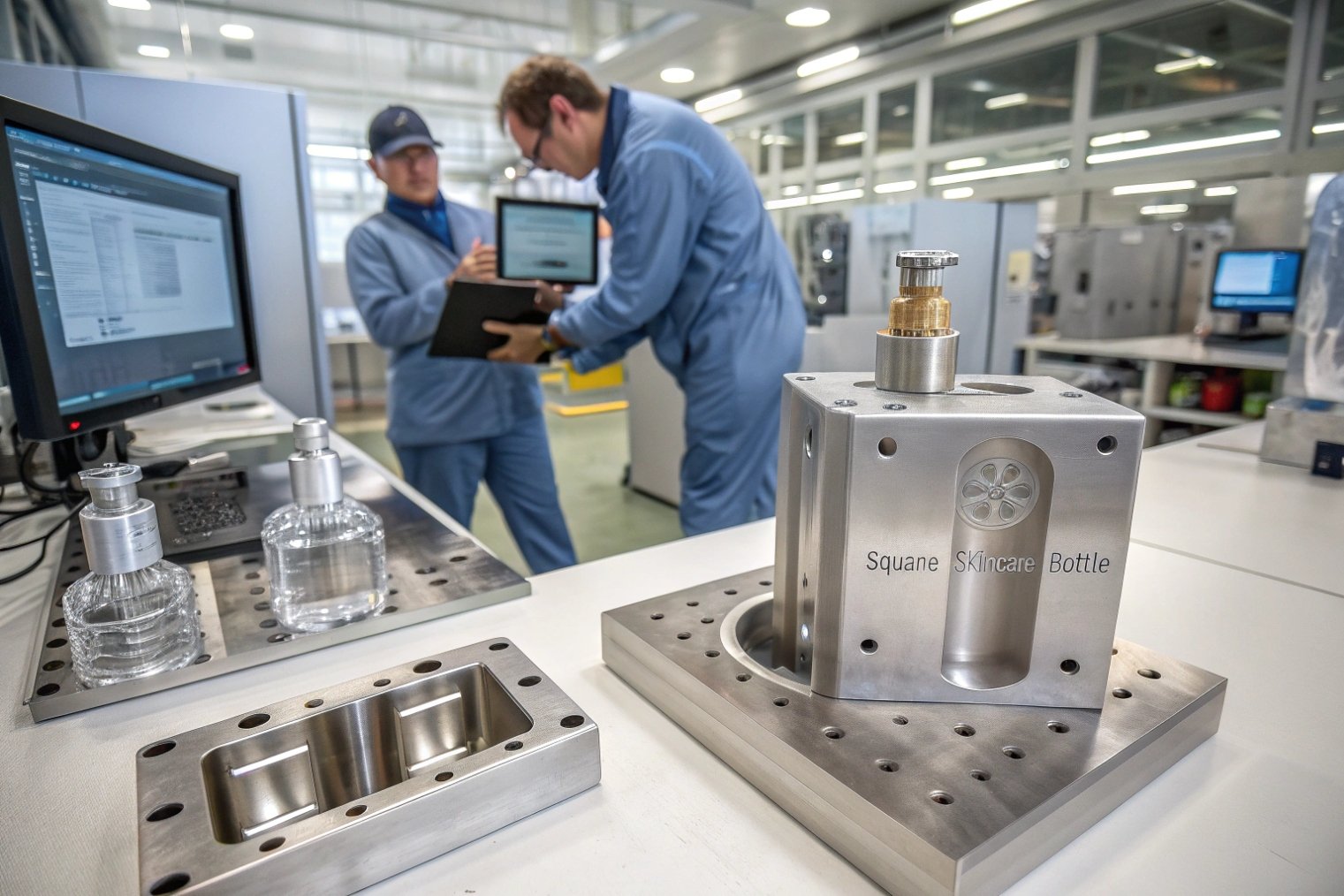
A premium manufacturer should meet verifiable quality standards like ISO 9001, show GMP awareness such as ISO 22716 alignment where needed, and provide market-ready documentation for your target regions.
Treat certifications as proof of daily behavior
Certificates matter, but only when the factory uses the system every day. ISO 9001 quality management 4 is a strong baseline because it forces document control, training, calibration, and corrective actions. For cosmetics, ISO 22716 cosmetic GMP 5 is often linked to cosmetic GMP. Many packaging sites are not certified to ISO 22716, but a serious supplier can still support GMP-style controls that help brand audits and filling partners.
Environmental certificates also show maturity. ISO 14001 environmental management 6 can be helpful because it signals controlled waste, emissions, and compliance. Still, it does not replace real performance metrics. The factory should also be able to talk about recycled glass use, energy reduction, and water treatment in plain language.
Confirm regulatory literacy for the markets you sell into
A good packaging partner understands the paperwork needed for your regions. For the EU, brands operate under the EU cosmetics regulation framework, and packaging information often supports the product file and safety work. For the US, brands may worry about heavy metals and contaminants in pigments, inks, and coatings. A premium supplier does not argue. The supplier provides evidence or supports third-party testing based on risk.
Ask for traceability and change control, not only certificates
Luxury brands often face questions like “Which lot went to which customer?” and “What changed between last year and this year?” Traceability and change control answer those questions. The supplier should have lot coding, record retention, and a rule for approving any change in color, coating, or glass recipe.
| Requirement | What it protects | What to request | What to avoid |
|---|---|---|---|
| ISO 9001 | stable quality system | certificate + scope + audit date | certificate not matching site |
| GMP alignment (ISO 22716 mindset) | hygiene and control culture | training, SOP samples, controls | “we follow GMP” only |
| ISO 14001 (optional) | environmental management | certificate + waste outline | no KPI tracking behind it |
| Chemical compliance | brand safety | EU REACH compliance 7 style declarations for inks/coatings | generic one-page promises |
| Traceability | recall control | lot code map, sample labels | mixed lots with no logic |
| Change control | batch-to-batch stability | change notice process | silent changes in finish |
A premium supplier is easy to audit. The documents exist, the scope is clear, and the team answers fast.
How can you verify luxury-level bottle consistency, defect control, and batch-to-batch quality?
A brand can approve a perfect sample, then receive bulk goods that look “almost the same.” That “almost” is what customers notice.
Verify luxury-level consistency by locking measurable specs, defining defect limits and inspection rules, validating closure fit and decoration durability, and requiring batch traceability with inspection records for each shipment.
Turn “luxury feel” into measurable specs
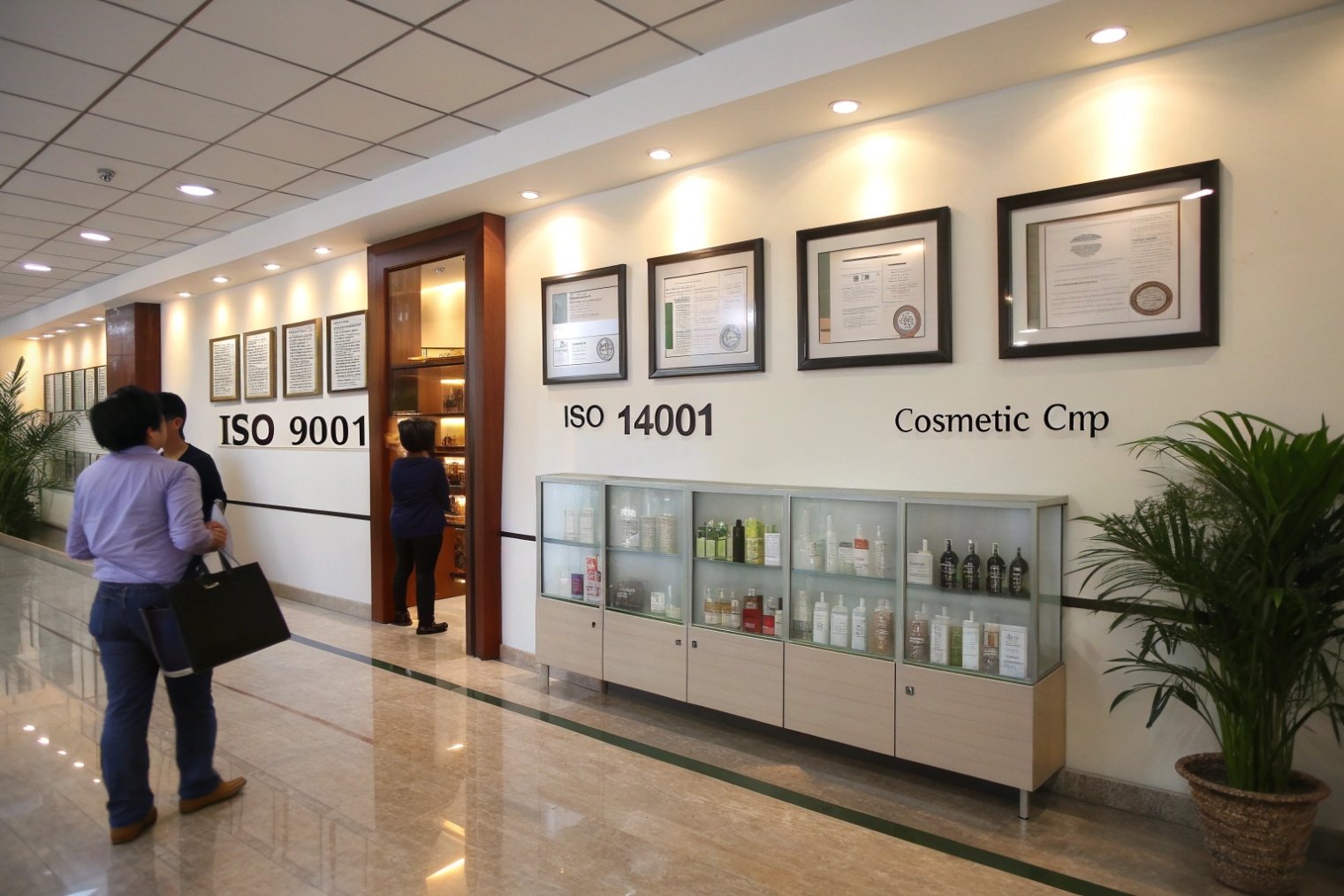
Luxury feel is measurable. Weight, wall thickness, height, diameter, base thickness, and neck finish all affect look and hand feel. A premium factory can share tolerances and show how they measure them with gauges and calibrated tools.
Color control also matters. Even clear flint glass can drift in tone. Coated glass can drift in gloss and shade. A strong supplier uses a color standard and a simple pass/fail method. A weak supplier only compares with eyes under different lighting.
Define defects like a luxury buyer, not like a commodity buyer
Luxury defect rules are different. A tiny scratch on the front panel can be critical. A small bubble inside the base may be acceptable. The rules must be written and signed, and they must match your sales channel. Retail and influencer PR boxes demand stricter cosmetics standards than inner-case shipments to a filler.
Also, insist on a “stop rule.” If defects spike, production stops, and the root cause gets fixed. That is how premium factories protect brands.
Use staged sampling and data, not one sample box
A single sample proves style. It does not prove process control. A better method is a staged approach:
- pre-production glass sample
- decorated sample with the real process
- pilot-run sample pulled under mass settings
Then ask for inspection data from the pilot run. The numbers do not need to be complex. They need to be consistent and tied to lot codes.
| Quality gate | What to check | Simple method | Why it matters |
|---|---|---|---|
| Forming stability | weight and dimensions | sampling + gauges | shelf uniformity |
| Stress control | risk of cracks | stress checks on samples | fewer failures later |
| Surface cosmetics | scratches, stones, bubbles | defect list + AQL | luxury appearance |
| Neck finish fit | threads and sealing | go/no-go gauges + fit tests | leak prevention |
| Decoration durability | adhesion and rub resistance | tape/rub tests | long-term premium look |
| Final pack-out | chips and scuffs | AQL + handling rules | customer unboxing |
Batch-to-batch quality is not luck. It is the result of controlled specs, controlled inspection, and controlled corrections.
What customization and decoration capabilities matter most for high-end skincare and fragrance packaging?
A luxury brand cannot win by looking like everyone else. At the same time, extreme decoration that fails in shipping is not luxury.
The most important customization is the kind that stays consistent at scale: unique molds, stable color control, durable frosting and lacquering, precise printing, and protection features like UV shielding for sensitive formulas.
Choose customization that supports real use
Skincare bottles get handled daily in wet environments. Fragrance bottles get handled in stores and during gifting. That means decoration must survive water, oils, rubbing, and travel.
For active serums, UV protection can matter. Amber glass or coated solutions can reduce light exposure. For fragrance, some oils can interact with certain coatings, so compatibility checks are needed before mass production.
Focus on repeatability and repairability
Luxury is not only the first impression. It is the 10,000th impression. A premium manufacturer can repeat frosting texture, lacquer thickness, and print alignment across lots. The factory can also fix defects without changing the full look, because the process window is understood.
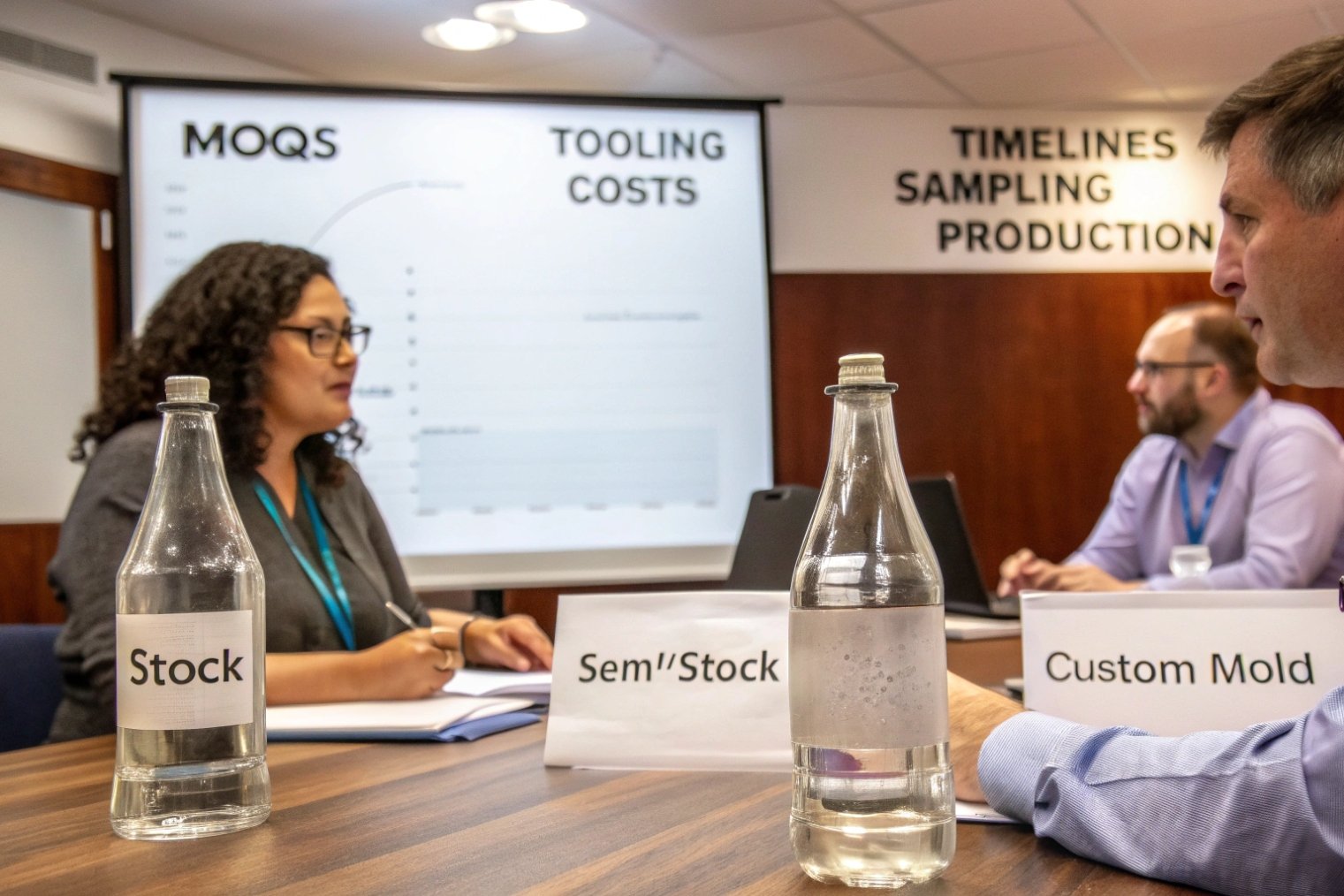
Customization should also consider supply risk. A unique mold looks great, but it adds tooling time and cost. A smart launch often starts with a semi-custom approach, like a standard bottle plus signature coating and closure, then moves to a fully private mold after demand is proven.
Demand a decoration brief with durability targets
A decoration brief should include: Pantone references, gloss level, coating thickness target, print area, minimum line thickness, and durability tests. “Nice looking” is not a spec. Pass/fail is a spec.
| Capability | Best for | Luxury effect | Main risk | What to request |
|---|---|---|---|---|
| Private mold (new silhouette) | hero SKU | hard to copy | time and tooling cost | mold schedule + ownership terms |
| Custom glass color | brand identity | instant recognition | color drift | standard + tolerance method |
| Frosting / etched look | skincare | soft premium touch | uneven finish | multi-sample approval set |
| Lacquering / spray coating | skincare + fragrance | depth and richness | scuffs and chips | abrasion test + packing spec |
| Silk screen printing | logos, text | clean and sharp | misalignment | positioning control method |
| Hot stamping | accents | luxury highlight | rub-off | rub cycles + top coat plan |
| Metallization / electro look | fragrance | high shine | scratches | protective packing rules |
| UV protection approach | active formulas | formula stability | added cost | target level + test logic |
High-end decoration is a balance. It must look special, survive real handling, and stay repeatable across large lots.
How do you compare MOQ, sampling/mold costs, lead time, and international shipping reliability before ordering in bulk?
A bulk order can save unit cost, then destroy profit through breakage, delays, and rework. The real cost is landed cost plus risk cost.
Compare suppliers by total landed cost and delivery risk: real MOQs by process, staged sampling and mold terms, milestone-based lead times, and shipping readiness proven by packaging tests and breakage controls.

Split MOQ into three parts, so surprises do not appear later
Many suppliers quote one MOQ, but luxury packaging usually has multiple minimums:
1) glass bottle MOQ (forming efficiency),
2) decoration MOQ (line setup and yield),
3) closure/assembly MOQ (closure supplier rules).
A premium partner explains all three. That helps build a launch plan that fits your cash flow and demand curve.
Make sampling a gate process, not a “one-time sample”
Sampling should match real production steps:
- drawing approval and 3D review
- first glass sample
- decorated sample with real materials
- pilot run using mass settings
- bulk run with inspection plan
This reduces the gap between sample and bulk. It also forces early decisions on color, gloss, and closure fit.
Compare lead time using milestones, not promises
A single lead time number hides risk. A better comparison uses milestones: mold start, sampling date, decoration material arrival, production start, final inspection, and ship date. A premium supplier can share a simple schedule and explain what causes delay, like peak season capacity or coating curing time.
Prove shipping reliability with packing standards and tests
Glass shipping can be stable when packing is engineered. Ask for carton grade, divider style, pallet height limits, corner protection, and wrap rules. Also ask for basic drop or vibration testing, and a packing spec that matches your route and sales channel.
| Item | What to compare | How to verify | Why it matters |
|---|---|---|---|
| MOQ breakdown | bottle vs decoration vs closure | written quote with details | prevents hidden minimums |
| Mold cost | fee, ownership, life, maintenance | tooling terms in writing | protects future reorders |
| Sample stages | how many rounds and what each proves | sample plan + dates | avoids rushed approval |
| Lead time | normal vs peak season | milestone schedule | protects launch timing |
| Inspection | AQL and defect rules | checklist + records | stops bad lots early |
| Shipping | carton/dividers/pallet rules | packing spec + photos | reduces breakage and returns |
| Documents | invoices, packing lists, compliance | example documents | avoids customs holds |
| Sustainability proof | cullet %, energy, wastewater | KPI report boundaries | keeps claims credible |
A bulk order should feel boring. When MOQ, tooling, sampling, timeline, and packing are clear, the project stays calm and repeatable.
Conclusion
The right manufacturer proves luxury with systems, data, repeatable decoration, and reliable delivery, so every lot matches the brand promise from first sample to final container.
Footnotes
-
Explains what CAPA should look like in real quality systems, beyond “we will fix it” promises. ↩ ↩
-
Clarifies how AQL sampling works so defect rules are written, measurable, and enforceable. ↩ ↩
-
Quick overview of ISTA 3A parcel hazards to validate packing specs before international shipping. ↩ ↩
-
Use ISO’s official page to confirm the exact ISO 9001 version, scope, and certificate validity. ↩ ↩
-
Helps teams understand what “cosmetic GMP” covers when suppliers claim ISO 22716 alignment. ↩ ↩
-
Useful for checking what ISO 14001 actually certifies versus what environmental claims imply. ↩ ↩
-
Reference for what REACH is and why inks/coatings need documented chemical compliance in EU supply chains. ↩ ↩






