
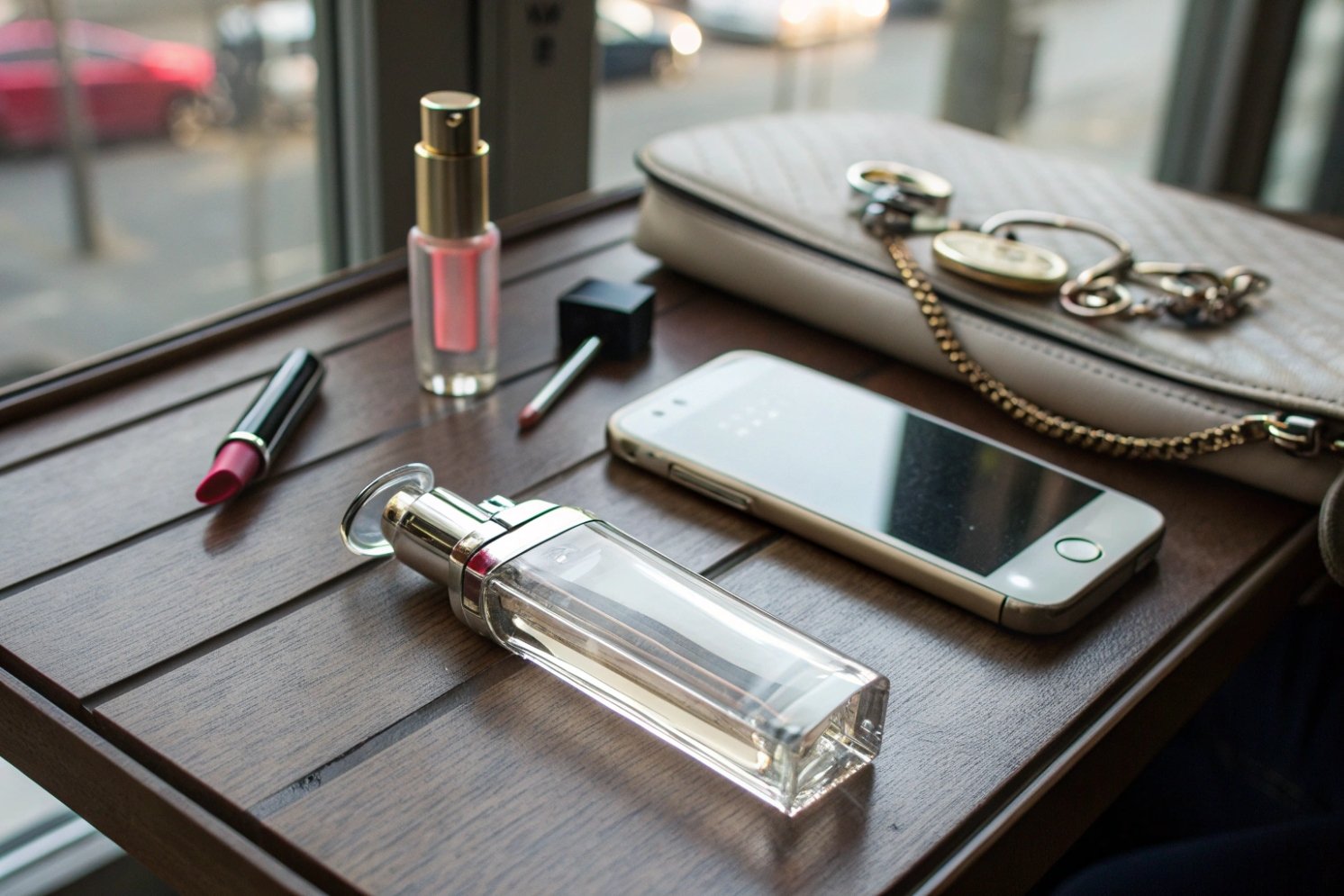
Carrying a full 50 or 100 ml perfume bottle around all day is heavy, risky, and sometimes impossible with hand luggage liquid restrictions 1 and micro-bags.
A perfume atomizer is a small refillable spray bottle that turns perfume into a fine mist, so you can carry, apply, and share fragrance easily without exposing or damaging the main bottle.
From a glass packaging point of view, a good refillable perfume atomizer 2 is a tiny engineered system. The bottle, pump, dip tube, gasket, and cap all work together. When this system is right, you get a soft, even cloud of scent, no leaks in your bag, and less evaporation from your full-size bottle at home. That is why brands invest so much in atomizers for travel, discovery sets, and daily use.
How do crimp vs screw pumps differ in sealing and look?
Many people judge a perfume only by the smell, then get frustrated when the spray head leaks, wobbles, or looks cheap on the bottle.
Crimp pumps are permanently sealed to the bottle for a very clean, luxury look and strong leak resistance, while screw pumps are removable and flexible but need careful design to stay tight and premium.
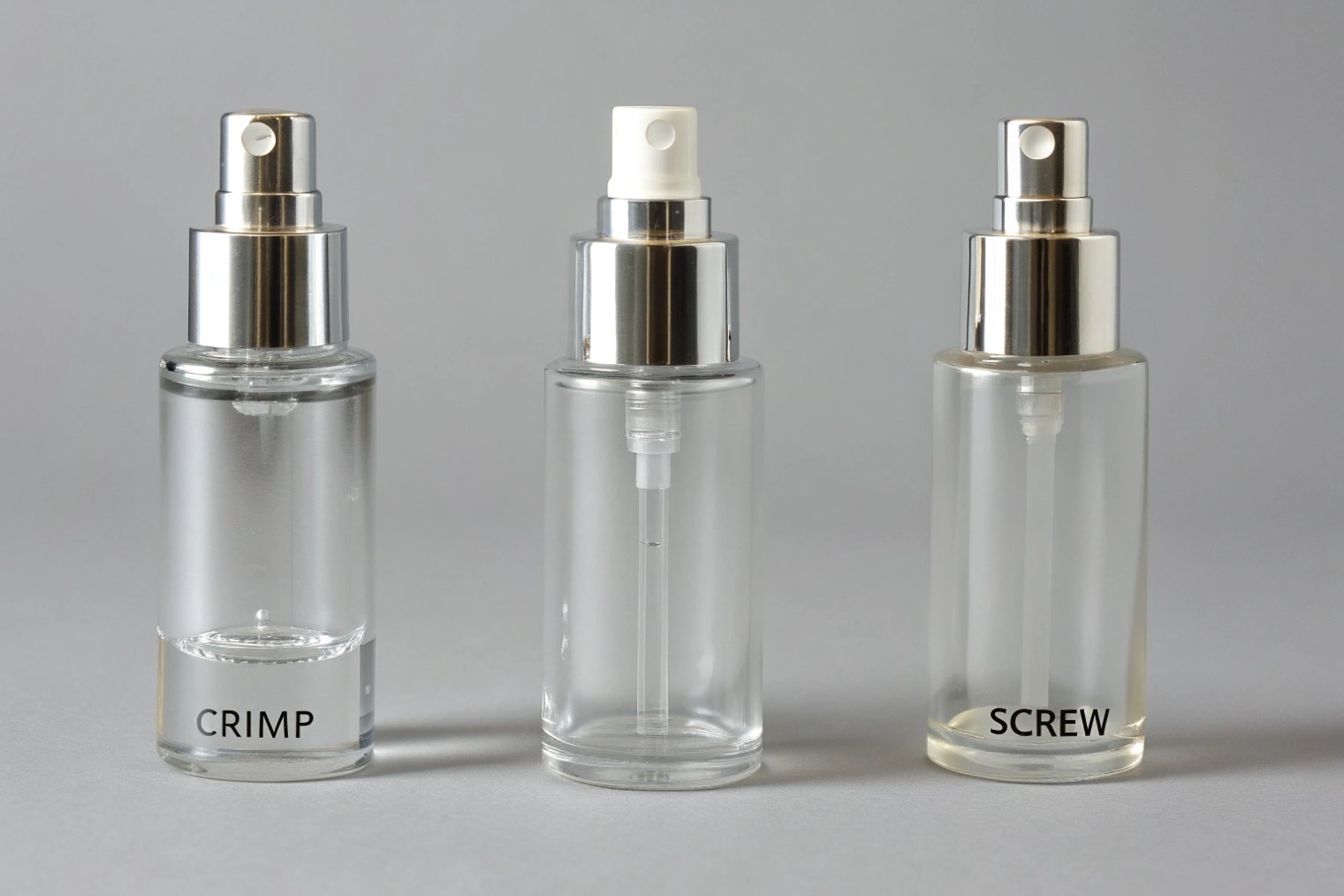
Crimp and screw systems both move perfume from bottle to air, but they behave very differently in use, assembly, and aesthetics. When we choose between them for a glass atomizer, we balance sealing performance, filling method, refillability, and visual style.
Crimp pumps: clean shoulders and strong seals
A crimp pump uses a metal or aluminum ferrule that wraps around the bottle neck and tightens under pressure as part of the crimping process 3. The ferrule locks the pump to the glass permanently. There is usually a gasket under the ferrule that presses tightly against the neck finish. This creates a strong barrier against leakage and evaporation, even with volatile alcohol-based juice.
Visually, crimp systems look very neat. The metal ferrule can hide the neck and create a smooth transition from shoulder to actuator. This is why many prestige fragrance brands still choose crimp pumps for hero bottles and high-end atomizers. Another plus is tamper resistance. Once crimped, the pump cannot be removed without visible damage.
Screw pumps: refillable and flexible
Screw pumps use threaded collars that match a screw neck on the glass bottle. The pump can be screwed on and off by hand. This makes filling and refilling easier, especially for travel atomizers and decant bottles. It also allows the user to clean the bottle or change the fragrance later.
The trade-off is that sealing depends more on the thread precision and gasket quality. If the collar is not tight enough or the gasket material is wrong, there is a higher risk of slow weeping or extra evaporation over time. From a design side, screw collars are often a bit bulkier, which can look less minimal than a slim crimp ring.
A simple comparison:
| Feature | Crimp Pump | Screw Pump |
|---|---|---|
| Seal strength | Very strong, factory-set | Good, if threads and gasket are right |
| Refillability | Not refillable (in normal use) | Easy to open and refill |
| Visual style | Clean shoulders, luxury look | More visible collar, flexible looks |
| Tamper resistance | High | Lower |
| Filling process | Needs crimp machine | Simple line or even manual filling |
| Ideal use | Prestige bottles, long storage | Travel atomizers, decants, DIY blends |
For many travel-sized glass atomizers, we see a hybrid approach. The main 50–100 ml bottle uses a crimp pump to protect the formula for years. Smaller 5–15 ml atomizers use screw pumps so customers can refill them safely from the main bottle or from refills, without special tools.
What output and droplet size create a fine, even mist?
A beautiful bottle will still disappoint if the spray feels like a hard jet, leaves wet spots on clothes, or fades too quickly.
Most good perfume atomizers use an output around 0.07–0.12 ml per spray and a droplet size in the fine mist range, so they create a soft, even cloud that covers skin without soaking it.
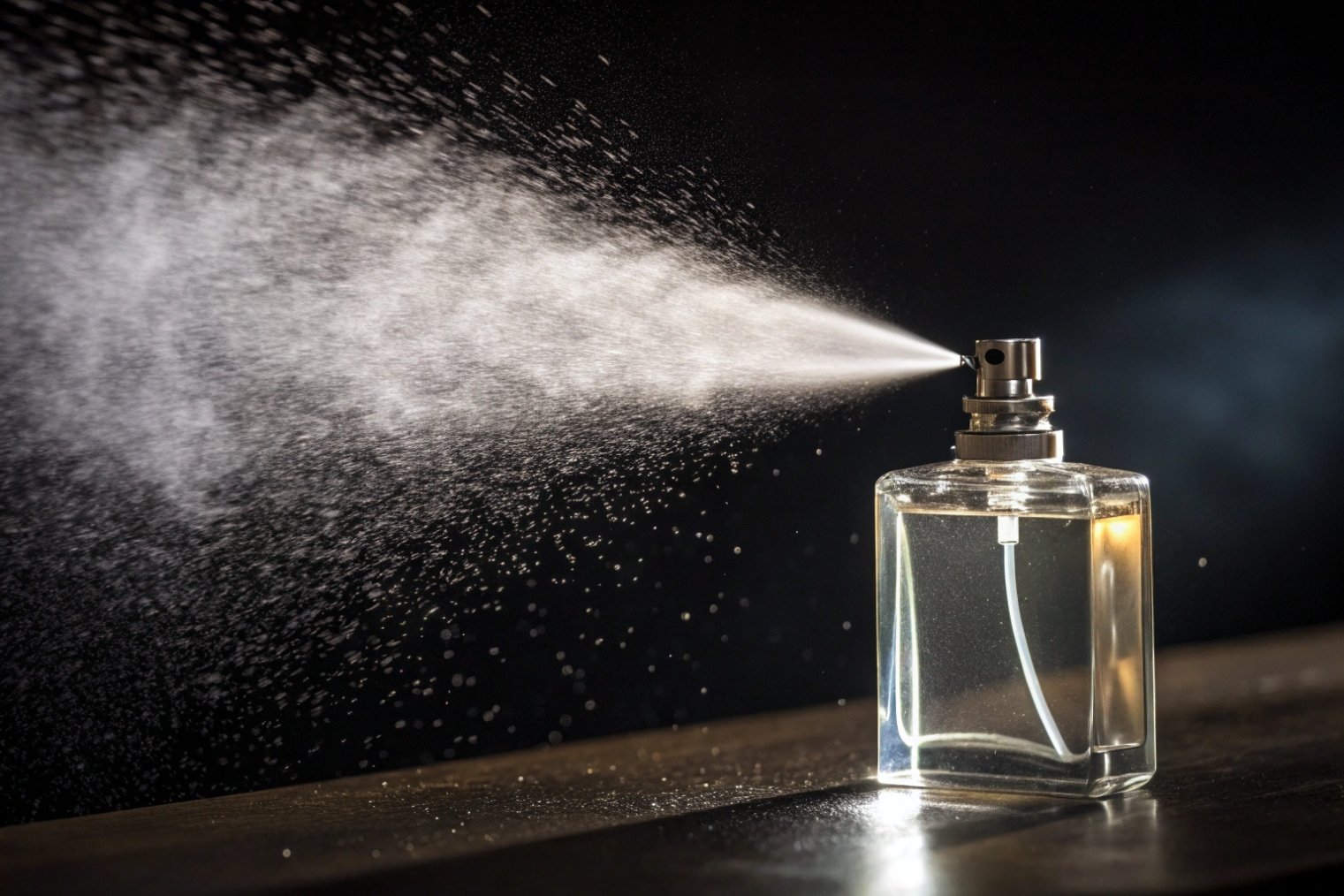
Spray quality comes from the pump engine, nozzle design, and how well they match the perfume’s viscosity and alcohol level. When we specify an atomizer, we think about how big each spray should be, how far it should travel, and how the cloud should feel on skin.
Output and spray feel
Output is the volume pushed out with one full stroke of the actuator. If it is too low, the user will pump again and again, which feels weak and annoying. If it is too high, the spray can overload the skin or clothes and empty a small atomizer very fast.
For fine fragrance:
- Light mists often use around 0.07–0.09 ml per spray.
- Standard mists sit around 0.10–0.12 ml per spray.
This range gives a clear scent presence with one or two sprays on pulse points, without leaving a heavy wet patch. In small 5–10 ml atomizers, lower outputs help the product last longer and give good control.
Droplet size and distribution
Droplet size affects how the fragrance sits and evaporates. Very large droplets behave like splashes and can stain textile fibers. Very tiny droplets float more and can feel airy, but if the output is low, they may not give enough intensity.
A fine mist atomizer aims for droplets in a balanced range, with a narrow spread, so most droplets sit in that “just right” zone. The spray nozzle design 4 controls this using internal channels and a tiny outlet orifice. It breaks the liquid into small droplets as air mixes in.
Here is a basic picture of how output and droplet behavior relate:
| Parameter | Too Low / Small | Ideal Zone | Too High / Large |
|---|---|---|---|
| Output per spray | Many pumps, weak presence | 1–3 sprays feel enough | Overload, fast emptying |
| Droplet size pattern | Very airy, light impression | Fine, even mist cloud | Spots, risk of staining |
| User perception | “Is this working?” | “Soft, even, controlled” | “Strong jet” or “too wet” |
Travel atomizers must handle many quick uses. So pumps in this category should feel smooth and consistent, with low actuation force. The actuator shape also matters. A well-shaped finger pad helps the user press straight down, which keeps droplet size and output consistent from spray to spray.
In development, we test atomizers on real skin and fabric, not just in lab glass. This shows how the cloud moves in real conditions and how different outputs work with the same juice across 5 ml, 10 ml, and 15 ml formats.
Which materials are compatible with alcohol-based fragrance?
A refillable atomizer should feel safe and solid, but some plastics can haze, crack, or leach odor when they sit with strong alcohol and fragrance oils.
Glass bottles with compatible pump components—such as stainless steel springs, good-quality elastomers, and fragrance-resistant plastics—handle alcohol-based perfume best and keep the mist clean and neutral.
Material choice is one of the main reasons many fragrance brands still prefer glass atomizers. Alcohol, water, and oil-based perfume concentrates can be tough on polymers. Over time, bad matches can cloud, soften, or even fracture plastic parts.
Glass as the primary container
Glass is naturally inert with standard perfume formulas. It does not absorb scent, it does not deform under normal conditions, and it has excellent barrier properties. A clear or tinted glass atomizer keeps the juice stable and lets people see the level and color. For design, high-white flint or colored glass also reinforces the brand’s luxury image.
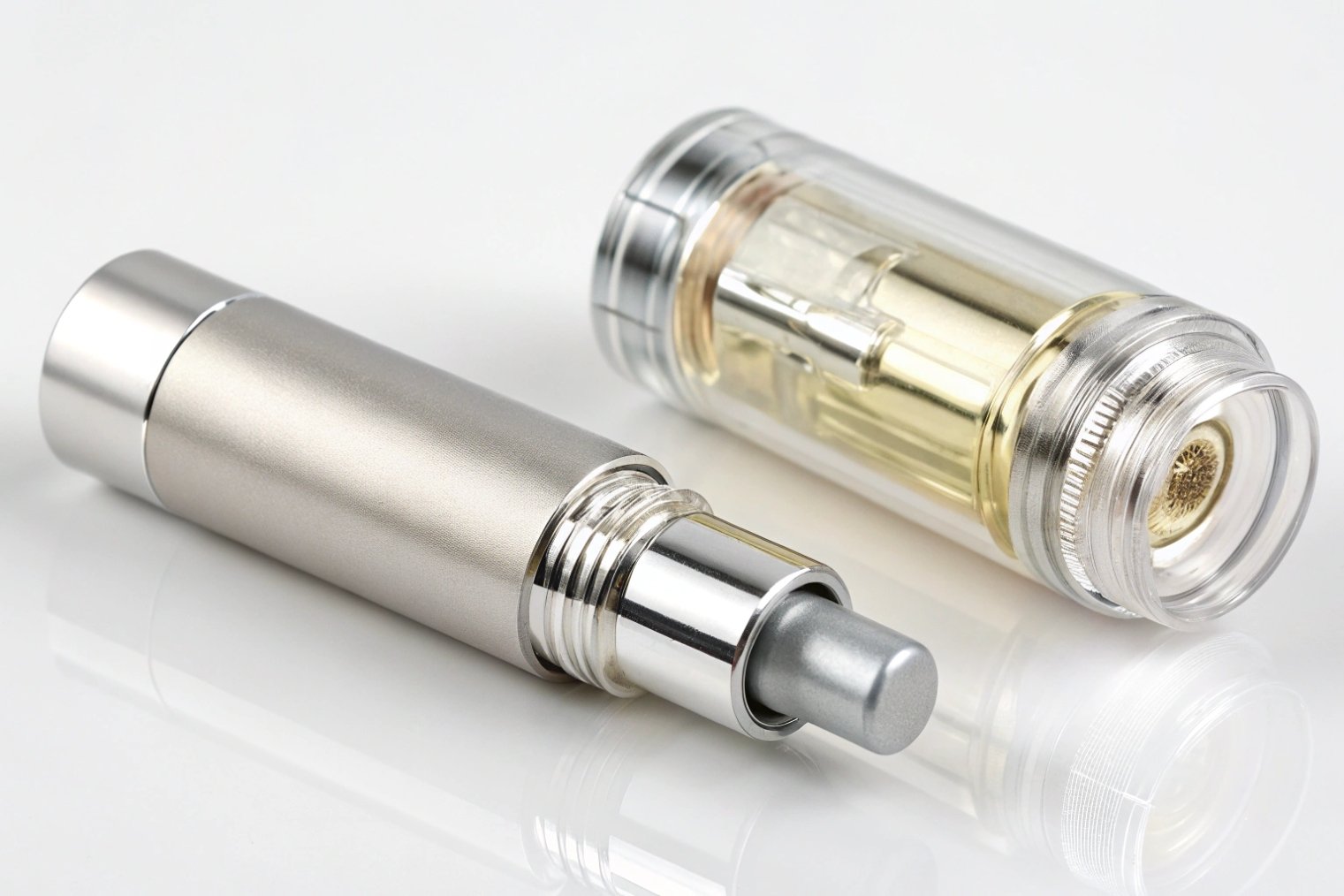
Some travel atomizers use an aluminum shell around a glass insert. The glass insert holds the perfume. The shell protects it from impact and light, and gives a sleek look in bags and pockets. This “glass-in-metal” structure combines chemical safety with durability.
Internal pump and gasket materials
Inside the pump, several small parts touch the liquid:
- Spring (often stainless steel).
- Piston and housing (often specific plastics).
- Gaskets and seals (various elastomers).
- Dip tube (flexible plastic).
These parts must resist alcohol and fragrance oils without swelling, cracking, or releasing off-notes. Before locking materials, many teams check a chemical compatibility database 5 for ethanol and solvent resistance as a baseline.
Common, safer options include:
| Component | Typical Material Choice | Why It Works |
|---|---|---|
| Bottle | Soda-lime glass, high-white glass | Inert, strong, recyclable |
| Shell (outer) | Aluminum or anodized aluminum | Light, protective, premium look |
| Spring | Stainless steel | Corrosion resistant |
| Housing | PP, POM, or other perfume-rated plastics | Good chemical resistance |
| Gaskets | Suitable elastomers (e.g., fluoroelastomer (FKM) 6 types) | Seal and resist solvents |
| Dip tube | PE or other compatible polymer | Flexible, handles alcohol |
On the outside, caps can be metal, plastic, or wood. For wood, it is best to use an inner liner so the perfume does not soak into the cap and warp it. Lacquers and coatings must also be perfume-safe. If not, strong alcohol can soften them and create tacky surfaces or off-smells.
From a supplier side, every new atomizer construction should pass compatibility and migration checks with the actual formula, not just a standard test liquid. This prevents long-term surprises in the field and protects both the fragrance and the user.
How do travel atomizers prevent leakage and evaporation?
Many fragrance lovers own a travel atomizer, but a single leak inside a bag or suitcase can destroy trust in the product and the brand.
Travel atomizers prevent leakage and evaporation through tight seals, controlled headspace, robust pumps, and smart locking caps or shells that protect the actuator from accidental presses.
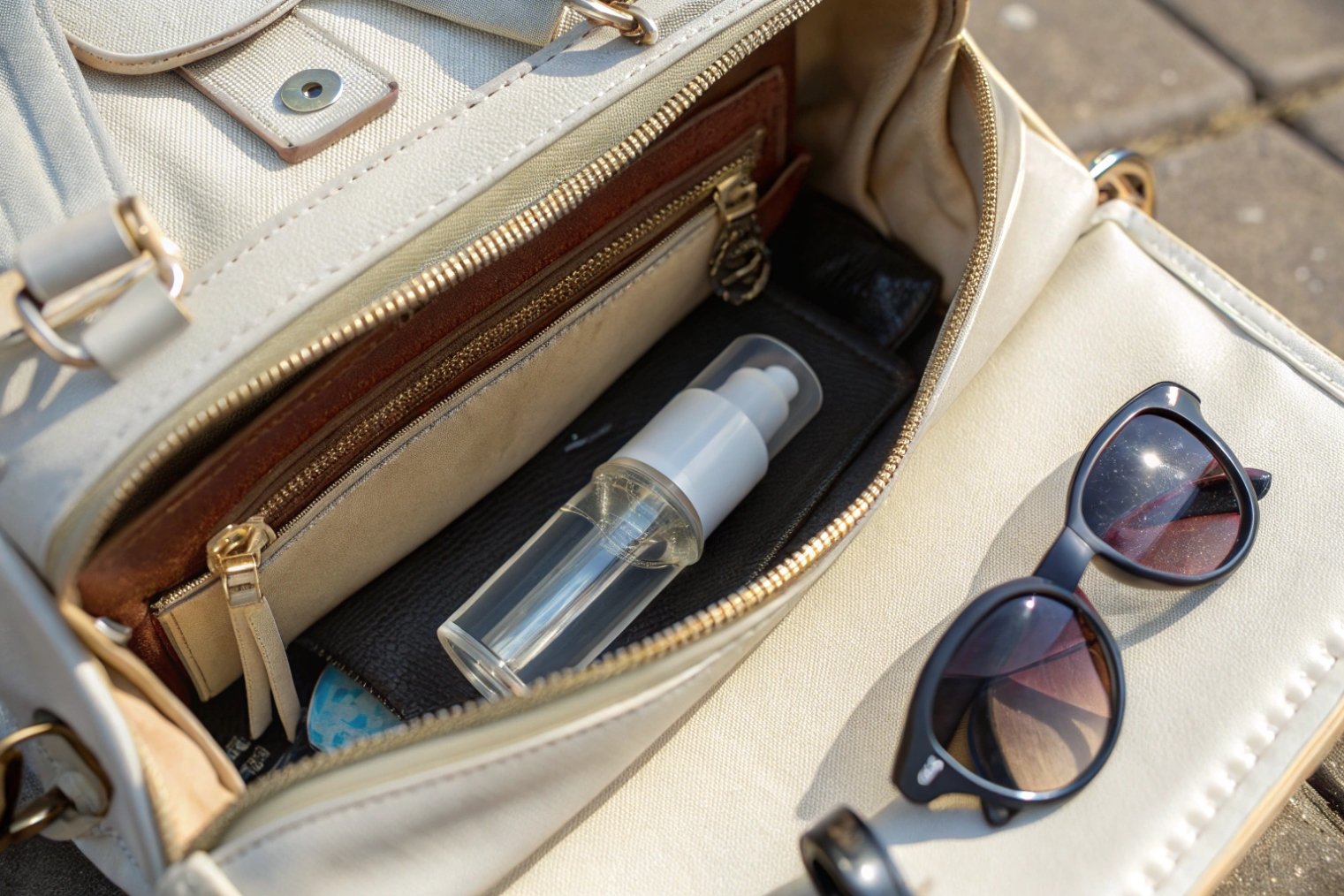
Travel formats face tougher conditions than a bottle on a bedroom shelf. They bounce in bags, see temperature changes, and lie sideways for hours. So sealing and mechanical design must be stronger and more forgiving.
Sealing, headspace, and internal stability
A leak-resistant travel atomizer starts with a good seal between bottle and pump. With screw systems, a precise thread and the right torque on the collar are key. With crimp systems, ferrule pressure and gasket quality matter most. In both cases, we want even compression around the neck.
Headspace—the air gap above the liquid—also plays a role. Too little headspace can create pressure spikes with temperature changes, which push liquid toward the pump. Too much headspace increases the volume of air, which can dry the dip tube and speed up evaporation. A controlled fill level (for example, around 85–90% of full capacity) gives enough room for expansion without wasting space.
A quick overview:
| Design Element | Role in Travel Safety |
|---|---|
| Neck + gasket design | Stops leaks at the joint |
| Accurate fill level | Handles expansion and movement |
| Robust pump engine | Keeps internal check valves stable |
| Quality dip tube cut | Limits air pockets and dry pumping |
Locking and protective features
Many travel atomizers now include extra mechanical protection. Some use twist-to-lock actuators. When twisted, the actuator cannot be pressed, so perfume cannot spray by accident in a bag. Others use overcaps that fit firmly and protect the actuator from knocks. In glass-in-metal designs, a full outer shell hides and shields the inner glass and pump.
Some refillable travel atomizers fill from the bottom. They plug onto the main bottle’s spray head and pump perfume into a small inner tank. These systems avoid opening the main bottle and reduce air contact. To prevent leaks, they need strong check valves and seals at the base. When engineered well, they keep evaporation very low and make refilling quick and clean.
For brands, it is smart to test travel atomizers with:
- Drop and vibration tests aligned with ISTA transit testing 7.
- Overpressure and temperature cycling.
- Long-term sideways storage.
This test set mimics real-life bags, flights, and car glove boxes. When the design passes, customers gain confidence that their favorite scent is safe in a pocket-sized glass bottle.
Conclusion
A well-designed glass perfume atomizer protects your fragrance, raises the experience of every spray, and gives brands a safe, elegant way to follow their customers into daily life and travel.
Footnotes
-
Official UK guidance on carry-on liquid limits and airport variations. ↩ ↩
-
Clear explanation of what an atomizer is and how it creates a fine spray. ↩ ↩
-
Quick overview of crimping mechanics, useful for understanding crimp pump sealing. ↩ ↩
-
Explains nozzle fundamentals that influence spray pattern and droplet formation. ↩ ↩
-
Practical tool to check material resistance to ethanol and other solvents used in fragrance. ↩ ↩
-
Background on FKM elastomers and why they’re chosen for solvent-resistant seals. ↩ ↩
-
Reference point for common package performance tests used to simulate shipping abuse. ↩ ↩






