
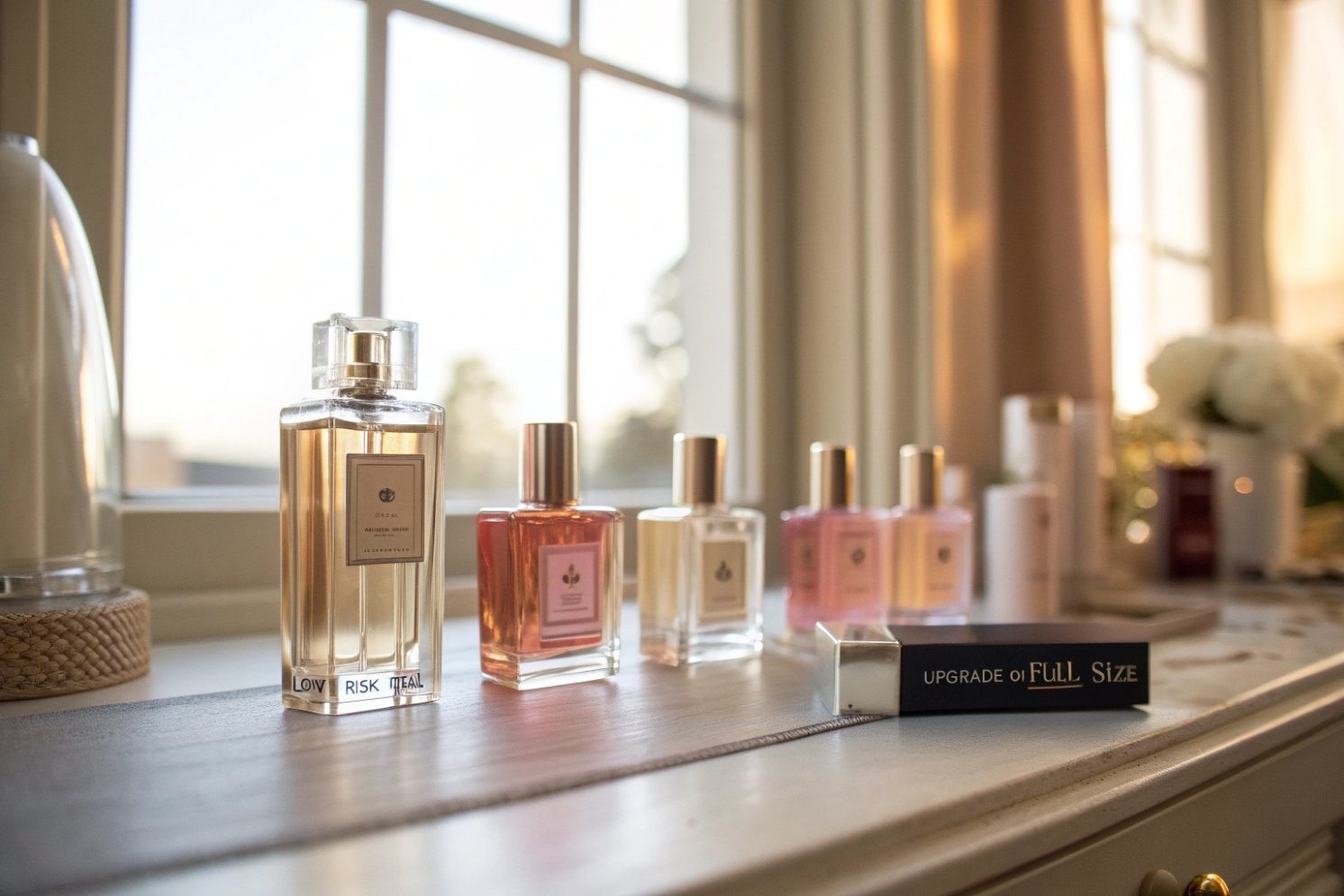
Full-size bottles look beautiful on a dresser, but they are heavy, costly, and risky for first-time buyers who are not sure they will love the scent yet.
Mini perfume bottles are popular because they lower the cost and risk of trying fragrances, fit modern travel and lifestyle patterns, and act as powerful sales tools that convert trial into full-size purchases.
From a brand and packaging point of view, minis are not just “small versions”. They are a strategic format. They open the door for new customers, fuel gift sets and subscriptions, and put the fragrance into handbags, gym bags, and carry-ons. When we design them well, they become one of the most efficient tools to grow a fragrance line.
Do minis drive sampling, gift sets, and subscriptions?
Many people want to explore new scents, but full-size bottles feel too expensive and too permanent for a simple test.
Yes. 5–15 ml minis are ideal for discovery sets, gift coffrets, and subscription programs because they lower commitment, let people try several scents, and create clear upgrade paths to full-size bottles.
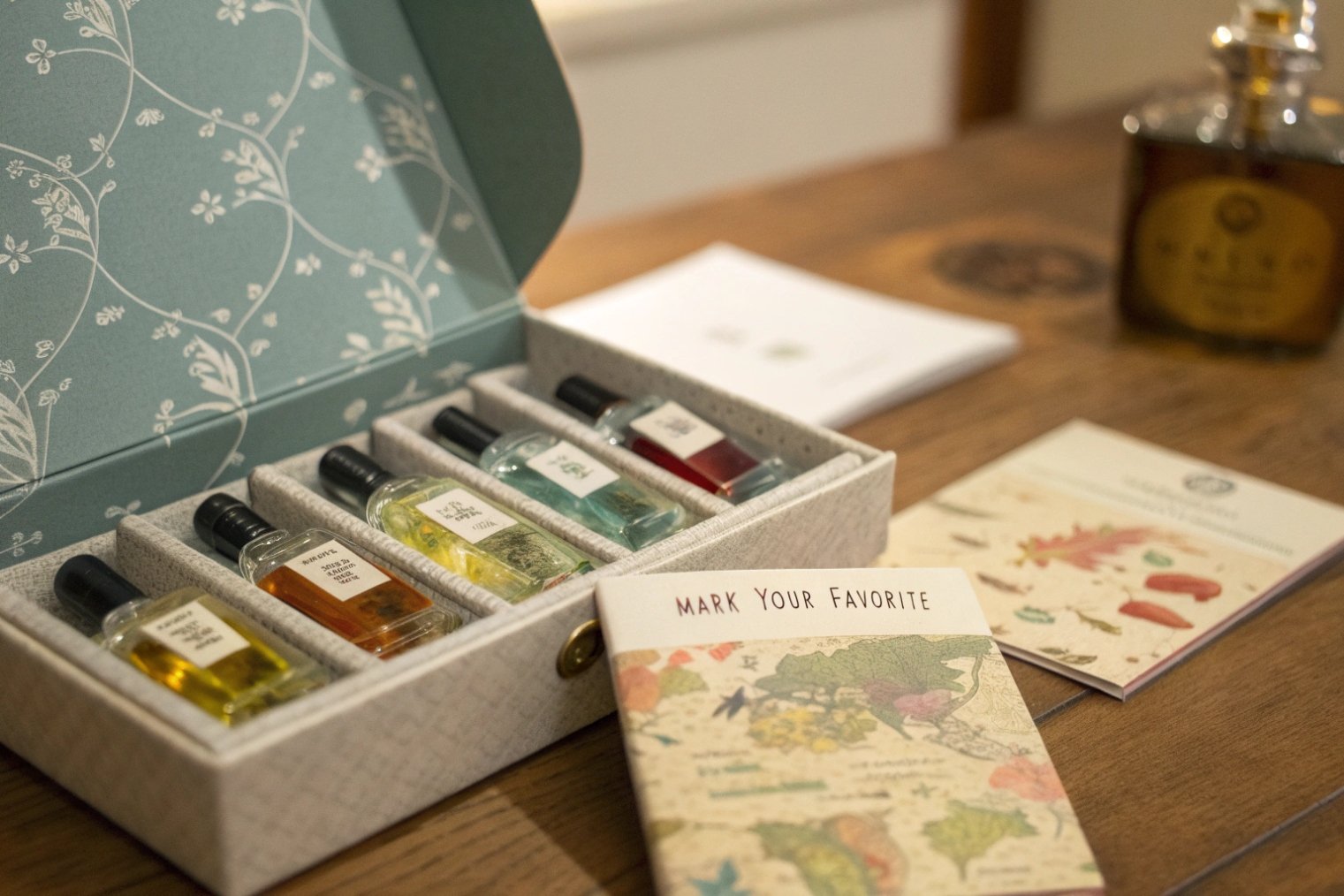
Mini formats sit at the heart of modern fragrance sampling. A well-designed 5–10 ml bottle offers enough product for real-life testing over several days or weeks, not just one or two sprays from a blotter. This is classic product sampling 1 at a premium level. It helps customers understand how a scent fits into their routine, seasons, and mood. Instead of forcing them to guess from a single in-store experience, minis let them live with the fragrance.
Discovery sets: low risk, high learning
Discovery sets with three to ten minis work very well for niche or story-driven brands. Each vial or mini bottle becomes a small chapter of the brand universe. People can compare, layer, and rank favorites in their own time. This reduces returns and disappointment. It also moves the purchase decision from “Do I like this?” to “Which one do I like most?”
Gift sets and coffrets
Minis are also strong in gifting. A coffret of small bottles is easy to wrap, easy to mail, and feels playful. It removes the stress of choosing one “right” scent for someone else. For the brand, this means one gifting SKU can introduce several fragrances at once. Glass minis that replicate the full-size shape reinforce brand recognition and look beautiful in photos.
Subscriptions and DTC funnels
For subscription models, 5–15 ml formats are almost perfect. They are light, safe to ship, and last for about one month of regular use, depending on pump output. This aligns well with the subscription business model 2: frequent variety, low shipping friction, and repeat engagement. Each delivery can contain a hero scent, an experimental option, or a seasonal note. The cost per ml is higher, but the lifetime value of a subscriber often offsets this easily.
Here is a simple mapping of mini use cases:
| Mini Format | Typical Volume | Main Role | Brand Benefit |
|---|---|---|---|
| Discovery mini | 2–5 ml | Sampling and first contact | Low-cost trial, story hook |
| Travel spray | 5–10 ml | Travel and daily carry | Frequent use, brand visibility |
| Subscription size | 8–15 ml | Monthly rotation | Recurring revenue, data on preferences |
| Gift coffret mini | 5–10 ml | Gifting and collecting | Multi-scent exposure in one purchase |
In this way, minis are not a side product. They live at the top of the funnel for many fragrance businesses and shape how people discover and stay with the brand.
How do 5–15 ml formats improve travel convenience and compliance?
Most fragrance lovers want to travel with their scent, but full-size bottles feel heavy, fragile, and risky at airport security.
5–15 ml perfume bottles fit easily into handbags and comply with standard airline liquid rules, so customers fly, commute, and go out at night with fragrance on hand, without worrying about weight or confiscation.
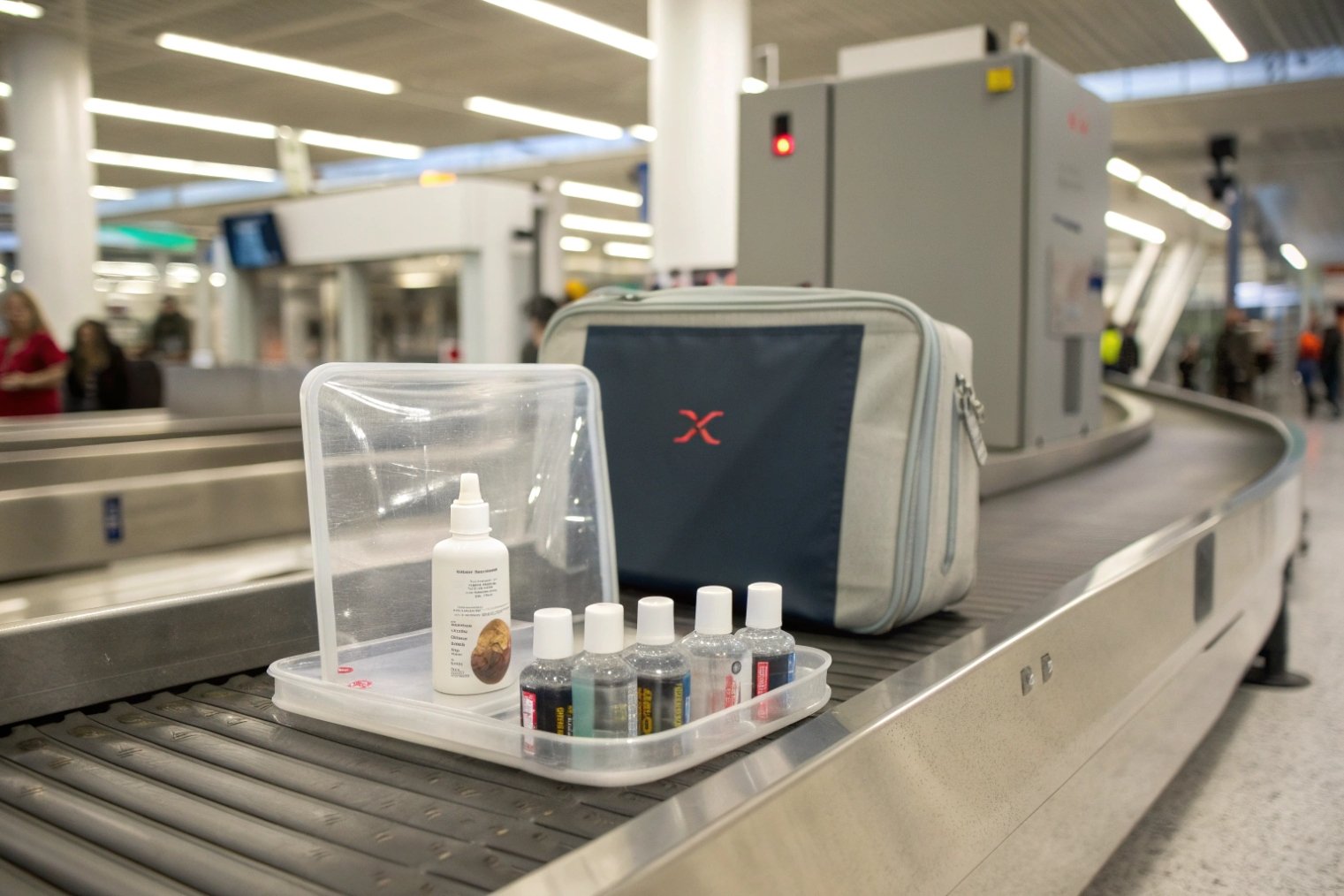
Travel convenience is one of the strongest rational reasons behind the mini boom. Many airport security systems use a 100 ml limit for liquids in carry-on bags (for example, the TSA 3-1-1 liquids rule 3). Minis sit far below that line, so they feel “safe” to pack. People can carry several scents for different occasions—day, night, work, holiday—without filling a whole quart bag.
Light, robust, and bag-friendly
A 5–15 ml bottle weighs very little compared to a 50 or 100 ml flacon, especially when we use compact glass forms and slim pumps. This makes it comfortable to carry all day. The footprint fits easily into vanity bags, micro-bags, and even small pockets. For design, this means we keep proportions simple and avoid fragile necks or heavy caps.
Because the bottle is small, it is easier to protect against breakage. Thick glass walls, rounded shoulders, and slightly recessed bases help absorb shocks in transit or in a packed bag. Many brands choose crimp pumps for minis because they seal tightly and resist accidental activation.
Realistic usage during trips
For most people, a 5–10 ml spray holds enough fragrance for one or two weeks of daily use. So a single mini can cover a full vacation. For longer trips, a person can bring two or three different minis. This supports the idea of a “scent wardrobe” on the move, which aligns well with younger consumers who like to change fragrance by mood or outfit.
Here is a simple view of use by volume:
| Volume | Typical Sprays* | Trip Coverage (approx.) | Best Use Case |
|---|---|---|---|
| 5 ml | ~50–70 | Long weekend / short trip | Quick trips, gym, testing |
| 10 ml | ~100–140 | 1–2 weeks | Holidays, business travel |
| 15 ml | ~150–200 | 3+ weeks | Frequent travelers, desk drawers |
*Assuming 0.07–0.10 ml per spray; see common fragrance pump dosage specifications 4.
Compliance and peace of mind
Beyond pure rules, minis remove anxiety. People worry less about breaking a favorite full bottle in a hotel bathroom or losing it in transit. If a mini breaks or leaks, the emotional loss and financial hit are lower. This psychological safety point often matters more than technical risks. When customers feel safe traveling with minis, they are more open to buying them as add-ons at airports, train stations, and online travel bundles, especially when rules like the UK hand luggage restrictions guidance 5 make “small containers” feel like the safest choice.
From a brand’s perspective, every trip with a mini is more exposure. The bottle sits on sinks, hotel counters, and restaurant tables. Glass minis with strong shapes and decorations turn these moments into micro-billboards for the fragrance house.
Are unit economics viable despite higher cost per milliliter?
When we shrink bottles, packaging and logistics costs do not shrink in the same way, so minis often look expensive on a per-milliliter basis.
Yes, minis can be very profitable even with higher cost per milliliter, because they sell at premium price points, drive full-size conversions, and open channels like travel retail and subscriptions that full bottles cannot reach alone.
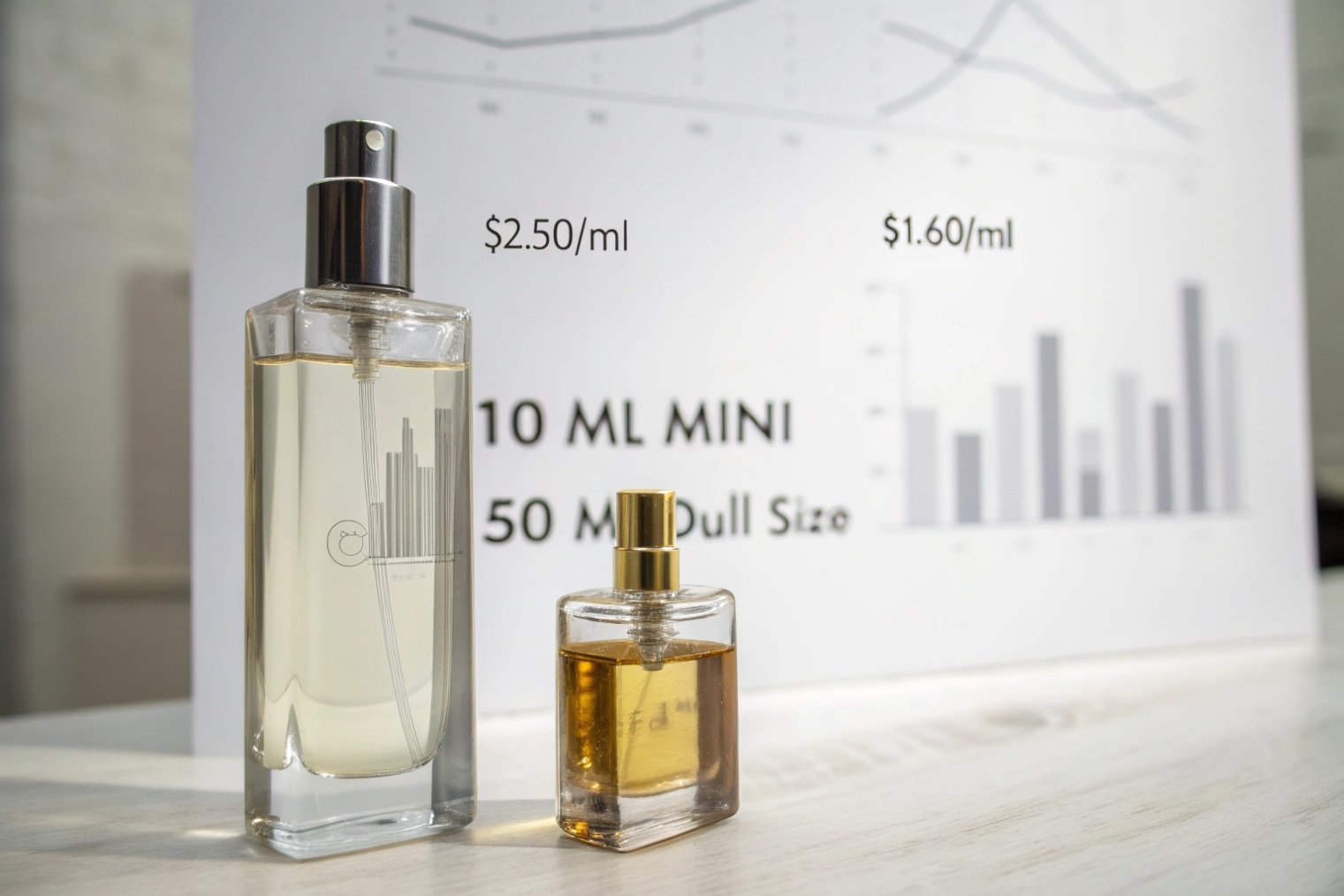
In unit economics, a mini looks challenging at first. The glass, pump, cap, and carton costs do not scale down proportionally with volume. A 10 ml bottle can cost close to a 30 ml one to produce, once we include filling, quality checks, and handling. So the cost per ml goes up. However, retail pricing also shifts. Customers accept a higher price per ml in exchange for lower absolute spend and convenience.
Margin logic: unit vs milliliter
Let us look at a simplified example:
| Size | Fill | Ex-factory Cost | Retail Price | Gross Margin per Unit | Price per ml |
|---|---|---|---|---|---|
| 10 ml | 10 | $4 | $25 | $21 | $2.50 |
| 50 ml | 50 | $8 | $90 | $82 | $1.80 |
If your team debates “is this too expensive per ml?”, it helps to align on gross vs net margin concepts 6 so everyone compares the same thing. Here, the 10 ml mini has a higher price per ml, but it still delivers solid margin per unit. When we add the fact that minis often sell in higher volumes through sets and travel retail, their total contribution can be strong.
Strategic value beyond direct margin
Minis also create indirect value:
- They drive full-size sales after trial.
- They reduce returns because customers test before committing.
- They support channel partners who want small, high-rotation SKUs.
- They generate data in subscriptions and DTC programs.
If a certain share of mini buyers later purchase a full size, the “conversion margin” can justify even a lower margin on the mini itself. In practice, many brands still keep healthy margins on both.
Packaging and operations levers
Good design can improve economics:
- Reuse the same glass mold for several scents with different decorations.
- Use standard neck finishes and pumps to reduce component MOQs.
- Design minis to pack densely in cartons, lowering freight and storage costs.
- Align minis with gifting, discovery, and seasonal campaigns, so they never sit idle.
By thinking of minis as a family, not isolated objects, we spread the tooling and design cost over more SKUs and seasons. This is where a glass partner adds value. We help find shapes that look premium at 5–15 ml but still run efficiently on production lines.
What merchandising turns minis into full-size conversions?
If minis only sell once, they become a cute but expensive habit instead of a growth engine for the fragrance line.
The most effective merchandising places minis where impulse and curiosity are high, bundles them into discovery or gift formats, and connects each mini clearly to its full-size “big sister” through shelf layout, storytelling, and digital follow-up.
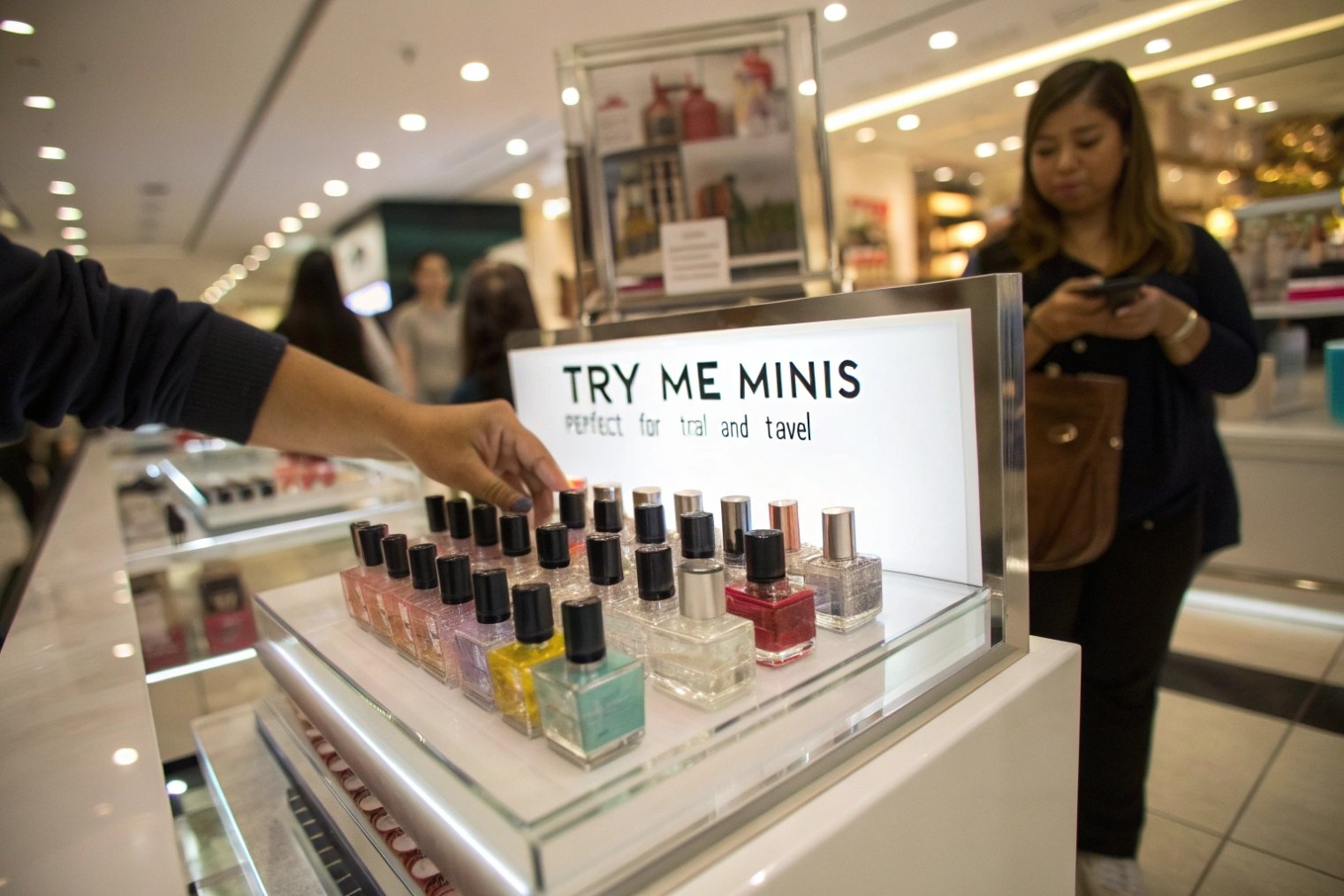
Minis convert best when they are easy to notice, easy to understand, and clearly linked to a next step. This is a merchandising and design question as much as a pricing one. A tiny bottle hidden on a bottom shelf will not drive much behavior. A well-lit tray of minis next to the main testers can do a lot.
Placement and visibility
Strong placements include:
- Cash wrap areas where people make fast, emotional decisions.
- Endcaps and gondola tops with discovery sets and clear signage.
- Travel retail fixtures near security, where people think about liquids.
- Online product pages tied to “Try before full size” or “Discovery kit”.
Physically, minis should mirror the look of full-size bottles: same silhouette, same decoration style, same logo. This visual echo helps the shopper connect the mini in their hand with the full bottles on the main shelves.
Storytelling and education
Merchandising should answer three simple questions:
- What is this scent about?
- How long will this mini last me?
- What happens if I love it?
Clear, simple communication turns minis into a promise, not a puzzle. For example, a small table tent can say: “10 ml • Around 100 sprays • Enough for 2 weeks of daily wear. Love it? Ask for the 50 ml or 100 ml size.” QR codes or NFC tags on discovery boxes work best when they follow a real identifier standard (like the GS1 Digital Link standard 7) so the same code can support loyalty, recycling guidance, and product pages.
Here is a quick view of tactics and their impact:
| Tactic | Goal | Effect on Conversion |
|---|---|---|
| Discovery sets with booklet | Teach stories and notes | Higher full-size interest |
| “Try then upgrade” discounts | Reward moving to full size | Faster decision, lower hesitation |
| Shelf blocks pairing mini + full | Visual link between formats | Easier cross-navigation |
| Digital remarketing to mini buyers | Remind and educate | Sustained follow-up after trial |
Data, subscriptions, and refills
In DTC channels, minis are a goldmine for data. When customers choose minis online, they tell the brand which notes or families they prefer. Brands can then recommend full sizes, refills, or complementary scents tailored to that profile. Subscription boxes push this further by tracking which vials people finish quickly and which they neglect.
Refillable systems add one more layer. A 5–10 ml travel spray can use a refill from a 50 or 100 ml glass bottle at home. Merchandising can show this system clearly in-store: “Wear the mini, refill from your signature bottle, reduce waste.” This connects the emotional pleasure of minis with the sustainability and value of larger refillable formats.
Conclusion
Mini perfume bottles are popular because they match how people live, travel, and shop today, turning small, beautiful glass formats into powerful tools for trial, loyalty, and sustainable fragrance habits.
Footnotes
-
Explains how product sampling drives trial and conversion—useful for designing mini strategies. ↩ ↩
-
Overview of subscription business models and mechanics behind recurring revenue programs. ↩ ↩
-
Official TSA guide to carry-on liquid limits and screening expectations for travelers. ↩ ↩
-
Example fragrance pump dosage spec to ground spray-count estimates for 5–15 ml formats. ↩ ↩
-
UK government summary of airport hand luggage liquid restrictions, including container size limits. ↩ ↩
-
Clarifies gross vs net margin concepts for mini vs full-size profitability checks. ↩ ↩
-
GS1 Digital Link shows how QR codes can carry product IDs for traceability, loyalty, and recycling guidance. ↩ ↩






