
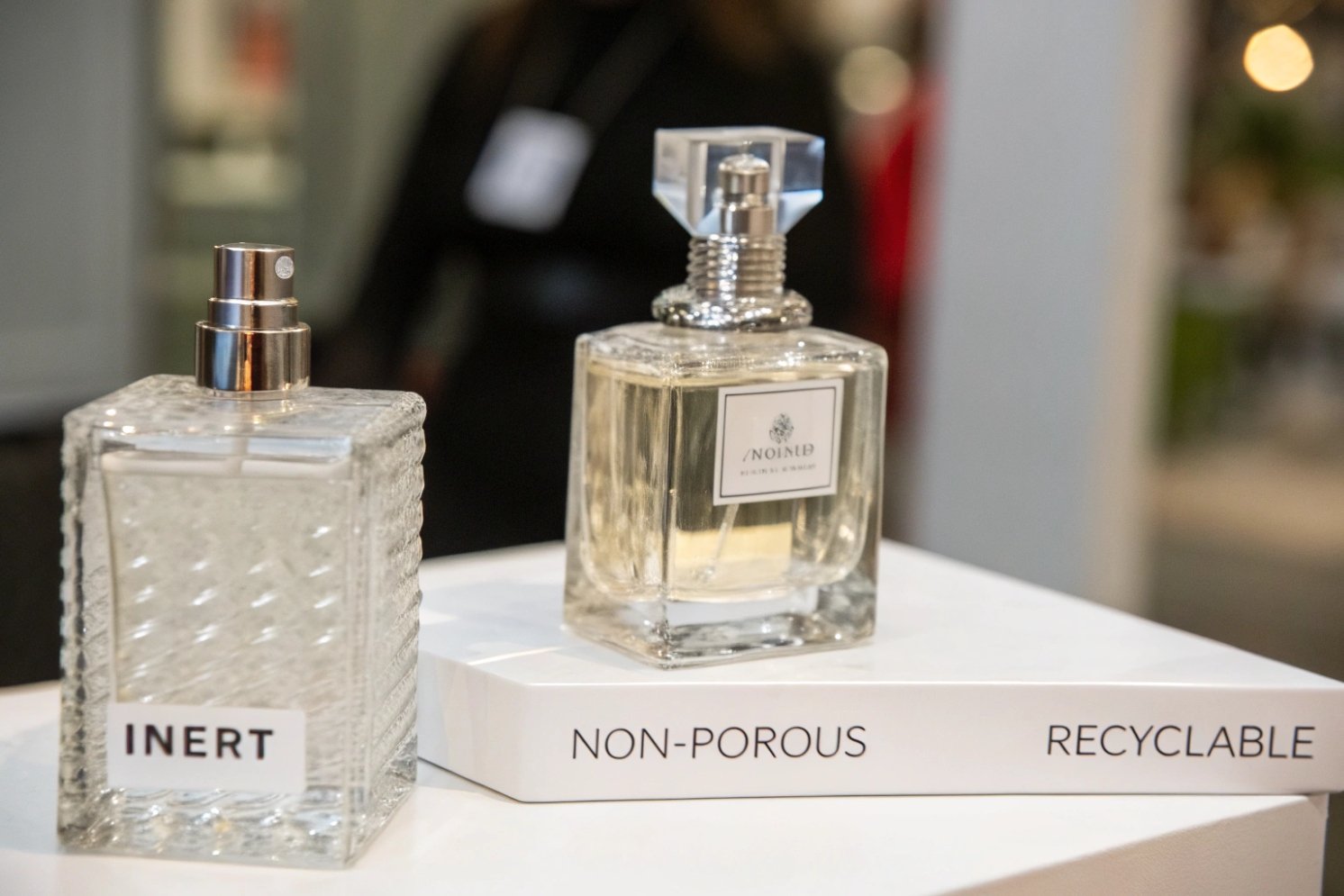
Perfume lives in a very harsh environment: high alcohol, volatile aromatics, light, and time. The wrong bottle slowly rewrites the formula you paid to develop.
Perfume bottles are made of glass because it is inert, non-porous, light-protective, highly recyclable, and easy to shape into luxurious, custom forms that preserve both the fragrance and the brand image.
Glass is not just a pretty shell around the juice. It is part of the formula’s long-term stability plan and part of the brand’s storytelling. When you understand how glass behaves compared with plastic and metal, it becomes very clear why the industry still relies on it for almost every serious fragrance launch.
Is glass truly inert and safer for alcohol-based fragrances?
When alcohol, citrus oils, and delicate aroma molecules sit in a bottle for years, any reactive surface will slowly edit the scent from underneath.
Well-made soda-lime or high-flint glass is effectively inert for alcohol-based fragrances: it does not leach, does not absorb aroma, and forms tight systems that slow oxidation and evaporation.
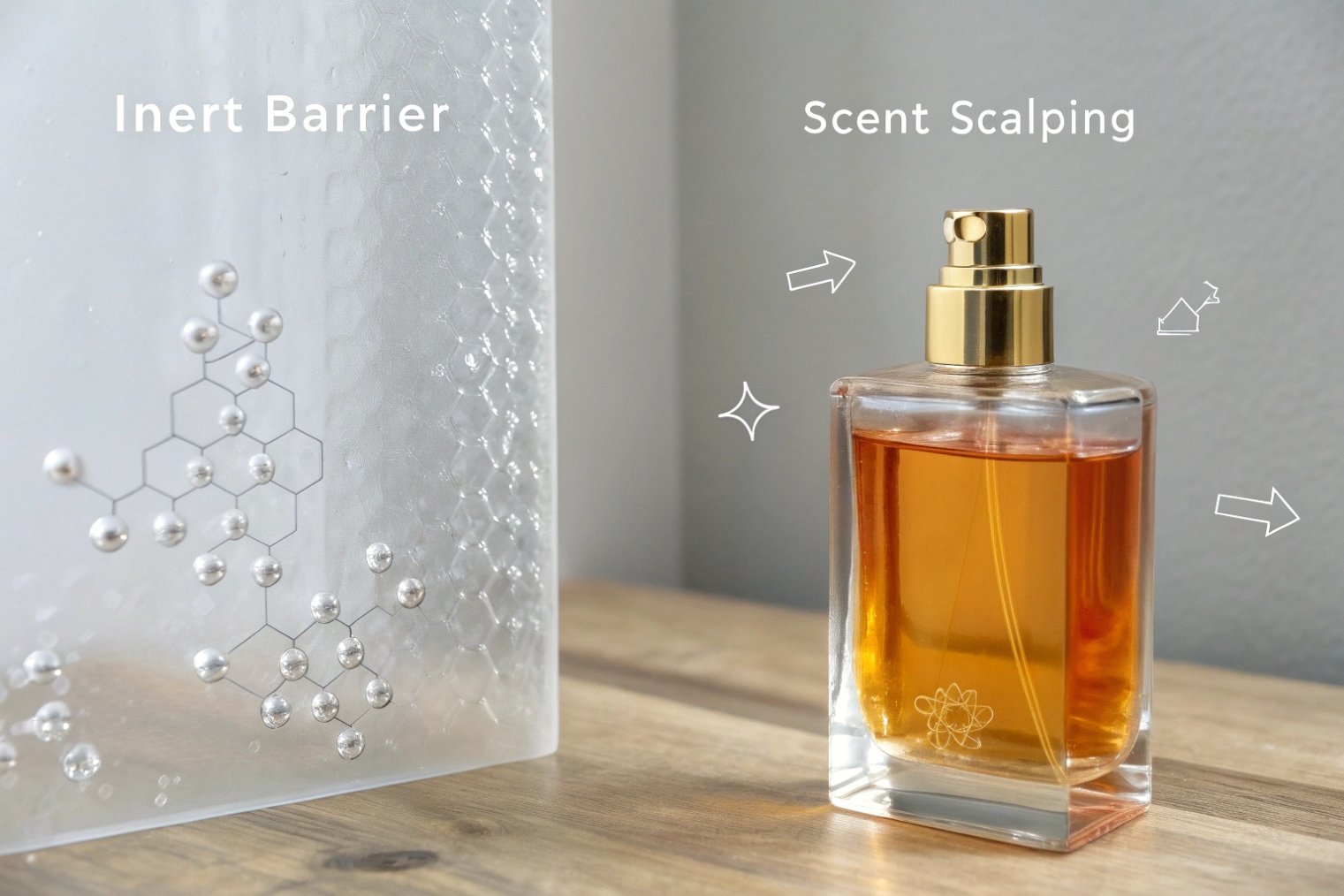
Glass is built from a silica-based network and is widely described as a virtually inert and impermeable packaging material 1. Most mainstream fragrance bottles are made from soda-lime glass 2, which is chemically stable for everyday container use.
Plastics behave differently. Many plastics can absorb volatile fragrance compounds into their matrix and then slowly release them over time. This “scent scalping” phenomenon 3 is well documented in food and flavor packaging. The result is a flatter top note and a less defined opening. Plastics can also allow more oxygen and tiny molecules to pass through over long storage; research comparing the moisture and oxygen barrier properties of glass vs. PET/HDPE bottles 4 highlights why glass remains the most predictable “barrier” choice.
Glass also supports very good sealing. Together with a well-designed crimp or screw pump, it forms an almost airtight system. Limited gas exchange means slower oxidation of sensitive ingredients and less evaporation of the lightest notes. That is one reason vintage perfumes in intact glass bottles can still smell surprisingly close to the original, while the same juice in a plastic travel atomizer may feel tired after a year.
There is one important exception: lead crystal. Traditional lead crystal decanters can leach lead into alcoholic liquids 5. They look beautiful, but they are display pieces, not long-term storage containers for perfume. For safe storage, standard perfume glass (soda-lime, extra-flint, or borosilicate) is the correct choice.
A simple comparison:
| Property | Glass (perfume grade) | Typical plastics (HDPE / PET) |
|---|---|---|
| Chemical reactivity | Extremely low | Low–medium, depends on formula |
| Aroma absorption | Negligible | Possible “scent scalping” over time |
| Oxygen / vapor permeability | Very low | Higher, especially over long storage |
| Long-term scent stability | Excellent with good closure | More drift in top notes likely |
For any alcohol-based fragrance that aims to last years on a dresser or in a collector’s cabinet, glass remains the safest and most predictable primary material.
How does glass weight and clarity enhance luxury branding?
Perfume is as much about the ritual of using it as it is about the formula. The bottle teaches the hand and the eye what kind of experience to expect.
Glass offers visual clarity, optical depth, and satisfying weight in the hand, all of which signal quality and luxury, especially when combined with a thick base, sharp facets, or controlled color.
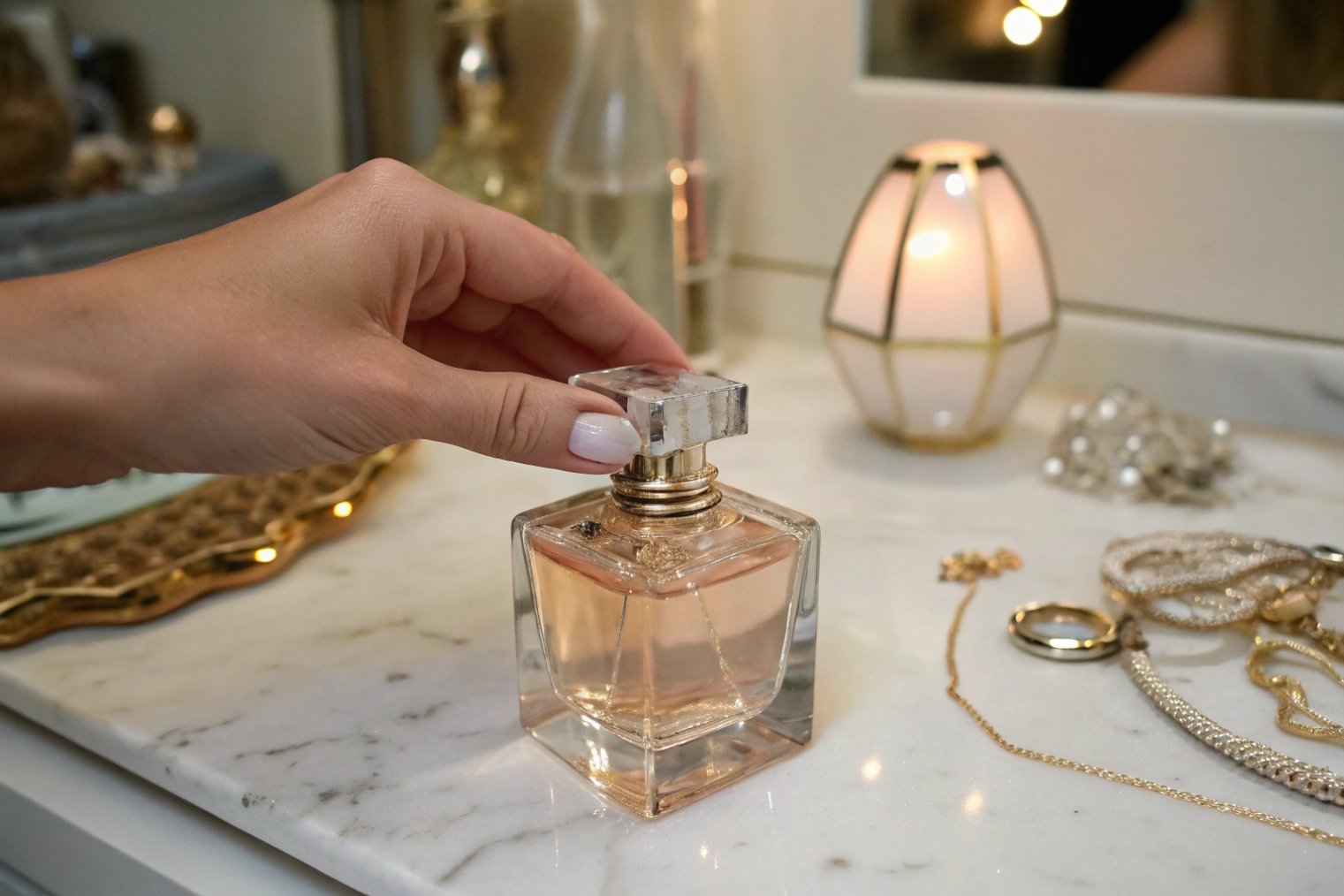
When someone lifts a perfume bottle, the first message is weight. A thick glass base and solid walls immediately feel more substantial than thin plastic. That extra mass suggests care, permanence, and value, even when the actual material cost is modest. Many prestige and niche brands deliberately choose heavy-bottomed bottles for this reason.
Clarity is the second message. High-flint glass can make the liquid look almost suspended in air, with minimal color distortion. This lets the brand show off a carefully tuned juice shade—champagne, rose, amber—without haze or yellowness from the container. For clean or “clinical” lines, ultra-clear glass supports a transparency story. For more mysterious or sensual lines, tinted or smoked glass can be used to shape the mood.
Surface quality matters too. Glass can be polished, frosted, or faceted to manipulate light. A simple cylindrical bottle in clear glass feels very different from the same volume in frosted glass with a satin touch. Frosting hides fingerprints, cuts glare, and creates a soft visual language that many skincare-inspired perfumes prefer. High gloss and sharp edges, on the other hand, say “cut crystal” and glamour.
Some typical branding choices:
| Design element | User perception | Typical brand positioning |
|---|---|---|
| Thick glass base | Solid, expensive, collectible | Luxury, niche, prestige |
| Ultra-clear flint | Clean, modern, high purity | Minimalist, “clean beauty”, unisex |
| Frosted / matte glass | Soft, gentle, skin-care inspired | Wellness, soft floral, spa-like |
| Deep tinted glass | Mysterious, bold, nighttime | Intense, evening, statement scents |
Because glass can hold strong geometric shapes with sharp transitions, it also supports iconic silhouettes that become trademarks on the shelf. Think of how quickly some bottles are recognized even in silhouette or in black and white. Plastic can mimic some of this, but it rarely delivers the same light refraction, “cool touch”, and perceived value as good glass.
Are glass bottles more recyclable than plastic perfume packaging?
As sustainability pressure rises, more brands ask whether heavy, complex perfume bottles really make sense in a circular economy.
Glass is widely recyclable, chemically stable through many melt cycles, and free from odor carryover, making it a strong candidate for closed-loop systems—especially when closures are designed for easy separation.
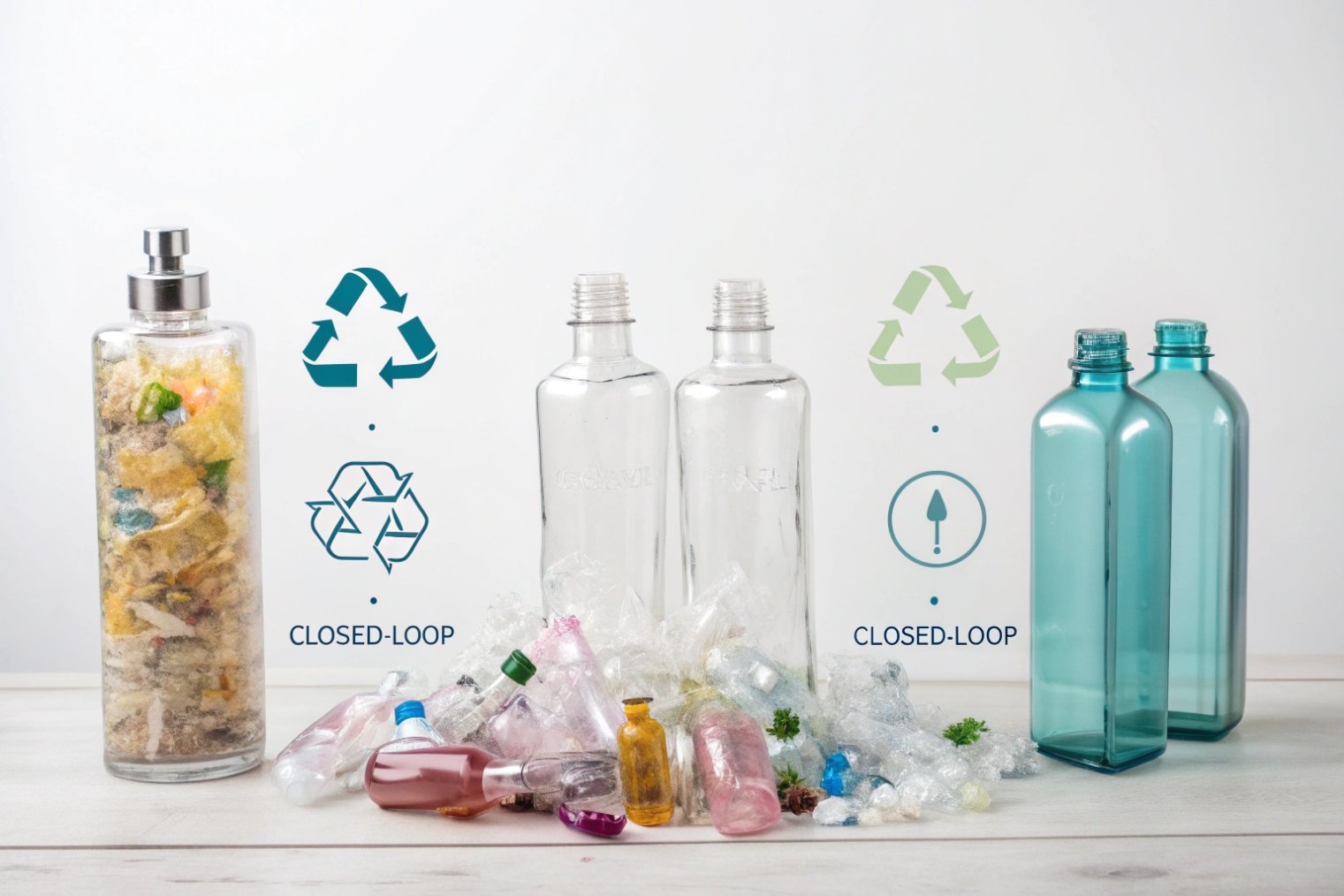
Glass has a simple advantage: it is essentially infinite-use as a material. If you want a practical industry reference for this, the Glass Packaging Institute recycling facts 6 explain why cullet can be remelted into new containers and how it supports efficiency in manufacturing.
Plastics are more complicated. Different resin families (PET, HDPE, PP, etc.) must be separated, and many cosmetic packs use multi-layer or metallized plastics that are harder to recycle. Plastics can also retain odors from previous contents, which limits where the recycled material can be used next. For fragrance, where odor neutrality is critical, this is a serious constraint.
Consumers also perceive glass as more sustainable. It feels durable, natural, and re-usable. That perception feeds into refill and return programs. A sturdy glass perfume bottle with a removable pump can be cleaned and refilled many times, either at home or in-store, without the packaging feeling “tired” or stained by previous scents.
Of course, glass has downsides: higher weight and higher transport emissions per unit if not carefully optimized. But if a bottle is designed for reuse and refill, its environmental impact per use drops sharply. Many brands now combine:
- A heavy, reusable glass outer bottle
- Refillable inner cartridges or simple refilling rituals
- Clear information on how to recycle pumps and caps separately
Recyclability snapshot:
| Aspect | Glass bottle | Plastic perfume bottle |
|---|---|---|
| Technical recyclability | Very high (single material) | Varies, often multi-material |
| Odor carryover after use | Very low | Can be high |
| Consumer perception | Premium, eco, durable | Light, convenient, sometimes “disposable” |
| Reuse / refill potential | High with smart closure design | Possible, but more limited |
So when brands want to connect luxury with sustainability, glass plus a serious refill strategy tends to be a credible way forward.
What design options does glass offer for custom shapes and embossing?
A fragrance story often begins before the spray, in the shape and detailing of the bottle itself.
Glass can be molded, engraved, embossed, frosted, sprayed, and metallized, allowing sculptural silhouettes, raised logos, and signature textures that are hard to copy and easy to trademark.
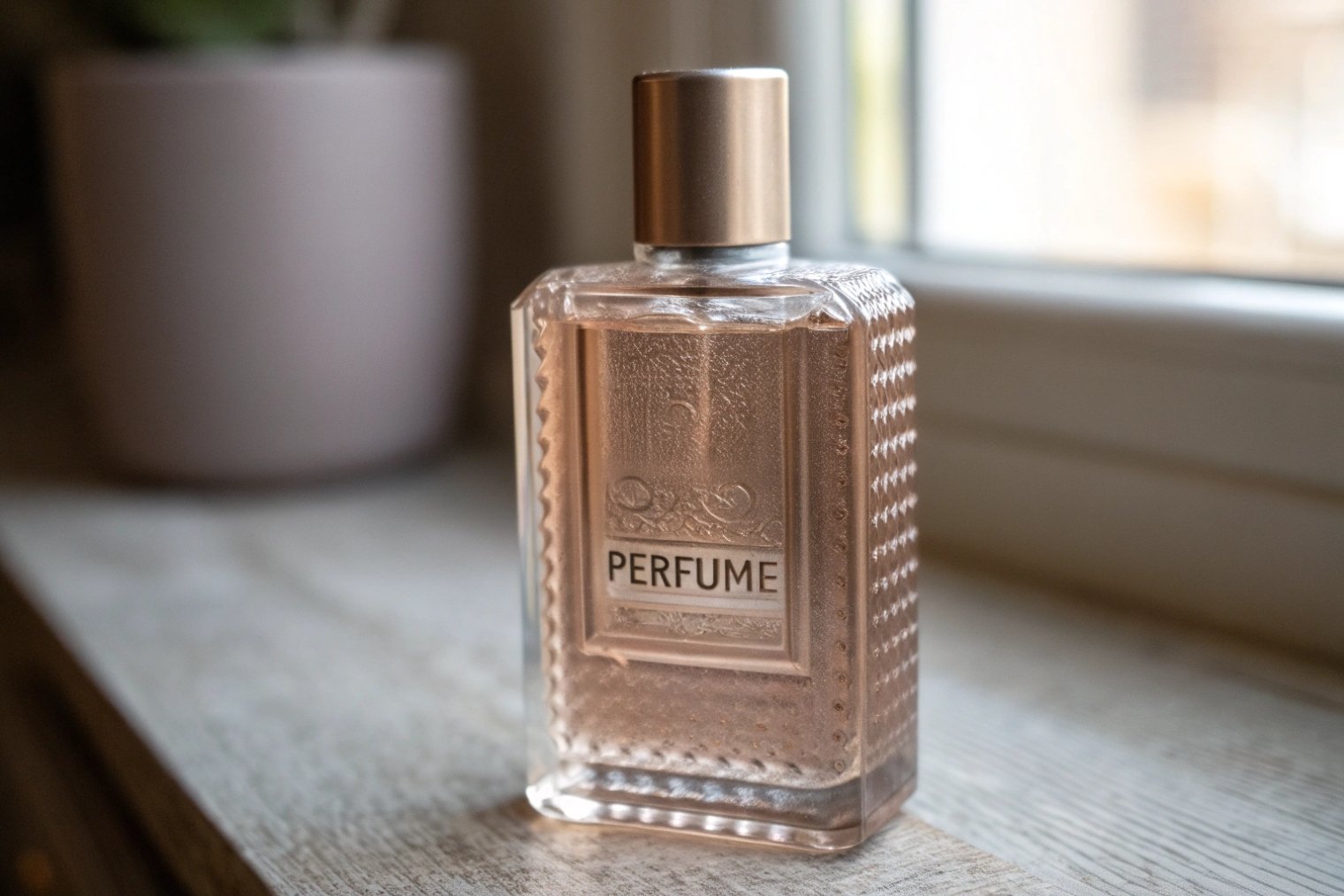
Because glass is molded in a hot, viscous state, it can capture very fine surface detail in the mold. This enables:
- Embossed logos and patterns directly in the glass wall or base
- Debossed panels that hold labels or ink within a recessed frame
- Complex curves, shoulders, and facets that would be hard to maintain in thin plastic
Embossing is especially useful when a brand wants a subtle, permanent mark that survives long after labels wear off. A raised logo on the base or shoulder, for example, still shows up in photography and collector shots even when the bottle is almost empty.
Surface treatments multiply the design space:
- Acid-etching and spray frosting processes 7 for an all-over matte look
- Partial masking so only specific zones are frosted or clear
- Spray coating inside or outside in solid color, transparent tint, or gradient
- Hot foil stamping of logos or lines directly on glass or on a frosted layer
- Screen printing of fine text and line art, often in one or two colors
All of these can be applied to standard catalog molds, which keeps tooling investment and MOQ lower, while still delivering a custom look. For brands at earlier stages, this combination of a stock bottle + smart decoration is often the best path to “custom” without the risk of large mold runs.
Design options summary:
| Glass design tool | Visual effect | Complexity / MOQ impact |
|---|---|---|
| Embossed logo / pattern | Permanent, tactile branding | Requires mold change |
| Frosted finish | Soft, premium, hides fingerprints | Decorator process, low mold impact |
| Internal color spray | Uniform color, better light control | Additional process, standard molds |
| Gradient spray | Artistic, modern, storytelling | Slightly higher decoration complexity |
| Foil and screen print | Sharp logos, premium details | Plate and foil cost, flexible MOQ |
Compared with plastic, glass also keeps sharp edges and fine transitions much better over time; it does not creep or deform at normal storage temperatures. So a sculptural design remains crisp on the shelf year after year.
For refillable concepts, glass is especially helpful. A robust outer bottle with embossed branding can hold different refill inserts or pumps over a product’s lifetime. The brand “object” stays the same, while the juice can change, letting the packaging carry long-term emotional value.
Conclusion
Perfume bottles are made of glass because it quietly protects the juice, elevates the ritual, supports real recycling and refill stories, and gives designers huge freedom to create iconic shapes.
Footnotes
-
Explains why glass is considered inert and impermeable for protecting sensitive contents. ↩ ↩
-
Defines soda-lime glass and its common use in bottles and containers. ↩ ↩
-
Reviews how packaging materials absorb aroma compounds, causing measurable “flavor/fragrance scalping.” ↩ ↩
-
Research comparing oxygen/moisture barrier performance of glass versus PET/HDPE bottles. ↩ ↩
-
Evidence that lead can migrate from lead crystal into alcoholic liquids during storage. ↩ ↩
-
Industry recycling facts on cullet use, energy savings, and glass’s circular potential. ↩ ↩
-
Practical overview of frosting methods used to create durable matte finishes on glass. ↩ ↩






