
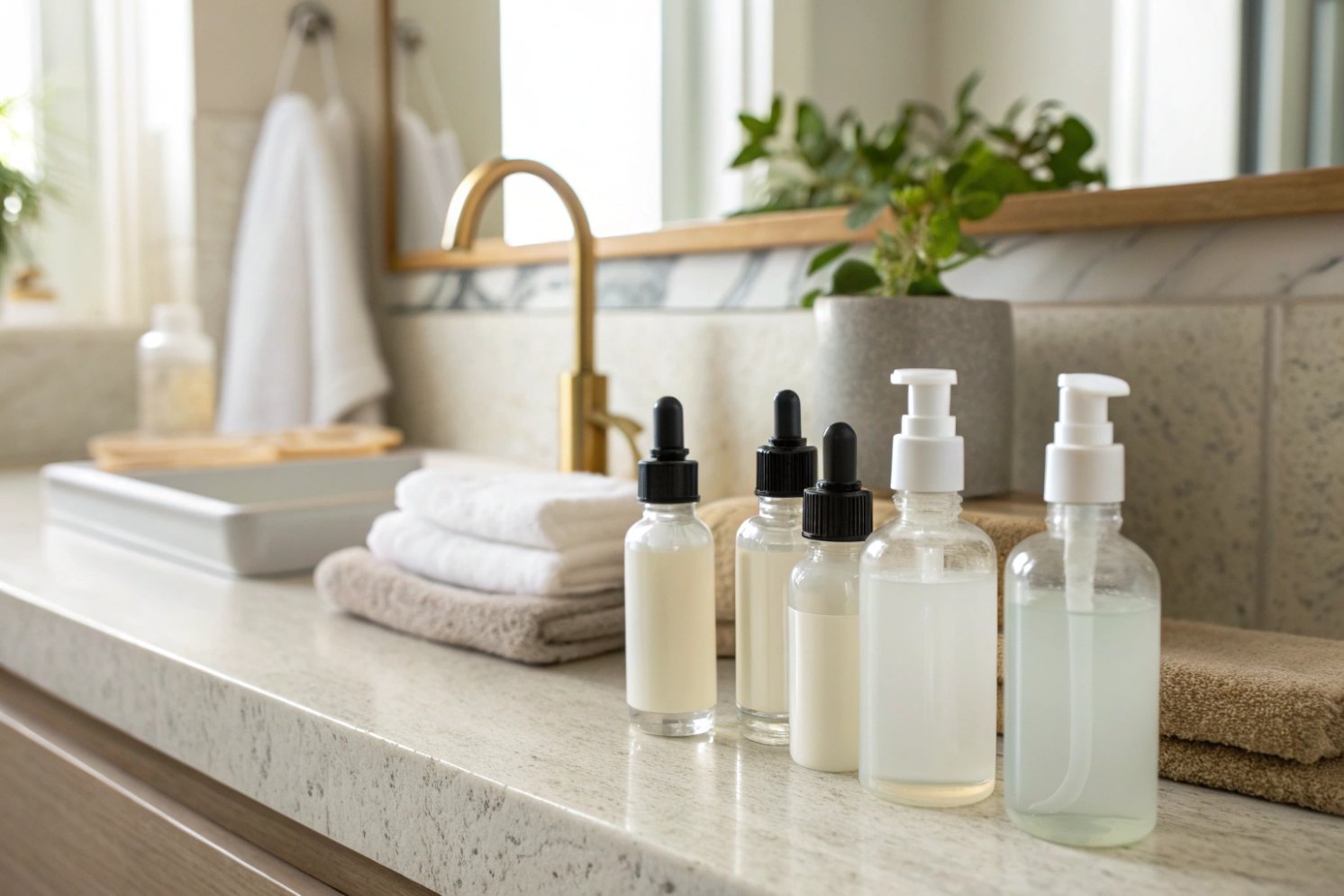
Frosted glass looks simple from the outside, but brands choose it because it changes light, touch, perception, and even how formulas age on the shelf.
Frosted cosmetic bottles diffuse light, hide fingerprints and flaws, improve grip, and signal a soft luxury image, while still keeping glass’s chemical resistance and recyclability for serums, oils, and creams.
When cosmetic clients ask for frosted bottles, they rarely mean “just change the finish”. They are usually chasing better stability for active formulas, a more premium look, and smoother decoration in photos, on shelf, and in the user’s hand. Frosting sits at the center of all three goals.
Does frosted glass really protect cosmetic actives from light and heat?
Many brands choose frosting to “protect vitamin C”, then feel surprised when the lab still asks for an outer box or an amber option.
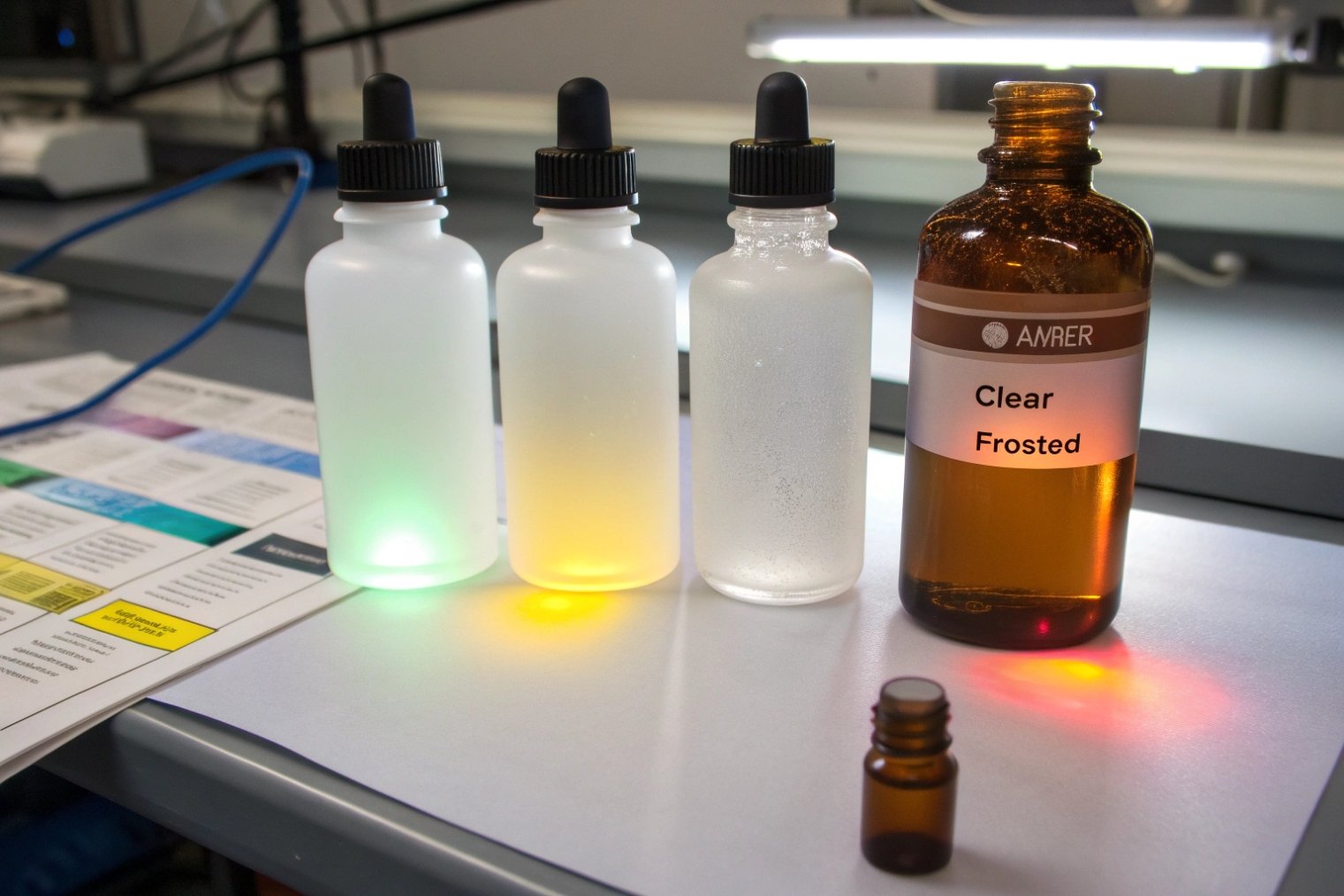
Frosting reduces and diffuses light, especially glare and part of visible and UV, so it slows degradation a bit, but it does not replace true light-protective amber or opaque packaging, and it does not block heat.
Light protection: what frosting actually does
A frosted surface is a controlled layer of micro-roughness that behaves like a ground-glass optical diffuser 1. It scatters incoming light in many directions. For cosmetic formulas, this has three effects:
- It lowers direct light intensity reaching any one spot in the bulk.
- It cuts strong reflections that can create hot spots near the wall.
- It gives partial attenuation in the UV and high-energy blue range, depending on etch depth and any tint in the glass.
If you need to quantify “how frosted is frosted,” teams often treat haze and transmission as measurable optics and reference methods like ASTM D1003 haze and luminous transmittance 2 as a practical vocabulary for diffusion vs clarity.
In practice, this means a frosted flint bottle offers better light environment than a perfectly clear glossy one. For mildly light-sensitive formulas such as basic moisturizers, simple plant extracts, or low-level fragrance, this can be enough when combined with a carton or controlled storage.
For highly sensitive actives, like pure vitamin C (see ascorbic acid stability and photo-degradation pathways 3), retinoids, or some peptides, frosting is only part of the story. These actives react not only to light, but also to oxygen, pH, and trace metals. Frosting slows the light part, but does not turn a clear bottle into a fully protective container. For retinoid families specifically, research on UVA-driven photodegradation of retinoic acid 4 is a useful reminder that “diffusion” is not the same as “blocking.”
A simple comparison for planning:
| Glass type | Light behavior | Typical use for actives |
|---|---|---|
| Clear, glossy flint | Max transmission, strong glare | Stable formulas, short shelf life |
| Frosted flint | Diffused light, reduced intensity | Many serums, oils, lotions with moderate sensitivity |
| Amber / opaque or painted | Strong attenuation in UV/visible | Highly sensitive actives, long shelf life |
Heat behaviour: what changes and what does not
Frosting does very little for heat. Glass thermal mass and conductivity stay the same. If a finished bottle sits in a hot warehouse or under strong sunlight, the internal temperature will rise almost as much as a clear bottle. Any improvement comes mainly from reduced direct beam heating and less localized hot spots, not from real insulation.
So when stability tests show tight heat limits, the main tools remain:
- Correct formula stabilizers and antioxidants.
- Temperature control in logistics.
- Outer cartons or secondary packaging.
Frosting is an extra layer of comfort, not the main heat-defense system.
Practical packaging strategies
In real projects with active skincare, a simple and robust pattern works well:
- For medium sensitivity: frosted flint + good carton + clear “store below X °C” message.
- For high sensitivity: frosted amber or tinted glass + outer box + possibly airless system.
- For hero “clinical” lines: consider fully opaque or metallized glass, with frost used only in small windows or gradients.
This way, frosting does its job as part of a protection stack, instead of carrying more responsibility than it can handle alone.
How does frosting affect brand perception and shelf appeal?
Many marketing teams start moodboards with “soft, cloudy glass” long before anyone mentions CTE or UV.
Frosted bottles signal softness, purity, and luxury, hide fingerprints and minor defects, reduce glare under store lights, and create calm, photography-friendly surfaces that help cosmetic brands stand out without shouting.
What consumers feel when they see frosted glass
When people pick up a frosted bottle, several subtle cues hit at once:
- The matte finish feels softer and less “industrial” than high-gloss.
- Light spreads gently across the surface, so colors look creamy instead of harsh.
- The semi-transparency suggests purity and honesty, because you can still see the product inside.
In user interviews, frosted glass is often linked with words like “gentle”, “minimal”, “premium”, “Nordic”, “clean beauty”. Clear glass leans more toward “scientific”, “clinical”, or “basic”. High-gloss colored glass can feel bolder or more mass-market.
Frosting also hides some real-world mess: fingerprints, smudges from oil-based creams, and tiny scuffs from shipping do not show up as clearly. This is useful for bathroom use, where bottles live in steam and on damp counters.
Shelf impact and digital presence
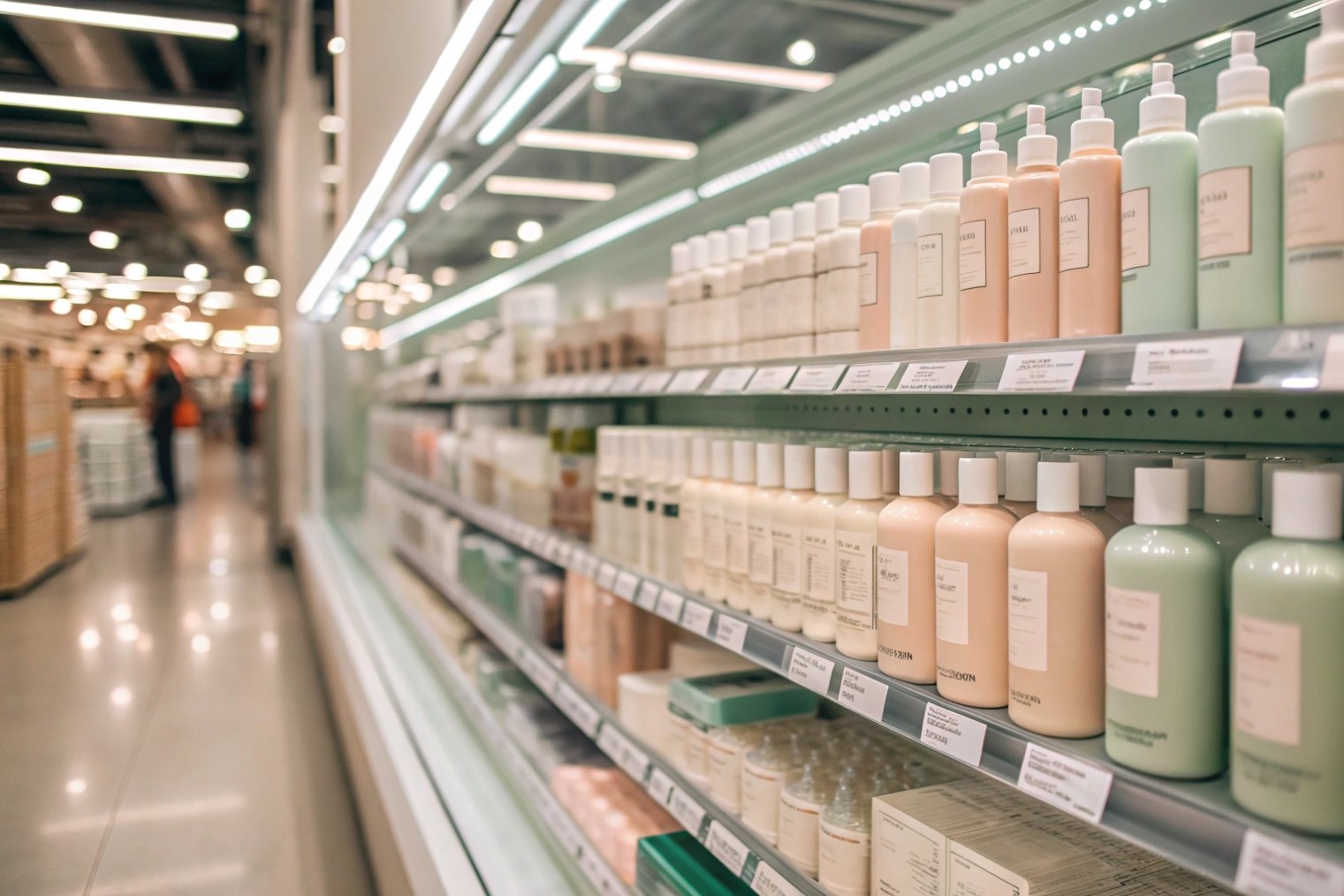
Under strong retail lighting, clear glossy glass throws reflections and glare. This can make labels hard to read and colors hard to capture in photos. Frosted surfaces scatter the light, so print and foils stay readable from more angles.
For e-commerce and social content, this matters even more. A frosted bottle is easier to photograph without complex lighting setups. Brand marks and claims stay legible in simple studio shots and user-generated photos. For many indie brands, this alone is a strong reason to choose frosting.
Frosting also helps with range architecture. By adjusting:
- Frost density (light vs heavy)
- Tint (clear frost vs warm or cool tones)
- Coverage (full frost vs partial panels or gradients)
a brand can create a clear visual ladder for basic, advanced, and “clinical” lines while keeping the same bottle shape and closure. This reduces tooling costs and simplifies logistics.
Perception table for quick planning
| Frost style | Consumer perception hints | Typical cosmetic use |
|---|---|---|
| Light, almost clear frost | Gentle, approachable, natural | Daily moisturizers, toners, face mists |
| Dense white frost | Clinical, high-tech, premium | Serums, treatments, eye products |
| Tinted frost (blue, green) | Fresh, functional, ingredient-focused | Vitamin lines, acne lines, soothing care |
| Gradient frost | Artful, design-led, storytelling | Hero SKUs, limited editions |
When all these cues line up with the formula story, frosting becomes a quiet but powerful branding tool, not just a finish choice.
What decorating methods work best on frosted cosmetic bottles?
Once the bottle is frosted, the next question is always, “What can we print on it without losing that soft look?”
Screen printing, hot stamping, and UV inks work very well on frosted bottles, especially after proper surface treatment; the matte texture boosts ink adhesion, metallic contrast, and legibility for small cosmetic texts.
How frosting changes the “canvas” for decoration
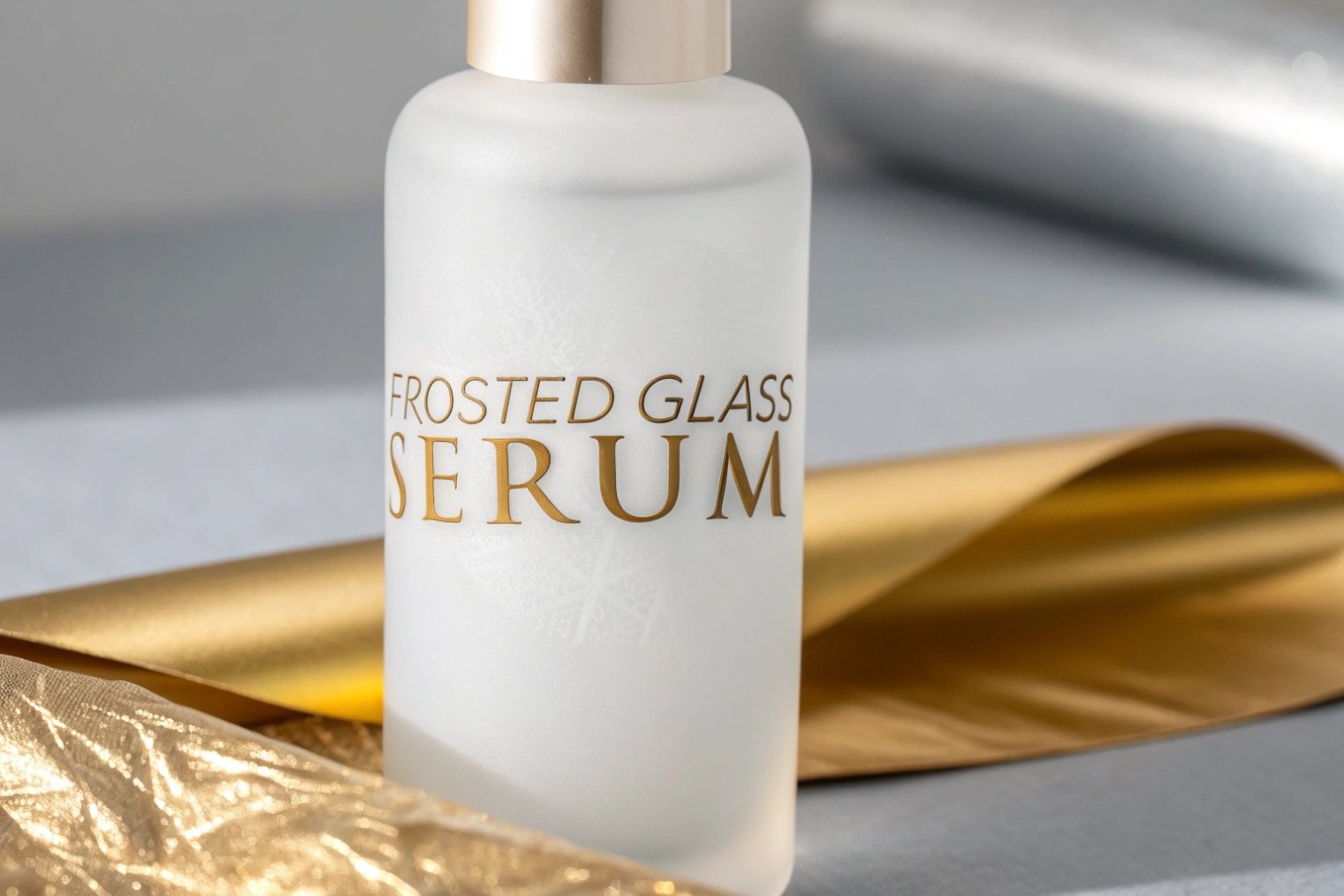
Frosting increases surface energy and micro-roughness compared with very smooth flint. This is usually good news for decoration:
- Inks can key into the microscopic texture instead of sitting on a slick surface.
- Small pinholes and flow issues are less obvious.
- Metallic foils and hot stamping stand out more strongly against the soft background.
However, the etched surface also diffuses edges slightly. If artwork uses ultra-fine lines or very small text, the frost level and ink choice must be tuned, otherwise details can look fuzzy.
Decorating methods that pair well with frost
In cosmetic work, several techniques consistently perform well on frosted bottles:
-
Direct screen printing (ceramic or organic inks)
- Strong, durable graphics.
- Works with one to several colors.
- Matte background makes white, black, and deep colors pop.
-
Hot stamping and foil accents
- Gold, silver, or tinted foil looks more refined against matte glass than against high-gloss.
- Good for logos, borders, and small details that signal luxury.
-
UV-curable inks
- Fast, clean lines with good adhesion on properly treated frost.
- Useful for fine text and multi-color designs.
-
Partial spray or gradient overlays
- Combine clear and frosted zones, or two frost intensities.
- Good for storytelling (e.g., “active water rising” effects) without new molds.
When you want metallic detailing that reads “premium” fast, it helps to align artwork and tooling to the hot foil stamping process 5 so results are repeatable at scale. For fast production and crisp small text, many decorators also lean on UV/EB curing technology 6 to lock inks and coatings quickly.
A quick comparison:
| Decoration method | On frosted glass – pros | Points to watch |
|---|---|---|
| Screen printing | Strong adhesion, bold look | Adjust mesh and ink for rougher surface |
| Hot stamping | High contrast, luxury signal | Need clean, uniform frost under foil |
| UV inks | Fine detail, fast lines | Control cure to avoid brittleness |
| Decals / transfer labels | Complex artwork possible | Edges more visible on matte surfaces |
| Large self-adhesive labels | Easy SKU changes | Can hide frost, losing some benefit |
Practical tips from project experience
In real cosmetic launches, a few habits help:
- Approve both empty and filled decorated samples under real store lighting.
- Check legibility of small International Nomenclature of Cosmetic Ingredients (INCI) 7 text on the frosted surface, not just the main logo.
- Keep the number of decoration colors modest; frost already adds complexity.
- For refill systems, design markings so they stay clear even after repeated handling and wiping.
When decoration, frosting level, and bottle shape are developed together, the result looks effortless on shelf and is also easy to run at scale.
Are frosted cosmetic bottles more scratch-resistant and slip-resistant than clear glass?
Teams often assume “matte = tougher”, then feel surprised when lab drop tests tell a different story.
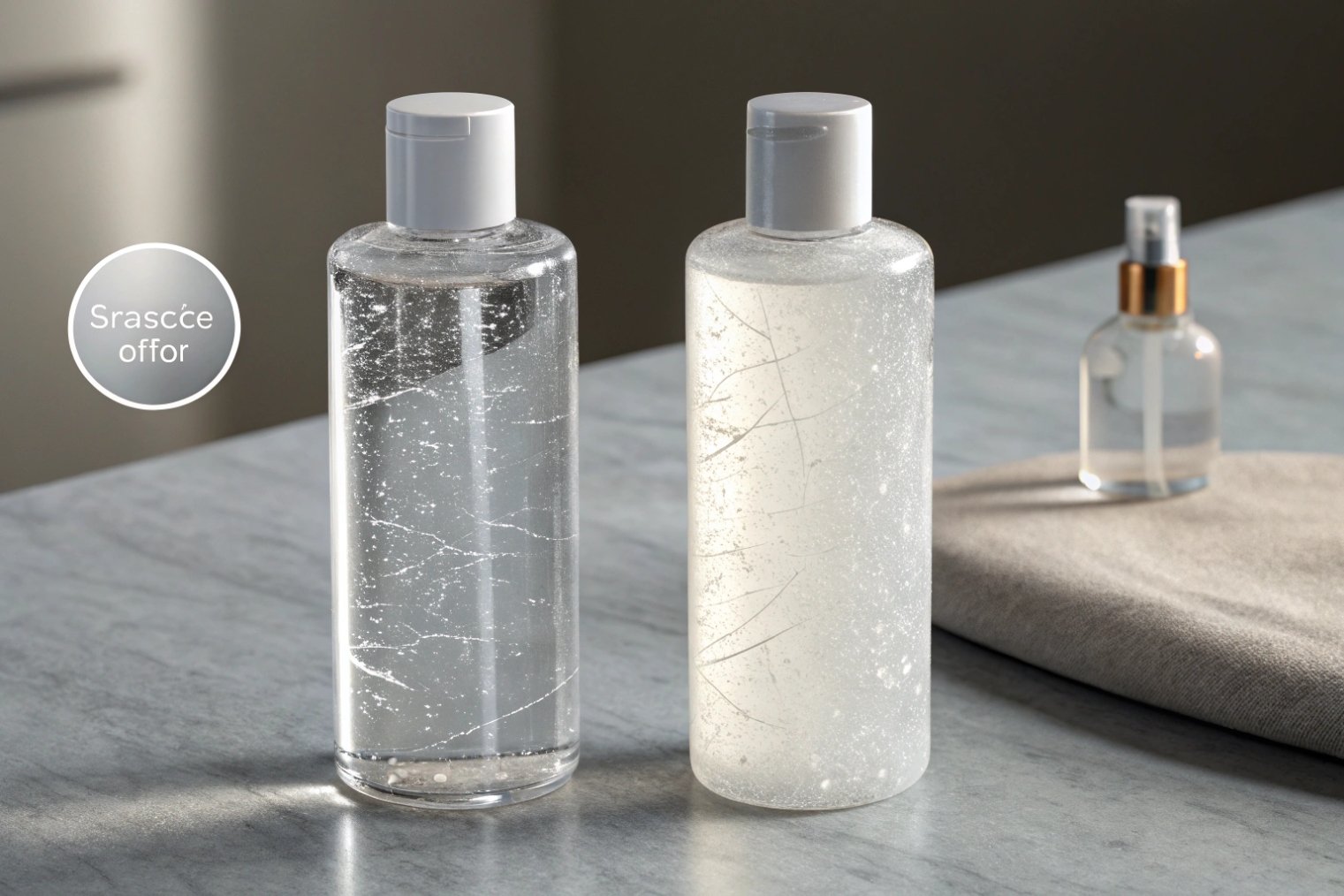
Frosted bottles do not make the glass itself harder, but they hide fine scratches better and improve grip, so they look less damaged in use and slip less in wet, oily bathroom conditions.
Scratch behaviour: visibility vs actual strength
Frosting changes how scratches look more than how they form:
- On glossy clear glass, even a light scuff shows as a bright line.
- On a frosted surface, the base is already matte, so fine scratches blend in.
- Only deep gouges that cut through the frost to clear glass stand out strongly.
From a mechanical point of view, the etched outer skin may be slightly weaker than untouched glass because micro-defects are larger. For cosmetic bottles, the etch is usually shallow and controlled, so overall strength is still acceptable, especially when annealing and handling are good.
In daily use, this means frosted bottles look newer for longer, even if total mechanical strength is similar or slightly lower than non-frosted bottles of the same design.
Slip resistance and real-world handling
The micro-texture of frosting gives more friction to fingers:
- Better grip with wet or lotion-covered hands.
- Less chance a small serum bottle slips from a user’s fingers at the sink.
- More secure feel with heavier glass or tall slender formats.
This is one reason many brands put high-end oils, serums, and bath products in frosted glass. The bottles feel less “dangerous” in a wet environment. If the line also uses a slightly heavier base, the result feels premium and stable in the hand.
A simple comparison:
| Property | Clear glossy glass | Frosted glass |
|---|---|---|
| Fine scratch visibility | Very high | Lower |
| Grip in wet conditions | Lower | Higher |
| Glare and reflections | High | Low |
| Inherent glass strength | Slightly higher surface quality | Slightly more surface defects, but controlled |
Balancing beauty and robustness
There is a trade-off. Very aggressive deep etching can weaken the glass surface more noticeably. For cosmetic bottles, the best balance usually comes from:
- A controlled, relatively fine frost.
- Good annealing and handling to keep residual stress low.
- Appropriate drop and scuff testing at the pack level (including pump, cap, and cartons).
When this balance is right, frosted bottles feel secure in the hand, survive normal bathroom life, and still pass the drop and transport tests that matter for large-scale distribution.
Conclusion
Frosted cosmetic bottles sit at the sweet spot where light control, touch, branding, and decoration all support each other, as long as formula sensitivity and process limits are understood from the start.
Footnotes
-
Shows how ground-glass diffusers scatter light, supporting the optics behind frosted glass finishes. ↩ ↩
-
Defines haze and transmittance measurements used to quantify how much frosting diffuses glare. ↩ ↩
-
Summarizes ascorbic acid stability and photo-degradation pathways relevant to vitamin C skincare formulas. ↩ ↩
-
Peer-reviewed data on UVA-driven retinoic acid degradation, informing when frost is insufficient versus amber/opaque. ↩ ↩
-
Explains the hot foil stamping process and where it creates premium metallic effects on packaging. ↩ ↩
-
Introduces UV/EB curing technology used for fast, durable ink and coating curing on decorated bottles. ↩ ↩
-
Official reference for INCI naming so label text stays consistent and compliant across markets. ↩ ↩






